Chef Isabel
Abanico Ibérico a la Plancha
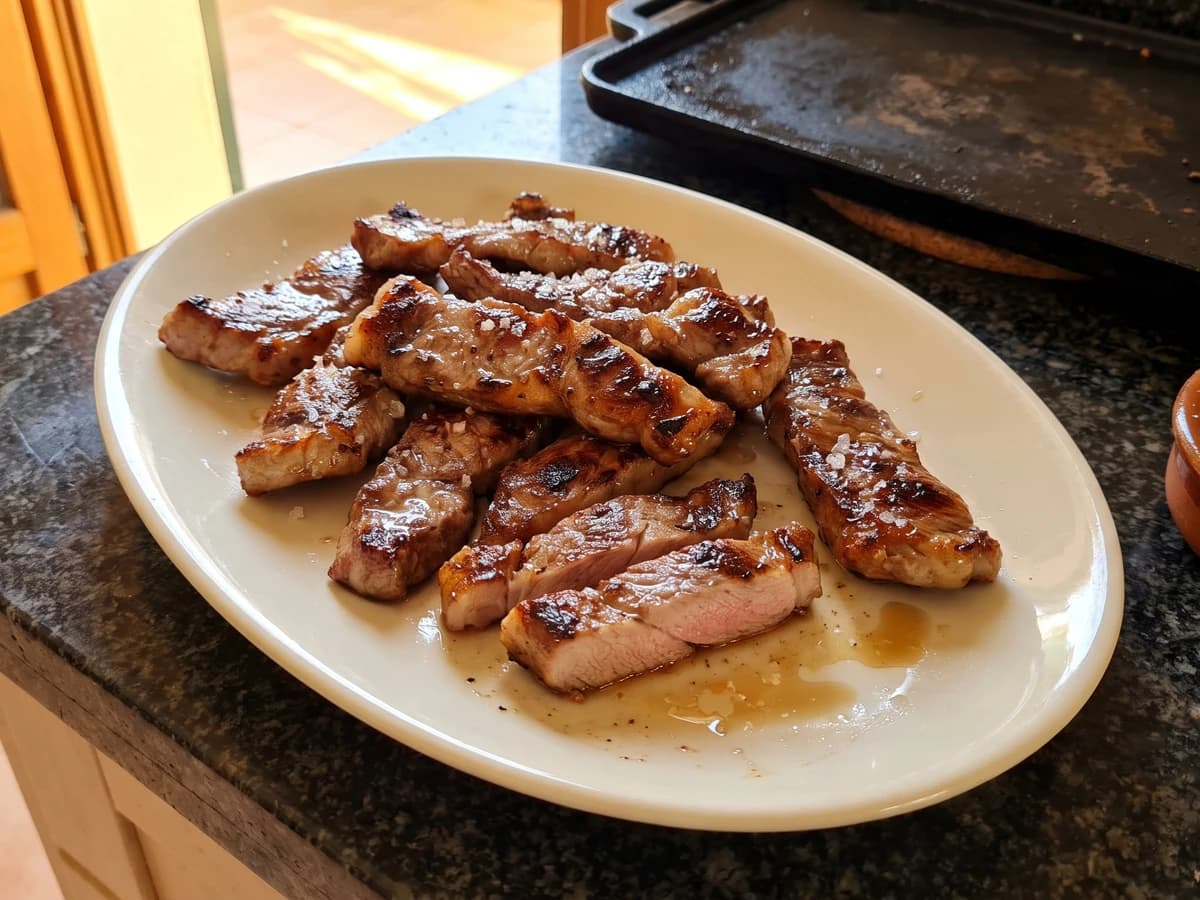
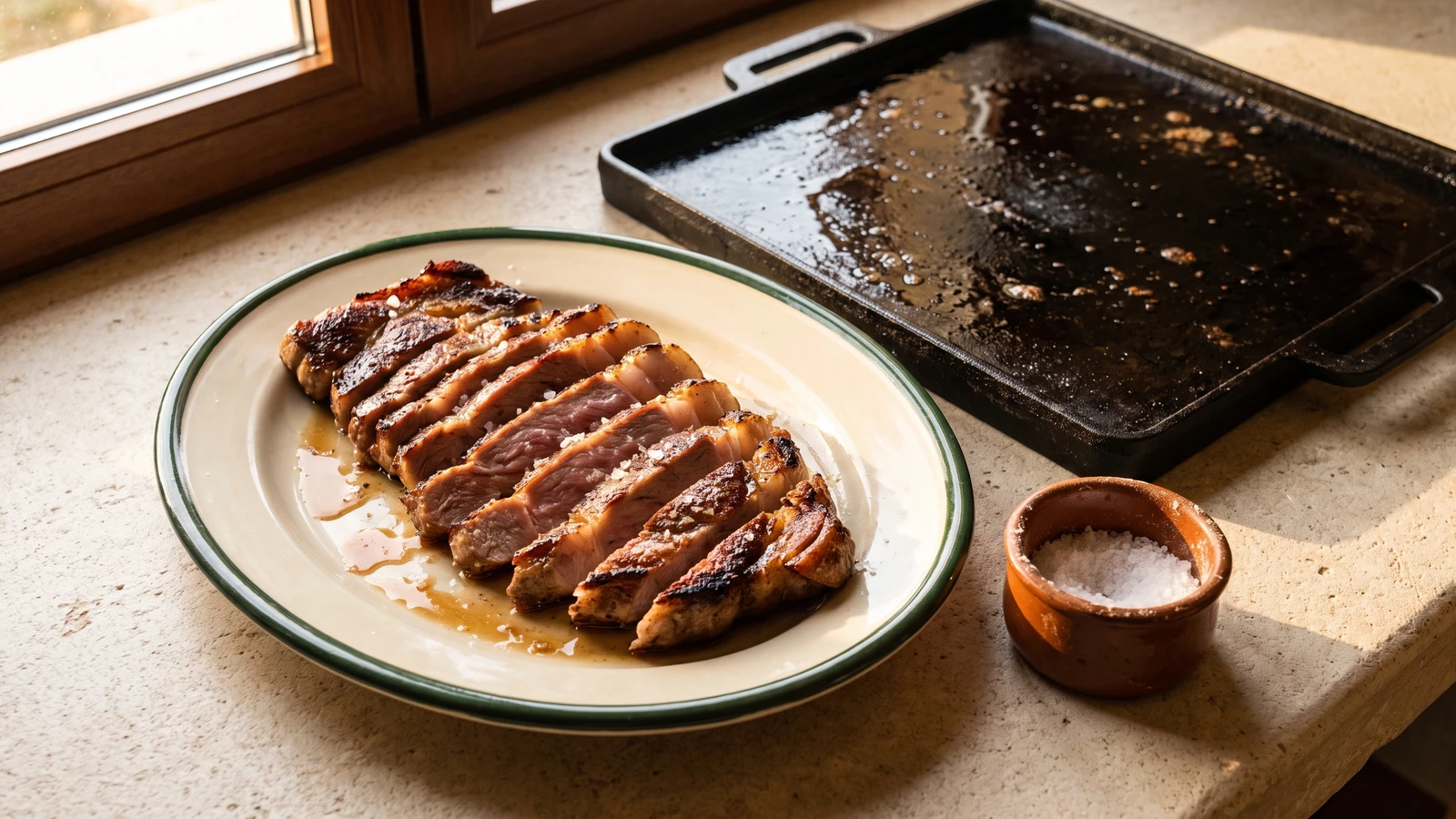
Extremadura's dehesa gives us this fan-shaped, marbled rib cut: salt it at the last moment, lay it on a fierce plancha, and count in seconds so the centre stays juicy.
A cooking platform built around craft, culture, and the stories behind what we eat.
Created by
Extremadura's dehesa gives secreto ibérico its veined fat and deep sweetness. A fierce plancha, coarse salt, and a short rest are all this quick cut needs to brown outside and stay rosy within.
Secreto ibérico a la plancha is Extremadura's dehesa pork at its plainest: a thin, fan-shaped cut from where the shoulder meets the belly, threaded with fat and cooked bare on fierce iron. It isn't presa, the thicker shoulder cut. Secreto is flatter, looser in texture, and so well marbled that it bastes itself as it cooks. Salt is all it wants.
The method that decides it is simple. Dry the meat properly and put it on a plancha hot enough to brown the outside before the centre overcooks. That fast heat melts the fine seams of fat through the meat while building the dark crust that gives the dish its savoury edge. Take it to 63°C, rest it for five minutes, and it stays juicy with a rosy centre. Leave it until grey throughout and you've paid for the best part only to cook it away.
Outside Spain, secreto is sometimes sold as Iberian pork skirt, though it isn't the same anatomical cut as beef skirt. If you can't find it, use a well-marbled pork collar steak cut no thicker than 2cm. The collar is denser and lacks secreto's delicate lace of fat, but the same hot, quick method treats it well. No hace falta haber pisado España. The Margin beside this one says only: dry meat, fierce iron, salt after. Siempre sale, si lo sigues. It turns out if you follow it.
Secreto belongs to the pork-cutting tradition of Extremadura's dehesa, where Iberian pigs range beneath holm and cork oaks and, during the montanera, feed on the fallen acorn crop. The cut is a small, fan-shaped muscle concealed beneath layers of fat where the shoulder meets the belly, which accounts for its name, secreto, or secret. Its plancha preparation remains deliberately plain because the intramuscular fat, especially in acorn-finished pork, supplies both the cooking fat and the dish's characteristic flavour.
Quantity
700g
2 or 3 whole pieces, about 1.5 to 2cm thick
Quantity
700g
cut 1.5 to 2cm thick
Quantity
7g
| Ingredient | Quantity |
|---|---|
| secreto ibérico2 or 3 whole pieces, about 1.5 to 2cm thick | 700g |
| well-marbled pork collar steaks (optional)cut 1.5 to 2cm thick | 700g |
| coarse sea salt | 7g |
Take the secreto from the refrigerator 20 minutes before cooking. Trim only loose silverskin or ragged edges, never the seams of white fat running through the meat. Pat every surface thoroughly dry with kitchen paper. A wet surface cools the iron and makes the pork simmer in its juices before it can brown.
Set a heavy cast-iron plancha or frying pan over high heat for 5 to 7 minutes. It should reach about 230 to 250°C at the surface. Leave it dry. Secreto carries enough fat of its own, and added oil only gives you more smoke without improving the meat.
Lay the pieces on the plancha in a single layer, lowering them away from you. Press each one lightly for five seconds so the whole surface meets the iron, then leave it untouched for 2½ to 3 minutes. The underside should form a dark mahogany crust while beads of clear fat gather around the edges. Cook in batches if the pieces would touch.
Turn the secreto with tongs and cook the second side for 2 to 3 minutes. Hold any thick fatty edge against the plancha for another 20 to 30 seconds. Check the thickest part from the side with an instant-read thermometer and remove each piece as it reaches 63°C. The centre may still be rosy, which is right, but temperature, not colour, decides when pork is safely cooked.
Move the secreto to a warm plate and scatter the measured 7g of coarse salt evenly over both sides. Rest it uncovered for 5 minutes, giving the pork its full safe resting time and letting the juices settle. Slice across the visible grain into strips about 1cm wide, return any resting juices to the plate, and serve at once. Pésalo, no lo adivines, weigh the salt, don't guess.
1 serving (about 140g)
Culinary guides, cultural storytelling, and the editorial depth that makes cooking meaningful.
Discover Culinary ExplorerChef Isabel
Extremadura's dehesa gives us this fan-shaped, marbled rib cut: salt it at the last moment, lay it on a fierce plancha, and count in seconds so the centre stays juicy.

Chef Isabel
Aletría Murciana is Murcia's humble noodle guiso: fine fideos, pork ribs, potato, saffron, and a dark sweet sofrito. Get that base right and the pot knows where it's going.

Chef Isabel
Andrajos are Andalucía's dough-rag stew from Jaén and Granada: a slow rabbit guiso thickened with torn sheets of flour dough, rolled thin so they cook tender instead of gummy.
Chef Isabel
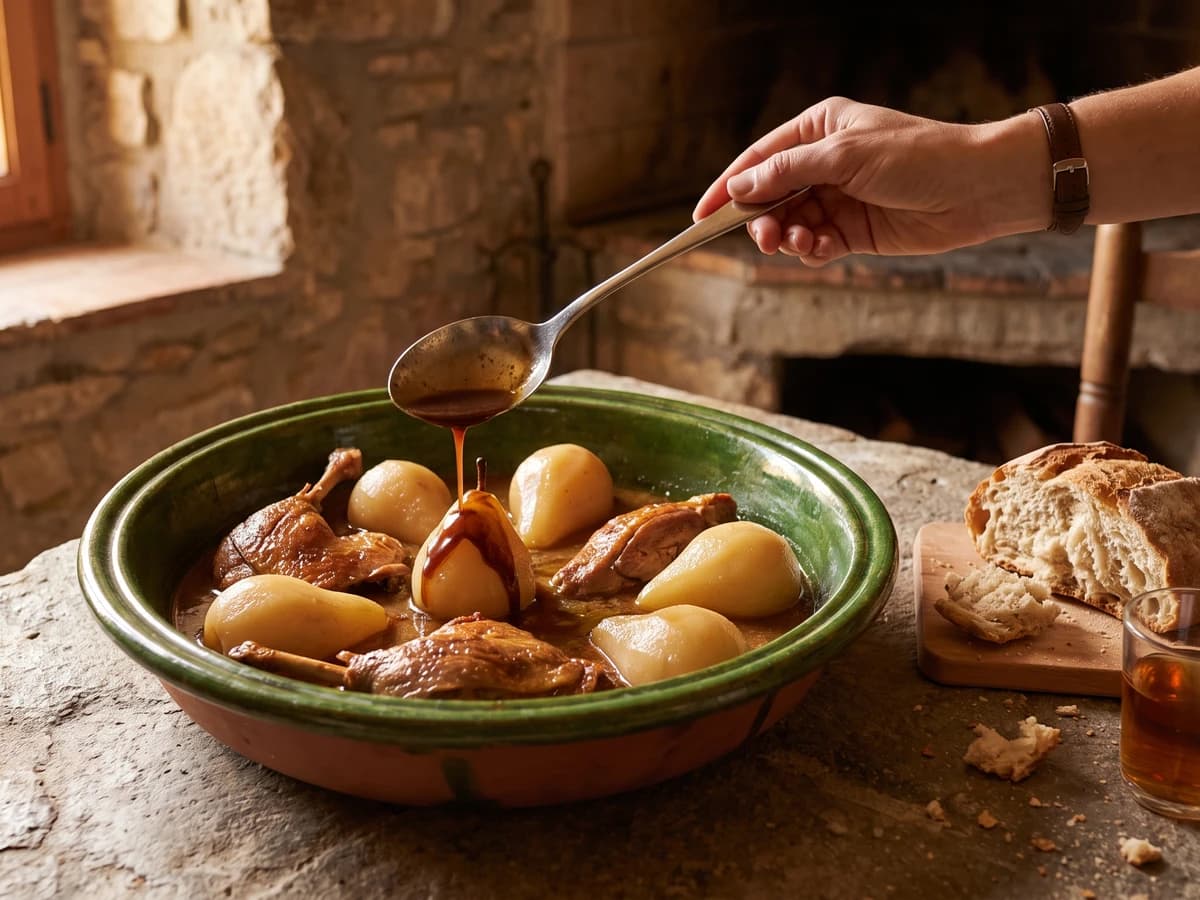
Ànec amb peres is Catalan celebration cooking: duck braised in a dark sofregit, firm autumn pears added near the end, and an almond-garlic picada that turns the juices into a close, glossy sauce.