Chef Isabel
Aceitunas Aliñadas Andaluzas
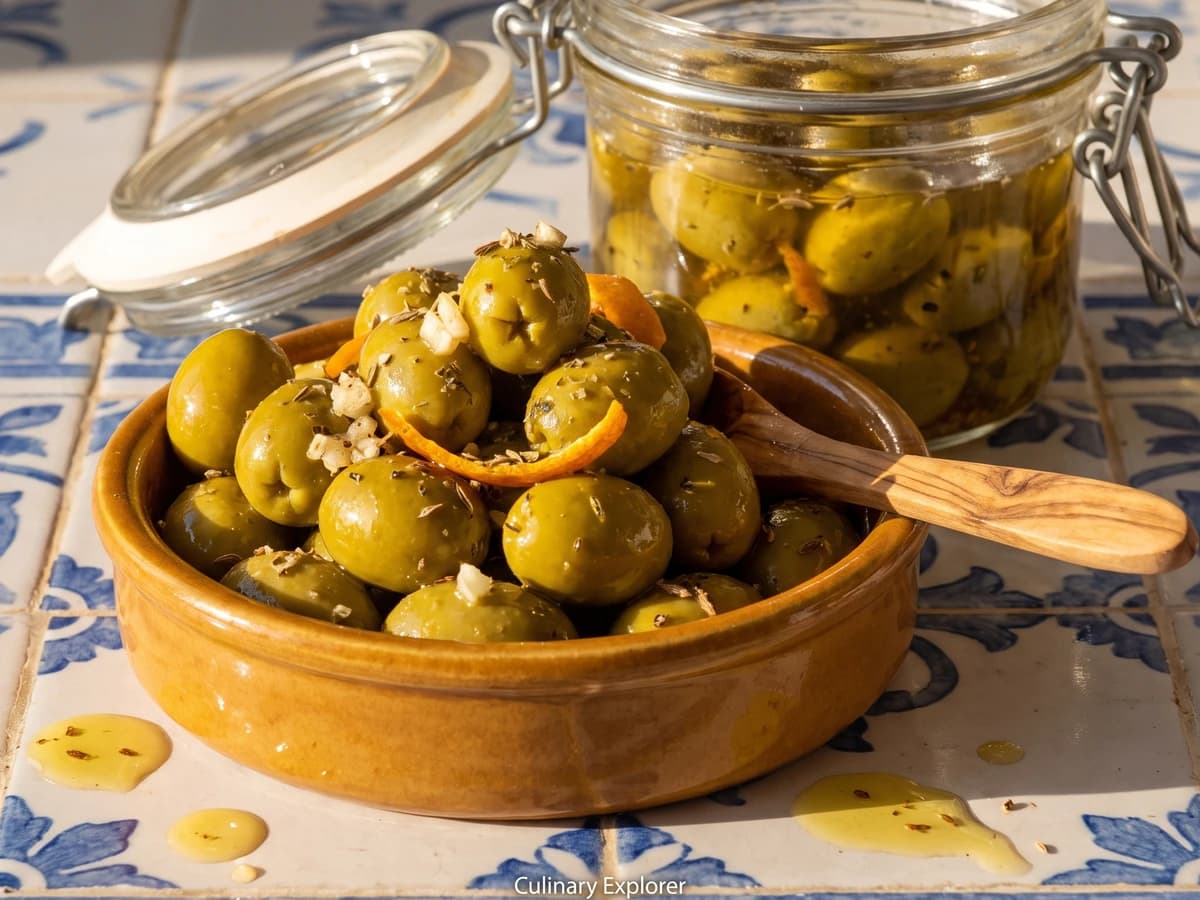
Andalucía's green olives are cracked just enough to drink in garlic, cumin, oregano and sherry vinegar, then left two days until the brine turns fragrant and every bite carries the aliño.
A cooking platform built around craft, culture, and the stories behind what we eat.
Created by
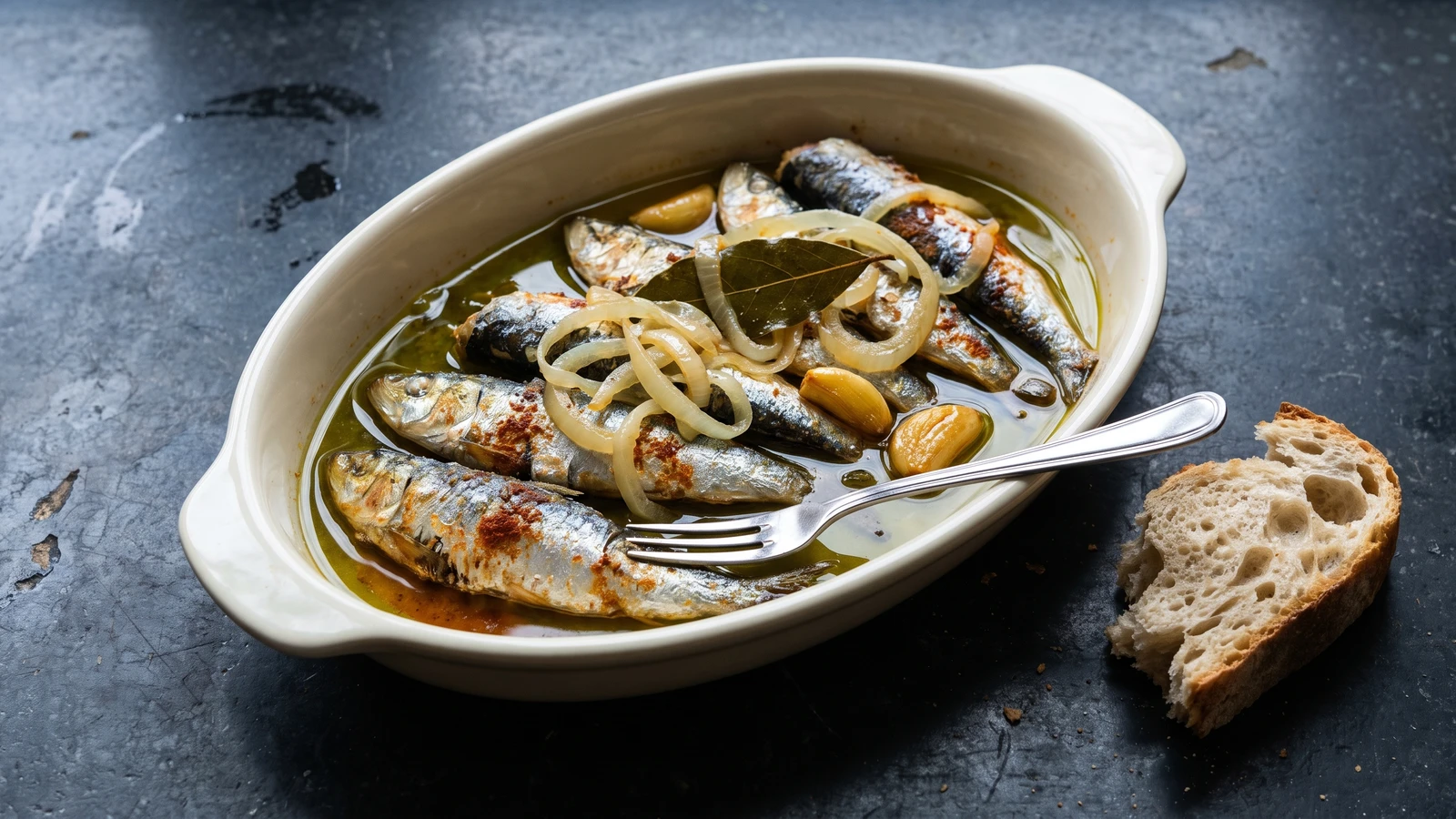
On the Cantabrian coast, sardines are lightly floured and fried, then rested overnight beneath onion, garlic, bay, olive oil and sharp vinegar until the flesh turns firm, fragrant and properly seasoned.
Sardinas en escabeche belong to the Cantabrian coast, where an oily fish with a short season is lightly floured, fried and covered with a warm, sharp marinade of olive oil, wine vinegar, onion, garlic and bay. This isn't boquerones en vinagre, the raw anchovy preparation. These sardines are cooked first, and that thin coat of flour gives the escabeche something to cling to without turning the fish heavy.
The overnight rest decides the dish. Straight from the pan, the vinegar sits on the surface and tastes separate from the oil. Leave the sardines covered and cold for a full day, and the flesh firms gently while the onion, bay and vinegar settle into one clean, savoury flavour. Rush that rest and you've made fried sardines with dressing, which is pleasant enough but isn't the same thing.
Buy sardines when their skin is bright, their eyes clear and their flesh firm. If fresh ones aren't good where you're standing, properly thawed frozen sardines work. Dry them very carefully because they soften a little in freezing and spit more in the oil. Small mackerel or horse mackerel can take the same escabeche, tal como se hace allí, but the result is richer and must carry the name of that fish.
Serve them cool, not numb from the refrigerator, with bread for the onion and the sharp green-gold oil. The Margin beside this recipe says only, "Leave them alone until tomorrow." Sensible advice. Siempre sale, si lo sigues.
In fishing ports along the Cantabrian coast, frying a catch and covering it with vinegar, oil and aromatics gave households more time to eat delicate oily fish before cold storage was available. The word escabeche entered Iberian cooking through the Arabic sikbaj, a vinegar-seasoned preparation whose preserving logic became rooted across the peninsula. Coastal kitchens applied it especially well to sardines, mackerel and bonito, fish plentiful enough in season to be cooked for the days ahead.
Quantity
800g, about 12 to 16
headed, gutted and scaled, backbones left in
Quantity
10g
divided
Quantity
75g
Quantity
350ml
for frying, with 150ml strained and reserved for the escabeche
Quantity
200g
thinly sliced
Quantity
4 cloves
peeled and lightly crushed
Quantity
2
Quantity
10
Quantity
2g
Quantity
100ml
Quantity
120ml
| Ingredient | Quantity |
|---|---|
| whole fresh sardinesheaded, gutted and scaled, backbones left in | 800g, about 12 to 16 |
| fine sea saltdivided | 10g |
| plain flour | 75g |
| mild olive oilfor frying, with 150ml strained and reserved for the escabeche | 350ml |
| yellow onionthinly sliced | 200g |
| garlicpeeled and lightly crushed | 4 cloves |
| bay leaves | 2 |
| black peppercorns | 10 |
| sweet pimentón | 2g |
| dry white wine | 100ml |
| white wine vinegar, preferably 6% acidity | 120ml |
Rinse the sardine cavities quickly under cold water, checking that no dark innards remain along the backbone. Don't soak them. Pat the fish completely dry inside and out, season with 8g of the salt, and refrigerate for 10 minutes. Water left on the skin makes the oil spit and stops the flour forming its thin, even coat.
Spread the flour on a plate. Coat each sardine lightly, including the cavity, then shake off every loose patch. Heat the olive oil in a 28cm frying pan to about 175°C. Fry in small batches for 90 seconds to 2 minutes per side, depending on size, until the skin is pale gold and the flesh has just turned opaque at the backbone. Don't crowd the pan or cook the fish crisp. Lift each batch onto a rack or absorbent paper, then arrange the sardines snugly in a shallow non-reactive dish.
Let the frying oil settle for 5 minutes, then strain it through a fine sieve into a heatproof jug. Measure 150ml into a clean pan. Add the onion, garlic, bay leaves and peppercorns. Cook over low heat for 12 to 15 minutes, stirring now and then, until the onion is soft and translucent but not brown. This escabeche wants the clean sweetness of softened onion, not the dark flavour of a long sofrito.
Take the pan off the heat, stir in the pimentón for 10 seconds, then carefully add the wine and vinegar. Return the pan to low heat, add the remaining 2g salt, and simmer gently for 3 minutes. The brief simmer joins the oil and vinegar and takes the raw edge from the wine without boiling away the brightness.
Pour the warm escabeche, onion and all, evenly over the sardines. Use a snug dish so the liquid reaches well up their sides. Spoon some onion between the layers if the fish must overlap. Leave the shallow dish uncovered for 30 minutes, just until it loses its fiercest heat, then cover and refrigerate. Spoon the marinade over any exposed fish once during cooling.
Refrigerate the sardines for at least 12 hours and preferably 24. This rest is what turns fried fish and vinegar into escabeche, so don't shorten it. Take the dish from the refrigerator 20 minutes before serving, then lift the sardines carefully with a fish slice and spoon the softened onion and marinade over them. Serve cool with bread.
1 serving (about 290g)
Culinary guides, cultural storytelling, and the editorial depth that makes cooking meaningful.
Discover Culinary ExplorerChef Isabel
Andalucía's green olives are cracked just enough to drink in garlic, cumin, oregano and sherry vinegar, then left two days until the brine turns fragrant and every bite carries the aliño.
Chef Isabel
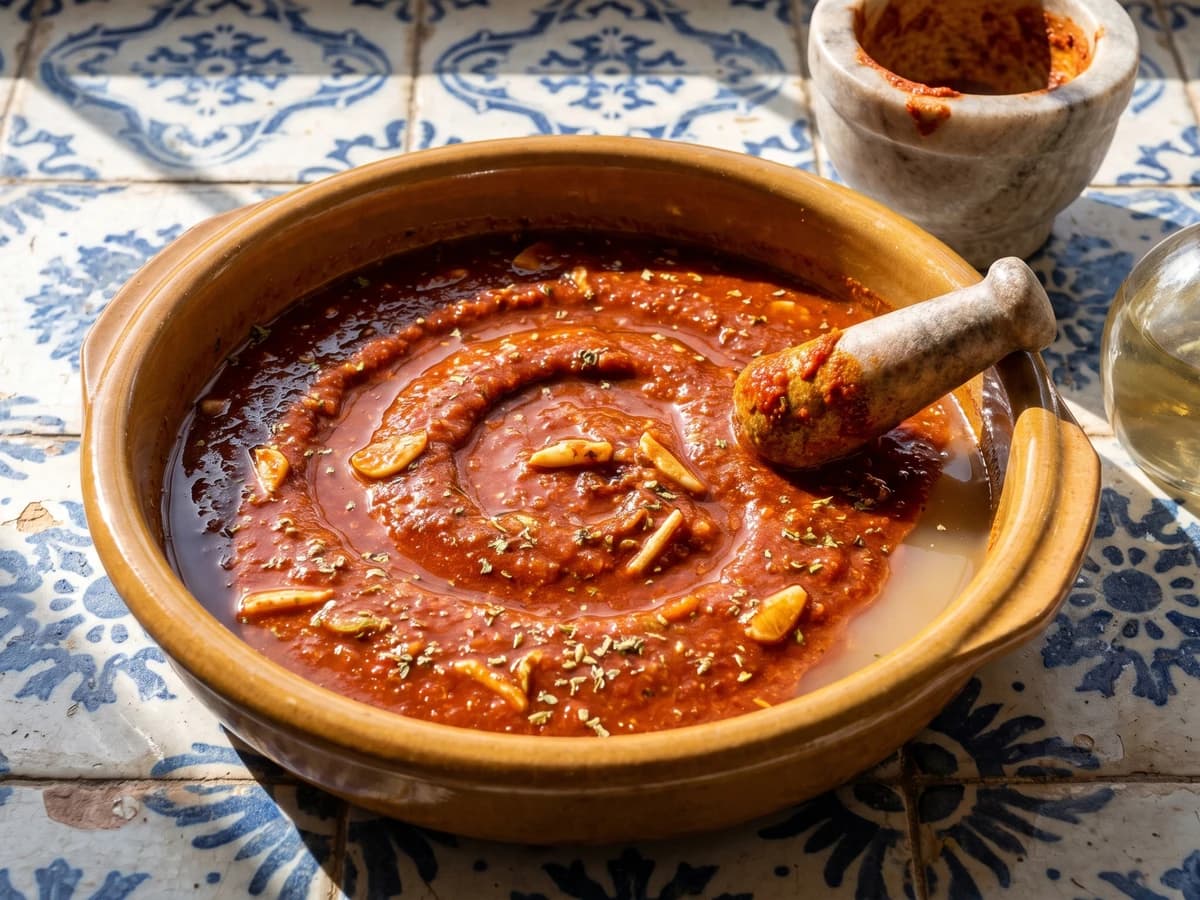
Andalucía's sharp, brick-red marinade brings vinegar, garlic, oregano, cumin and pimentón to fish and pork; pound the seasonings first, then give the acid time to carry them through.
Chef Isabel
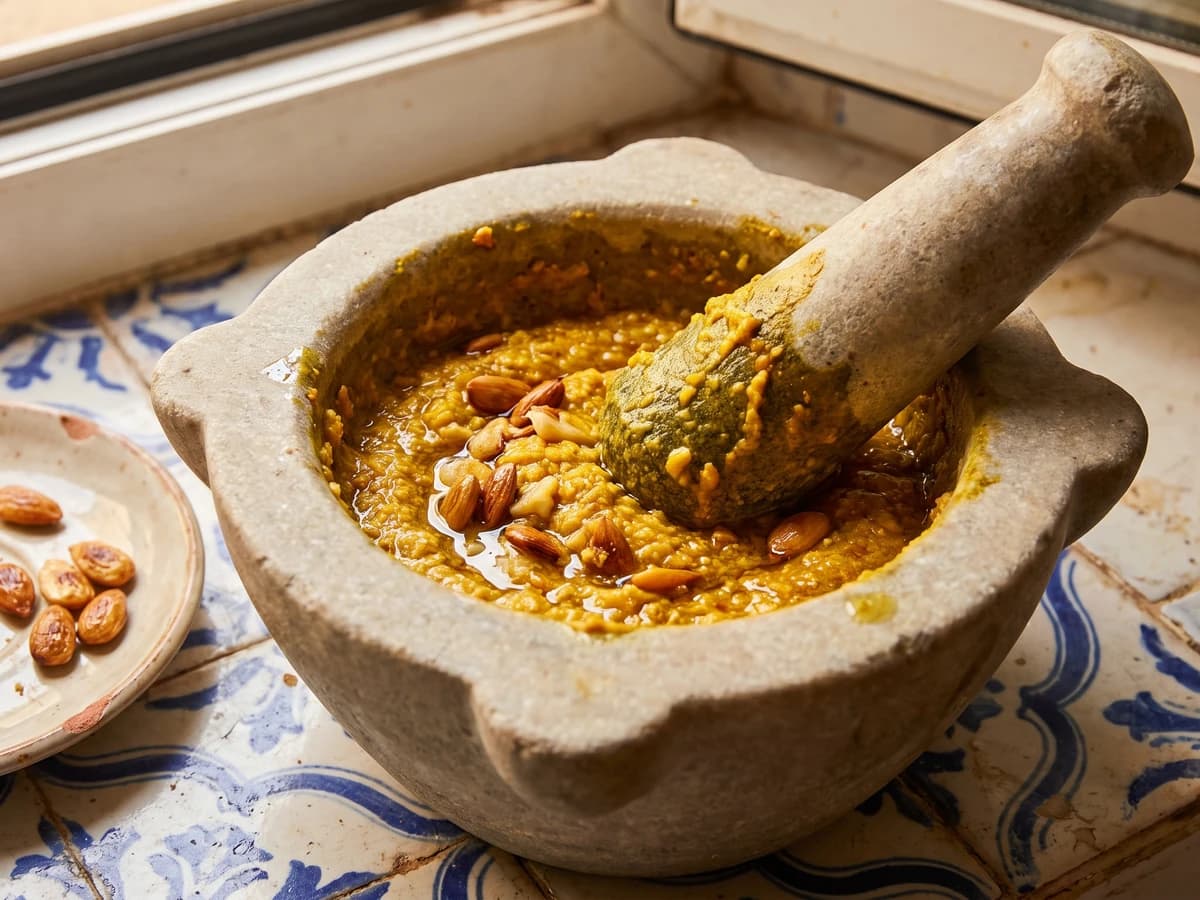
Almería's ajopollo turns fried garlic, almonds, bread and saffron into a golden mortar paste that gives modest fish and potato guisos their body, richness and unmistakable southern depth.
Chef Isabel
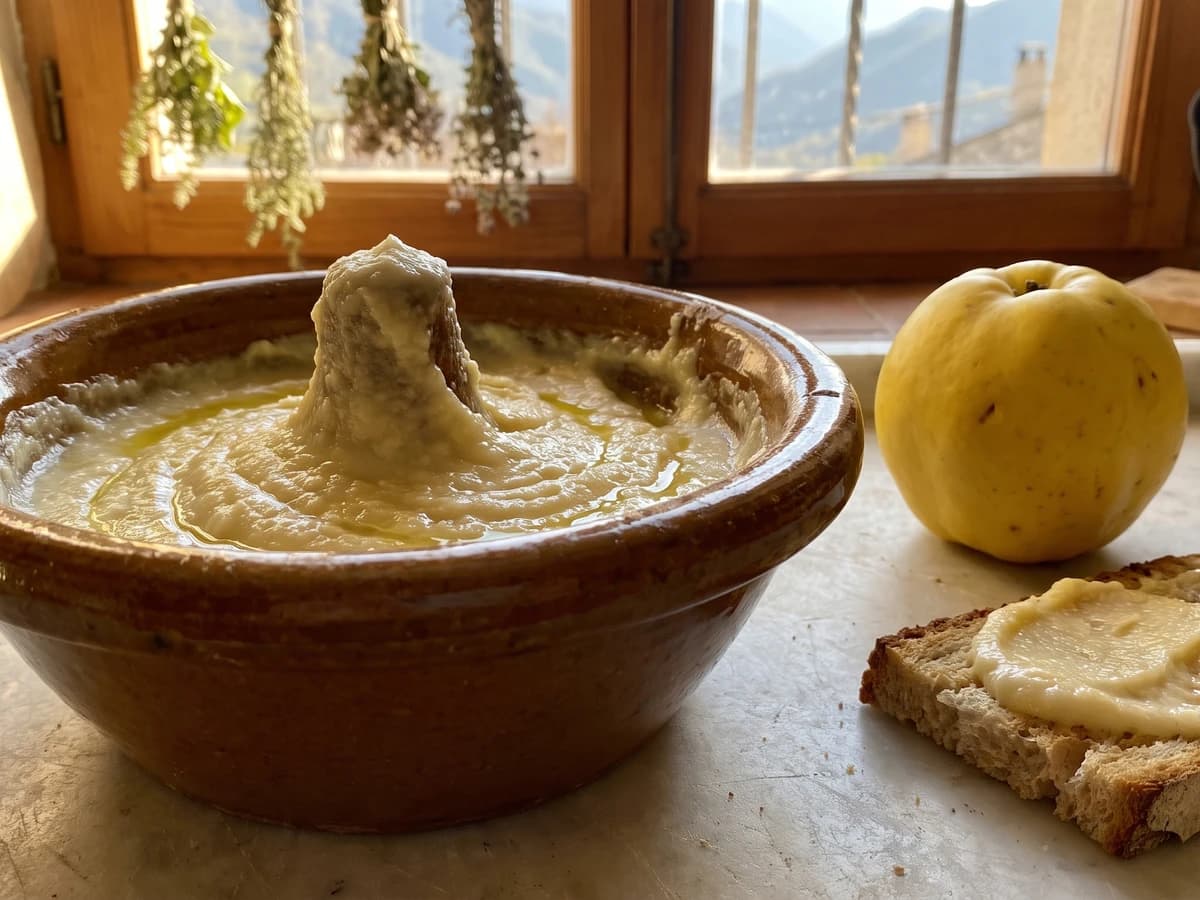
Allioli de codony belongs to the Catalan Pyrenees: boiled quince, raw garlic, salt, and olive oil worked into a thick, fragrant sauce for grilled meat, sausages, bread, and the autumn table.