Chef Isabel
Aceitunas Aliñadas Andaluzas
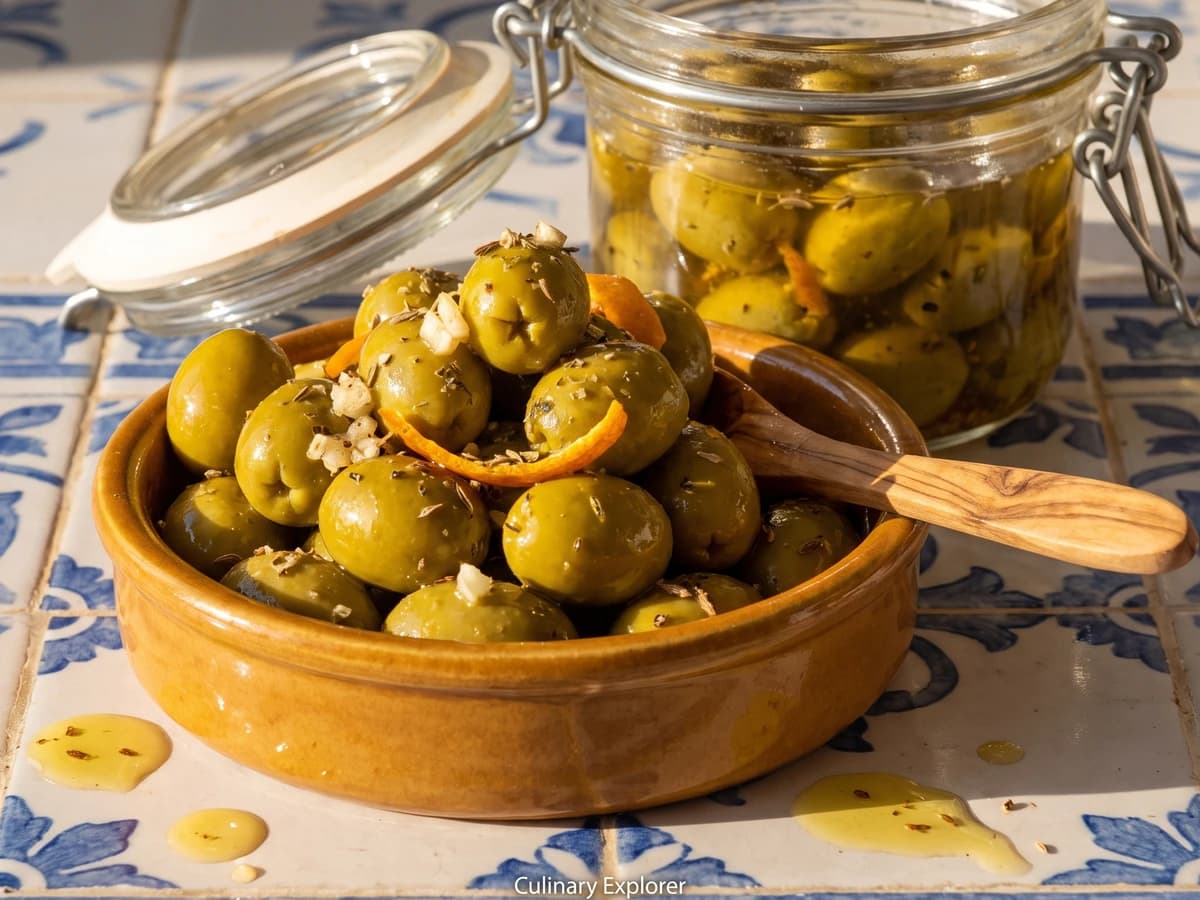
Andalucía's green olives are cracked just enough to drink in garlic, cumin, oregano and sherry vinegar, then left two days until the brine turns fragrant and every bite carries the aliño.
A cooking platform built around craft, culture, and the stories behind what we eat.
Created by
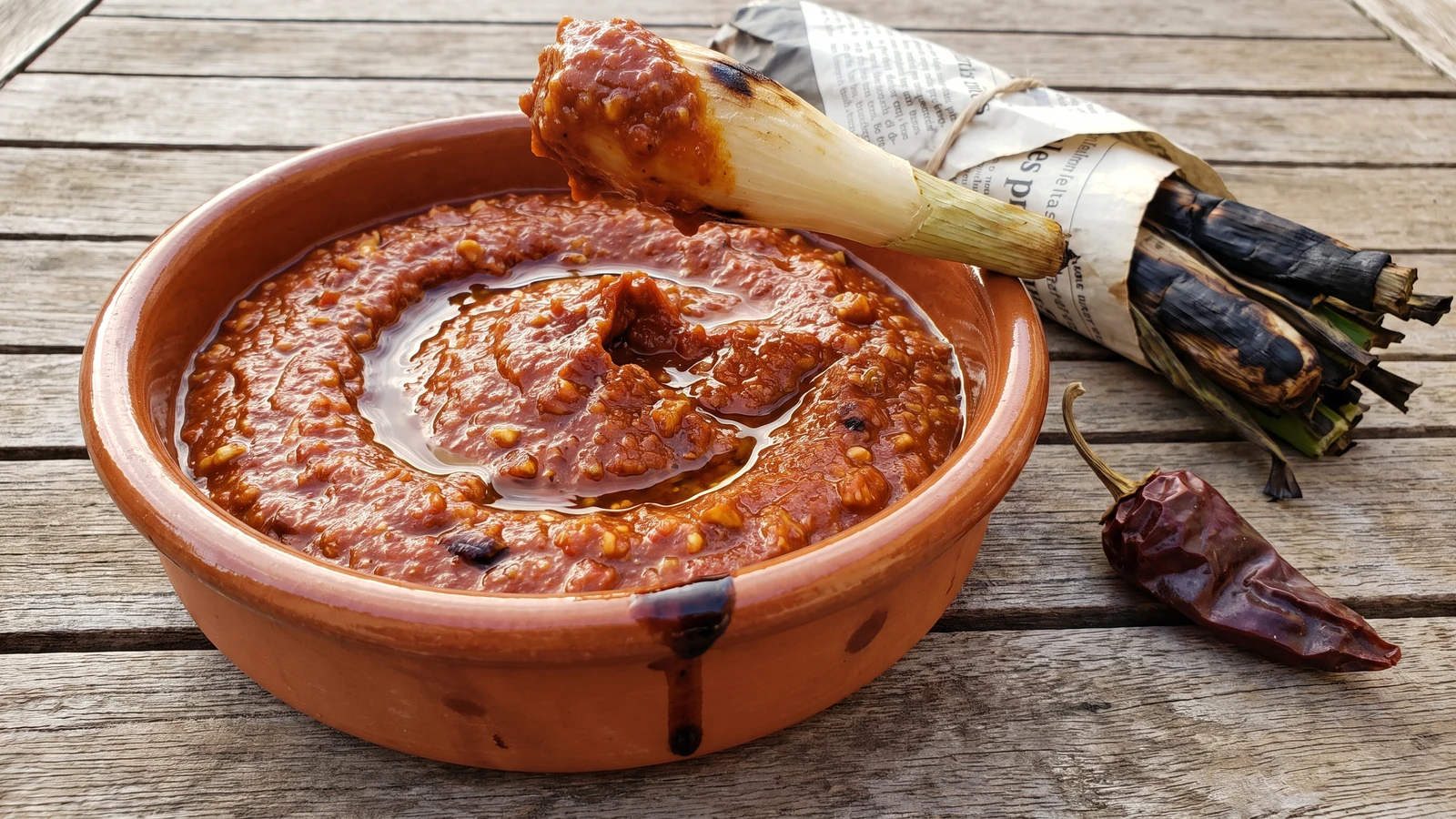
Catalonia's sauce for a calçotada, with roasted tomato and garlic, sweet ñora, toasted almonds and hazelnuts, then enough olive oil to make it loose, rough-textured and ready for dunking.
Salvitxada is Catalan, and more precisely the sauce of the calçotada around Valls in the Camp de Tarragona: roasted tomato and garlic, sweet dried ñora, toasted almonds and hazelnuts, bread, vinegar and a generous measure of olive oil. It is closely related to romesco, and households often blur the names, but this version is kept loose enough for a peeled calçot to be dragged through it and come away properly coated.
The method that decides it is the order. Pound the ñora, garlic, nuts and bread first, add the roasted tomato, then work in the oil gradually. This makes a rough, spoonable emulsion with a little grain left from the nuts. Pour everything into a blender at once and you'll get either an oily puddle or smooth nut cream. Neither belongs on a calçot.
If ñoras are hard to find, use two dried pimientos choriceros of the same total weight. Their flesh is darker and a little less sweet, so the sauce will taste earthier, but it remains a sensible Spanish-kitchen substitution. No hace falta haber pisado España. My Margin gives the consistency plainly: thick enough to cling, loose enough to drip on your shirt. Siempre sale, si lo sigues.
Salvitxada belongs to the calçotada of Valls, in Alt Camp, where calçots are laid over flames of vine prunings, wrapped to soften, then stripped of their blackened outer layers and dipped into sauce. It shares roasted peppers, nuts, bread, vinegar and oil with Tarragona's romesco, a sauce long associated with the cooking of the coast, so the names and formulas overlap from household to household. At a calçotada, its distinction is practical: it is mixed loose enough for dipping the long onion.
Quantity
4 (about 20g)
stemmed and seeded
Quantity
600g
left whole for roasting
Quantity
1 medium head (about 50g)
left whole and unpeeled
Quantity
125g
Quantity
40g
Quantity
35g
cut into thick pieces
Quantity
240ml
divided
Quantity
40ml
divided
Quantity
8g
divided
Quantity
15 to 45ml
| Ingredient | Quantity |
|---|---|
| dried ñora peppersstemmed and seeded | 4 (about 20g) |
| ripe plum tomatoesleft whole for roasting | 600g |
| garlicleft whole and unpeeled | 1 medium head (about 50g) |
| raw blanched almonds | 125g |
| raw hazelnuts | 40g |
| day-old rustic breadcut into thick pieces | 35g |
| extra virgin olive oil, preferably Arbequinadivided | 240ml |
| red wine vinegardivided | 40ml |
| fine sea saltdivided | 8g |
| cold water (optional) | 15 to 45ml |
Put the stemmed and seeded ñoras in a bowl and cover them with very hot water. Hold them below the surface with a small plate and leave them for 30 minutes. Drain, open them flat and scrape the softened red flesh from the skins with the back of a knife. Keep the flesh and discard the tough skins.
Heat the oven to 220°C, or 425°F. Set the whole tomatoes and unpeeled garlic head on a small roasting tray. Roast for 35 to 40 minutes, turning the tomatoes once, until their skins split and blacken in patches, their flesh begins to collapse and the garlic feels soft when pressed. Cool just until you can handle them. Peel and core the tomatoes over a bowl so their juices are saved, then squeeze the soft garlic from its skins.
While the vegetables roast, put the almonds and hazelnuts in a dry frying pan over medium-low heat. Toast for 5 to 7 minutes, stirring often, until golden and fragrant. Tip them out immediately. Add 15ml of the measured olive oil to the pan and fry the bread for 2 to 3 minutes, turning until crisp and golden on both sides. Let everything cool.
Pound 6g of the salt with the roasted garlic in a large mortar. Add the ñora flesh, then the toasted nuts and fried bread, working everything into a coarse picada, the pounded nut base. Add the peeled tomatoes and 35ml of the vinegar, then pound until combined but still faintly grainy. If using a food processor, pulse in the same order and stop before the nuts become a smooth paste.
Add the remaining 225ml olive oil gradually, stirring firmly with the pestle or running the processor on low. This slow addition is the step that holds the tomato, nuts and oil together while keeping the sauce rough enough for a calçot. Add 15ml cold water and mix. If it does not fall from a spoon in a heavy ribbon, add more water 15ml at a time, using no more than 45ml altogether.
Leave the salvitxada covered at room temperature for 30 minutes so the ñora, garlic and vinegar settle into the nuts. Stir well, then taste with a piece of bread or, better, a grilled calçot. Add the reserved 5ml vinegar if it tastes heavy, and up to the remaining 2g salt if needed. Serve at room temperature in a wide bowl for dunking.
1 serving (about 85g)
Culinary guides, cultural storytelling, and the editorial depth that makes cooking meaningful.
Discover Culinary ExplorerChef Isabel
Andalucía's green olives are cracked just enough to drink in garlic, cumin, oregano and sherry vinegar, then left two days until the brine turns fragrant and every bite carries the aliño.
Chef Isabel
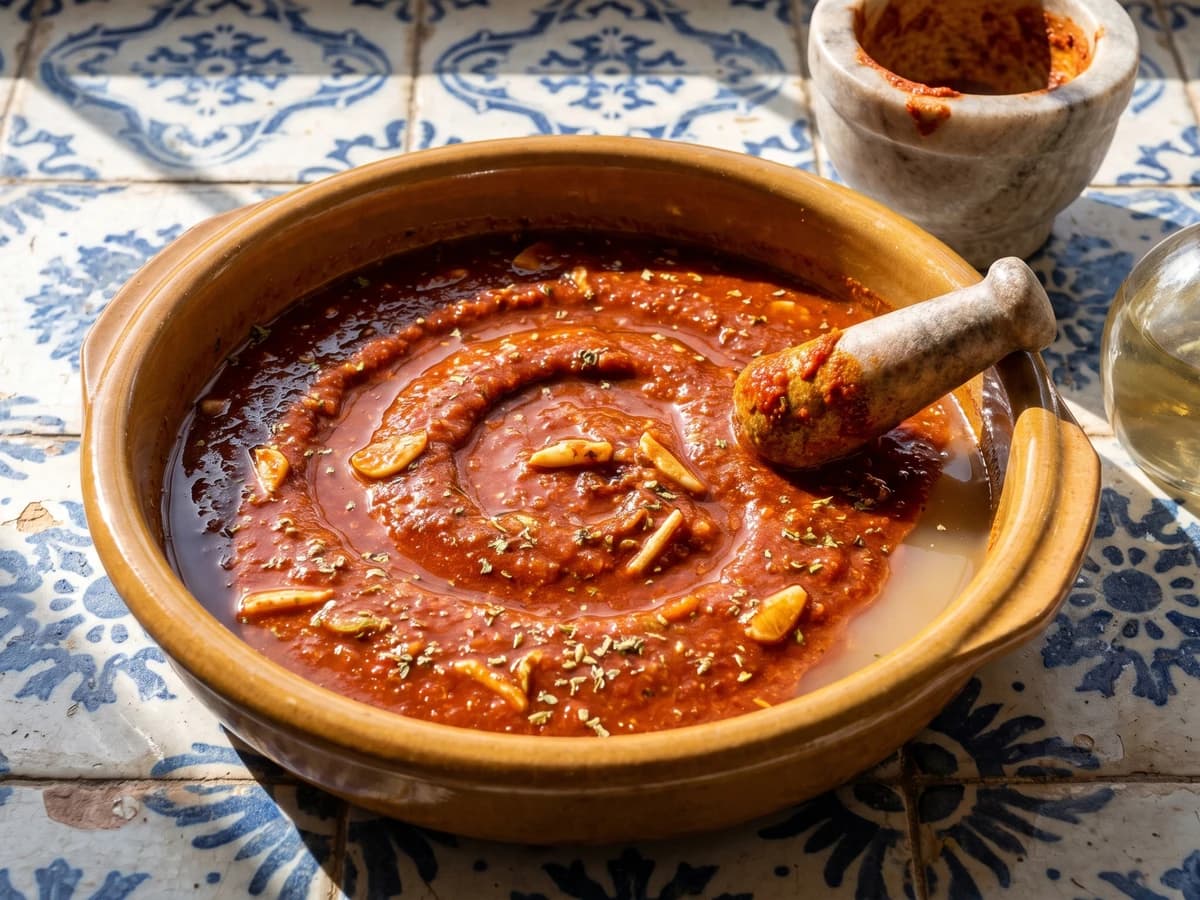
Andalucía's sharp, brick-red marinade brings vinegar, garlic, oregano, cumin and pimentón to fish and pork; pound the seasonings first, then give the acid time to carry them through.
Chef Isabel
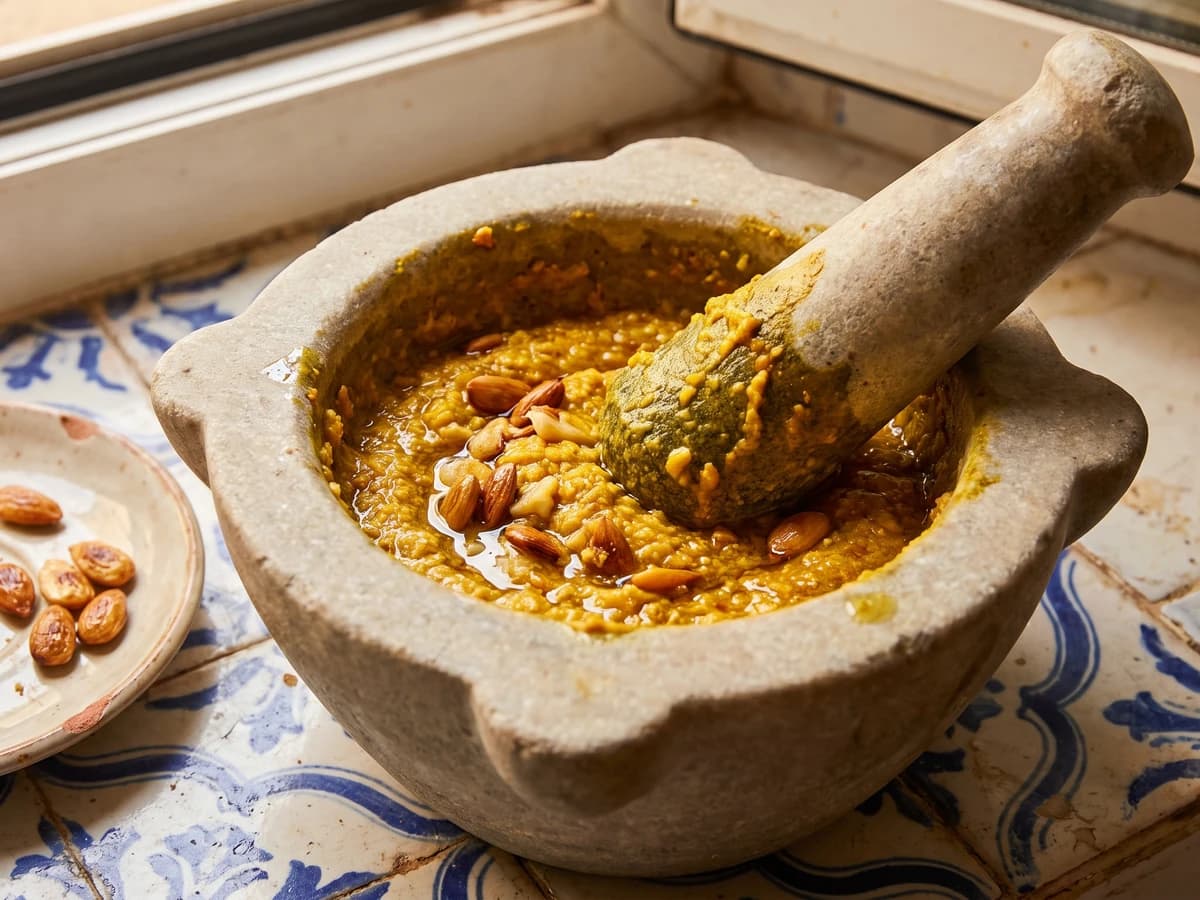
Almería's ajopollo turns fried garlic, almonds, bread and saffron into a golden mortar paste that gives modest fish and potato guisos their body, richness and unmistakable southern depth.
Chef Isabel
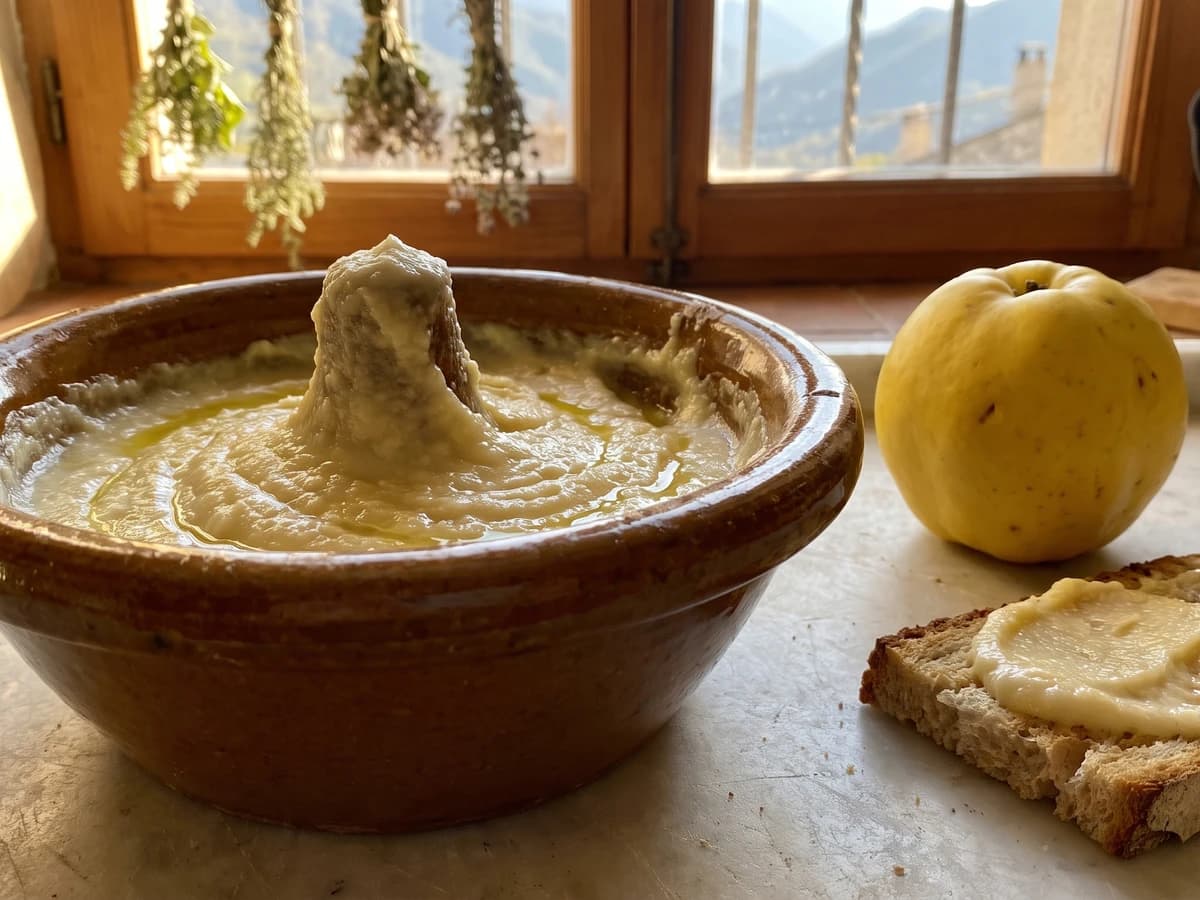
Allioli de codony belongs to the Catalan Pyrenees: boiled quince, raw garlic, salt, and olive oil worked into a thick, fragrant sauce for grilled meat, sausages, bread, and the autumn table.