Chef Isabel
Aceitunas Aliñadas Andaluzas
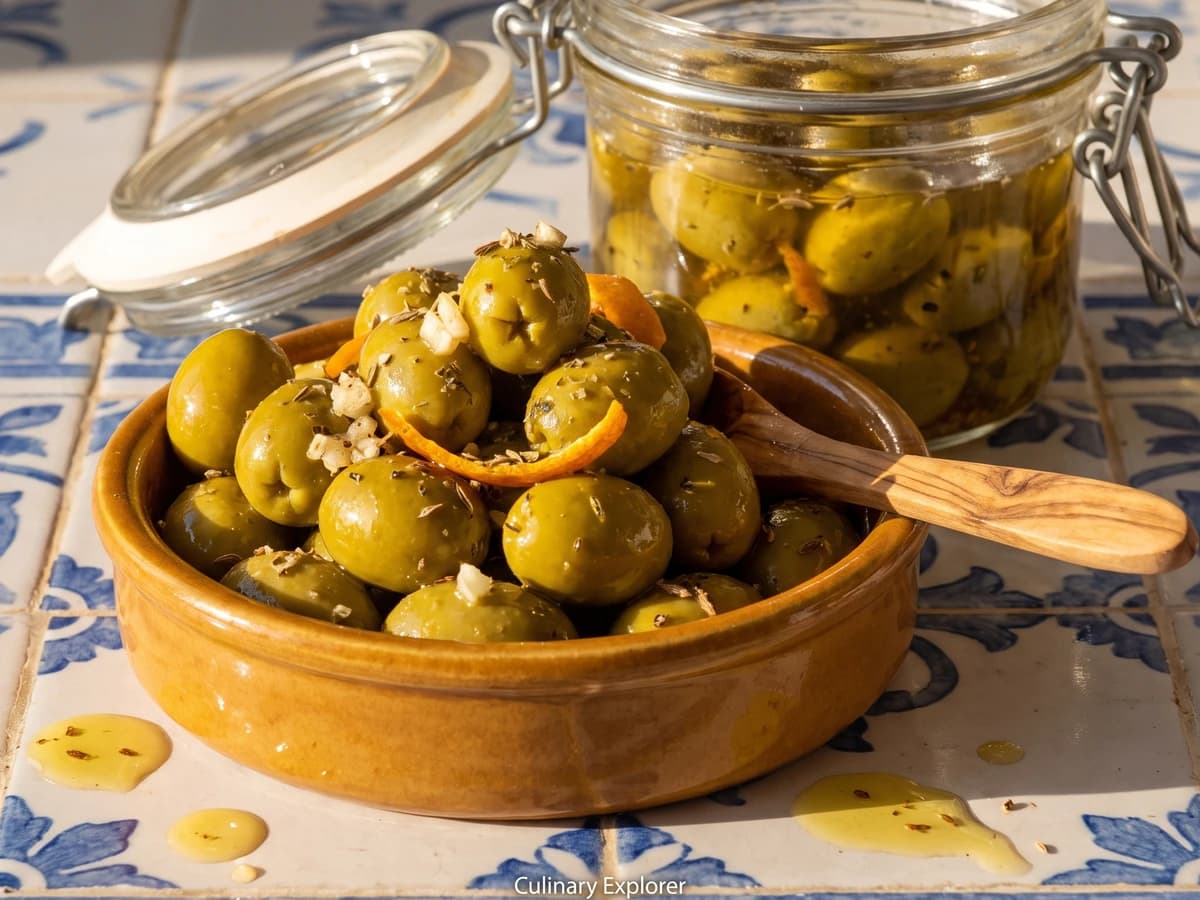
Andalucía's green olives are cracked just enough to drink in garlic, cumin, oregano and sherry vinegar, then left two days until the brine turns fragrant and every bite carries the aliño.
A cooking platform built around craft, culture, and the stories behind what we eat.
Created by
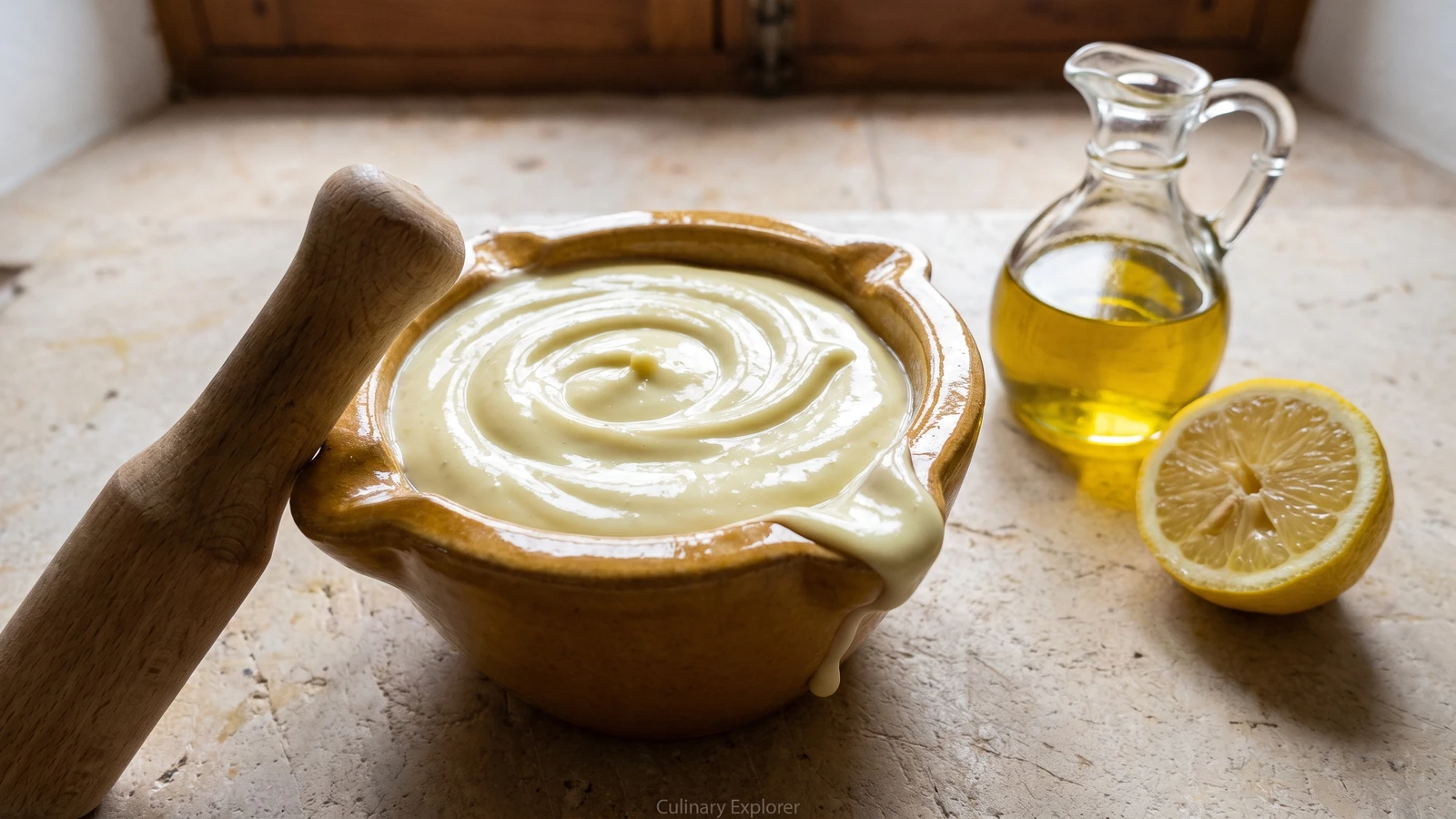
Mahonesa belongs to Menorca: egg yolk and mild olive oil worked into a pale, glossy sauce, with the first oil added drop by drop so the emulsion holds.
Salsa mahonesa is Menorca's pale emulsion of egg yolk and olive oil, sharpened with lemon and salt. It is smooth, glossy, and mild enough to sit beside fish, potatoes, vegetables, and cold meats. There is no garlic here. Add it and you've walked into the territory of allioli, another sauce.
The first spoonful of oil decides it. I beat that oil into the yolk by drops, waiting until each one disappears before adding the next. That slow beginning builds the emulsion, giving the rest of the oil somewhere to settle. Once the sauce is thick and holding its shape, you may pour in a thread. Not before.
Use fresh, mild olive oil. A fiercely bitter oil will make a fiercely bitter mahonesa, and no amount of beating can argue with it. If good mild olive oil is difficult to find where you are, use equal parts mild olive oil and sunflower oil, as many Spanish home kitchens do. The sauce will be paler and more neutral, with less of Menorca's olive character, but it will still be sound. No hace falta haber pisado España.
My Margin carries one correction beside this sauce: "too fast, begin again with one yolk." A split mahonesa is not lost. Beat it slowly into a fresh yolk and it comes back together. Pésalo, no lo adivines, and keep the oil thread fine.
Mahonesa is linked by name to Mahón, Menorca's great port, and a familiar account says the sauce travelled to France after the Duke of Richelieu captured the town in 1756. The surviving record does not settle whether the sauce was first made there or whether its French name arose another way, so its precise birthplace remains disputed. In Spain both mahonesa and mayonesa are used, but the spelling with an h keeps Mahón's claim in plain sight.
Quantity
1 (about 20g)
very fresh or pasteurized, at room temperature
Quantity
200ml
at room temperature
Quantity
10ml
strained and divided
Quantity
2g
Quantity
5ml
for loosening
| Ingredient | Quantity |
|---|---|
| large egg yolkvery fresh or pasteurized, at room temperature | 1 (about 20g) |
| mild extra virgin olive oilat room temperature | 200ml |
| fresh lemon juicestrained and divided | 10ml |
| fine sea salt | 2g |
| lukewarm water (optional)for loosening | 5ml |
Bring the yolk, oil, and lemon juice to the same cool room temperature. Set a clean, completely dry mortar or narrow bowl on a folded cloth so it cannot move. Water left in the bowl and a cold yolk make the first emulsion less dependable.
Put the yolk, 5ml of the lemon juice, and the salt in the mortar or bowl. Work them together for 30 seconds, using steady circles with the pestle or brisk strokes with the whisk, until the yolk looks smooth and slightly thickened.
Add the first 30ml of oil one drop at a time while beating continuously. Do not add the next drop until the last has disappeared. This beginning decides the sauce: it builds the structure that holds all the oil to come. Rush it now and you will have oil beside yolk, not mahonesa.
When the mixture is visibly thick, glossy, and clinging to the pestle or whisk, add the oil in a very thin, steady thread while you keep beating. After about 100ml of oil has gone in, beat in the remaining 5ml lemon juice, then continue with the rest of the oil. The finished mahonesa should hold soft ridges without feeling stiff.
Taste the mahonesa. If it is thicker than you want, beat in 5ml lukewarm water. Transfer it at once to a clean covered container and refrigerate until needed. Serve it with boiled or fried potatoes, fish, shellfish, vegetables, or cold meats. Siempre sale, si lo sigues.
1 serving (about 27g)
Culinary guides, cultural storytelling, and the editorial depth that makes cooking meaningful.
Discover Culinary ExplorerChef Isabel
Andalucía's green olives are cracked just enough to drink in garlic, cumin, oregano and sherry vinegar, then left two days until the brine turns fragrant and every bite carries the aliño.
Chef Isabel
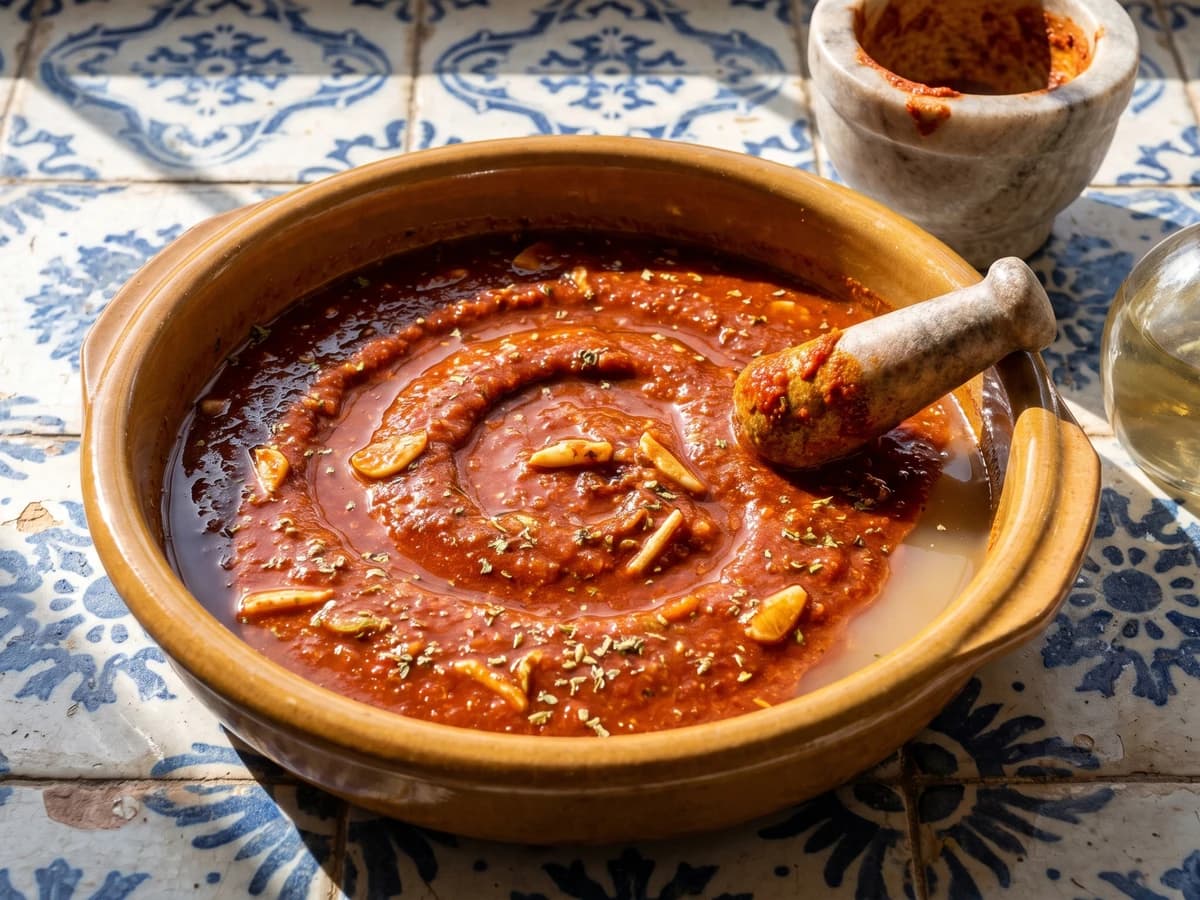
Andalucía's sharp, brick-red marinade brings vinegar, garlic, oregano, cumin and pimentón to fish and pork; pound the seasonings first, then give the acid time to carry them through.
Chef Isabel
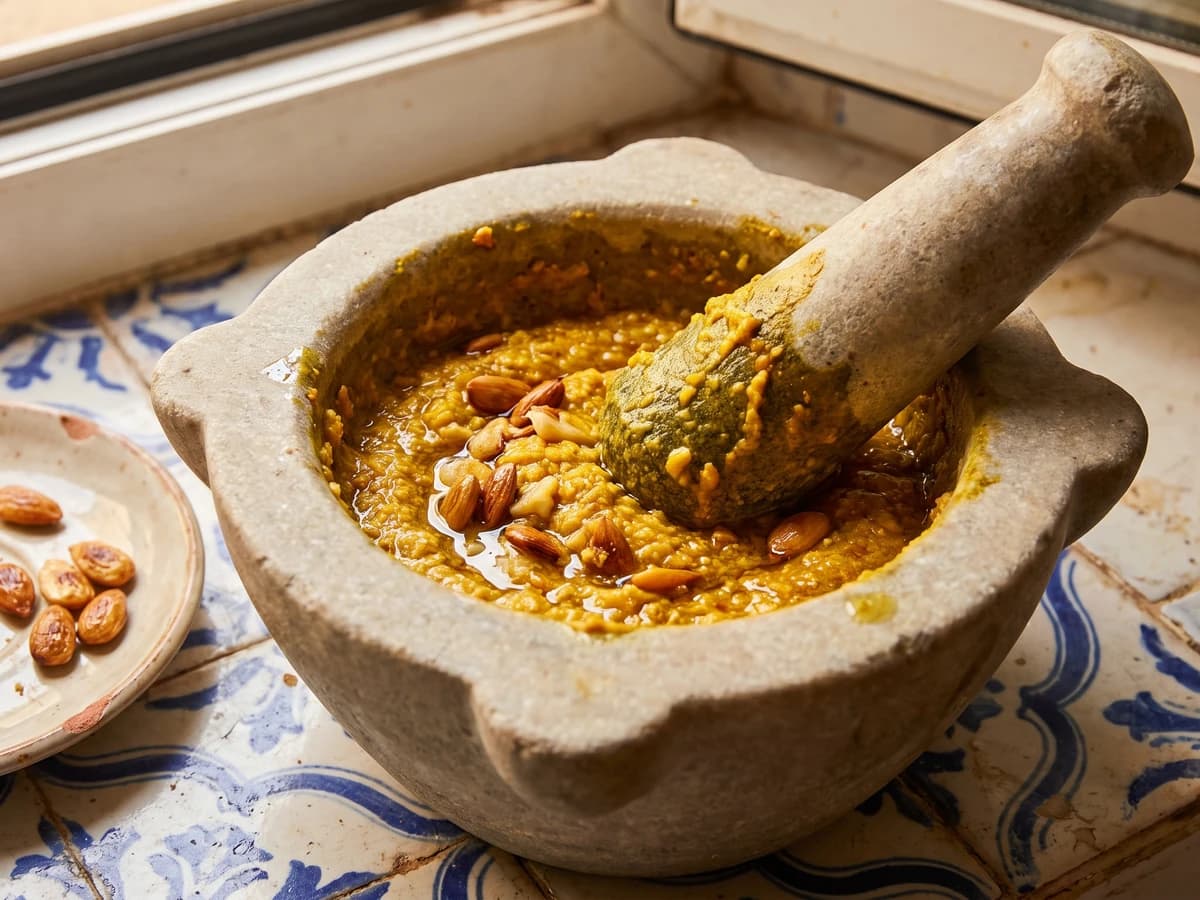
Almería's ajopollo turns fried garlic, almonds, bread and saffron into a golden mortar paste that gives modest fish and potato guisos their body, richness and unmistakable southern depth.
Chef Isabel
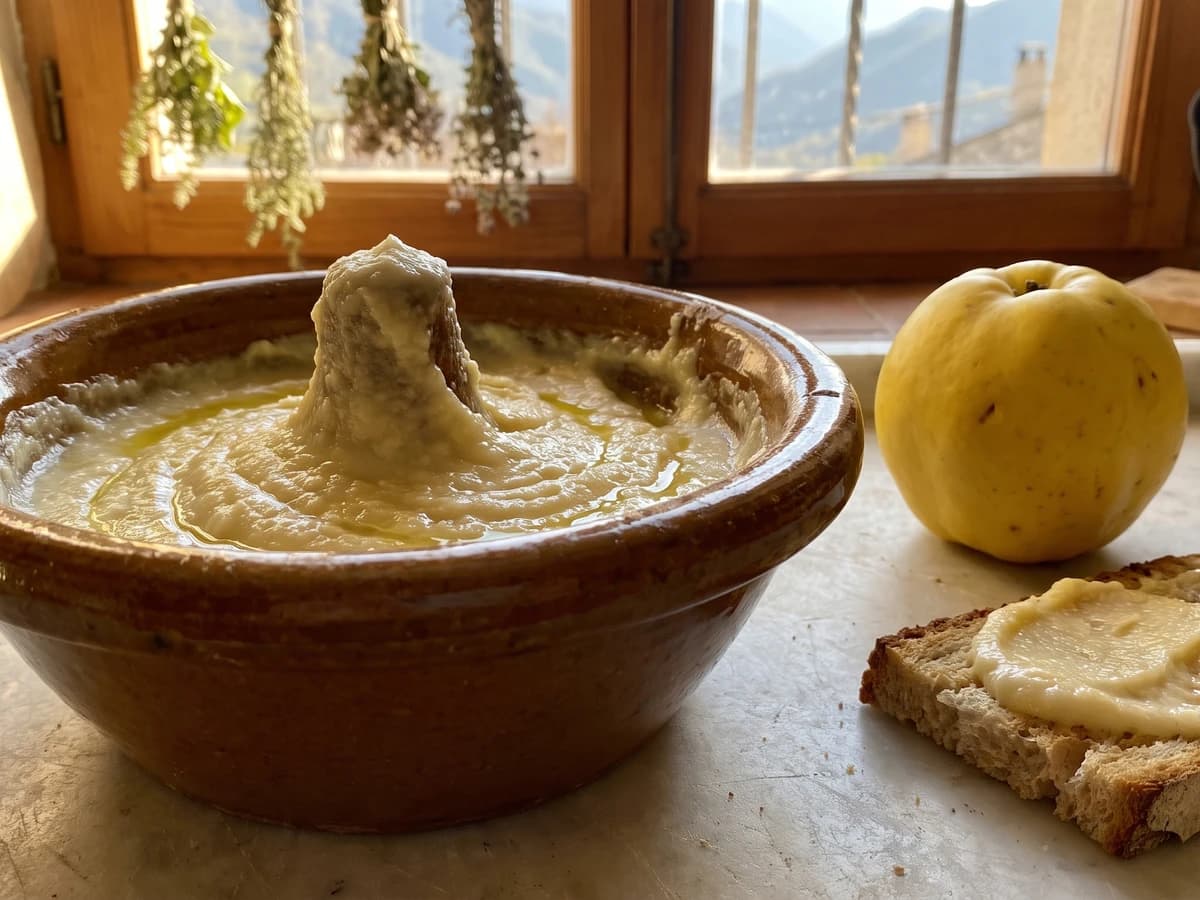
Allioli de codony belongs to the Catalan Pyrenees: boiled quince, raw garlic, salt, and olive oil worked into a thick, fragrant sauce for grilled meat, sausages, bread, and the autumn table.