Chef Isabel
Aceitunas Aliñadas Andaluzas
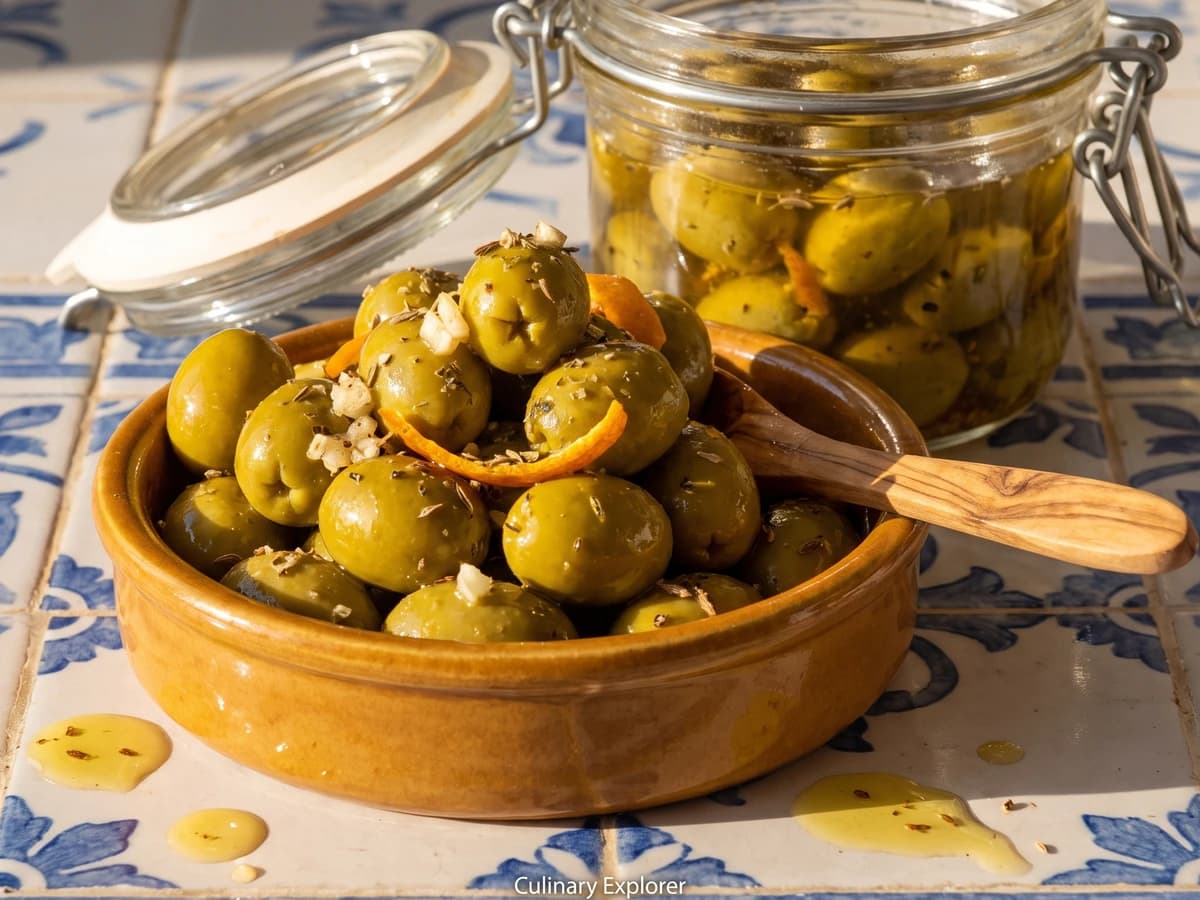
Andalucía's green olives are cracked just enough to drink in garlic, cumin, oregano and sherry vinegar, then left two days until the brine turns fragrant and every bite carries the aliño.
A cooking platform built around craft, culture, and the stories behind what we eat.
Created by
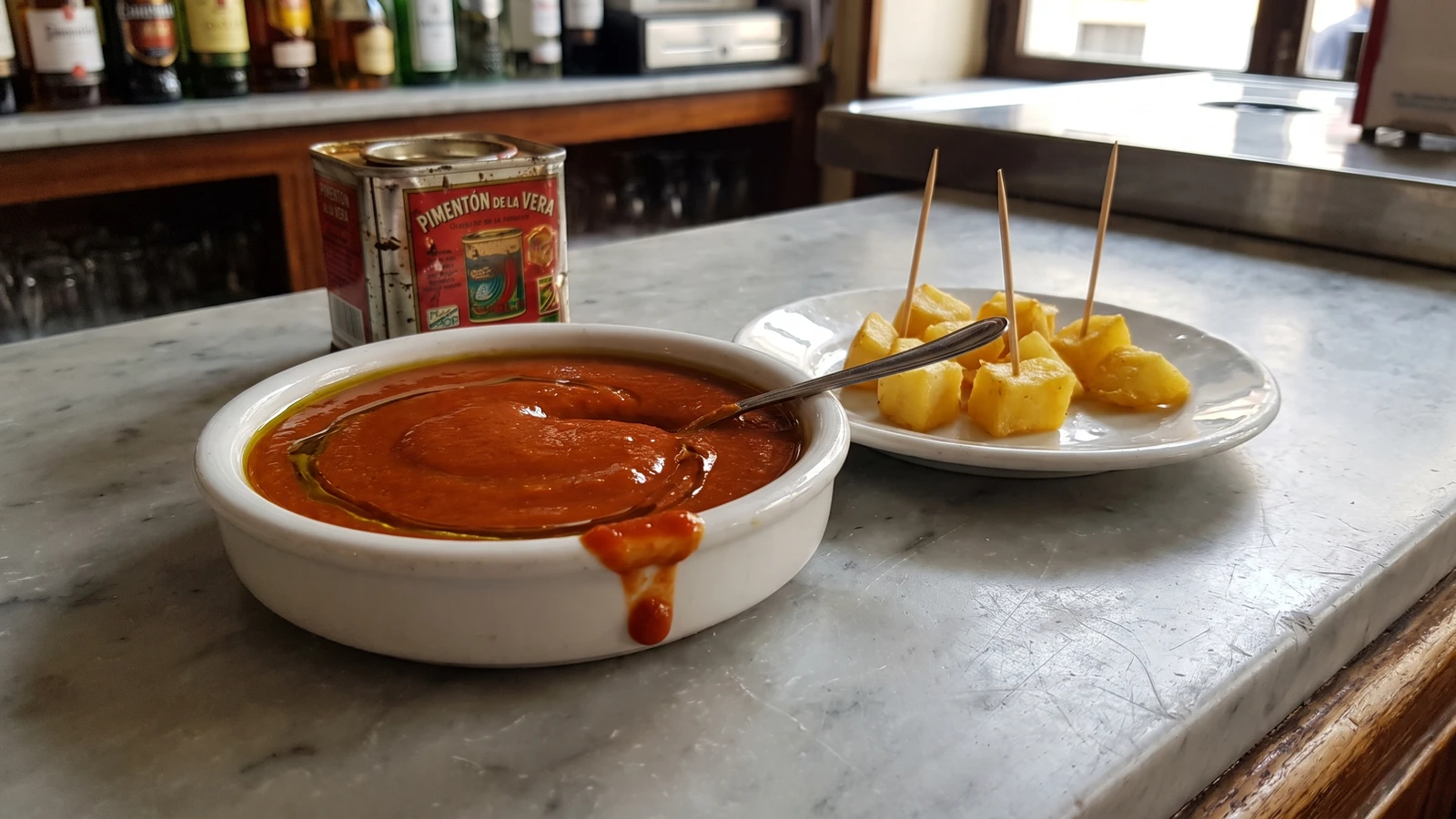
Madrid’s brick-red bar sauce gets its body from a pale flour base and its clean heat from sweet and hot pimentón. No tomato, no ketchup, and no mystery once the whisk starts.
Salsa brava is Madrid’s brick-red bar sauce, a smooth pimentón gravy made to cling to rough cubes of fried potato. What makes the madrileña sauce itself is not tomato, and certainly not ketchup, but olive oil, flour, light broth, and the measured heat of pimentón dulce and picante. It should pour in a ribbon and bite cleanly, not sit on the potato like paste.
The flour decides whether it works. I cook it gently in the oil until it loses its chalky smell and turns pale straw, then take the pan off the heat before adding the pimentón. The flour needs several minutes. The pepper needs seconds. Scorch the pimentón and the whole pan tastes bitter, however much broth you add afterward.
No hace falta haber pisado España. If hot Spanish pimentón is difficult to find, replace it with another 4g of sweet pimentón and 0.5g cayenne. The heat will be sharper and less rounded, but the sauce will still serve you well. The Margin beside mine says only this: toast the flour, not the pepper. Siempre sale, si lo sigues.
Patatas bravas belong to Madrid’s tabernas, where bars including Casa Pellico and La Casona became known for fried potato chunks under a fierce red sauce. Bar formulas were closely guarded and never perfectly uniform, but one old Madrid family of brava is a pimentón-thickened broth with no tomato, quite different from the tomato-based sauces found elsewhere. In Catalonia the potatoes often arrive with allioli as well as a red sauce, which is a regional serving custom rather than the Madrid plate.
Quantity
45ml
Quantity
25g
Quantity
8g
Quantity
4g
Quantity
350ml
warmed
Quantity
10ml
Quantity
3g
| Ingredient | Quantity |
|---|---|
| mild extra virgin olive oil | 45ml |
| plain wheat flour | 25g |
| pimentón dulce (sweet Spanish paprika), preferably de la Vera | 8g |
| pimentón picante (hot Spanish paprika), preferably de la Vera | 4g |
| unsalted light chicken stockwarmed | 350ml |
| vinagre de Jerez (sherry vinegar) | 10ml |
| fine sea salt | 3g |
Warm the chicken stock in a small pan or jug until it feels hot but is not boiling. Warm stock joins the flour base smoothly; cold stock tightens it at once and leaves you chasing lumps.
Put the olive oil and flour in a light-coloured saucepan over medium-low heat. Whisk constantly for 3 to 4 minutes, scraping into the corners, until the mixture is smooth, pale straw-coloured, and smells faintly of toasted biscuit rather than raw flour. Do not let it turn brown.
Take the saucepan off the heat and wait 30 seconds. Add both pimentóns and whisk for no more than 10 seconds, just until the oil turns a deep brick red and the pepper smells warm and sweet. Do not put the pan back over the heat yet. Pimentón burns quickly, and burnt pimentón stays bitter.
Pour in about 100ml of the warm stock in a thin stream, whisking without stopping until you have a smooth red paste. Add the remaining stock in three additions, whisking each one smooth before the next. Return the pan to low heat and hold it at a gentle simmer for 6 to 8 minutes, stirring often, until the sauce coats the back of a spoon but still pours freely.
Whisk in the sherry vinegar and salt, then simmer for 1 final minute. The finished sauce should fall from the spoon in a broad ribbon and slowly level itself in the bowl. If it is too thick, whisk in 15ml warm water at a time. Pass it through a fine sieve only if you have lumps, then spoon it warm over freshly fried potatoes.
1 serving (about 60g)
Culinary guides, cultural storytelling, and the editorial depth that makes cooking meaningful.
Discover Culinary ExplorerChef Isabel
Andalucía's green olives are cracked just enough to drink in garlic, cumin, oregano and sherry vinegar, then left two days until the brine turns fragrant and every bite carries the aliño.
Chef Isabel
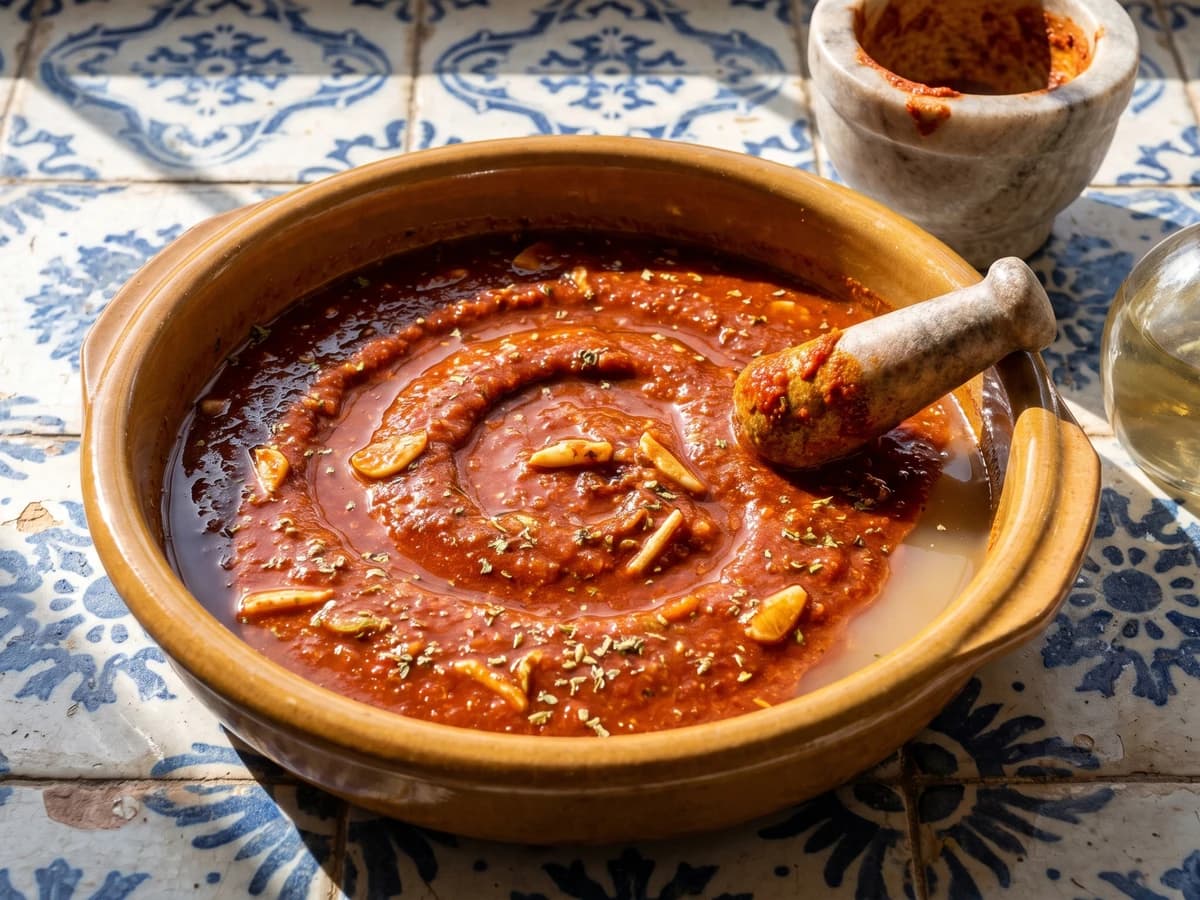
Andalucía's sharp, brick-red marinade brings vinegar, garlic, oregano, cumin and pimentón to fish and pork; pound the seasonings first, then give the acid time to carry them through.
Chef Isabel
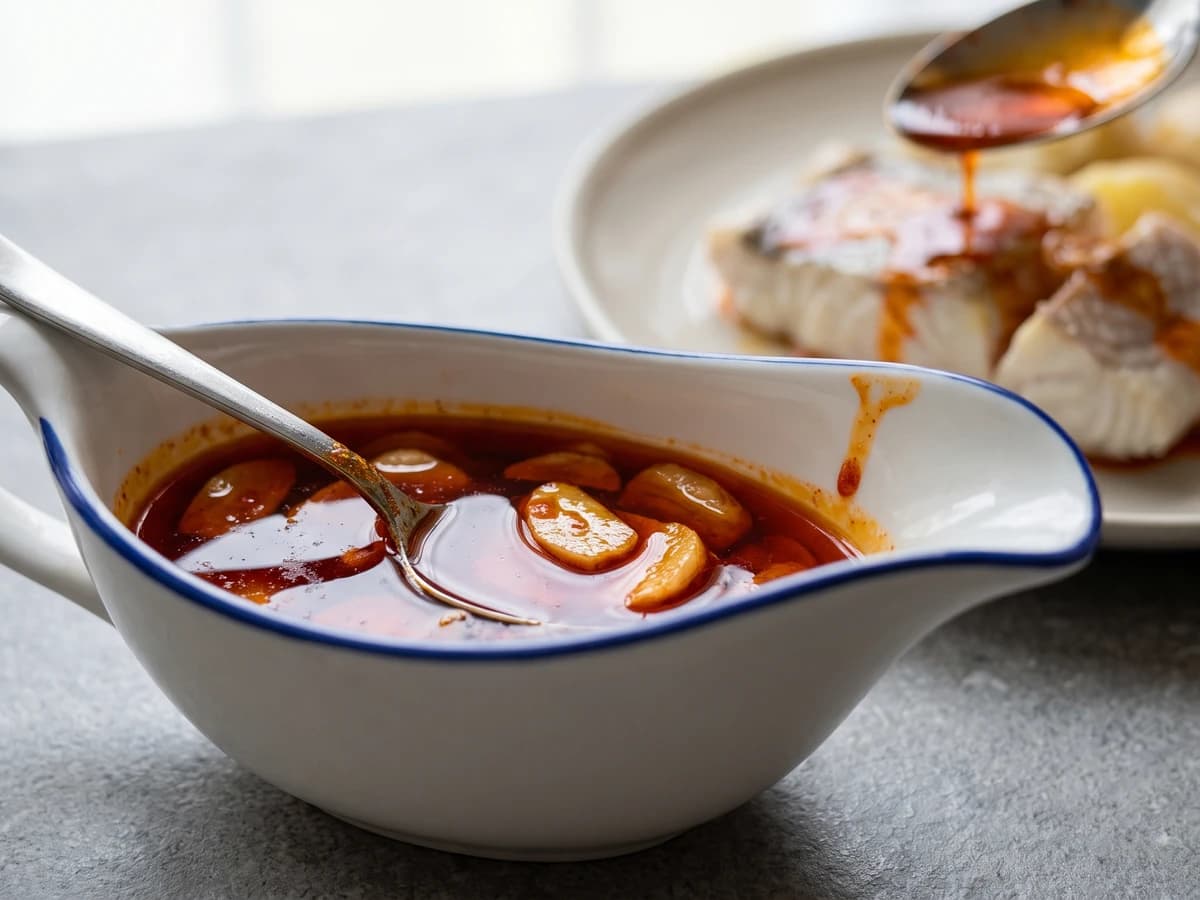
Ajada gallega is Galicia's quick garlic and pimentón refrito for boiled fish, octopus, vegetables and cachelos, with the paprika stirred in off the heat so its red oil stays sweet, never bitter.
Chef Isabel
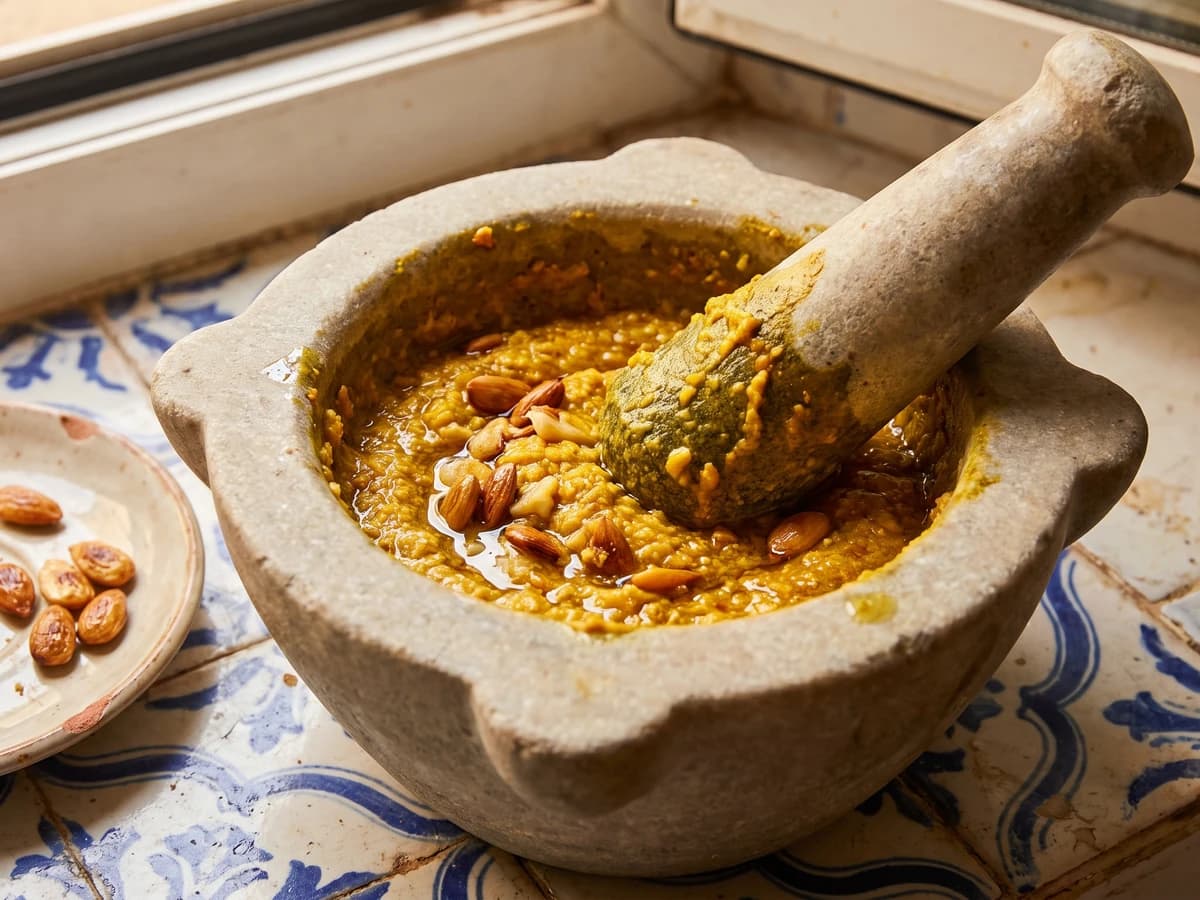
Almería's ajopollo turns fried garlic, almonds, bread and saffron into a golden mortar paste that gives modest fish and potato guisos their body, richness and unmistakable southern depth.