Chef Isabel
Aceitunas Aliñadas Andaluzas
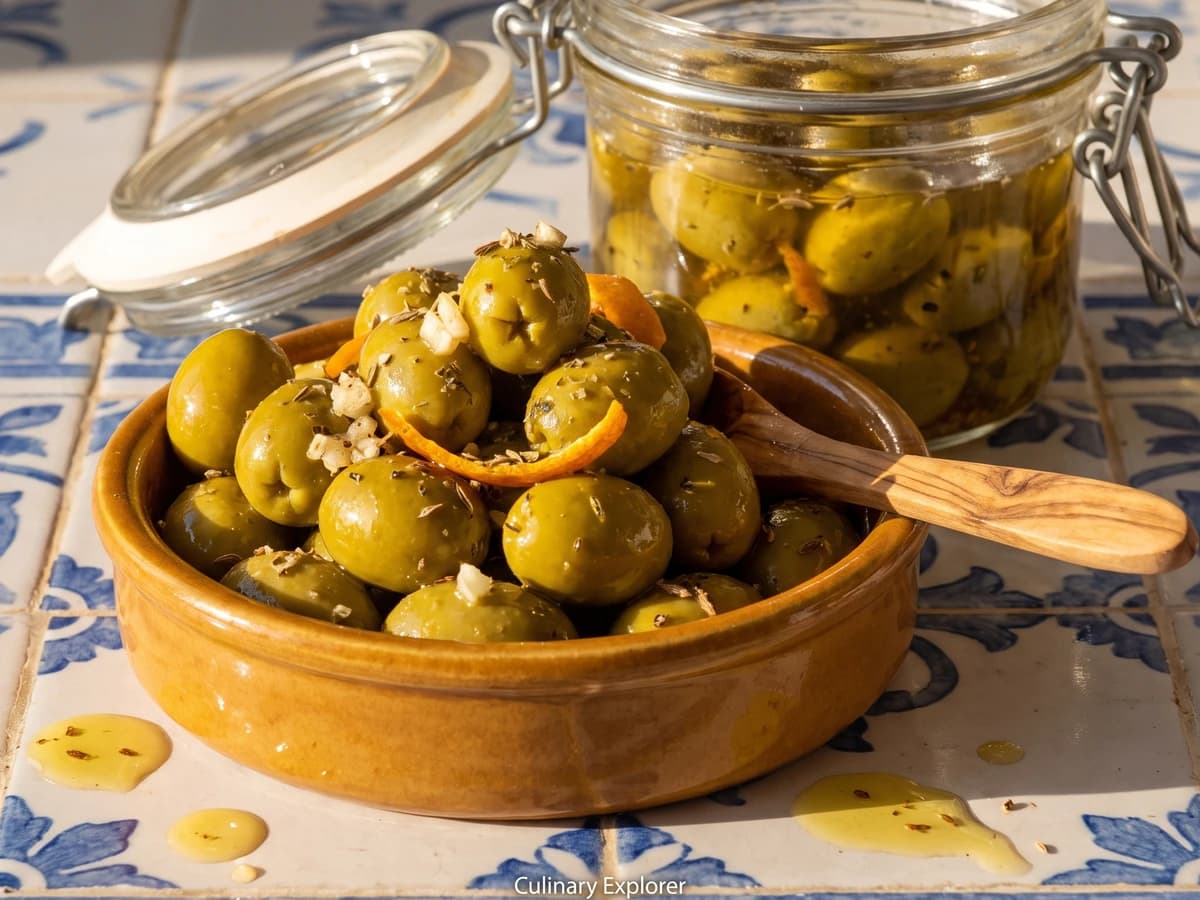
Andalucía's green olives are cracked just enough to drink in garlic, cumin, oregano and sherry vinegar, then left two days until the brine turns fragrant and every bite carries the aliño.
A cooking platform built around craft, culture, and the stories behind what we eat.
Created by
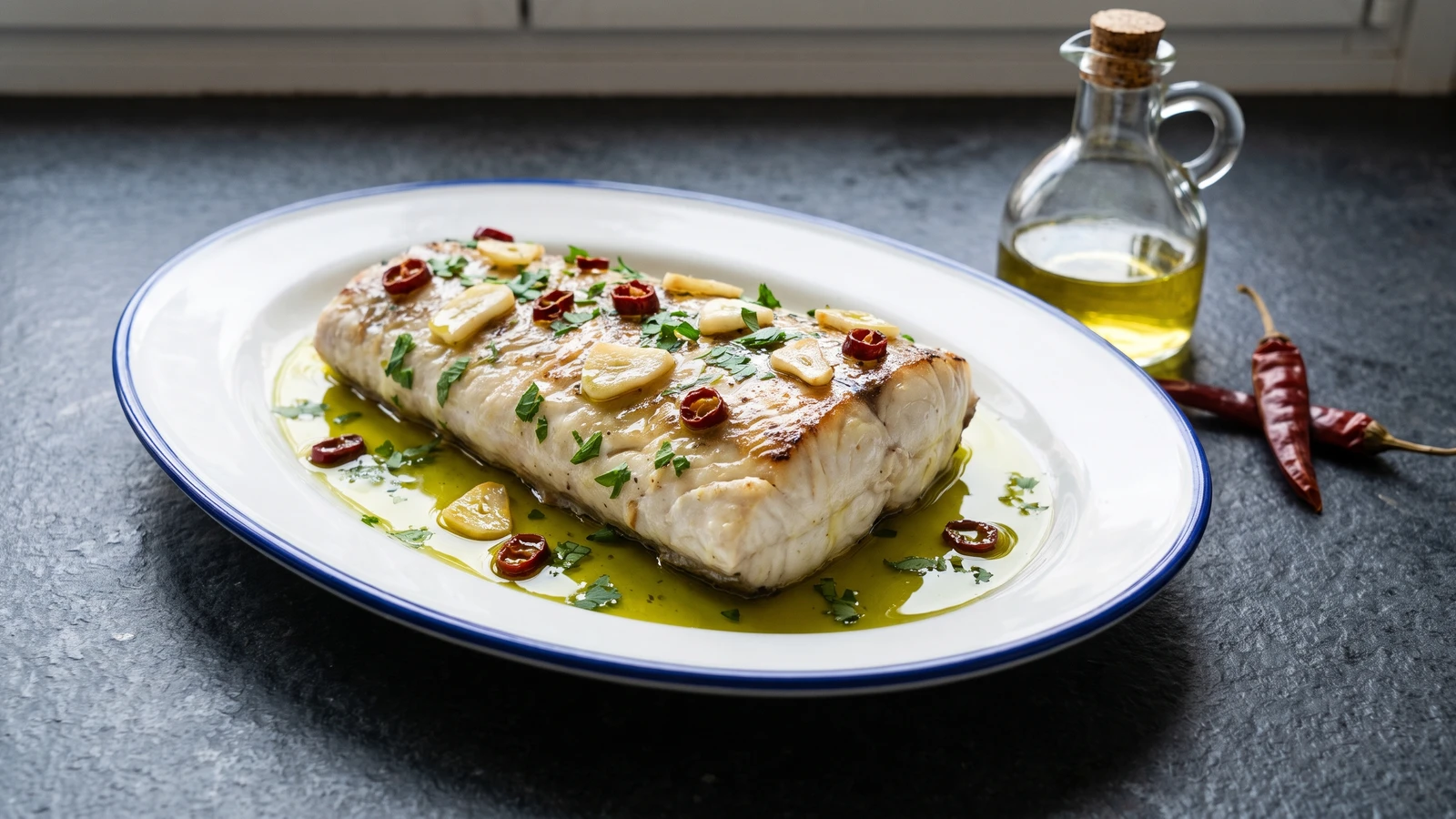
Salsa bilbaína is the Basque Country's quick answer for white fish: garlic and guindilla turned pale gold in olive oil, then brightened with vinegar off the heat.
Salsa bilbaína belongs to the Basque Country: a clear, hot dressing of olive oil, sliced garlic, dried guindilla, and wine vinegar laid over fish the moment it leaves the pan or oven. It is quick where pil-pil is slow, but the two aren't interchangeable. Pil-pil depends on fish gelatin worked into an emulsion; bilbaína stays loose, glossy, and sharp.
I start the garlic and guindilla in cold oil, then bring the heat up gently. That is the method that decides it. The garlic must reach pale gold and no darker, because it carries on cooking after the pan leaves the fire. Wait 20 seconds, add the vinegar off the heat, and stand back from the splutter. The Margin beside mine says only: gold, then vinegar. It is enough.
If Basque guindilla seca is nowhere near you, use one small dried cayenne. It will be a little fiercer but the sauce remains itself. A mild cider vinegar can replace the white wine vinegar and gives a rounder, fruitier edge. No hace falta haber pisado España. You need good oil, firm fresh garlic, and five attentive minutes. Siempre sale, si lo sigues.
Salsa bilbaína belongs to the coastal cooking of Bilbao and Bizkaia, where hake, sea bream, cod, and other fish were finished with a hot refrito of olive oil, garlic, dried guindilla, and vinegar. It shares its larder with pil-pil but not its method: pil-pil uses the fish's gelatin to bind oil into a sauce, while bilbaína remains a loose, sharp dressing. With fish cooked a la espalda, the dressing and the collected fish juices may pass through the pan in tres vuelcos, three turns, before returning to the platter.
Quantity
100ml
Quantity
20g (4 to 5 cloves)
sliced evenly, 1 to 2mm thick
Quantity
1 small (about 0.5g)
stemmed and sliced into rings
Quantity
15ml (1 tablespoon)
Quantity
1g (about 1/4 teaspoon)
Quantity
5g
finely chopped
| Ingredient | Quantity |
|---|---|
| extra virgin olive oil | 100ml |
| garlicsliced evenly, 1 to 2mm thick | 20g (4 to 5 cloves) |
| dried red guindilla or small dried cayennestemmed and sliced into rings | 1 small (about 0.5g) |
| white wine vinegar | 15ml (1 tablespoon) |
| fine sea salt | 1g (about 1/4 teaspoon) |
| flat-leaf parsley (optional)finely chopped | 5g |
Slice the garlic into even rounds, 1 to 2mm thick, so every piece cooks at the same pace. Stem the dried guindilla and cut it into small rings. Measure the vinegar before the pan goes on; once the garlic colours, this sauce waits for nobody.
Put the olive oil, garlic, and guindilla in a cold 18 to 20cm frying pan. Set it over medium-low heat and cook for 3 to 5 minutes, swirling the pan now and then. The bubbles should stay small and gentle. Remove the pan as soon as the garlic is pale gold around the edges, because it will continue cooking in the oil. Brown garlic makes the whole sauce bitter.
Take the pan fully off the heat and wait 20 seconds. Add the vinegar carefully down the inside edge of the pan, keeping your face and hands back because it will spit. Add the salt and parsley, if using, then swirl for 10 seconds. Do not return it to the heat. The vinegar stays clean and lively, and the garlic stops at gold instead of carrying on to brown.
Spoon the salsa bilbaína at once over freshly cooked hake, sea bream, monkfish, cod, squid, or prawns, dividing the garlic and guindilla between the portions. Give each plate some of the sharp vinegar from the bottom as well as the oil. This is a loose dressing, not an emulsion.
1 serving (about 32g)
Culinary guides, cultural storytelling, and the editorial depth that makes cooking meaningful.
Discover Culinary ExplorerChef Isabel
Andalucía's green olives are cracked just enough to drink in garlic, cumin, oregano and sherry vinegar, then left two days until the brine turns fragrant and every bite carries the aliño.
Chef Isabel
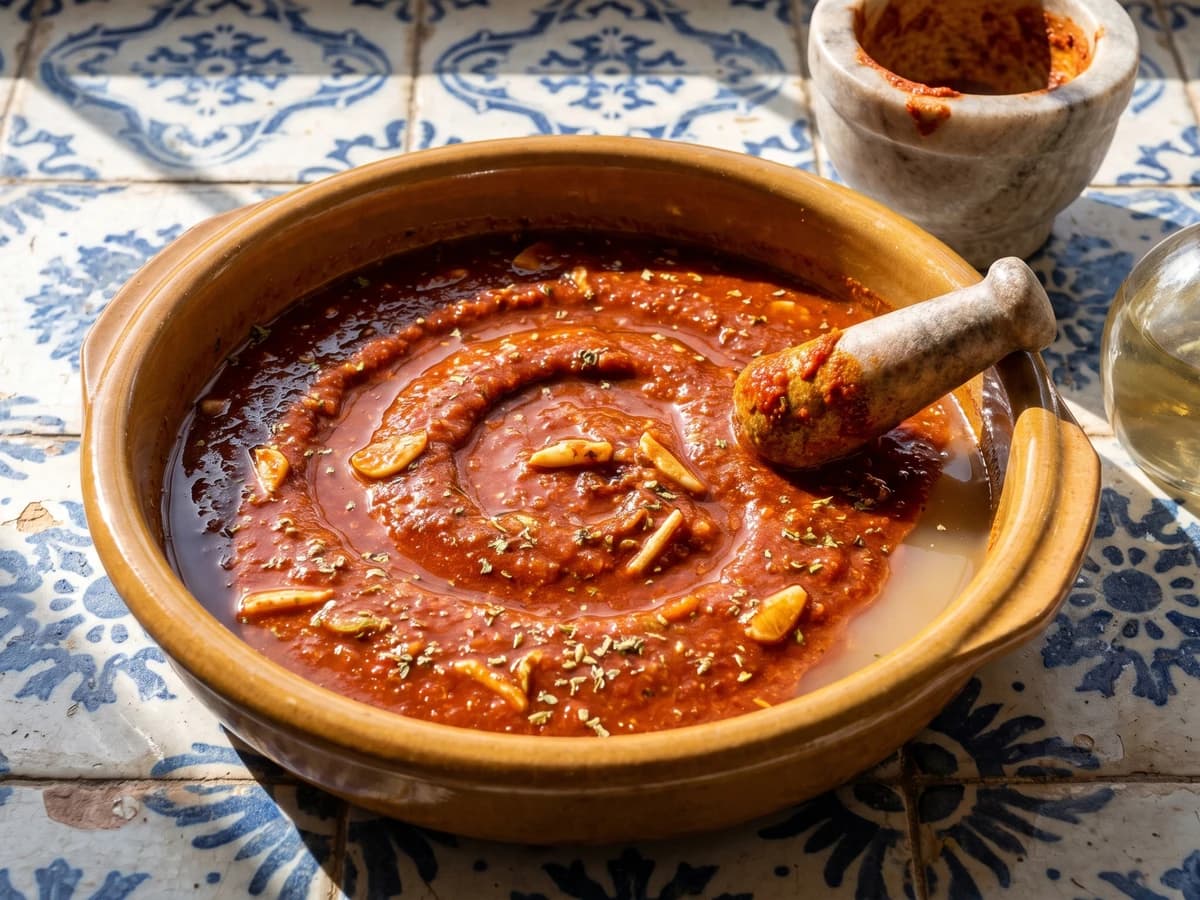
Andalucía's sharp, brick-red marinade brings vinegar, garlic, oregano, cumin and pimentón to fish and pork; pound the seasonings first, then give the acid time to carry them through.
Chef Isabel
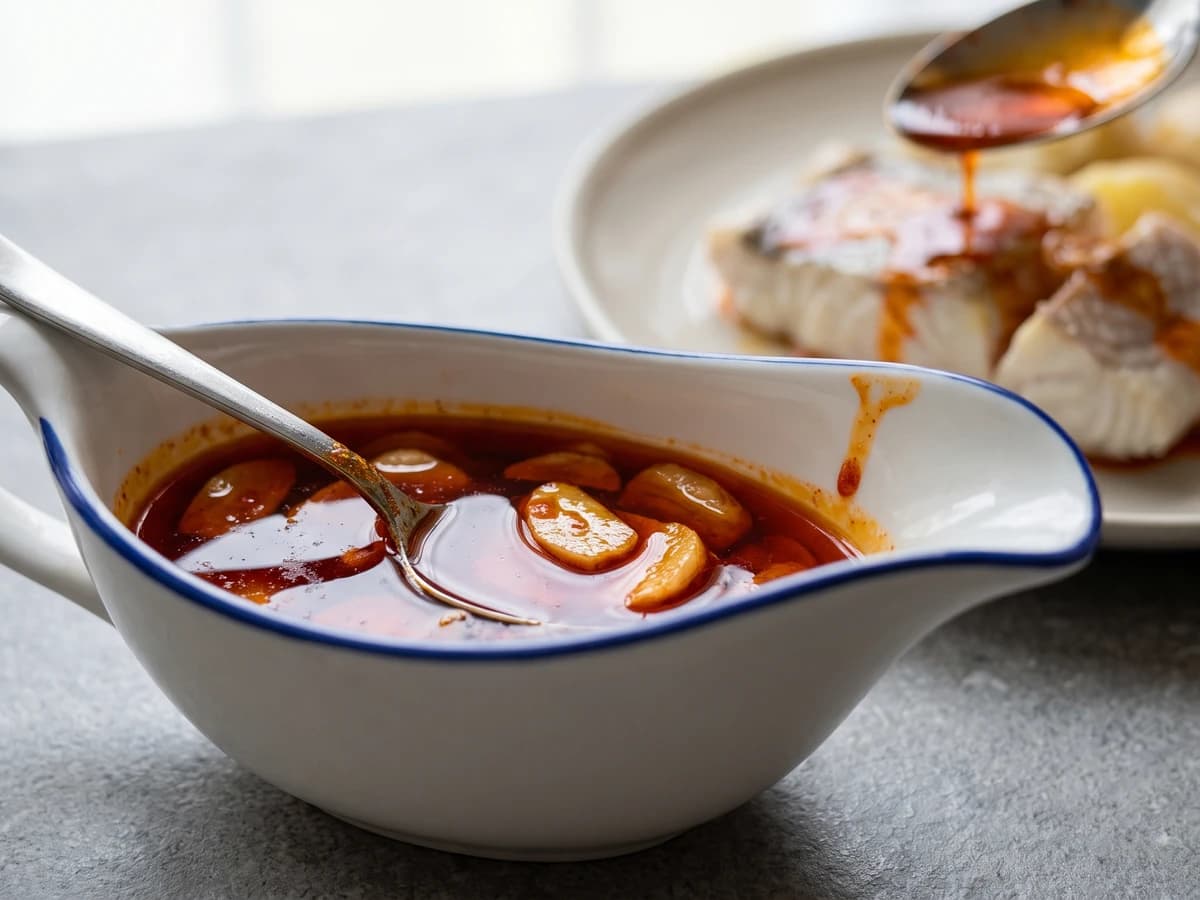
Ajada gallega is Galicia's quick garlic and pimentón refrito for boiled fish, octopus, vegetables and cachelos, with the paprika stirred in off the heat so its red oil stays sweet, never bitter.
Chef Isabel
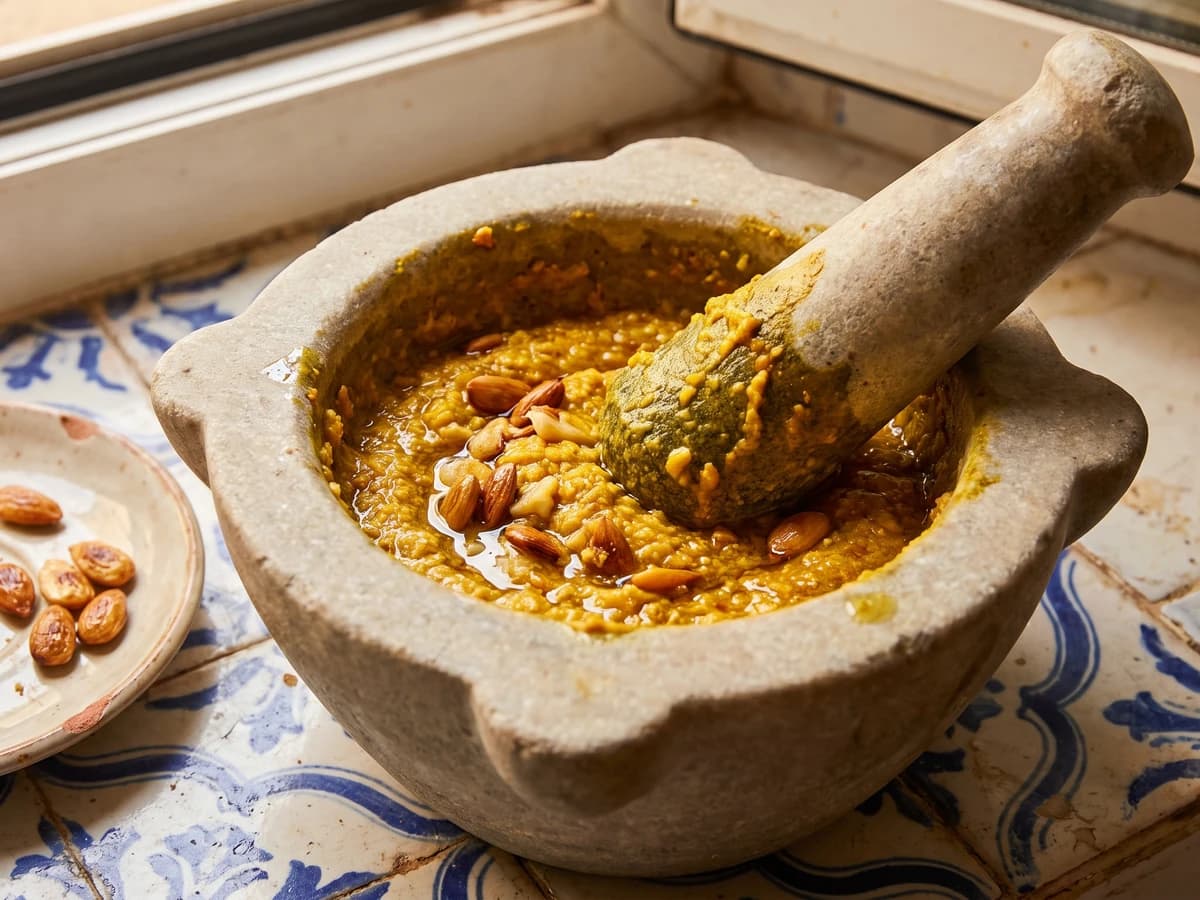
Almería's ajopollo turns fried garlic, almonds, bread and saffron into a golden mortar paste that gives modest fish and potato guisos their body, richness and unmistakable southern depth.