Chef Isabel
Aceitunas Aliñadas Andaluzas
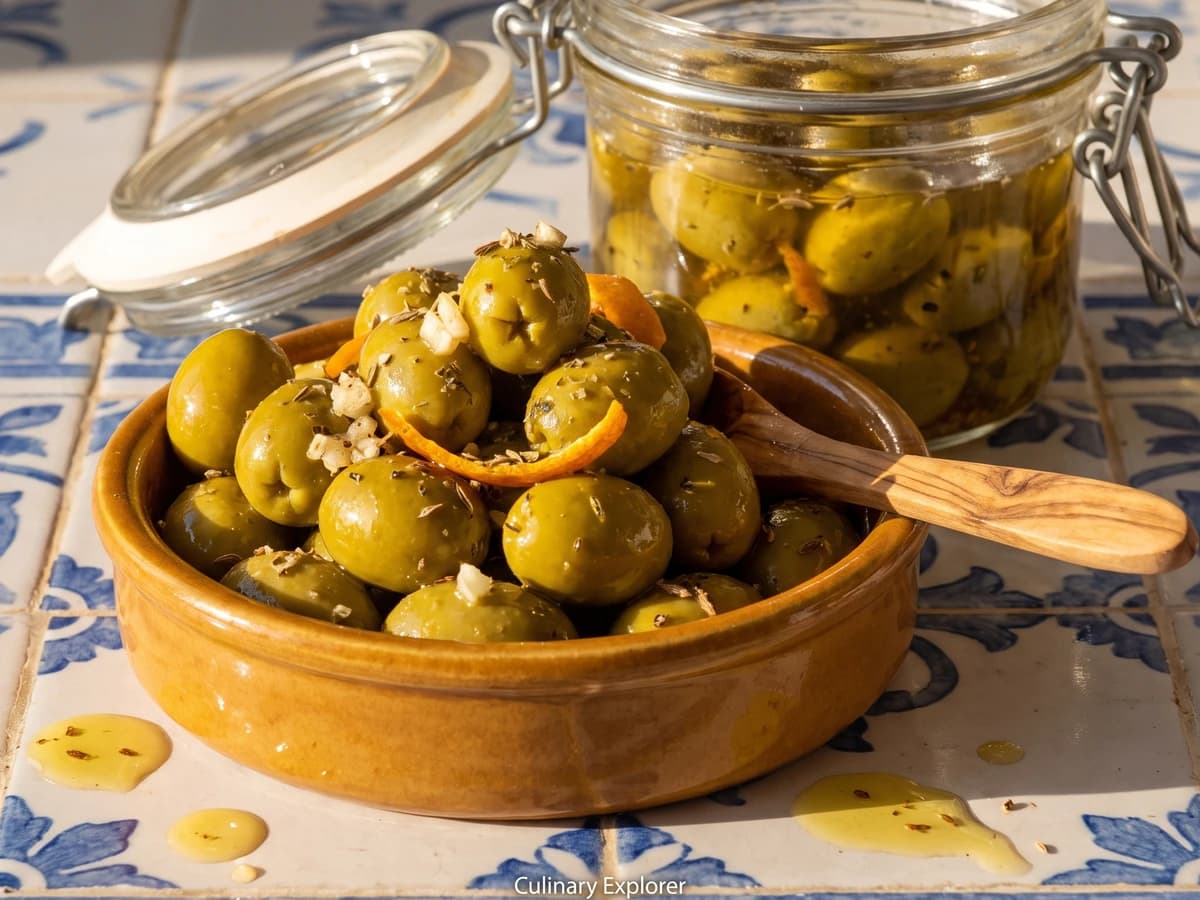
Andalucía's green olives are cracked just enough to drink in garlic, cumin, oregano and sherry vinegar, then left two days until the brine turns fragrant and every bite carries the aliño.
A cooking platform built around craft, culture, and the stories behind what we eat.
Created by
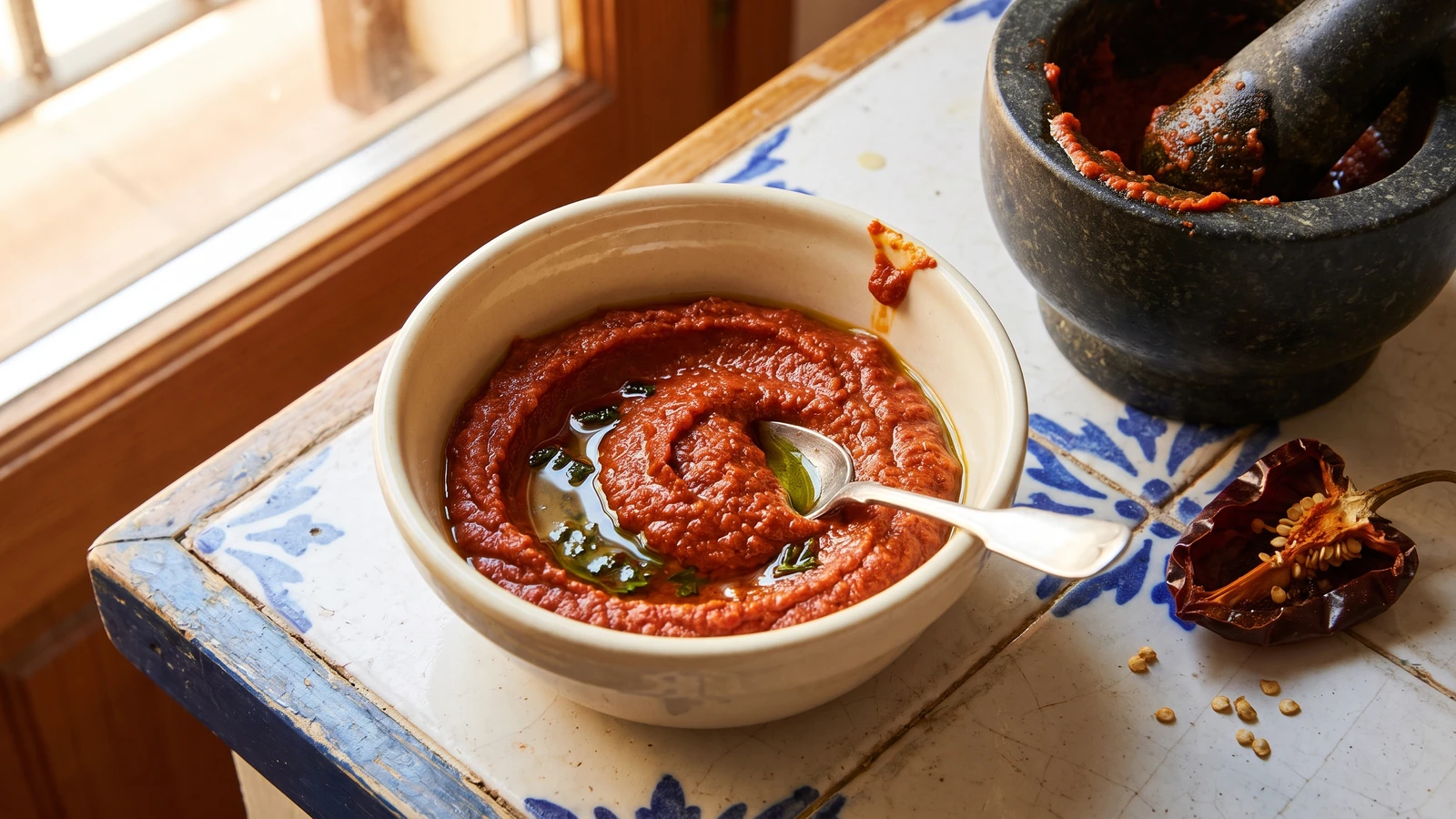
Salmorreta is Alicante's dark, concentrated base for coastal rice: ñora, garlic, ripe tomato and parsley fried patiently until sweet, brick-red and strong enough to season the whole pan.
Salmorreta is Alicante's concentrated ñora sofrito, the slow-fried base beneath arroz a banda and many of the province's coastal arroces. Dried ñora, garlic and parsley are pounded, then worked into ripe tomato until the mixture becomes dark, thick and strong enough to carry a whole pan of rice. The ñora is its surname. Leave it out and you have a useful tomato sofrito, but you don't have salmorreta.
The ñora decides whether it works. Fry each piece for only a few seconds, just until its deep red colour darkens and the oil releases its sweet pepper smell. Let it turn black and the bitterness follows the paste all the way to the table. After that, give the tomato time. It must lose its water slowly until a spoon drawn through the pan leaves a clear path and green-gold oil appears around the edges.
If ñoras are hard to find, carne de pimiento choricero, jarred choricero pepper pulp, is the substitute a Spanish larder would reach for. It gives a deeper, less sweet result, but the base still does its work. Don't replace the ñora with smoked pimentón; the smoke belongs elsewhere. My Margin carries one warning beside this recipe: count seconds for the pepper, minutes for the tomato. Siempre sale, si lo sigues.
Salmorreta belongs to the fishing towns of the Alicante coast and especially to arroz a banda, rice cooked in the broth of morralla, the small rockfish and bony catch, while the boiled fish was eaten apart, a banda. Dried ñora pounded with garlic and parsley, then folded into reduced tomato, became one of the clear signatures of Alicante's coastal arroces and a concentrated way to carry pepper sweetness into fish broth.
Quantity
6 (about 30g whole)
stemmed, seeded and torn into pieces
Quantity
700g
halved and grated, skins discarded, yielding about 600g pulp
Quantity
30g
left whole
Quantity
15g
washed and thoroughly dried
Quantity
90ml
Quantity
4g
| Ingredient | Quantity |
|---|---|
| dried ñora peppersstemmed, seeded and torn into pieces | 6 (about 30g whole) |
| ripe plum tomatoeshalved and grated, skins discarded, yielding about 600g pulp | 700g |
| peeled garlic clovesleft whole | 30g |
| flat-leaf parsley leaves and tender stemswashed and thoroughly dried | 15g |
| extra virgin olive oil | 90ml |
| fine sea salt | 4g |
Wipe the ñoras clean with a dry cloth. Pull away the stems, shake out every loose seed and tear each pepper into three or four flat pieces. Keep them dry, since water caught in a dried pepper will spit when it reaches the oil.
Warm the olive oil in a 26cm heavy frying pan over medium-low heat. Fry the ñora pieces in two batches, pressing them briefly into the oil for 3 to 5 seconds on each side. Lift them out as soon as they smell sweet and toasted and their red colour deepens. They will become crisp as they cool.
Lower the heat and add the whole garlic cloves to the same oil. Cook for 5 to 7 minutes, turning often, until pale gold and soft through the centre. Add the thoroughly dried parsley and fry for 15 seconds, just until it darkens and settles. Lift the garlic and parsley out with a slotted spoon.
Carefully add the grated tomato and all its juice to the pepper-scented oil, then stir in the salt. Cook over medium heat for 5 minutes to bring it to a steady bubble. Lower the heat and cook uncovered for 30 to 35 minutes, stirring more often as it thickens. It is ready when the colour has deepened to brick red, a spoon leaves a clear path across the pan for several seconds and olive oil shows around the edges.
Crumble the cooled ñoras into a mortar and pound them to a coarse powder. Add the fried garlic and parsley and work everything into a thick, even paste. Mix in about 100g of the reduced tomato to loosen it, then scrape the mixture back into the frying pan. A narrow jug and stick blender will do the job if you have no mortar, but add no water.
Cook the combined salmorreta over low heat for 5 to 8 minutes, stirring and scraping the bottom, until it holds in a mound and beads of oil gather at the rim. It should taste concentrated, sweet from the cooked tomato and ñora, with no raw garlic or watery finish. Cool in a shallow container before portioning.
1 serving (about 13g)
Culinary guides, cultural storytelling, and the editorial depth that makes cooking meaningful.
Discover Culinary ExplorerChef Isabel
Andalucía's green olives are cracked just enough to drink in garlic, cumin, oregano and sherry vinegar, then left two days until the brine turns fragrant and every bite carries the aliño.
Chef Isabel
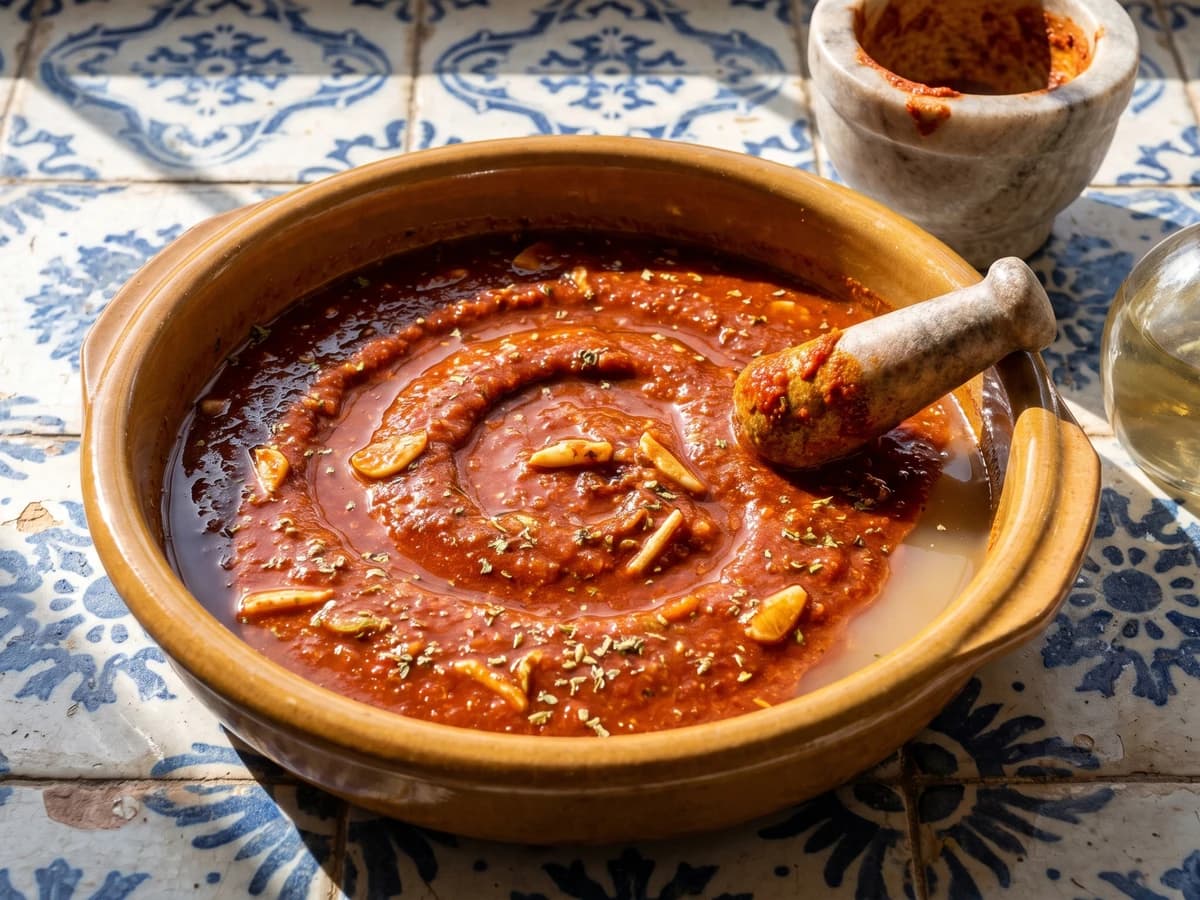
Andalucía's sharp, brick-red marinade brings vinegar, garlic, oregano, cumin and pimentón to fish and pork; pound the seasonings first, then give the acid time to carry them through.
Chef Isabel
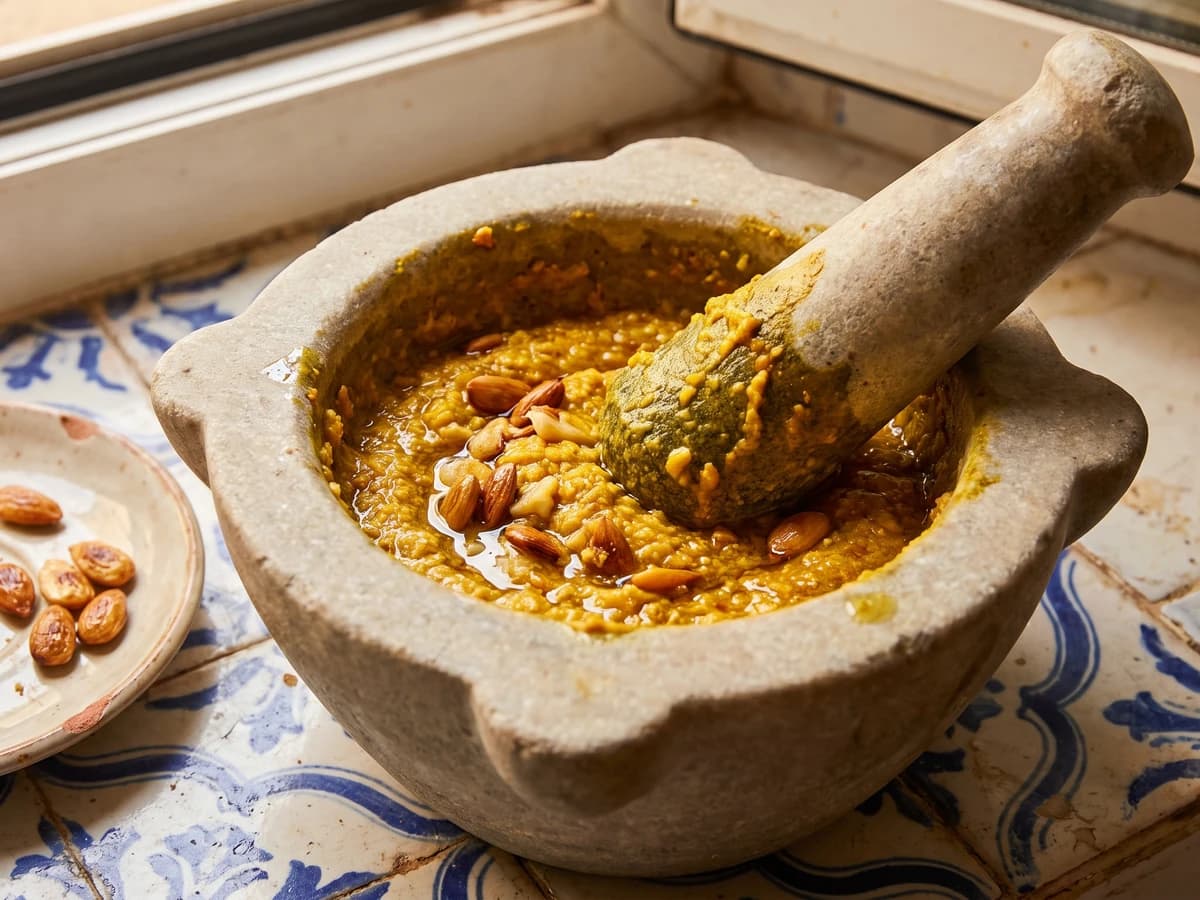
Almería's ajopollo turns fried garlic, almonds, bread and saffron into a golden mortar paste that gives modest fish and potato guisos their body, richness and unmistakable southern depth.
Chef Isabel
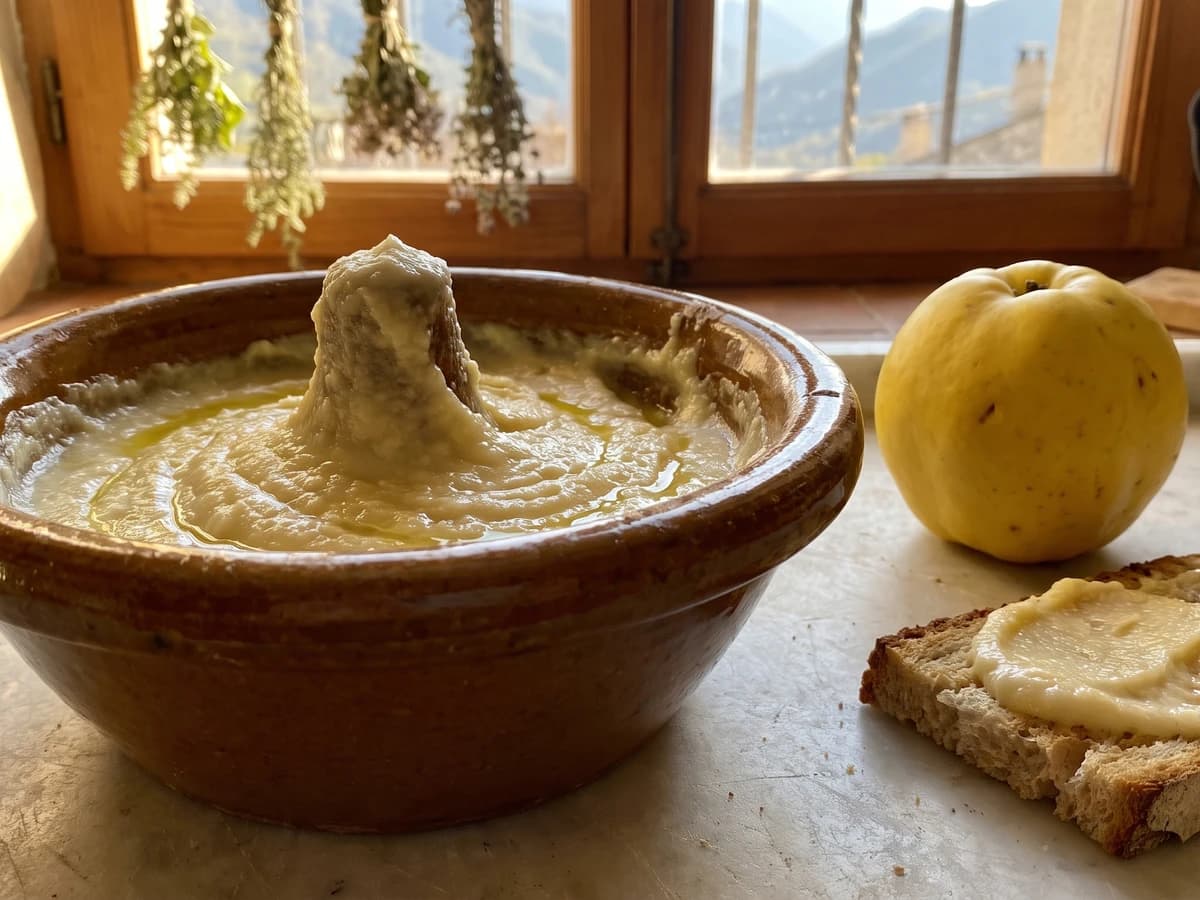
Allioli de codony belongs to the Catalan Pyrenees: boiled quince, raw garlic, salt, and olive oil worked into a thick, fragrant sauce for grilled meat, sausages, bread, and the autumn table.