Chef Isabel
Duelos y Quebrantos Manchegos
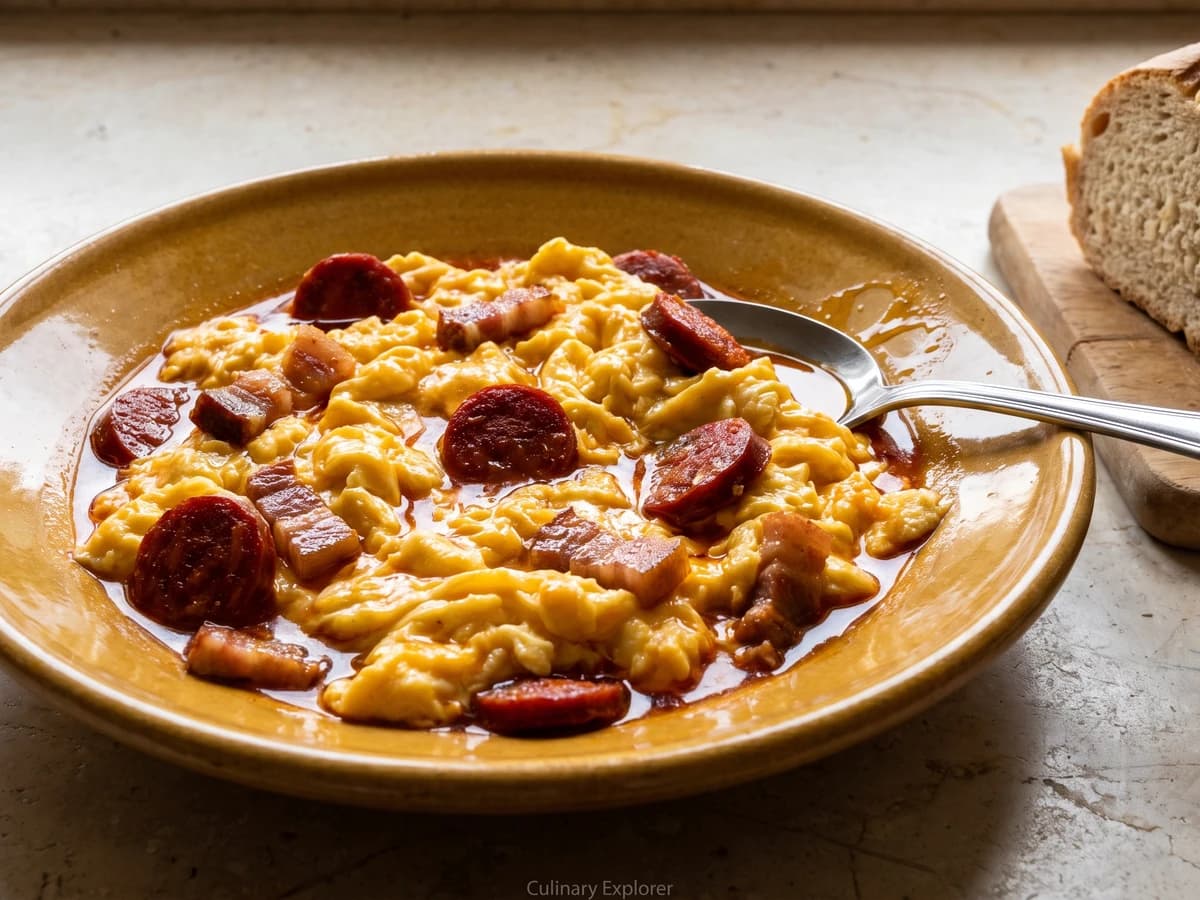
Duelos y quebrantos is Castilla-La Mancha in one pan: chorizo and bacon rendered slowly, then eggs folded through until soft, the plain Saturday meal Cervantes set on Don Quixote's table.
A cooking platform built around craft, culture, and the stories behind what we eat.
Created by
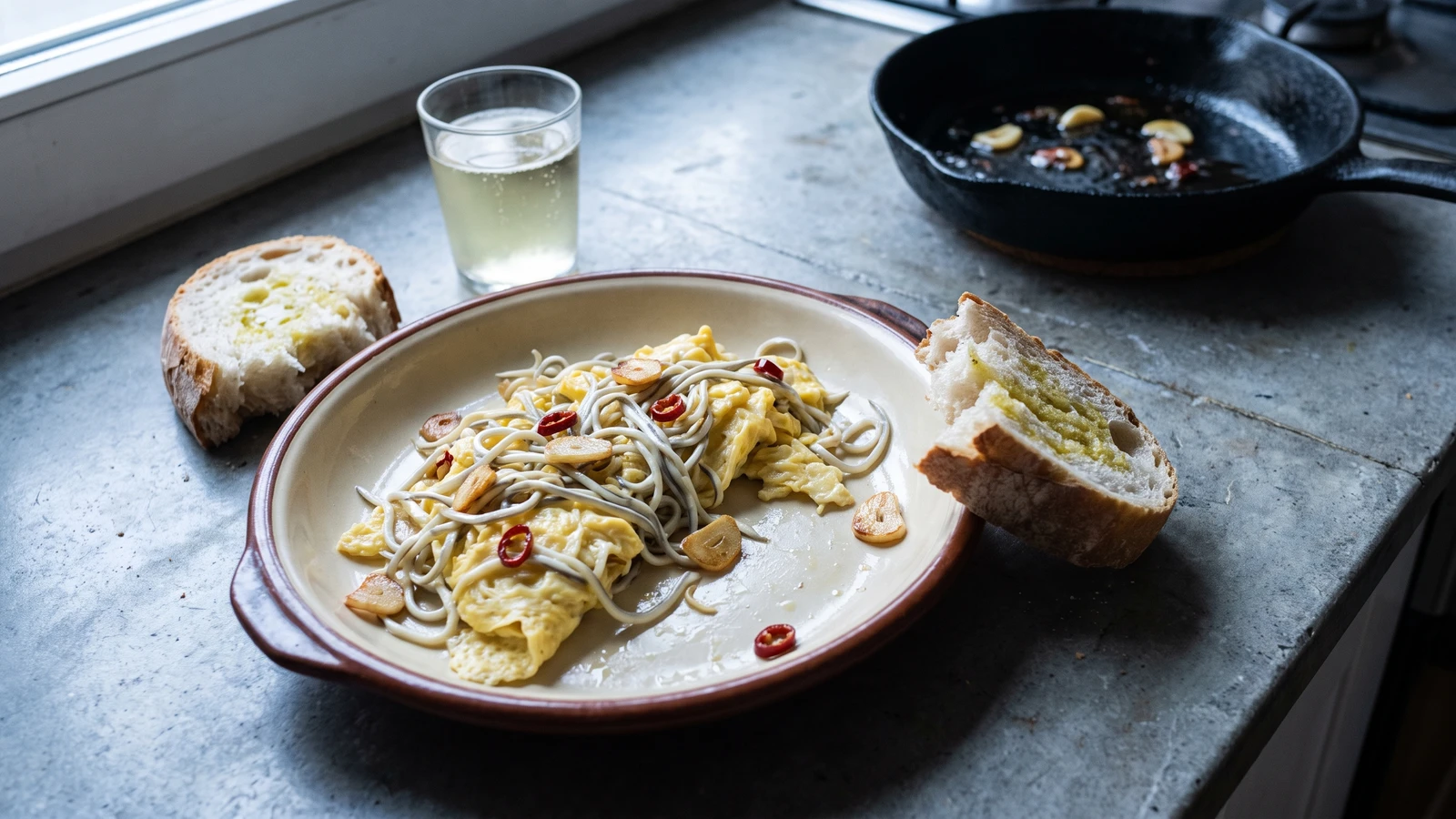
Basque revuelto de gulas turns garlic-scented gulas and guindilla through barely set eggs. Sear the gulas quickly, then pull the pan while the curds still shine and tremble.
Revuelto de gulas is Basque in lineage: soft egg folded around gulas warmed in olive oil with sliced garlic and guindilla, the little dried chile used in angulas a la bilbaína. The gulas carry the shape and al ajillo character of those costly eel fry into an everyday pan. Garlic, chile, olive oil, and tender strands make it this dish. Onion, cream, or cheese would make another scramble entirely.
The egg decides it. Sear the gulas quickly in the fragrant oil, lower the heat, and fold in the beaten eggs with broad, slow strokes. Take the pan off while the curds are still loose and glossy because the stored heat finishes them on the way to the plate. Wait until they look completely cooked in the pan and you'll serve them dry. That is the whole difficulty, and it isn't much.
Gulas are already the practical Basque answer when true angulas are beyond reach. They are fish surimi, not baby eel, and they taste milder and feel springier. If you cannot find them, pull plain surimi seafood sticks into fine strands; the result will be sweeter and a little thicker, but the garlic and guindilla keep the dish recognizable. No hace falta haber pisado España. Serve it the moment it leaves the pan, and it comes out. The Margin beside this one says only: leave the heat early.
Angulas a la bilbaína, juvenile European eels cooked in olive oil with sliced garlic and guindilla, belong to the Basque table, while Aguinaga beside Gipuzkoa's Oria estuary became closely associated with the winter eel catch. When wild angulas grew scarce and prohibitively dear, a Basque producer rooted in Aguinaga developed gulas from fish surimi, preserving the slender form and familiar al ajillo preparation within ordinary reach. Folding gulas into softly set egg is a later household revuelto rather than the old angulas dish, but its regional line is clear.
Quantity
200g
removed from the package and gently loosened into strands
Quantity
6, about 300g without shells
Quantity
30ml
Quantity
3, about 12g
thinly and evenly sliced
Quantity
1 small, about 0.5g
cut into rings
Quantity
1.5g
Quantity
4 slices, about 160g
for serving
| Ingredient | Quantity |
|---|---|
| plain refrigerated gulasremoved from the package and gently loosened into strands | 200g |
| large eggs | 6, about 300g without shells |
| extra virgin olive oil | 30ml |
| garlic clovesthinly and evenly sliced | 3, about 12g |
| dried guindilla or cayenne chilecut into rings | 1 small, about 0.5g |
| fine sea salt | 1.5g |
| crusty country bread (optional)for serving | 4 slices, about 160g |
Separate the gulas gently with your fingers so they enter the pan as loose strands, not a cold block. Crack the eggs into a bowl, add the salt, and beat just until the whites and yolks come together. Don't beat in air and don't add milk or cream; this revuelto should taste of egg, garlic oil, and gulas.
Set a 24cm frying pan over medium-low heat and add the olive oil. Add the sliced garlic and cook for 2 to 3 minutes, moving it often, until pale gold at the edges. Add the guindilla for the final 30 seconds. Keep the garlic shy of brown; scorched garlic makes the whole pan bitter.
Raise the heat to medium-high, add the gulas, and toss them through the garlic oil for 60 to 90 seconds. They should become glossy and hot, with a few strands beginning to curl, but they should not dry out or take on a crust.
Turn the heat to low and pour in the beaten eggs. Wait 5 seconds, then draw a silicone spatula slowly across the base in broad sweeps, folding the set egg through the gulas. Cook for 45 to 75 seconds, moving the pan off the heat whenever the egg sets too quickly. Stop while the curds are soft and glossy and a little unset egg remains between them. The heat held by the pan will finish the scramble.
Divide the revuelto immediately among warm plates, making sure every serving gets garlic and a little guindilla. Taste before adding any more salt because packaged gulas are already seasoned. Serve with crusty bread for the garlic oil. A revuelto waits for nobody.
1 serving (about 160g)
Culinary guides, cultural storytelling, and the editorial depth that makes cooking meaningful.
Discover Culinary ExplorerChef Isabel
Duelos y quebrantos is Castilla-La Mancha in one pan: chorizo and bacon rendered slowly, then eggs folded through until soft, the plain Saturday meal Cervantes set on Don Quixote's table.
Chef Isabel
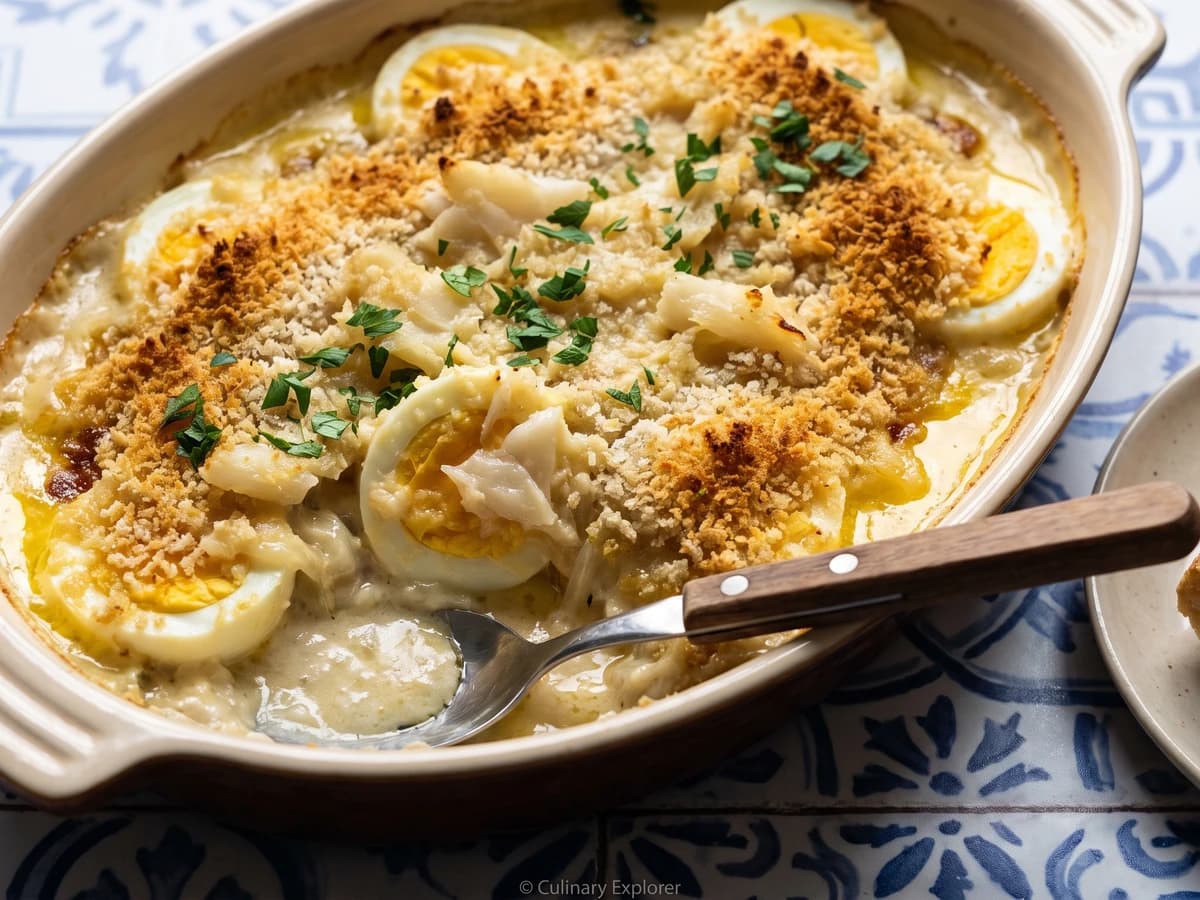
Donostia's baked eggs sit beneath a slow, sweet onion and bacalao sauce, with a fine breadcrumb crust browned under the grill. Desalt the cod properly and the rest is straightforward.
Chef Isabel
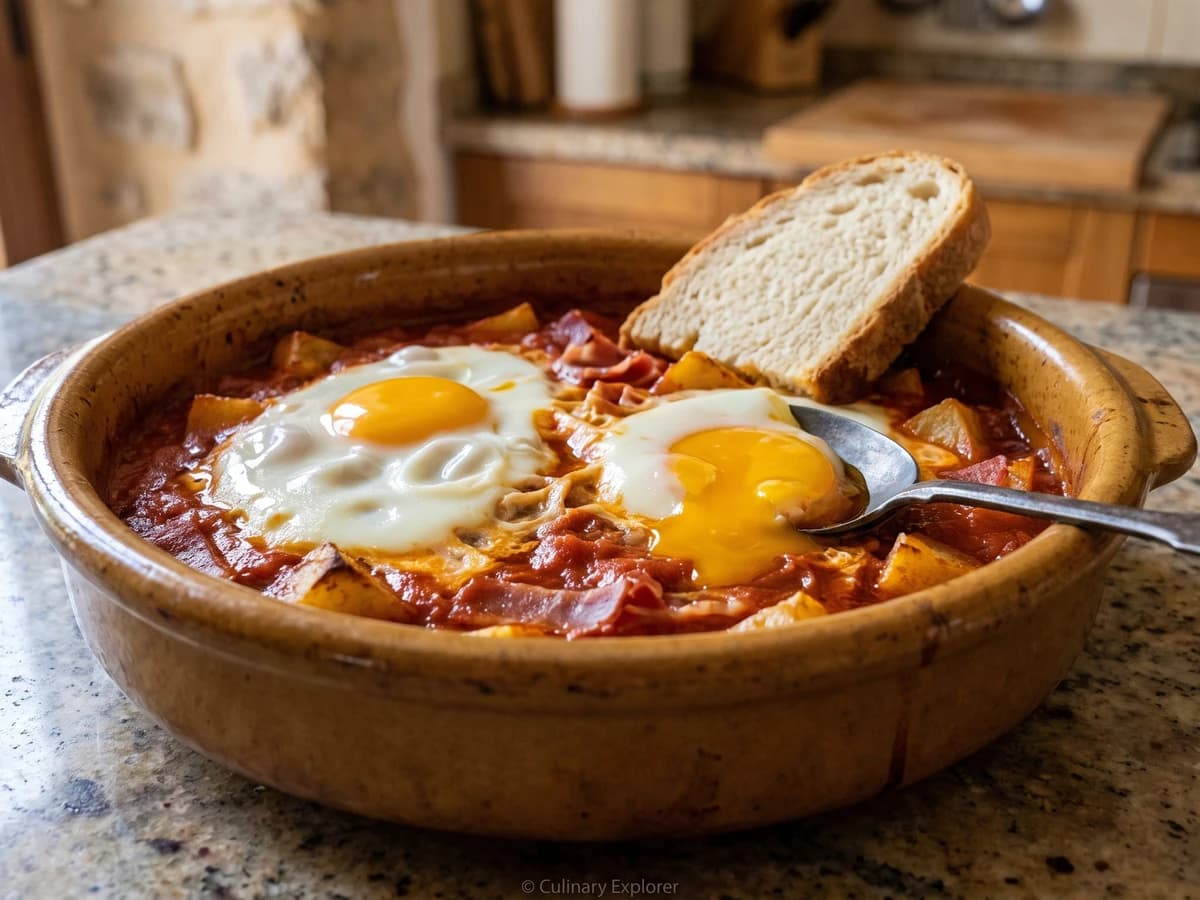
Extremadura sets eggs into a thick bed of fried potato, tomato sofrito, jamón, and its own smoky pimentón, then bakes them just until the whites hold and the yolks stay soft.
Chef Isabel
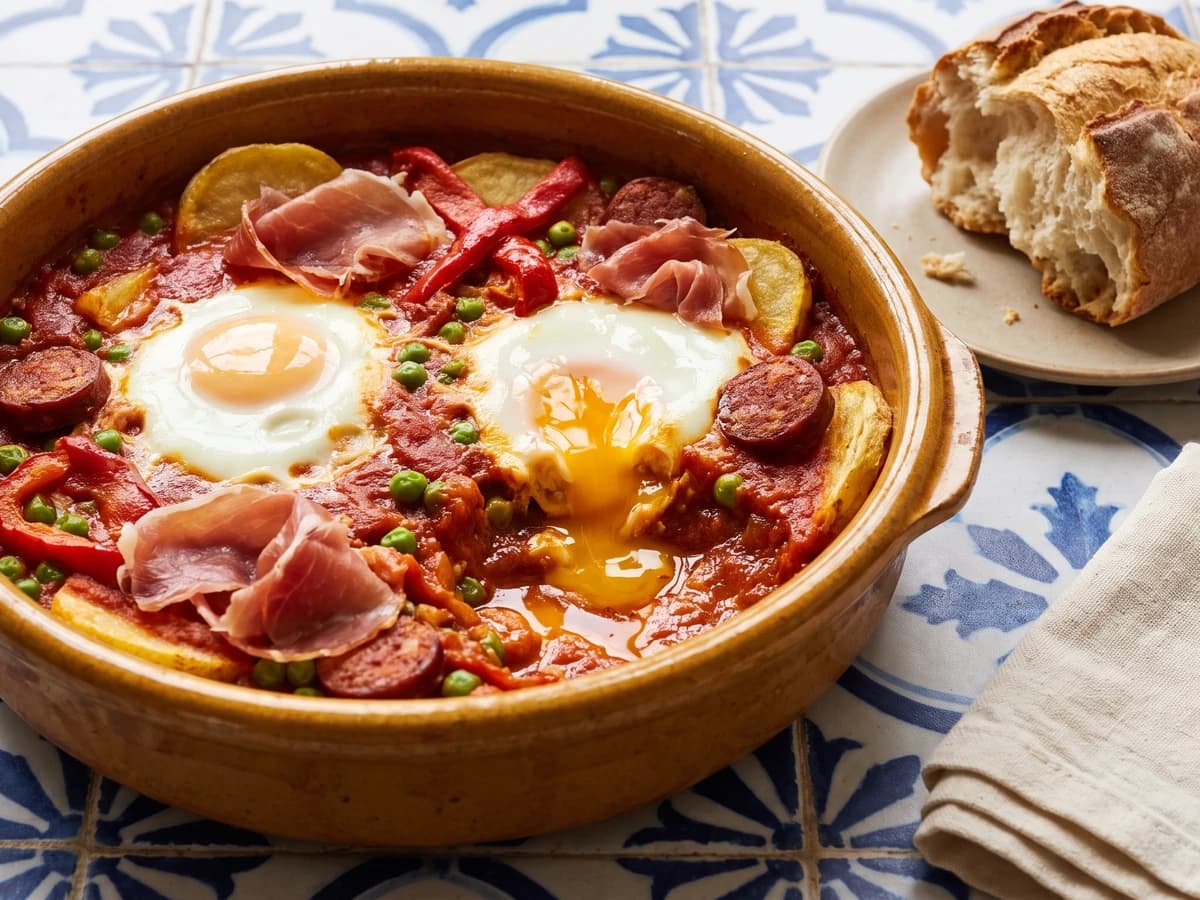
Huevos a la flamenca are Seville in a cazuela: eggs baked over a dark, sweet tomato sofrito with potatoes, peas, peppers, jamón and chorizo, pulled while the whites set and the yolks still run.