Chef Isabel
Duelos y Quebrantos Manchegos
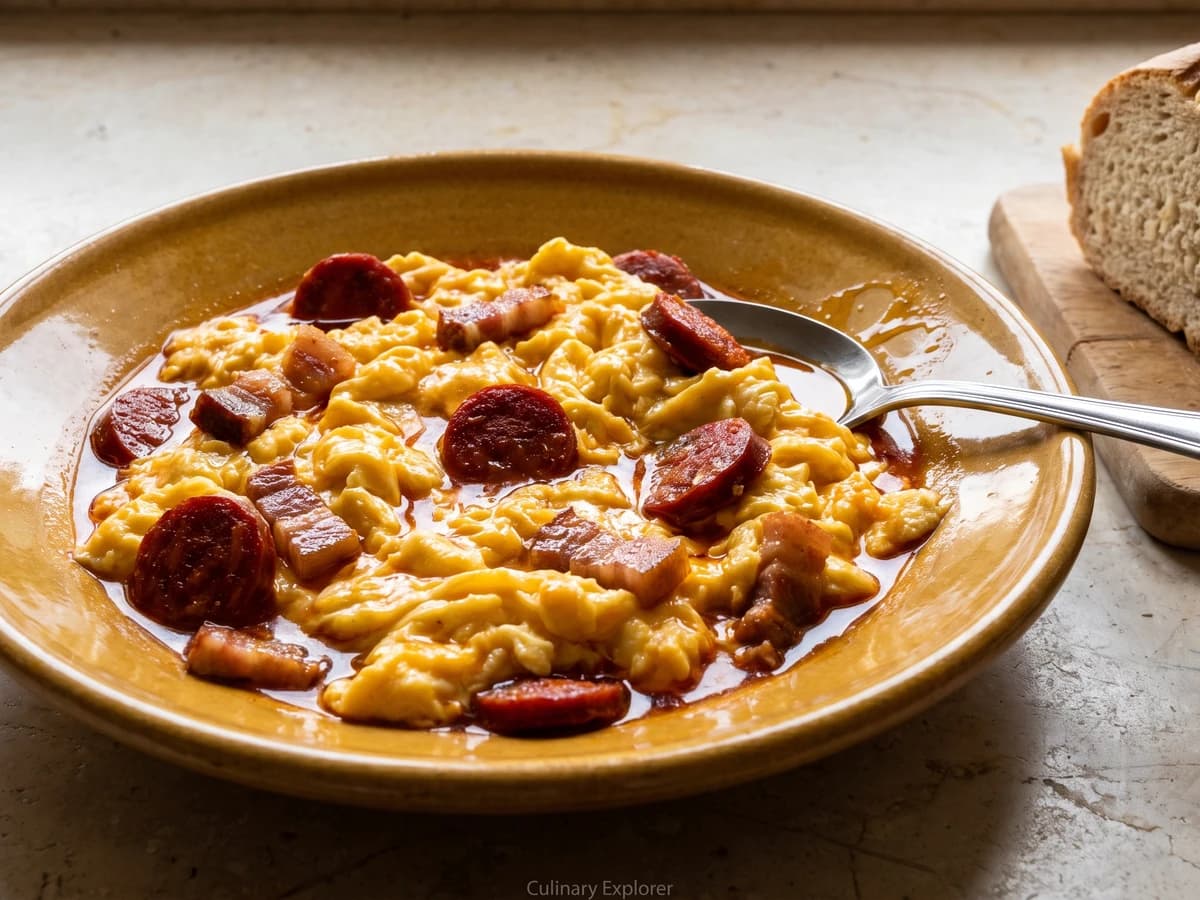
Duelos y quebrantos is Castilla-La Mancha in one pan: chorizo and bacon rendered slowly, then eggs folded through until soft, the plain Saturday meal Cervantes set on Don Quixote's table.
A cooking platform built around craft, culture, and the stories behind what we eat.
Created by
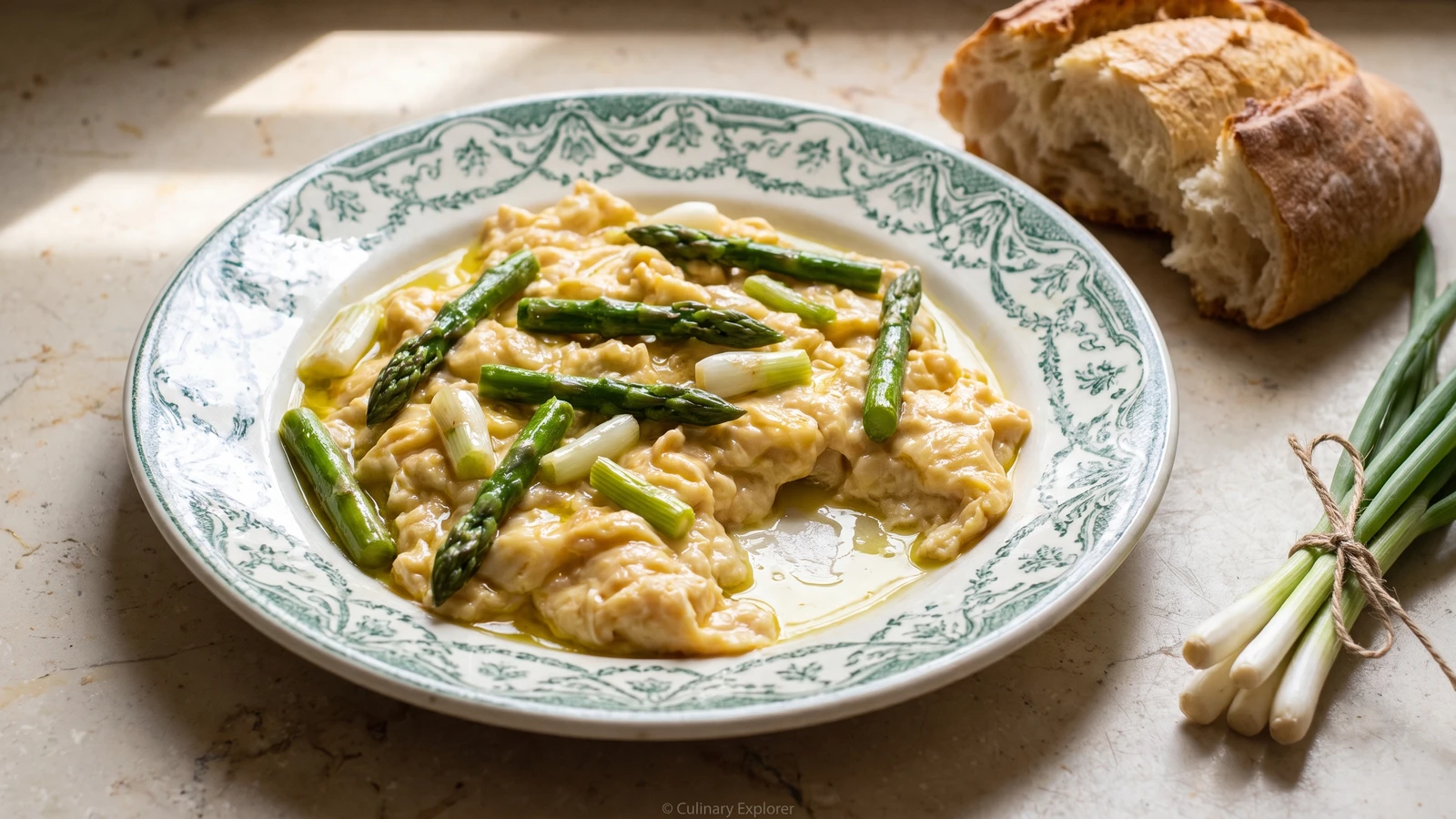
Andalucía's spring revuelto brings tender ajetes and wild asparagus together in olive oil, with eggs folded through off the heat so the curds stay soft, glossy, and loose.
Revuelto de ajetes y espárragos is Andaluz spring cooking: tender young garlic and espárragos trigueros, the thin wild asparagus gathered after the winter rains, held together with soft egg and olive oil. It is a revuelto, not an omelette. The egg stays loose around the vegetables, and there is no milk or cream to make it heavy. On an Andalusian table, a small market bundle becomes breakfast, supper, or something set down with bread.
The step that decides it comes after the vegetables are tender. Take the pan off the heat before the egg goes in, then fold slowly. The warmth left in the pan makes soft, glossy curds without squeezing them dry. If the eggs need more, give them only a few seconds over the lowest flame and take them away again. The finished revuelto should slump onto the plate, not stand there like masonry.
If wild asparagus does not grow where you are, buy the thinnest green asparagus you can find. It will be milder, juicier, and less faintly bitter, but it cooks by the same method. If ajetes are scarce, use 150g scallions with one small garlic clove added during the final 30 seconds of sautéing. The result is a little more onion-forward and sharper, but it keeps the honest green-garlic character of the dish.
Serve it the moment the eggs are ready. My notebook margin says simply, "al plato ya," onto the plate now. That is not impatience. It is the difference between a tender revuelto and dry scrambled eggs.
In rural Andalucía, particularly the olive country of Granada and Jaén, gathering espárragos trigueros from field edges after the rains has long marked the turn into spring. Ajetes are garlic plants pulled young, before their bulbs swell, so both vegetables belong to the brief green season rather than the preserved larder. The revuelto made a quick household meal of those small, uneven harvests, using eggs to bind the vegetables without hiding their flavour.
Quantity
200g trimmed
washed and cut into 3cm lengths
Quantity
250g trimmed
cut into 3cm lengths, with the tips kept whole
Quantity
8 (about 400g without shells)
at cool room temperature
Quantity
30ml
Quantity
4g
divided
Quantity
200g
sliced, for serving
| Ingredient | Quantity |
|---|---|
| ajetes (young green garlic)washed and cut into 3cm lengths | 200g trimmed |
| espárragos trigueros (wild asparagus), or very thin green asparaguscut into 3cm lengths, with the tips kept whole | 250g trimmed |
| large eggsat cool room temperature | 8 (about 400g without shells) |
| extra virgin olive oil | 30ml |
| fine sea saltdivided | 4g |
| country bread (optional)sliced, for serving | 200g |
Trim away the roots and any tough dark-green ends from the ajetes. Wash carefully between the leaves, where soil likes to hide, then cut them into 3cm lengths. Snap or cut off the woody asparagus bases. Cut the tender stalks into 3cm pieces and keep the tips separate so they do not overcook.
Warm the olive oil in a 28cm frying pan over medium-low heat. Add the ajetes and 1g of the salt. Cook for 5 to 6 minutes, stirring often, until supple and sweet-smelling with only the faintest gold at the edges. They should soften, not crisp.
Add the asparagus stalks and cook for 2 minutes. Add the tips and another 1g salt, then cook for 2 minutes more. The asparagus should be tender but still green, and the cut end should yield when pressed with the spatula. Very fine wild asparagus may need a minute less.
While the vegetables cook, crack the eggs into a bowl and add the remaining 2g salt. Beat only until the whites and yolks come together. Do not whip them frothy; a revuelto wants soft, close curds rather than a puffed omelette.
Take the pan completely off the heat and wait 20 seconds. Pour in the eggs, then draw a flexible spatula slowly around the pan and through the centre, folding the setting egg over the vegetables. Keep folding for 60 to 90 seconds. Residual heat sets the eggs gently, which is what keeps the curds loose and glossy instead of dry. If raw egg still pools at the bottom, return the pan to the lowest heat for 5 to 10 seconds, then lift it off and fold again.
Stop while the eggs still look slightly underdone; they will finish in the warm pan. Transfer the revuelto immediately to a shallow serving plate so the curds do not keep cooking. Spoon it out with the asparagus tips visible and serve with country bread. Siempre sale, si lo sigues, it turns out if you follow it.
1 serving (about 240g)
Culinary guides, cultural storytelling, and the editorial depth that makes cooking meaningful.
Discover Culinary ExplorerChef Isabel
Duelos y quebrantos is Castilla-La Mancha in one pan: chorizo and bacon rendered slowly, then eggs folded through until soft, the plain Saturday meal Cervantes set on Don Quixote's table.
Chef Isabel
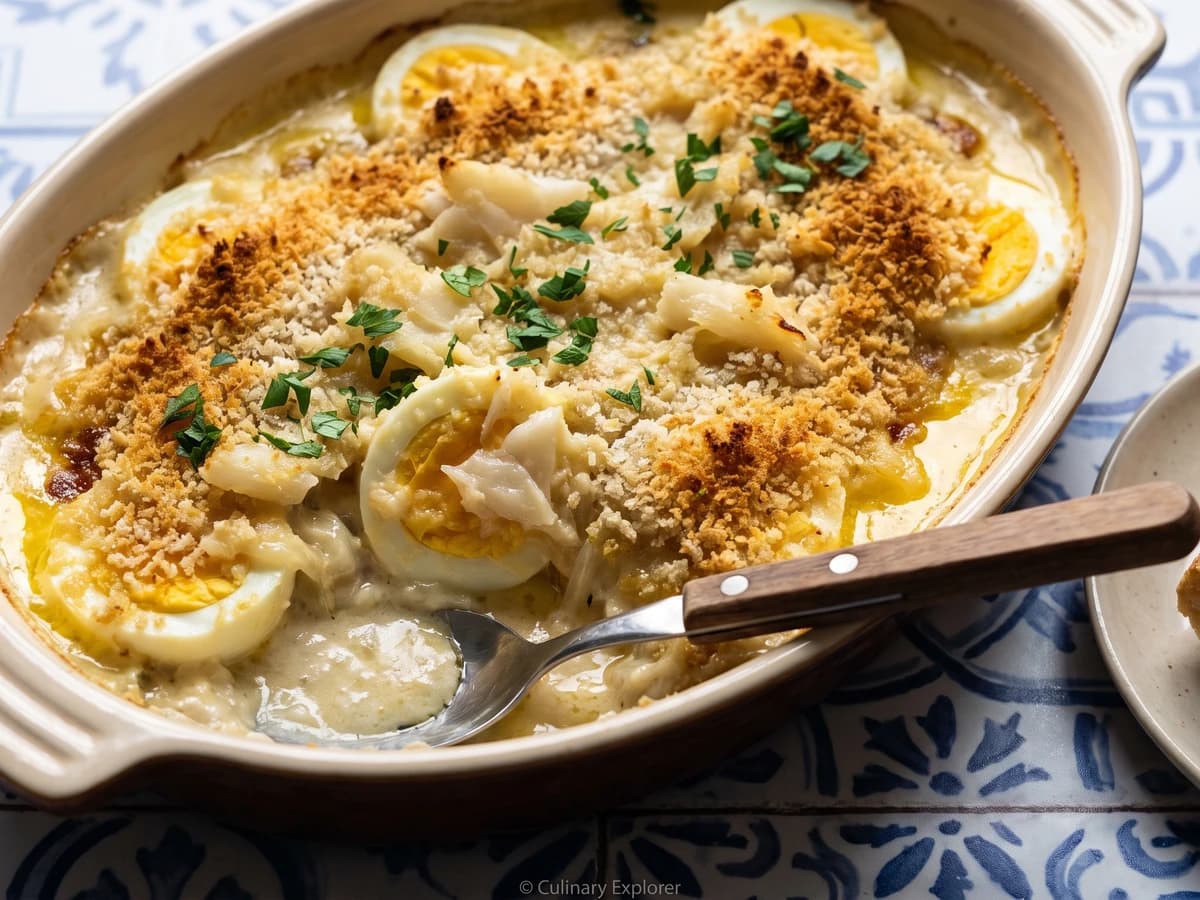
Donostia's baked eggs sit beneath a slow, sweet onion and bacalao sauce, with a fine breadcrumb crust browned under the grill. Desalt the cod properly and the rest is straightforward.
Chef Isabel
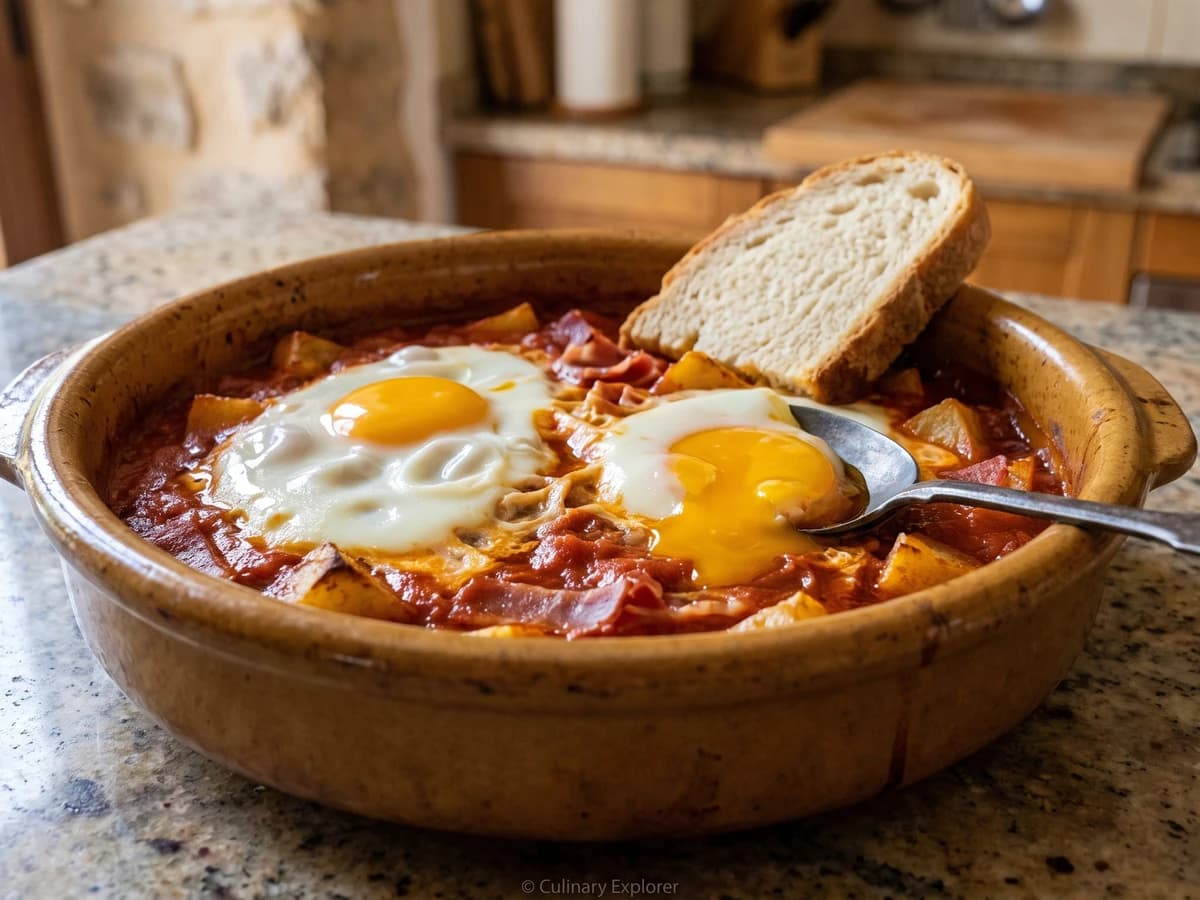
Extremadura sets eggs into a thick bed of fried potato, tomato sofrito, jamón, and its own smoky pimentón, then bakes them just until the whites hold and the yolks stay soft.
Chef Isabel
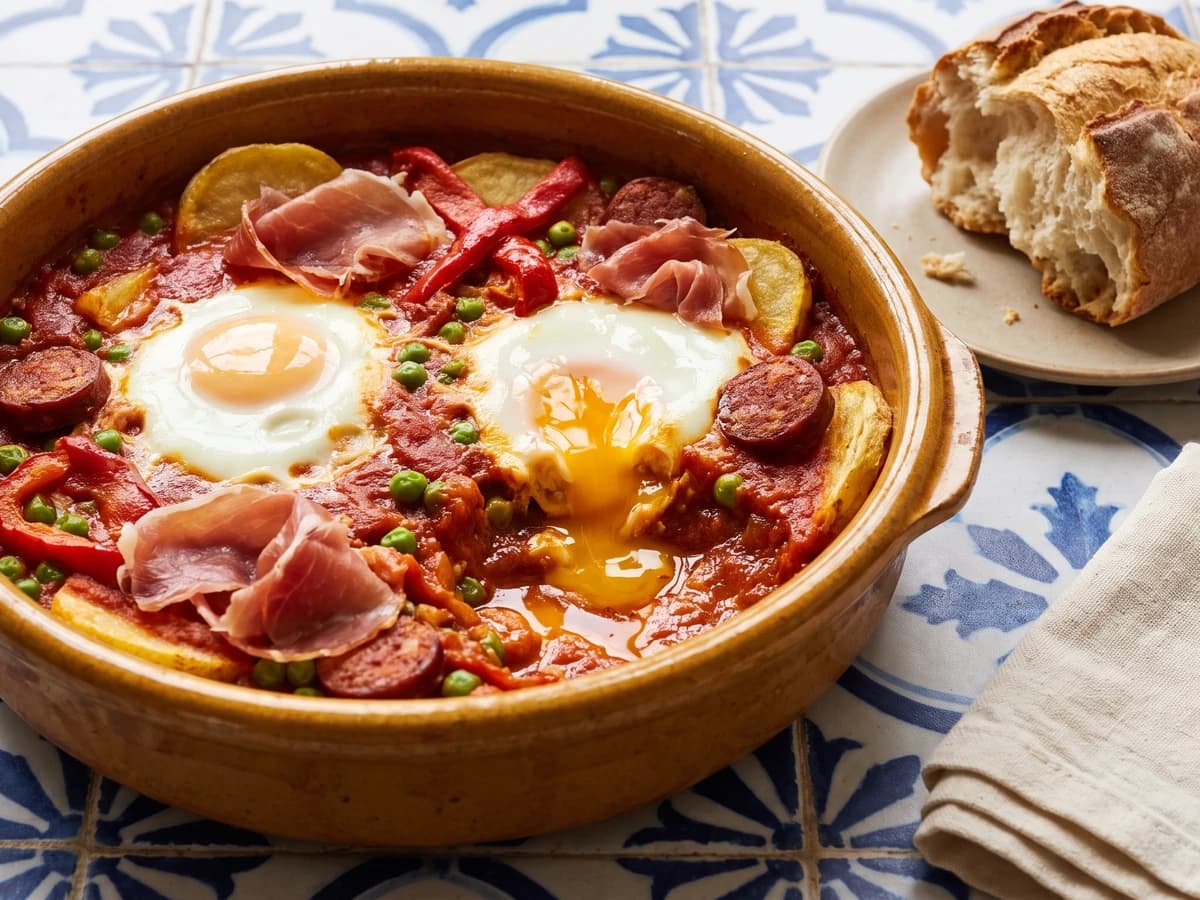
Huevos a la flamenca are Seville in a cazuela: eggs baked over a dark, sweet tomato sofrito with potatoes, peas, peppers, jamón and chorizo, pulled while the whites set and the yolks still run.