Chef Isabel
Abanico Ibérico a la Plancha
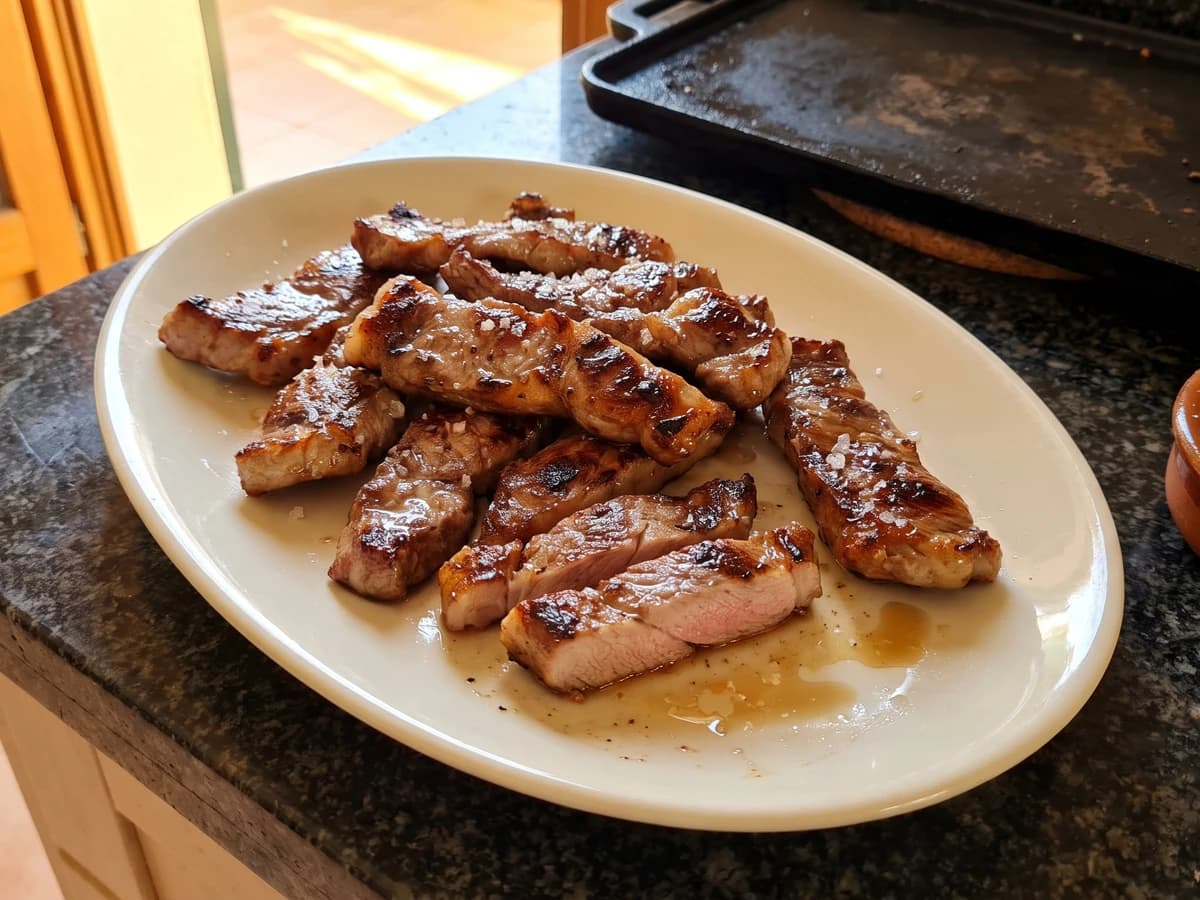
Extremadura's dehesa gives us this fan-shaped, marbled rib cut: salt it at the last moment, lay it on a fierce plancha, and count in seconds so the centre stays juicy.
A cooking platform built around craft, culture, and the stories behind what we eat.
Created by
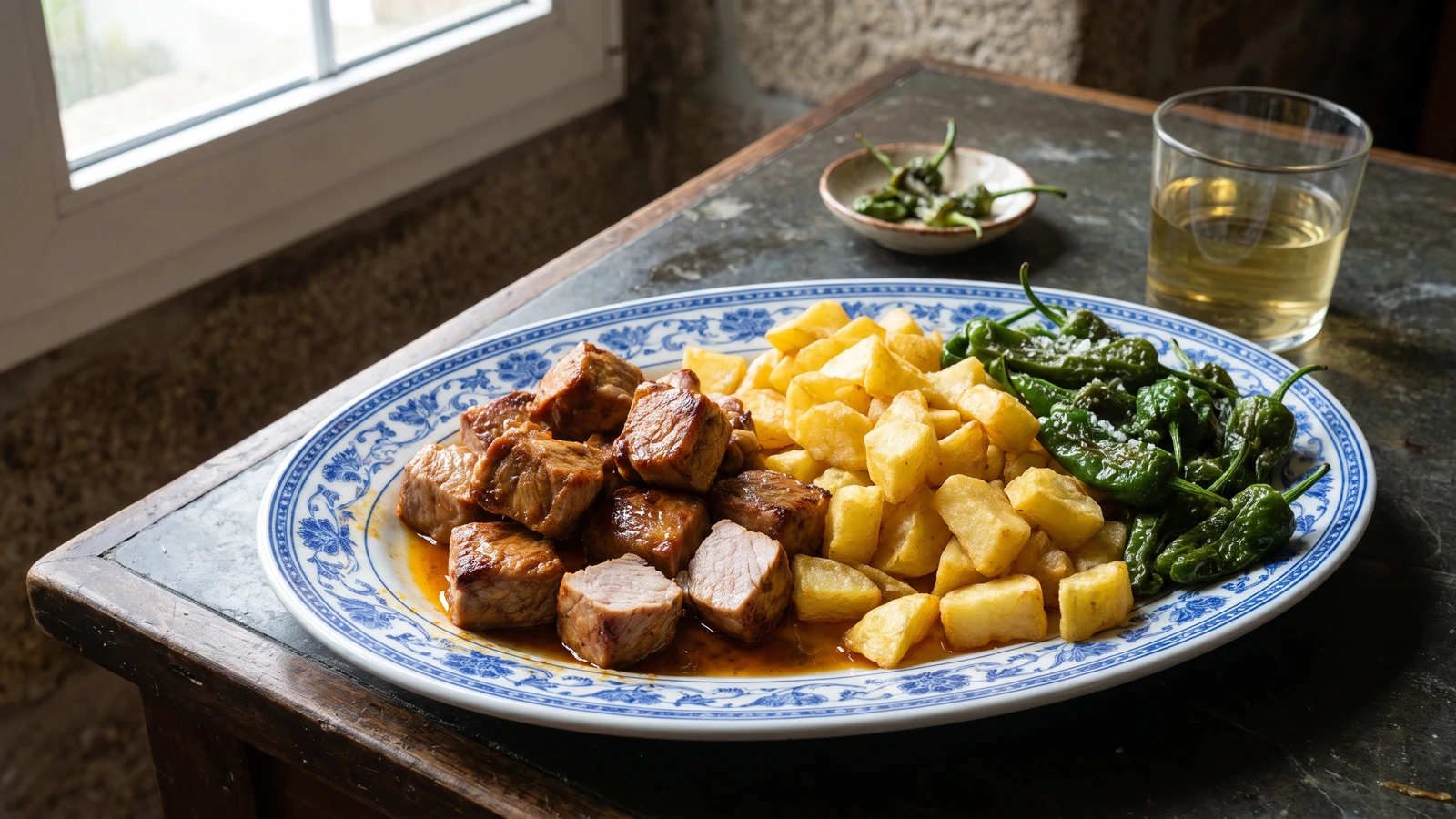
Galician raxo is pork loin marinated overnight with garlic, white wine, and a restrained spoon of pimentón, then fried in fierce batches and served with golden chips and blistered Padrón peppers.
Raxo is Galician: cubes of pork loin rested overnight with garlic, a measured hand of pimentón, and a little white wine, then fried quickly and brought to the table with patacas fritas, fried potatoes, and Padrón peppers. The loin matters. Keep the pieces plump and the seasoning gentler than zorza, Galicia's more heavily spiced chopped pork, and you have raxo rather than sausage mixture in a frying pan.
One thing decides it: the pork must reach a properly hot pan without crowding. I drain off the marinade, blot away the loose moisture, and fry the cubes in batches. Put all 800g in at once and they release water, the pimentón catches, and the loin goes grey before it browns. Give each piece room and you get bronzed edges, a garlicky oil gloss, and a juicy middle.
No hace falta haber pisado Galicia. If Padrón peppers aren't sold where you are, use shishitos; they blister the same way, though they're usually milder and a little grassier. The Margin beside this recipe says only: pan wide, pork apart. Siempre sale, si lo sigues. It turns out if you follow it.
Raxo belongs to Galicia's tabernas and family tables; its name comes from the Galician term for pork loin, the cut that gives the dish its identity. It is commonly served as a ración, a shared bar portion, with patacas fritas, while pementos de Herbón, the peppers grown around Padrón in A Coruña, join it in season. Raxo sits beside zorza but is not the same preparation: zorza grew from the heavily seasoned pork mixture fried for tasting before household chorizos were stuffed, while raxo keeps larger loin pieces distinct.
Quantity
800g
trimmed and cut into 2.5cm cubes
Quantity
20g
finely grated or crushed
Quantity
4g
about 2 level teaspoons
Quantity
1g
about 1/2 teaspoon
Quantity
1g
about 1/2 teaspoon
Quantity
8g
Quantity
40ml
Quantity
30ml
Quantity
900g
cut into 1cm chips
Quantity
1 litre
Quantity
250g
Quantity
45ml
divided
Quantity
10g
divided
| Ingredient | Quantity |
|---|---|
| boneless pork lointrimmed and cut into 2.5cm cubes | 800g |
| garlicfinely grated or crushed | 20g |
| sweet pimentónabout 2 level teaspoons | 4g |
| dried oreganoabout 1/2 teaspoon | 1g |
| ground black pepperabout 1/2 teaspoon | 1g |
| fine sea salt | 8g |
| dry white wine, preferably Ribeiro | 40ml |
| extra virgin olive oil, for the marinade | 30ml |
| frying potatoes, preferably Agria, Maris Piper, or Russetcut into 1cm chips | 900g |
| mild olive oil or high-oleic sunflower oil, for deep-frying | 1 litre |
| Padrón peppers, or shishito peppers | 250g |
| olive oil, for frying the peppers and porkdivided | 45ml |
| coarse sea saltdivided | 10g |
Put the pork in a non-reactive bowl with the garlic, pimentón, oregano, black pepper, fine salt, white wine, and extra virgin olive oil. Turn everything thoroughly until every cube carries a thin red coating. Cover and refrigerate for 12 to 24 hours. Don't take it beyond a day; the wine and garlic begin to spoil the clean texture of the loin.
Thirty minutes before cooking, tip the pork into a colander and let it drain for 10 minutes. Discard the raw marinade. Blot away hanging droplets with kitchen paper, but don't wipe off the thin coat of garlic and pimentón. Rinse the cut potatoes under cold water until the water runs clear, soak them for 15 minutes, then dry them completely.
Fill a deep, heavy pan no more than halfway with the frying oil and heat it to 150°C. Fry the potatoes in two batches for 6 to 8 minutes, stirring carefully now and then, until cooked through but still pale and soft. Lift them onto a wire rack and let them stand while the oil heats further.
Raise the oil to 190°C. Return the potatoes in two batches and fry for 2 to 3 minutes, until deep gold with firm, crisp edges. Drain them on the rack, toss with 6g of the coarse salt, and leave them uncovered so they stay crisp.
Dry the Padrón peppers well. Heat 25ml of the olive oil in a wide frying pan over medium-high heat, add the peppers, and cook for 3 to 5 minutes, turning often, until their skins blister and the flesh begins to collapse. Lift them onto a plate, scatter over the remaining 4g coarse salt, and keep them uncovered.
Return the pan to medium-high heat and add the remaining 20ml olive oil. When the oil moves freely across the pan, add one-third of the pork in a single uncrowded layer. Leave it untouched for 90 seconds, then turn and fry for another 2 to 3 minutes, until bronzed at the edges and just opaque inside. Repeat with the remaining pork. The thickest cube should reach 63°C, then rest for 3 minutes.
Pile the raxo onto a warm platter and spoon over the browned garlic and pimentón-stained oil left in the pan. Set the chips and blistered peppers alongside, keeping each distinct rather than burying the pork. Bring it straight to the table while the loin is still juicy and the chips still answer your teeth.
1 serving (about 335g)
Culinary guides, cultural storytelling, and the editorial depth that makes cooking meaningful.
Discover Culinary ExplorerChef Isabel
Extremadura's dehesa gives us this fan-shaped, marbled rib cut: salt it at the last moment, lay it on a fierce plancha, and count in seconds so the centre stays juicy.

Chef Isabel
Aletría Murciana is Murcia's humble noodle guiso: fine fideos, pork ribs, potato, saffron, and a dark sweet sofrito. Get that base right and the pot knows where it's going.

Chef Isabel
Andrajos are Andalucía's dough-rag stew from Jaén and Granada: a slow rabbit guiso thickened with torn sheets of flour dough, rolled thin so they cook tender instead of gummy.
Chef Isabel
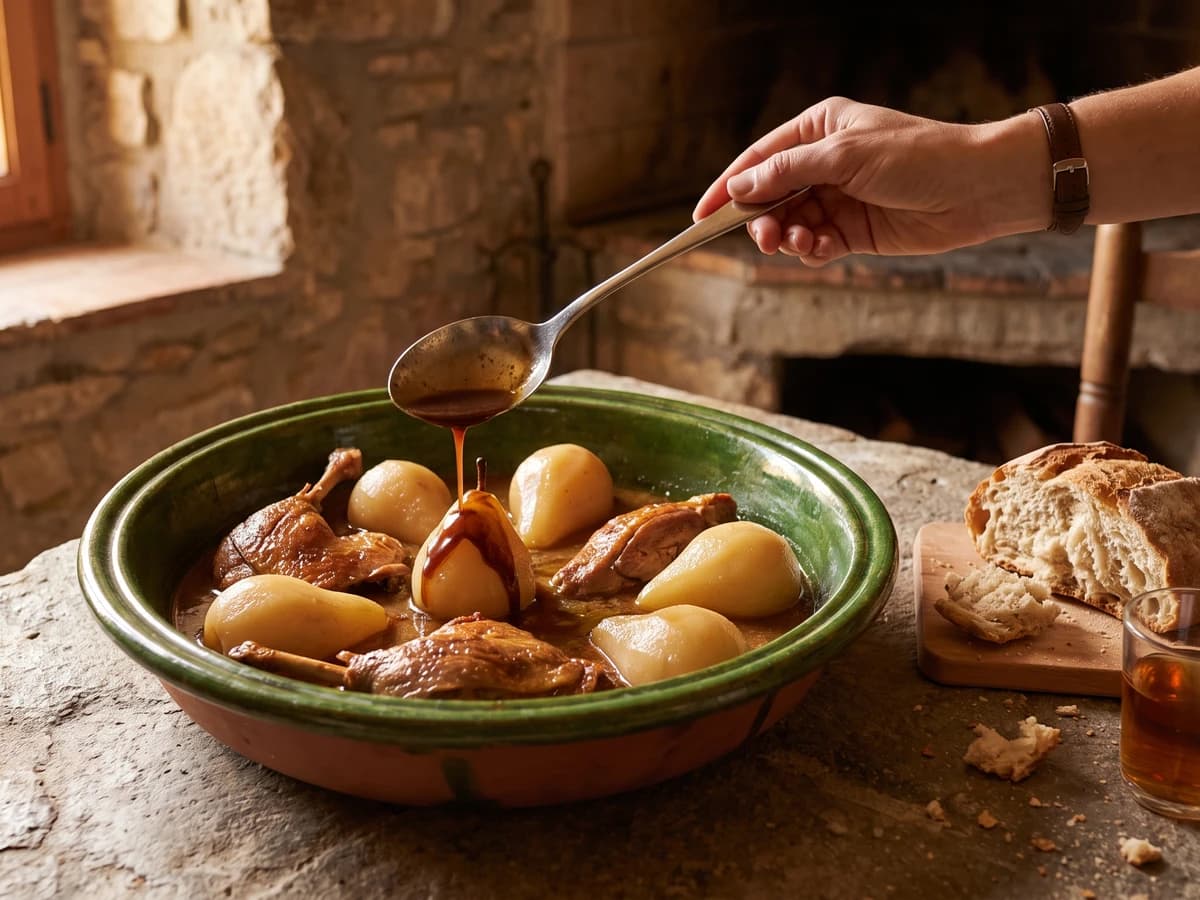
Ànec amb peres is Catalan celebration cooking: duck braised in a dark sofregit, firm autumn pears added near the end, and an almond-garlic picada that turns the juices into a close, glossy sauce.