Chef Isabel
Abanico Ibérico a la Plancha
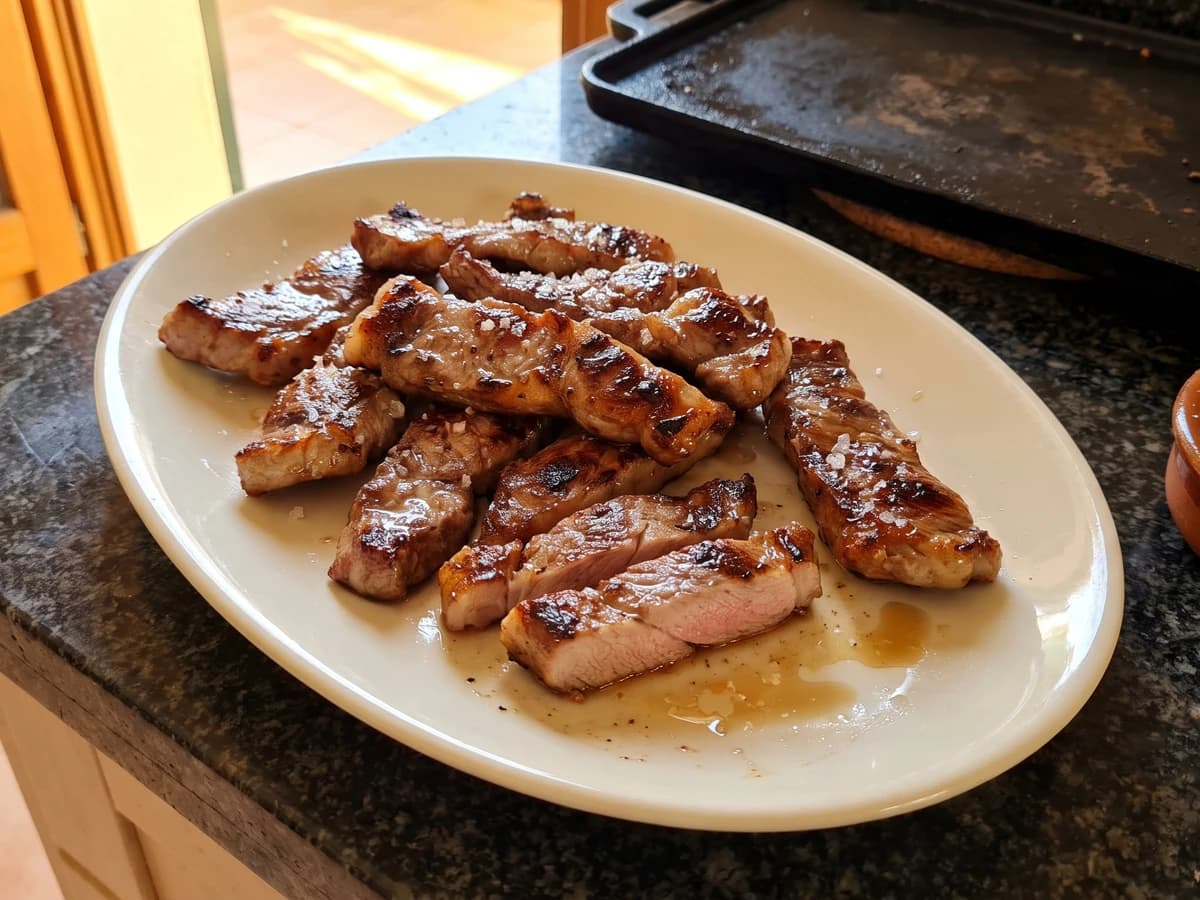
Extremadura's dehesa gives us this fan-shaped, marbled rib cut: salt it at the last moment, lay it on a fierce plancha, and count in seconds so the centre stays juicy.
A cooking platform built around craft, culture, and the stories behind what we eat.
Created by
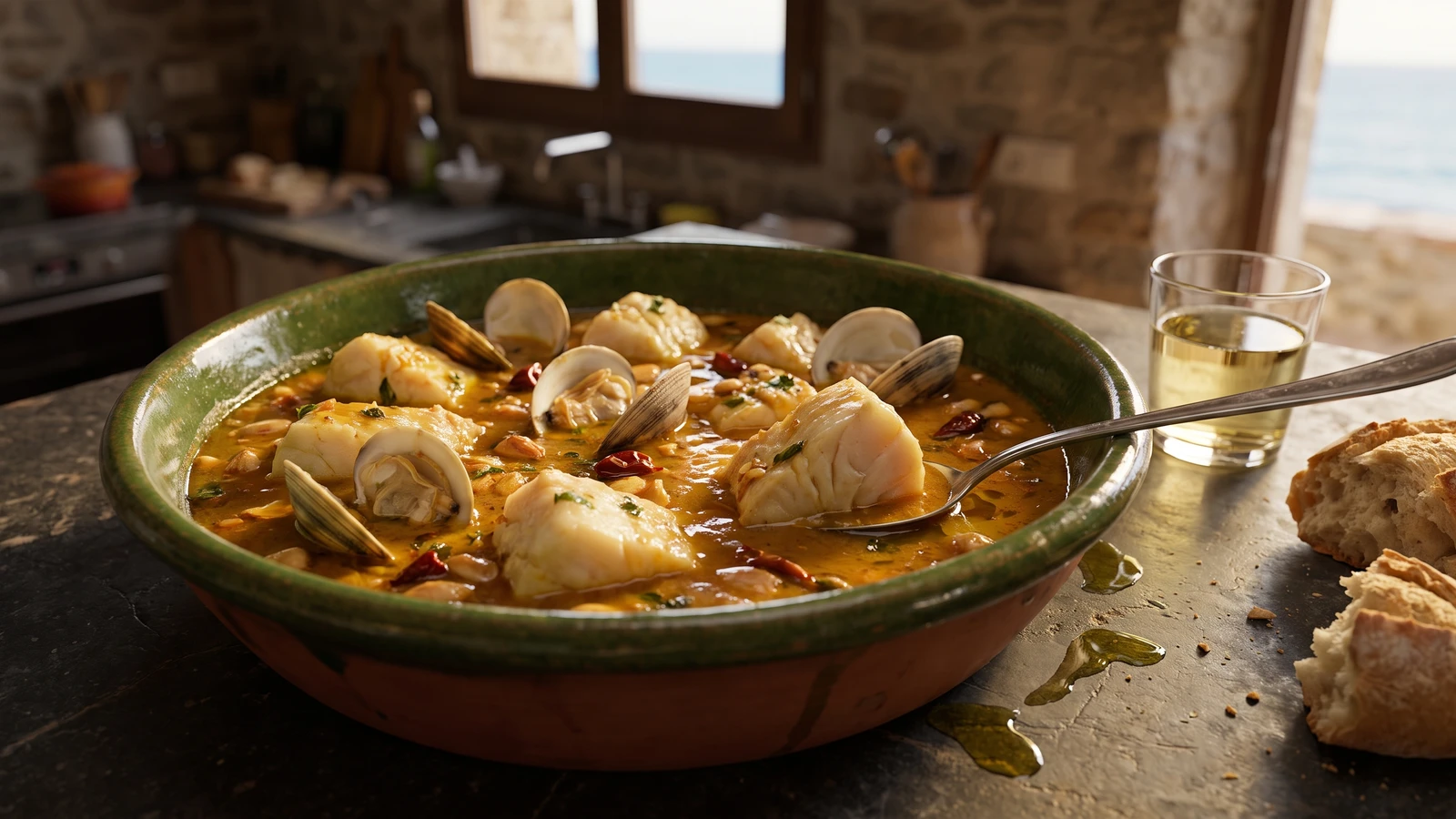
Catalonia's rape a la marinera sets firm monkfish and clams in a glossy sauce of slow sofregit, dry white wine, and almond picada. Build the sauce first, then cook the fish only until it yields.
Rape a la marinera, rap a la marinera in Catalonia, belongs to the Catalan coast: firm monkfish and clams settled into a glossy sauce built from sofregit, dry white wine, fumet, and an almond-and-bread picada. That picada, a paste pounded in the mortar, gives this version its Catalan surname. It thickens without making the sauce heavy and carries garlic, parsley, and toasted almond through every spoonful.
The method that decides the dish is timing. I finish the sauce before the monkfish goes anywhere near the cazuela. Cook the onion slowly until dark gold and sweet, reduce the tomato until almost dry, then give the wine time to lose its raw edge. Only when the picada has brought the sauce together do you add the fish. Monkfish turns firm and dry when it waits in a bubbling pot, so it goes in late and cooks gently for seven minutes or so. No longer.
Frozen monkfish is sound if that is what your market has. Thaw it overnight in the refrigerator and dry it very well, because trapped water thins the sauce. If monkfish is impossible to find, use thick hake loin, merluza, which is what a Spanish kitchen would reach for. It cooks a little sooner and flakes where monkfish stays springy, so move it once and no more. No hace falta haber pisado España.
Bring the cazuela straight to the table with enough bread for the sauce. The Margin in my notebook says sauce first, fish last. Remember that and the dish behaves itself. Siempre sale, si lo sigues.
Along the Costa Brava, fishermen's cazuelas turned firm pieces of the day's catch and a few shellfish into a shared meal with sofregit, wine, and fumet made from heads and bones. Monkfish suited the pot especially well because its large head made a concentrated broth while the fleshy tail had few fine bones and stayed whole in the sauce. A la marinera is a family of coastal preparations rather than one national formula; the almond-and-bread picada is the mark of this Catalan form.
Quantity
900g
grey membrane removed; cut into 8 pieces about 4cm thick
Quantity
500g
scrubbed and purged
Quantity
30g salt with 1 litre water
Quantity
6g, divided
Quantity
50ml, divided
Quantity
20g
crust removed and torn into pieces
Quantity
30g
Quantity
4 cloves
1 left whole and 3 finely chopped
Quantity
10g
divided
Quantity
180g
finely chopped
Quantity
200g
fresh tomato grated, or canned tomatoes drained and crushed
Quantity
150ml
Quantity
400ml
divided
Quantity
up to 60ml
| Ingredient | Quantity |
|---|---|
| cleaned monkfish tail filletsgrey membrane removed; cut into 8 pieces about 4cm thick | 900g |
| small live clams, such as almeja fina, Manila clams, or littlenecksscrubbed and purged | 500g |
| fine salt and cold water, for purging the clams | 30g salt with 1 litre water |
| fine sea salt | 6g, divided |
| extra virgin olive oil | 50ml, divided |
| day-old country breadcrust removed and torn into pieces | 20g |
| blanched almonds | 30g |
| garlic1 left whole and 3 finely chopped | 4 cloves |
| flat-leaf parsley leavesdivided | 10g |
| onionfinely chopped | 180g |
| ripe tomato pulp, or canned whole plum tomatoesfresh tomato grated, or canned tomatoes drained and crushed | 200g |
| dry white wine | 150ml |
| unsalted fish stock or fumetdivided | 400ml |
| hot water (optional) | up to 60ml |
Dissolve the 30g salt in 1 litre cold water. Add the clams and leave them in a cool place for 30 minutes so they release their grit. Lift them out rather than pouring them into a colander, which would send the sand back over them. Rinse and scrub the shells. Discard any cracked clam and any open one that does not close when tapped.
Warm 15ml of the olive oil in a wide cazuela or heavy lidded frying pan over medium-low heat. Add the whole garlic clove and almonds. Cook for 2 minutes, stirring, then add the bread and fry for another 2 minutes until everything is evenly golden. Lift it all into a mortar. Add 8g of the parsley and 75ml of the fish stock, then pound to a slightly coarse paste.
Return the cazuela to low heat with the remaining 35ml olive oil. Add the onion and 2g of the sea salt. Cook for 15 to 18 minutes, stirring often, until the onion is dark gold, soft, and almost jammy. Add the three chopped garlic cloves and cook for 1 minute. Stir in the tomato and cook for another 12 to 15 minutes, until it has darkened, tastes sweet rather than raw, and a spoon drawn across the pan leaves a clean path. This slow base is the floor of the sauce. Rush it and the whole dish tastes thin.
Raise the heat to medium and pour in the white wine. Scrape up anything caught on the bottom and let the wine bubble for 4 minutes, until reduced by about half and no raw alcoholic smell remains. Add the remaining 325ml fish stock and simmer gently for 8 minutes so the stock takes on the sofregit's sweetness.
Stir the picada into the simmering stock a spoonful at a time. Cook gently for 4 minutes, stirring around the base of the cazuela, until the sauce lightly coats the back of a spoon but still runs from it. If it becomes too thick, add hot water 15ml at a time. Taste, but do not add more salt yet. The clams still have their say.
Dry the monkfish thoroughly and season it with the remaining 4g sea salt. Set the pieces in the sauce in one layer and spoon a little sauce over them. Hold the pan at a gentle simmer for 3 minutes, without stirring. Add the drained clams, cover, and cook for another 3 to 5 minutes, until the clams open and the thickest monkfish piece is opaque, springy, and reaches 63°C in the centre. Shake the cazuela once by its handles instead of turning the fish. Discard any clam that remains closed.
Take the cazuela off the heat as soon as the monkfish is done. Let it stand for 2 minutes, then taste the sauce and correct the salt only if it needs it. Chop the remaining 2g parsley and scatter it lightly over the top. Bring the cazuela straight to the table. The sauce should pool around the fish with a glossy, spoon-coating finish, ready for bread.
1 serving (about 400g)
Culinary guides, cultural storytelling, and the editorial depth that makes cooking meaningful.
Discover Culinary ExplorerChef Isabel
Extremadura's dehesa gives us this fan-shaped, marbled rib cut: salt it at the last moment, lay it on a fierce plancha, and count in seconds so the centre stays juicy.

Chef Isabel
Aletría Murciana is Murcia's humble noodle guiso: fine fideos, pork ribs, potato, saffron, and a dark sweet sofrito. Get that base right and the pot knows where it's going.

Chef Isabel
Andrajos are Andalucía's dough-rag stew from Jaén and Granada: a slow rabbit guiso thickened with torn sheets of flour dough, rolled thin so they cook tender instead of gummy.
Chef Isabel
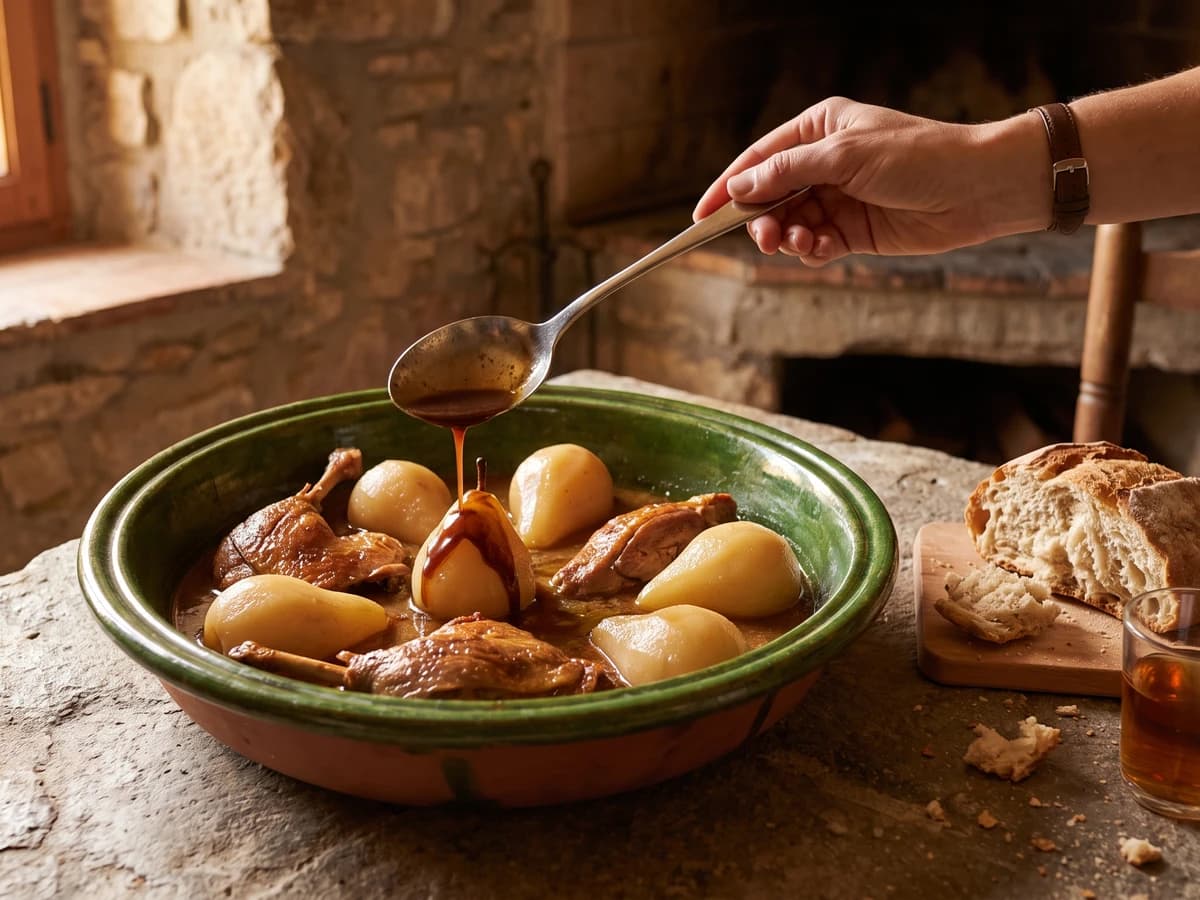
Ànec amb peres is Catalan celebration cooking: duck braised in a dark sofregit, firm autumn pears added near the end, and an almond-garlic picada that turns the juices into a close, glossy sauce.