Chef Isabel
Abanico Ibérico a la Plancha
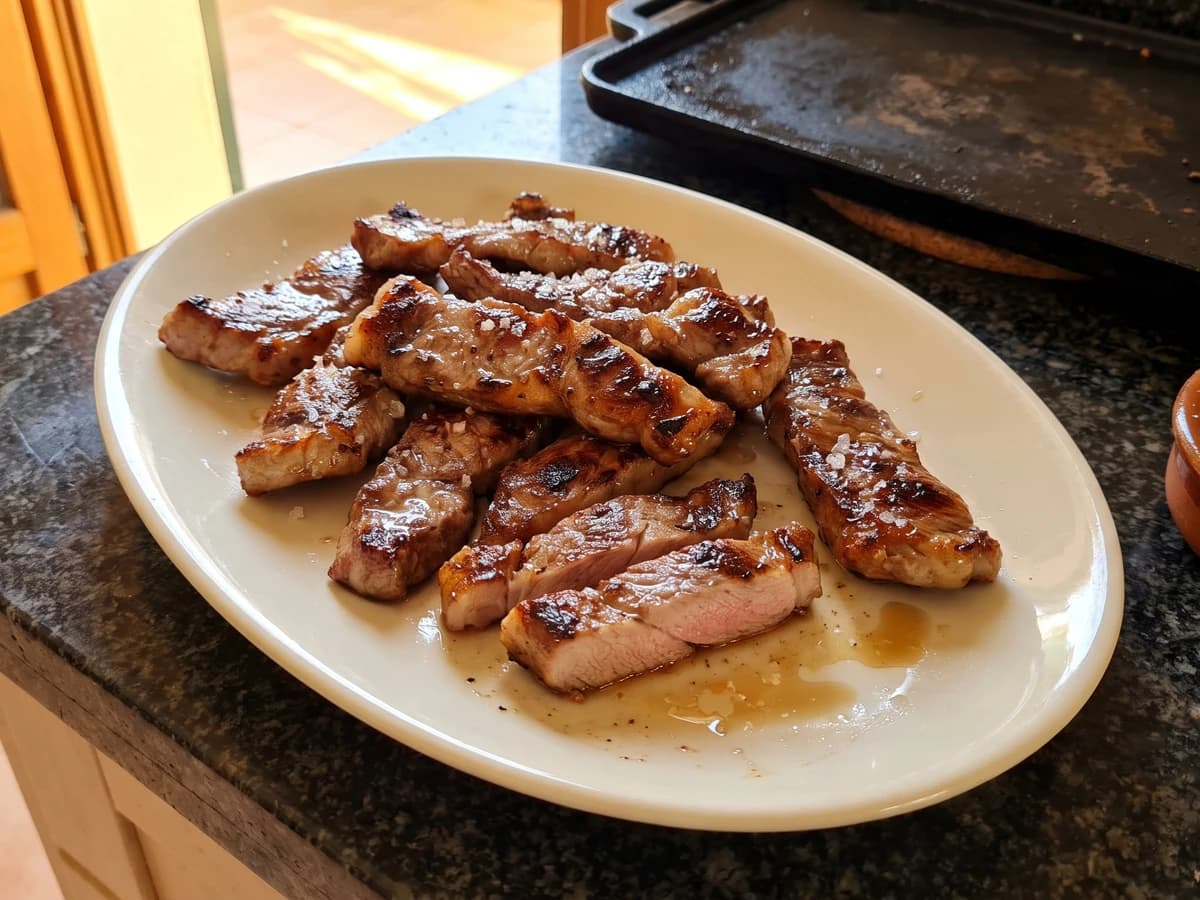
Extremadura's dehesa gives us this fan-shaped, marbled rib cut: salt it at the last moment, lay it on a fierce plancha, and count in seconds so the centre stays juicy.
A cooking platform built around craft, culture, and the stories behind what we eat.
Created by
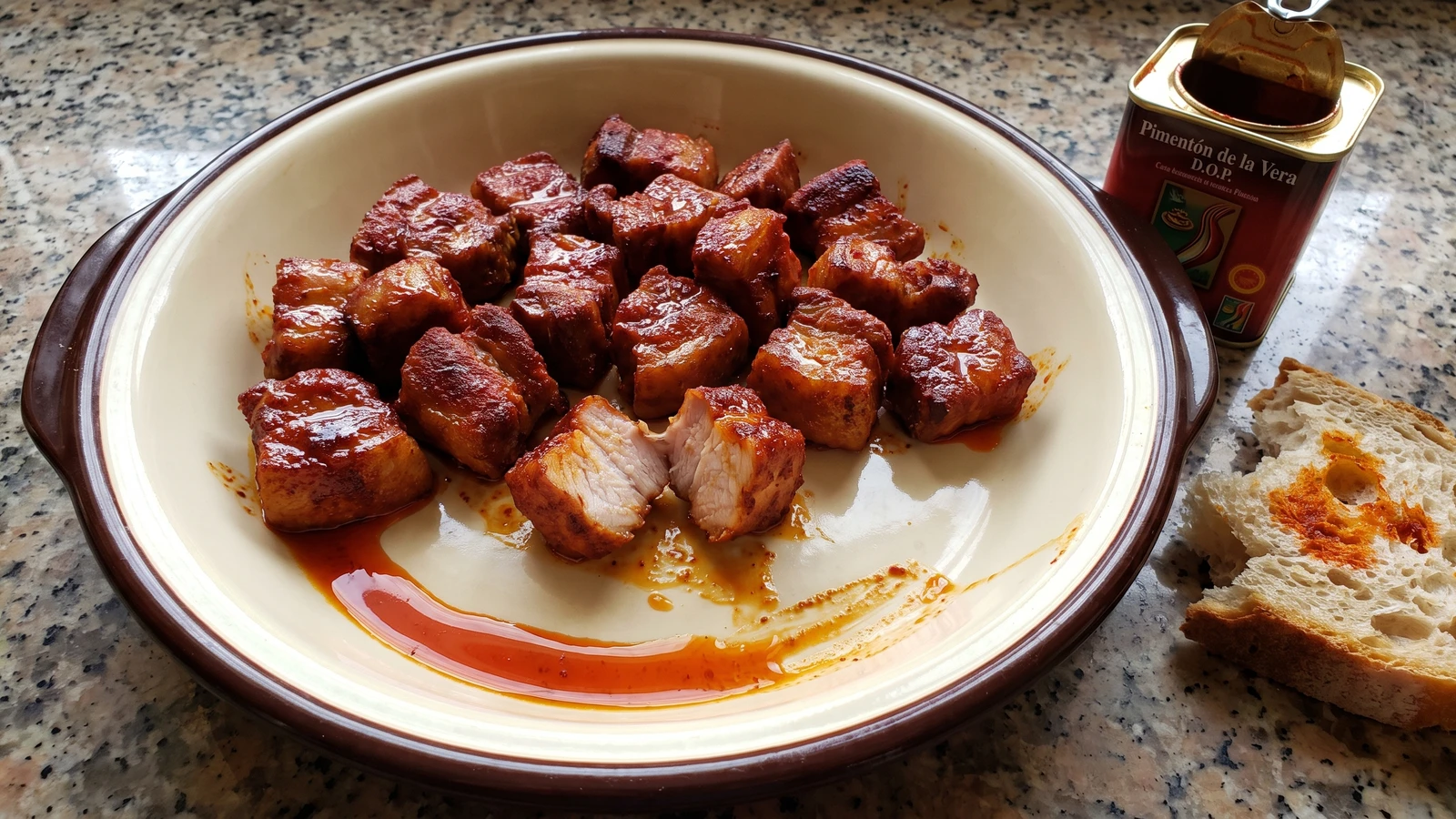
Extremadura's matanza tasting dish: small pieces of pork rested overnight in garlic, oregano and Pimentón de la Vera, then fried until browned, juicy and slick with red oil.
Prueba de cerdo is Extremadura's matanza tasting dish, especially in Cáceres: small pieces of fresh pork steeped in the garlic, oregano and Pimentón de la Vera adobo used for chorizo, then fried. Prueba means test. A piece went into the pan while the seasoned meat could still be corrected. The pork is cooked fresh and left in juicy pieces, not cured as sausage. That distinction matters.
The overnight adobo decides the dish. I crush the garlic with measured salt, stir in the paprika, oregano and white wine, then leave the pork covered and cold for 12 hours. That rest distributes the seasoning properly instead of leaving raw garlic here and a mouthful of salt there. Fry one piece first and taste it cooked. Never taste a raw pork marinade. The old purpose of the dish is still the soundest instruction in the recipe.
In Extremadura you'd ask for magro de cerdo, lean pork carrying enough fat to stay juicy. Far from there, boneless pork collar or shoulder is right; loin works, but it dries sooner and needs a shorter cooking time. If you can't find Pimentón de la Vera, use a good sweet smoked paprika and understand that its smoke may be sharper and less rounded. Fry the meat in batches so it browns instead of boiling in its own liquid. My Margin says, "one bite before the full pan." Siempre sale, si lo sigues.
Prueba de cerdo belongs to the household matanza of Extremadura, particularly the province of Cáceres, where families slaughtered and preserved a pig during the cold season. Before the chorizo mixture was packed into casings, a small portion was fried so the salt, garlic, oregano and paprika could be judged and corrected, which gave the dish its name: la prueba, the test. Its red seasoning points to La Vera in northern Cáceres, where peppers are traditionally dried slowly over oak fires because the damp autumn air does not suit drying them in the open sun.
Quantity
800g
trimmed of tough sinew and cut across the grain into 2cm pieces
Quantity
20g (about 5 medium cloves)
peeled
Quantity
12g
Quantity
14g
Quantity
2g
Quantity
2g
Quantity
75ml
Quantity
45ml
divided between the adobo and frying
| Ingredient | Quantity |
|---|---|
| boneless pork collar or pork shouldertrimmed of tough sinew and cut across the grain into 2cm pieces | 800g |
| garlicpeeled | 20g (about 5 medium cloves) |
| fine sea salt | 12g |
| sweet Pimentón de la Vera | 14g |
| hot Pimentón de la Vera | 2g |
| dried oregano | 2g |
| dry white wine | 75ml |
| extra virgin olive oildivided between the adobo and frying | 45ml |
Trim away tough silver skin, but leave the soft seams of fat that run through the pork. Cut the meat across the grain into even 2cm pieces. Pésalo, no lo adivines: keeping the meat and salt in the stated proportion gives you a properly seasoned adobo without relying on a raw taste.
Pound the garlic and salt together in a mortar until you have a smooth paste. Stir in both pimentones and the oregano, then loosen the mixture with the white wine and 15ml of the olive oil. Mix it cold. Pimentón scorched over direct heat turns bitter before the pork ever reaches the pan.
Put the pork in a nonreactive bowl and pour over the adobo. Turn every piece until no pale patches remain. Cover and refrigerate for 12 hours, turning once if convenient. Don't shorten this to an hour: the overnight rest is what makes the seasoning even and gives the dish its proper deep red colour.
Take the pork from the refrigerator 20 minutes before cooking. Heat a wide, heavy frying pan over medium-high heat for 2 minutes, then add 10ml of the remaining oil. Lift out two pieces of pork, letting excess marinade fall back into the bowl, and fry for about 2 minutes on the first side and 1 to 2 minutes after turning. Cut into one and taste it only when fully cooked. It should be savory, smoky and plainly garlicky. This first cooked bite is the prueba.
Fry the remaining pork in three uncrowded batches, adding the final 20ml oil between them as needed. Let each batch sit untouched for about 2 minutes before turning, then cook for another 2 to 3 minutes. You want browned edges, a juicy centre and brick-red oil. If the coating turns dark brown, lower the heat at once; that is the paprika burning, not useful browning.
Return all the browned pork and its resting juices to the pan. Scrape in any adobo left in the bowl, lower the heat to medium and let it bubble for 2 full minutes, turning the meat until the raw wine smell disappears and the red oil clings in a thin gloss. The thickest pieces should reach 68 to 70°C. Rest off the heat for 3 minutes, then serve with bread for the pimentón-stained juices.
1 serving (about 175g)
Culinary guides, cultural storytelling, and the editorial depth that makes cooking meaningful.
Discover Culinary ExplorerChef Isabel
Extremadura's dehesa gives us this fan-shaped, marbled rib cut: salt it at the last moment, lay it on a fierce plancha, and count in seconds so the centre stays juicy.

Chef Isabel
Aletría Murciana is Murcia's humble noodle guiso: fine fideos, pork ribs, potato, saffron, and a dark sweet sofrito. Get that base right and the pot knows where it's going.

Chef Isabel
Andrajos are Andalucía's dough-rag stew from Jaén and Granada: a slow rabbit guiso thickened with torn sheets of flour dough, rolled thin so they cook tender instead of gummy.
Chef Isabel
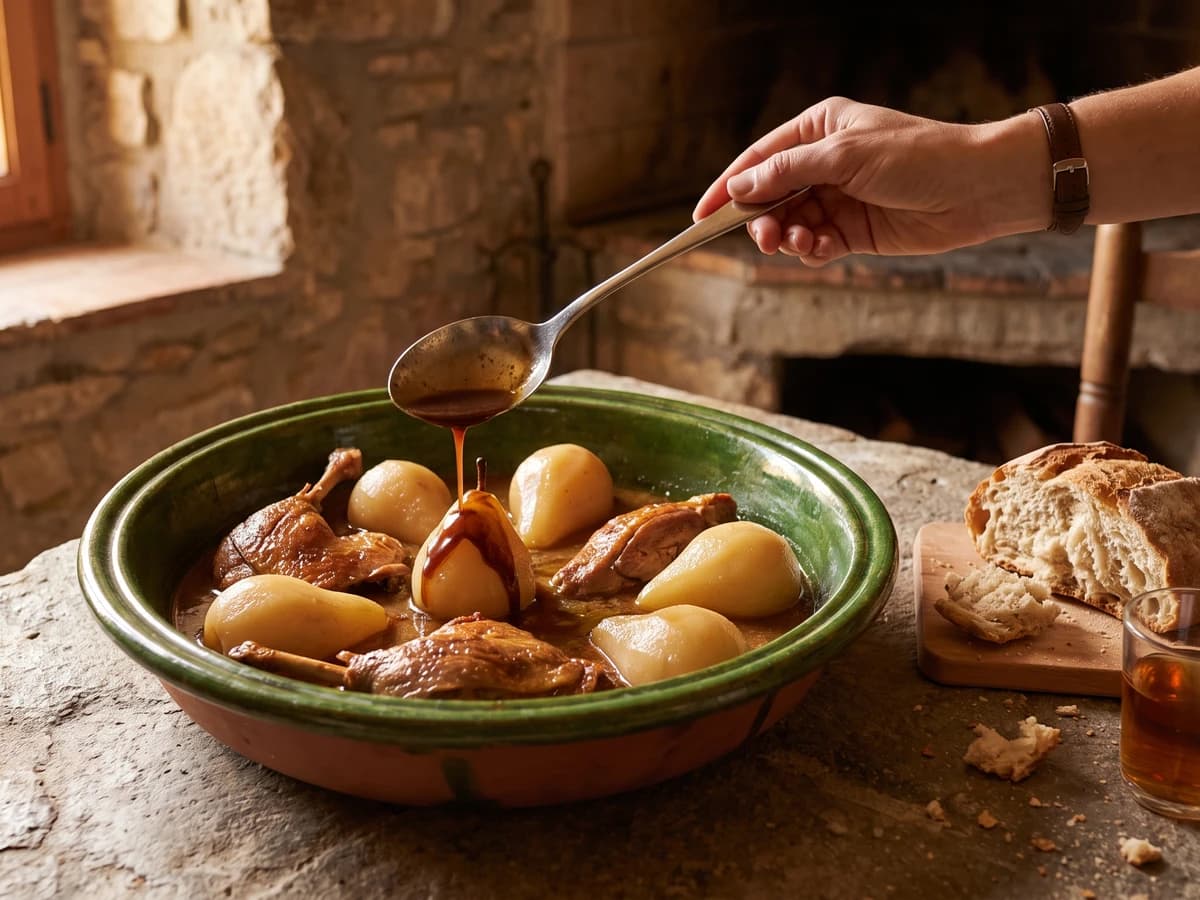
Ànec amb peres is Catalan celebration cooking: duck braised in a dark sofregit, firm autumn pears added near the end, and an almond-garlic picada that turns the juices into a close, glossy sauce.