Chef Isabel
Abanico Ibérico a la Plancha
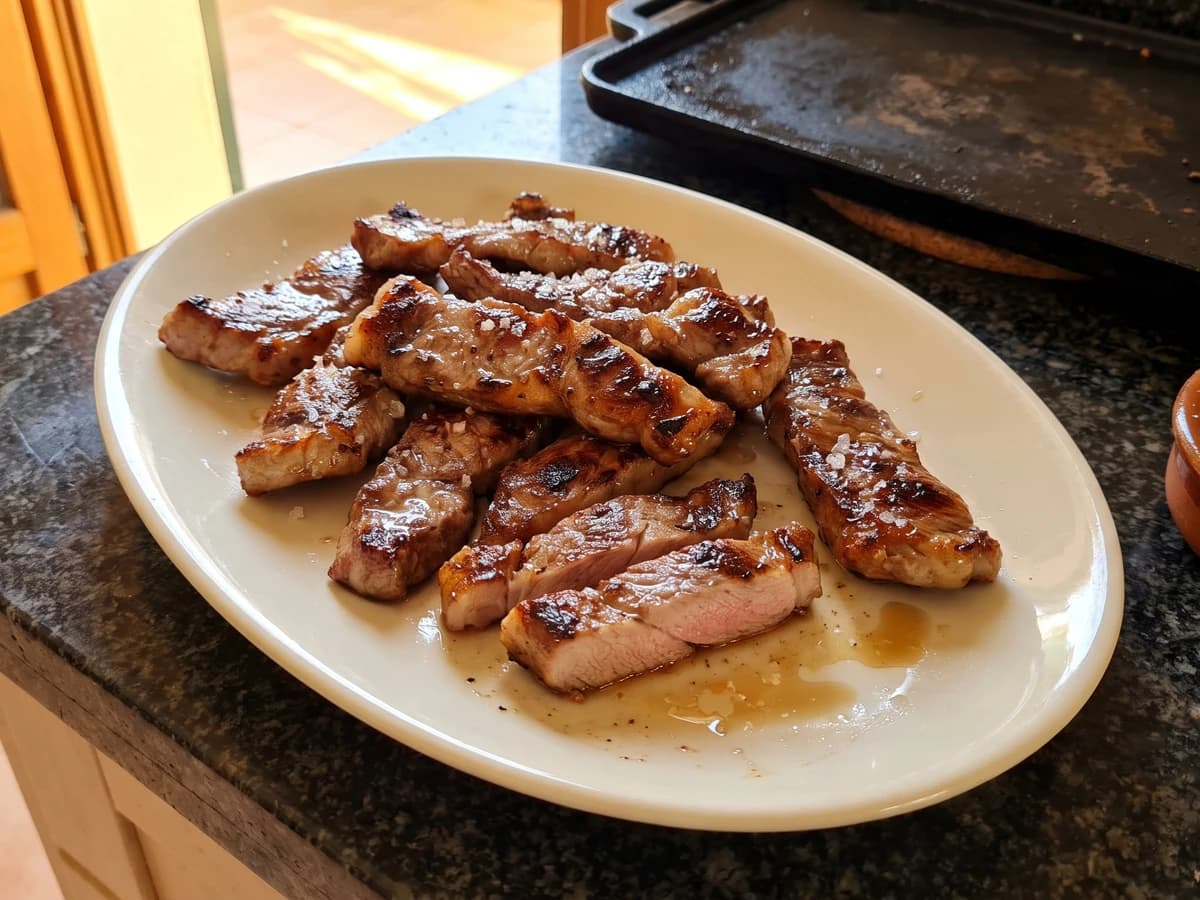
Extremadura's dehesa gives us this fan-shaped, marbled rib cut: salt it at the last moment, lay it on a fierce plancha, and count in seconds so the centre stays juicy.
A cooking platform built around craft, culture, and the stories behind what we eat.
Created by
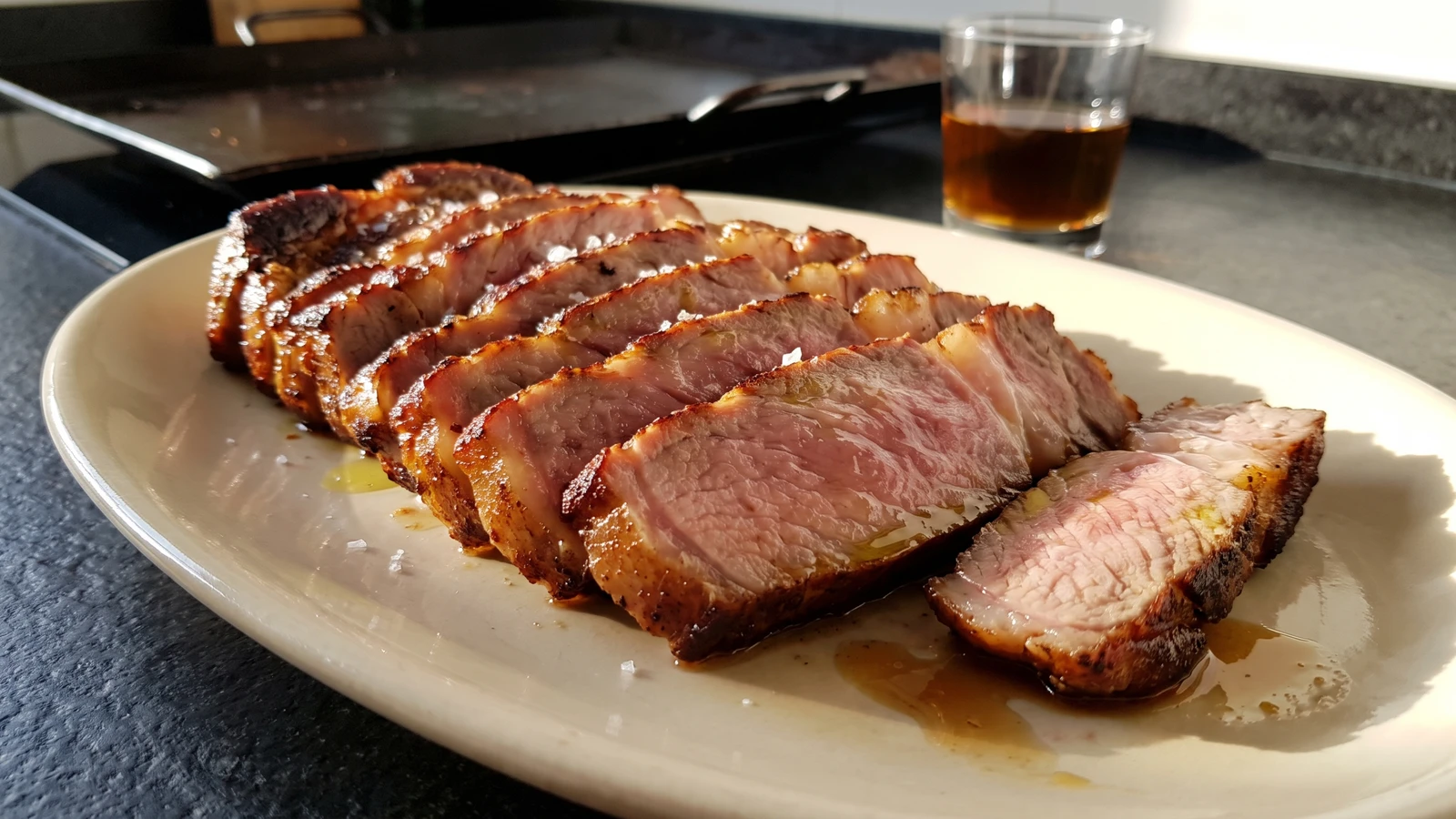
Presa ibérica is western Andalucía's richly marbled shoulder cut: salt it, sear it fiercely on hot iron, rest it well, then slice across the grain while the centre is still rosy.
Presa ibérica a la plancha belongs to the dehesa country of western Andalucía, especially the Sierra de Aracena in Huelva. Presa is the thick, marbled piece nestled where the shoulder meets the loin. Here it needs no marinade and no sauce to hide behind, only salt and a fierce plancha, the flat iron that gives the meat its dark crust while the middle stays rosy.
The method that decides it is simple: dry the meat thoroughly, put it onto properly hot iron, and stop cooking at 63°C in the centre. The fine fat then softens through the meat instead of draining away while the muscle tightens. Rest it for five minutes and slice against the grain. That's what keeps each mouthful juicy rather than stubborn.
If presa cannot be found where you are, ask for well-marbled pork collar or neck, aguja de cerdo in a Spanish butcher's shop. It has a coarser grain and less of the sweet, nutty fat of presa de bellota, but it takes the same treatment honestly. No hace falta haber pisado España. My Margin for this one says only: dry meat, hot iron, five quiet minutes. Siempre sale, si lo sigues.
Presa comes from the upper shoulder of the Ibérico pig raised across the dehesas of western Andalucía and Extremadura, including the oak country of the Sierra de Aracena y Picos de Aroche in Huelva. During the montanera, pigs destined for the de bellota designation range beneath holm and cork oaks, eating acorns and pasture that give their fat its distinctive sweetness. At the household matanza, much of this richly marbled part once went into prized chacinas, cured pork preparations, while careful butchery preserved the whole presa for cooking over hot iron or coals.
Quantity
800g
cut into 4 steaks about 3cm thick
Quantity
7g
Quantity
10ml (2 teaspoons)
Quantity
1g
for finishing
| Ingredient | Quantity |
|---|---|
| presa ibérica de bellotacut into 4 steaks about 3cm thick | 800g |
| fine sea salt | 7g |
| extra virgin olive oil | 10ml (2 teaspoons) |
| flaky sea salt (optional)for finishing | 1g |
Take the presa from the refrigerator twenty minutes before cooking. Note the direction of the muscle fibres now, because the crust makes them harder to see later. Trim away only any tough silver skin, leaving every seam of soft fat in place, then press the meat completely dry with kitchen paper.
Set a heavy plancha or cast-iron pan over medium-high heat for six to eight minutes. It should be very hot, about 230°C at the surface, before the meat touches it. A lukewarm pan melts the fat before it browns the outside, and that is how a fine piece of presa becomes grey and greasy.
Rub the steaks with the olive oil and distribute the 7g fine salt evenly over both sides. Pésalo, no lo adivines, weigh it, don't guess. Season immediately before cooking so the surfaces remain dry.
Lay the steaks on the hot plancha with space between them. Cook in two batches if the iron is smaller than 35cm. Leave the first side untouched for two and a half to three minutes, until it carries a deep brown crust and releases cleanly. Turn once and cook the second side for two minutes, then hold the fatty edges against the iron with tongs for about thirty seconds each.
Insert an instant-read thermometer sideways into the thickest part. If the centre has not reached 63°C, lower the heat to medium and turn the steaks every thirty seconds until it does. Temperature decides this more reliably than the clock. The meat should feel springy, not hard, and remain rosy within.
Move the presa to a warm platter and rest it uncovered for five minutes. Do not wrap it tightly, or the crust softens. Slice across the remembered direction of the grain into pieces about 5mm thick, spoon the collected juices over them, and finish with the flaky salt if using. Serve at once.
1 serving (about 160g)
Culinary guides, cultural storytelling, and the editorial depth that makes cooking meaningful.
Discover Culinary ExplorerChef Isabel
Extremadura's dehesa gives us this fan-shaped, marbled rib cut: salt it at the last moment, lay it on a fierce plancha, and count in seconds so the centre stays juicy.

Chef Isabel
Aletría Murciana is Murcia's humble noodle guiso: fine fideos, pork ribs, potato, saffron, and a dark sweet sofrito. Get that base right and the pot knows where it's going.

Chef Isabel
Andrajos are Andalucía's dough-rag stew from Jaén and Granada: a slow rabbit guiso thickened with torn sheets of flour dough, rolled thin so they cook tender instead of gummy.
Chef Isabel
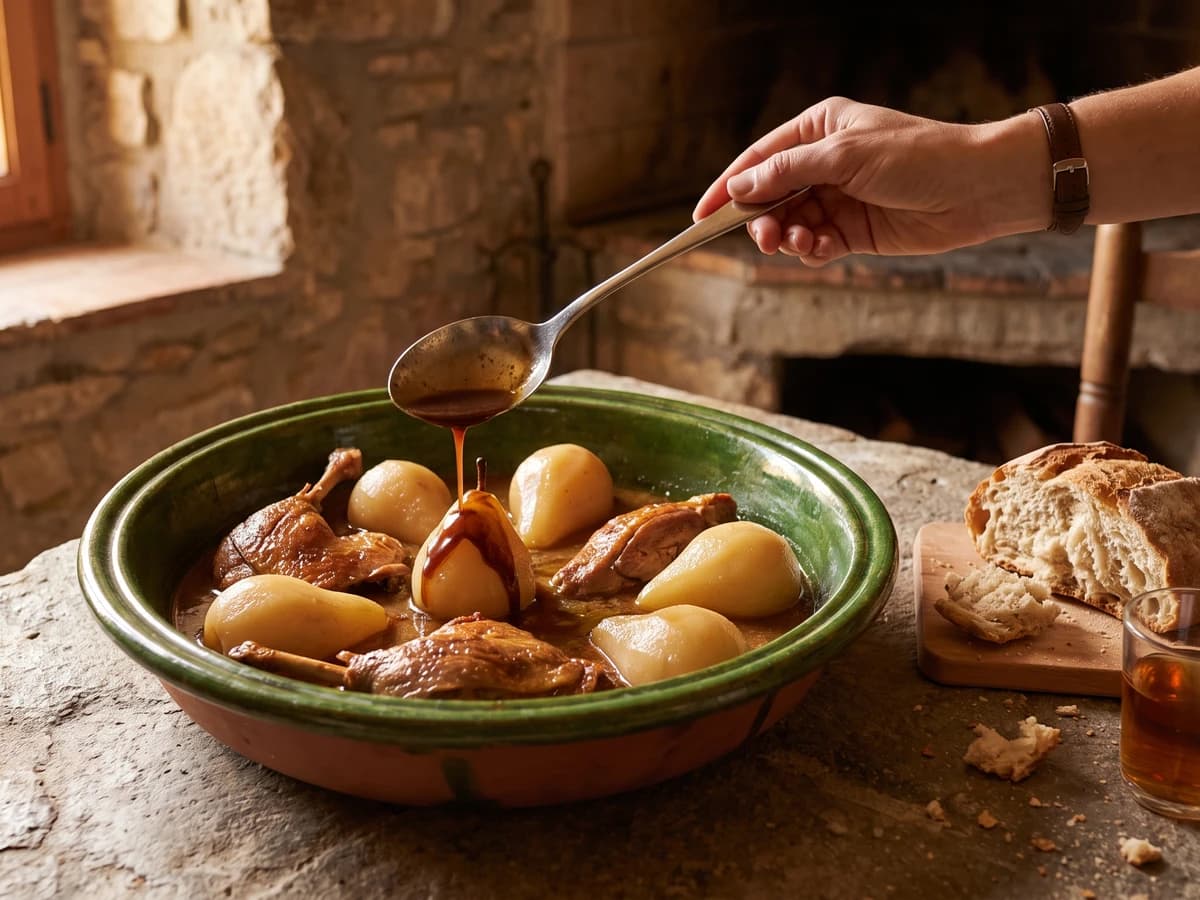
Ànec amb peres is Catalan celebration cooking: duck braised in a dark sofregit, firm autumn pears added near the end, and an almond-garlic picada that turns the juices into a close, glossy sauce.