Chef Isabel
Abanico Ibérico a la Plancha
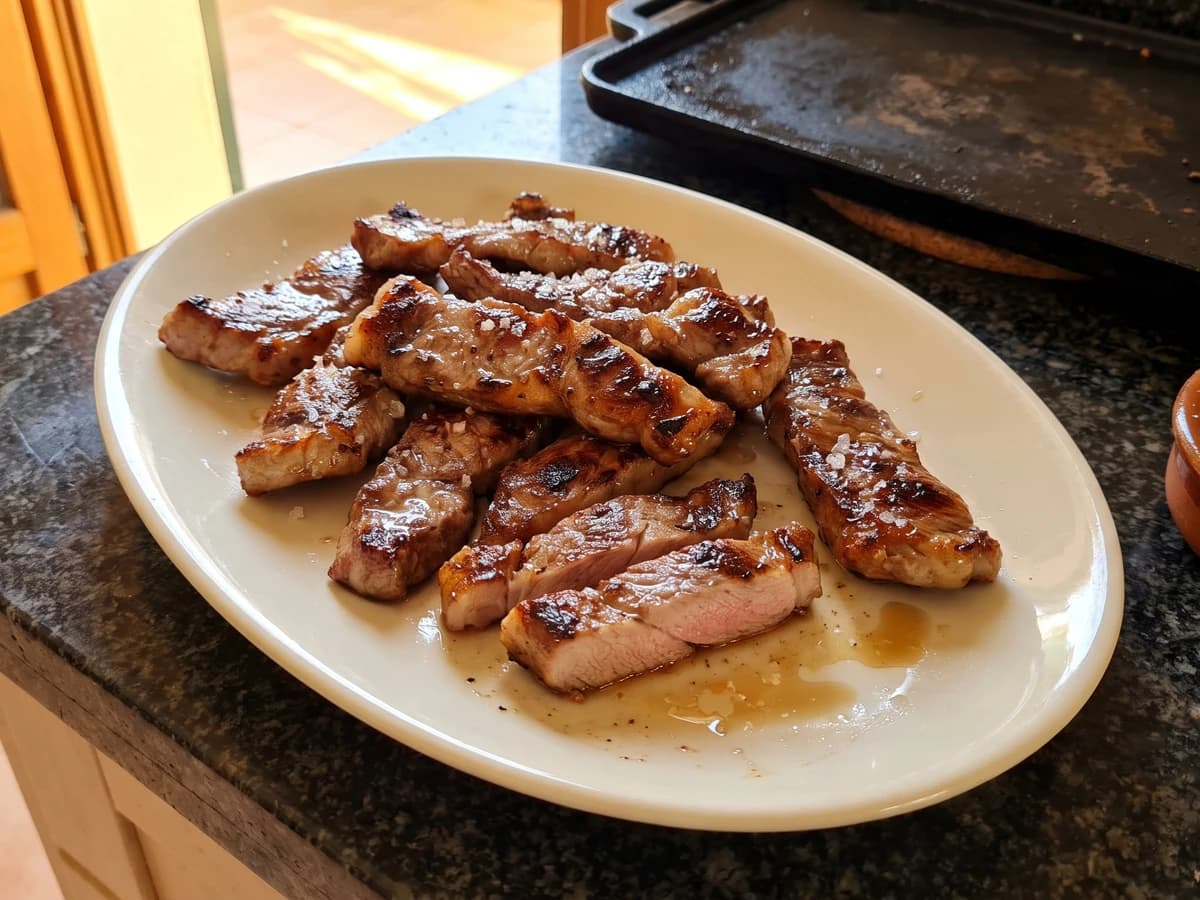
Extremadura's dehesa gives us this fan-shaped, marbled rib cut: salt it at the last moment, lay it on a fierce plancha, and count in seconds so the centre stays juicy.
A cooking platform built around craft, culture, and the stories behind what we eat.
Created by
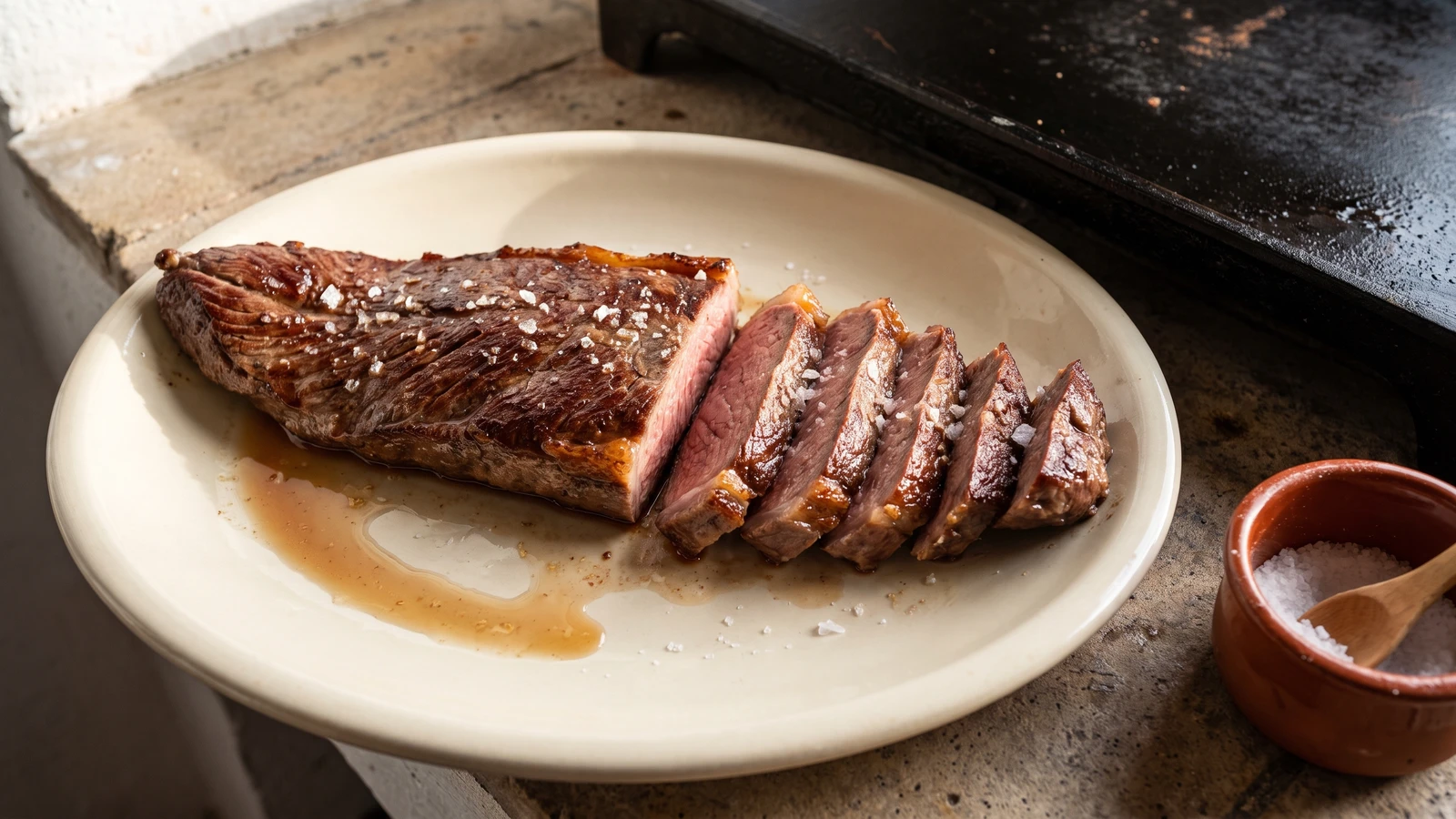
Extremadura cooks pluma Ibérica fast and bare: a fierce plancha, a short rest, and coarse salt leave the feather-shaped loin tip deeply browned outside and rosy, juicy, and marbled within.
Pluma Ibérica a la plancha belongs to the dehesa country of Extremadura. The pluma is the small, feather-shaped muscle at the end of the loin, tender like solomillo but threaded with far more fat. That marbling is the point. What makes this the dish, rather than merely grilled pork, is the cut and the refusal to bury it: no marinade, no sauce, only fierce iron and coarse salt.
The method that decides it is a bone-dry surface against a properly hot plancha. If the iron is lukewarm, the fat leaks away before the meat browns and you get grey pork sitting in its own juices. Pat it dry, oil the meat rather than the pan, and leave it untouched long enough to build a dark crust. A thermometer takes the guesswork out of the rosy centre. Pésalo, no lo adivines, and measure the temperature too.
No hace falta haber pisado España. If pluma is unavailable, use presa Ibérica cut into steaks of the same thickness; it is meatier and needs a little longer. Well-marbled pork collar or neck is the useful substitute farther from Spain, though its grain is coarser and it lacks some of Ibérico's sweet, nutty fat. Don't replace it with tenderloin, which is too lean for this treatment. The Margin beside this recipe says only, "seca, fuego fuerte, reposo": dry, fierce heat, rest. Siempre sale, si lo sigues.
Pluma belongs to the Ibérico butchery of Extremadura's dehesa, the oak pasture where acorn-finished pigs forage during the montanera. Its name means "feather" and comes from the flat, triangular shape of the muscle at the end of the loin, whose fine seams of fat suit the direct heat of the plancha. This quick fresh-meat preparation is another face of the same Extremaduran pig culture known beyond the region chiefly through jamón and the cured larder of the matanza.
Quantity
700g (about 2 whole pieces)
silver skin removed, visible fat left intact
Quantity
10ml
Quantity
7g
| Ingredient | Quantity |
|---|---|
| pluma Ibéricasilver skin removed, visible fat left intact | 700g (about 2 whole pieces) |
| olive oil | 10ml |
| coarse sea salt | 7g |
Take the pluma from the refrigerator 20 minutes before cooking. Trim away only tough silver skin, leaving every soft seam of fat in place. Pat both sides very dry with kitchen paper; moisture must evaporate before meat can brown, and this cut is too quick-cooking to wait for that.
Set a heavy flat plancha or cast-iron griddle over high heat for 5 to 7 minutes. The cooking surface should reach about 230 to 250°C. Rub the meat all over with the 10ml olive oil, leaving no puddles. The iron is ready when a corner of the meat gives an immediate, hard sizzle.
Lay the pluma flat on the plancha without crowding it. Cook the first side untouched for 2 1/2 to 3 minutes, until a dark mahogany crust forms and the meat releases without tearing. Turn once and cook the second side for 2 to 3 minutes. Hold any thick fatty edge against the iron with tongs for 20 to 30 seconds. Don't press the meat; pressing only gives its juices to the plancha.
Move the pluma to a warm plate and rest it uncovered for 5 minutes. Slice across the grain into pieces about 8mm thick, keeping the rosy centre and browned edge in every slice. Spoon the resting juices over the meat and scatter all 7g of coarse salt evenly across the cut faces. Serve at once.
1 serving (about 145g)
Culinary guides, cultural storytelling, and the editorial depth that makes cooking meaningful.
Discover Culinary ExplorerChef Isabel
Extremadura's dehesa gives us this fan-shaped, marbled rib cut: salt it at the last moment, lay it on a fierce plancha, and count in seconds so the centre stays juicy.

Chef Isabel
Aletría Murciana is Murcia's humble noodle guiso: fine fideos, pork ribs, potato, saffron, and a dark sweet sofrito. Get that base right and the pot knows where it's going.

Chef Isabel
Andrajos are Andalucía's dough-rag stew from Jaén and Granada: a slow rabbit guiso thickened with torn sheets of flour dough, rolled thin so they cook tender instead of gummy.
Chef Isabel
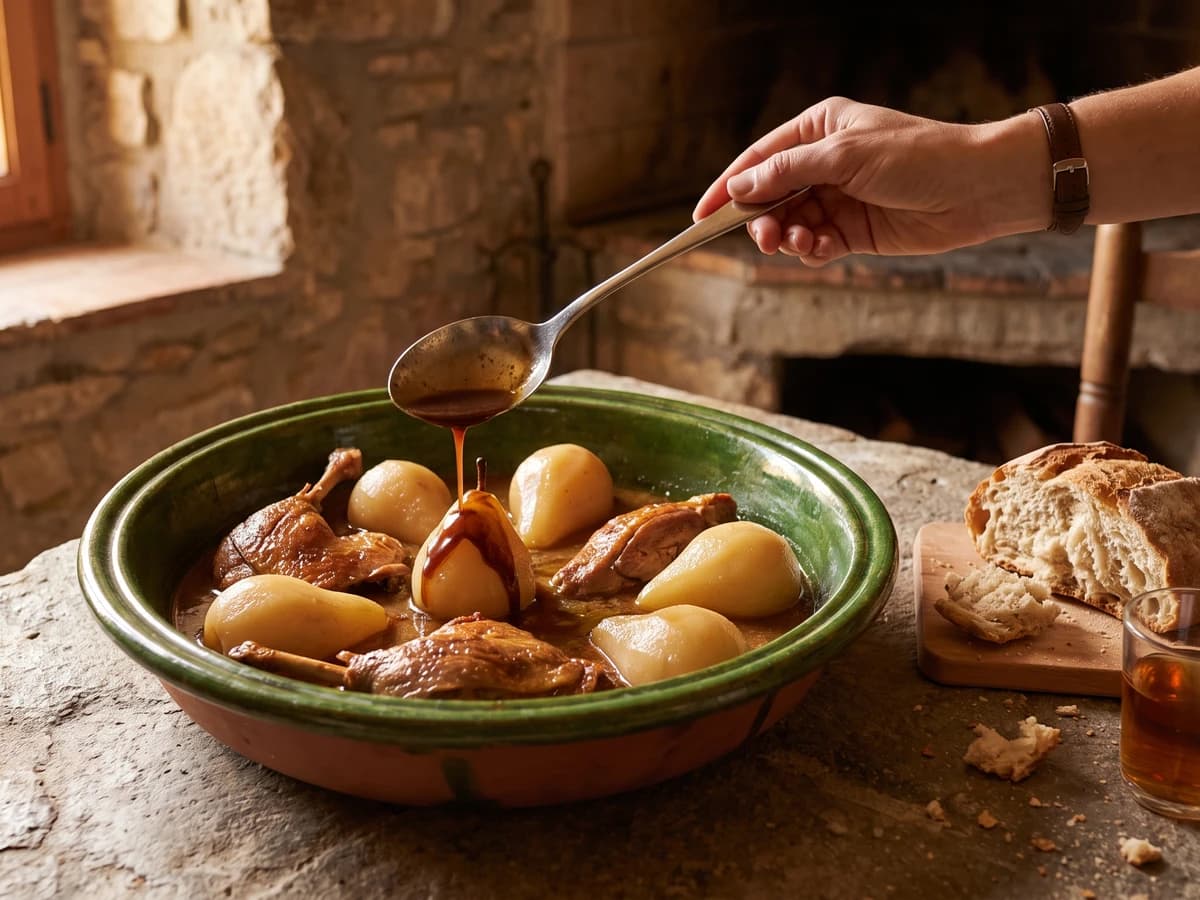
Ànec amb peres is Catalan celebration cooking: duck braised in a dark sofregit, firm autumn pears added near the end, and an almond-garlic picada that turns the juices into a close, glossy sauce.