Chef Isabel
Abanico Ibérico a la Plancha
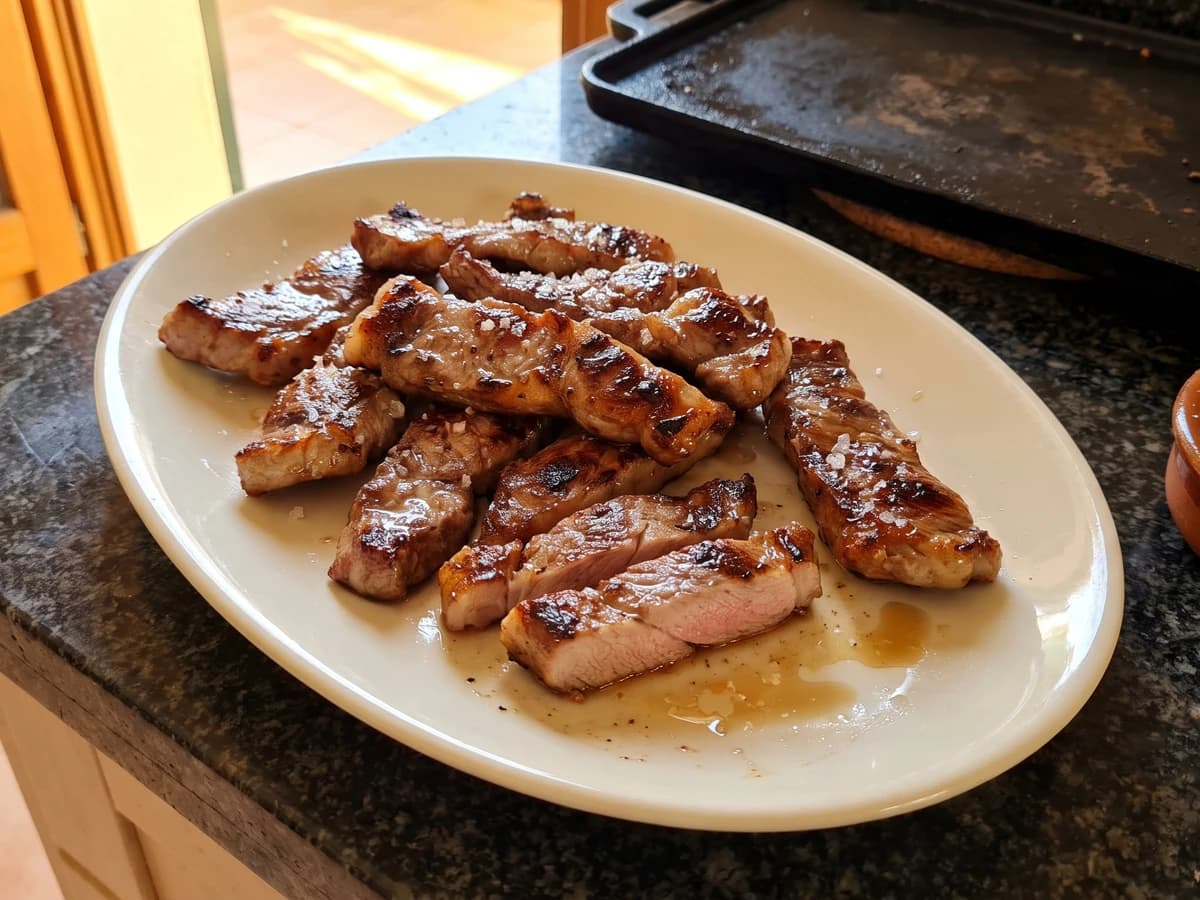
Extremadura's dehesa gives us this fan-shaped, marbled rib cut: salt it at the last moment, lay it on a fierce plancha, and count in seconds so the centre stays juicy.
A cooking platform built around craft, culture, and the stories behind what we eat.
Created by
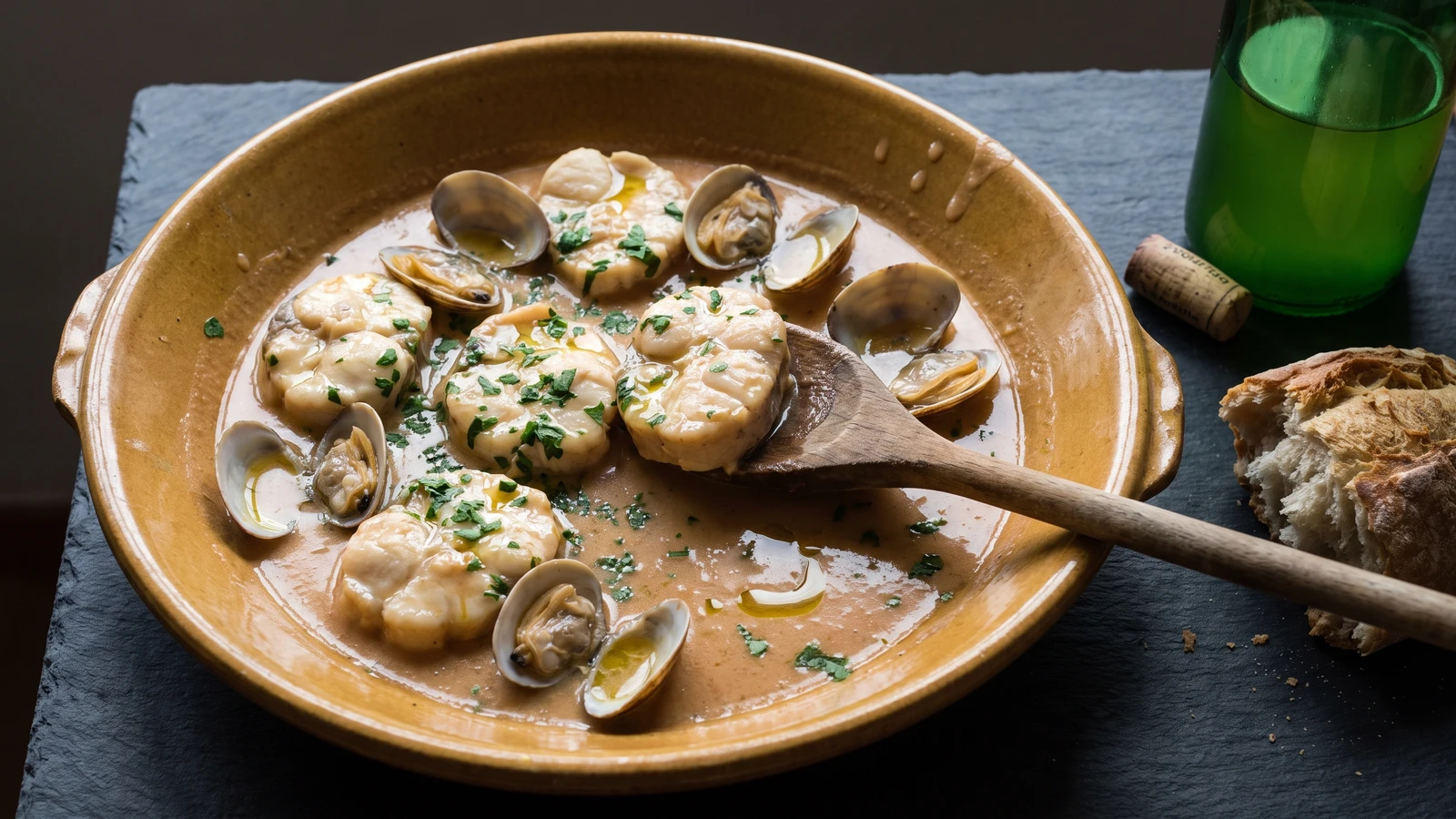
Asturias gives firm monkfish and briny clams a sauce of natural cider, slow onion, and tomato. Reduce the cider before the fish returns, and the sauce turns rounded while the flesh stays succulent.
Pixín a la sidra is Asturian: thick pieces of monkfish, small clams, and sidra natural settled into a soft onion-and-tomato sauce. The dry, tart cider is the surname here. It brings Asturias's apple country to its Cantabrian catch, while the monkfish stays in meaty pieces where a softer fish would fall apart. Esto es de Asturias, no de "España" a secas.
The step that decides the dish is reducing the cider before the fish returns. First cook the sofrito, the slow onion base, until the onion is dark gold and the tomato has lost its water. Then add the cider and let it reduce by half. Put the monkfish in too soon and its flesh tightens before the cider loses its raw, sharp edge. I sear it briefly, finish it gently in the sauce, and give the clams only enough time to open.
Far from Asturias, use a dry, unsweetened still hard cider. The sauce will be a little less tannic than one made with Asturian sidra natural, but it will be right in balance. Small littleneck or Manila clams stand in well for almejas finas. If monkfish is unavailable, an Asturian cook might reach for thick hake steaks, though then the dish is merluza a la sidra, not pixín. The Margin beside this one says only, "reduce first." Siempre sale, si lo sigues.
Pixín is the Asturian name for monkfish, a fish landed along the Cantabrian coast at ports such as Lastres, Gijón, and Avilés. Cooking it with sidra natural joins that coastal catch to the apple orchards of the Comarca de la Sidra around Villaviciosa and Nava, while the clams recall the tidal flats of Asturian estuaries. The fish's great head traditionally goes into caldo, the stock, and its firm tail into the finished sauce, a household division that wastes none of an awkward-looking fish.
Quantity
800g
grey membrane removed; cut into 8 medallions about 3cm thick
Quantity
500g
scrubbed
Quantity
1 litre
for purging the clams
Quantity
35g
dissolved in the cold water
Quantity
6g
divided
Quantity
30g
for dusting
Quantity
45ml
Quantity
200g
finely diced
Quantity
10g (about 2 large cloves)
finely minced
Quantity
200g
grated, or crushed if canned
Quantity
300ml
Quantity
200ml, plus up to 60ml if needed
kept hot
Quantity
12g
finely chopped
| Ingredient | Quantity |
|---|---|
| skinless, boneless monkfish tailgrey membrane removed; cut into 8 medallions about 3cm thick | 800g |
| live small clams, such as almeja fina, Manila clams, or littlenecksscrubbed | 500g |
| cold water (optional)for purging the clams | 1 litre |
| fine sea salt for purging (optional)dissolved in the cold water | 35g |
| fine sea salt for seasoningdivided | 6g |
| plain flourfor dusting | 30g |
| extra virgin olive oil | 45ml |
| onionfinely diced | 200g |
| garlicfinely minced | 10g (about 2 large cloves) |
| ripe tomato flesh, or canned whole peeled tomatoesgrated, or crushed if canned | 200g |
| Asturian sidra natural, or dry unsweetened still hard cider | 300ml |
| light unsalted fish stockkept hot | 200ml, plus up to 60ml if needed |
| flat-leaf parsley leavesfinely chopped | 12g |
Discard any clam with a broken shell. Tap any open ones firmly and discard those that do not close. If they were not sold already purged, dissolve 35g salt in 1 litre cold water and soak the clams for 20 minutes. Lift them out with your hands so the sand stays behind, rinse under cold water, and drain.
Check that every strip of grey outer membrane has been removed, because it contracts in the pan and pulls the fish out of shape. Pat the medallions very dry, season them evenly with 4g of the salt, and leave them for 10 minutes. Pat them dry once more before flouring.
Heat the olive oil in a wide, heavy pan over medium-high heat. Dust the monkfish lightly with the flour and shake off every loose bit. Sear it in one uncrowded layer for 60 to 75 seconds per side, just until pale gold outside but still raw at the centre. Transfer it to a plate and keep any juices that collect.
Lower the heat and add the onion with 1g salt to the same pan. Cook for 15 to 18 minutes, stirring often, until dark gold, soft, and almost jammy. Add the garlic and cook for 45 seconds. Stir in the tomato and cook for another 10 to 12 minutes, until its water is gone, the colour has deepened, and a spoon drawn through the sofrito leaves a clean path.
Raise the heat to medium-high and pour in the cider, scraping up the browned traces from the bottom. Let it boil steadily for 8 to 10 minutes, until reduced by half to roughly 150ml. The bubbles will grow broader and the sharp raw-apple smell will soften. This reduction is what decides the sauce: it concentrates the cider before the monkfish has any chance to overcook.
Add 200ml hot fish stock and simmer for 5 minutes. Take the pan off the heat and pass the sauce through a food mill, or blend it carefully until smooth. Return it to the pan and bring it to the barest simmer. It should coat a spoon but still pour easily; if it is too thick, add the remaining stock 15ml at a time.
Set the monkfish and its collected juices into the sauce in one layer. Simmer very gently for 3 minutes, turn the pieces, then scatter in the clams and cover. Cook for another 3 to 5 minutes, removing the clams as they open. The monkfish is ready when its centre has turned just opaque and the flesh feels firm with a slight spring. Return the opened clams to the pan and discard any that remain closed.
Take the pan off the heat. Stir in two-thirds of the parsley and let the dish rest for 3 minutes so the sauce settles around the fish. Taste before adding the last 1g salt, because the clams may have seasoned it sufficiently. Scatter over the remaining parsley and serve from the cazuela, with bread or plain boiled potatoes to carry the cider sauce.
1 serving (about 340g)
Culinary guides, cultural storytelling, and the editorial depth that makes cooking meaningful.
Discover Culinary ExplorerChef Isabel
Extremadura's dehesa gives us this fan-shaped, marbled rib cut: salt it at the last moment, lay it on a fierce plancha, and count in seconds so the centre stays juicy.

Chef Isabel
Aletría Murciana is Murcia's humble noodle guiso: fine fideos, pork ribs, potato, saffron, and a dark sweet sofrito. Get that base right and the pot knows where it's going.

Chef Isabel
Andrajos are Andalucía's dough-rag stew from Jaén and Granada: a slow rabbit guiso thickened with torn sheets of flour dough, rolled thin so they cook tender instead of gummy.
Chef Isabel
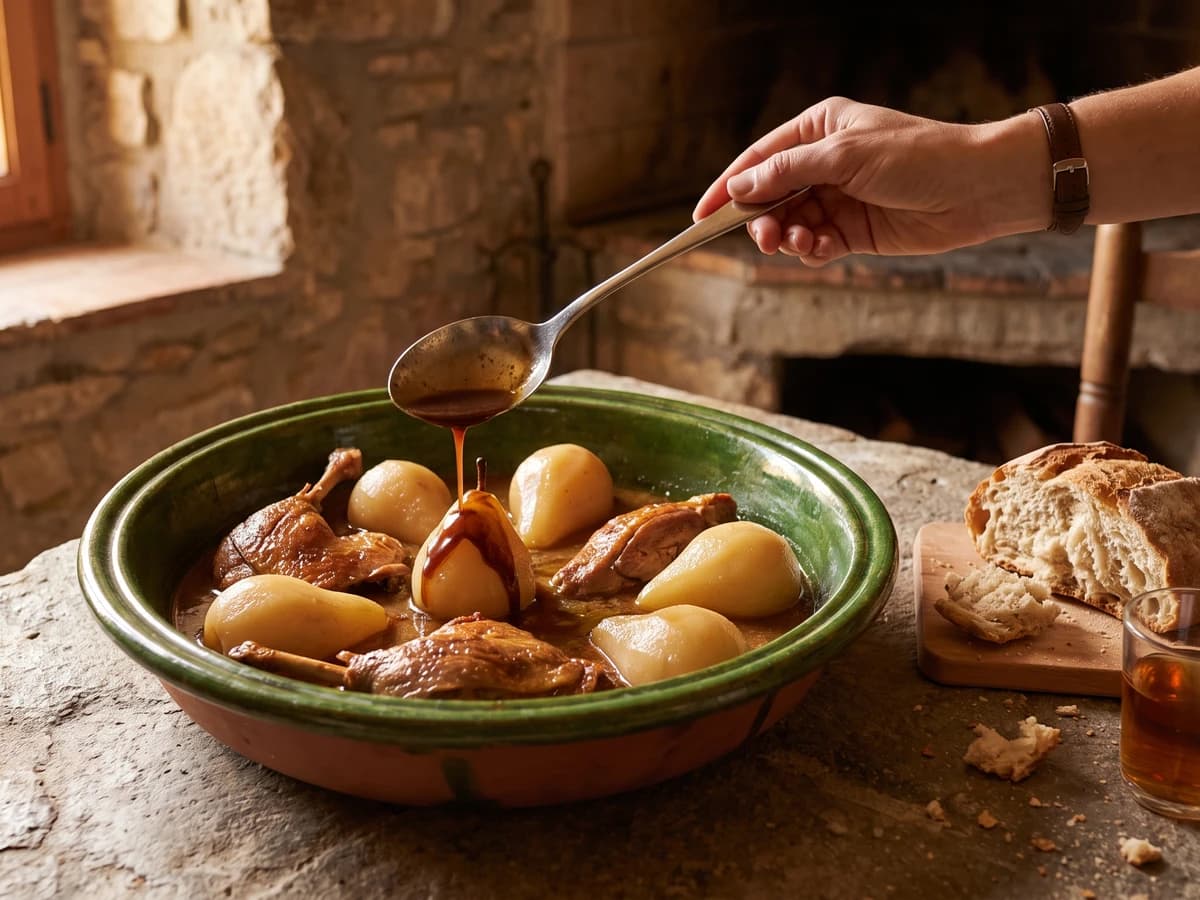
Ànec amb peres is Catalan celebration cooking: duck braised in a dark sofregit, firm autumn pears added near the end, and an almond-garlic picada that turns the juices into a close, glossy sauce.