Chef Isabel
Abanico Ibérico a la Plancha
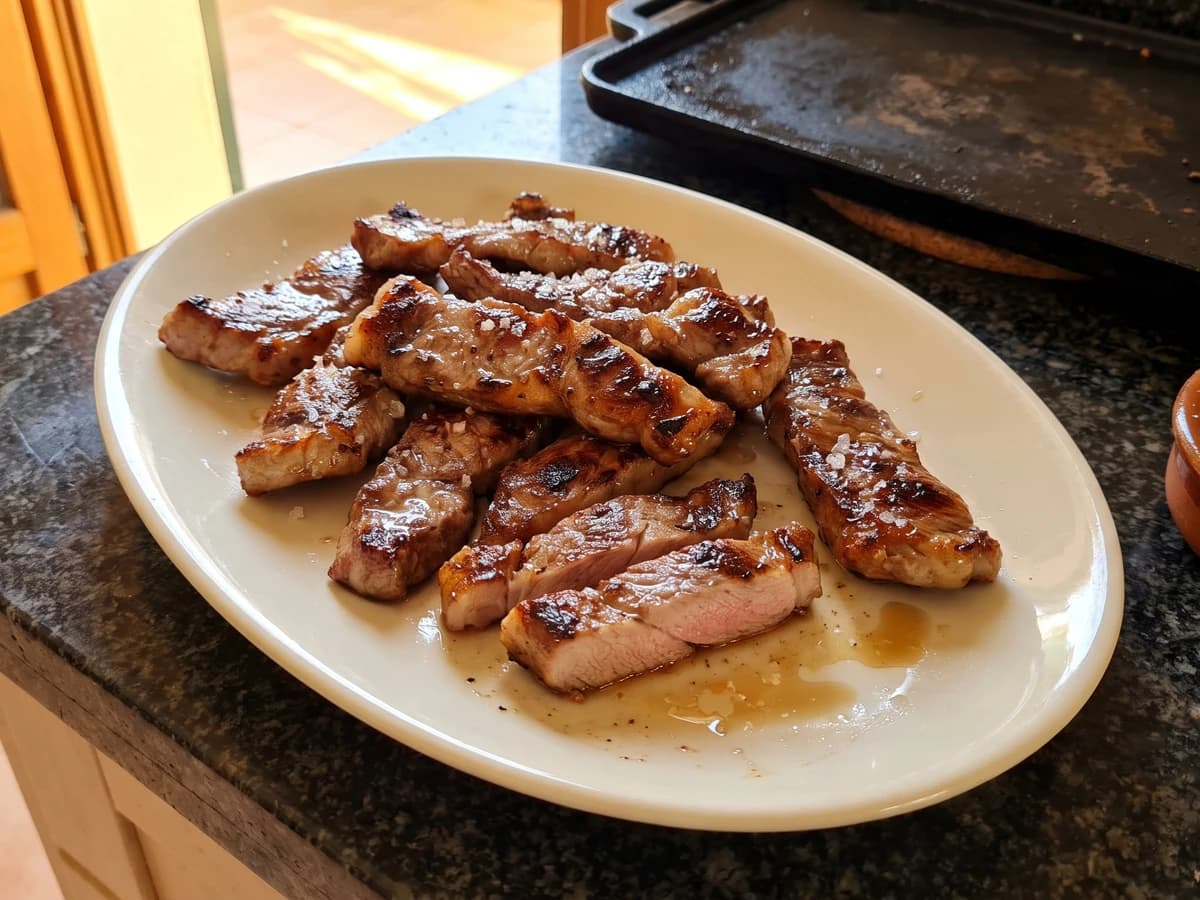
Extremadura's dehesa gives us this fan-shaped, marbled rib cut: salt it at the last moment, lay it on a fierce plancha, and count in seconds so the centre stays juicy.
A cooking platform built around craft, culture, and the stories behind what we eat.
Created by
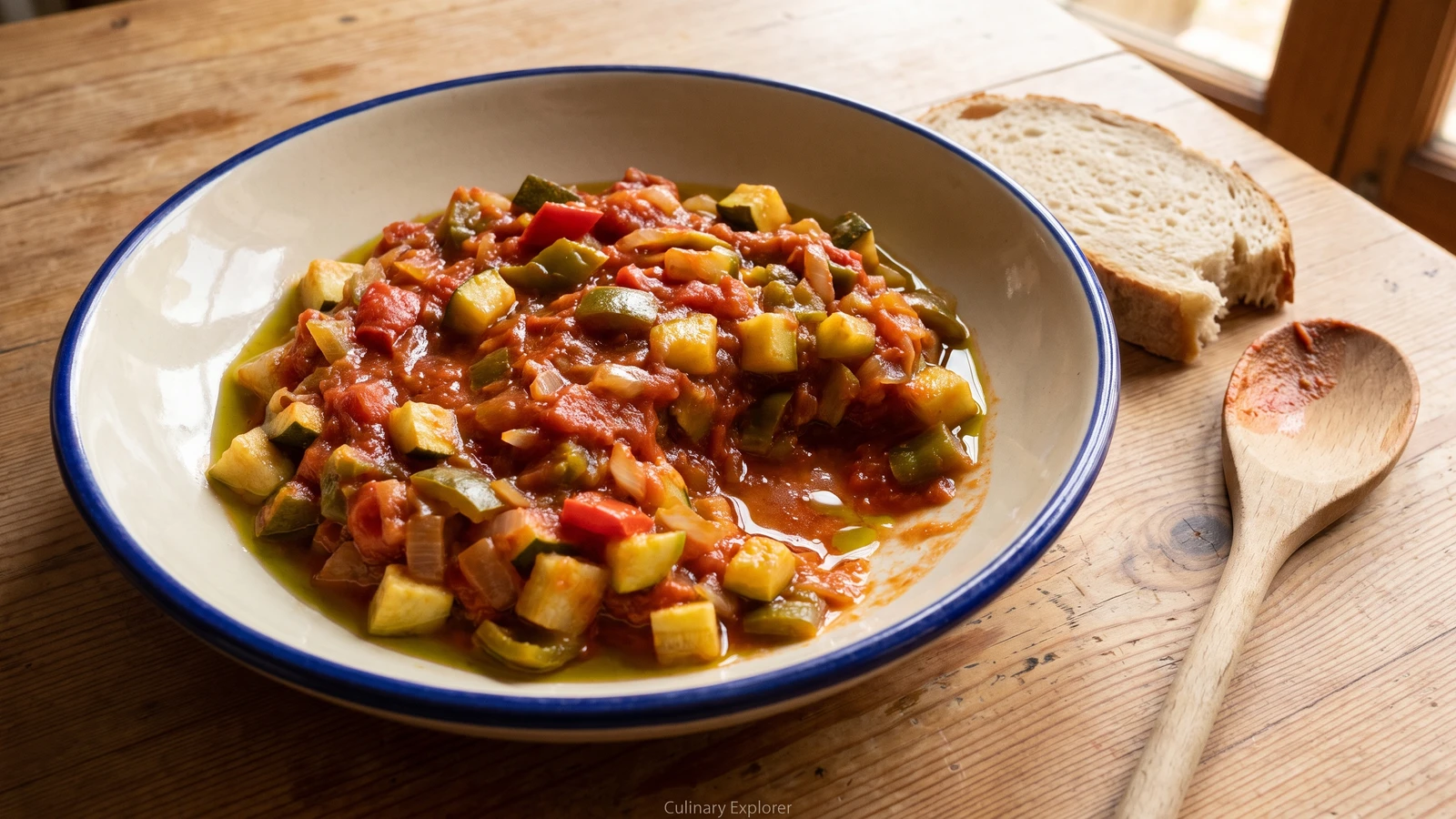
Pisto Manchego is La Mancha in a pan: summer tomato, green pepper, red pepper, onion, and courgette, cooked separately until sweet, then joined so each piece keeps its shape in the thick sauce.
Pisto Manchego is La Mancha's summer vegetable pan: tomato, long green pepper, a little red pepper, onion, and courgette, cooked in olive oil until sweet. What makes it this pisto is the shape of it. The vegetables stay diced and recognizable, held together by tomato reduced until it coats them. It isn't a purée, and it shouldn't sit in a puddle.
The method that decides it is simple: cook each vegetable apart. Onion, pepper, courgette, and tomato surrender their water at different speeds. Tip them in together and the courgette gives up before the pepper is tender; give each its turn, then fold everything together for the last ten minutes. I use one wide pan and one bowl, so this asks for time, not a sink full of washing.
Far from La Mancha, use a green bell pepper if pimiento verde italiano, the long green frying pepper, is missing. Its skin is thicker and its flavour less grassy, so dice it slightly smaller and cook it three to five minutes longer. When tomatoes are pale and hard, good canned whole peeled tomatoes are the honest choice. Drain them lightly, crush them, and reduce them ten minutes longer. The result is deeper and less fresh, but it is still pisto worth eating.
The Margin beside my recipe says only, "No water under the spoon." Reduce the tomato properly, keep the courgette intact, and let the finished pan rest before serving. Siempre sale, si lo sigues. It turns out if you follow it.
Pisto belongs to La Mancha, where the summer huerta supplied tomato and green pepper for an economical pan eaten by farming households, often with bread or an egg. Its name descends from the Latin pistus, meaning pounded or crushed, a reminder that pisto first named a chopped mixture rather than one rigid list of vegetables. Tomato and green pepper form the Manchego core; onion and courgette are established household additions, with their proportions changing from one town and kitchen to the next.
Quantity
90ml
divided
Quantity
300g
cut into 1.5cm dice
Quantity
300g
seeded and cut into 1.5cm dice
Quantity
200g
seeded and cut into 1.5cm dice
Quantity
500g
cut into 1.5cm cubes
Quantity
1kg
coarsely grated, skins discarded
Quantity
12g
divided
Quantity
240g
sliced, for serving
| Ingredient | Quantity |
|---|---|
| extra virgin olive oildivided | 90ml |
| onioncut into 1.5cm dice | 300g |
| pimiento verde italiano or long green frying pepperseeded and cut into 1.5cm dice | 300g |
| red bell pepperseeded and cut into 1.5cm dice | 200g |
| courgettecut into 1.5cm cubes | 500g |
| ripe plum tomatoescoarsely grated, skins discarded | 1kg |
| fine sea saltdivided | 12g |
| country bread (optional)sliced, for serving | 240g |
Cut the onion, peppers, and courgette into even 1.5cm pieces, keeping each vegetable separate. Halve the tomatoes across their middles and grate the cut faces against the coarse side of a box grater until only the skins remain in your palm; discard the skins. Even pieces are not fussiness here. They let each panful soften at the same pace.
Set a wide, heavy 30cm pan over medium-low heat and add 20ml of the olive oil. Add the onion with 2g of the salt and cook for 14 to 16 minutes, stirring every few minutes, until soft, translucent, and pale gold at the edges. Do not hurry it into browning. Lift the onion into a large heatproof bowl, leaving any oil behind.
Add 25ml olive oil to the same pan, followed by both peppers and 2g salt. Cook over medium-low heat for 16 to 18 minutes, stirring occasionally, until the pieces are supple and sweet, their skins lightly wrinkled and their corners just beginning to colour. They should bend without collapsing. Transfer them to the bowl with the onion.
Add 20ml olive oil and the courgette. Raise the heat to medium and cook for 7 minutes before adding 3g salt. Continue for another 5 to 7 minutes, turning the pieces gently, until their edges look translucent but the centres still hold their shape. Move the courgette to the bowl. It will finish cooking later, so stop before it goes completely soft.
Pour the remaining 25ml olive oil into the pan. Add the grated tomato and the remaining 5g salt, bring it to a lively bubble over medium heat, then lower the heat and cook uncovered for 30 to 35 minutes. Stir more often as it thickens. It is ready when the colour has deepened, small beads of oil show around the edge, and a wooden spoon drawn across the bottom leaves a track open for two seconds.
Return the onion, peppers, and courgette to the thick tomato. Fold them together gently, lower the heat, and cook uncovered for 8 to 10 minutes. Stir only two or three times so the pieces remain distinct. This separate cooking is what decides the dish: every vegetable loses its water and becomes tender in its own time before they meet. If liquid gathers beneath the spoon, give it another 5 minutes uncovered.
Take the pan off the heat and leave the pisto to rest for 10 minutes. The tomato settles around the vegetables and the olive-oil sheen returns to the surface. Taste once rested, then serve warm or at room temperature with country bread. A spoonful should hold together on the plate without becoming stiff or leaving a watery pool.
1 serving (about 480g)
Culinary guides, cultural storytelling, and the editorial depth that makes cooking meaningful.
Discover Culinary ExplorerChef Isabel
Extremadura's dehesa gives us this fan-shaped, marbled rib cut: salt it at the last moment, lay it on a fierce plancha, and count in seconds so the centre stays juicy.
Chef Isabel
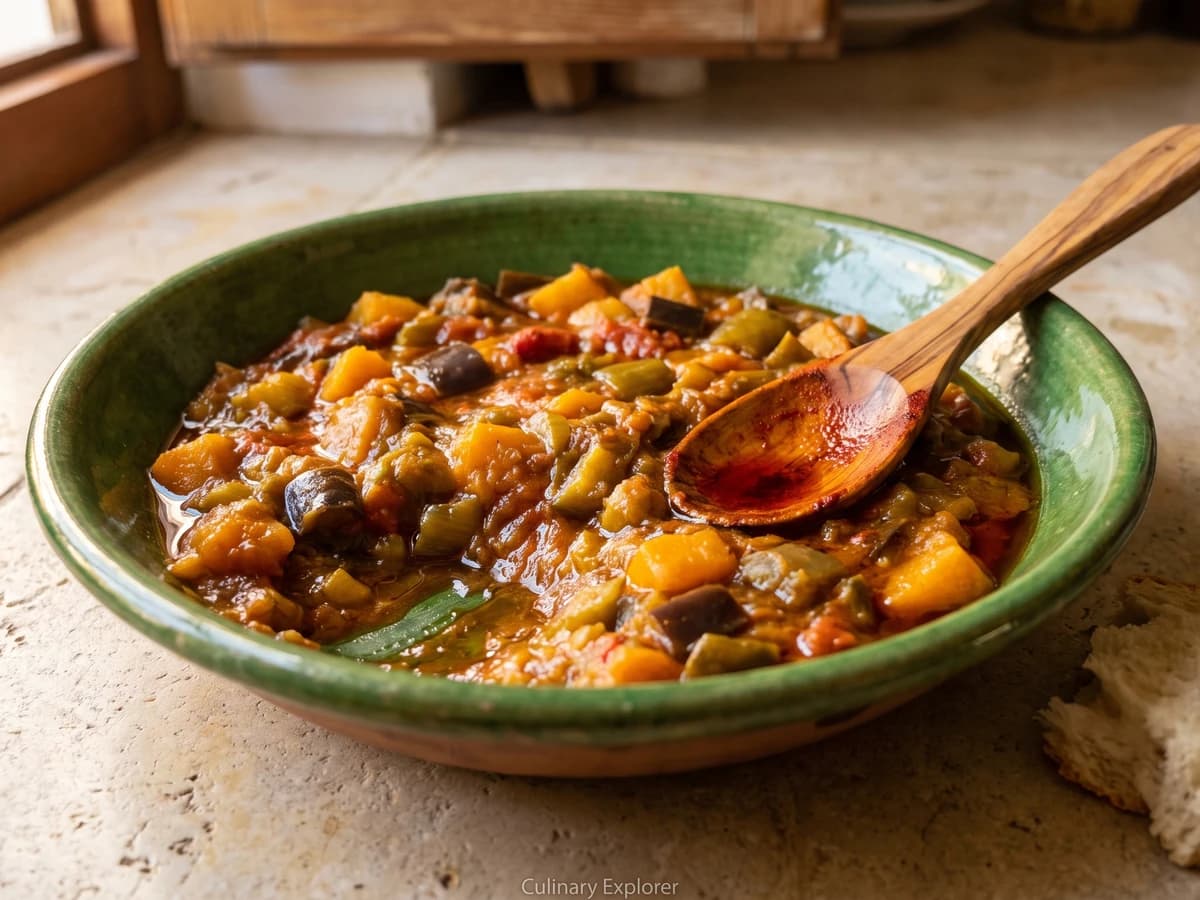
Alboronía is Andalucía's old pumpkin and aubergine stew, deepened with tomato, pimentón, and cumin, then cooked without hurry until the vegetables settle into a glossy, sweet, spoon-soft whole.

Chef Isabel
Aletría Murciana is Murcia's humble noodle guiso: fine fideos, pork ribs, potato, saffron, and a dark sweet sofrito. Get that base right and the pot knows where it's going.
Chef Isabel
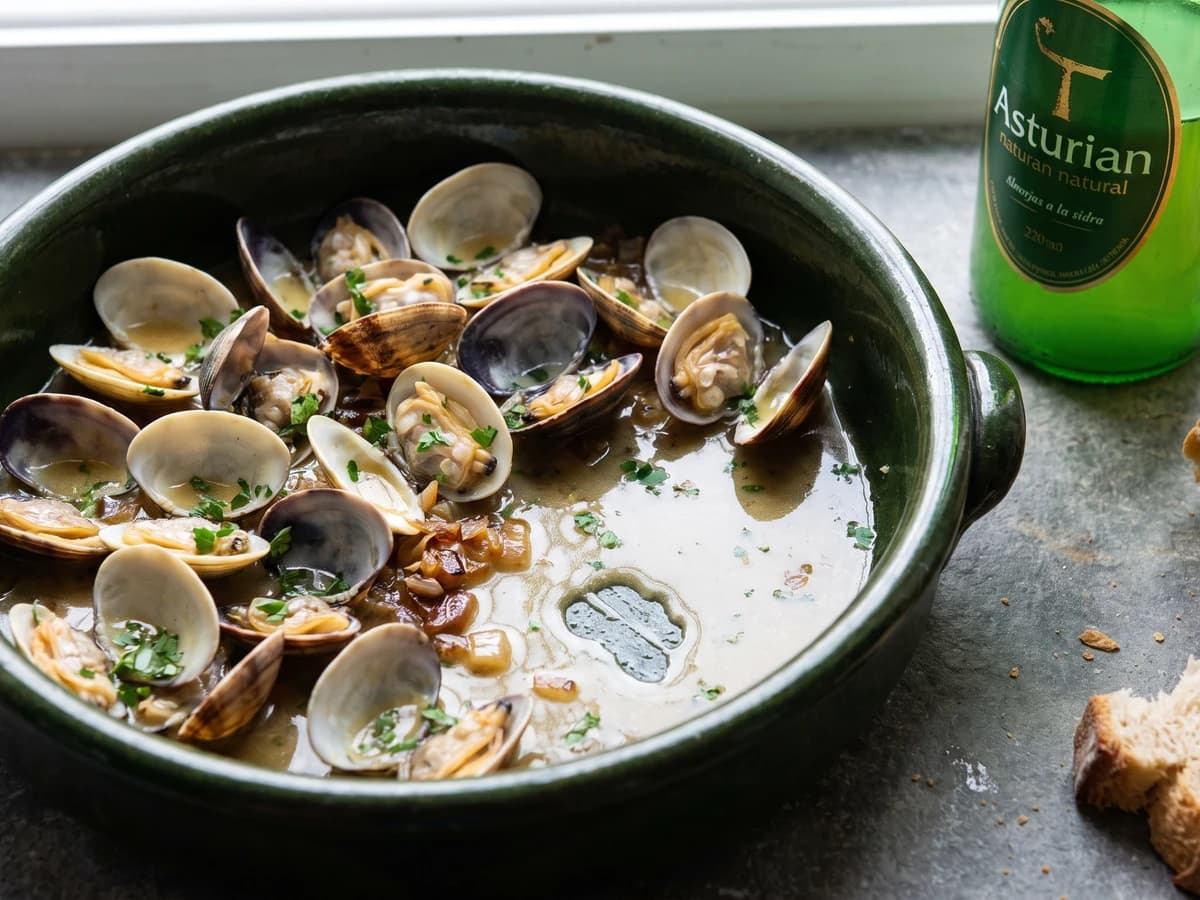
Asturias opens clams in tart natural cider over a slow onion and garlic sofrito, making a bright, briny sauce that asks for bread and rewards one rule: lift each clam as it opens.