Chef Isabel
Duelos y Quebrantos Manchegos
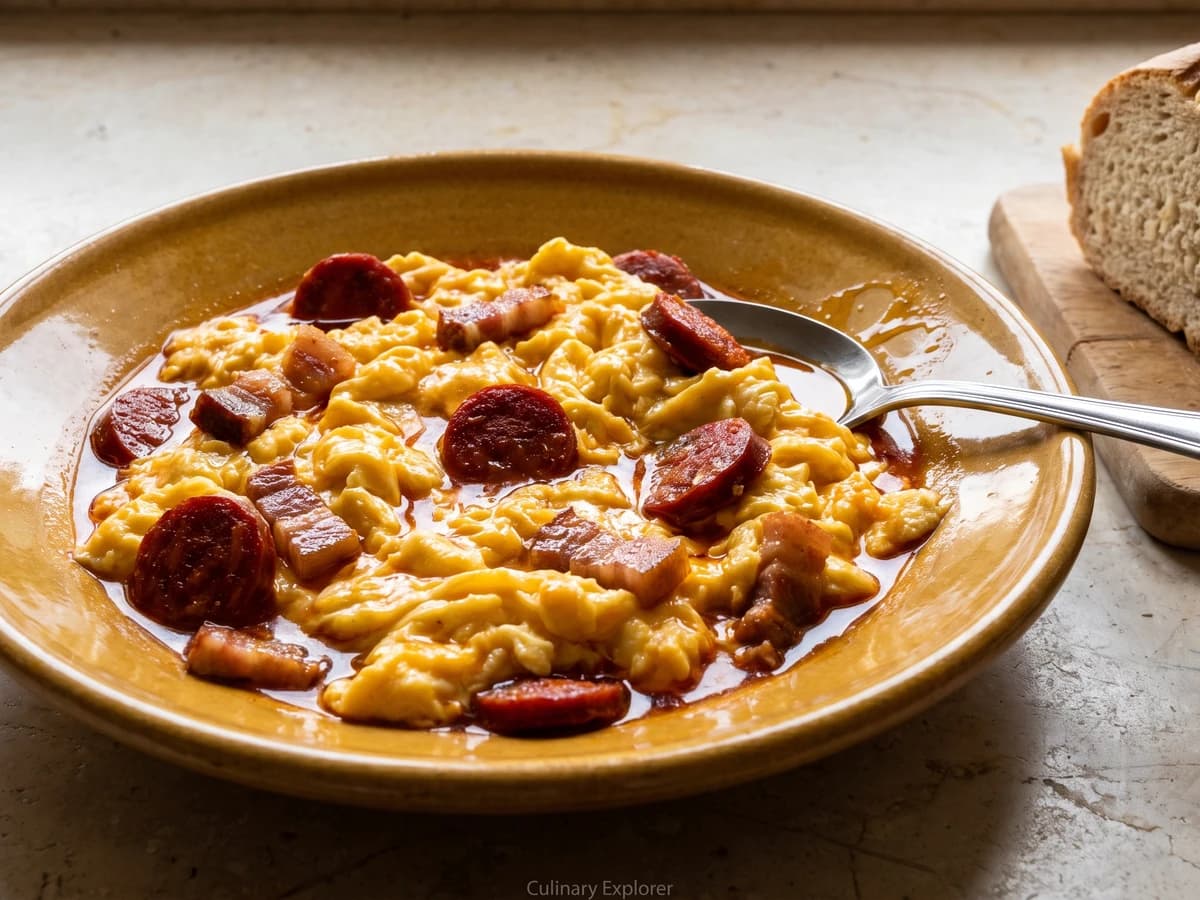
Duelos y quebrantos is Castilla-La Mancha in one pan: chorizo and bacon rendered slowly, then eggs folded through until soft, the plain Saturday meal Cervantes set on Don Quixote's table.
A cooking platform built around craft, culture, and the stories behind what we eat.
Created by
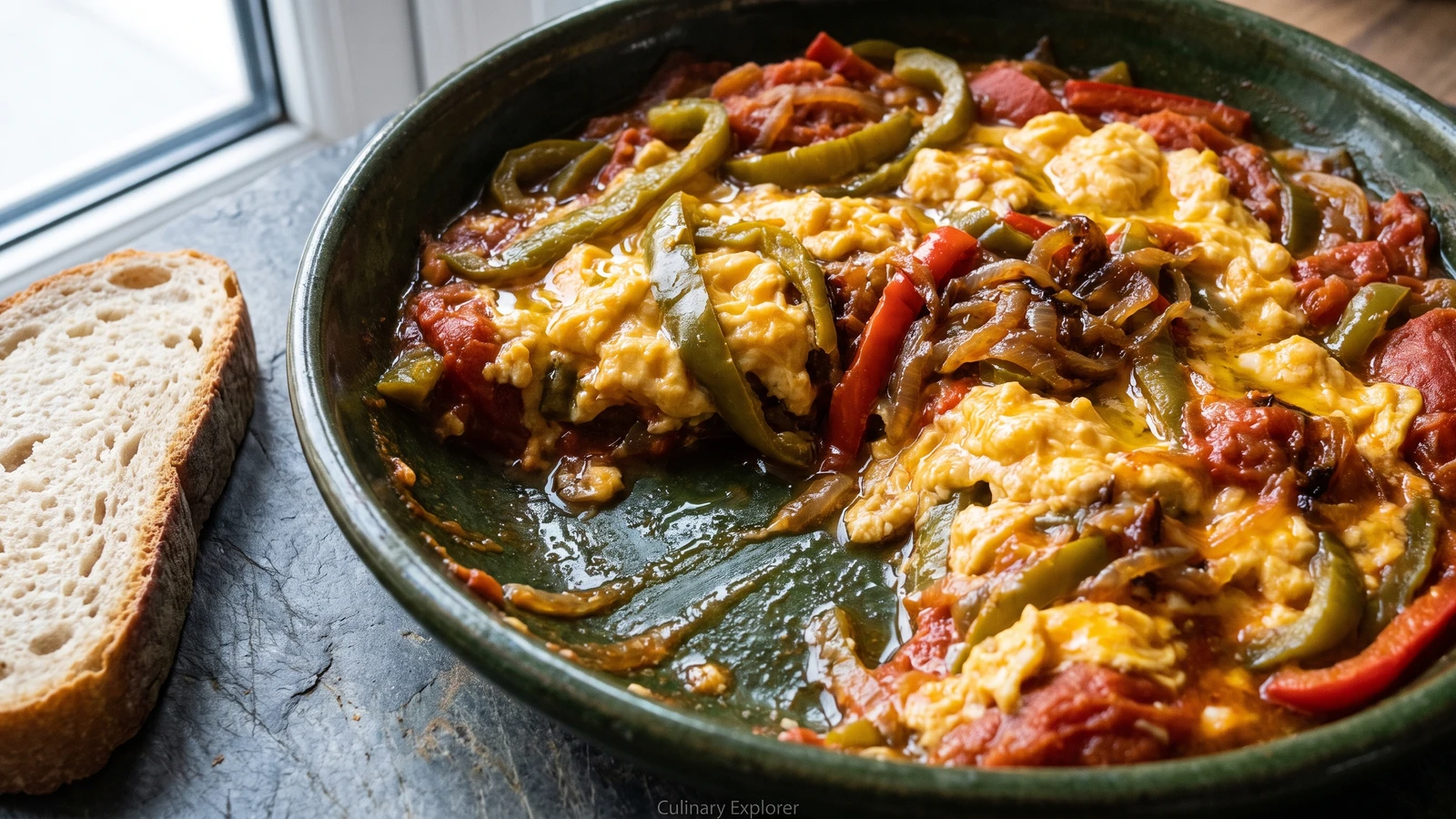
Basque piperrada cooks green frying peppers, onion, and ripe tomato slowly until sweet and nearly jammy, then folds in beaten eggs just until tender for a plain, sustaining meal.
Piperrada is Basque, a slow pan of green peppers, onion, and tomato bound with beaten egg. The pepper is the spine of it, the tomato gives body, and the egg turns the vegetable base into a meal. It isn't a quick scramble with vegetables tipped in at the end. Everything must first cook down until it tastes like one thing.
The method that decides it is simple: don't add the eggs while the vegetables are still wet. Cook the onion and pepper low until soft and sweet, add the tomato, then keep going until a spoon drawn through the pan leaves a clean path. Add the eggs too early and they boil in tomato water, turning loose and grainy. Wait, fold them gently, and they stay tender.
If pimiento verde italiano, the thin-skinned green frying pepper, isn't sold where you live, use Cubanelle. A green bell pepper works at a pinch, but it is thicker and a little more bitter, so give it another five to ten minutes. When tomatoes aren't worth buying fresh, use good whole peeled tomatoes from a tin, drained and crushed. The flavour will be deeper and less bright, but the dish remains sound. In the Margin beside this recipe I wrote only, "the egg waits for the pepper." Siempre sale, si lo sigues.
Piperrada belongs to Euskal Herria, the Basque lands on both sides of the western Pyrenees, and takes its name from piperra, the Basque word for pepper. Peppers and tomatoes, crops brought from the Americas, settled into the regional kitchen as a slow-cooked accompaniment for eggs, salt cod, tuna, and meat. Northern Basque versions may carry the mild warmth of piment d'Espelette, while the egg-bound household version makes the pepper mixture into an inexpensive meal of its own.
Quantity
450g trimmed weight
stems and seeds removed, cut into 1cm strips
Quantity
300g peeled weight
thinly sliced
Quantity
800g
halved for grating
Quantity
60ml
Quantity
6, about 300g without shells
lightly beaten
Quantity
9g
divided
| Ingredient | Quantity |
|---|---|
| green Italian frying peppersstems and seeds removed, cut into 1cm strips | 450g trimmed weight |
| yellow onionthinly sliced | 300g peeled weight |
| very ripe plum tomatoeshalved for grating | 800g |
| extra virgin olive oil | 60ml |
| large eggslightly beaten | 6, about 300g without shells |
| fine sea saltdivided | 9g |
Set a box grater over a bowl. Grate each tomato half on the coarse holes, cut side against the grater, until only the skin remains in your hand. Discard the skins. You should have roughly 600g of tomato pulp and juice.
Heat the olive oil in a wide 28cm skillet over medium-low heat. Add the sliced onion and 2g of the salt. Cook for 10 to 12 minutes, stirring every few minutes, until completely soft and pale gold. If it catches at the edges, lower the heat rather than adding water.
Add the pepper strips and another 2g of salt. Turn them through the onion and oil, then cook over low heat for 20 to 25 minutes. Stir now and then. They are ready when the skins have relaxed, the strips bend without springing back, and the onion beneath them is dark gold and jammy.
Pour in the grated tomato and add 2g of salt. Raise the heat to medium until it bubbles, then lower it again and cook uncovered for 18 to 22 minutes. Stir more often near the end. The base is ready when it looks thick and glossy, no watery liquid gathers at the edges, and a spoon drawn across the bottom leaves a clean path for two seconds.
Beat the eggs with the remaining 3g salt just until the whites and yolks are joined. Lower the heat beneath the skillet. Pour in the eggs and fold slowly with a wooden spoon, lifting the vegetable mixture from the bottom rather than beating it. Cook for 2 to 4 minutes, until the eggs form soft curds and no raw liquid remains. Take the pan off the heat while the surface is still glossy, as the skillet will finish the cooking.
Let the piperrada settle for one minute, then spoon it into a shallow serving dish. Serve immediately with plain country bread for the oil and tomato left on the plate. Tal como se hace allí, it needs no decorative garnish and no second sauce.
1 serving (about 330g)
Culinary guides, cultural storytelling, and the editorial depth that makes cooking meaningful.
Discover Culinary ExplorerChef Isabel
Duelos y quebrantos is Castilla-La Mancha in one pan: chorizo and bacon rendered slowly, then eggs folded through until soft, the plain Saturday meal Cervantes set on Don Quixote's table.
Chef Isabel
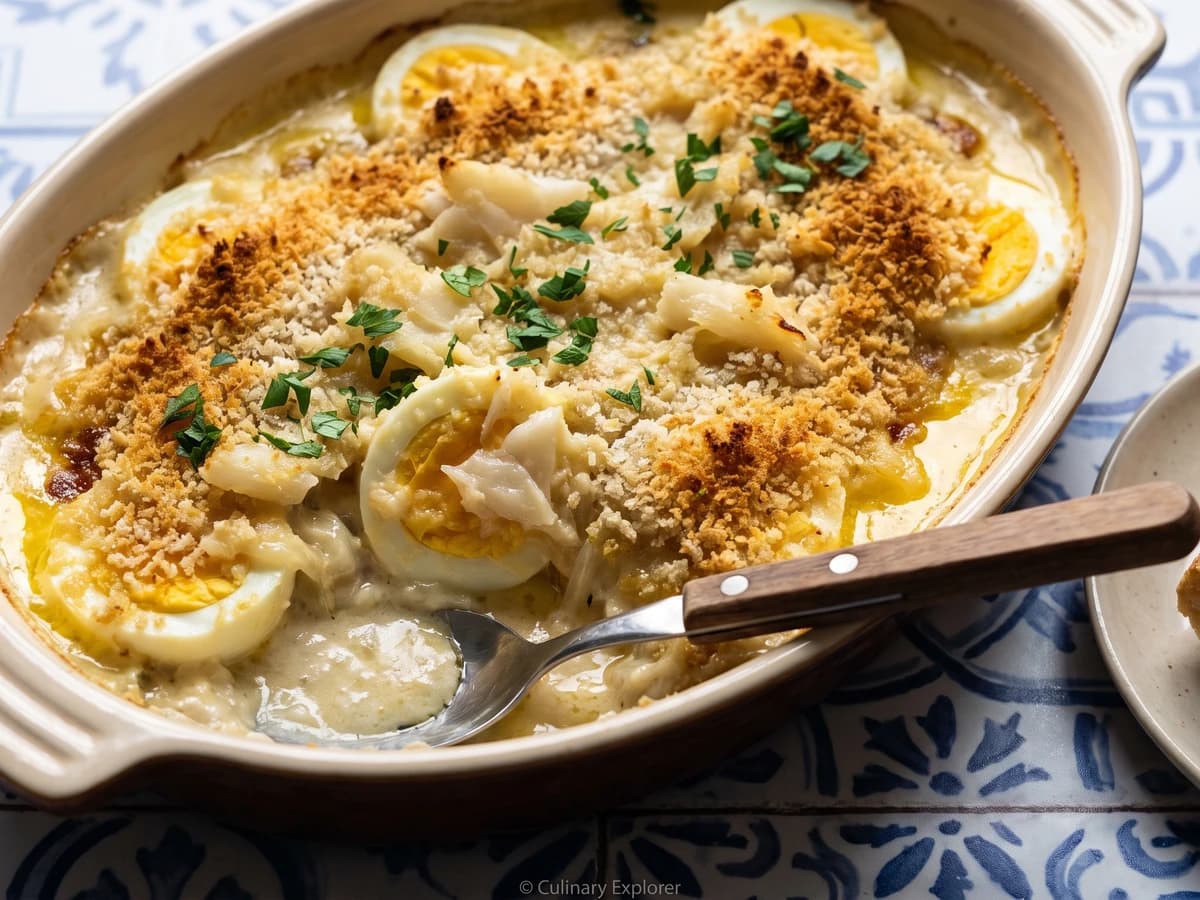
Donostia's baked eggs sit beneath a slow, sweet onion and bacalao sauce, with a fine breadcrumb crust browned under the grill. Desalt the cod properly and the rest is straightforward.
Chef Isabel
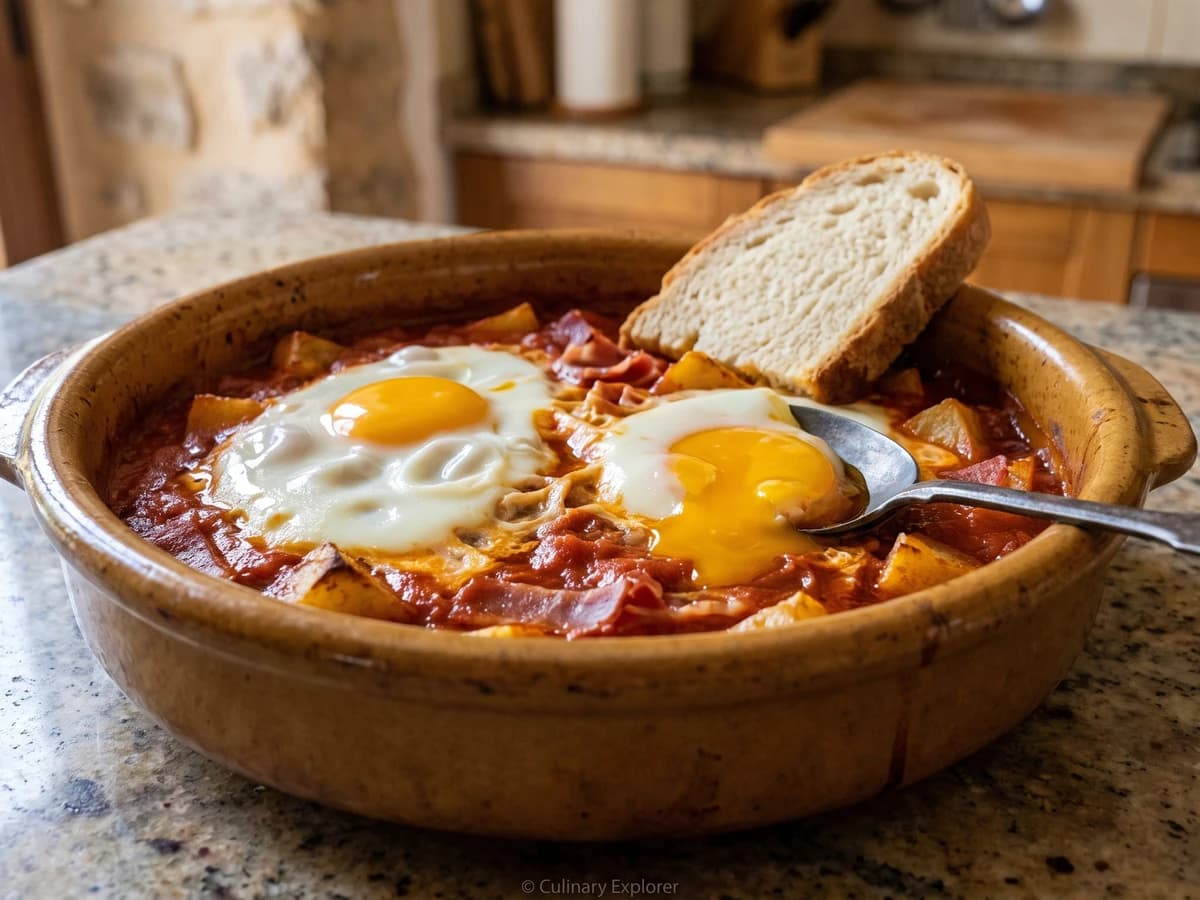
Extremadura sets eggs into a thick bed of fried potato, tomato sofrito, jamón, and its own smoky pimentón, then bakes them just until the whites hold and the yolks stay soft.
Chef Isabel
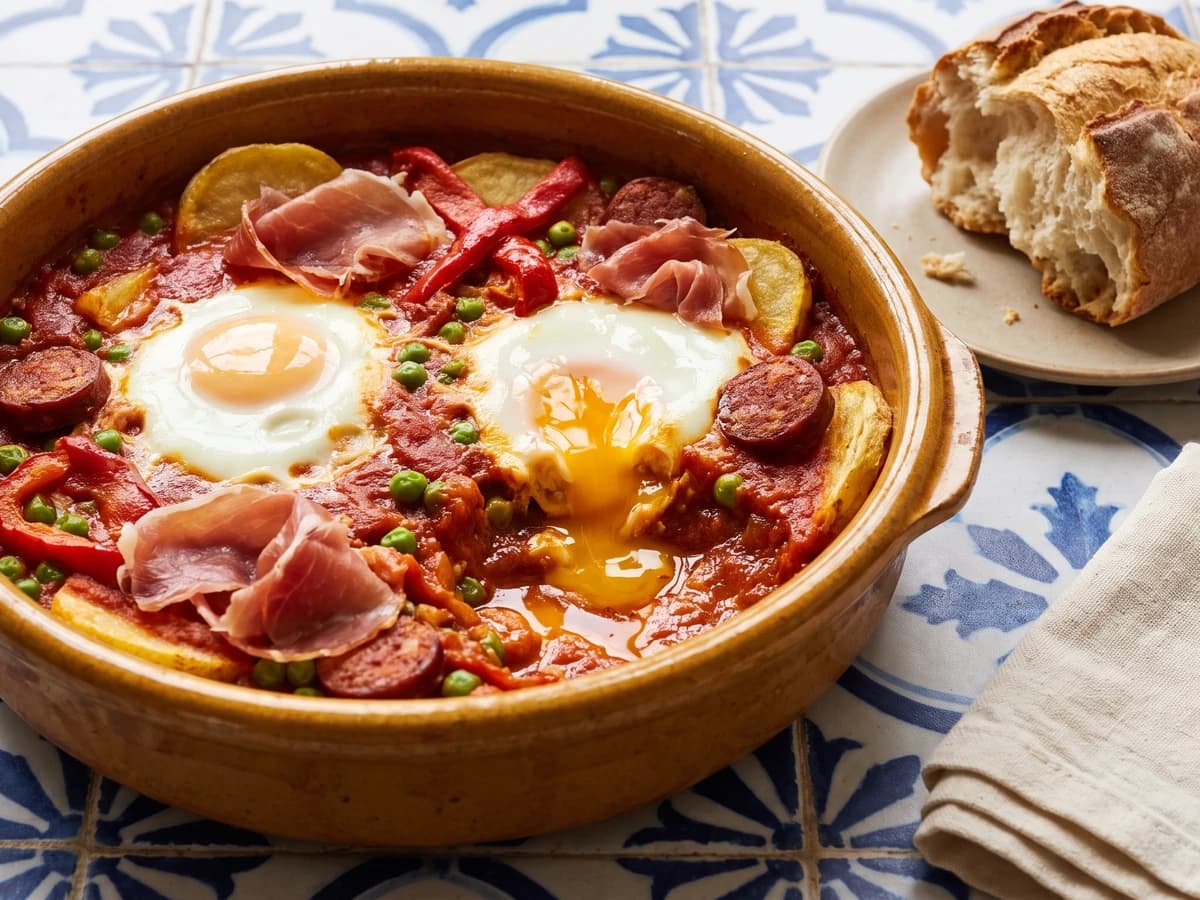
Huevos a la flamenca are Seville in a cazuela: eggs baked over a dark, sweet tomato sofrito with potatoes, peas, peppers, jamón and chorizo, pulled while the whites set and the yolks still run.