Chef Isabel
Abanico Ibérico a la Plancha
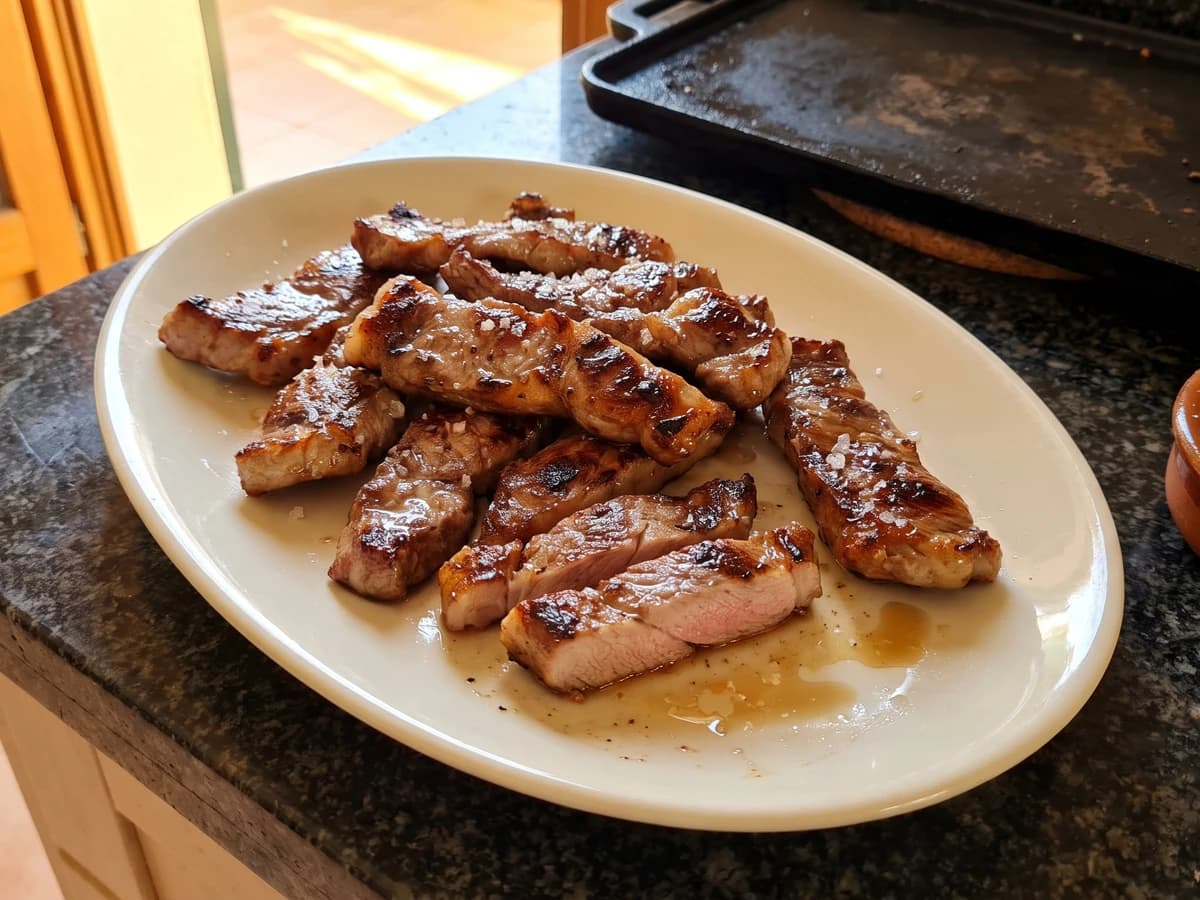
Extremadura's dehesa gives us this fan-shaped, marbled rib cut: salt it at the last moment, lay it on a fierce plancha, and count in seconds so the centre stays juicy.
A cooking platform built around craft, culture, and the stories behind what we eat.
Created by
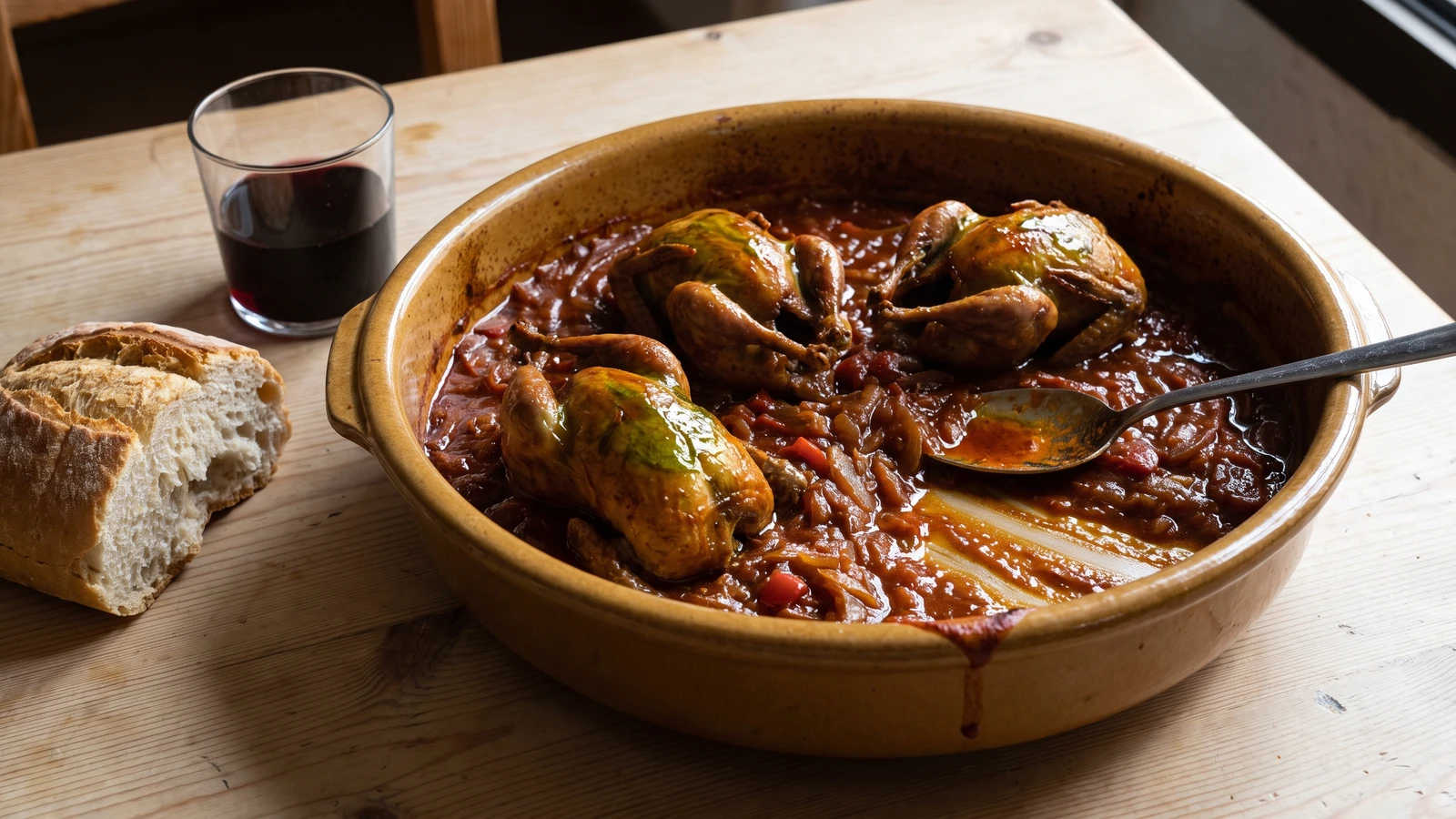
Tierra de Campos gives its prized young pigeon a patient Castilian braise, with dark meat, a slow onion and pepper base, pimentón, and red wine settling into a glossy sauce.
Pichón de Tierra de Campos estofado belongs to the open Castilian plain of Tierra de Campos, in Castilla y León. Young pigeon is browned, then braised with onion, green pepper, garlic, sweet pimentón and red wine until its dark meat loosens at the joints. What makes it this dish, and not simply roast squab with gravy, is the deep vegetable sauce built underneath it.
The method that decides it is the sofrito, the slow onion and pepper base. Cook it low until the vegetables are dark gold, sweet and nearly jammy before the wine goes in. That patience removes their raw water and gives the sauce its body. Rush it, and you get sharp wine around a thin onion broth. The pimentón goes in off the heat because scorched pimentón turns bitter, and no amount of wine will persuade it otherwise.
Ask for farmed squab weighing 350 to 450 grams each, fully dressed. Frozen birds are perfectly sound if they thaw slowly in the refrigerator. If squab cannot be found, use two small Cornish game hens, split in half, and allow another ten minutes or so in the braise. The meat will be paler, milder and less mineral, but the method remains worth making. Adult pigeon is not the same substitution; it needs a much longer cook.
I take the birds out before finishing the sauce, pass the softened vegetables through a food mill, and reduce it until it clings to a spoon. The line in my margin is simple: don't return the pichones until the sauce can hold them. Siempre sale, si lo sigues. It turns out, if you follow it.
Tierra de Campos is a grain-growing comarca spread across Palencia, Valladolid, Zamora and León, its level horizon marked by palomares built from adobe and rammed earth. These dovecotes supplied households with young pigeons and with palomina, their droppings, which were valued as fertilizer for the fields, so the bird belonged to the working farm economy before it became food for special tables. Estofado suited its dark meat: wine and vegetables softened it in a covered pot while pimentón gave the sauce depth and colour.
Quantity
4, 350-450g each
fully dressed, giblets removed and patted dry
Quantity
12g
divided
Quantity
2g
Quantity
60ml
Quantity
350g
cut into 3mm dice
Quantity
160g
seeded and cut into 3mm dice
Quantity
16g, about 4 medium cloves
finely chopped
Quantity
12g
Quantity
5g
Quantity
250ml
Quantity
350ml, plus up to 100ml if needed
Quantity
1
| Ingredient | Quantity |
|---|---|
| farmed squabs (pichones)fully dressed, giblets removed and patted dry | 4, 350-450g each |
| fine sea saltdivided | 12g |
| freshly ground black pepper | 2g |
| extra virgin olive oil | 60ml |
| yellow onionscut into 3mm dice | 350g |
| green bell pepperseeded and cut into 3mm dice | 160g |
| garlicfinely chopped | 16g, about 4 medium cloves |
| plain flour | 12g |
| sweet pimentón | 5g |
| dry red wine | 250ml |
| hot water | 350ml, plus up to 100ml if needed |
| dried bay leaf | 1 |
Heat the oven to 160°C conventional, 140°C fan, or 325°F. Take the squabs from the refrigerator twenty minutes before cooking. Remove any stray pinfeathers, check that the cavities are clean, and pat the birds thoroughly dry. Season inside and out with 10g of the salt and all the black pepper.
Heat 45ml of the olive oil in a wide, heavy casserole over medium-high heat. Brown the squabs in two batches so the pan stays hot, turning them until the breasts, backs and legs take on a deep hazelnut colour, eight to ten minutes per batch. Lift them to a plate. Lower the heat and leave the browned residue in the casserole; that belongs in the sauce.
Add the remaining 15ml olive oil, the onions, green pepper and remaining 2g salt. Cook over medium-low heat for twenty-five to thirty minutes, stirring every few minutes, until the vegetables are dark gold, very soft and nearly jammy. If the bottom catches before the onions soften, add one tablespoon of the measured water and scrape it clean. Add the garlic and cook for two minutes.
Sprinkle the flour over the sofrito and stir for one minute. Take the casserole off the heat, add the sweet pimentón, and stir for fifteen seconds. Pour in the red wine at once, return the casserole to medium heat, and scrape up every browned bit. Simmer for five to seven minutes, until the wine has reduced by roughly two-fifths and no longer smells raw.
Return the squabs to the casserole, breast sides up, and add the bay leaf and 350ml hot water. The liquid should reach about halfway up the birds; add a little of the reserved extra water only if your casserole is wider. Bring it to the barest simmer, cover tightly, and place it in the oven. Turn and baste the birds after twenty-five minutes. Begin checking at fifty minutes. They are ready when a leg joint moves freely, the meat beside it yields to a skewer, and the thickest part of the thigh reaches at least 74°C or 165°F. Most farmed squabs need fifty-five to sixty-five minutes.
Transfer the squabs to a warm plate and cover loosely. Discard the bay leaf, skim off any large pools of fat, and pass the sauce and vegetables through a food mill into the casserole. A careful pass with an immersion blender also works. Simmer uncovered for five to eight minutes, stirring often, until the sauce is glossy and coats the back of a spoon. Taste before adding any more salt.
Set the squabs back in the finished sauce and spoon it over them. Warm gently for five minutes, then take the casserole off the heat and rest it, covered, for ten minutes. Serve one bird per person with plenty of sauce and thick slices of pan candeal or another firm white country bread. The bread is there for the sauce, not decoration.
1 serving (about 380g)
Culinary guides, cultural storytelling, and the editorial depth that makes cooking meaningful.
Discover Culinary ExplorerChef Isabel
Extremadura's dehesa gives us this fan-shaped, marbled rib cut: salt it at the last moment, lay it on a fierce plancha, and count in seconds so the centre stays juicy.
Chef Isabel
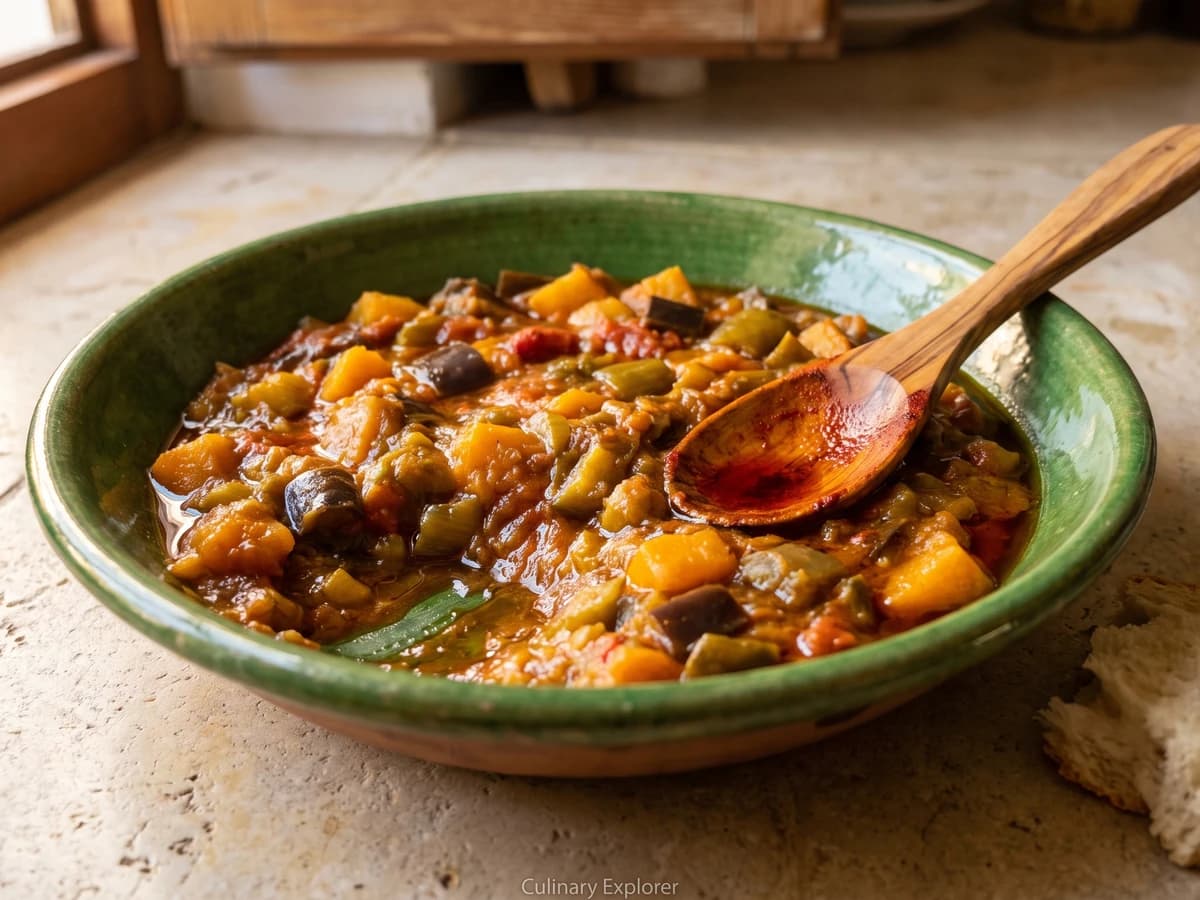
Alboronía is Andalucía's old pumpkin and aubergine stew, deepened with tomato, pimentón, and cumin, then cooked without hurry until the vegetables settle into a glossy, sweet, spoon-soft whole.

Chef Isabel
Aletría Murciana is Murcia's humble noodle guiso: fine fideos, pork ribs, potato, saffron, and a dark sweet sofrito. Get that base right and the pot knows where it's going.
Chef Isabel
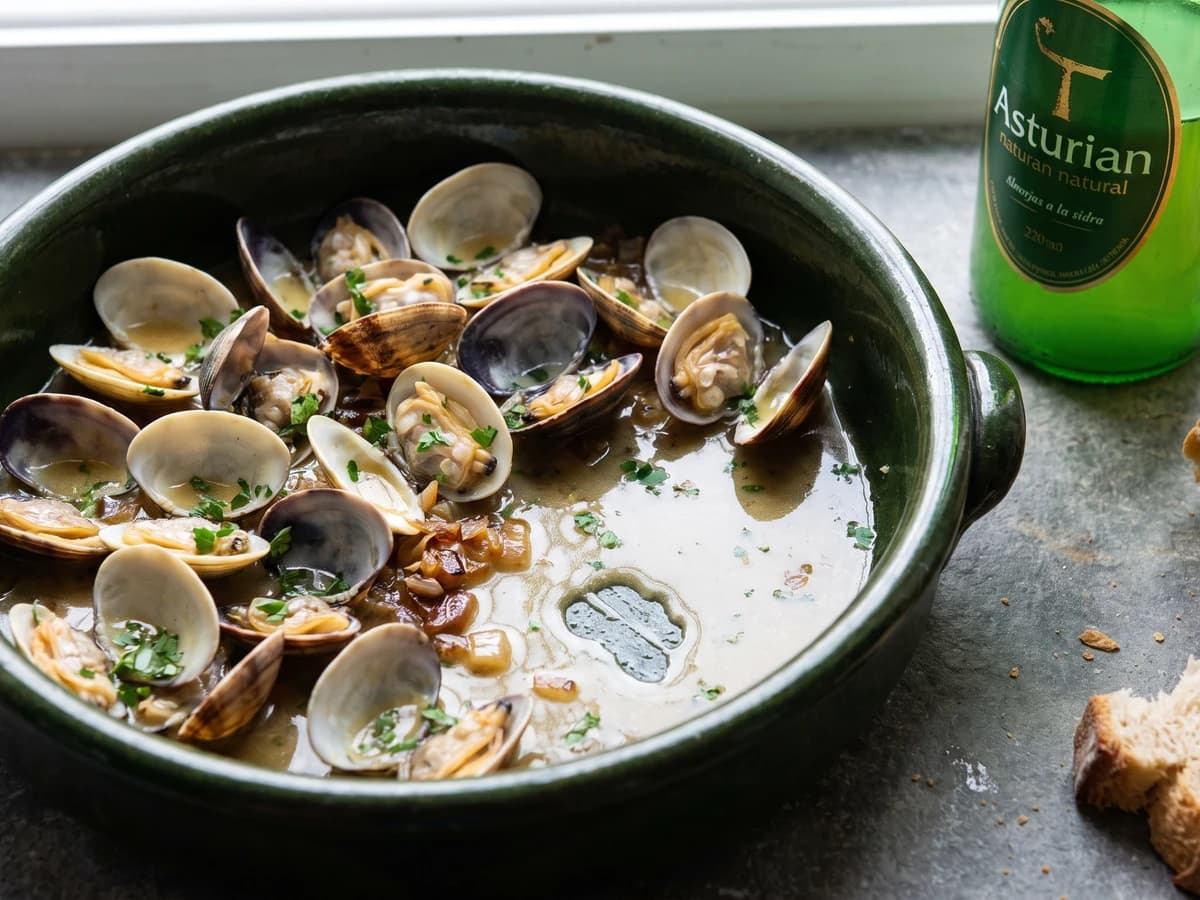
Asturias opens clams in tart natural cider over a slow onion and garlic sofrito, making a bright, briny sauce that asks for bread and rewards one rule: lift each clam as it opens.