Chef Isabel
Aceitunas Aliñadas Andaluzas
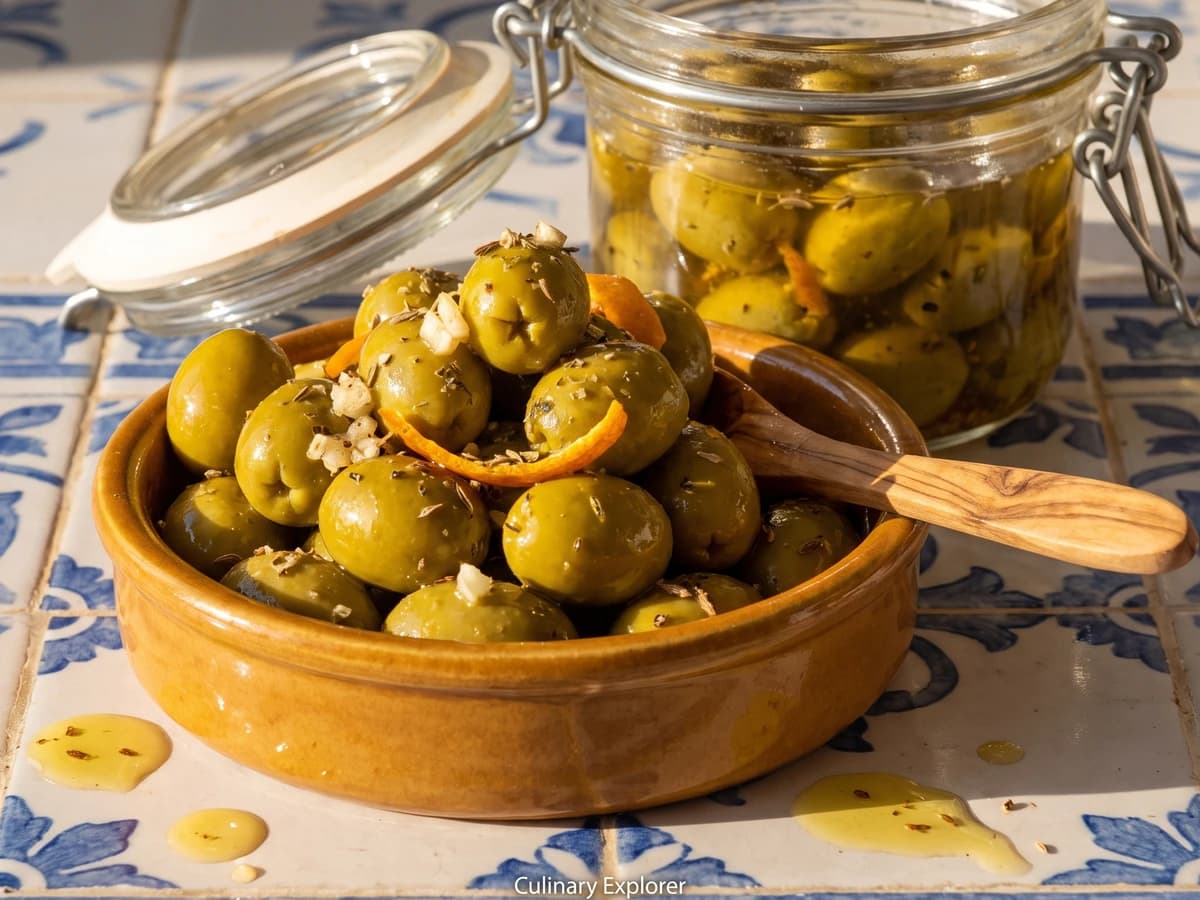
Andalucía's green olives are cracked just enough to drink in garlic, cumin, oregano and sherry vinegar, then left two days until the brine turns fragrant and every bite carries the aliño.
A cooking platform built around craft, culture, and the stories behind what we eat.
Created by
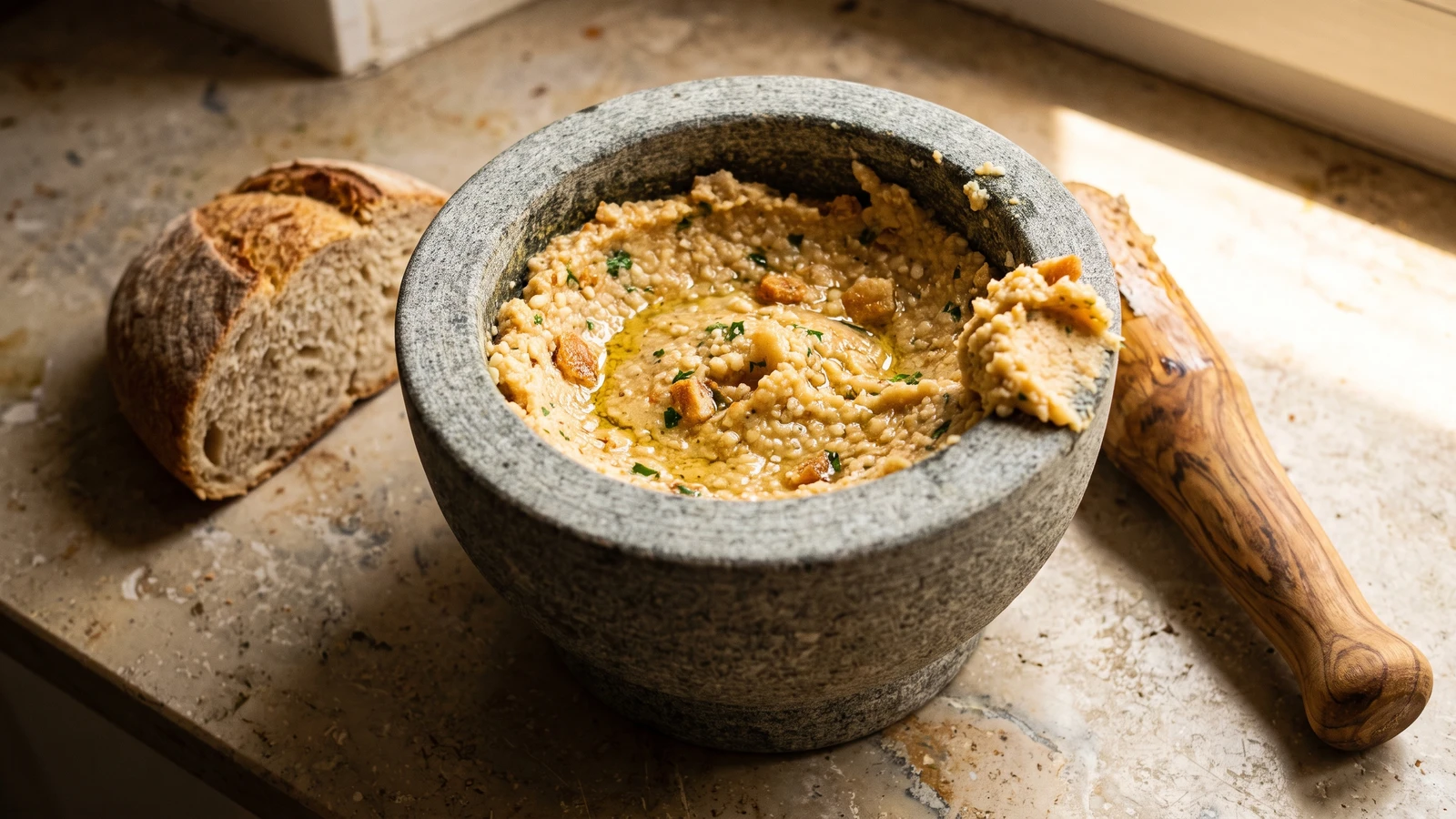
Picada is Catalonia's last word in a stew: almonds, fried bread, garlic and parsley pounded coarse, loosened with cooking liquid, then stirred in to give body and fragrance.
Picada is Catalonia's pounded finish: almonds, fried bread, garlic and parsley worked in a mortar, loosened with the pot's own liquid and stirred into a stew just before it is done. It isn't a relish to sit on top. In many Catalan pots, the sofregit, the slow onion and tomato base, begins the dish; picada closes it. This little mortarful binds the juices without flour and carries garlic, nuts and parsley through every spoonful.
The order decides it. I pound the garlic with salt first, bruise in the parsley, then work the warm almonds and fried bread while everything is still dry. Only when it has become a coarse, oily paste do I add hot cooking liquid. Dry pounding releases the almond oil and breaks the bread fine enough to thicken the pot. Add liquid too soon and the ingredients slide around the mortar instead of becoming one paste. Stir it into the final 5 to 8 minutes of cooking, enough to mellow the garlic without flattening the parsley.
Marcona almonds are lovely, but you don't need them. Ordinary raw almonds work; if the skins remain, the picada will be darker, flecked and faintly more bitter. Hazelnuts are another traditional Catalan choice, especially for meat or mushroom stews, though their flavour is deeper. A day-old baguette stands in perfectly well for pa de pagès, the round country loaf. No hace falta haber pisado España. The Margin beside this one says only: stop before smooth. Siempre sale, si lo sigues.
Picada takes its name from picar, to pound or chop, and belongs to Catalonia's old mortar tradition rather than to the family of sauces passed at the table. Medieval Catalan cookbooks already record nuts and bread pounded into sauces; the same structure closes suquet de peix, fricandó, meatball stews and bean pots after the sofregit has built their base. Depending on the pot and the household, a picada may also contain hazelnuts, saffron, liver or dark chocolate, but almond, bread, garlic and parsley form its plain, useful foundation.
Quantity
40g
Quantity
25g
cut into 2 thin slices
Quantity
45ml
divided
Quantity
5g, about 1 large clove
peeled
Quantity
6g
roughly chopped and patted dry
Quantity
1g
Quantity
60ml
| Ingredient | Quantity |
|---|---|
| raw blanched almonds | 40g |
| day-old pa de pagès or firm white country breadcut into 2 thin slices | 25g |
| olive oildivided | 45ml |
| garlicpeeled | 5g, about 1 large clove |
| flat-leaf parsley leaves and tender stemsroughly chopped and patted dry | 6g |
| fine sea salt | 1g |
| hot cooking liquid from the stew, or hot water | 60ml |
Warm 30ml of the olive oil in a 20cm frying pan over medium-low heat. Add the bread and fry for about 90 seconds per side, until deep gold across the surface and firm at the edges. Lift it out and leave it to cool for 2 minutes, then tear it into pieces small enough for the mortar.
Add the remaining 15ml olive oil and the almonds to the same pan. Cook over medium-low heat for 3 to 4 minutes, stirring often, until the almonds are evenly golden and smell plainly nutty. Scrape the almonds and any oil left in the pan onto a plate. Let them stand for 2 minutes so they are warm rather than scorching.
Put the garlic and salt in the mortar and pound for 1 to 2 minutes, until the garlic becomes a smooth paste. Add the parsley and work it in until bruised and dark green. Add the warm almonds in three batches, pounding each before adding the next, then add the fried bread. Keep pounding until you have a cohesive but grainy paste, with no nut pieces larger than a lentil. Don't chase perfect smoothness; a picada should still show the mortar's work.
Take 45ml of hot liquid from the nearly finished stew and add it to the mortar a spoonful at a time, working it into the picada. It should become a thick mixture that falls slowly from the pestle. Scrape it into 1.25 to 1.5 litres of stew, rinse the mortar with the remaining 15ml liquid, and add that too. Stir well and simmer gently, uncovered, for 5 to 8 minutes. The broth should gain a little body and a nutty, garlicky depth without becoming heavy. Taste for salt only after the picada has cooked through.
1 serving (about 28g)
Culinary guides, cultural storytelling, and the editorial depth that makes cooking meaningful.
Discover Culinary ExplorerChef Isabel
Andalucía's green olives are cracked just enough to drink in garlic, cumin, oregano and sherry vinegar, then left two days until the brine turns fragrant and every bite carries the aliño.
Chef Isabel
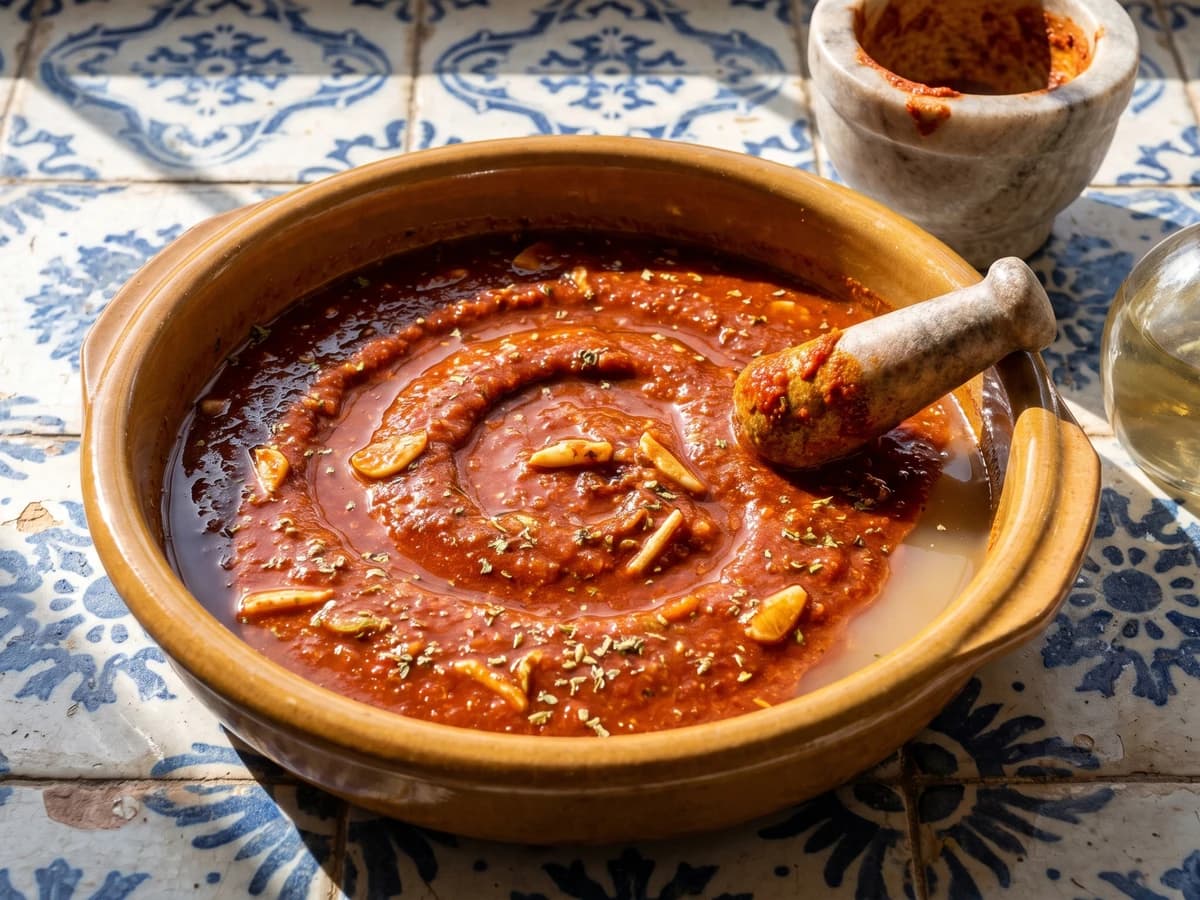
Andalucía's sharp, brick-red marinade brings vinegar, garlic, oregano, cumin and pimentón to fish and pork; pound the seasonings first, then give the acid time to carry them through.
Chef Isabel
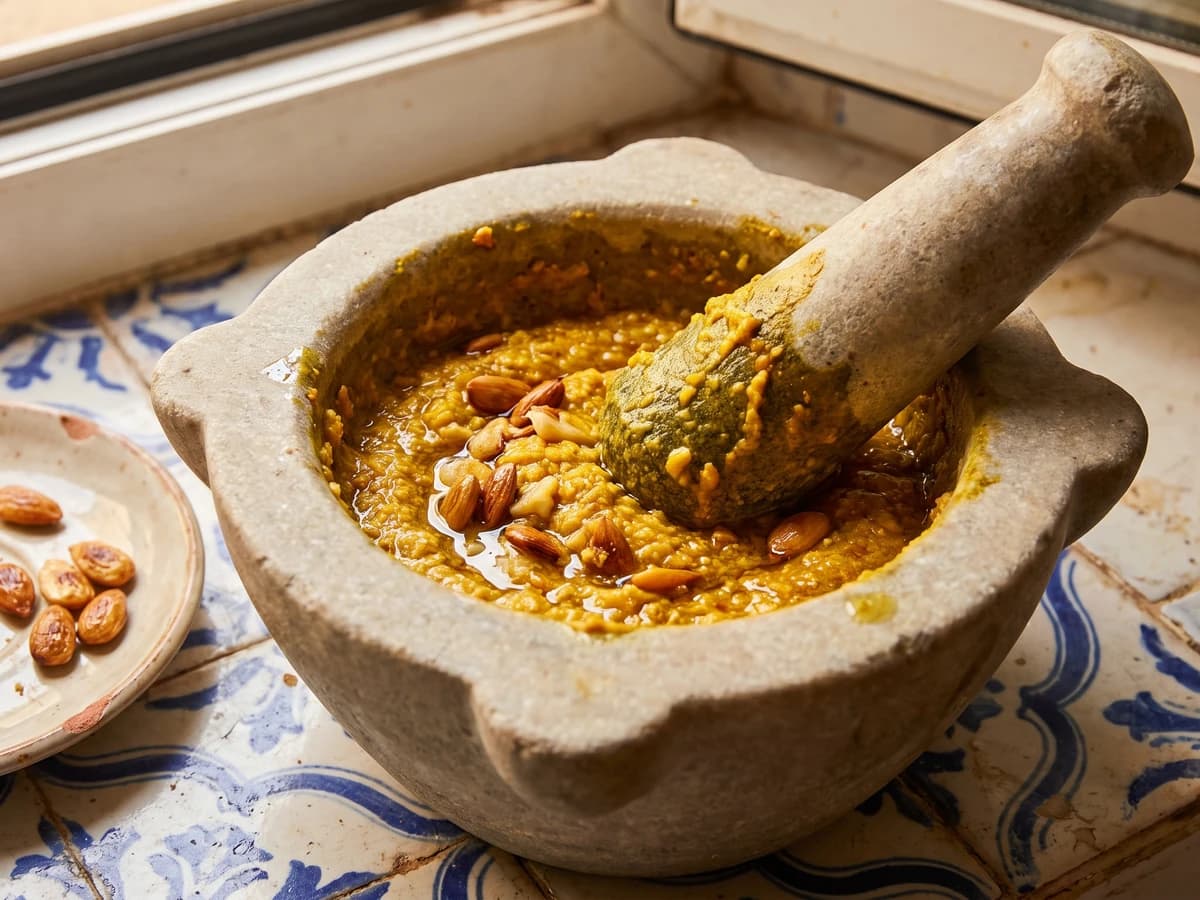
Almería's ajopollo turns fried garlic, almonds, bread and saffron into a golden mortar paste that gives modest fish and potato guisos their body, richness and unmistakable southern depth.
Chef Isabel
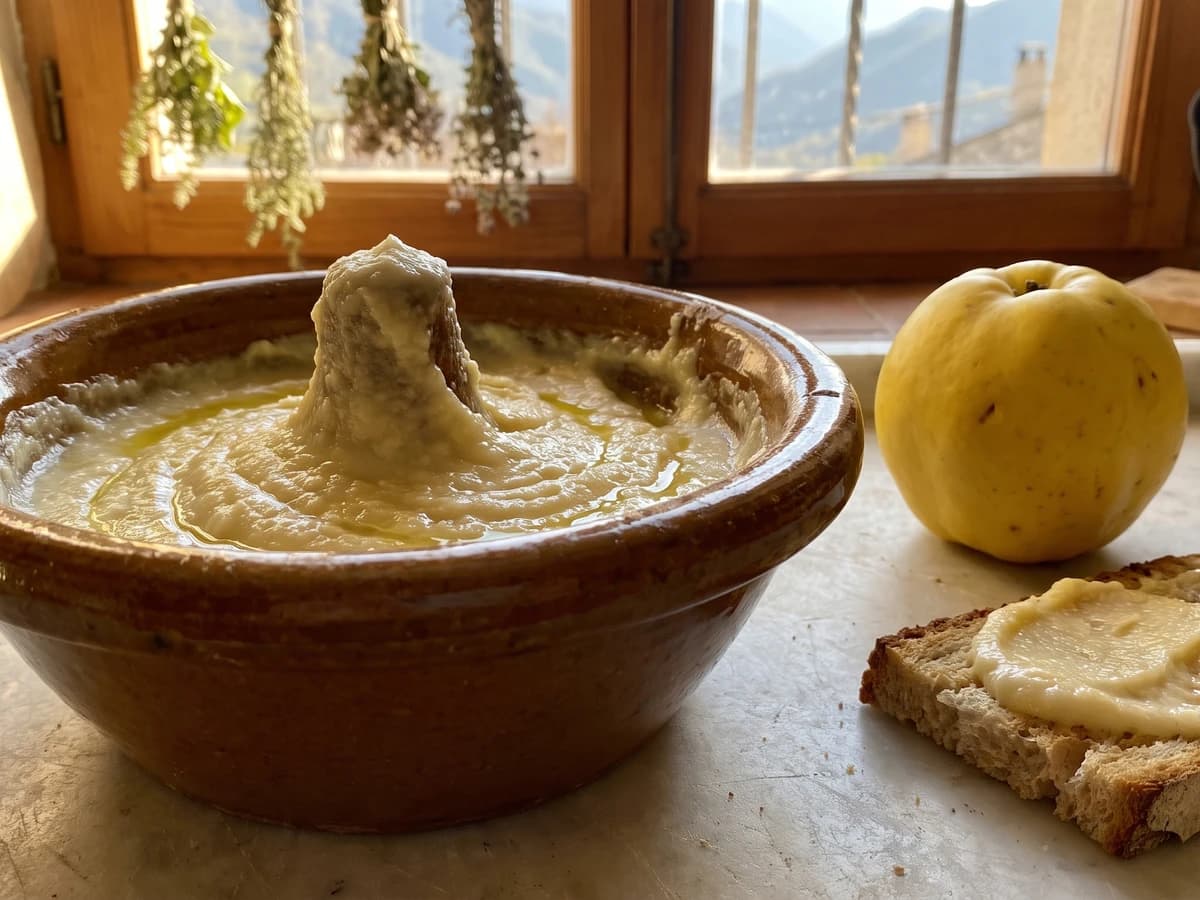
Allioli de codony belongs to the Catalan Pyrenees: boiled quince, raw garlic, salt, and olive oil worked into a thick, fragrant sauce for grilled meat, sausages, bread, and the autumn table.