Chef Isabel
Abanico Ibérico a la Plancha
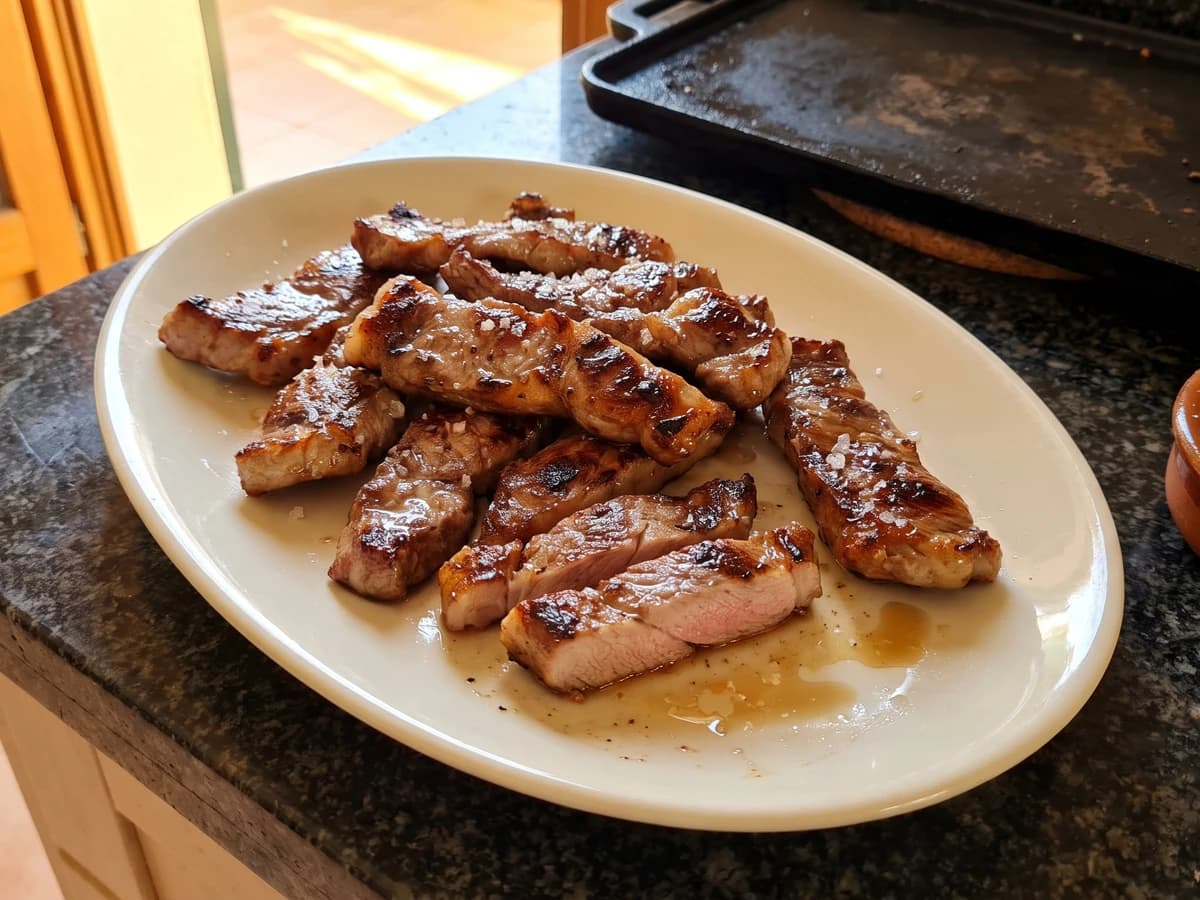
Extremadura's dehesa gives us this fan-shaped, marbled rib cut: salt it at the last moment, lay it on a fierce plancha, and count in seconds so the centre stays juicy.
A cooking platform built around craft, culture, and the stories behind what we eat.
Created by
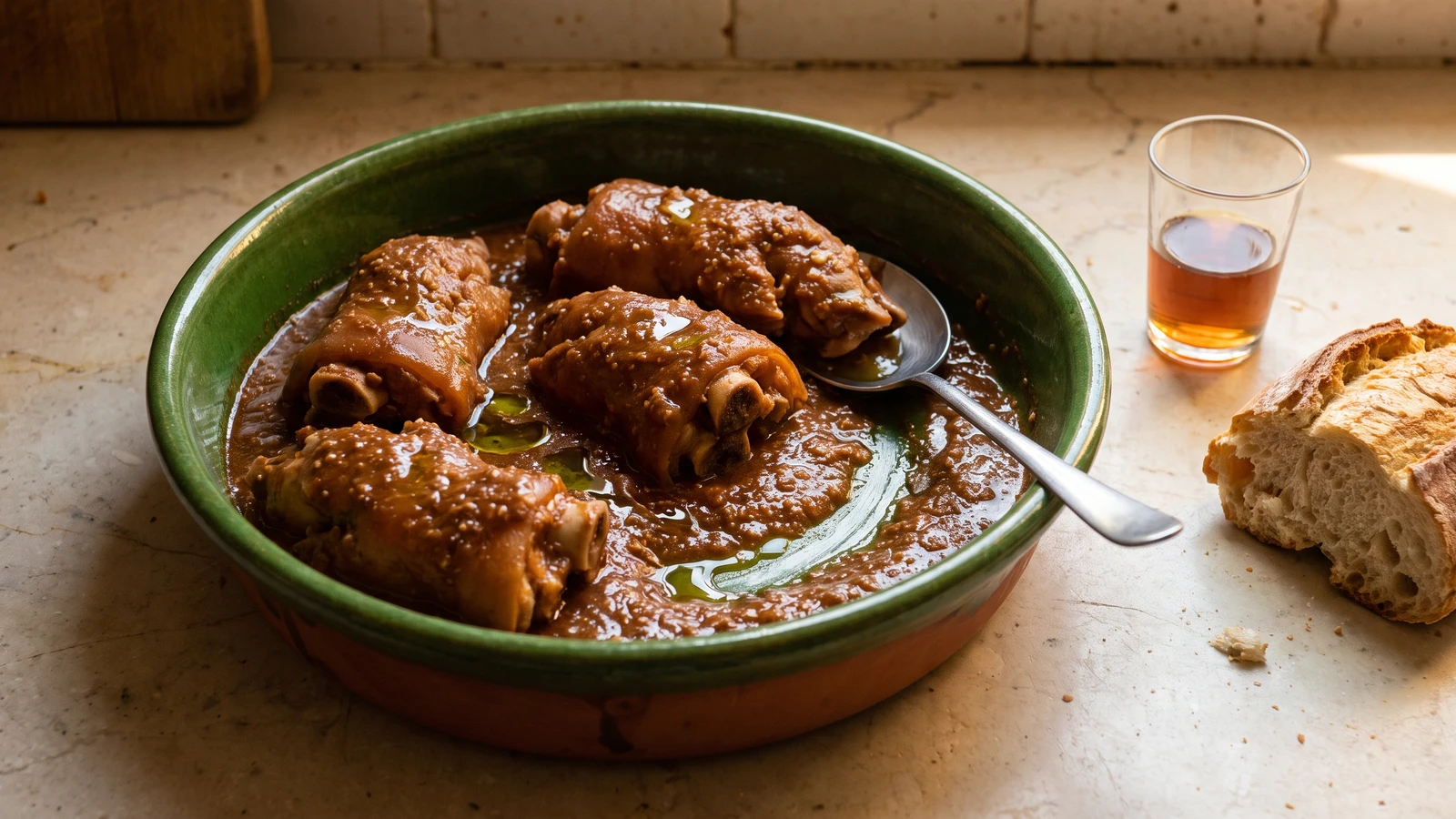
Peus de porc are Catalan cuina de cullera at its deepest: tender trotters, dark sofregit, and almond-hazelnut picada held at a slow xup-xup until the sauce turns glossy enough to cling.
Peus de porc a la catalana belong to Catalonia: pig's trotters first simmered until yielding, then settled into a dark sofregit of onion and tomato and finished with a picada of almonds, hazelnuts, garlic, parsley, and bread. Trotters are cooked across the peninsula. The sofregit and picada give this one its Catalan surname, a deep, glossy plate of cuina de cullera, spoon food.
The method that decides it is the xup-xup, the low, patient burble of the final braise. Keep the sauce at a lazy blip so the gelatin from the trotters joins the sofregit and picada while the meat stays on the bones. Boil it hard and the flesh falls apart before the sauce comes together. Low heat and patience. That's the work.
Vi ranci gives the sauce its mellow, nutty depth. If you can't find it, use the same amount of dry oloroso or amontillado; the sauce will have a slightly sharper walnut edge, but it will still belong at the Catalan table. Outside tomato season, use good canned whole tomatoes instead of pale fresh ones. No hace falta haber pisado España, you don't need to have set foot in Spain.
Make it the day before if you can. The sauce settles around the trotters overnight and reheats beautifully. In the Margin beside this one I wrote only two things: don't hurry the onion, and don't bully the trotters. Siempre sale, si lo sigues.
Peus de porc belong to Catalonia's cuina d'aprofitament, cooking that wastes nothing, rooted in the household matança that turned every edible part of the pig into food for the coming months. The Catalan signature is not the trotter alone, but the pairing of sofregit and picada: onion and tomato cooked down patiently, then nuts, garlic, parsley, and bread pounded into the sauce to bind its natural gelatin. Some households add a morsel of dark chocolate or a carquinyoli to the picada, not to sweeten the stew, but to deepen and thicken it.
Quantity
4 (about 2kg total)
cleaned, singed, and split lengthwise by the butcher
Quantity
3 litres
Quantity
3.5 litres
Quantity
1 (150g)
trimmed, washed, and halved
Quantity
1 (120g)
peeled and cut into 3 pieces
Quantity
1 (200g)
peeled and halved
Quantity
2
Quantity
2 sprigs
Quantity
2
Quantity
2g
Quantity
20g
divided
Quantity
60ml
divided
Quantity
350g
finely chopped
Quantity
4 cloves
2 thinly sliced and 2 left whole
Quantity
400g
grated if fresh, crushed if canned
Quantity
125ml
Quantity
750ml
Quantity
30g
Quantity
30g
Quantity
25g
cut into small cubes
Quantity
10g
roughly chopped
Quantity
1g
Quantity
8g
finely grated
| Ingredient | Quantity |
|---|---|
| pig's trotterscleaned, singed, and split lengthwise by the butcher | 4 (about 2kg total) |
| cold water for blanching | 3 litres |
| cold water for simmering | 3.5 litres |
| leektrimmed, washed, and halved | 1 (150g) |
| carrotpeeled and cut into 3 pieces | 1 (120g) |
| onion for the cooking liquorpeeled and halved | 1 (200g) |
| bay leaves | 2 |
| thyme | 2 sprigs |
| whole cloves | 2 |
| black peppercorns | 2g |
| fine sea saltdivided | 20g |
| extra virgin olive oildivided | 60ml |
| onions for the sofregitfinely chopped | 350g |
| garlic2 thinly sliced and 2 left whole | 4 cloves |
| ripe plum tomatoes or canned whole peeled tomatoesgrated if fresh, crushed if canned | 400g |
| vi ranci, or dry oloroso or amontillado | 125ml |
| strained trotter cooking liquor | 750ml |
| raw blanched almonds | 30g |
| raw hazelnuts | 30g |
| day-old country breadcut into small cubes | 25g |
| flat-leaf parsley leavesroughly chopped | 10g |
| freshly ground black pepper | 1g |
| dark chocolate with 70% cocoa (optional)finely grated | 8g |
Check that the butcher has scrubbed, singed, and split the trotters lengthwise. Rinse them well, set them in a large pot with 3 litres of cold water, and bring to a full boil. Boil for 8 minutes, then drain. Rinse the trotters and wash the grey foam from the pot. This first blanch gives you a cleaner cooking liquor and a sauce that tastes of pork, not scum.
Return the trotters to the clean pot. Add 3.5 litres of fresh cold water, the leek, carrot, halved onion, bay leaves, thyme, cloves, peppercorns, and 12g of the salt. Bring up slowly, skim any foam, then lower the heat and partially cover. Simmer at the barest movement for 2 hours 30 minutes to 3 hours. They are ready when a small knife enters the thickest joint easily and the flesh has begun to draw back from the bone, but each half still holds together.
Lift the trotters carefully onto a tray. Strain the cooking liquor and measure out 750ml. Skim the surface fat with a ladle, leaving a little behind for flavour. Keep the trotters covered while they cool enough to handle; exposed skin becomes dry and sticky.
Heat 50ml of the olive oil in a wide, heavy casserole over low heat. Add the chopped onions and 6g of the salt. Cook for 35 to 45 minutes, stirring often, until dark gold, soft, and almost jammy. Add the 2 sliced garlic cloves and cook for 2 minutes. Stir in the tomatoes and cook for another 25 to 30 minutes, until the mixture is dark brick-red, a spoon leaves a clear track across the pan, and the oil begins to show at the edges. This slow loss of water is where the sweetness comes from; rush it and the sauce stays pale and thin.
Pour the vi ranci into the sofregit and scrape up everything from the bottom. Let it bubble gently for 3 minutes, until the raw smell of alcohol has gone. Add 600ml of the reserved cooking liquor and the ground black pepper. Arrange the trotters in the sauce, skin side upward, bring it to a low xup-xup, and partially cover. Braise gently for 30 minutes. Shake the casserole once or twice instead of turning the fragile pieces with a spoon.
Toast the almonds and hazelnuts in a dry frying pan over medium-low heat for 4 to 5 minutes, moving them often, until fragrant and lightly coloured. Set them aside. Add the remaining 10ml olive oil to the pan and fry the bread cubes until golden. Pound the 2 whole garlic cloves and parsley in a mortar, then add the toasted nuts and bread and work everything into a coarse paste. Pound in the grated chocolate if using. Loosen the picada with 30ml of sauce from the casserole.
Work the picada into the sauce around the trotters. Keep the casserole uncovered at the gentlest xup-xup for 15 to 20 minutes, shaking it occasionally, until the sauce is glossy and thick enough to cling to the back of a spoon. If it tightens too far, add the remaining cooking liquor in 50ml additions. Taste before using the final 2g salt. The sauce should be deeply savoury, not aggressively salty.
Take the casserole off the heat and rest it for 20 minutes. The sauce will settle and thicken as the gelatin cools slightly. Serve one whole trotter per person in a shallow bowl with plenty of sofregit and picada sauce, and bread for the bottom of the bowl. Tal com es fa allí, exactly as it's made there.
1 serving (about 475g)
Culinary guides, cultural storytelling, and the editorial depth that makes cooking meaningful.
Discover Culinary ExplorerChef Isabel
Extremadura's dehesa gives us this fan-shaped, marbled rib cut: salt it at the last moment, lay it on a fierce plancha, and count in seconds so the centre stays juicy.

Chef Isabel
Aletría Murciana is Murcia's humble noodle guiso: fine fideos, pork ribs, potato, saffron, and a dark sweet sofrito. Get that base right and the pot knows where it's going.

Chef Isabel
Andrajos are Andalucía's dough-rag stew from Jaén and Granada: a slow rabbit guiso thickened with torn sheets of flour dough, rolled thin so they cook tender instead of gummy.
Chef Isabel
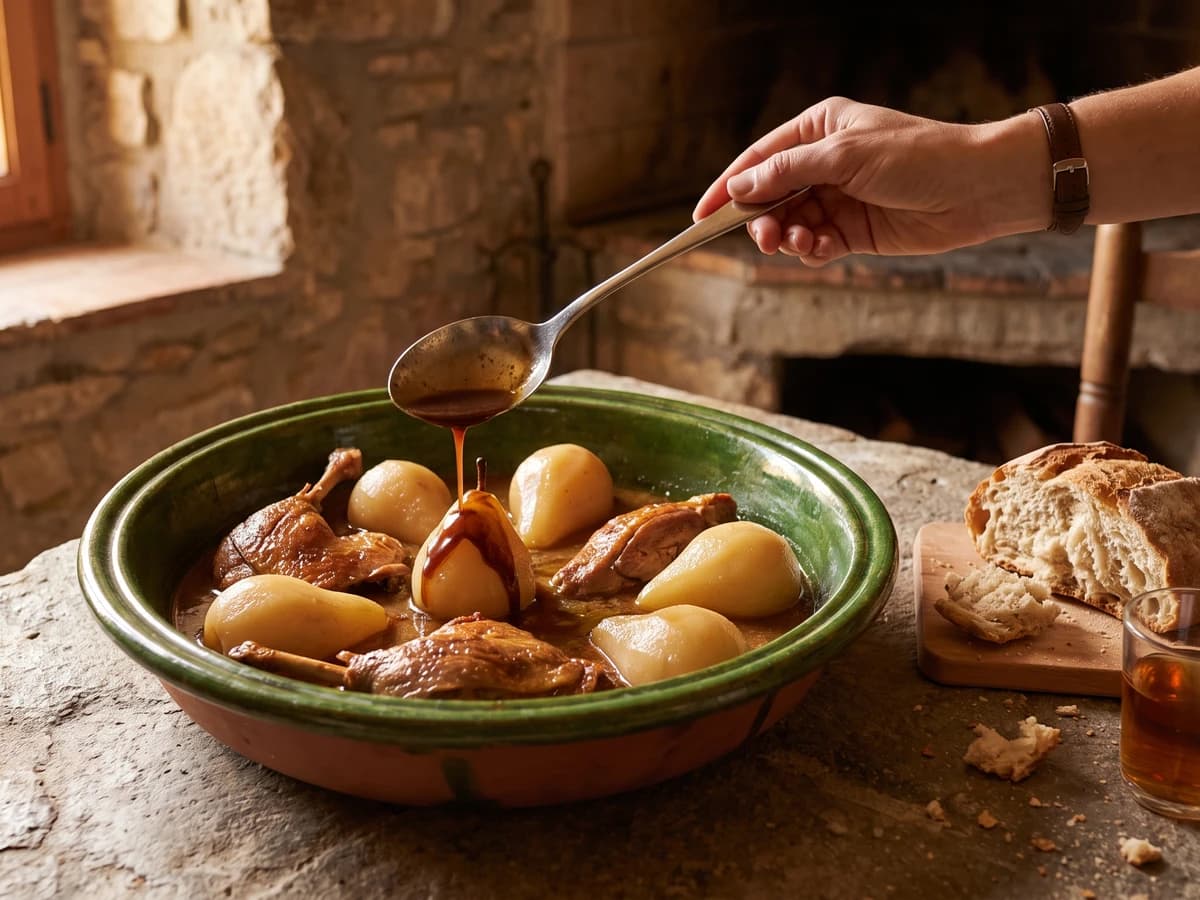
Ànec amb peres is Catalan celebration cooking: duck braised in a dark sofregit, firm autumn pears added near the end, and an almond-garlic picada that turns the juices into a close, glossy sauce.