Chef Isabel
Abanico Ibérico a la Plancha
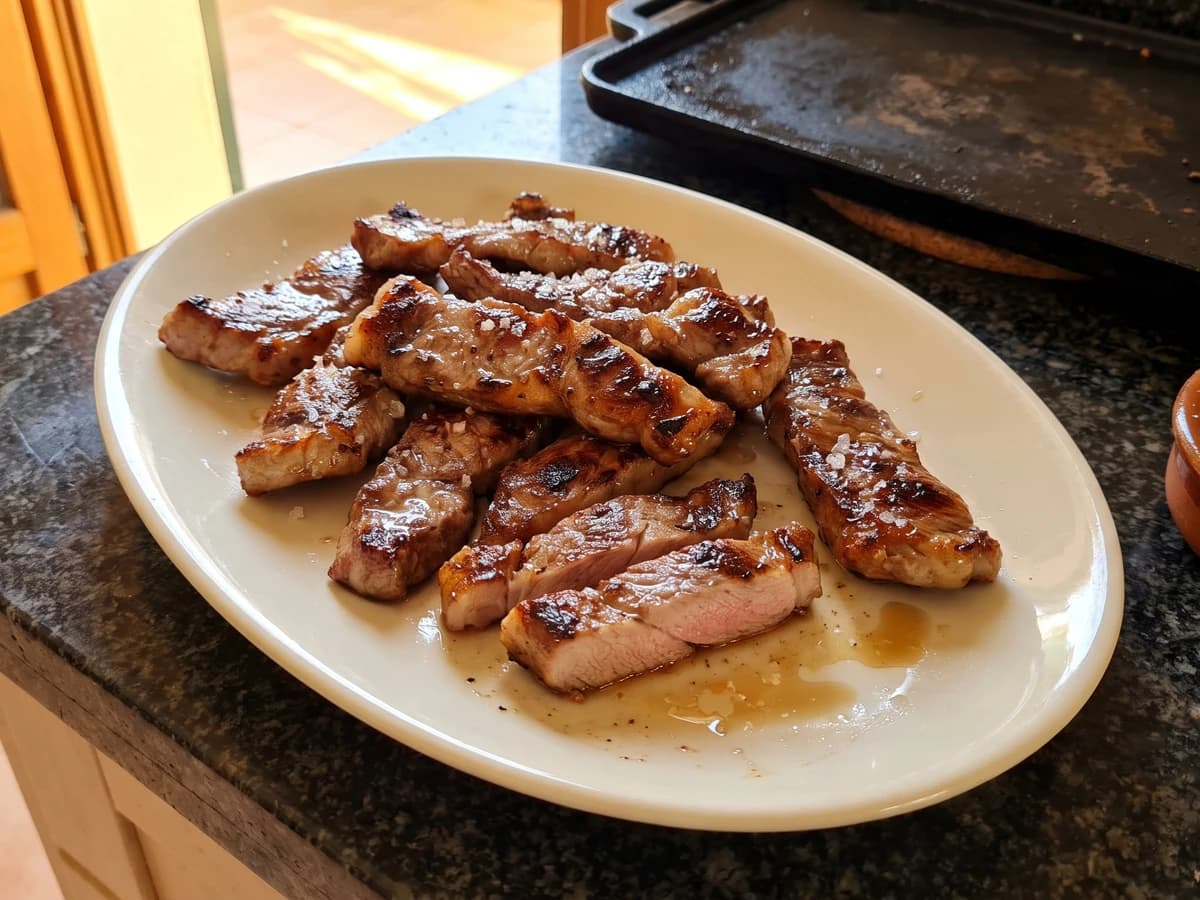
Extremadura's dehesa gives us this fan-shaped, marbled rib cut: salt it at the last moment, lay it on a fierce plancha, and count in seconds so the centre stays juicy.
A cooking platform built around craft, culture, and the stories behind what we eat.
Created by
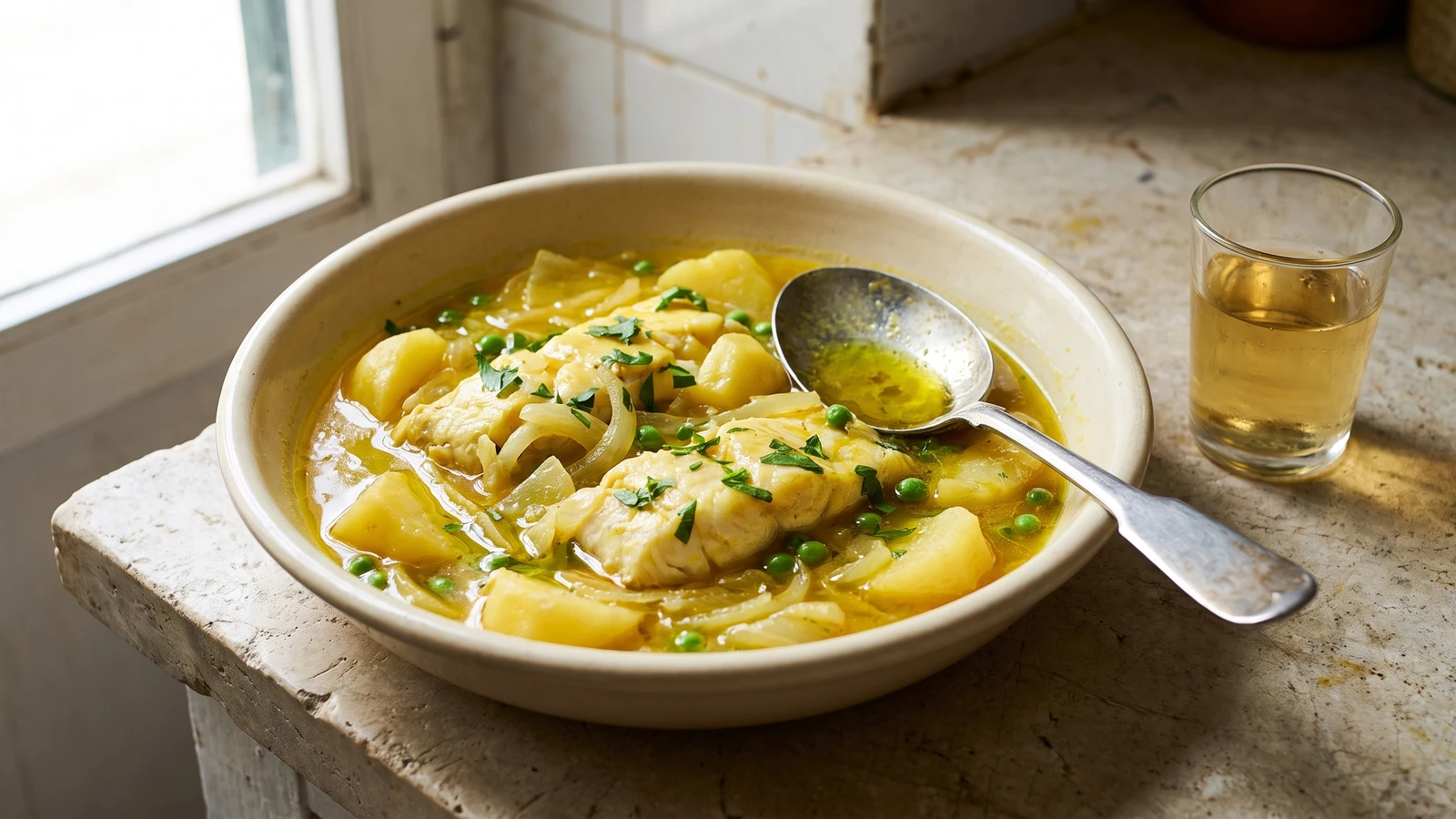
Cádiz cooks hake in a golden saffron-and-turmeric broth with potatoes and peas. Build the onion slowly, then poach the fish only at the end, and supper comes out tender every time.
Pescado en amarillo is gaditano, from Cádiz: thick pieces of hake, potatoes, and peas in a light yellow sauce scented with saffron and a little turmeric. There is no tomato hiding beneath the colour. This is an Atlantic fish cazuela, economical enough for a weekday and generous enough to put in the middle of the table.
Begin with the sofrito, the slow onion base. Cook it low until the onion is deep gold, soft, and sweet before the wine goes in. That gives the broth its foundation, but the step that decides the dish comes later: the potatoes must be nearly tender before you add the hake. Fish does not wait politely while a hard potato finishes cooking.
Once the hake is in, keep the sauce at the barest simmer. A rolling boil breaks the flesh into dry flakes and clouds the yellow broth. Cover the pan, give it five to seven minutes, then let the remaining heat finish the centre. Shake the cazuela gently instead of stirring through the fish.
No hace falta haber pisado España. If hake is scarce where you are, use thick pieces of fresh cod or pollock. Cod is firmer and a little richer; pollock is leaner and needs checking a minute sooner. Frozen peas are entirely sensible, and hake frozen at sea can be excellent once thawed slowly and dried well. The line in my margin says, "the fish waits outside until the potato is ready." Siempre sale, si lo sigues.
Pescado en amarillo belongs to the fishing kitchens of Cádiz and its Atlantic bay, where the day's white fish was stretched with potatoes into a family cazuela. Amarillo names the preparation rather than one particular fish: saffron coloured the broth when the household could spare it, with turmeric used to strengthen that gold in a thrifty kitchen. Hake suits the gentle cooking, though the same gaditano method has also been used for cazón, skate, and other firm fish brought home from the market.
Quantity
800g
cut about 3cm thick and patted dry
Quantity
8g, divided
plus more only if needed
Quantity
60ml
Quantity
200g
finely diced
Quantity
3 cloves
finely chopped
Quantity
1
Quantity
100ml
Quantity
700g
peeled and cracked into 4cm pieces
Quantity
600ml
kept warm
Quantity
0.1g
Quantity
1g
Quantity
150g
fresh or frozen
Quantity
10g
finely chopped
| Ingredient | Quantity |
|---|---|
| skin-on hake steakscut about 3cm thick and patted dry | 800g |
| fine sea saltplus more only if needed | 8g, divided |
| extra virgin olive oil | 60ml |
| yellow onionfinely diced | 200g |
| garlicfinely chopped | 3 cloves |
| bay leaf | 1 |
| manzanilla or dry white wine | 100ml |
| waxy potatoespeeled and cracked into 4cm pieces | 700g |
| light fish stockkept warm | 600ml |
| saffron threads | 0.1g |
| ground turmeric | 1g |
| peasfresh or frozen | 150g |
| flat-leaf parsleyfinely chopped | 10g |
Check the hake for stray scales, then dry it well. Season both sides with 3g of the salt and leave it at cool room temperature for 15 minutes while you start the sauce. If the fish was frozen, thaw it overnight in the refrigerator first; excess water would thin the broth.
Put the saffron in a dry pan over low heat for 20 seconds, just until fragrant. Do not let it darken. Crush it between your fingers into a small bowl, add the turmeric and 100ml of the warm fish stock, then leave the mixture to infuse while the onion cooks.
Heat the olive oil in a wide 28cm cazuela or sauté pan over medium-low heat. Add the onion, bay leaf, and 3g of the salt. Cook for 12 to 15 minutes, stirring regularly, until the onion is deep gold, soft, and sweet but not browned at the edges. Add the garlic and cook for 1 minute. Rush this and the onion stays pale and sharp, and the whole sauce tastes thinner.
Pour in the manzanilla or white wine and scrape the bottom of the pan. Raise the heat to medium and let it bubble for 2 to 3 minutes, until the raw smell of alcohol has gone and only a few spoonfuls remain.
Add the potatoes and turn them through the onion and oil for 2 minutes. Pour in the saffron mixture and 400ml more warm stock, reserving the last 100ml. Bring to a gentle simmer, cover slightly ajar, and cook for 15 to 20 minutes. Shake the pan once or twice. The potatoes are ready for the fish when a knife enters easily but the pieces still hold their shape.
Stir the peas into the potatoes, then arrange the hake in one layer without pushing it beneath the sauce. Spoon a little broth over each piece. Add enough reserved stock to bring the liquid halfway up the fish, cover, and hold it at the barest simmer for 5 to 7 minutes. Do not stir. The hake is done when the centre is opaque, separates in moist flakes, and reaches 63°C.
Take the pan off the heat and leave it covered for 3 minutes. Discard the bay leaf, add most of the parsley, and shake the pan gently by its handles so the potato starch and olive oil settle into the broth. Taste before adding the remaining salt. Scatter over the last parsley and serve directly from the cazuela, with potatoes, peas, fish, and yellow sauce in every portion.
1 serving (about 580g)
Culinary guides, cultural storytelling, and the editorial depth that makes cooking meaningful.
Discover Culinary ExplorerChef Isabel
Extremadura's dehesa gives us this fan-shaped, marbled rib cut: salt it at the last moment, lay it on a fierce plancha, and count in seconds so the centre stays juicy.

Chef Isabel
Aletría Murciana is Murcia's humble noodle guiso: fine fideos, pork ribs, potato, saffron, and a dark sweet sofrito. Get that base right and the pot knows where it's going.

Chef Isabel
Andrajos are Andalucía's dough-rag stew from Jaén and Granada: a slow rabbit guiso thickened with torn sheets of flour dough, rolled thin so they cook tender instead of gummy.
Chef Isabel
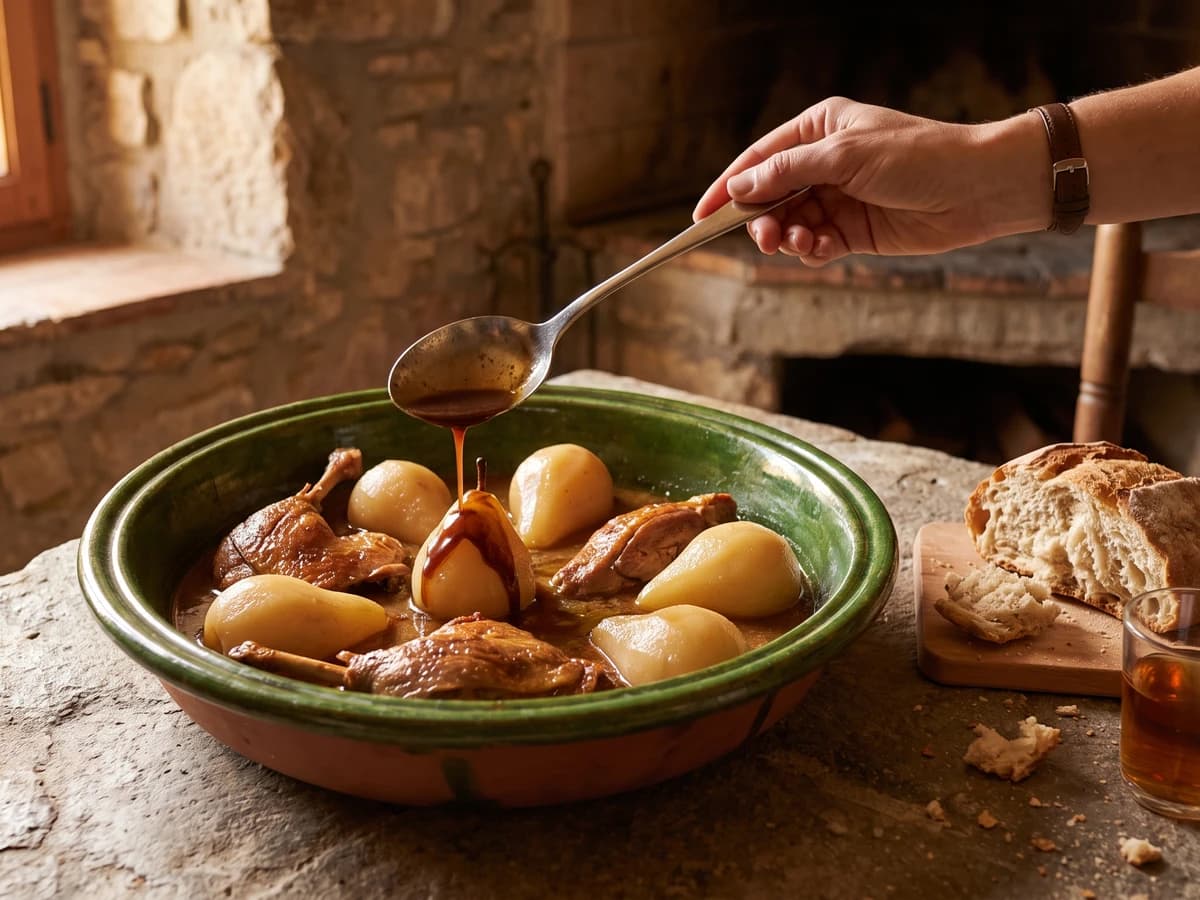
Ànec amb peres is Catalan celebration cooking: duck braised in a dark sofregit, firm autumn pears added near the end, and an almond-garlic picada that turns the juices into a close, glossy sauce.