Chef Isabel
Abanico Ibérico a la Plancha
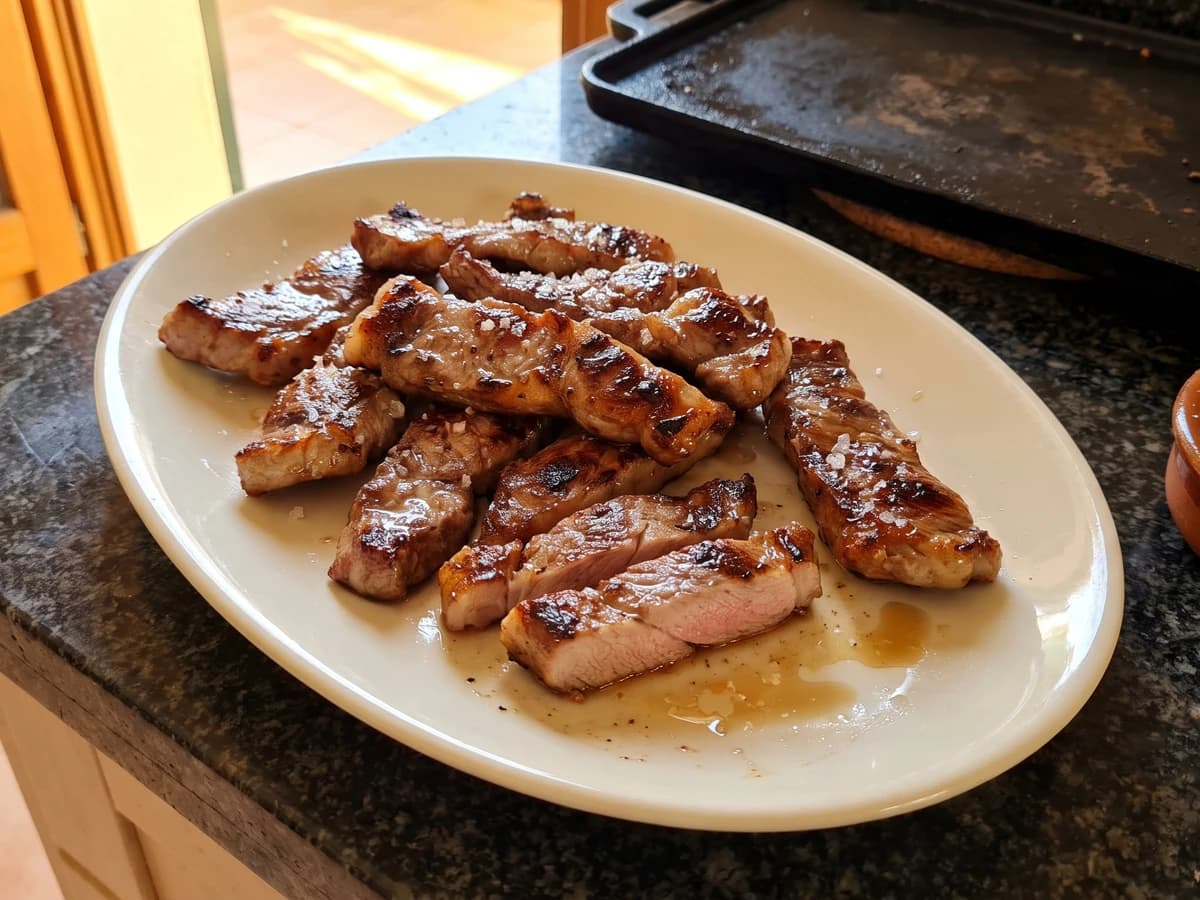
Extremadura's dehesa gives us this fan-shaped, marbled rib cut: salt it at the last moment, lay it on a fierce plancha, and count in seconds so the centre stays juicy.
A cooking platform built around craft, culture, and the stories behind what we eat.
Created by
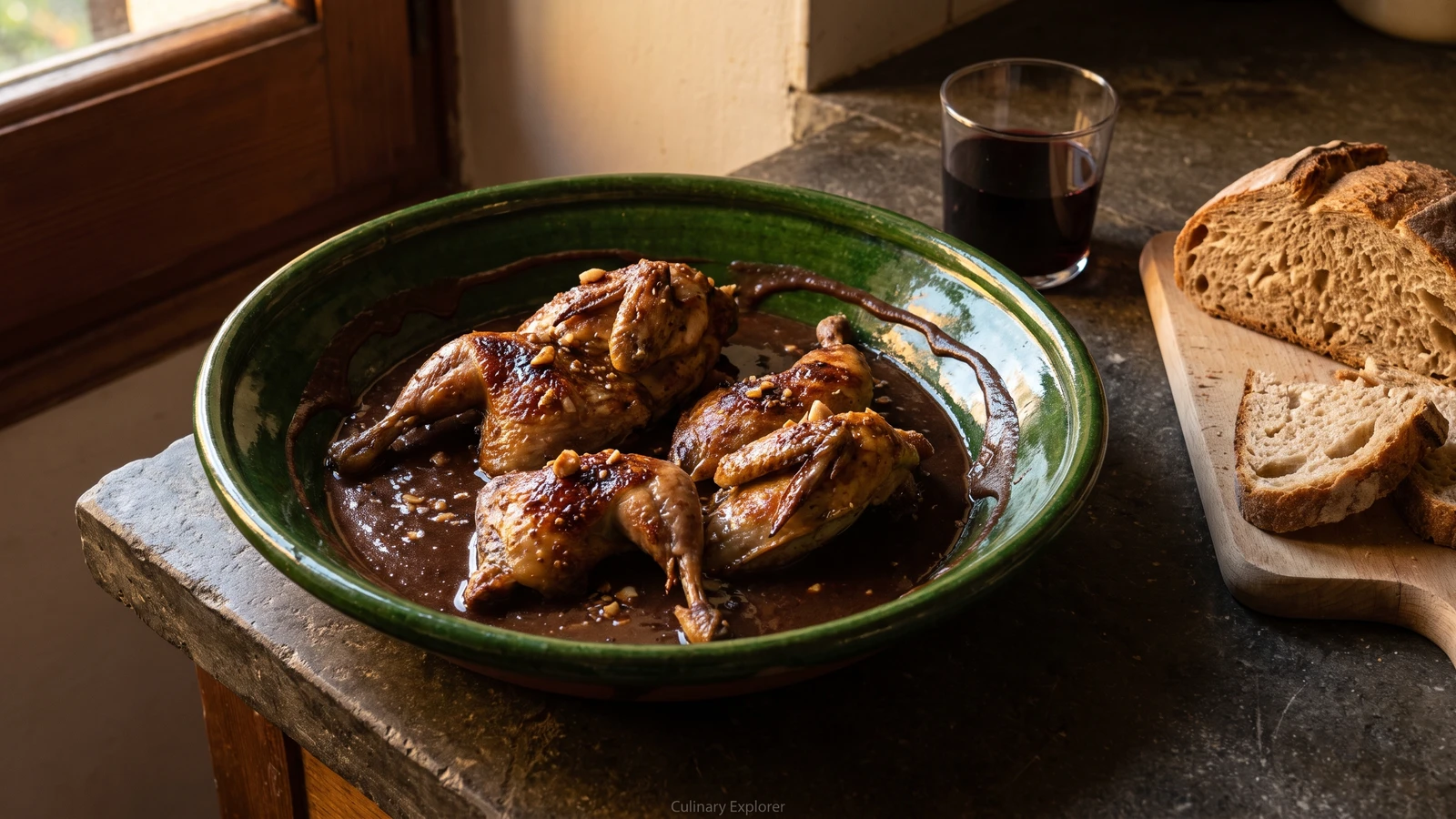
In Navarra and inland Catalonia, lean partridge is braised in red wine and finished with an almond picada and just enough bitter chocolate to deepen the sauce, never sweeten it.
Perdiz con chocolate belongs to the hunting kitchens of Navarra and inland Catalonia, where it is also called perdiu amb xocolata. This is a dark red-wine braise for a lean bird, finished with picada, the mortar-pounded mixture of toasted bread, almonds, garlic, and parsley that gives the sauce its body. The small piece of bitter chocolate is what separates it from an ordinary wine-braised partridge. It brings colour, bitterness, and depth, but no noticeable sweetness.
Partridge has always been food for an autumn or winter table, often saved for a Sunday or a gathering because one bird asks time and feeds only two people. Brown it properly, then give the onions and tomato their slow half-hour until the sofregit, the Catalan slow-cooked base, is dark, sweet, and nearly dry. That patient beginning keeps the finished sauce from tasting like wine poured over poultry.
The method that decides the dish comes at the end. Pound exactly 20 grams of high-cacao chocolate into the picada and stir it into the reduced sauce over the lowest heat. Don't let it boil. Too much chocolate makes the sauce heavy, and fierce heat turns its clean bitterness harsh. Pésalo, no lo adivines. Weigh it, don't guess.
If partridge isn't sold where you live, use eight large farmed quail and shorten the braise to 25 to 30 minutes. The sauce will be gentler and the meat less deeply gamey, but the method remains sound. My Margin beside this recipe says only, '20 g, no more.' Follow that, and siempre sale, si lo sigues.
Perdiz con chocolate has two established regional homes: the game country of Navarra and inland Catalonia, where the dish is known as perdiu amb xocolata. Cacao arrived in Iberian kitchens from the Americas and entered savory sauces beside nuts, bread, garlic, and spice before sweetened chocolate became its usual table form. In these hunting kitchens, the picada supplied richness and body to a bird whose meat is notably lean.
Quantity
2, 450-550g each
giblets removed and birds patted dry
Quantity
8g
divided
Quantity
1g
Quantity
45ml
divided
Quantity
20g
Quantity
30g
cut into cubes
Quantity
30g
Quantity
3 cloves
divided
Quantity
300g
finely chopped
Quantity
120g
cut into 5mm dice
Quantity
180g
drained and crushed
Quantity
30ml
Quantity
300ml
Quantity
450ml
Quantity
1
Quantity
2 sprigs
Quantity
8g
Quantity
20g
finely chopped
Quantity
10ml
Quantity
up to 60ml
only if the sauce needs loosening
| Ingredient | Quantity |
|---|---|
| oven-ready partridgesgiblets removed and birds patted dry | 2, 450-550g each |
| fine sea saltdivided | 8g |
| freshly ground black pepper | 1g |
| extra virgin olive oildivided | 45ml |
| pork lard | 20g |
| day-old rustic breadcut into cubes | 30g |
| blanched almonds | 30g |
| garlicdivided | 3 cloves |
| onionsfinely chopped | 300g |
| carrotcut into 5mm dice | 120g |
| canned whole peeled tomatoesdrained and crushed | 180g |
| brandy | 30ml |
| dry red wine | 300ml |
| unsalted chicken or game stock | 450ml |
| bay leaf | 1 |
| thyme | 2 sprigs |
| flat-leaf parsley leaves | 8g |
| dark chocolate with 85% cacaofinely chopped | 20g |
| vinagre de Jerez | 10ml |
| water (optional)only if the sauce needs loosening | up to 60ml |
Check the partridges for pinfeathers and, if they are wild, for any stray shot. Do not rinse them. Pat them thoroughly dry, season inside and out with 6g of the salt and all the pepper, and leave them for 30 minutes while you prepare the vegetables. Heat the oven to 160°C.
Heat 15ml of the olive oil in a 28cm heavy casserole over medium-low heat. Fry the bread cubes until crisp and golden, about 3 minutes, then lift them out. Add one whole garlic clove and cook until pale gold, about 2 minutes. Remove it. Toast the almonds in the same casserole for 2 to 3 minutes, moving them constantly so they colour without scorching. Set the bread, garlic, and almonds aside for the picada.
Add the remaining 30ml olive oil and the lard to the casserole. Raise the heat to medium-high. Brown the partridges on the breast, back, and both sides until the skin is a deep hazelnut colour, 10 to 12 minutes altogether. Give each surface time against the pan. Pale skin adds nothing to the sauce. Transfer the birds to a plate.
Lower the heat and add the onions and carrot to the same casserole. Cook for 25 minutes, stirring often and scraping up the browned juices, until the onion is dark gold, soft, and jammy. Mince the remaining two garlic cloves, add them, and cook for 1 minute. Stir in the crushed tomato and cook for another 12 to 15 minutes, until nearly all its water is gone and the oil shows around the edges. This slow sofregit gives the sauce its sweetness. Rush it and the wine will taste thin and sharp.
Pour in the brandy and let it bubble for 1 minute. Add the red wine, bring it to a lively simmer, and reduce it to about 120ml, which takes 10 to 12 minutes. The smell should lose its raw alcoholic edge and turn rounder and more like cooked fruit.
Return the partridges to the casserole breast-side up. Add the stock, bay leaf, and thyme; the liquid should come roughly halfway up the birds. Bring it just to a simmer, cover, and transfer to the oven. Braise for 35 minutes, turn the birds onto their backs, and cook for another 25 to 35 minutes. They are ready when the legs move easily at the joint and the thickest part of the thigh reaches at least 74°C. Transfer them to a warm plate and cover loosely.
Discard the bay and thyme. Pass the vegetables and braising liquid through a food mill, or blend them directly in the casserole with a stick blender. Simmer uncovered for 5 to 10 minutes, until the sauce lightly coats a spoon. Meanwhile, pound the toasted almonds, fried bread, fried garlic, and parsley in a mortar. Add 60ml of the sauce and work it into a thick paste, then pound in the 20g of chopped chocolate.
Turn the sauce to its lowest heat and stir in the chocolate picada. Cook very gently for 5 minutes, stirring, without letting it boil. Add the sherry vinegar, then taste before adding any of the remaining 2g salt. The finished sauce should be dark, glossy, and savory, with the chocolate felt as depth rather than sweetness. If it becomes too thick, loosen it with water 15ml at a time.
Split each partridge lengthwise through the breastbone and back, using sturdy kitchen shears. Nestle the four halves in the sauce and warm them over low heat for 4 to 5 minutes, still without boiling. Spoon plenty of sauce over each serving and bring the rest to the table. Serve with plain potatoes or good bread, which is there to catch the sauce and knows its job.
1 serving (about 400g)
Culinary guides, cultural storytelling, and the editorial depth that makes cooking meaningful.
Discover Culinary ExplorerChef Isabel
Extremadura's dehesa gives us this fan-shaped, marbled rib cut: salt it at the last moment, lay it on a fierce plancha, and count in seconds so the centre stays juicy.

Chef Isabel
Aletría Murciana is Murcia's humble noodle guiso: fine fideos, pork ribs, potato, saffron, and a dark sweet sofrito. Get that base right and the pot knows where it's going.
Chef Isabel
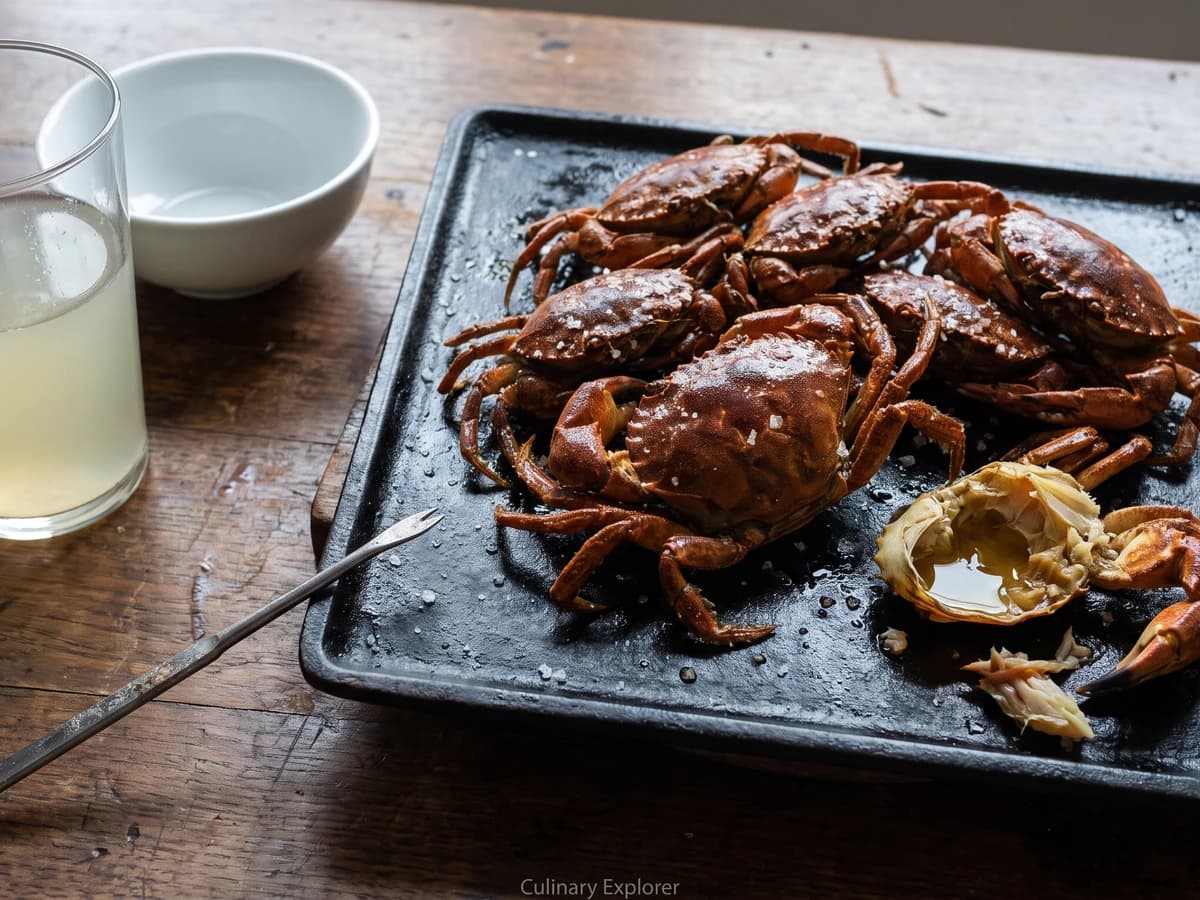
Asturias puts its small velvet crabs straight on a fierce plancha with salt and oil, keeping the shell liquor sweet and briny. Dry them well, cook them fast, and bring plenty of napkins.

Chef Isabel
Andrajos are Andalucía's dough-rag stew from Jaén and Granada: a slow rabbit guiso thickened with torn sheets of flour dough, rolled thin so they cook tender instead of gummy.