Chef Isabel
Abanico Ibérico a la Plancha
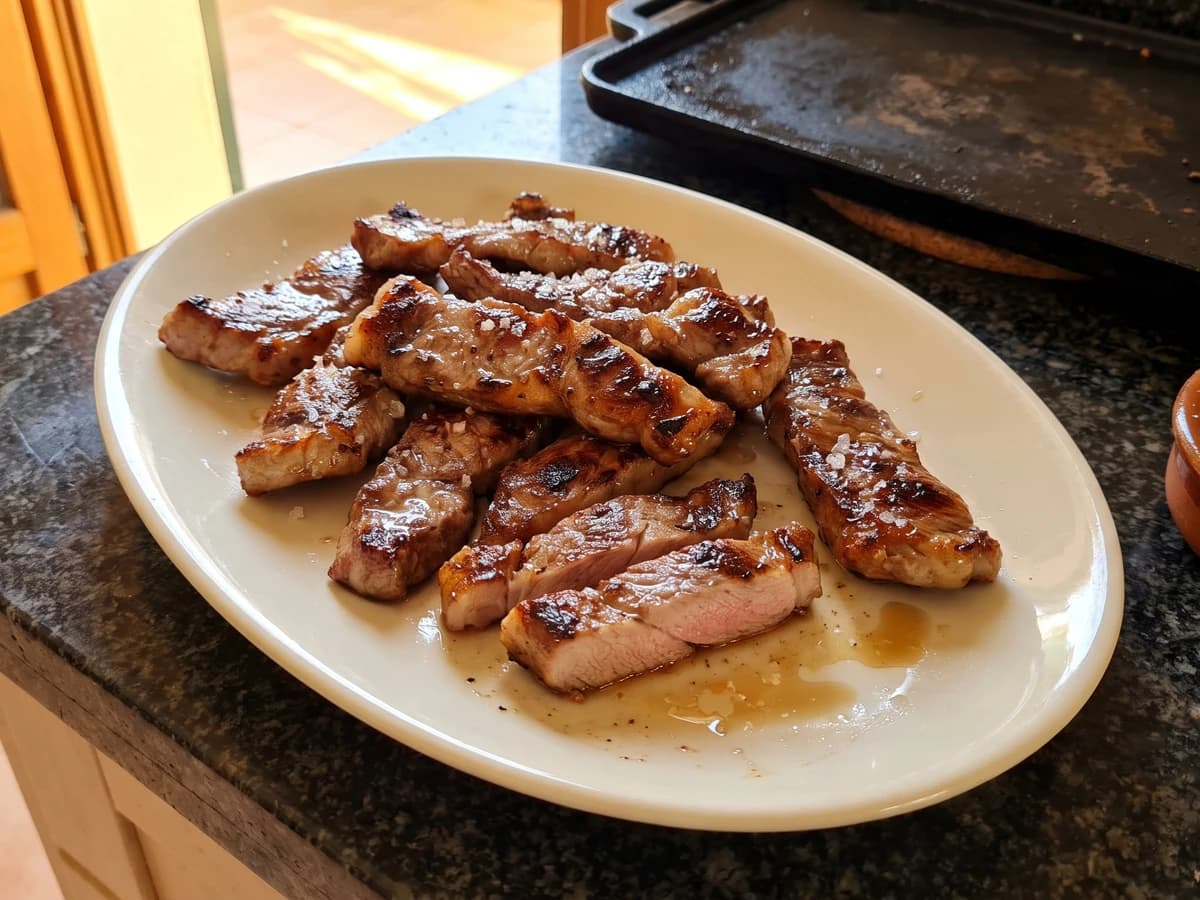
Extremadura's dehesa gives us this fan-shaped, marbled rib cut: salt it at the last moment, lay it on a fierce plancha, and count in seconds so the centre stays juicy.
A cooking platform built around craft, culture, and the stories behind what we eat.
Created by
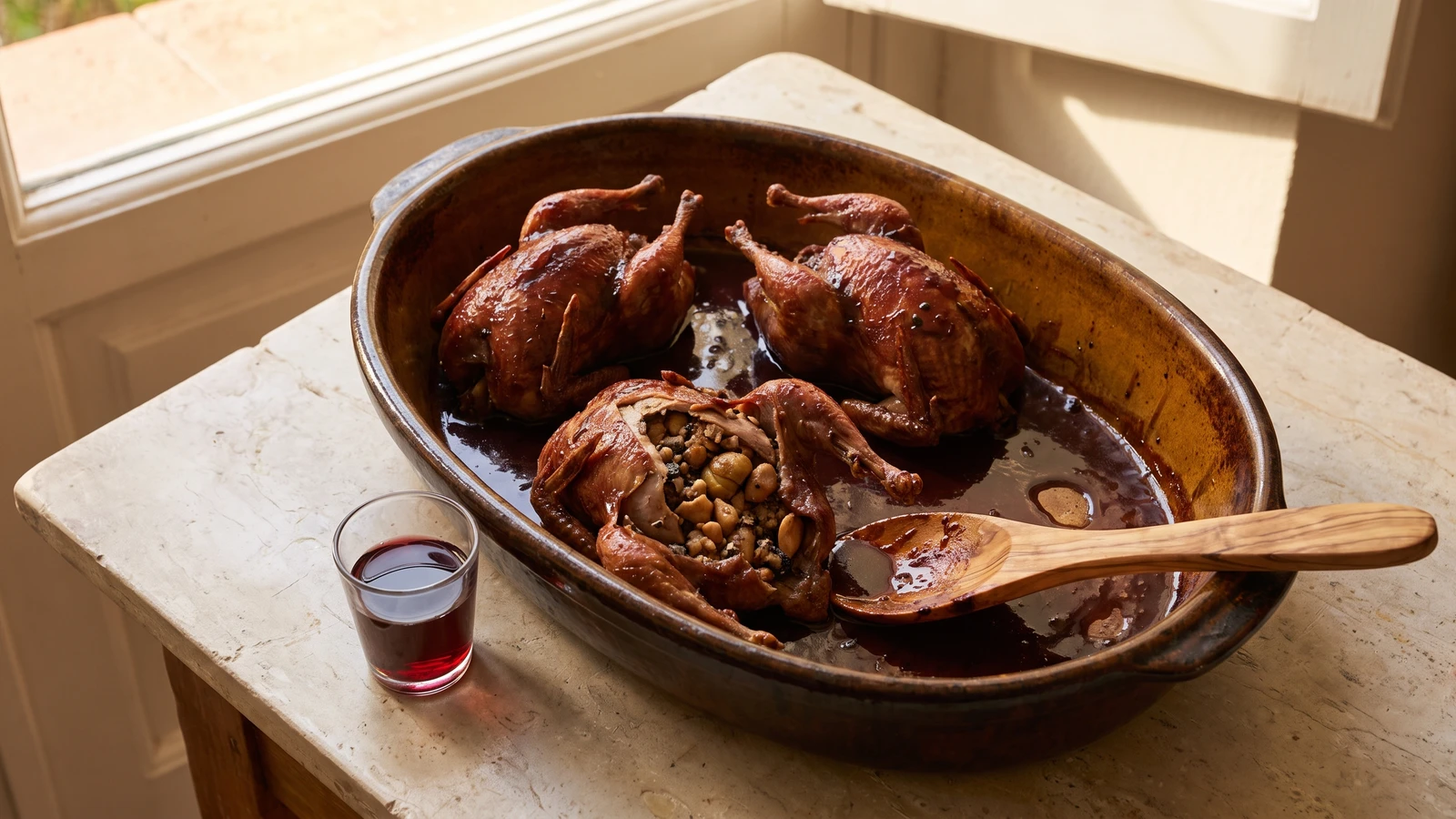
Extremadura's feast-day partridge is packed with a liver and almond stuffing, rested two days in Port, and braised gently until the birds are tender and the wine becomes a dark, glossy sauce.
Perdiz al modo de Alcántara is Extremadura's great feast-day partridge. A coarse relleno, a stuffing of poultry liver and almonds, fills each bird before it rests for two full days in Port and then braises under a tight lid. Foie gras and black truffle belong to the grand version. This is conventual cooking from Alcántara, rich but not showy, and quite unlike a neighboring game-bird stew thickened with vegetables or bread.
The Port bath decides the dish. Keep the stuffed birds properly cold, turn them every twelve hours, and give the wine time to reach the meat. Then dry them thoroughly before browning. A wet partridge turns grey in the pot, while a dry one takes on the deep roasted flavor that keeps the sweet wine in balance. Braise gently after that. A hard boil tightens this lean bird and breaks the filling.
If partridge is impossible to find, use eight farmed quail. A Spanish kitchen would sooner reach for another small game bird than for a large chicken. Marinate the quail for twenty-four hours and braise them for thirty-five to forty-five minutes; the meat will be milder, but the liver, almonds, and Port still carry the character of the dish. The line in my Margin is simple: dry the bird, lower the heat, and trust the pot. Siempre sale, si lo sigues.
Perdiz al modo de Alcántara belongs to Extremadura's western border and is traditionally tied to the Conventual de San Benito at Alcántara, the great house of the military-religious Order of Alcántara. Its Port bath reflects a town facing Portugal, while partridge, liver, and truffle mark it as feast food from a wealthy conventual table rather than an everyday country pot. The best-known account says soldiers serving General Junot carried the formula away during the French occupation and that his wife, Laure Junot, Duchess of Abrantès, helped make it famous in French cookery.
Quantity
4 (350-450g each)
livers reserved
Quantity
160g
use the partridge livers and enough trimmed chicken liver to make up the weight
Quantity
60g
very finely chopped
Quantity
1 clove
finely chopped
Quantity
40g
lightly toasted and finely ground
Quantity
20g
Quantity
1
Quantity
80g
chilled and cut into 1cm cubes
Quantity
20g
finely chopped
Quantity
60g
divided
Quantity
750ml
Quantity
300ml
Quantity
16g
divided
Quantity
3g
divided
| Ingredient | Quantity |
|---|---|
| oven-ready partridgeslivers reserved | 4 (350-450g each) |
| poultry liversuse the partridge livers and enough trimmed chicken liver to make up the weight | 160g |
| onionvery finely chopped | 60g |
| garlicfinely chopped | 1 clove |
| blanched almondslightly toasted and finely ground | 40g |
| fresh breadcrumbs | 20g |
| large egg yolk | 1 |
| duck foie gras (optional)chilled and cut into 1cm cubes | 80g |
| fresh black truffle (optional)finely chopped | 20g |
| pork larddivided | 60g |
| ruby Port | 750ml |
| unsalted chicken stock | 300ml |
| fine saltdivided | 16g |
| freshly ground black pepperdivided | 3g |
Check the cavities carefully and remove any remaining feathers, loose bone, or shot from wild birds. Wipe the partridges clean and pat them dry. Do not rinse them around the sink. Set the reserved livers aside with enough trimmed chicken liver to give you 160g in all.
Melt 15g of the lard in a small frying pan over low heat. Add the onion and cook for 8 minutes, stirring often, until soft and pale gold. Add the garlic for the final minute, then spread everything on a plate and let it cool completely. Pulse the cold poultry livers in a processor until coarsely chopped, not liquid. Mix them with the onion, garlic, ground almonds, breadcrumbs, egg yolk, 5g salt, and 1g pepper. Fold in the foie gras and truffle now if using them.
Divide the stuffing among the four partridges, filling each cavity loosely. Leave enough room for the filling to swell as it cooks. Close each opening with a small metal skewer or two wooden cocktail sticks, then tie the legs together with kitchen string. A packed-tight bird cooks unevenly, and pâté escaping into the wine is no one's idea of economy.
Fit the stuffed birds closely into a nonreactive container and pour over the 750ml Port. Cover and refrigerate at 4°C or colder for 48 hours, turning the birds every 12 hours so all sides spend time in the wine. Keep them refrigerated throughout; fortified wine adds flavor, but it does not make raw poultry safe at room temperature.
Lift the partridges from the Port and strain the liquid into a jug. Pat every surface of the birds thoroughly dry. Season them with the remaining 11g salt and 2g pepper. Melt the remaining 45g lard in a wide, heavy casserole over medium-high heat. Brown the partridges on every side for 8 to 10 minutes in all, working in two batches if the pot is crowded. Set them on a plate.
Pour the strained marinade into the casserole and scrape up the browned residue. Bring it to a full boil for 5 minutes, then continue boiling for 10 to 15 minutes, until reduced to about 350ml. The full boil makes a marinade that held raw poultry safe for the braise. Add the unsalted stock and bring the liquid back to a gentle simmer.
Return the partridges and their collected juices to the casserole, breast sides up. Cover tightly and braise in a preheated 150°C oven for 70 to 90 minutes, turning each bird once after 40 minutes. The liquid should move gently, never hammer at a boil. They are ready when the legs yield at the joint and the centre of the stuffing reaches at least 74°C on an instant-read thermometer.
Move the partridges to a warm platter and rest them for 10 minutes. Skim excess fat from the braising liquid, then boil it uncovered for 8 to 12 minutes, until glossy and thick enough to leave a light coating on a spoon. Return any juices from the resting birds to the sauce. Taste before changing anything, because Port becomes sweeter and saltier as it reduces.
Remove the string and skewers. Serve one small partridge per person, whole or split lengthwise to show the liver and almond filling. Spoon the dark Port sauce around the birds rather than drowning their browned skin. Plain mashed potato or good bread is enough beside it. The partridge has already done the talking.
1 serving (about 375g)
Culinary guides, cultural storytelling, and the editorial depth that makes cooking meaningful.
Discover Culinary ExplorerChef Isabel
Extremadura's dehesa gives us this fan-shaped, marbled rib cut: salt it at the last moment, lay it on a fierce plancha, and count in seconds so the centre stays juicy.

Chef Isabel
Aletría Murciana is Murcia's humble noodle guiso: fine fideos, pork ribs, potato, saffron, and a dark sweet sofrito. Get that base right and the pot knows where it's going.
Chef Isabel
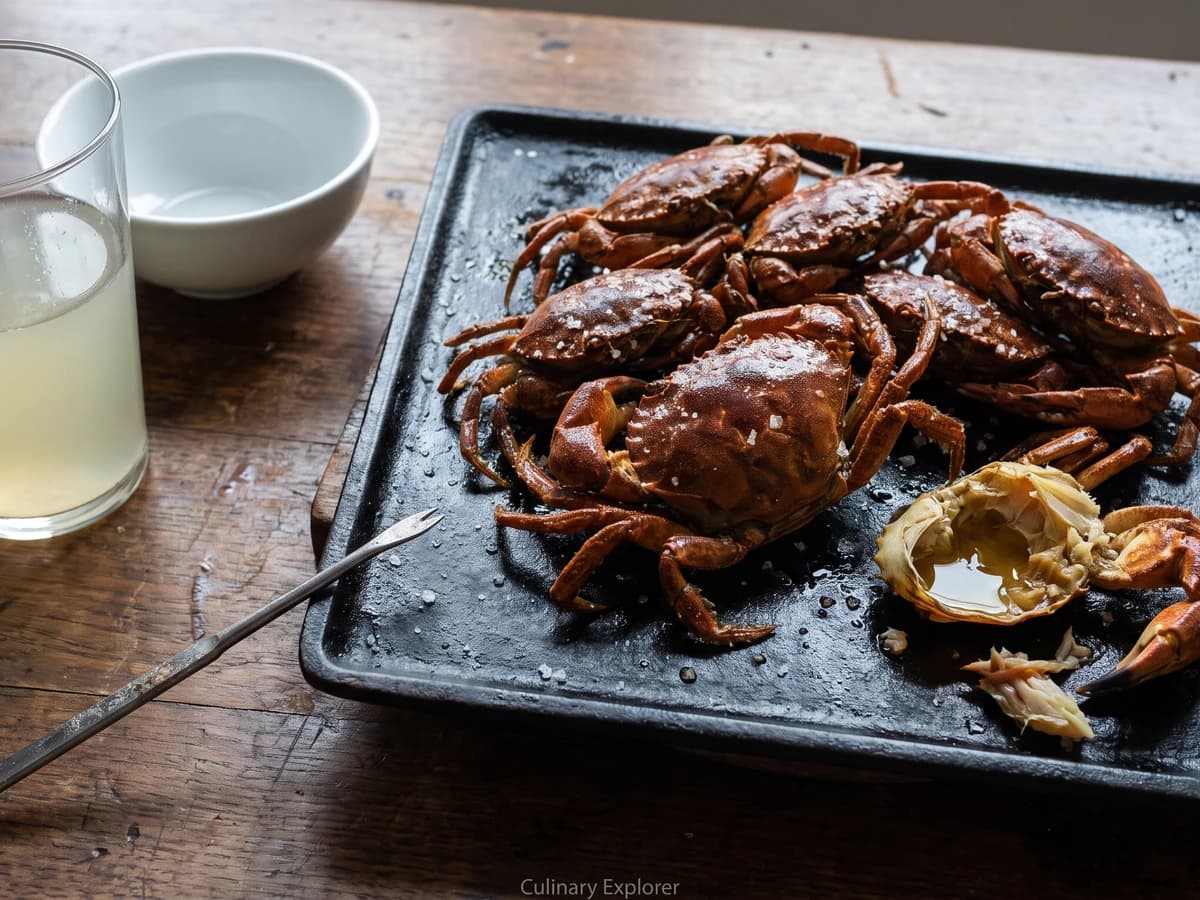
Asturias puts its small velvet crabs straight on a fierce plancha with salt and oil, keeping the shell liquor sweet and briny. Dry them well, cook them fast, and bring plenty of napkins.

Chef Isabel
Andrajos are Andalucía's dough-rag stew from Jaén and Granada: a slow rabbit guiso thickened with torn sheets of flour dough, rolled thin so they cook tender instead of gummy.