Chef Isabel
Abanico Ibérico a la Plancha
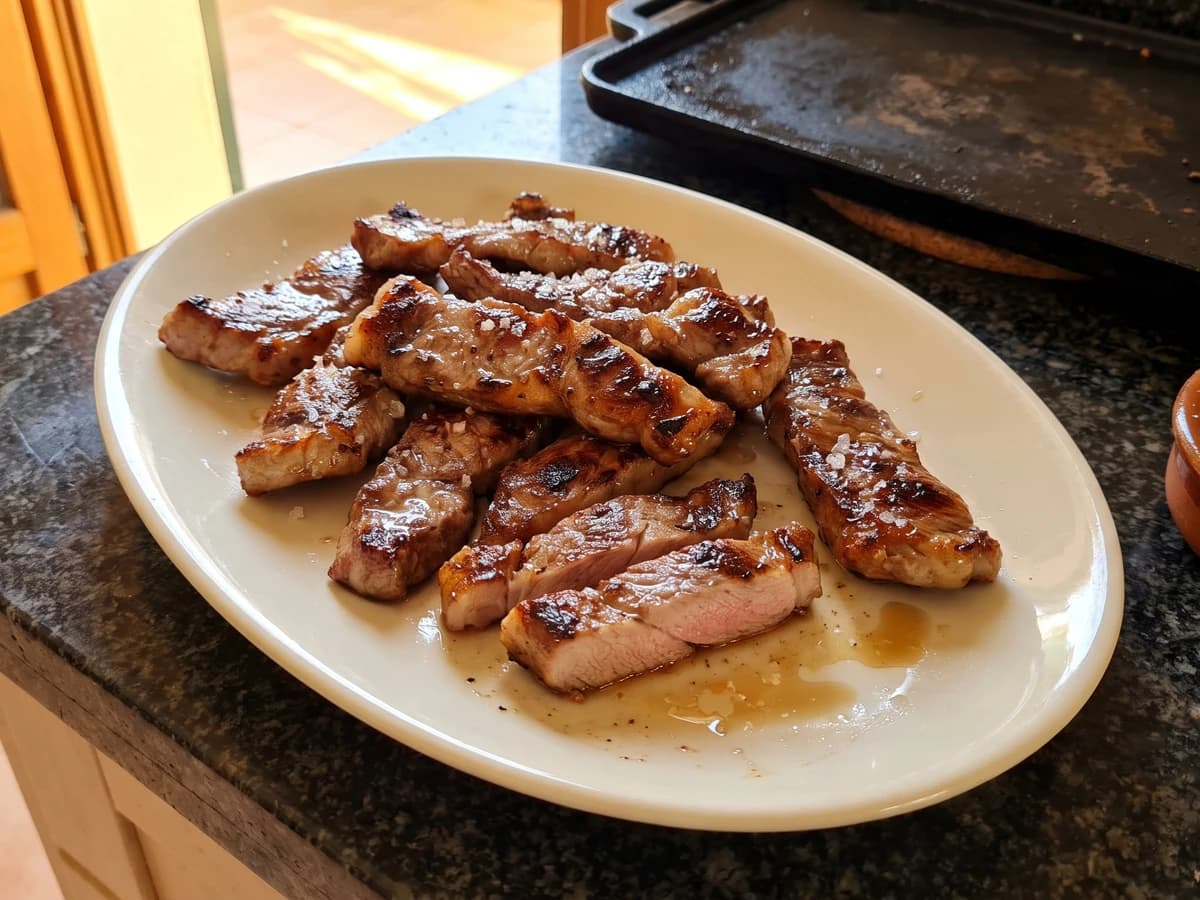
Extremadura's dehesa gives us this fan-shaped, marbled rib cut: salt it at the last moment, lay it on a fierce plancha, and count in seconds so the centre stays juicy.
A cooking platform built around craft, culture, and the stories behind what we eat.
Created by
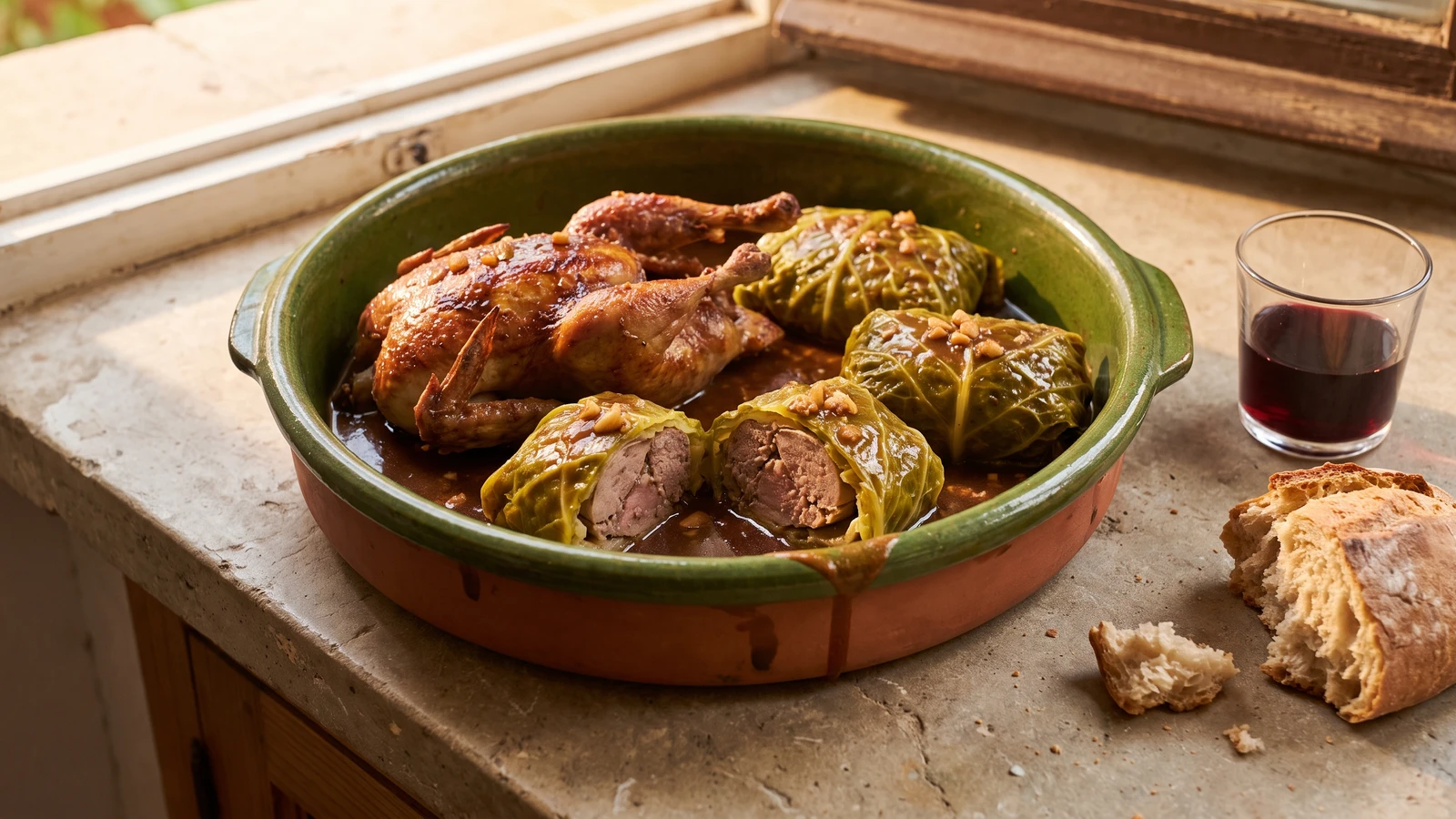
Catalonia’s cold-weather game dish braises partridge beside cabbage parcels filled with its own meat, then binds the wine-darkened sofregit with an almond and liver picada for a sauce worth bread.
Perdius amb farcellets de col is Catalan, a cold-weather game dish in which partridge, cabbage, vi ranci, and picada all belong in the same cassola. Two birds give four braised portions; the third gives its meat to the farcellets, little cabbage bundles that brown first and then drink in the wine sauce. That is what makes this more than partridge served beside boiled cabbage.
The step that decides it is the sofregit, the slow onion and tomato base. Cook the onion and carrot low until dark gold, then cook the tomato until the mixture is sweet, concentrated, and nearly dry. That slow cooking rounds the aged wine and carries the game without smothering it. The picada of almonds, bread, garlic, and liver goes in near the end, thickening the sauce just enough to cling.
If partridge is beyond reach, use six large quail: four for braising and two for the parcels. The flavour will be gentler and the birds cook sooner, but the Catalan structure remains. No hace falta haber pisado España. Keep the bundles snug and the simmer quiet, as the Margin beside this recipe says. Follow it and it comes out.
Perdius amb farcellets de col belongs to the inland Catalan autumn and winter table, where hunted partridge met cabbage from the kitchen garden in the same cassola. Farcellet comes from the Catalan farcell, a small wrapped bundle; cabbage leaves protected the chopped game during braising and helped a small bird feed more people. The finishing picada of nuts, bread, garlic, and liver is a defining Catalan method, using the animal and its cooking juices to give the sauce body.
Quantity
3, 350 to 450g each
halve 2 birds lengthwise; debone the third to yield about 200g meat, reserving its carcass
Quantity
2 partridge livers or 30g chicken liver
trimmed
Quantity
10, about 500g
8 for wrapping and 2 spare
Quantity
70g
rind removed and finely minced
Quantity
25g
Quantity
30ml
Quantity
1, about 18g
Quantity
12g
finely chopped and divided
Quantity
27g
15g for blanching and 12g for the dish
Quantity
2g
divided
Quantity
2 litres
for blanching
Quantity
60g
for coating
Quantity
90ml
divided
Quantity
25g
Quantity
20g
cut into one thick piece
Quantity
250g
finely chopped
Quantity
100g
finely chopped
Quantity
15g, about 3 cloves
finely chopped and divided
Quantity
200g
crushed
Quantity
175ml
Quantity
500ml
divided
Quantity
1
Quantity
2 small sprigs
Quantity
30g
toasted
| Ingredient | Quantity |
|---|---|
| young oven-ready partridgeshalve 2 birds lengthwise; debone the third to yield about 200g meat, reserving its carcass | 3, 350 to 450g each |
| partridge livers, or chicken livertrimmed | 2 partridge livers or 30g chicken liver |
| large outer Savoy cabbage leaves8 for wrapping and 2 spare | 10, about 500g |
| fresh unsmoked pork belly, cansalada frescarind removed and finely minced | 70g |
| fine dry breadcrumbs | 25g |
| whole milk | 30ml |
| large egg yolk | 1, about 18g |
| flat-leaf parsleyfinely chopped and divided | 12g |
| fine sea salt15g for blanching and 12g for the dish | 27g |
| freshly ground black pepperdivided | 2g |
| waterfor blanching | 2 litres |
| plain flourfor coating | 60g |
| extra virgin olive oildivided | 90ml |
| pork lard | 25g |
| day-old country breadcut into one thick piece | 20g |
| onionfinely chopped | 250g |
| carrotfinely chopped | 100g |
| garlicfinely chopped and divided | 15g, about 3 cloves |
| well-drained canned whole tomatoescrushed | 200g |
| Catalan vi ranci, or dry oloroso sherry | 175ml |
| unsalted poultry or light game stockdivided | 500ml |
| bay leaf | 1 |
| thyme | 2 small sprigs |
| blanched almondstoasted | 30g |
Ask the butcher to halve two partridges lengthwise and debone the third, keeping about 200g of its meat for the farcellets. Reserve the carcass for stock and keep two livers for the picada. Pat the four partridge halves dry and refrigerate them while you make the parcels.
Bring 2 litres of water and 15g salt to a boil. Lower in the cabbage leaves and blanch for 2 minutes, just until pliable without losing their green colour. Transfer them to cold water, drain, and pat them completely dry. Trim the thick central ribs level with the leaves so the parcels will fold without splitting.
Chop the deboned partridge meat finely by hand, or pulse it briefly in a processor without turning it into paste. Mix it with the pork belly, breadcrumbs, milk, egg yolk, 6g parsley, 3g salt, and 0.5g pepper. Knead for one minute, until the mixture begins to hold together, then chill it for 15 minutes.
Lay eight cabbage leaves flat. Divide the filling into eight portions of about 44g each. Pésalo, no lo adivines, weigh it, don't guess, because equal parcels finish together. Place one portion near the base of each leaf, fold in the sides, and roll tightly into a small bundle. Set each farcellet seam-side down.
Put the flour in a shallow dish. Coat the farcellets lightly and shake off every loose patch. Heat 45ml olive oil in a wide, heavy casserole over medium heat and brown the parcels seam-side down first, then on the other sides, about 6 minutes altogether. They need colour, not cooking through. Remove them carefully. Fry the country bread in the same oil until golden on both sides, then reserve it for the picada. Discard the flour left after coating.
Season the partridge halves with 7g salt and the remaining 1.5g pepper. Add the lard and 20ml olive oil to the casserole. Brown the birds skin-side down for 4 minutes, then for 2 minutes on the bone side. Remove them. Brown the livers for about 1 minute per side and set them with the fried bread; they will finish cooking in the sauce.
Lower the heat and add the remaining 25ml olive oil, the onion, and the carrot. Cook for 20 to 25 minutes, stirring often, until dark gold, soft, and almost jammy. Add two-thirds of the garlic and cook for 1 minute. Add the crushed tomato and the remaining 2g salt, then cook for another 18 to 20 minutes, until the mixture is dark, sweet-smelling, and leaves no watery trail when you draw the spoon through it. This slow sofregit, the onion and tomato base, decides the sauce. Rush it and the wine stays sharp and the whole dish tastes thin.
Pour in the vi ranci and scrape the bottom clean. Let it bubble for 4 to 5 minutes, until reduced by about half. Return the partridge halves skin-side up and add 400ml stock, the bay leaf, and the thyme. The liquid should reach roughly halfway up the birds. Bring it only to a bare simmer, cover, and cook gently for 30 minutes.
While the birds braise, pound the toasted almonds, fried bread, browned livers, remaining garlic, and remaining 6g parsley in a mortar. Work in about 80ml of the reserved stock until you have a thick, fairly smooth paste. This is the picada, the Catalan nut, bread, and liver mixture that binds the cooking juices into sauce.
Nestle the farcellets around the partridge, seam-side down. Cover and simmer gently for 20 minutes. Loosen the picada with a ladleful of sauce, stir it into the spaces between the parcels, and shake the casserole by its handles to distribute it without tearing the leaves. Simmer uncovered for 10 minutes more. The sauce should coat a spoon but still flow. Add some of the final 20ml stock if it becomes too thick. Check that the partridge is tender at the thigh and that both the bird and the centre of a farcellet reach 74°C.
Remove the bay and thyme. Take the casserole off the heat and let everything rest for 10 minutes so the sauce settles around the meat. Give each person one partridge half and two farcellets, with plenty of sauce and country bread alongside. Siempre sale, si lo sigues.
1 serving (about 520g)
Culinary guides, cultural storytelling, and the editorial depth that makes cooking meaningful.
Discover Culinary ExplorerChef Isabel
Extremadura's dehesa gives us this fan-shaped, marbled rib cut: salt it at the last moment, lay it on a fierce plancha, and count in seconds so the centre stays juicy.

Chef Isabel
Aletría Murciana is Murcia's humble noodle guiso: fine fideos, pork ribs, potato, saffron, and a dark sweet sofrito. Get that base right and the pot knows where it's going.
Chef Isabel
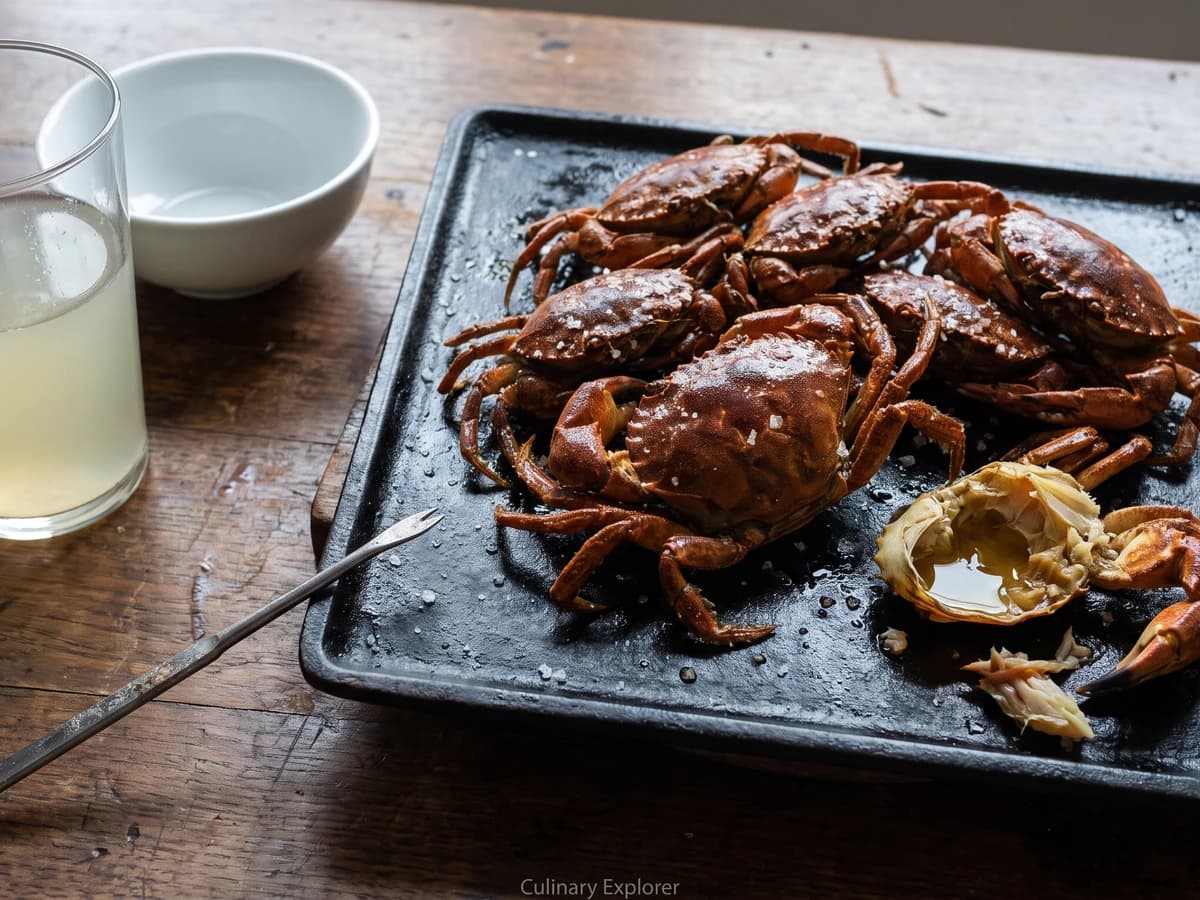
Asturias puts its small velvet crabs straight on a fierce plancha with salt and oil, keeping the shell liquor sweet and briny. Dry them well, cook them fast, and bring plenty of napkins.

Chef Isabel
Andrajos are Andalucía's dough-rag stew from Jaén and Granada: a slow rabbit guiso thickened with torn sheets of flour dough, rolled thin so they cook tender instead of gummy.