Chef Isabel
Bollo Preñao Asturiano
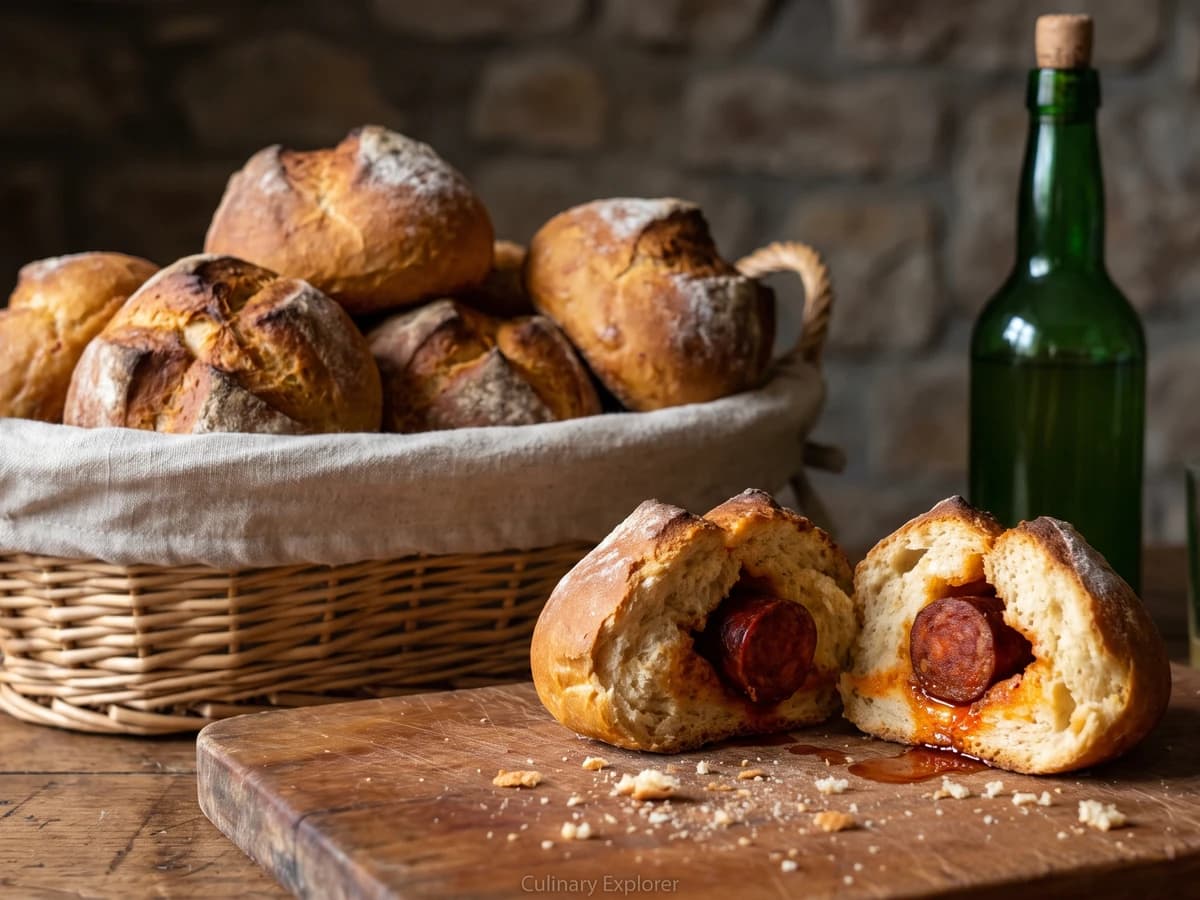
Asturias tucks a whole smoky chorizo inside each bread roll, so its pimentón-red fat seasons the crumb as it bakes. Seal the dough well, and you have the proper food of romerías and picnics.
A cooking platform built around craft, culture, and the stories behind what we eat.
Created by
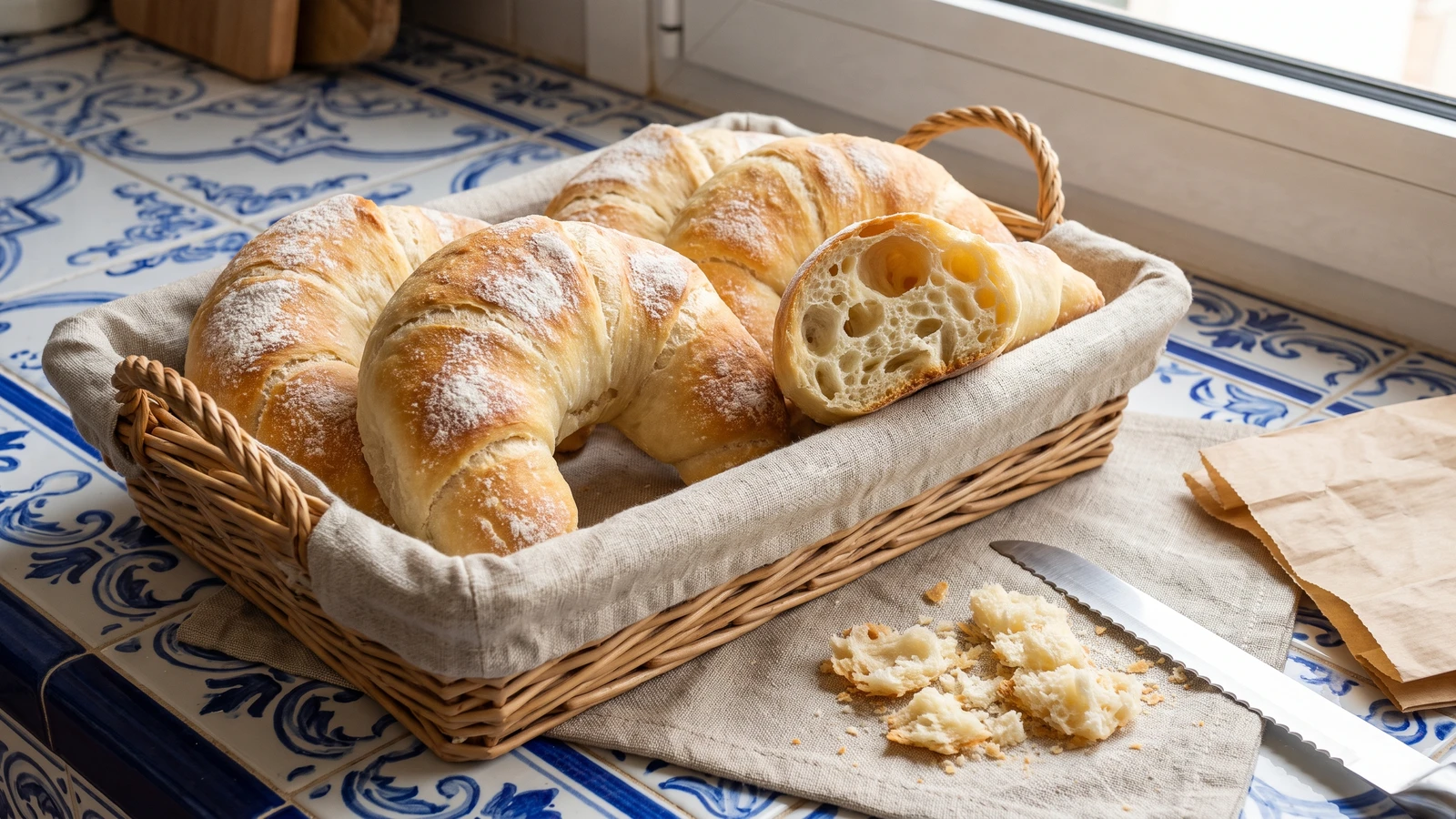
Valencia's little crescent roll has a crisp, flour-dusted shell and an airy crumb made for splitting along the curve and filling with blanc i negre.
Pataqueta is Valencian, a small crescent-shaped loaf from València and its surrounding horta, the irrigated market gardens that feed the city. Its floury crust, plump middle, and curved form set it apart from an ordinary round roll. Split it along the curve and it becomes the proper bread for blanc i negre, white longaniza with dark onion morcilla.
The final rise decides this bread. Press a floured fingertip lightly into the dough: the hollow should return slowly and leave a faint mark. If it springs straight back, the crumb will bake tight; if it sinks and stays there, the roll will spread. That small test is more reliable than the clock, because a Valencian winter kitchen and a warm kitchen elsewhere don't move at the same pace.
Valencian bakers use harina panificable, a medium-strength white flour. If you can't find it, mix ordinary all-purpose flour with bread flour. The crust will be a little firmer than one made with local flour, but the crumb remains light and strong enough to hold its filling. No hace falta haber pisado España. Weigh the dough, respect the rise, and curve each roll without pressing the air from its middle.
The preferment needs a night, but almost no attention. It gives the plain dough its wheaty depth and helps the crust color without sugar, milk, or oil. My Margin says only this beside the shaping: leave the belly plump. Siempre sale, si lo sigues.
Pataqueta belongs to València and l'Horta, where it is tied to the feast of Sant Vicent Màrtir on 22 January and the custom called anar de pataqueta, going out to share the bread as a country meal. The crescent loaf was commonly opened for blanc i negre, white longaniza and dark onion morcilla, often accompanied by produce from the surrounding irrigated fields. Its shape and feast-day use mark it as Valencian, not merely another small bread roll.
Quantity
500g, plus 15g for dusting
divide 100g for the preferment and 400g for the final dough
Quantity
310g
divide 100g for the preferment and 210g for the final dough
Quantity
4.5g
divide 0.5g for the preferment and 4g for the final dough
Quantity
10g
| Ingredient | Quantity |
|---|---|
| medium-strength white bread flour (harina panificable)divide 100g for the preferment and 400g for the final dough | 500g, plus 15g for dusting |
| waterdivide 100g for the preferment and 210g for the final dough | 310g |
| instant dry yeastdivide 0.5g for the preferment and 4g for the final dough | 4.5g |
| fine sea salt | 10g |
The evening before baking, stir 100g flour, 100g water at about 20°C, and 0.5g yeast in a small bowl. Cover it and leave it at cool room temperature for 10 to 12 hours. It is ready when the surface is crowded with bubbles, slightly domed, and smells gently wheaty rather than sharply sour.
Reserve 10g of the remaining water. Put the other 200g in a large bowl with the remaining 4g yeast and all the preferment. Add the remaining 400g flour and mix until no dry patches remain. Cover and rest for 20 minutes. Dissolve the 10g salt in the reserved water, work it into the dough, and squeeze and fold until evenly absorbed.
Knead for 8 to 10 minutes by hand, or 6 to 7 minutes with a mixer on low speed. The dough should become smooth, supple, and only faintly tacky. Stretch a small piece between your fingers; it should form a thin membrane before tearing. Don't bury a sticky dough under extra flour. Give it two minutes of rest and it will usually settle.
Place the dough in a clean bowl, cover it, and leave it for 60 to 75 minutes at about 22°C. After 30 minutes, lift and fold each side into the middle once. Let it rise until it has gained roughly two-thirds of its original volume and feels aerated. It needn't double.
Turn the dough onto a barely floured surface and divide it into six pieces of 137g each. Pésalo, no lo adivines, weigh it, don't guess. Draw the edges of each piece underneath to make a smooth ball without crushing the air from it. Cover the balls and let them relax for 15 minutes.
Set each ball seam-side up and press it gently into a thick oval about 15cm long and 9cm wide, keeping the middle plump. Roll the oval lightly under your palms to neaten it, then draw the ends inward to form a broad half moon. Press a shallow furrow along the inner curve with the side of your hand so the crescent remains distinct as it rises. Do not pinch the tips or flatten the belly.
Arrange the rolls well apart on baking paper, dust them lightly with the extra flour, and cover with a cloth. Leave them for 40 to 55 minutes. Test one near the thickest part with a floured fingertip: the hollow should return slowly and leave a faint mark. This is the point that decides the crumb, so trust the dough rather than the minute hand.
While the rolls rise, heat the oven to 245°C with a heavy baking tray or stone on the middle rack and a sturdy empty metal pan below it. Slide the pataquetas onto the hot surface. Carefully pour 150ml boiling water into the lower pan and close the door at once. Bake for 8 minutes, lower the heat to 220°C, briefly open the door to release excess humidity, and bake for another 8 to 10 minutes. They are ready when the shells are crisp and pale gold beneath the flour, the bases sound hollow when tapped, and the centres reach about 96°C.
Move the pataquetas to a wire rack and leave them for at least 30 minutes. Cutting too early compresses the tender crumb and makes it gummy. Once cool, use a serrated knife to open each roll along its outer curve, leaving the inner curve as a hinge for the filling.
1 serving (about 120g)
Culinary guides, cultural storytelling, and the editorial depth that makes cooking meaningful.
Discover Culinary ExplorerChef Isabel
Asturias tucks a whole smoky chorizo inside each bread roll, so its pimentón-red fat seasons the crumb as it bakes. Seal the dough well, and you have the proper food of romerías and picnics.
Chef Isabel
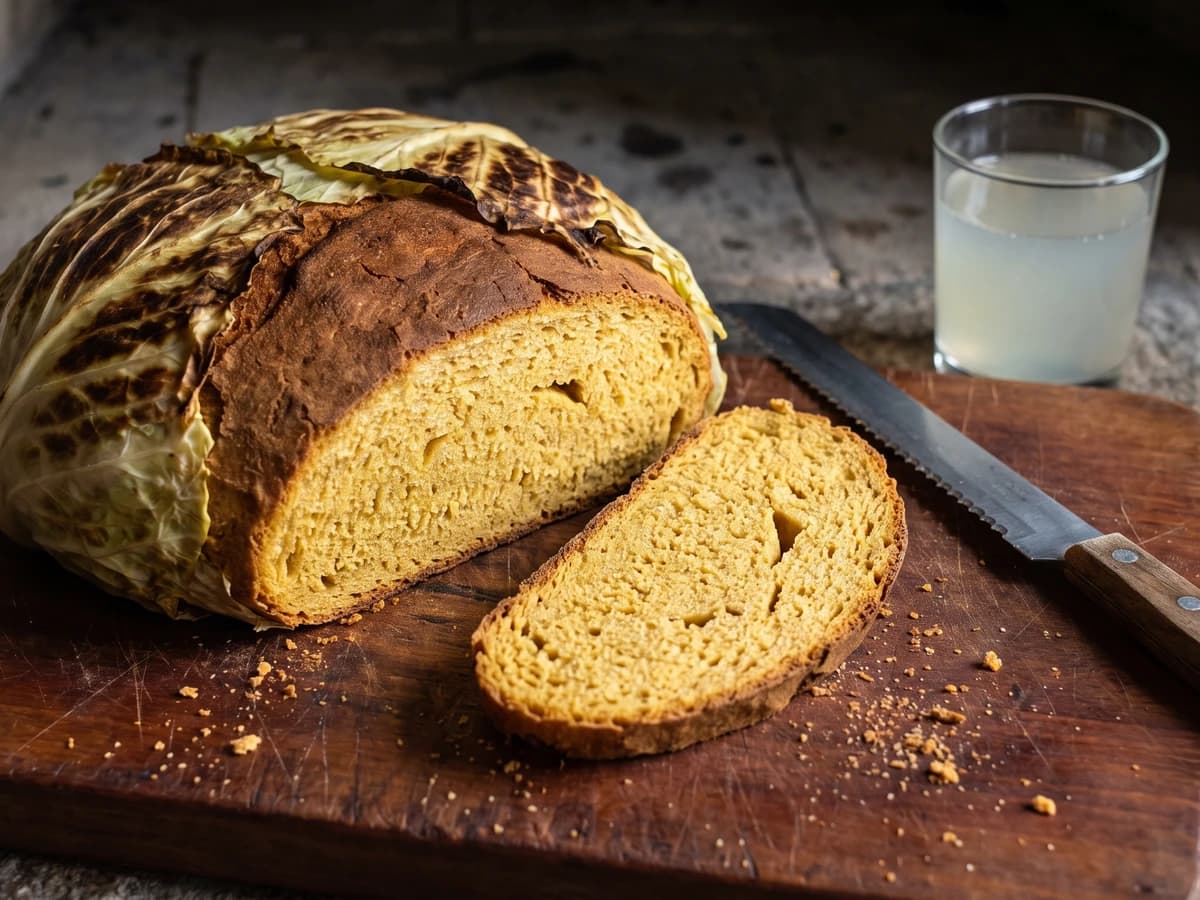
Asturian boroña is the plain corn loaf of the wet north, scalded with salted water and baked inside cabbage leaves until the crust darkens and the crumb stays close, gold, and moist.
Chef Isabel
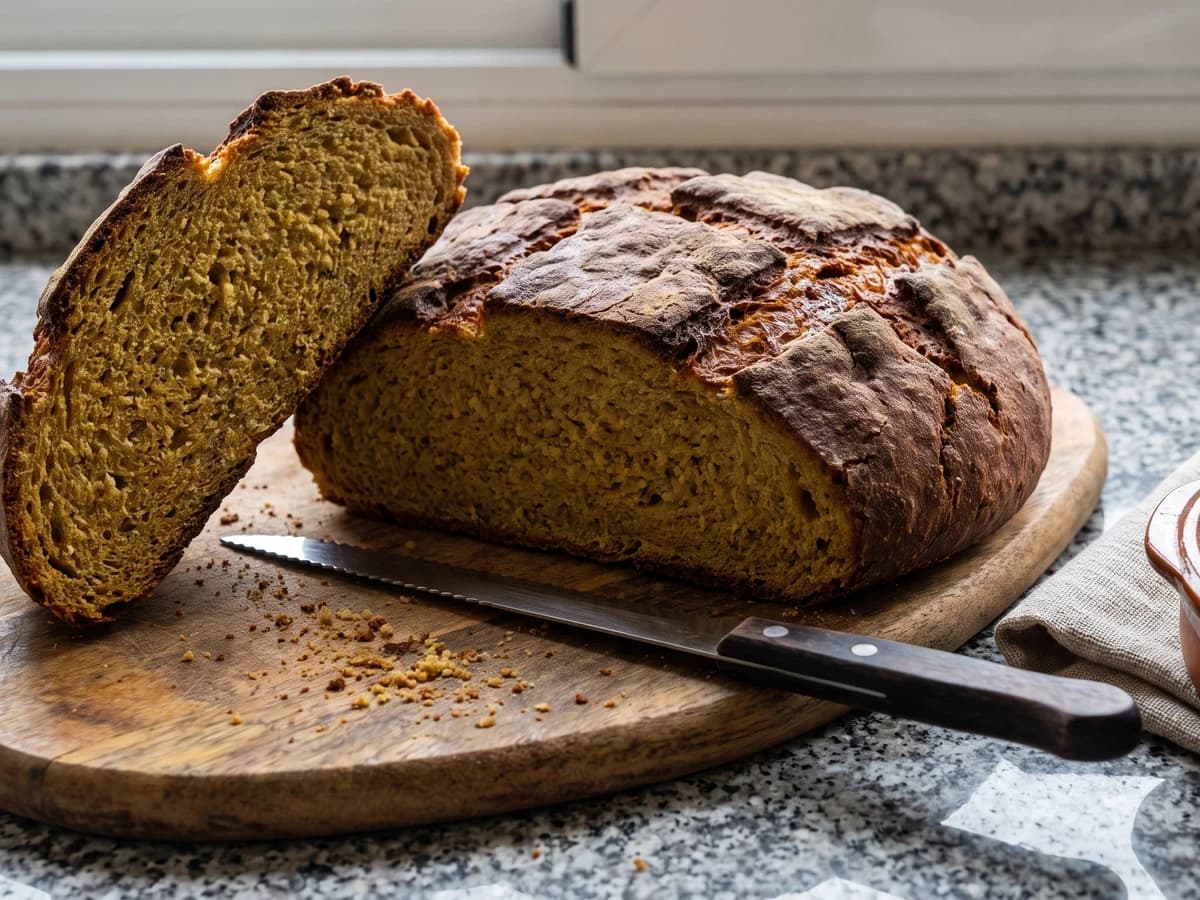
Broa Galega is Galicia's sturdy maize-and-rye loaf: scald the corn flour, give the damp dough time to rise, and the oven gives back a cracked crust and close, faintly sweet crumb.
Chef Isabel
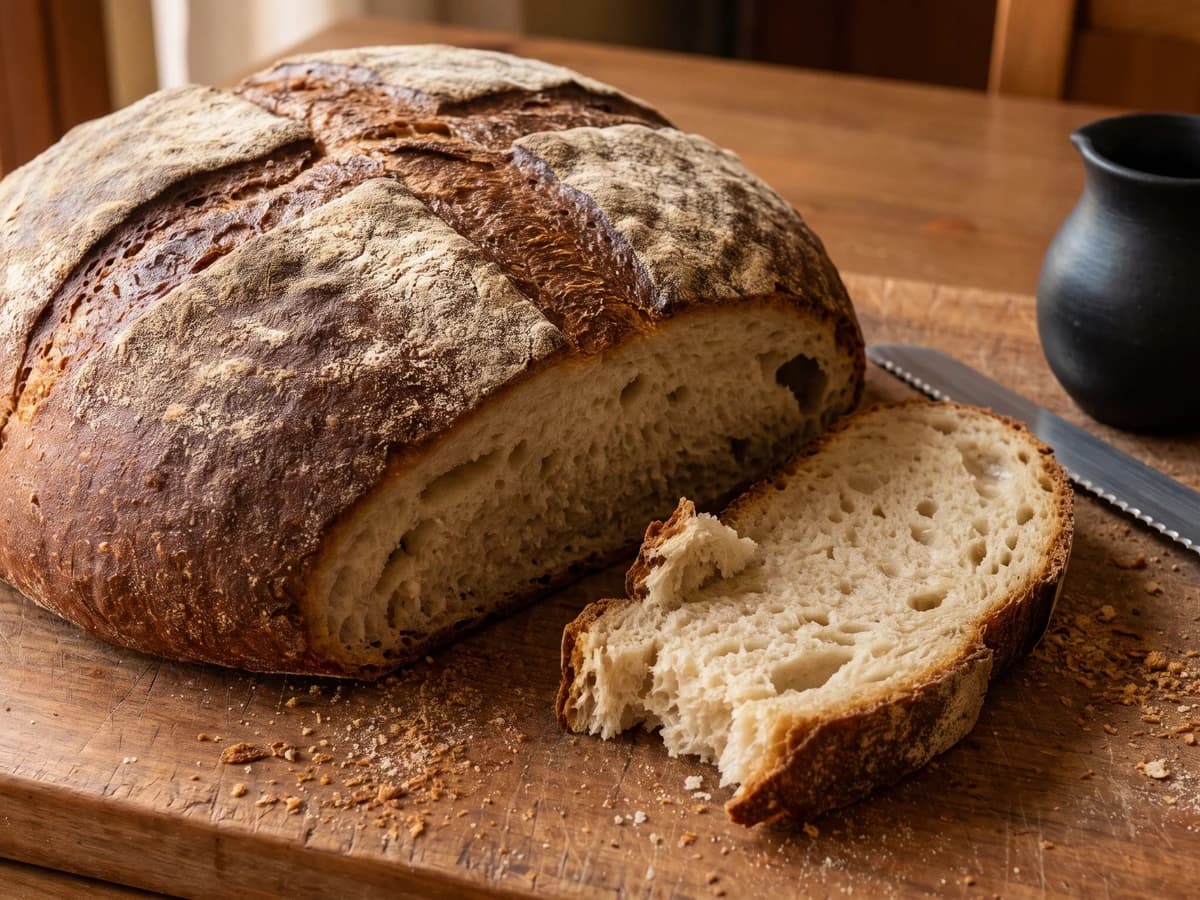
León's great pan de flama is a one-and-a-half-kilo round, slowly fermented and baked dark, with a thick crust that protects its moist, irregular crumb for days.