Chef Isabel
Bollo Preñao Asturiano
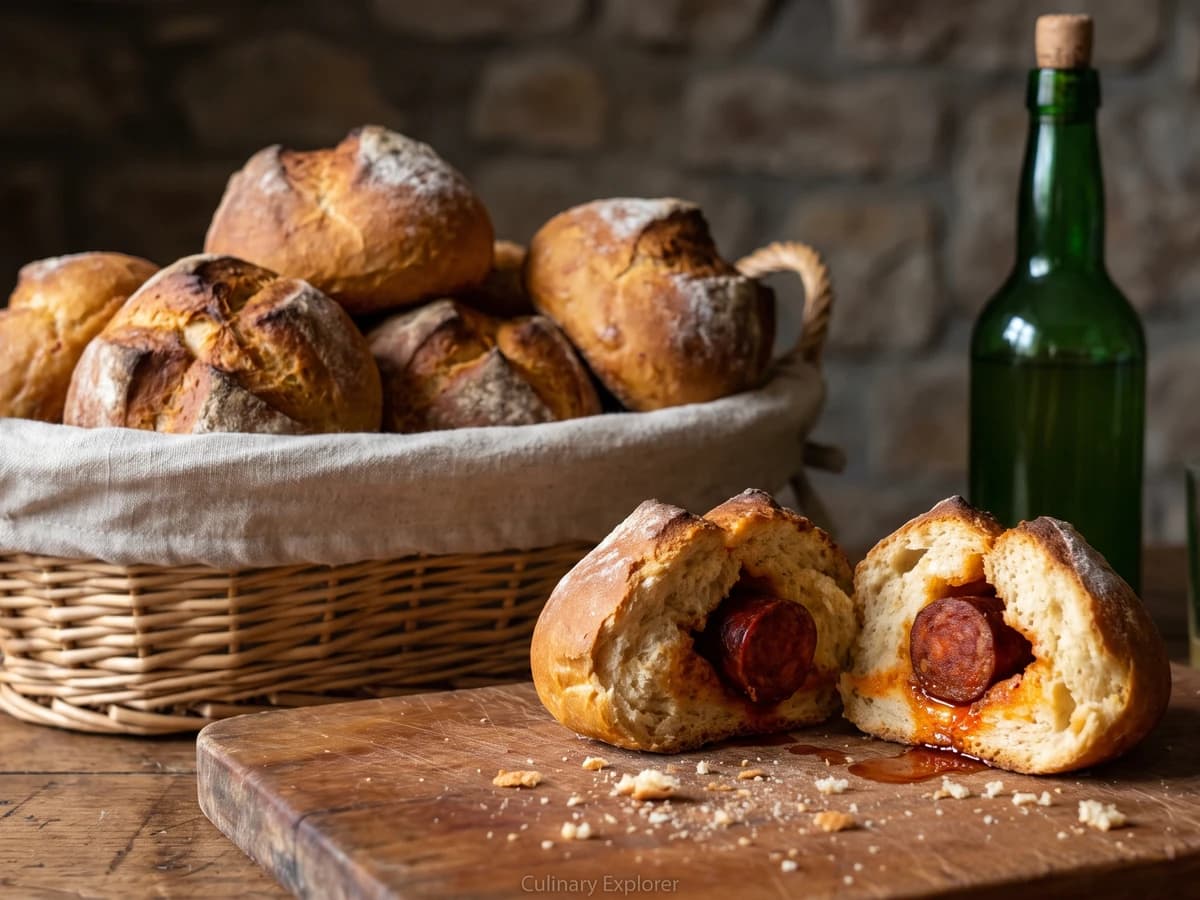
Asturias tucks a whole smoky chorizo inside each bread roll, so its pimentón-red fat seasons the crumb as it bakes. Seal the dough well, and you have the proper food of romerías and picnics.
A cooking platform built around craft, culture, and the stories behind what we eat.
Created by
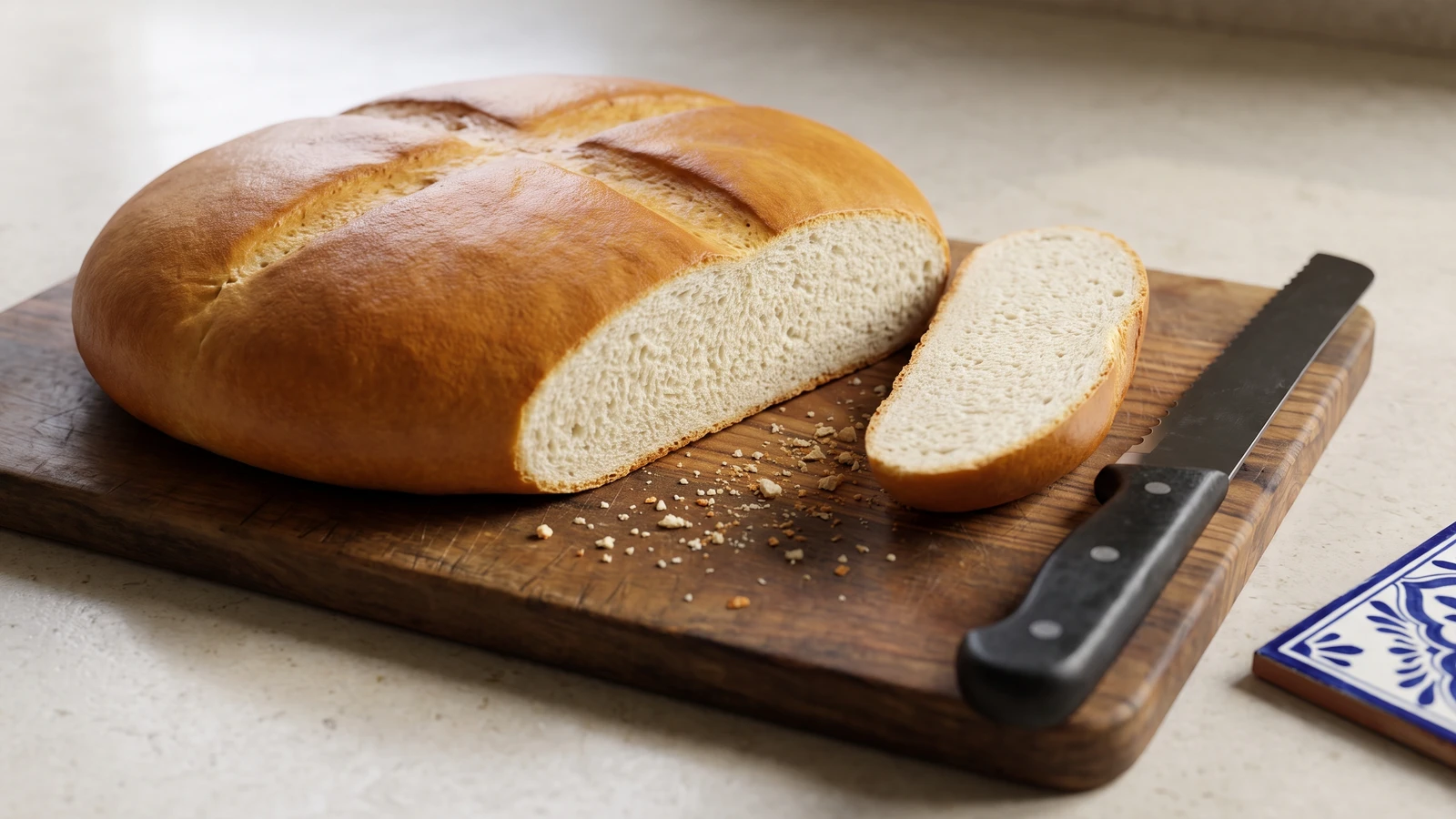
Ciudad Real's Pan de Cruz is a cross-scored candeal loaf with a firm golden crust and close white crumb, made to keep well, turn into migas, and carry every last spoonful of Manchegan gachas.
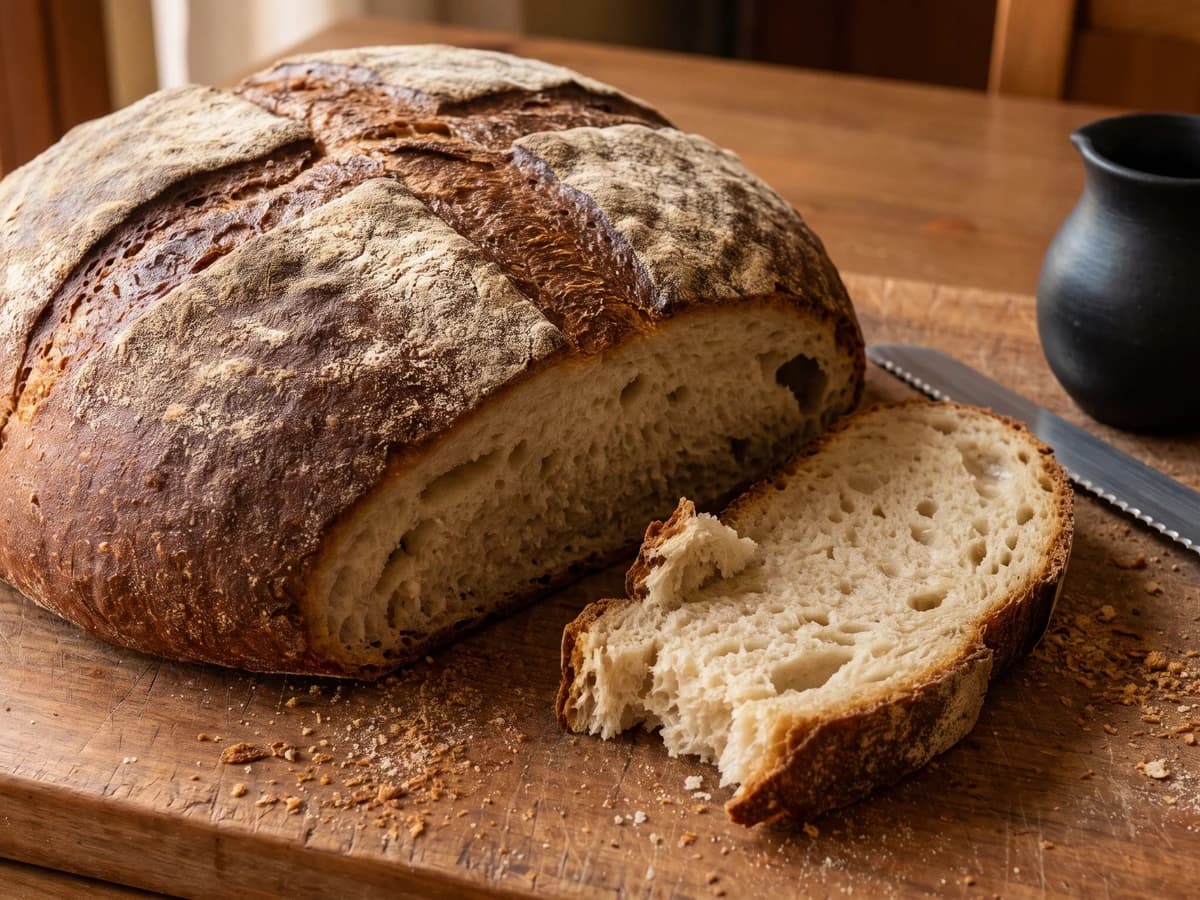
Pan de Cruz de Ciudad Real is Castilla-La Mancha's firm candeal loaf, round and flattened, with two deep cuts crossing its golden crust. Its crumb is white, fine, and deliberately close, not open and full of great holes. That sturdy crumb is why it keeps, why it holds together beside gachas manchegas, and why the loaf left after several days makes such good migas.
The method that decides it is the bregado, the repeated rolling and folding of a very stiff dough. A bakery uses refining rollers. At home, I use a heavy rolling pin and give it ten proper passes. That work smooths the dough and makes the tiny, even cells that distinguish this bread from a softer neighbouring loaf. Don't wait for it to double during proofing. A candeal loaf is meant to remain compact, and an overproofed one loses its clean cross and firm crumb.
If harina candeal isn't sold where you live, use an unbleached white all-purpose flour with 10.5 to 11.5 percent protein. The crumb will be a little creamier in colour and less distinctly sweet with wheat, but the low hydration and bregado still give you the right structure. Don't use coarse durum semolina; its milling is wrong for this loaf. The Margin beside my version says only, "proof by the finger, not the clock." Siempre sale, si lo sigues.
Pan de Cruz belongs to the province of Ciudad Real in Castilla-La Mancha, with deep roots in the wheat country around Campo de Calatrava. Its two perpendicular cuts give the loaf its name and control how the low-water dough opens in the oven, while its firm crust and close crumb suited rural tables where bread needed to keep for several days before becoming migas. The fine interior comes from bregado, the old practice of mechanically refining the stiff dough, not from making it wet or filling it with large holes.
Quantity
800g
divided into 160g and 640g
Quantity
368g
at 20°C, divided into 80g and 288g
Quantity
16g
divided into 3g and 13g
Quantity
5g
divided into 1g and 4g
| Ingredient | Quantity |
|---|---|
| harina candeal (fine candeal wheat flour)divided into 160g and 640g | 800g |
| waterat 20°C, divided into 80g and 288g | 368g |
| fine sea saltdivided into 3g and 13g | 16g |
| instant baker's yeastdivided into 1g and 4g | 5g |
The evening before baking, combine 160g candeal flour, 80g water, 1g instant yeast, and 3g salt. Knead for 3 to 4 minutes, until no dry flour remains and you have a very firm ball. Put it in a covered bowl and leave it for 12 to 16 hours at a cool room temperature of 18 to 20°C. It should smell gently fermented and show a little expansion, but it won't become light or billowy.
Tear the masa previa into walnut-sized pieces. Add the remaining 640g flour, 288g water, 4g yeast, and 13g salt. Squeeze and fold everything together, then knead firmly for 6 to 8 minutes. The dough will feel much stiffer than an ordinary bread dough. That is correct. Don't soften it with extra water. Cover it and let it rest for 15 minutes.
Set the dough on a sturdy, unfloured worktop. Roll it into a rectangle about 1 to 1.5cm thick, fold it in thirds like a letter, and turn it a quarter turn. Roll and fold it this way 10 times, which takes about 15 to 20 minutes. This is the bregado, the repeated refining that gives Pan de Cruz its fine, close crumb. Use your weight and a heavy rolling pin. When finished, the dough should be smooth, satin-like, and free of cracks.
Draw the edges underneath to make a taut round, pinch the seam closed, and set it seam-side down on baking parchment. Press it into a flattened round about 24cm wide and 5cm high. Cover with a clean cloth and proof at 22 to 24°C for 60 to 90 minutes. It should grow by roughly one-half, not double. A shallow fingertip mark should rise back slowly and remain faintly visible.
While the loaf proofs, heat the oven to 240°C with a baking stone or an inverted heavy baking sheet inside for at least 45 minutes. Just before baking, use a very sharp blade to make two straight, perpendicular cuts across the top, forming the cross that names the loaf. Cut 10 to 12mm deep and stop about 2cm from the outer edge. Make each cut decisively so the dense dough opens cleanly.
Slide the loaf and its parchment onto the hot surface. Lower the oven to 220°C and bake for 15 minutes, then reduce it to 200°C and bake for another 30 to 35 minutes. The crust should be an even, deep honey-gold and feel firm; the centre should register 96 to 98°C. Transfer the loaf to a rack and leave it for at least 2 hours before cutting. Slice it early and that carefully made crumb compresses.
1 serving (about 50g)
Culinary guides, cultural storytelling, and the editorial depth that makes cooking meaningful.
Discover Culinary ExplorerChef Isabel
Asturias tucks a whole smoky chorizo inside each bread roll, so its pimentón-red fat seasons the crumb as it bakes. Seal the dough well, and you have the proper food of romerías and picnics.
Chef Isabel
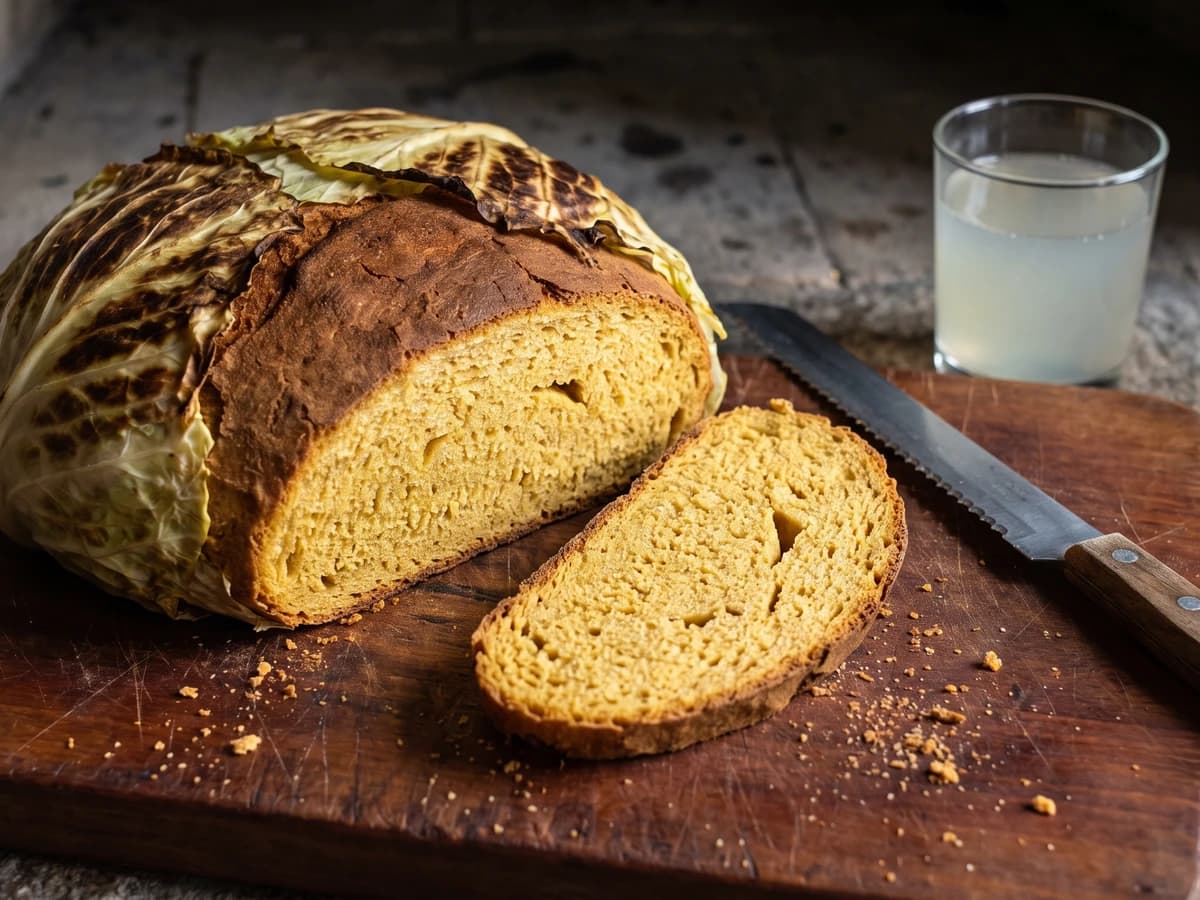
Asturian boroña is the plain corn loaf of the wet north, scalded with salted water and baked inside cabbage leaves until the crust darkens and the crumb stays close, gold, and moist.
Chef Isabel
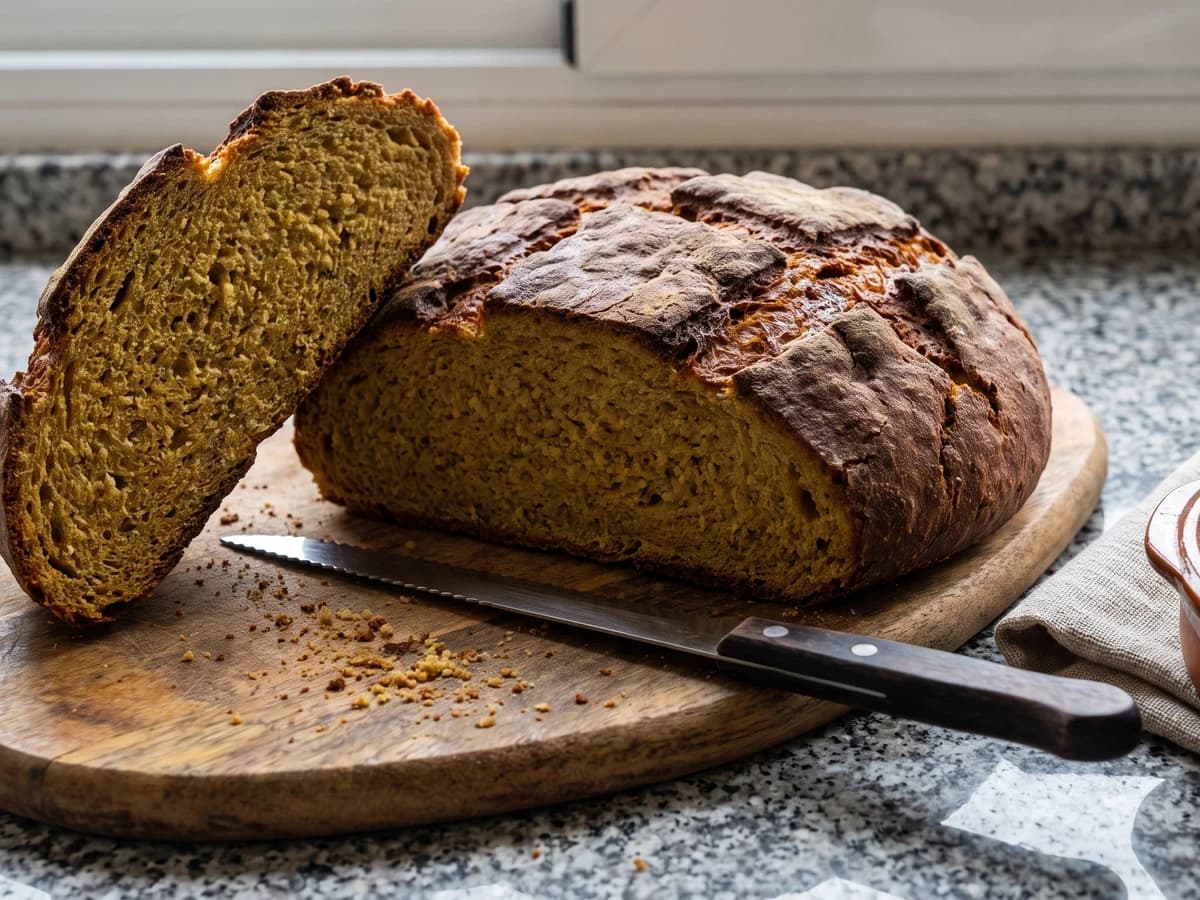
Broa Galega is Galicia's sturdy maize-and-rye loaf: scald the corn flour, give the damp dough time to rise, and the oven gives back a cracked crust and close, faintly sweet crumb.
Chef Isabel
León's great pan de flama is a one-and-a-half-kilo round, slowly fermented and baked dark, with a thick crust that protects its moist, irregular crumb for days.