Chef Isabel
Bollo Preñao Asturiano
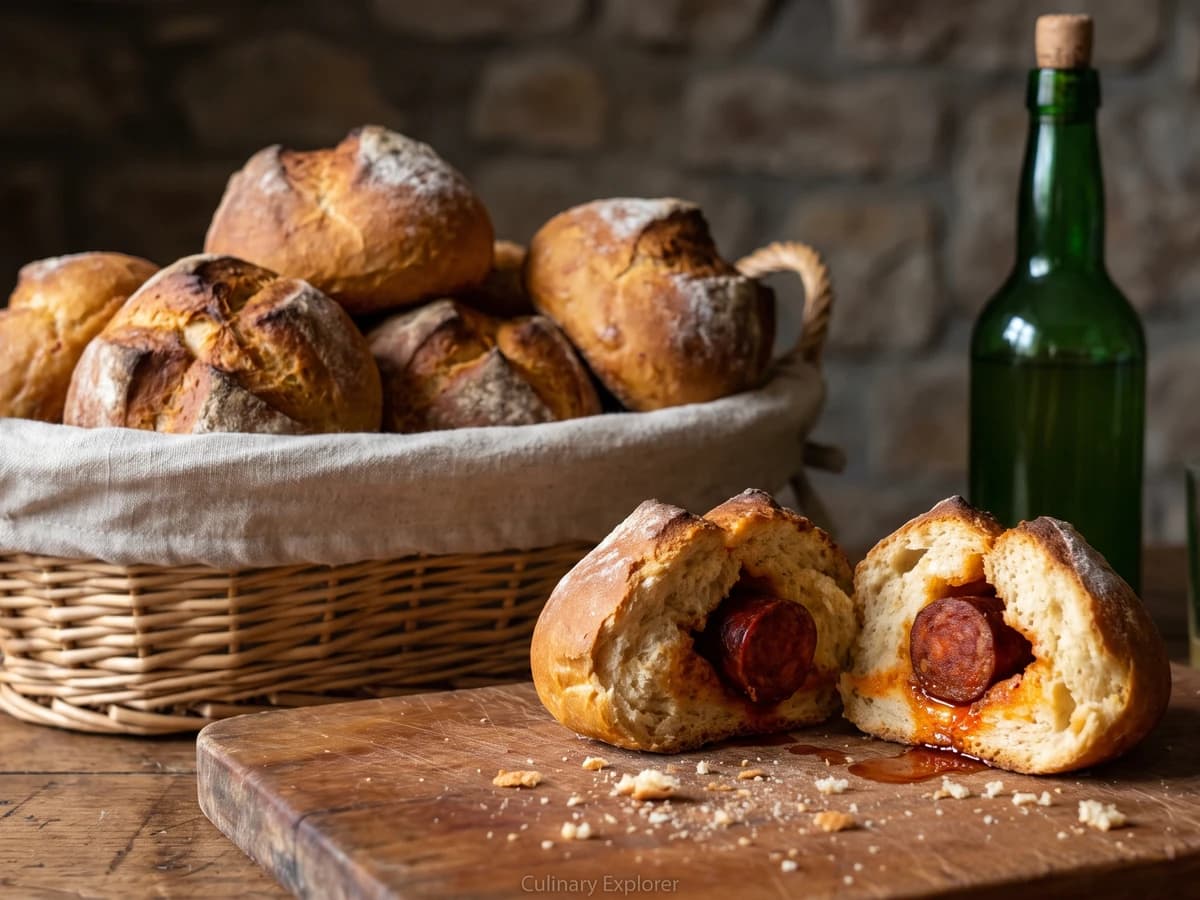
Asturias tucks a whole smoky chorizo inside each bread roll, so its pimentón-red fat seasons the crumb as it bakes. Seal the dough well, and you have the proper food of romerías and picnics.
A cooking platform built around craft, culture, and the stories behind what we eat.
Created by
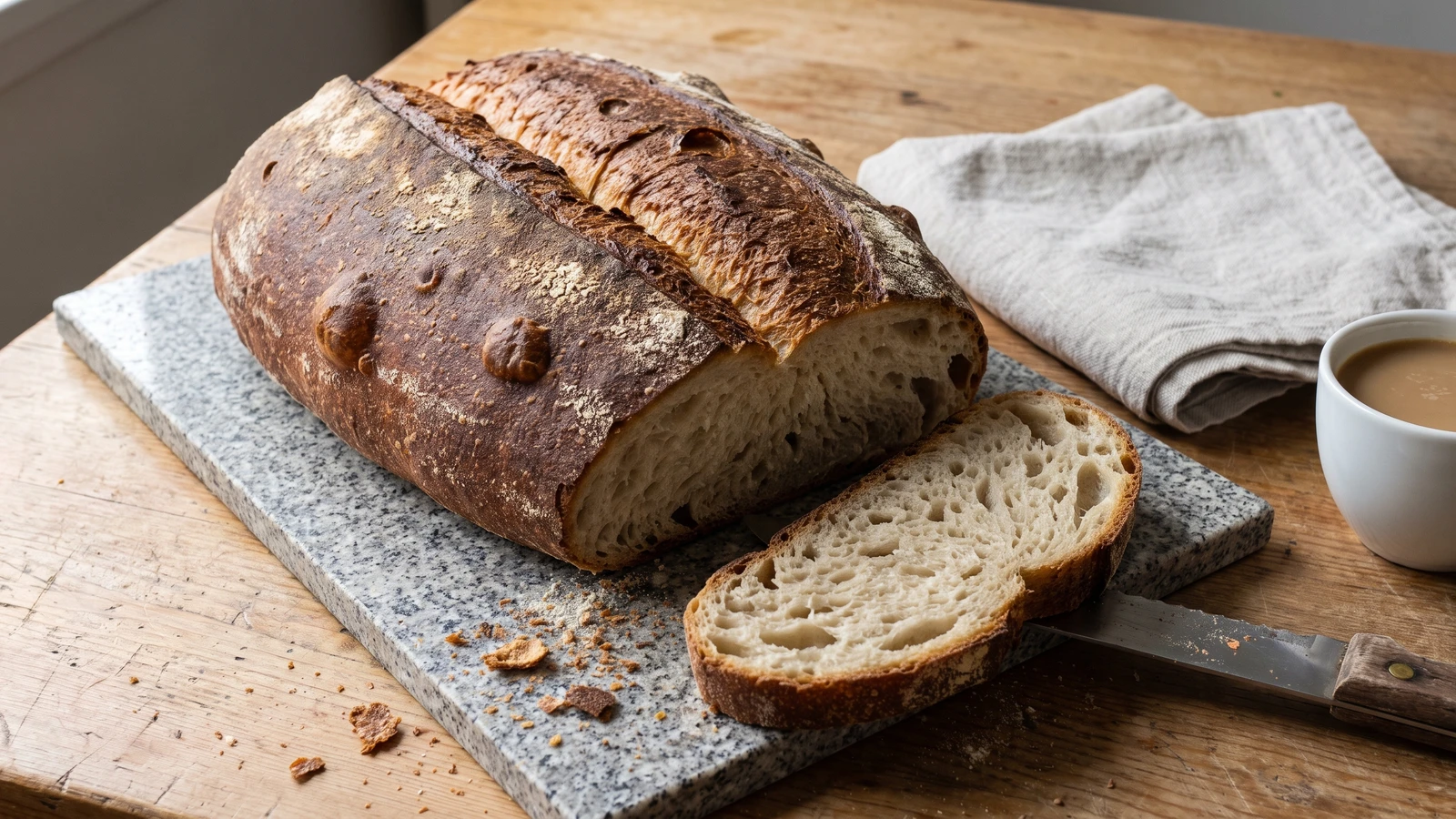
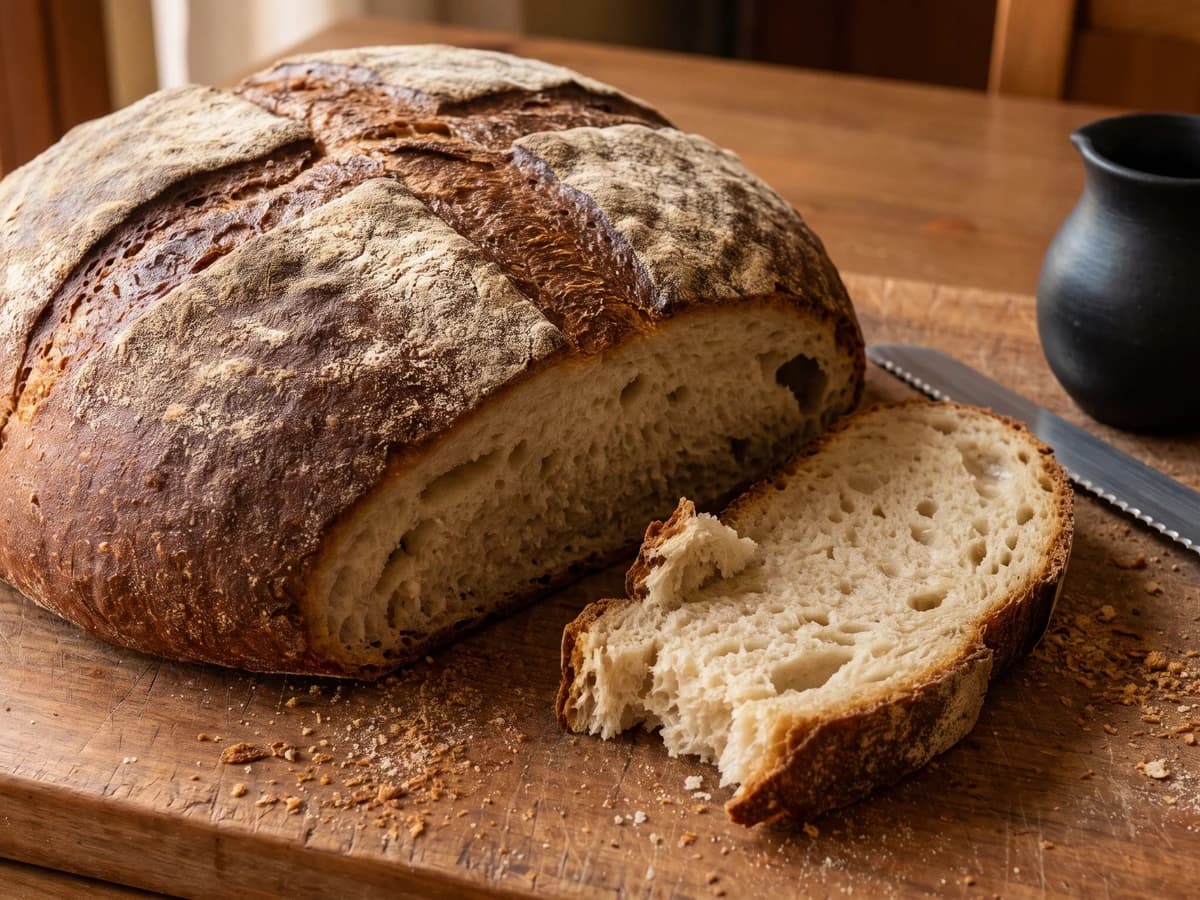
Galicia's Pan de Cea is an Ourense sourdough with a dark, thick stone-baked crust, firm irregular crumb, and central fenda that opens the long loaf into two rounded lobes.
Pan de Cea is Galician, from San Cristovo de Cea in Ourense, and its shape tells you what it is before you cut it: a long wheat loaf with rounded ends and a deep central fenda, the transverse opening that leaves it looking like two joined lobes. The crust is thick and dark chestnut. Inside, the crumb is pale, firm, fibrous, and irregular, with a clean sourness from masa madre, the old dough kept to raise the next batch. It isn't a round pan galego wearing a different name.
The staged fermentation decides this loaf. Let the dough rise once, re-knead it briefly, then shape and prove it again. That second working redistributes the gas and builds the close but uneven crumb Pan de Cea wants. Don't chase enormous holes. They belong to another sort of loaf. Cut the fenda only when the bread is ready for the oven, then give it a stone floor that has been heating for a full hour.
If Galician wheat flour doesn't reach your market, use an unbleached white bread flour with moderate strength, around 11.5 to 13 percent protein. The aroma will be less wheaty and local, but the structure will be right. A thoroughly heated baking stone or steel stands in for the granite floor of Cea's wood ovens; the underside will have a little less depth and the crust will be less rugged, but it remains a proper loaf. Don't add smoke flavor. Bread isn't chorizo.
Give the finished poia three hours before cutting it. The crumb is still setting while the crust cools, and an early knife leaves a damp, compressed line through the middle. Pésalo, no lo adivines, weigh it, don't guess. Siempre sale, si lo sigues.
Pan de Cea belongs to San Cristovo de Cea in the Ourense comarca of O Carballiño, close to the monastery of Oseira and a route long used by travelers bound for Santiago. Its panadeiras shaped large poias and smaller moletes for baking in communal circular ovens built from local granite, whose stored heat produced the bread's unusually thick crust. Pan de Cea became the first bread in Europe protected by an IGP, preserving both its place of production and its two-lobed form.
Quantity
850g, plus 20g for dusting
11.5 to 13 percent protein
Quantity
560g
at 24°C, divided
Quantity
170g
about 60% hydration and at peak activity
Quantity
17g
| Ingredient | Quantity |
|---|---|
| unbleached strong white wheat bread flour11.5 to 13 percent protein | 850g, plus 20g for dusting |
| waterat 24°C, divided | 560g |
| ripe stiff wheat sourdough starterabout 60% hydration and at peak activity | 170g |
| fine sea salt | 17g |
Use the stiff masa madre when it has risen to roughly twice its original size, smells clean and lightly lactic, and shows small bubbles beneath its surface. Tear it into a large bowl and work it through 530g of the water with your fingers. It needn't dissolve completely, but no piece should be larger than a walnut.
Add the 850g flour and mix until every dry patch disappears. The dough will feel firm, rough, and slightly sticky. Cover the bowl and leave it for 30 minutes so the flour can drink the water; this short rest makes the long kneading easier without changing the bread.
Dissolve the 17g salt in the remaining 30g water. Work it into the dough a little at a time, squeezing and folding until the water is absorbed. Knead on an unfloured surface for 12 to 15 minutes. Stop when the dough is smooth, elastic, and tacky rather than wet, and a stretched piece forms a thin membrane before tearing. Resist adding flour; a dry dough gives a heavy crumb.
Return the dough to the bowl, cover it, and leave it at 24 to 25°C for 3 to 4 hours. It should expand by about two-thirds, feel aerated beneath the surface, and carry a mild wheaty sourness. It needn't double. If your room is cooler, give it longer rather than putting it beside fierce heat.
Turn the risen dough onto the worktop and knead it firmly for 3 minutes, pressing out the largest pockets but not every trace of air. This is the traditional reamasado, the second working. It redistributes the fermentation and gives Pan de Cea its firm, fibrous crumb instead of a few cavernous holes. Cover and rest for 15 minutes.
Pat the rested dough into a thick rectangle about 30 by 22cm. Fold the long upper edge to the middle and seal it with the heel of your hand, then bring the lower edge over it and seal again. Roll gently into a loaf 38 to 40cm long, keeping both ends rounded rather than pointed. Set it seam-side down on a well-floured linen cloth or sheet of baking parchment.
Cover the loaf loosely and prove it for 1 hour 30 minutes to 2 hours, until it has grown by about half. A floured fingertip pressed 1cm into the dough should leave a mark that returns slowly but remains faintly visible. During the final hour, heat the oven to 250°C conventional, or 230°C fan, with a baking stone or steel on the middle rack and a sturdy empty metal tray below it.
Just before baking, dust the loaf lightly with flour. With a sharp serrated knife or bread lame, cut one decisive line straight across the middle of the loaf, from side to side and about 2cm deep. This is the fenda. It controls the expansion and opens the poia into its two characteristic rounded lobes. A timid scratch seals over, so commit to the cut.
Slide the loaf and its parchment onto the hot stone. Pour 200ml boiling water into the lower metal tray and close the door at once. Bake for 15 minutes, then carefully remove the water tray, lower the oven to 210°C conventional or 190°C fan, and bake for another 45 to 55 minutes. The loaf is ready when the crust is rigid and deep chestnut, the base sounds hollow, and the centre registers 97 to 99°C.
Turn off the oven, leave the door ajar, and keep the loaf inside for 5 minutes to dry the crust. Transfer it to a rack and cool for at least 3 hours before cutting. The crumb should be cream-colored, resilient, and irregular, with a restrained sourness. Cut too soon and it will seem damp and dense even when you baked it correctly.
1 serving (about 93g)
Culinary guides, cultural storytelling, and the editorial depth that makes cooking meaningful.
Discover Culinary ExplorerChef Isabel
Asturias tucks a whole smoky chorizo inside each bread roll, so its pimentón-red fat seasons the crumb as it bakes. Seal the dough well, and you have the proper food of romerías and picnics.
Chef Isabel
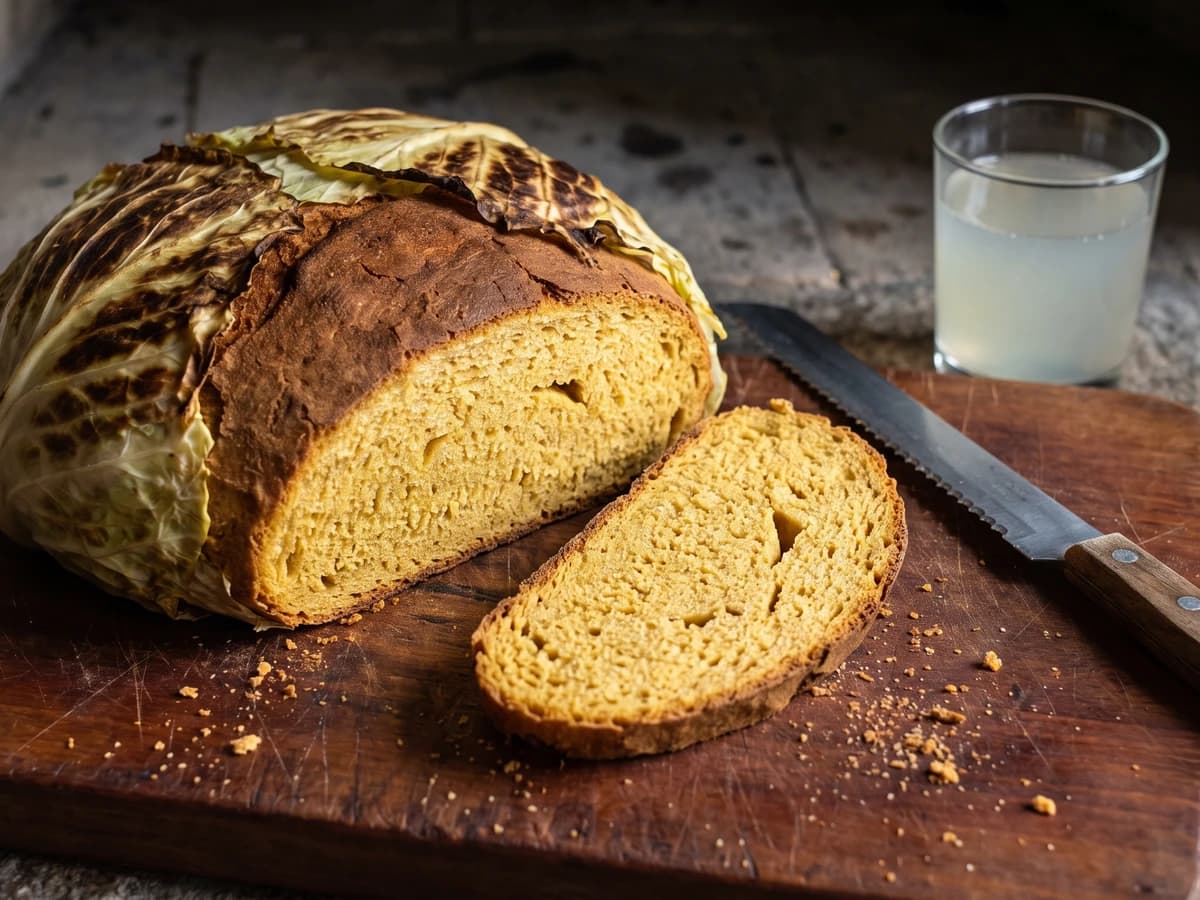
Asturian boroña is the plain corn loaf of the wet north, scalded with salted water and baked inside cabbage leaves until the crust darkens and the crumb stays close, gold, and moist.
Chef Isabel
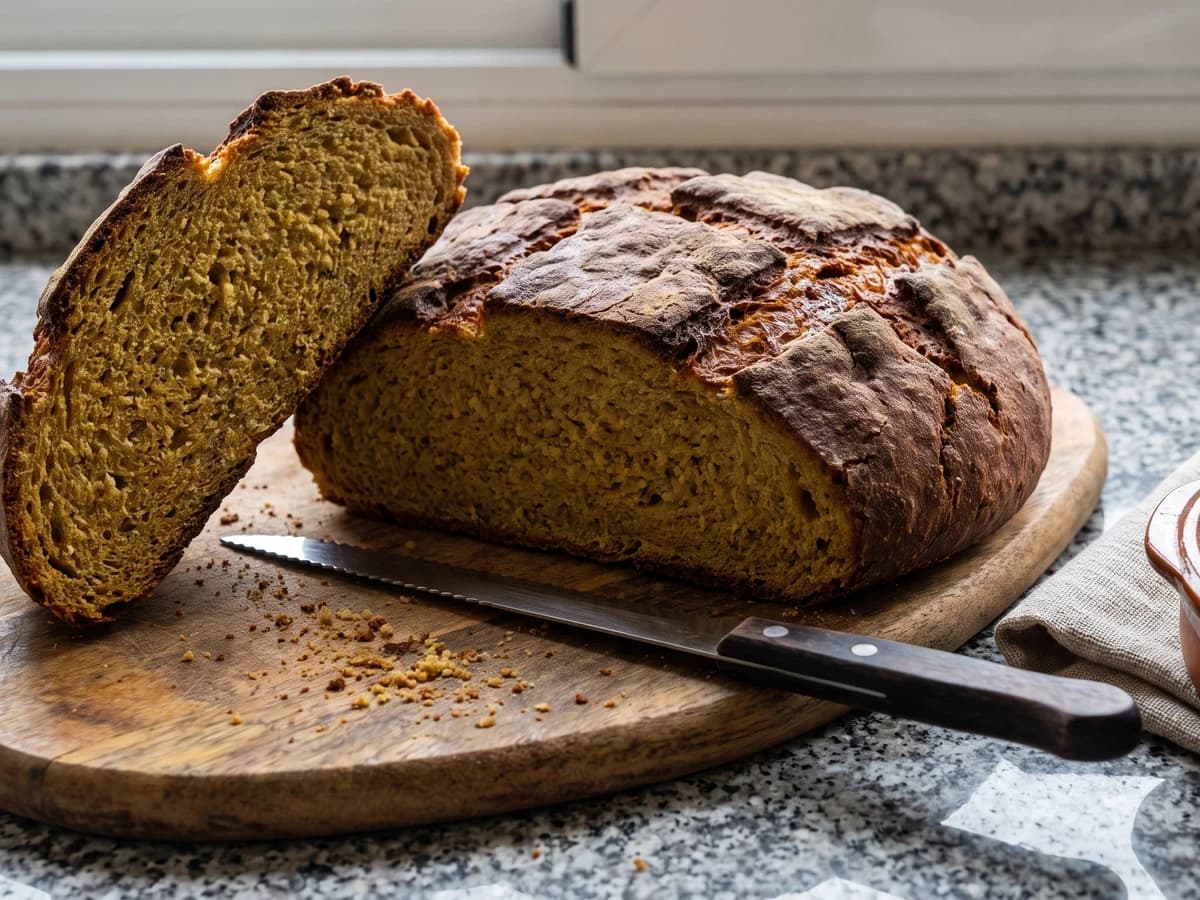
Broa Galega is Galicia's sturdy maize-and-rye loaf: scald the corn flour, give the damp dough time to rise, and the oven gives back a cracked crust and close, faintly sweet crumb.
Chef Isabel
León's great pan de flama is a one-and-a-half-kilo round, slowly fermented and baked dark, with a thick crust that protects its moist, irregular crumb for days.