Chef Isabel
Bollo Preñao Asturiano
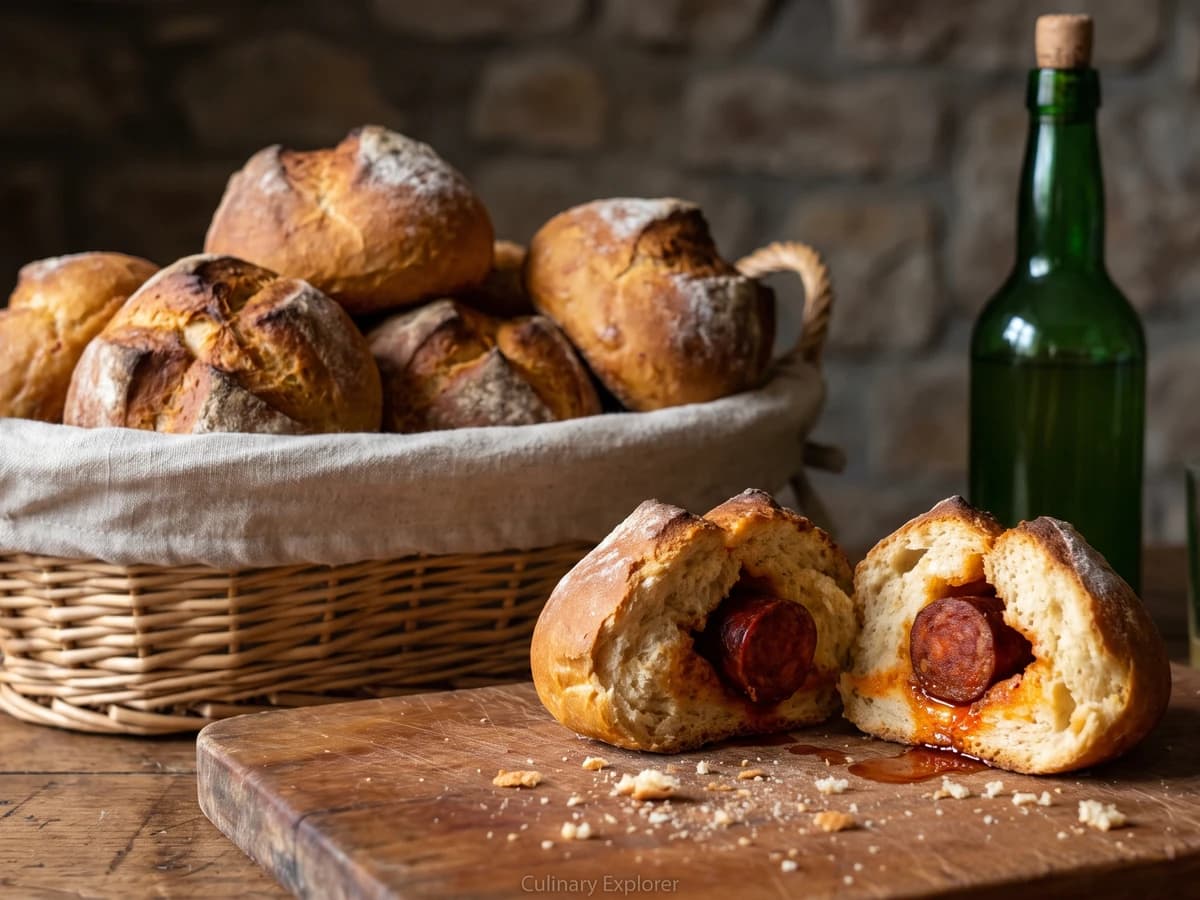
Asturias tucks a whole smoky chorizo inside each bread roll, so its pimentón-red fat seasons the crumb as it bakes. Seal the dough well, and you have the proper food of romerías and picnics.
A cooking platform built around craft, culture, and the stories behind what we eat.
Created by
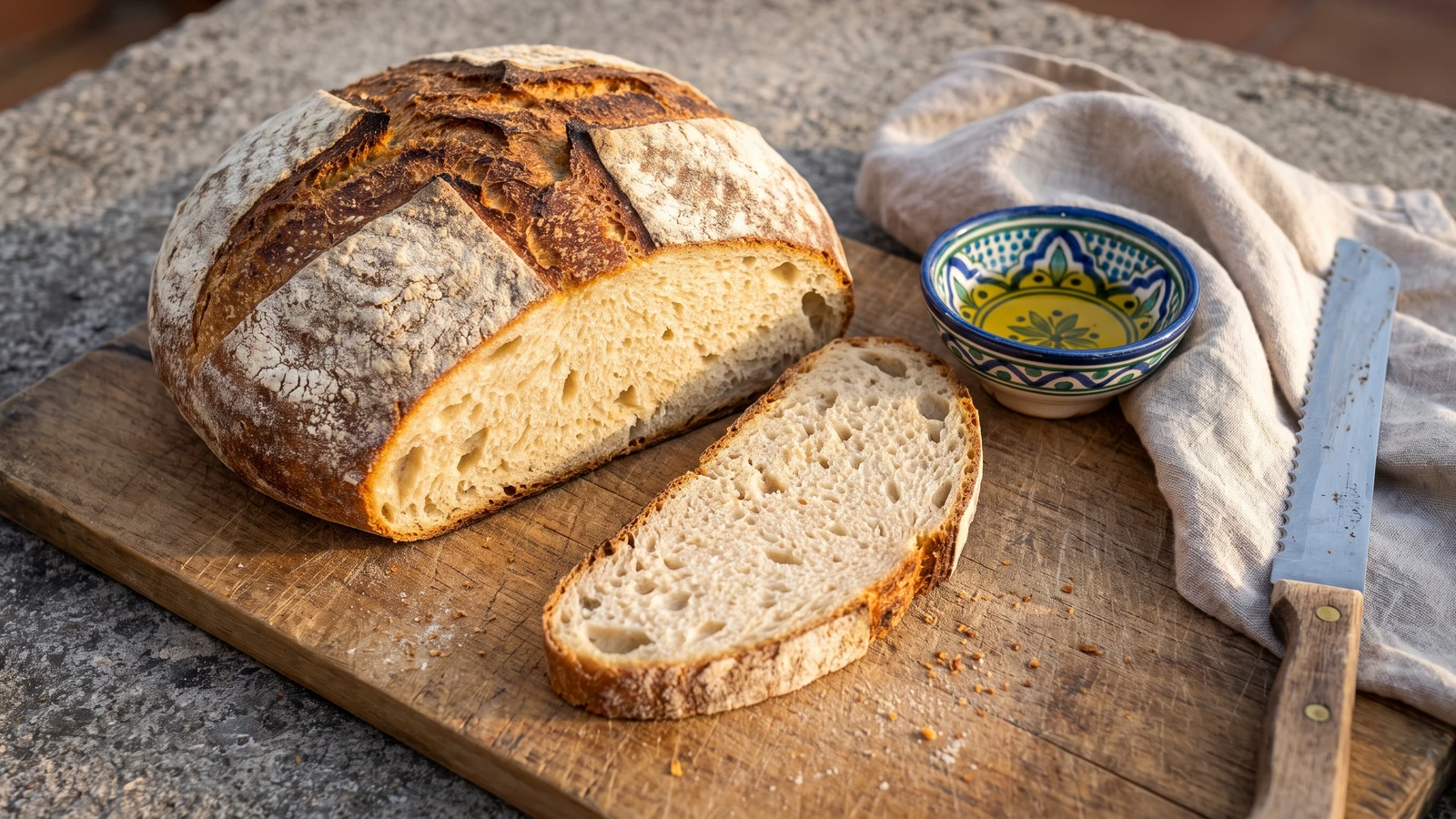
Granada's Pan de Alfacar is a hand-kneaded loaf of masa madre, spring water, wheat flour, and patience, with a supple open crumb under a crisp golden crust.
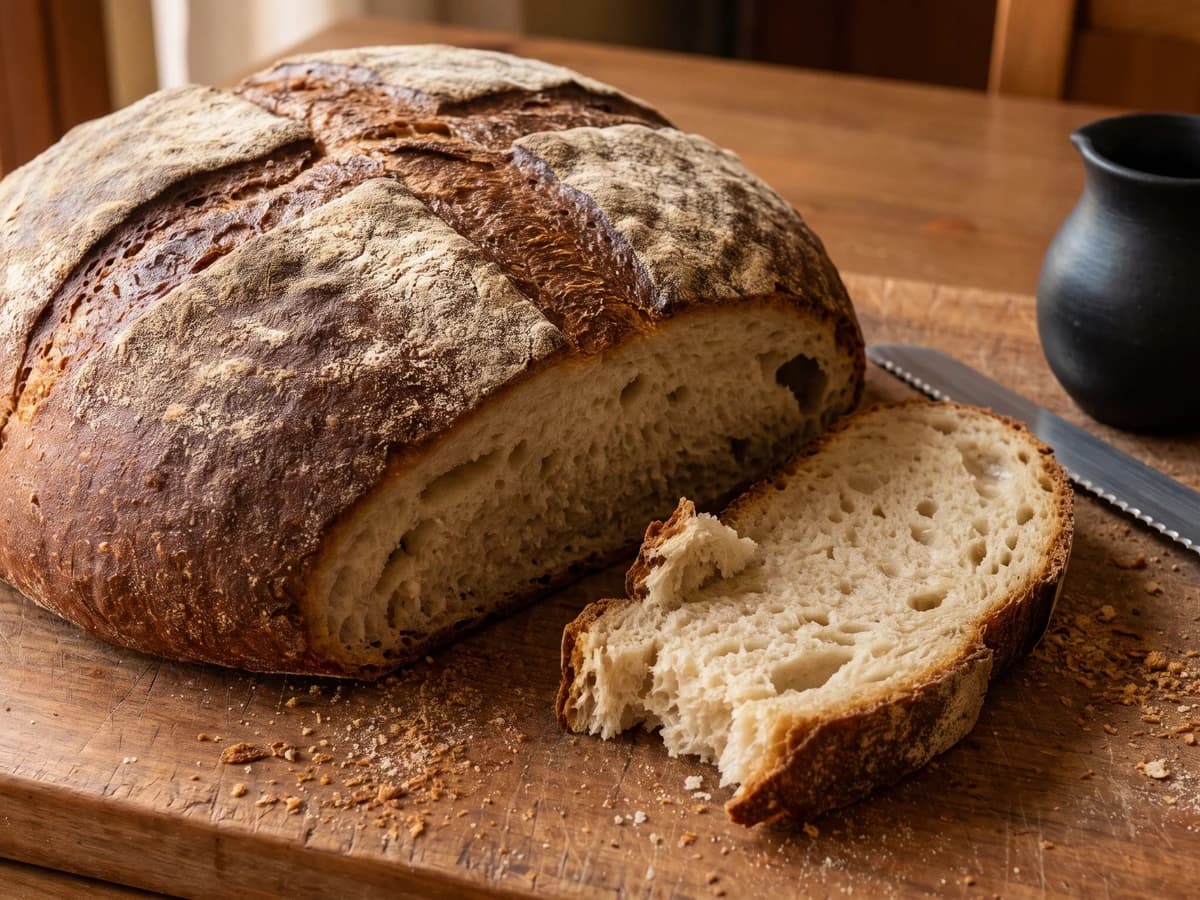
Pan de Alfacar is Granadino, from Alfacar and neighbouring Víznar at the foot of the Sierra de Huétor. It is a mild wheat loaf with a crisp golden crust and a pale, flexible crumb full of irregular holes. Masa madre, the living wheat starter, gives it flavour, while a little baker's yeast keeps the rise steady. This isn't meant to be a sharply sour loaf.
The hand-kneading decides it. At first the dough clings to everything, and the temptation is to bury it under more flour. Don't. Wet your hands and work it until the surface turns smooth and a small piece stretches thin without tearing. That developed dough holds the fermentation gases; extra flour only leaves you with a tight, heavy crumb. Pésalo, no lo adivines. Weigh it, don't guess.
I shape this one as a hogaza, the traditional round form, and stop the first rise before the dough doubles. Let it grow by roughly two-thirds, then shape it gently enough to keep the air you've worked for. My notebook's margin says only this: sticky hands are easier to mend than dry bread.
Only bread made in Alfacar and Víznar carries the IGP seal. Far from Granada, use neutral-tasting, chlorine-free spring water with a moderate mineral content. The exact mineral note will change, but the dough will behave properly and the crumb will remain light. No hace falta haber pisado España. Follow the dough as well as the clock. Siempre sale, si lo sigues: it turns out if you follow it.
Pan de Alfacar belongs to Alfacar and Víznar, neighbouring towns in Granada's Sierra de Huétor foothills, where abundant springs supplied flour mills and a baking trade that carried bread into the nearby capital. The protected bread is formed as bollo, rosco, rosca, or hogaza, each made from wheat flour, local water, masa madre, salt, and baker's yeast. Its identity rests on that spring-fed water and the accumulated practice of the local bakers, not on seeds, fat, or decorative additions.
Quantity
10g
at 100% hydration
Quantity
660g
about 11 to 12% protein, divided between the masa madre and final dough
Quantity
450g
at 22°C, divided
Quantity
12g
Quantity
3g
or 1g instant yeast
Quantity
15g
| Ingredient | Quantity |
|---|---|
| mature wheat sourdough starterat 100% hydration | 10g |
| medium-strength wheat flourabout 11 to 12% protein, divided between the masa madre and final dough | 660g |
| chlorine-free spring waterat 22°C, divided | 450g |
| fine sea salt | 12g |
| fresh baker's yeastor 1g instant yeast | 3g |
| wheat flour for dusting | 15g |
Mix the 10g mature starter with 60g of the flour and 60g of the water. Cover loosely and leave at 21 to 23°C for 8 to 10 hours. It is ready when it has at least doubled, smells gently milky and wheaten, and still has a rounded top. Use it before that top collapses; an exhausted starter makes the bread sourer and slower than Pan de Alfacar should be.
Put the remaining 600g flour in a wide bowl and add 370g of the remaining water. Mix until no dry flour remains. The dough will look rough. Cover and rest for 30 minutes so the flour absorbs the water before you ask it to stretch.
Add all the ripe masa madre. Dissolve the fresh or instant yeast in the remaining 20g water and add it, then sprinkle over the salt. Squeeze and fold until everything is evenly combined. Turn the dough onto a clean, unfloured surface and knead by lifting, folding, and turning for 8 to 12 minutes. It will begin sticky and finish smooth, elastic, and only lightly tacky. A small piece should stretch thin enough to admit light before it tears.
Place the dough in a clean covered bowl and leave it at about 24°C for 2½ to 3 hours. After 30 minutes, lift each side and fold it over the centre. Repeat after another 30 minutes. Then leave it undisturbed until it has risen by 60 to 70%, with bubbles visible beneath the surface. Do not wait for it to double; an overgrown dough loses strength during shaping.
Turn the dough onto a very lightly floured surface without pressing out all its air. Draw the edges towards the centre, turn it seam-side down, and use both hands or a scraper to make a loose round. Cover with a cloth and leave it for 20 minutes. The dough should relax without spreading into a puddle.
Dust a linen-lined 22cm basket or bowl with some of the dusting flour. Turn the relaxed dough over, fold its edges firmly into the centre, and pinch the seam closed. Turn it seam-side down and draw it across the counter in short movements until its skin is taut, taking care not to tear it. Place it seam-side up in the basket, cover, and proof at 23 to 24°C for 60 to 90 minutes. It is ready when a floured fingertip leaves an indentation that returns slowly but does not disappear.
While the loaf proofs, heat a conventional oven to 250°C, or 230°C with a fan, for at least 45 minutes. Preheat a baking stone, steel, or heavy inverted tray on the middle rack and place a sturdy empty metal pan on the lowest rack. Do not use glass for the water pan; thermal shock is a poor ingredient.
Turn the loaf onto baking paper or a floured peel. Brush away heavy patches of flour, leave a light dusting, and score two intersecting cuts about 1cm deep. Slide it onto the hot surface. Wearing oven gloves and keeping your face back, pour 250ml boiling water into the lower metal pan and close the oven immediately. Bake for 15 minutes at 240°C, or 220°C fan. Remove the water pan carefully, lower the oven to 220°C, or 200°C fan, and bake for another 25 to 30 minutes. The crust should be deep gold and firm, and the centre should register 96 to 98°C.
Move the bread to a rack and leave it untouched for at least 2 hours. The crust will settle crisp while moisture finishes moving through the crumb. Cut it early and that lovely open interior turns gummy around the knife. Patience has brought you this far; give it the last two hours.
1 serving (about 77g)
Culinary guides, cultural storytelling, and the editorial depth that makes cooking meaningful.
Discover Culinary ExplorerChef Isabel
Asturias tucks a whole smoky chorizo inside each bread roll, so its pimentón-red fat seasons the crumb as it bakes. Seal the dough well, and you have the proper food of romerías and picnics.
Chef Isabel
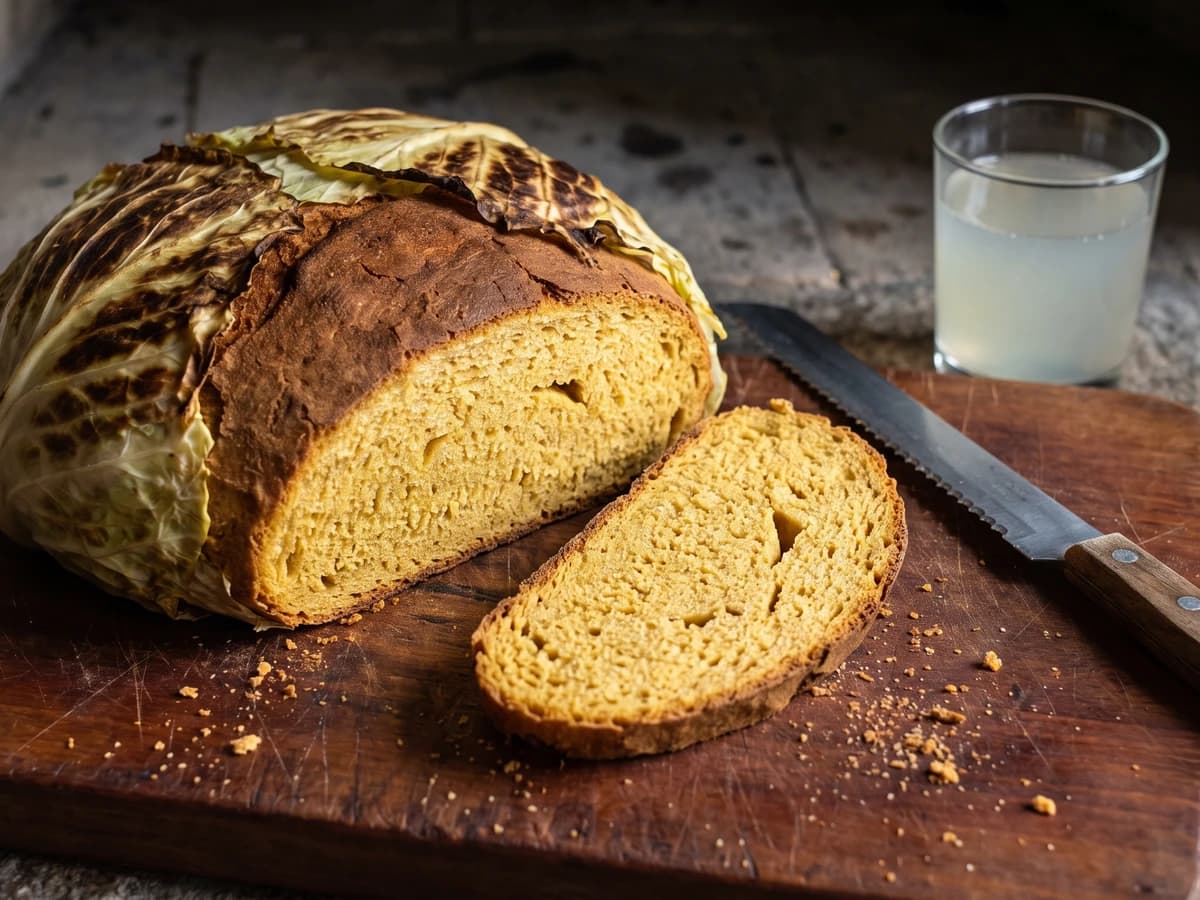
Asturian boroña is the plain corn loaf of the wet north, scalded with salted water and baked inside cabbage leaves until the crust darkens and the crumb stays close, gold, and moist.
Chef Isabel
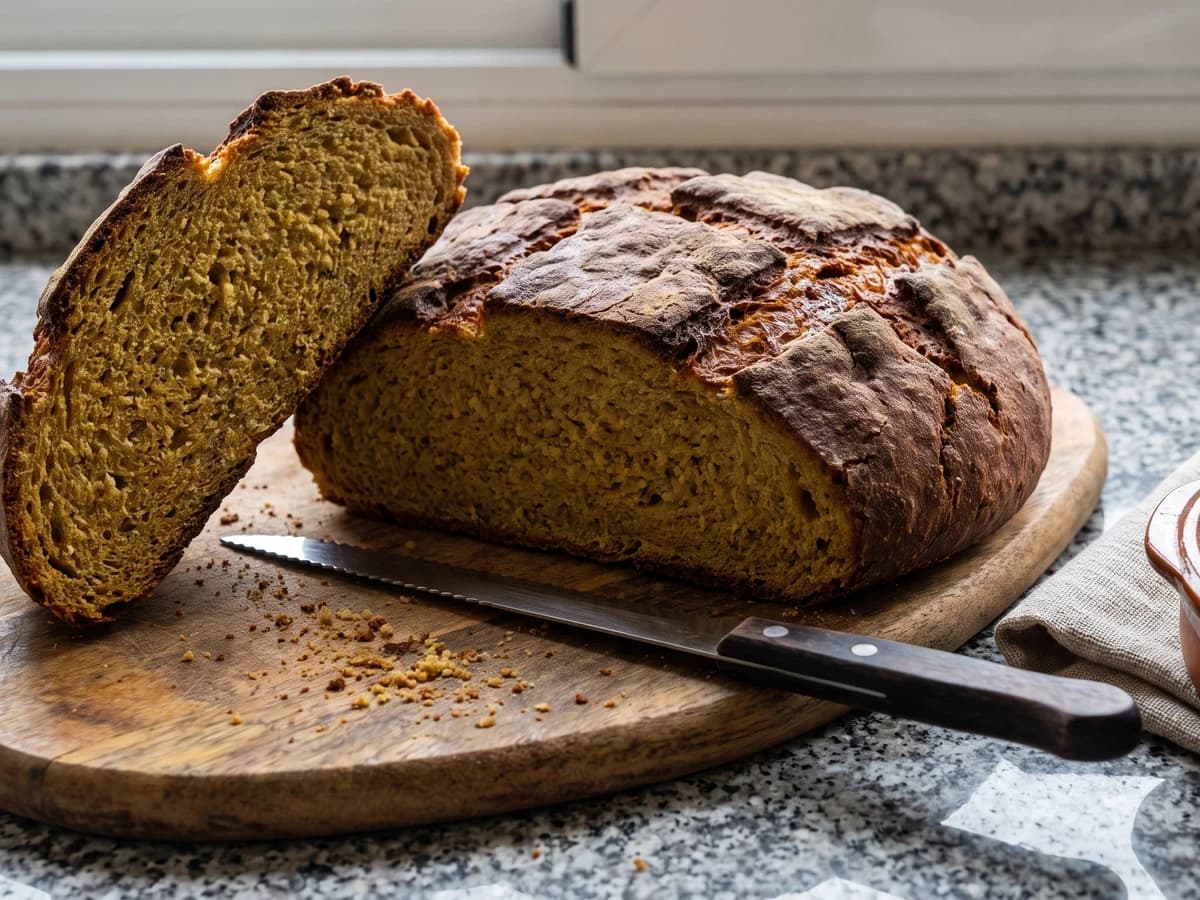
Broa Galega is Galicia's sturdy maize-and-rye loaf: scald the corn flour, give the damp dough time to rise, and the oven gives back a cracked crust and close, faintly sweet crumb.
Chef Isabel
León's great pan de flama is a one-and-a-half-kilo round, slowly fermented and baked dark, with a thick crust that protects its moist, irregular crumb for days.