Chef Isabel
Bollo Preñao Asturiano
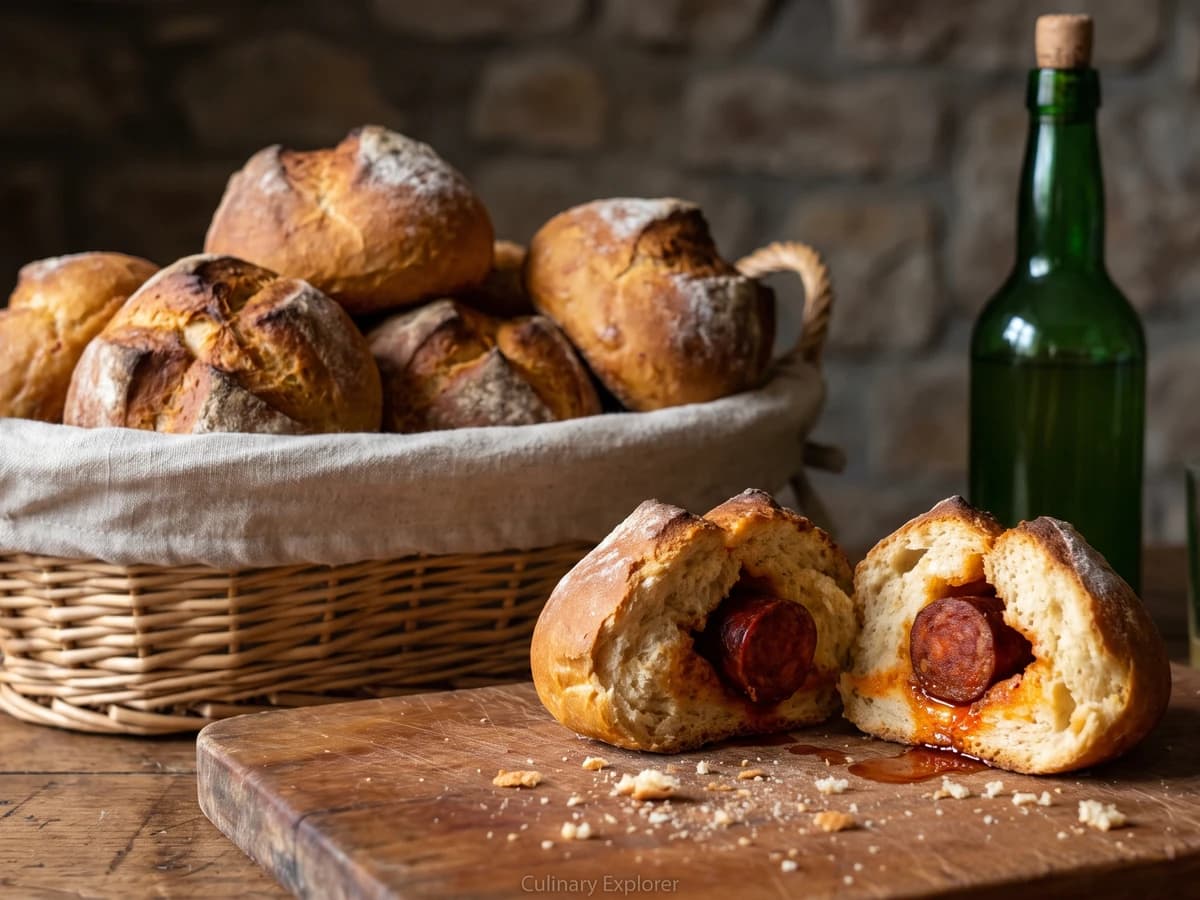
Asturias tucks a whole smoky chorizo inside each bread roll, so its pimentón-red fat seasons the crumb as it bakes. Seal the dough well, and you have the proper food of romerías and picnics.
A cooking platform built around craft, culture, and the stories behind what we eat.
Created by
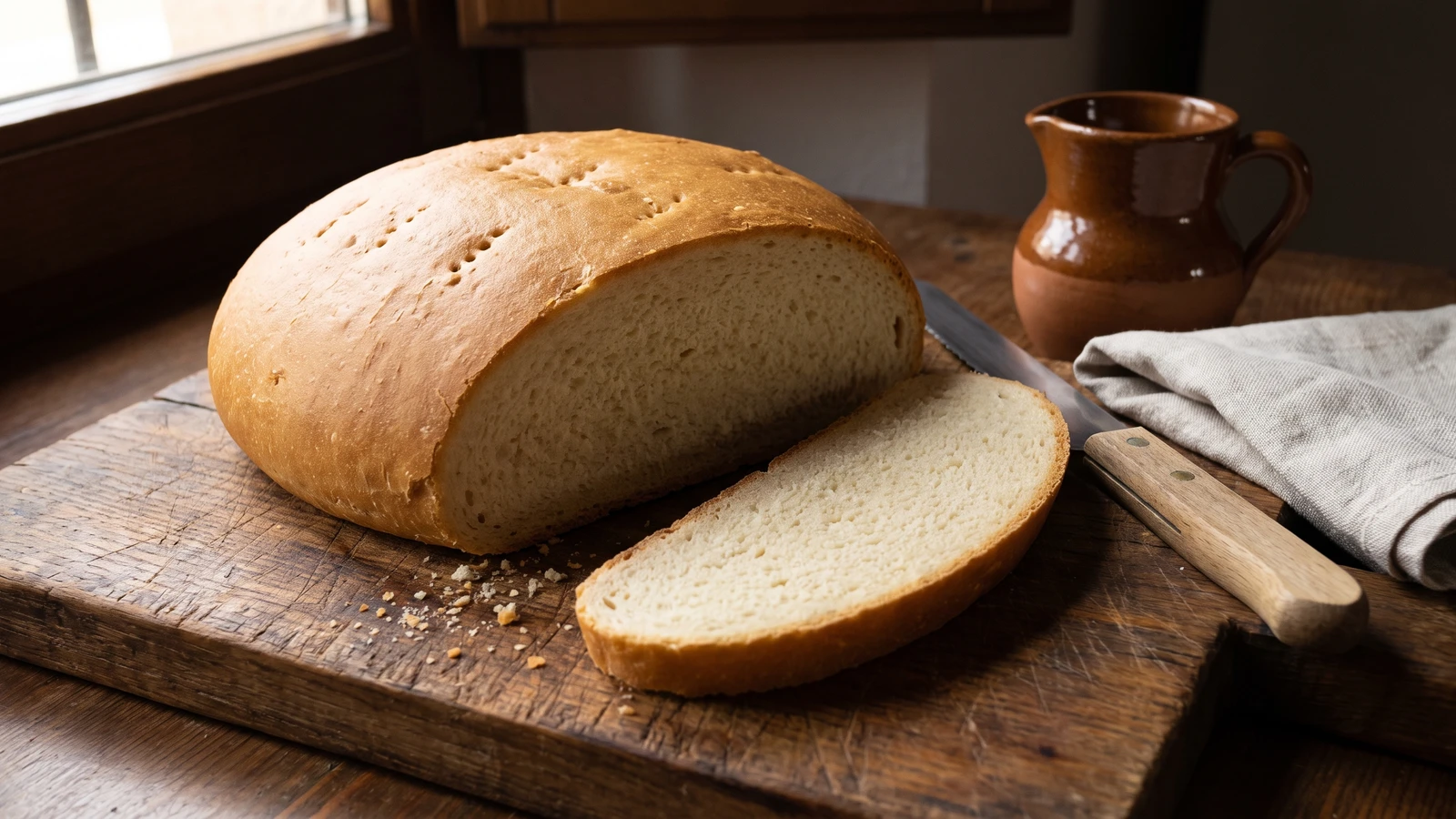
Castile's pan candeal is the opposite of an airy loaf: a firm, pale bread whose dry dough is rolled again and again until the crumb bakes fine, close, and nearly holeless.
Pan candeal is Castilian, the bread of the Meseta: a low, firm loaf with a thin pale crust and a dense white crumb so fine that the holes are barely there. It isn't pan de flama, the wetter bread with an open crumb. This one is pan bregado, rolled and hard-worked on purpose, made to cut cleanly beside a stew, cheese, or the cured larder.
The method that decides it is the bregado, also called sobado. At only 45 percent water, the first mixture looks too dry. Don't rescue it with another splash. Rest it, then roll, fold, and turn it again and again until a rough lump becomes smooth and satiny. That rolling presses out large pockets and organizes the stiff dough into the close crumb that belongs here.
If you can buy flour labeled harina candeal, use it. Far from Castile, choose a fine white all-purpose flour with moderate protein, not the strongest bread flour and not coarse semolina. The substitute makes a crumb that is a shade more elastic and less chalk-white, but the rolling still gives you the proper fine structure. No hace falta haber pisado España.
Give the shaped loaf one short rise and stop before it doubles. My Margin beside this bread says, "más no es mejor," more is not better. Let it become only half again as large, mark it, bake it pale, and cool it completely before the knife goes near it. Follow that, and the loaf comes out as it should.
Pan candeal belongs to the grain country of the Castilian Meseta, especially Valladolid, Zamora, and Salamanca, where candeal wheat became the basis of pale, close-crumbed loaves suited to the dry inland table. Bakers call its repeated rolling bregado or sobado, a method that turns a low-water dough into bread with tiny, even alvéolos, or crumb cells, and good keeping quality. The same family includes named forms such as the round lechuguino and the long fabiola, distinguished by shaping, cuts, and pricked patterns.
Quantity
500g
Quantity
225g
at about 22°C
Quantity
10g
Quantity
3g instant or 9g fresh
| Ingredient | Quantity |
|---|---|
| white candeal flour, or unbleached all-purpose flour with 10.5 to 11.5% protein | 500g |
| waterat about 22°C | 225g |
| fine sea salt | 10g |
| instant dry yeast, or fresh baker's yeast | 3g instant or 9g fresh |
Whisk the instant yeast through the flour in a large bowl. If you're using fresh yeast, dissolve it in the measured water instead. Add the salt, pour in all the water, and squeeze and press the mixture together until no loose flour remains. The dough will be much firmer than ordinary bread dough and may look unwilling at first. Don't add more water. Pésalo, no lo adivines, weigh it, don't guess.
Turn the dough onto an unfloured work surface and knead firmly for 5 minutes, using the heel of your hand to press rather than trying to stretch it. Cover it with the upturned bowl and leave it for 10 minutes. This short rest lets the flour absorb the water and makes the first rolling possible without changing the loaf's tight character.
Flatten the dough with a sturdy rolling pin, then roll it into a rectangle about 1cm thick. Fold it in thirds like a letter, turn it a quarter turn, and roll it out again. Repeat this rolling, folding, and turning 12 times, taking about 15 to 20 minutes. This is the bregado or sobado, the hard working of the dough that compresses large pockets and produces the fine, even crumb. It will change from rough and cracked to smooth, pale, and satiny.
After the final pass, fold the edges into the centre to make a compact parcel and pinch the joins firmly. Turn it seam-side down. Cup both hands around the dough and draw it against the work surface until you have a taut round loaf about 18cm across and 5cm high. Press out any obvious trapped bubbles as you shape; an airy pocket is not a prize in this bread.
Set the loaf on baking parchment, cover it so the surface cannot dry, and leave it at 24 to 26°C for 45 to 60 minutes. It should grow by about half, not double. Press it gently with one fingertip: the mark should return slowly and remain faintly visible. If it becomes soft and swollen, it has gone too far for the close crumb pan candeal needs.
While the loaf proves, heat the oven and a heavy baking sheet or stone to 220°C conventional, or 200°C fan. Just before baking, cut a clean cross about 5mm deep across the top with a sharp blade. Prick each quarter three times with a skewer or fork. These marks give the expanding dough somewhere controlled to move instead of letting the crust split wherever it pleases.
Slide the loaf, still on its parchment, onto the hot sheet or stone. Lower the oven immediately to 200°C conventional, or 180°C fan, and bake for 32 to 36 minutes. The crust should be firm and straw-gold, not dark brown. The centre should reach 95 to 97°C. This is a dense loaf, so its underside gives a quieter hollow sound than an airy bread.
Move the loaf to a rack and leave it untouched for at least 90 minutes. Cutting it early compresses the fine crumb into a damp line around the knife. Once cold, it should slice cleanly, with tiny, even cells and no large holes. Siempre sale, si lo sigues.
1 serving (about 59g)
Culinary guides, cultural storytelling, and the editorial depth that makes cooking meaningful.
Discover Culinary ExplorerChef Isabel
Asturias tucks a whole smoky chorizo inside each bread roll, so its pimentón-red fat seasons the crumb as it bakes. Seal the dough well, and you have the proper food of romerías and picnics.
Chef Isabel
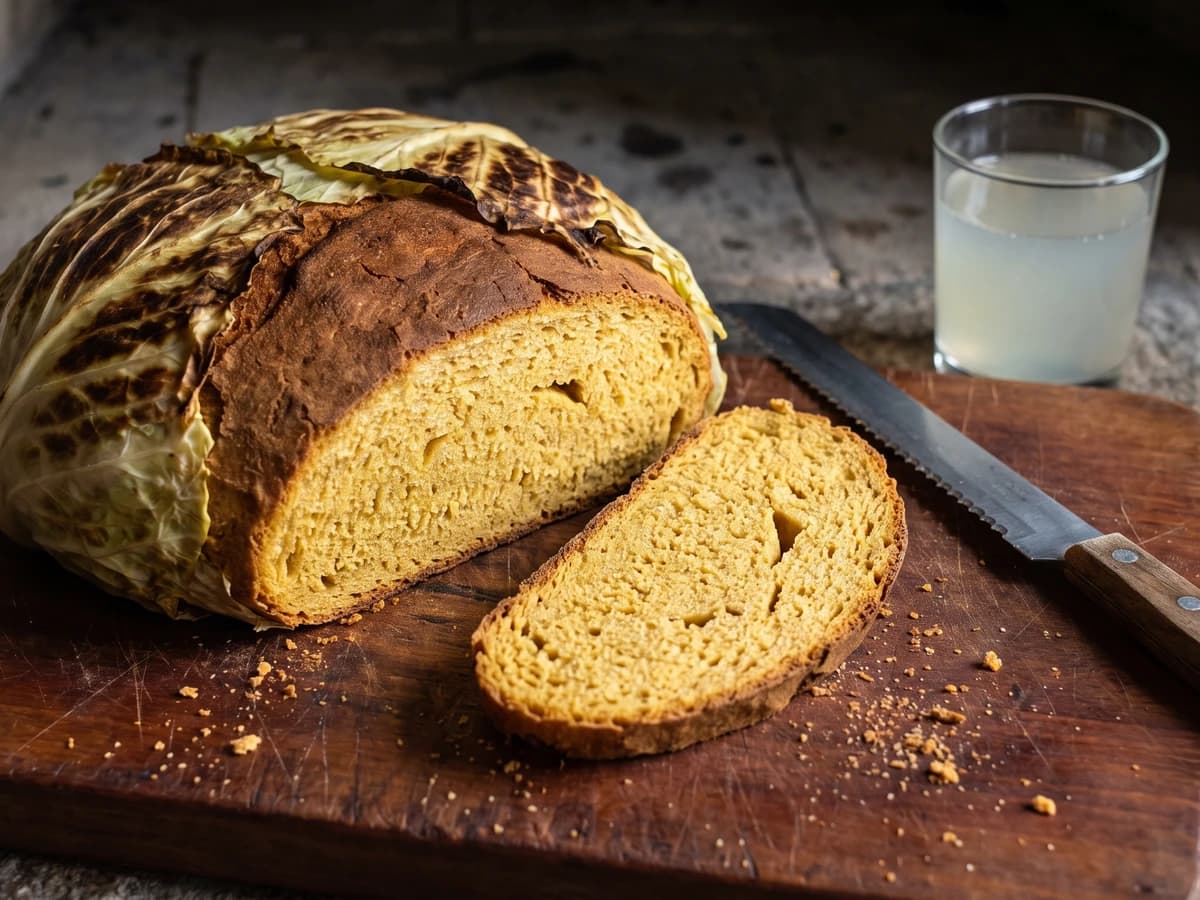
Asturian boroña is the plain corn loaf of the wet north, scalded with salted water and baked inside cabbage leaves until the crust darkens and the crumb stays close, gold, and moist.
Chef Isabel
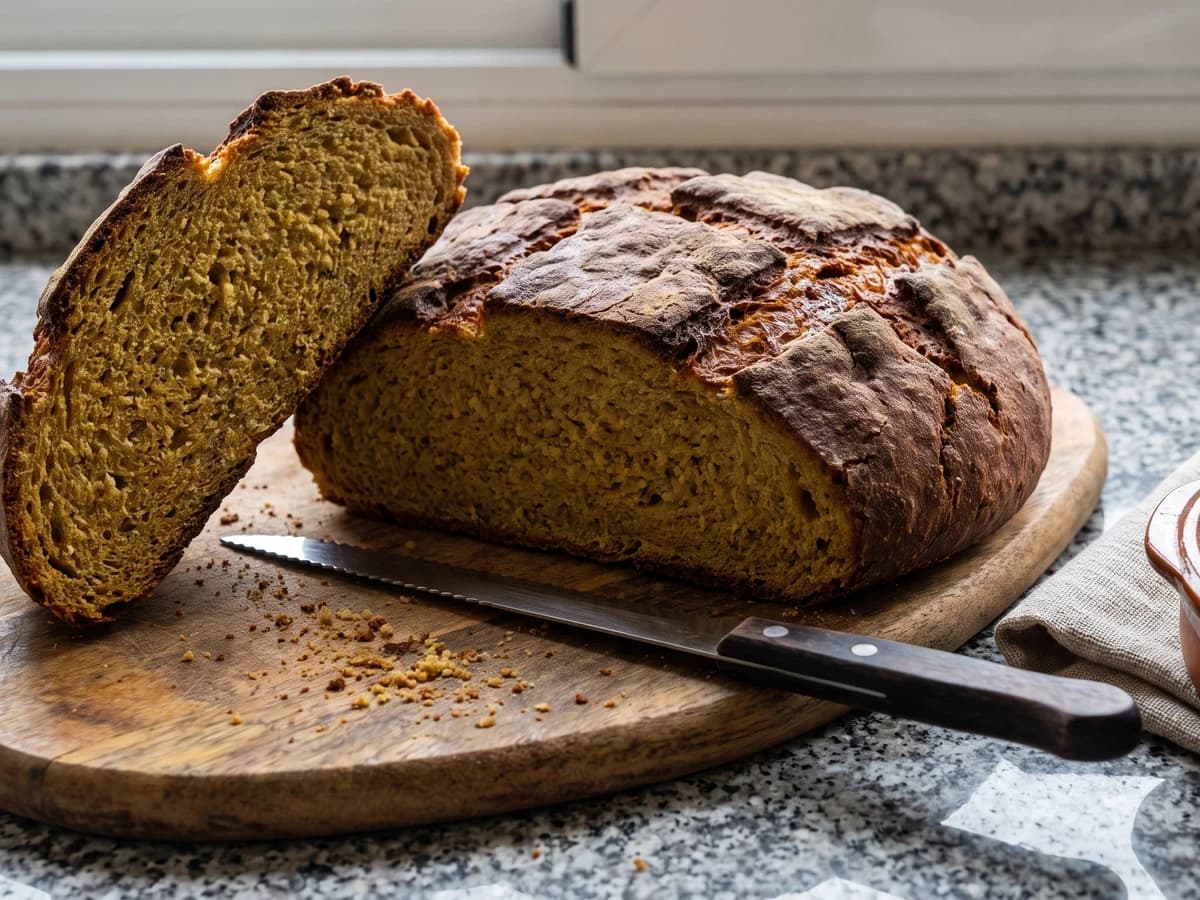
Broa Galega is Galicia's sturdy maize-and-rye loaf: scald the corn flour, give the damp dough time to rise, and the oven gives back a cracked crust and close, faintly sweet crumb.
Chef Isabel
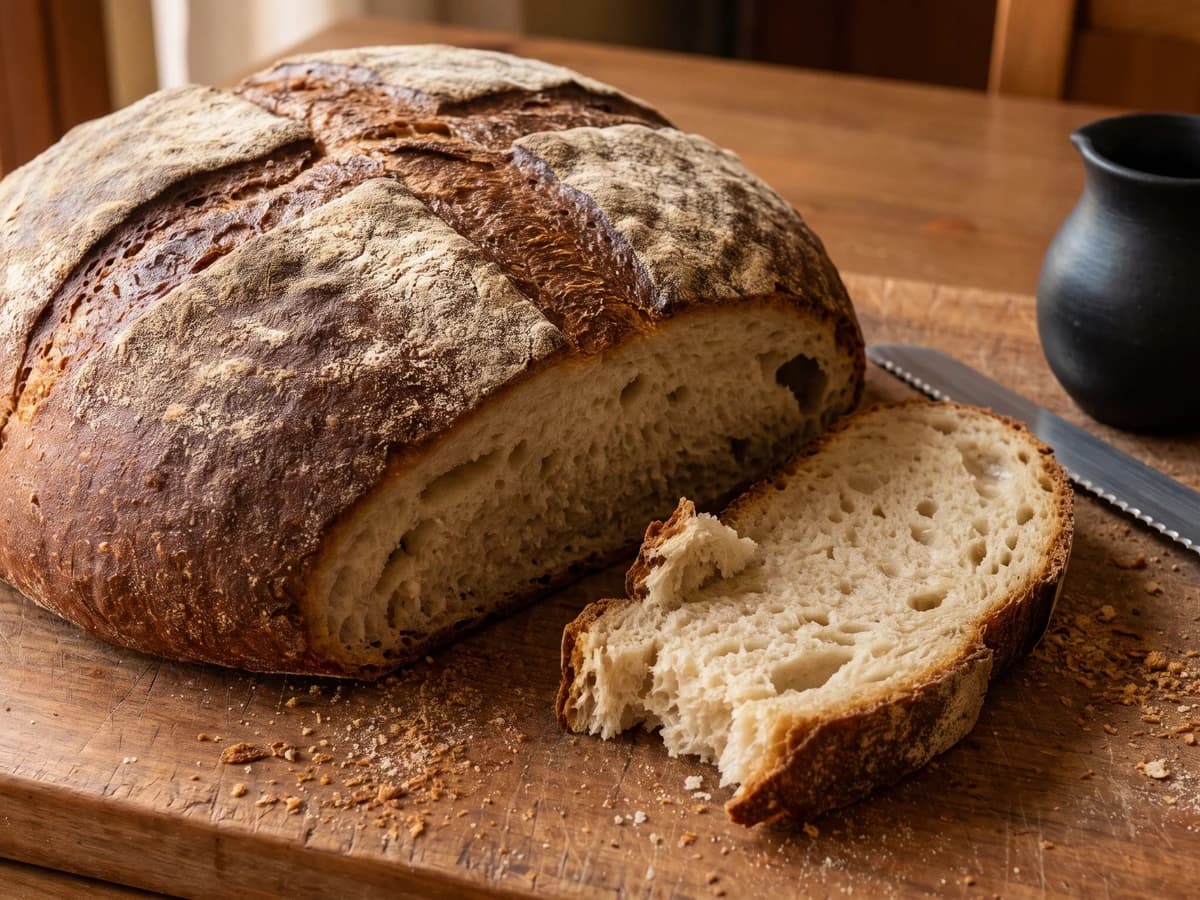
León's great pan de flama is a one-and-a-half-kilo round, slowly fermented and baked dark, with a thick crust that protects its moist, irregular crumb for days.