Chef Isabel
Bollo Preñao Asturiano
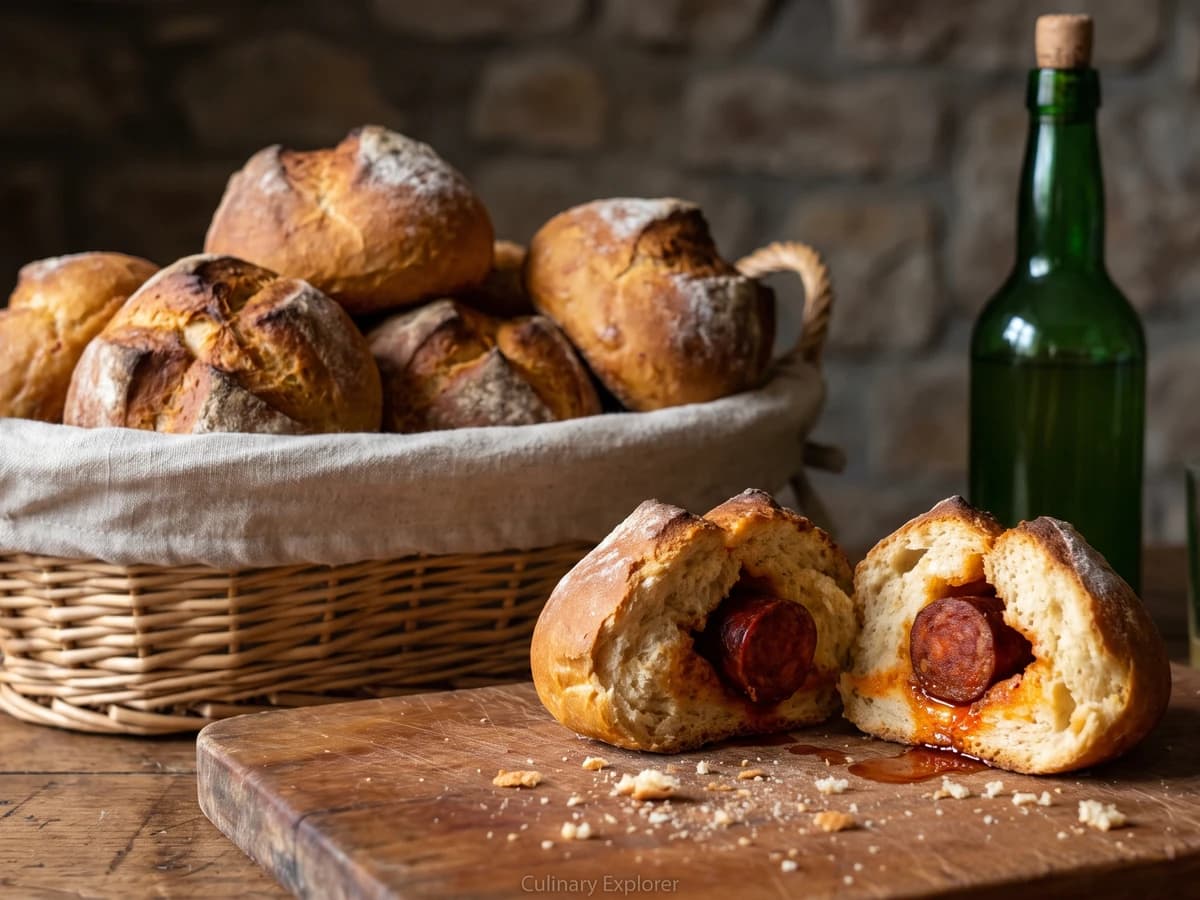
Asturias tucks a whole smoky chorizo inside each bread roll, so its pimentón-red fat seasons the crumb as it bakes. Seal the dough well, and you have the proper food of romerías and picnics.
A cooking platform built around craft, culture, and the stories behind what we eat.
Created by
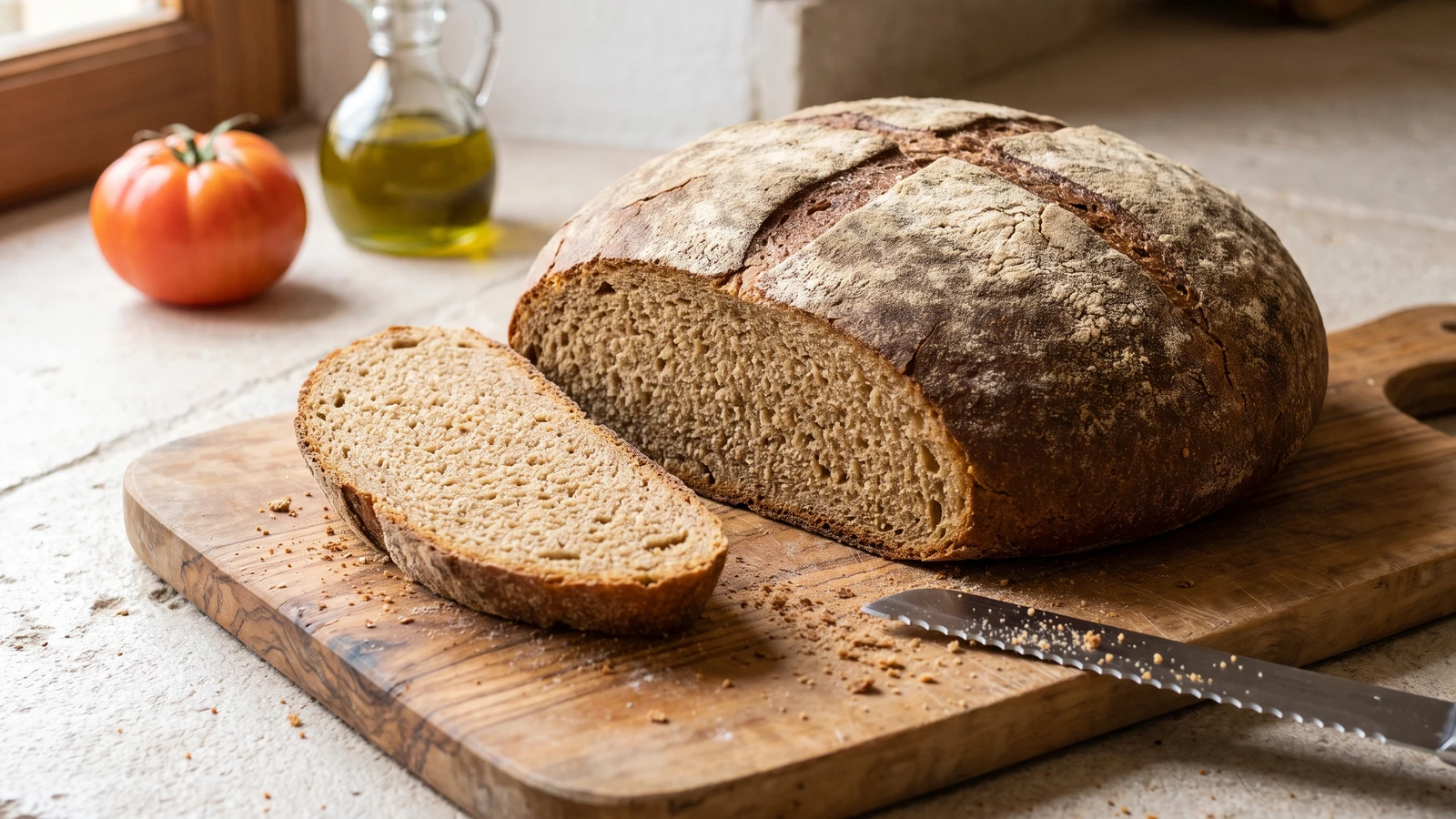
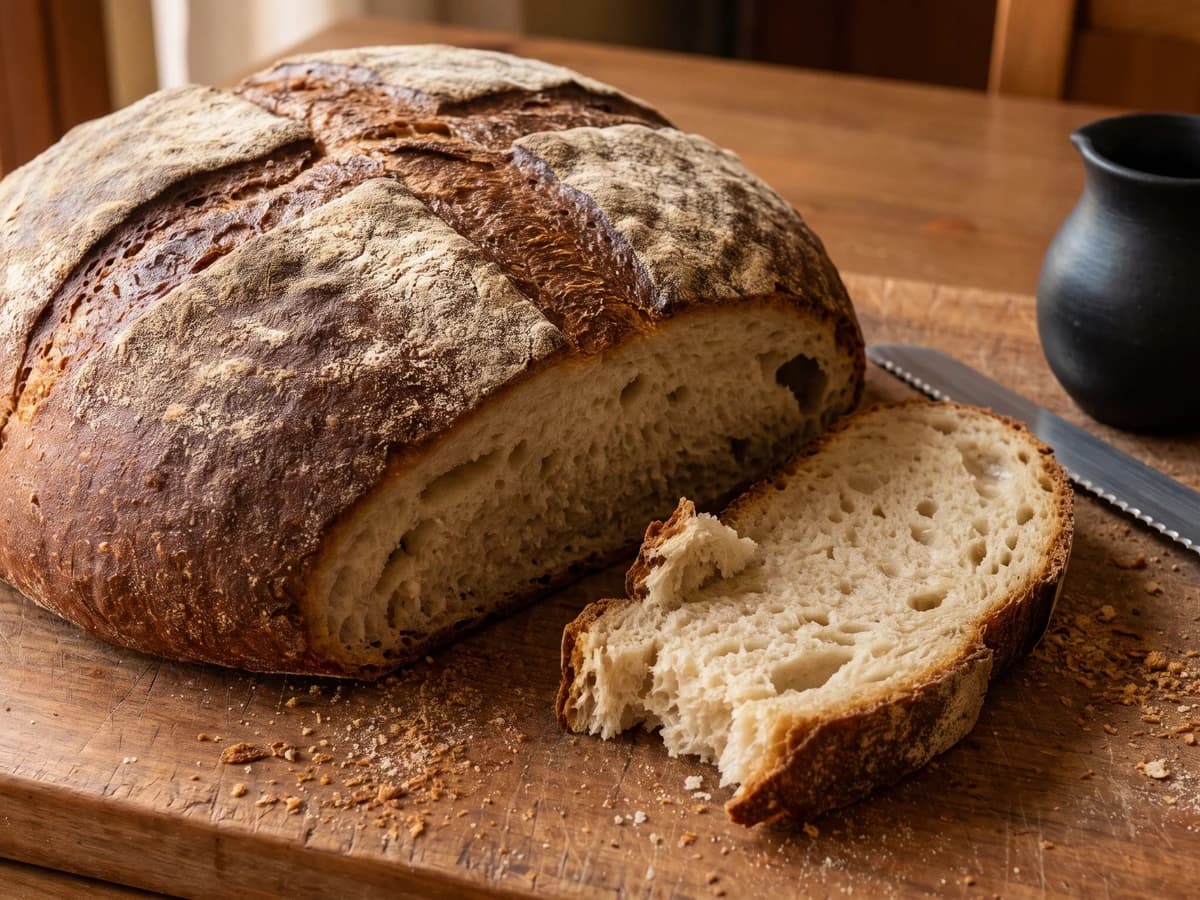
Pa moreno is Mallorca's brown everyday bread: a saltless round loaf with a close crumb, baked dark and sturdy enough for pa amb oli, sobrassada, cheese, soup, or the morning's preserves.
Pa moreno Mallorquí is Mallorca's brown everyday loaf, round, plainly made, and completely without salt. Its close, almost holeless crumb is not a fault. It is built to take ramellet tomato, olive oil, and a pinch of salt in pa amb oli, or to sit beside soup, cheese, sobrassada, and preserves without competing. A salted country loaf is a neighbour, not this bread.
The rise decides it. Salt usually reins in the yeast and braces the dough, but here there is none, so I stop the first fermentation when the dough has grown by half, not when it has doubled. Press out the larger bubbles, shape the round firmly, and bake it until the crust is properly chestnut brown. Let it cool before cutting. That gives you the compact crumb and faintly sweet wheat flavour Mallorca expects.
Whole xeixa flour, milled from Mallorca's old wheat, gives the finest version. If it isn't sold where you live, use stone-ground whole-wheat flour with strong white bread flour as written here. The flavour will be a little more robust and the crumb slightly springier, but the loaf will still be brown, close, and right for pa amb oli. No hace falta haber pisado Mallorca. The Margin beside this recipe says only, "Don't wait for doubled." Follow that and it comes out.
Pa moreno belongs to Mallorca, where the saltless loaf grew from a medieval economy in which valuable salt was kept for preserving meat, fish, and olives; thrift became the island's settled taste. Moreno means brown and distinguishes this less-refined loaf from pa blanc, its white-flour counterpart. Its firm crumb proved particularly suited to pa amb oli because it holds crushed ramellet tomato and olive oil without collapsing, while the salted food laid over it provides the seasoning.
Quantity
300g
Quantity
200g
Quantity
350g
at 24-26°C, divided
Quantity
4g
or 12g fresh baker's yeast
Quantity
15g
| Ingredient | Quantity |
|---|---|
| stone-ground whole-wheat flour, preferably whole xeixa flour | 300g |
| strong white bread flour | 200g |
| waterat 24-26°C, divided | 350g |
| instant dried yeastor 12g fresh baker's yeast | 4g |
| whole-wheat flour, for dusting (optional) | 15g |
Put the whole-wheat flour and bread flour in a large bowl and mix them thoroughly. Add 330g of the water and work it through with your fingers or a sturdy spoon until no dry flour remains. The dough will feel coarse and tacky. Cover the bowl and leave it for 20 minutes so the bran softens and the flour begins taking up the water.
Stir the yeast into the remaining 20g water. Pour it over the rested dough, squeeze and fold until absorbed, then knead for 8 to 10 minutes. The dough is ready when it feels supple, holds together cleanly, and stretches into a thin, slightly speckled sheet before the bran makes it tear. It should remain a little tacky but must not flow across the worktop.
Shape the dough into a ball, return it to the bowl, and cover. Leave it at about 24°C for 60 to 75 minutes, until it has grown by roughly half. Do not wait for it to double. Salt normally slows yeast and strengthens dough; without it, this loaf moves quickly and can overproof before you notice. That gives you a flat loaf with large holes instead of the close Mallorcan crumb.
Turn the dough onto a worktop dusted very lightly with whole-wheat flour. Press it evenly with your fingertips to release the larger pockets of gas. Fold the edges into the centre, turn it seam-side down, and draw it towards you against the worktop several times until the surface is taut. Make a firm round about 18cm across. This deliberate degassing and tight shape produce the compact, even crumb the bread needs.
Set the loaf seam-side down on baking paper and cover it loosely. Leave it for 40 to 55 minutes, until it has expanded by about half again. Press a floured fingertip gently into the side. The mark should return slowly and leave a shallow dent. If it springs back at once, give it another 10 minutes; if it does not move at all, bake immediately.
While the loaf proofs, heat the oven to 230°C, or 210°C with a fan, with a baking stone or heavy inverted tray on the middle rack. Put a small metal roasting tin on the lowest rack. Heat everything for at least 40 minutes so the loaf meets a properly hot surface.
Dust the loaf lightly with whole-wheat flour and cut a shallow cross, about 5mm deep, across the top. Slide it with its paper onto the hot stone or tray. Pour 150ml boiling water into the lower metal tin, keeping your face back and using oven gloves, then close the door at once. Bake for 15 minutes. Lower the heat to 200°C, or 180°C with a fan, and bake for another 30 to 35 minutes. The crust should be a deep chestnut brown, the base should sound hollow when tapped, and the centre should register 96-98°C.
Move the loaf to a rack and leave it untouched for at least 2 hours. The crumb finishes setting as the bread cools; cut it early and the middle turns gummy under the knife. Once cool, the crumb should be tawny, compact, and evenly pierced with very small holes. Siempre sale, si lo sigues.
1 serving (about 63g)
Culinary guides, cultural storytelling, and the editorial depth that makes cooking meaningful.
Discover Culinary ExplorerChef Isabel
Asturias tucks a whole smoky chorizo inside each bread roll, so its pimentón-red fat seasons the crumb as it bakes. Seal the dough well, and you have the proper food of romerías and picnics.
Chef Isabel
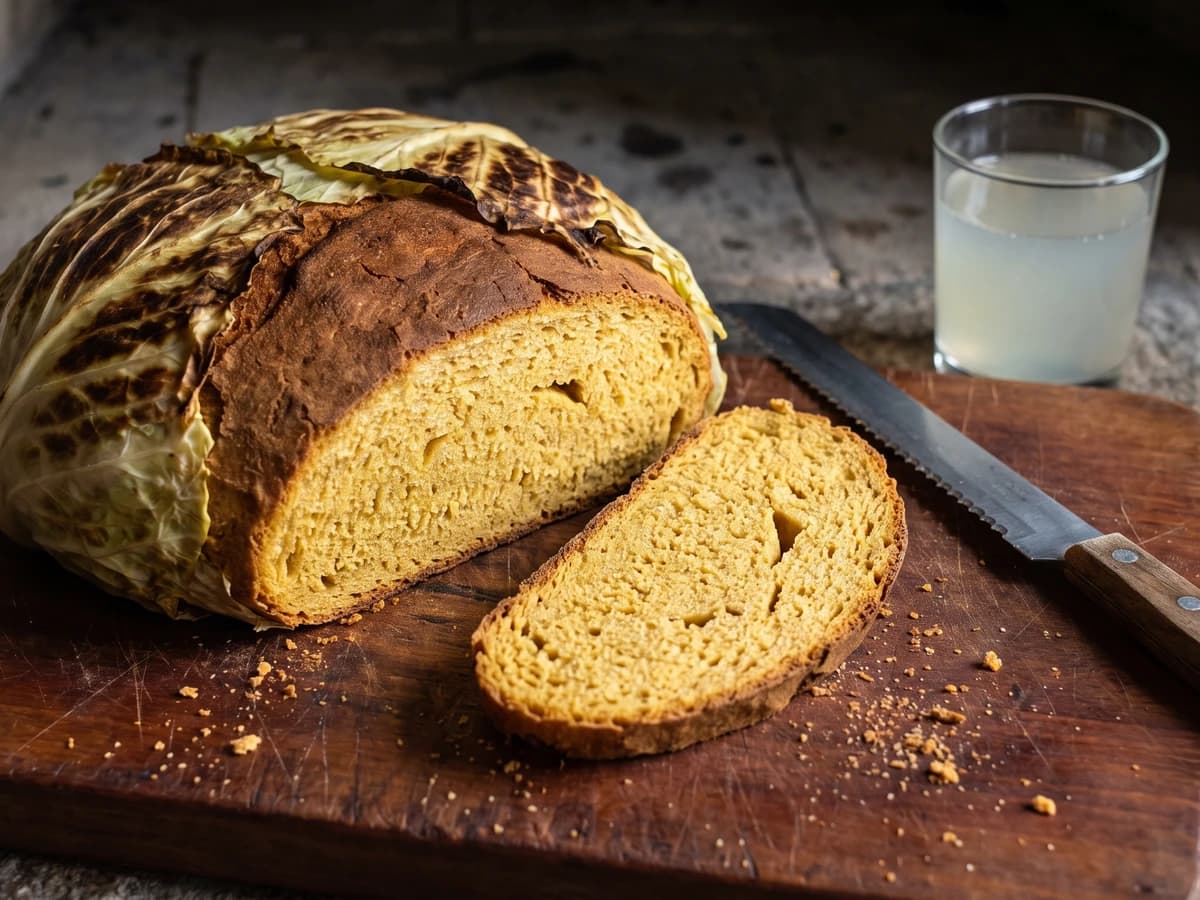
Asturian boroña is the plain corn loaf of the wet north, scalded with salted water and baked inside cabbage leaves until the crust darkens and the crumb stays close, gold, and moist.
Chef Isabel
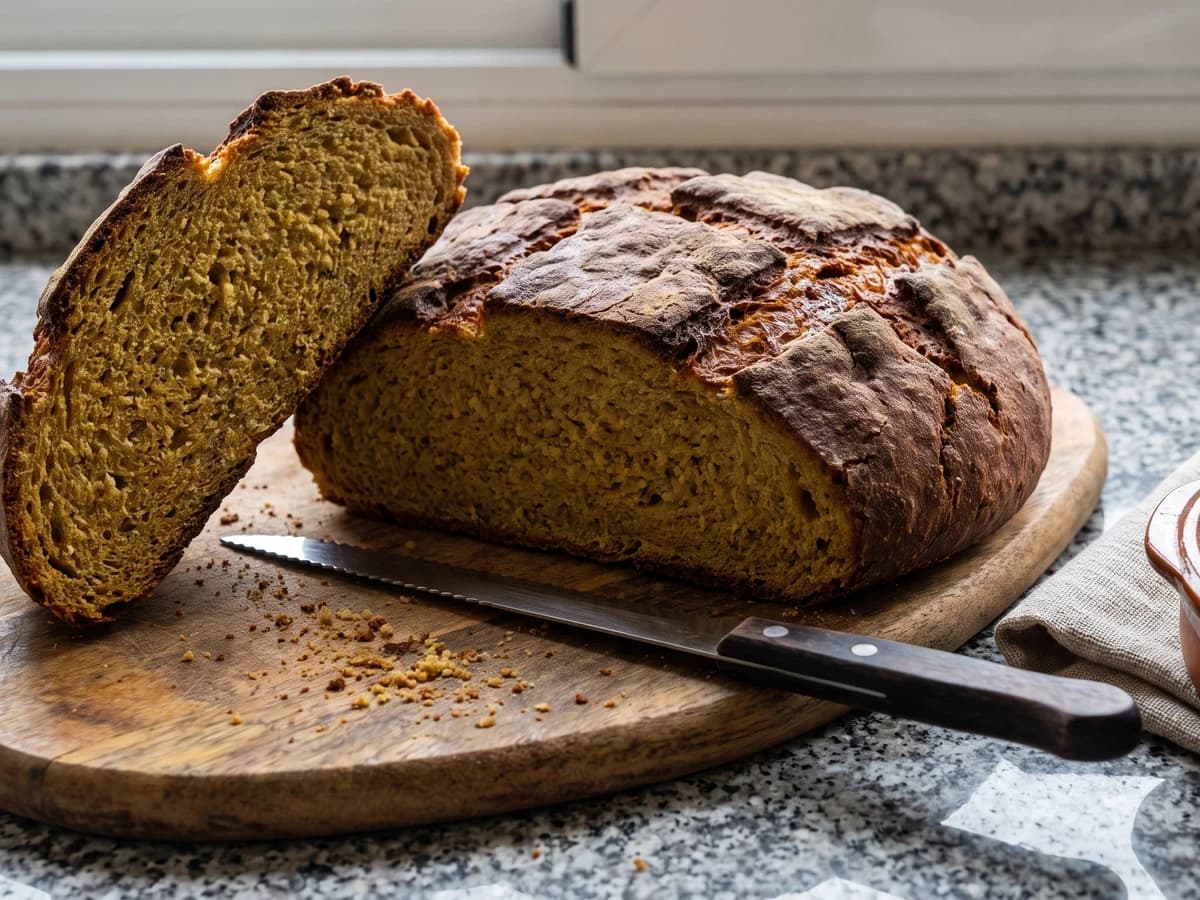
Broa Galega is Galicia's sturdy maize-and-rye loaf: scald the corn flour, give the damp dough time to rise, and the oven gives back a cracked crust and close, faintly sweet crumb.
Chef Isabel
León's great pan de flama is a one-and-a-half-kilo round, slowly fermented and baked dark, with a thick crust that protects its moist, irregular crumb for days.