Chef Isabel
Bollo Preñao Asturiano
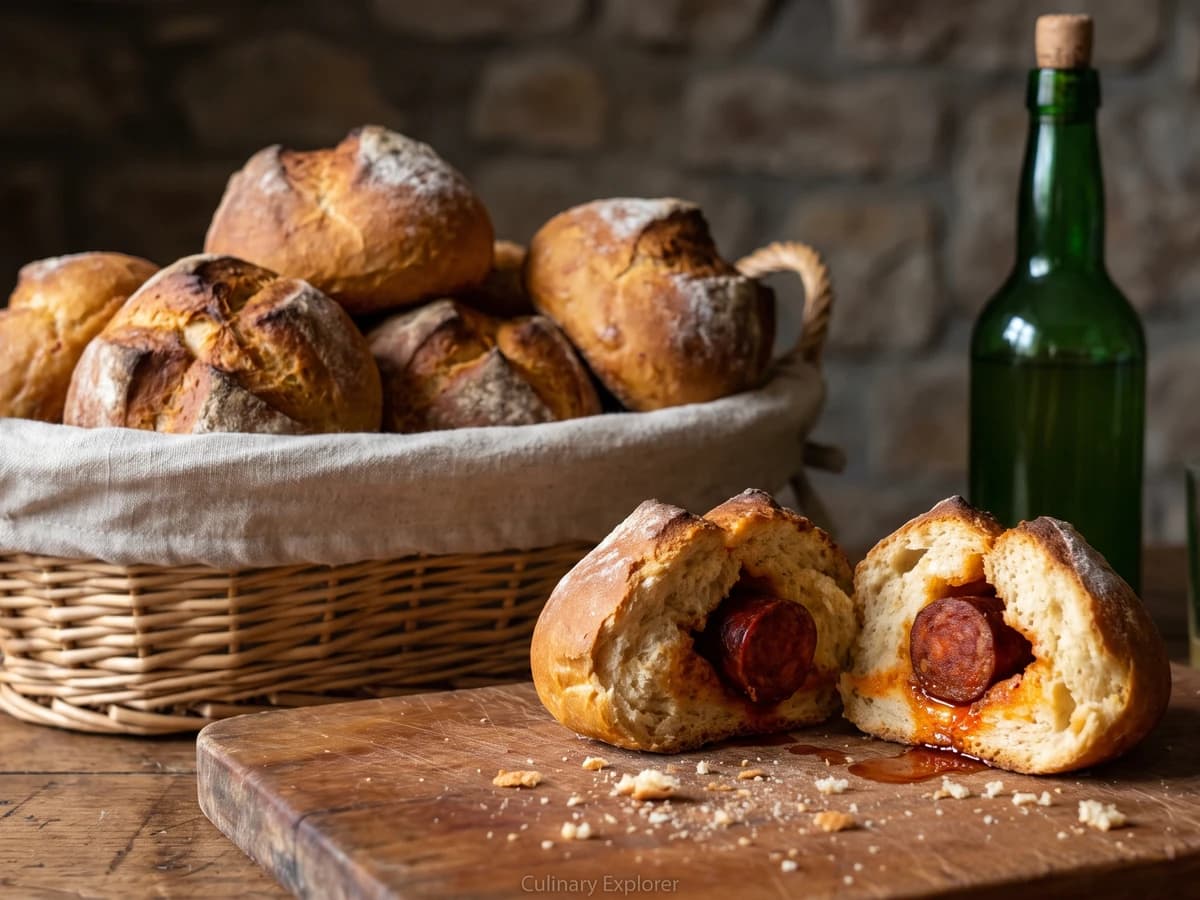
Asturias tucks a whole smoky chorizo inside each bread roll, so its pimentón-red fat seasons the crumb as it bakes. Seal the dough well, and you have the proper food of romerías and picnics.
A cooking platform built around craft, culture, and the stories behind what we eat.
Created by
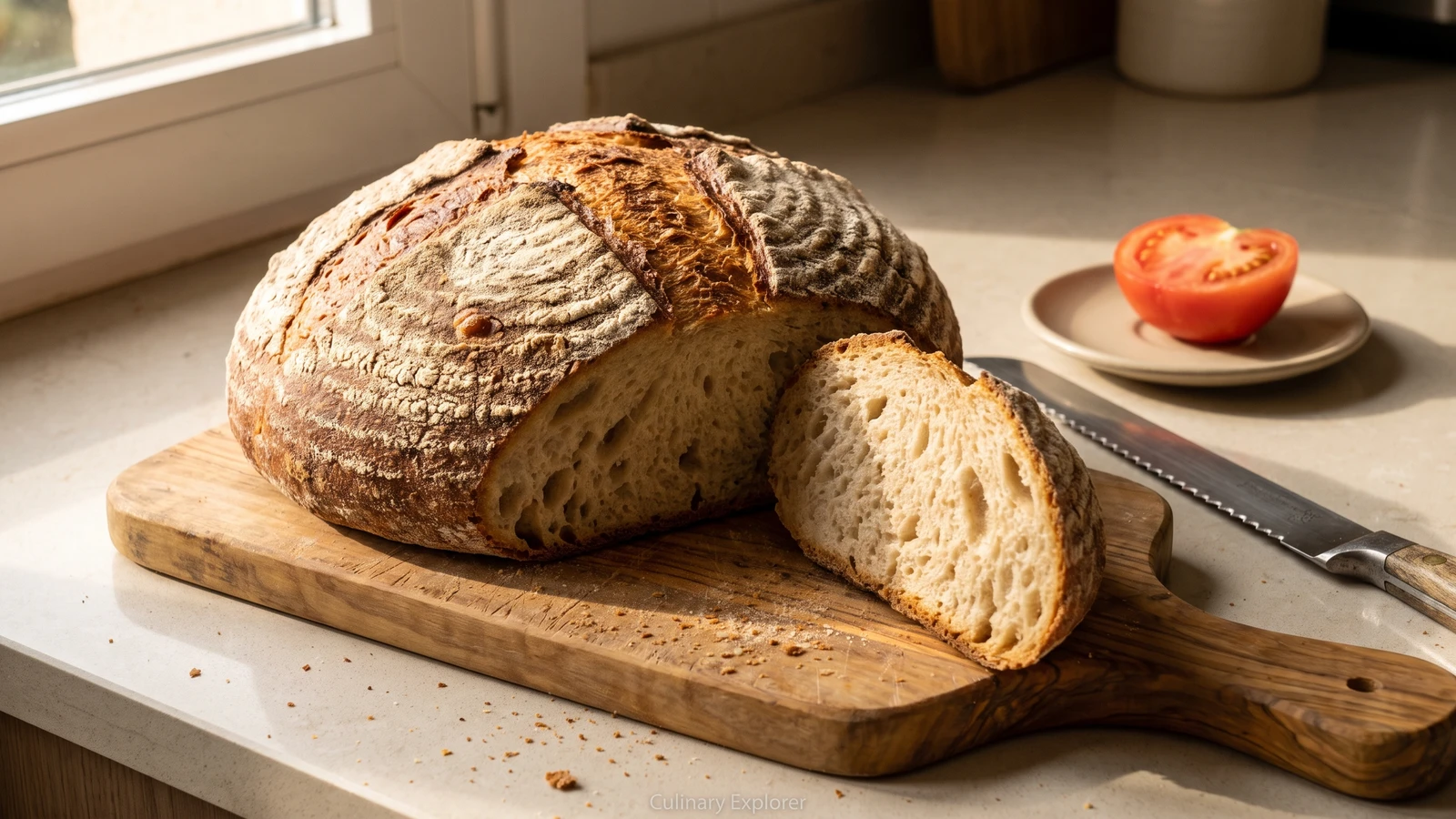
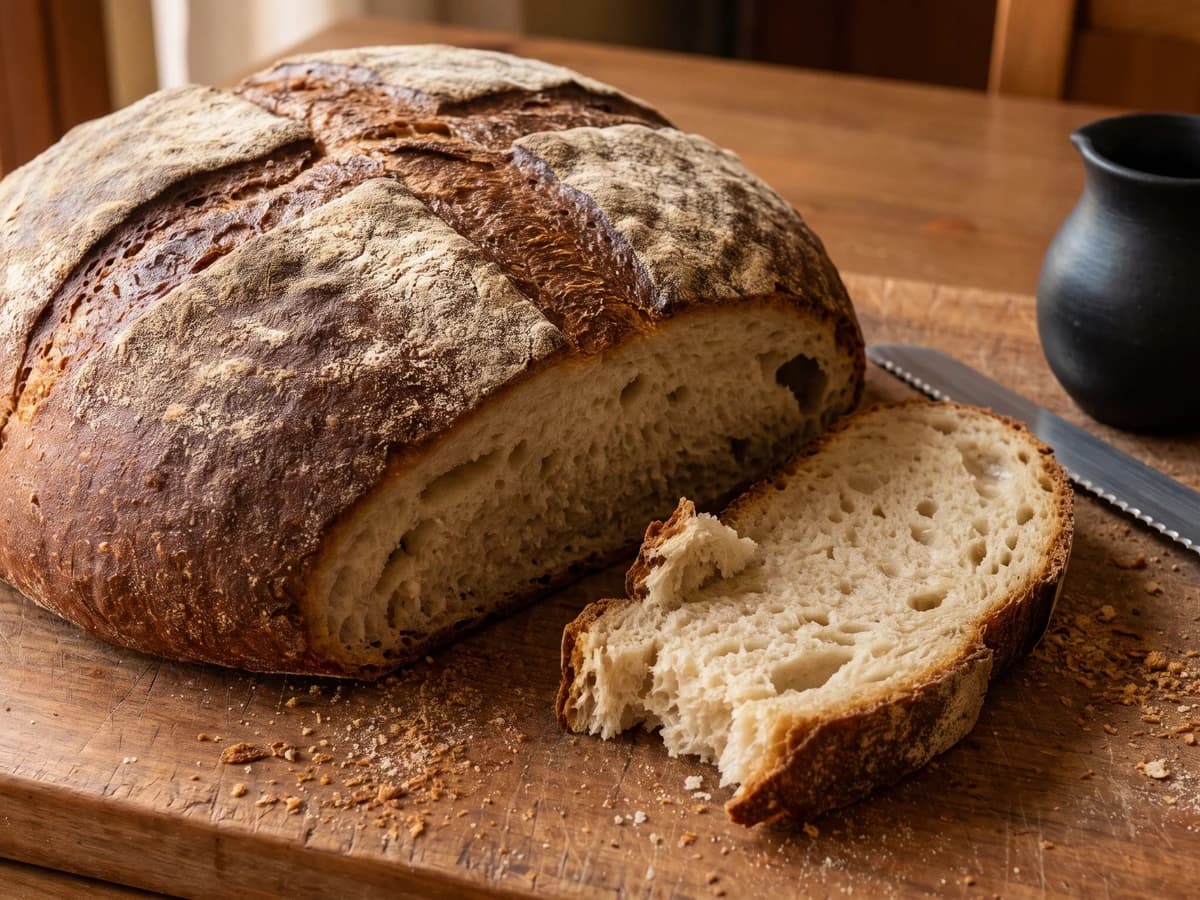
Catalonia's round country loaf earns its thick chestnut crust and moist, irregular crumb from ripe massa mare, patient fermentation, and a fierce hearth bake, then keeps well enough to feed the table for days.
Pa de Pagès Català is Catalonia's country loaf: large, round, formed by hand, with a deeply browned crust and a moist cream-coloured crumb crossed by uneven holes. Slow massa mare, natural wheat leaven, gives it flavour and keeping power, while the hot stone hearth builds the substantial crust. It isn't a white barra made round. The crust, crumb, patient fermentation, and hand-shaped form belong together.
Fermentation decides this loaf. Give the dough enough time to swell by half and feel aerated beneath your fingers before you shape it. An underfermented dough bakes dense; an exhausted one spreads before the oven can lift it. Watch the dough as well as the clock. That one habit matters more than clever scoring or heroic kneading.
If Catalan harina panificable isn't sold where you live, use an unbleached wheat flour with 11.5 to 12.5 percent protein. Very strong bread flour makes a chewier loaf, so blend 350g bread flour with 150g plain flour for the final dough if necessary. A thoroughly heated baking stone or steel stands in for the refractory floor of the village oven. No hace falta haber pisado España. My margin beside this loaf says only, "let it cool." Cut too soon and you crush the crumb you waited all day to make. Siempre sale, si lo sigues.
Pa de Pagès Català belongs throughout Catalonia rather than to a single comarca; pagès means farmer or countryman, and the large round loaf was made to travel home from the local oven and feed a household for several days. Its substantial crust protected the moist crumb, which remained useful when rubbed with tomàquet de penjar for pa amb tomàquet. The protected geographical indication preserves the round hand-formed shape, slow fermentation, and baking on a refractory hearth, working features that shaped the bread long before they were written into a specification.
Quantity
20g
at 100% hydration
Quantity
65g
at 22°C
Quantity
65g
Quantity
500g
11.5 to 12.5% protein
Quantity
330g
at 24°C, divided into 310g and 20g
Quantity
10g
Quantity
20g
| Ingredient | Quantity |
|---|---|
| active wheat sourdough starterat 100% hydration | 20g |
| water for the levainat 22°C | 65g |
| medium-strength wheat bread flour for the levain | 65g |
| medium-strength wheat bread flour11.5 to 12.5% protein | 500g |
| water for the final doughat 24°C, divided into 310g and 20g | 330g |
| fine sea salt | 10g |
| wheat flour for dusting | 20g |
Mix the 20g active starter with 65g water and 65g flour. Cover loosely and leave at 21 to 23°C for 8 to 12 hours. It is ready when it has at least doubled, the top is gently domed, and the inside is webbed with bubbles. Use it before the dome collapses.
Put the 500g flour and 310g of the final-dough water in a large bowl. Mix until no dry flour remains; the dough will look rough and feel firm. Cover and leave for 30 minutes. This rest lets the flour drink properly and begins building strength without hard kneading.
Spread all 150g of ripe levain over the dough. Pinch, fold, and squeeze for 3 to 4 minutes until it is evenly incorporated, then rest for 10 minutes. Dissolve the 10g salt in the remaining 20g water, work it into the dough, and fold for another 3 to 5 minutes. The dough should feel supple and slightly tacky, not wet enough to pour.
Cover the bowl and bulk-ferment the dough at about 24°C for 4 to 5 hours. During the first 90 minutes, give it three sets of folds at 30-minute intervals: lift one edge, stretch it without tearing, fold it across the middle, and repeat on all four sides. Leave it undisturbed after the last fold.
Turn the dough onto a lightly floured worktop. Use a bench scraper to draw it into a loose round without pressing out its air. Cover with an upturned bowl and leave it for 20 minutes. The dough should relax enough to shape without springing straight back.
Dust the top lightly, turn the dough over, and fold the outside edges into the centre all the way around. Turn it seam-side down. Cup both hands behind the loaf and draw it gently across the bare worktop several times, rotating as you go, until the surface is taut and the loaf stands round. Stop before the skin tears.
Line a 22 to 24cm bowl or banneton with linen and dust it well with the remaining flour. Set the loaf inside seam-side up, cover, and proof at 22 to 24°C for 1½ to 2½ hours. It is ready when it looks aerated and a floured fingertip pressed 1cm into the dough leaves a dent that returns slowly but does not disappear.
At least 45 minutes before baking, put a baking stone or steel on the middle rack and heat the oven to 250°C, or 480°F. Have a large oven-safe metal bowl ready to cover the loaf during the first part of the bake. The long preheat matters because a lukewarm stone gives a pale, heavy base.
Turn the loaf onto baking parchment or a floured peel, so the smooth side faces up. With a razor or very sharp knife, cut one decisive cross, each line about 10cm long and 1cm deep. Slide the loaf onto the hot stone, cover it with the metal bowl, and reduce the oven to 240°C, or 465°F. Bake for 20 minutes. Remove the bowl carefully, lower the heat to 220°C, or 425°F, and bake for another 25 to 30 minutes.
The loaf is done when the crust is a deep chestnut brown, the base sounds hollow when tapped, and the centre reaches 96 to 98°C. If it is pale, give it another 5 minutes. Cool on a rack for at least 2 hours before cutting. The crumb is still setting inside, and an early knife leaves it gummy.
1 serving (about 71g)
Culinary guides, cultural storytelling, and the editorial depth that makes cooking meaningful.
Discover Culinary ExplorerChef Isabel
Asturias tucks a whole smoky chorizo inside each bread roll, so its pimentón-red fat seasons the crumb as it bakes. Seal the dough well, and you have the proper food of romerías and picnics.
Chef Isabel
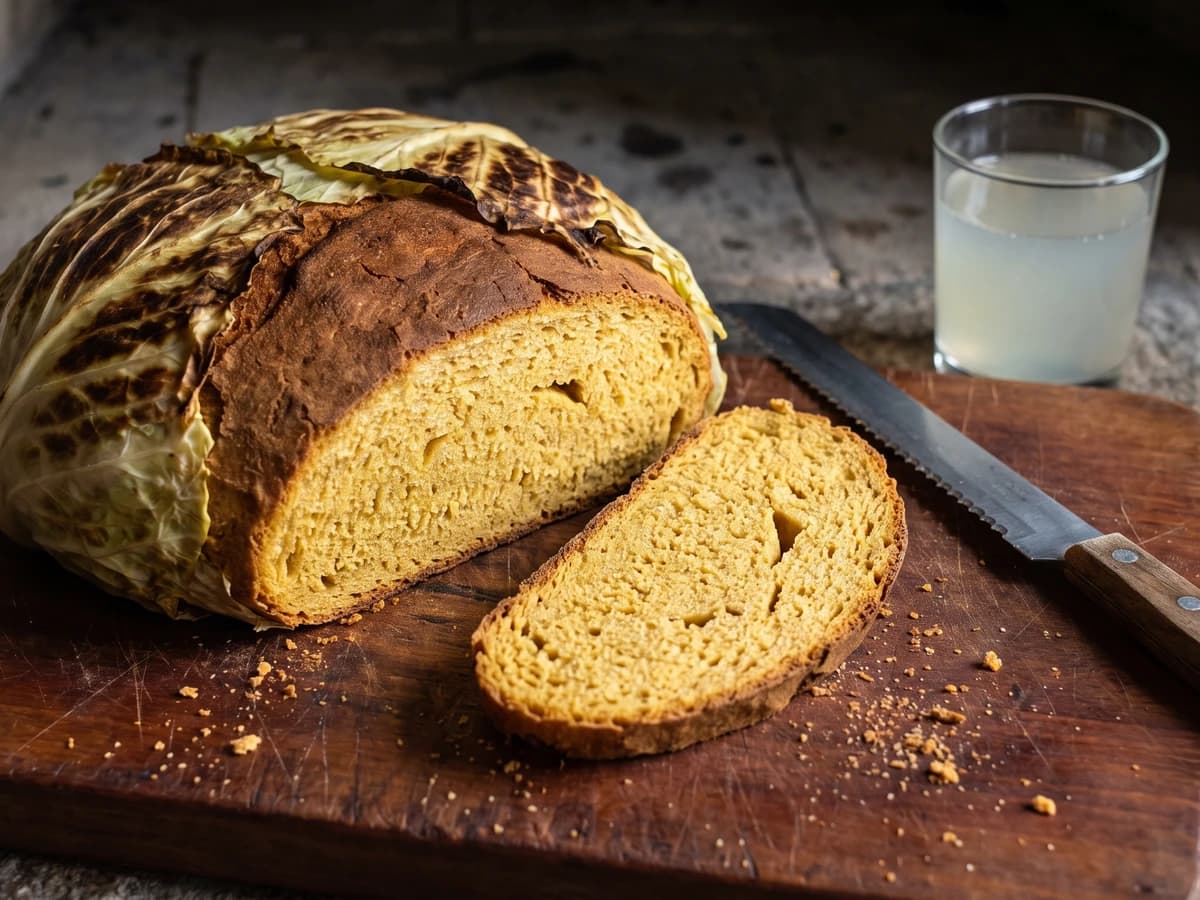
Asturian boroña is the plain corn loaf of the wet north, scalded with salted water and baked inside cabbage leaves until the crust darkens and the crumb stays close, gold, and moist.
Chef Isabel
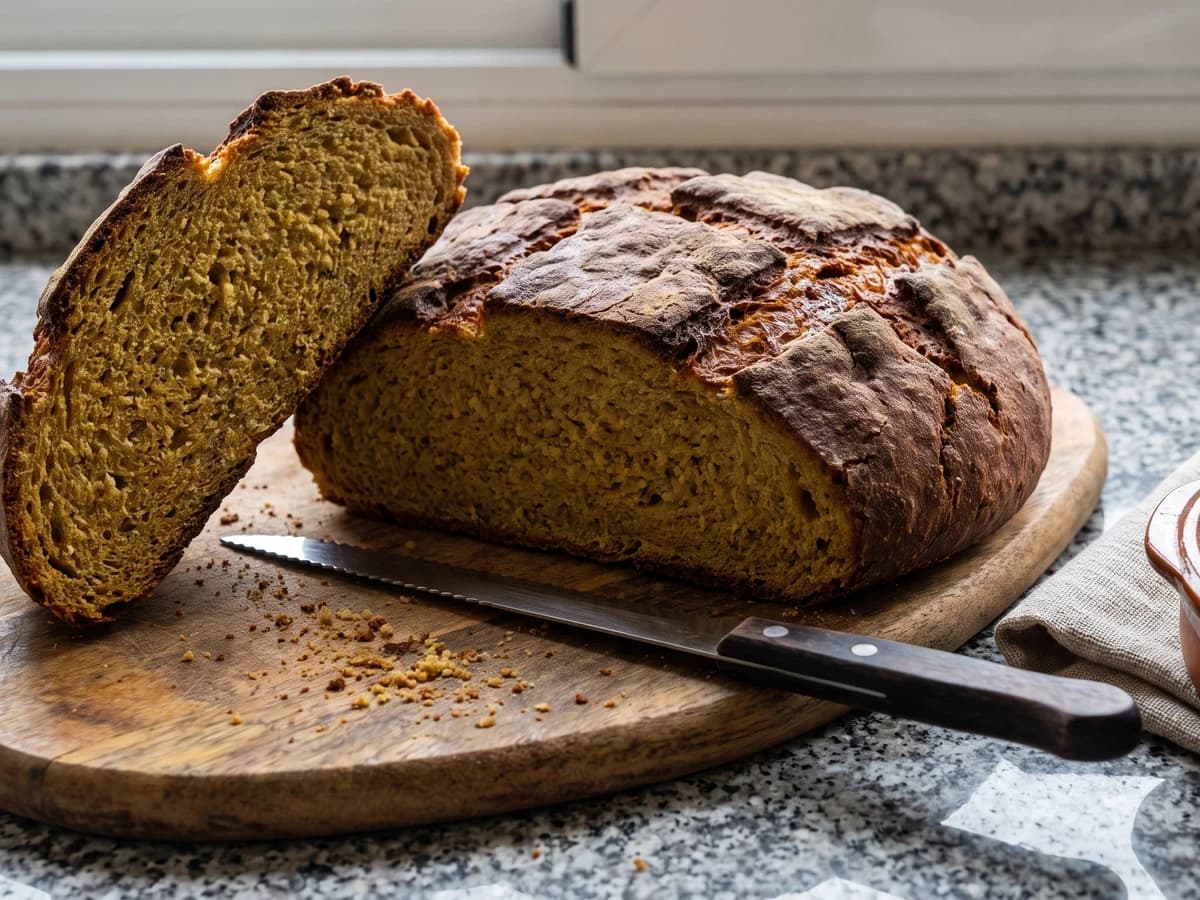
Broa Galega is Galicia's sturdy maize-and-rye loaf: scald the corn flour, give the damp dough time to rise, and the oven gives back a cracked crust and close, faintly sweet crumb.
Chef Isabel
León's great pan de flama is a one-and-a-half-kilo round, slowly fermented and baked dark, with a thick crust that protects its moist, irregular crumb for days.