Chef Isabel
Aceitunas Aliñadas Andaluzas
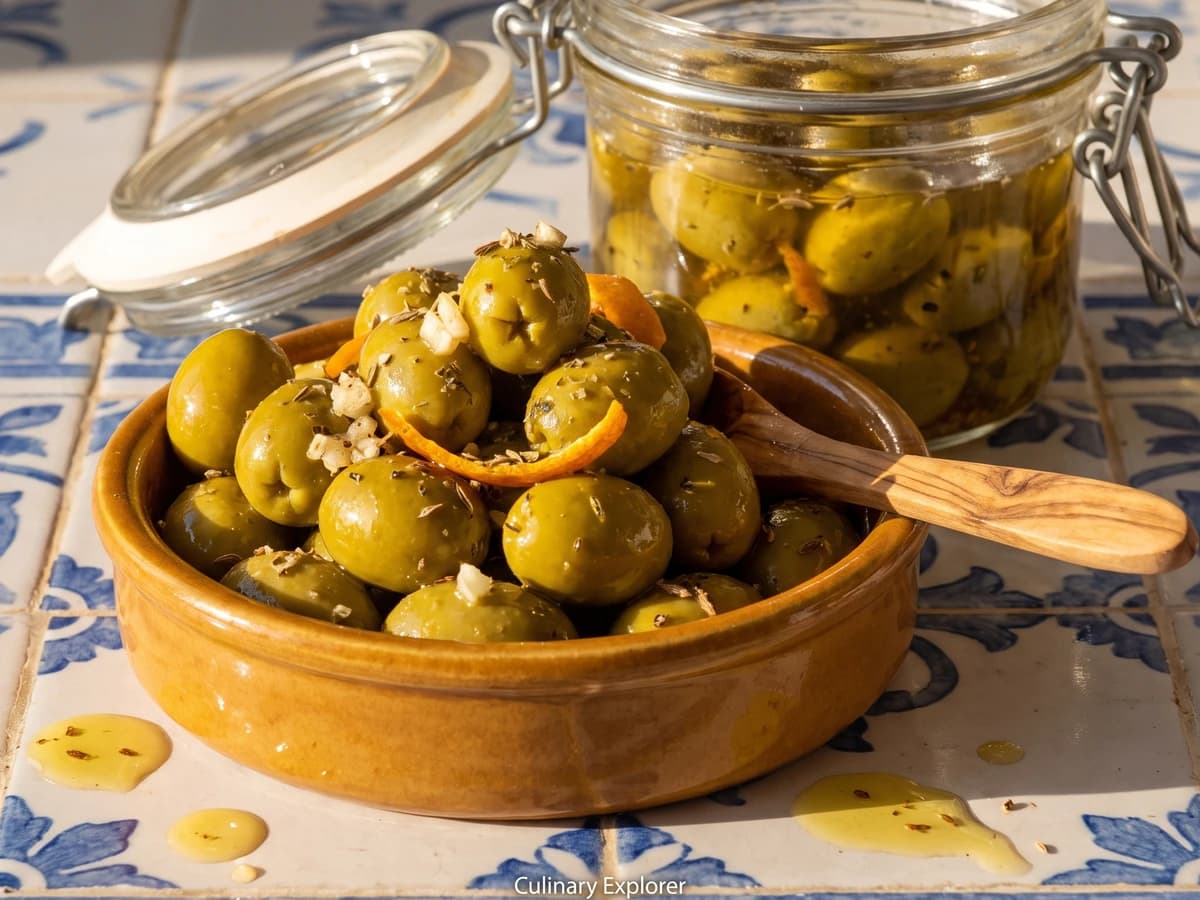
Andalucía's green olives are cracked just enough to drink in garlic, cumin, oregano and sherry vinegar, then left two days until the brine turns fragrant and every bite carries the aliño.
A cooking platform built around craft, culture, and the stories behind what we eat.
Created by
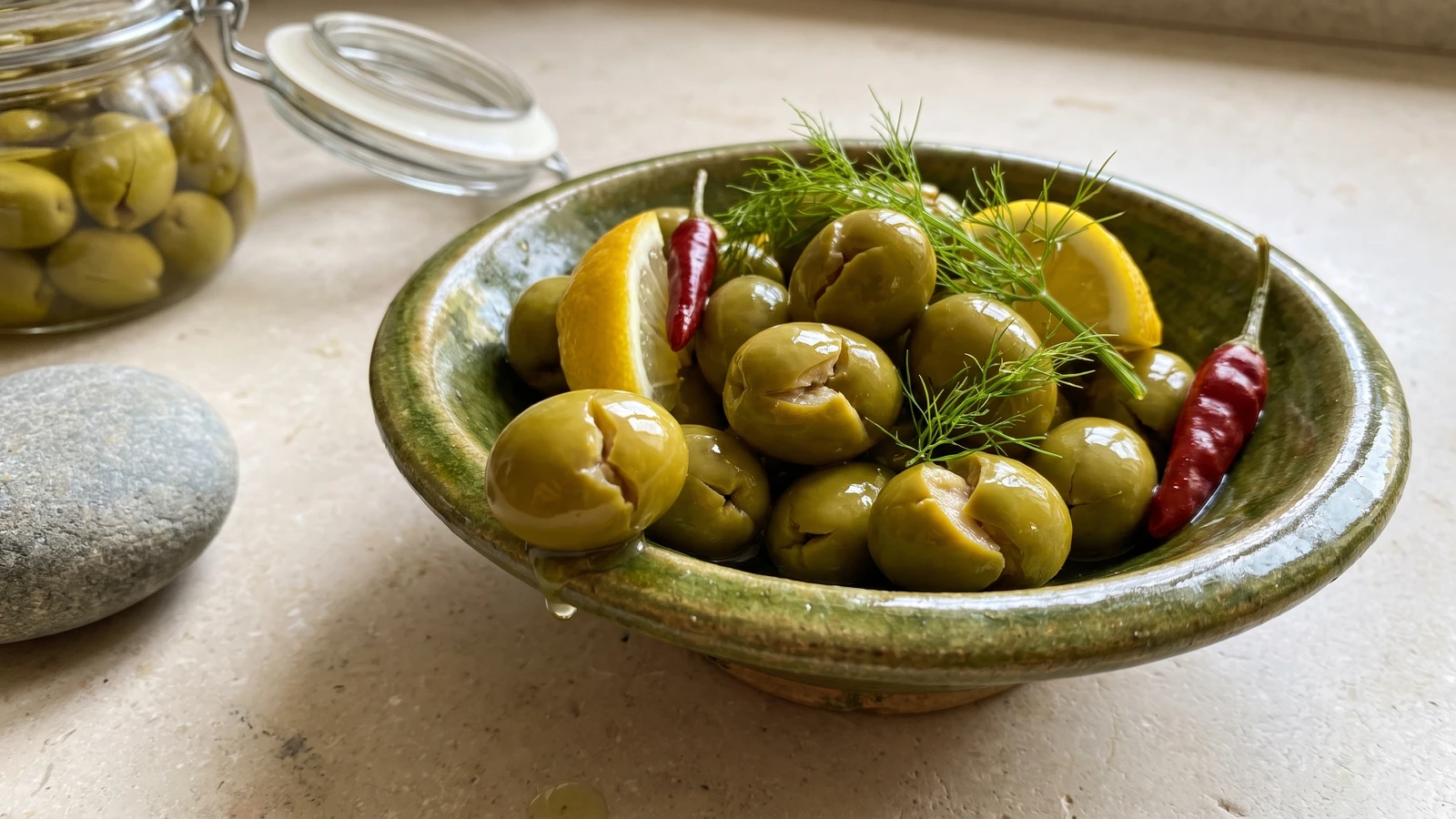
Balearic olives trencades are green olives cracked once, soaked clean of their fiercest bitterness, then packed with wild fennel, lemon and hot pepper in a brine that keeps their bite.
Olives trencades are Balearic, especially Mallorcan: hard green olives struck once to split the flesh, soaked until the fierce bitterness softens, then held in brine with fonoll, wild fennel, lemon and pebre de cirereta, the island's small hot pepper. Valencia has its own cracked olives, but the fennel-led jar here belongs to the Balearic table. These aren't bought olives with seasoning stirred through them. The curing is the dish.
The step that decides them is the daily change of fresh water. Cracking opens the flesh so the water can carry away its harshness. Leave that water standing and the bitterness simply moves out of the olive and waits beside it. Change it every twenty-four hours, then stop when the olive has one clean bitter edge left. Wash out every trace and you wash out its character with it.
Fresh Mallorcan olives are difficult to find far from the islands. Use untreated green Manzanilla or Hojiblanca olives straight from the harvest. Manzanilla stays firm but tastes a little milder and less grassy. Jarred olives won't do for this recipe because they've already been cured. No hace falta haber pisado España, but you do need raw fruit.
Give the packed olives a full week in the cold brine before judging them. The Margin beside this recipe says, simply, leave a little bitterness. That's the balance between the fruit, salty brine, lemon peel and fennel. Siempre sale, si lo sigues: it turns out if you follow it.
In the Catalan-speaking Balearic Islands, trencar means to crack, the practical act that opens a firm green olive so water can remove its bitter compounds much faster than from whole fruit. Mallorcan households seasoned the autumn preserve with wild fennel gathered from field edges, lemon and small hot peppers, ingredients close at hand rather than bought for ceremony. The same cracked-olive tradition runs through Valencian lands, where thyme, savory or garlic may join the brine, while wild fennel gives the Balearic jar its clearest regional mark.
Quantity
1kg
sorted and rinsed; preferably Mallorcan, Manzanilla or Hojiblanca
Quantity
21 litres
seven 3-litre fills, plus 3 litres for each additional soaking day if needed
Quantity
1.5 litres
Quantity
120g
Quantity
40g
rinsed and cut into 8cm lengths; substitute 30g cultivated fennel fronds plus 2g lightly crushed fennel seed
Quantity
1 medium (about 150g)
scrubbed, cut into 8 thin wedges and seeds removed
Quantity
2 (about 8g total)
fresh or dried, each slit once
| Ingredient | Quantity |
|---|---|
| freshly harvested untreated green olivessorted and rinsed; preferably Mallorcan, Manzanilla or Hojiblanca | 1kg |
| cold non-chlorinated water for soakingseven 3-litre fills, plus 3 litres for each additional soaking day if needed | 21 litres |
| non-chlorinated water for the brine | 1.5 litres |
| non-iodized sea salt or pickling salt | 120g |
| fresh wild fennel fronds and tender stemsrinsed and cut into 8cm lengths; substitute 30g cultivated fennel fronds plus 2g lightly crushed fennel seed | 40g |
| unwaxed lemonscrubbed, cut into 8 thin wedges and seeds removed | 1 medium (about 150g) |
| small hot red peppersfresh or dried, each slit once | 2 (about 8g total) |
Choose hard, fully green olives without soft patches, insect holes or broken skin. Rinse them twice in cold water and drain. Set a 3-litre nonreactive container of cold water beside your board so every cracked olive can go straight under the surface.
Lay a clean tea towel loosely over one olive to catch the spray. Strike its widest point once with a smooth stone, wooden mallet or the flat side of a sturdy wooden utensil. You want one or two splits through the flesh while the pit remains whole. Drop it immediately into the water and repeat. Don't pulverize them; crushed flesh goes soft in the brine.
Keep the olives beneath the water with a small plate or glass weight and refrigerate. After twenty-four hours, drain away all the darkened water, rinse the container and cover with 3 litres of fresh cold water. Repeat every twenty-four hours for seven days. On day seven, rinse one olive, cut off a small piece and taste it. It should be pleasantly bitter, not so harsh that the taste clings to your tongue. If it is still fierce, continue for up to three more days, using 3 litres of fresh water each day.
Heat 500ml of the brine water in a nonreactive saucepan just until hot. Add the 120g salt and stir until completely dissolved, then mix in the remaining 1 litre of cold water. This is an 8 percent brine by the weight of the water. Pésalo, no lo adivines, weigh it, don't guess. Let the brine cool completely before it touches the olives.
Drain the soaked olives well. Divide half the fennel, lemon and hot pepper between two freshly cleaned 1.5-litre jars. Add the olives without crushing them, tucking the remaining aromatics through the middle and over the top. Pour in enough cold brine to cover the olives by at least 1cm, leaving 2.5cm of empty space at the rim. Slide a clean chopstick around the inside to release trapped air, then add glass weights so every olive and lemon wedge stays submerged.
Fit the lids and refrigerate the jars for at least seven days. Check them daily during the first week to make sure the fruit remains under the brine. If pressure builds beneath a lid, loosen it briefly over the sink and close it again. Taste after seven days; the fennel should be clear, the lemon bright and the olive firm with a clean bitter finish. They become rounder after a second week.
Lift out only what you plan to serve, using a clean fork or spoon, and let the excess brine drain away. Don't rinse them unless your own batch tastes too salty. Return the jar to the refrigerator at once and keep every remaining olive submerged. Serve cool rather than ice-cold so the fennel and lemon can be tasted.
1 serving (about 60g)
Culinary guides, cultural storytelling, and the editorial depth that makes cooking meaningful.
Discover Culinary ExplorerChef Isabel
Andalucía's green olives are cracked just enough to drink in garlic, cumin, oregano and sherry vinegar, then left two days until the brine turns fragrant and every bite carries the aliño.
Chef Isabel
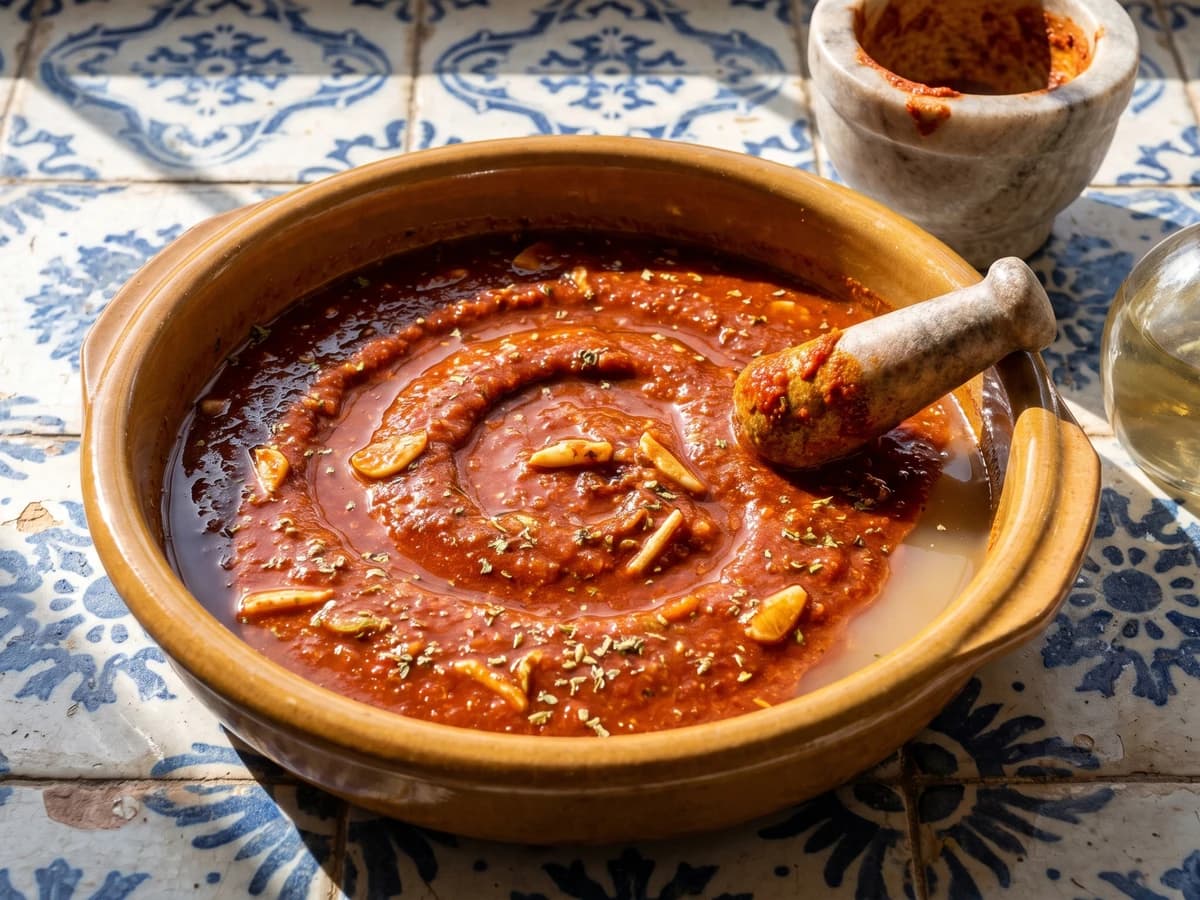
Andalucía's sharp, brick-red marinade brings vinegar, garlic, oregano, cumin and pimentón to fish and pork; pound the seasonings first, then give the acid time to carry them through.
Chef Isabel
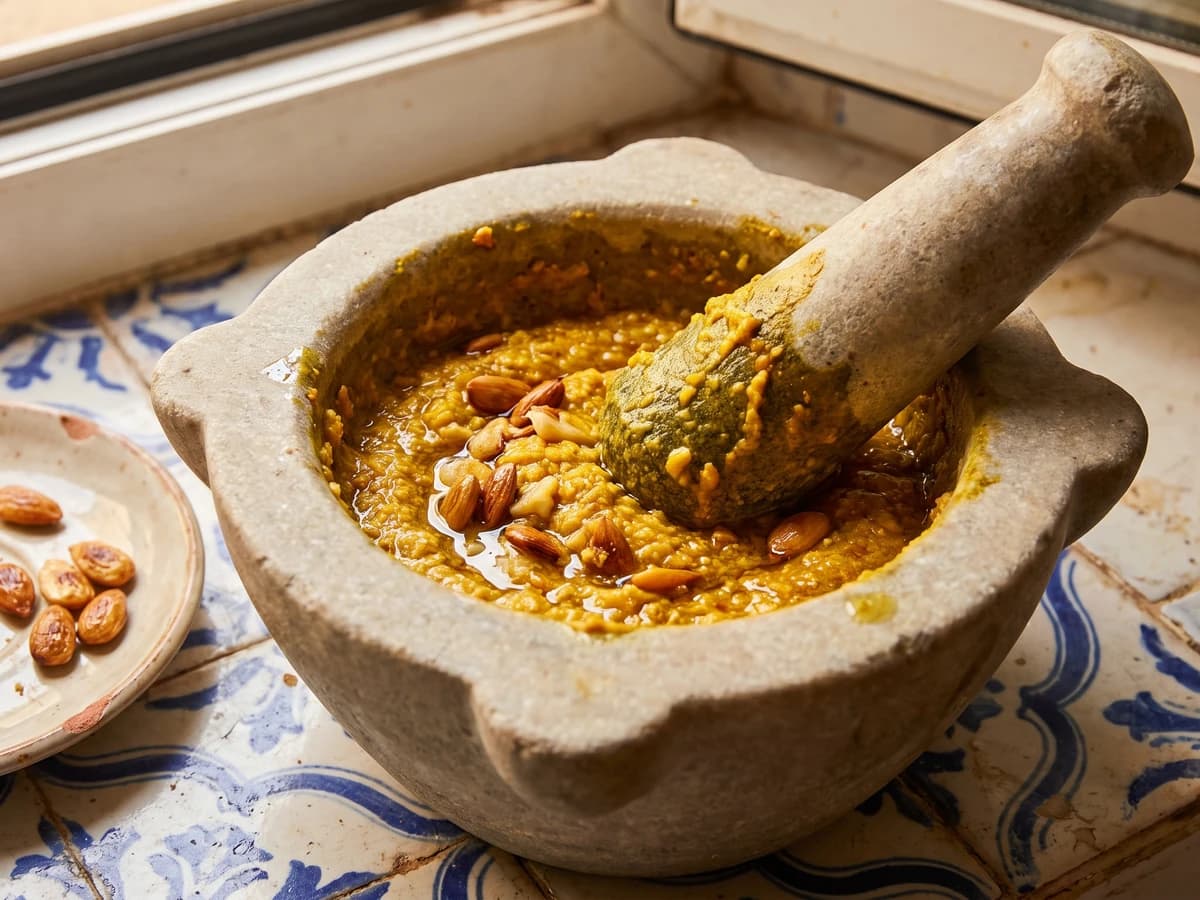
Almería's ajopollo turns fried garlic, almonds, bread and saffron into a golden mortar paste that gives modest fish and potato guisos their body, richness and unmistakable southern depth.
Chef Isabel
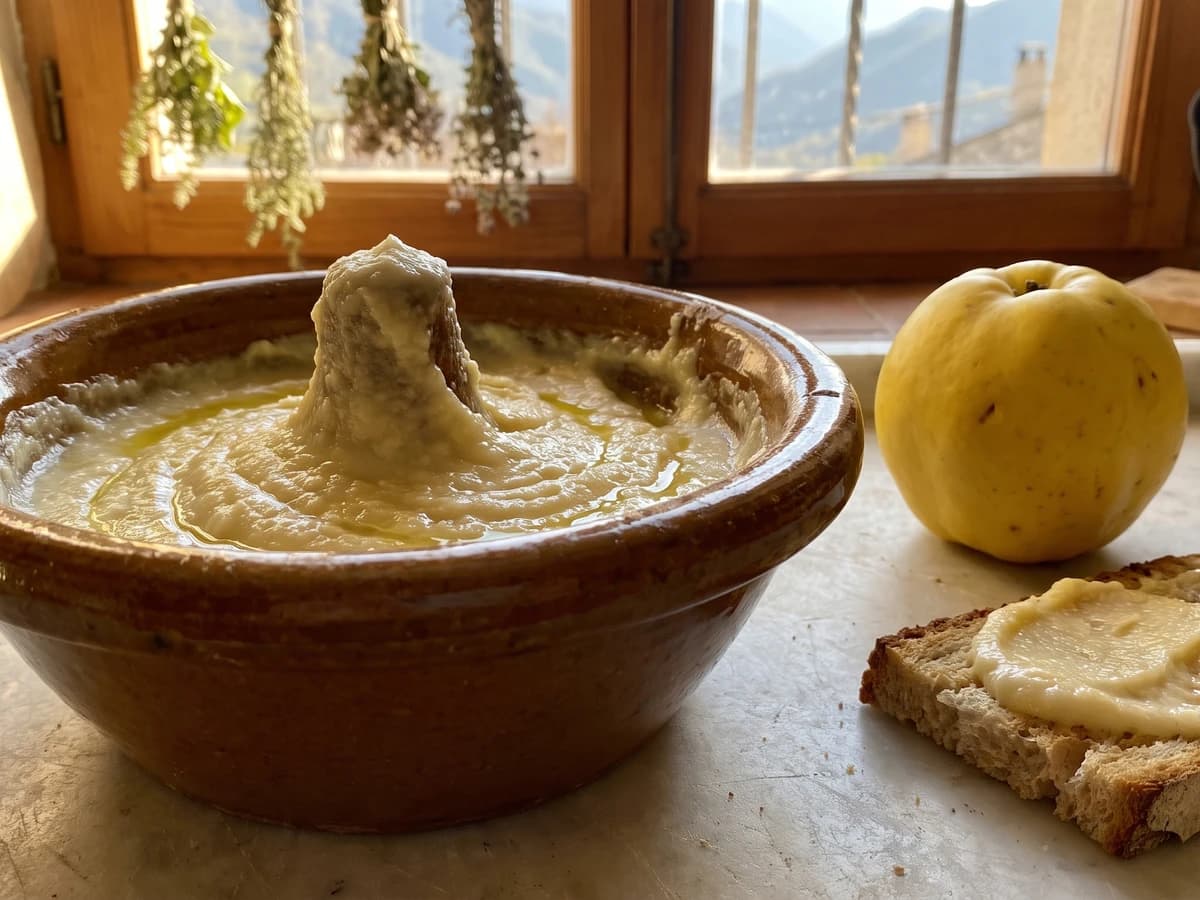
Allioli de codony belongs to the Catalan Pyrenees: boiled quince, raw garlic, salt, and olive oil worked into a thick, fragrant sauce for grilled meat, sausages, bread, and the autumn table.