Chef Isabel
Aceitunas Aliñadas Andaluzas
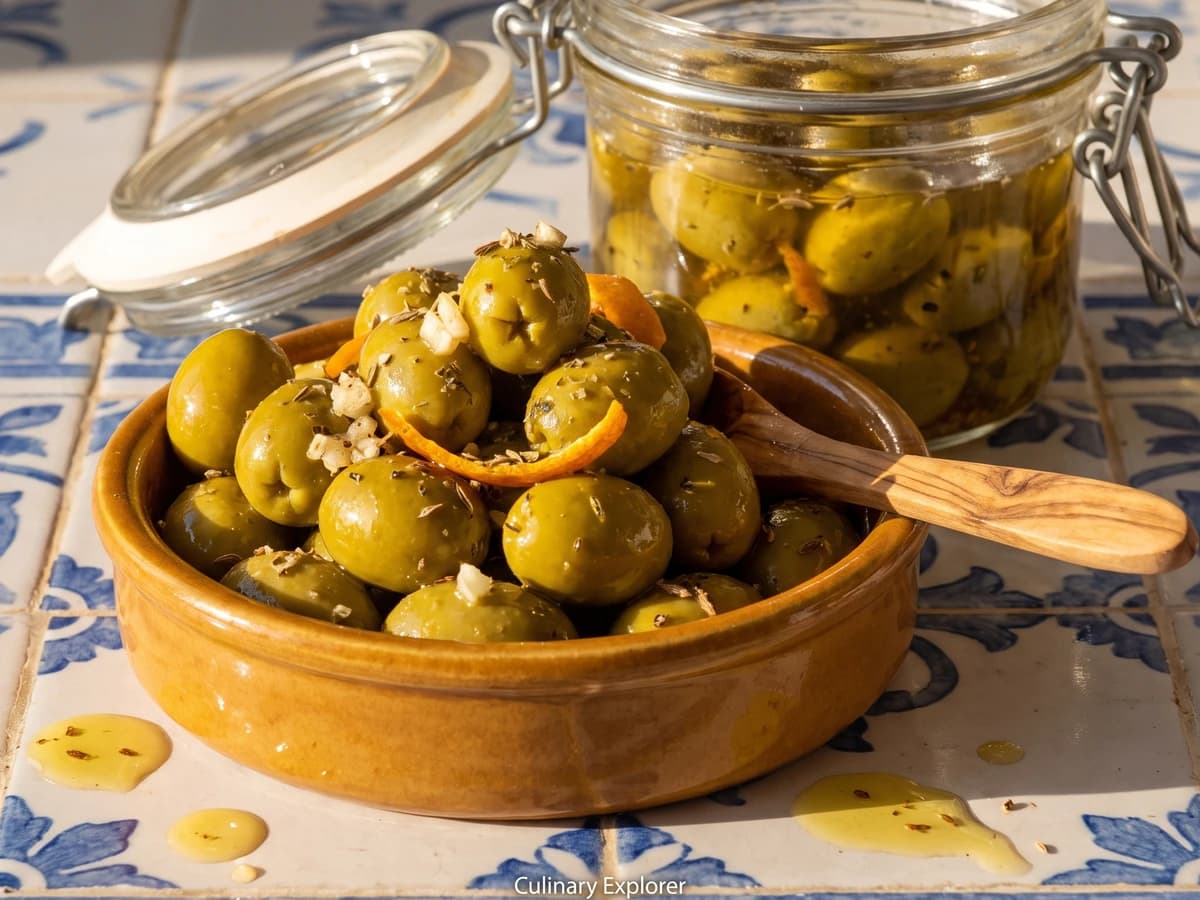
Andalucía's green olives are cracked just enough to drink in garlic, cumin, oregano and sherry vinegar, then left two days until the brine turns fragrant and every bite carries the aliño.
A cooking platform built around craft, culture, and the stories behind what we eat.
Created by
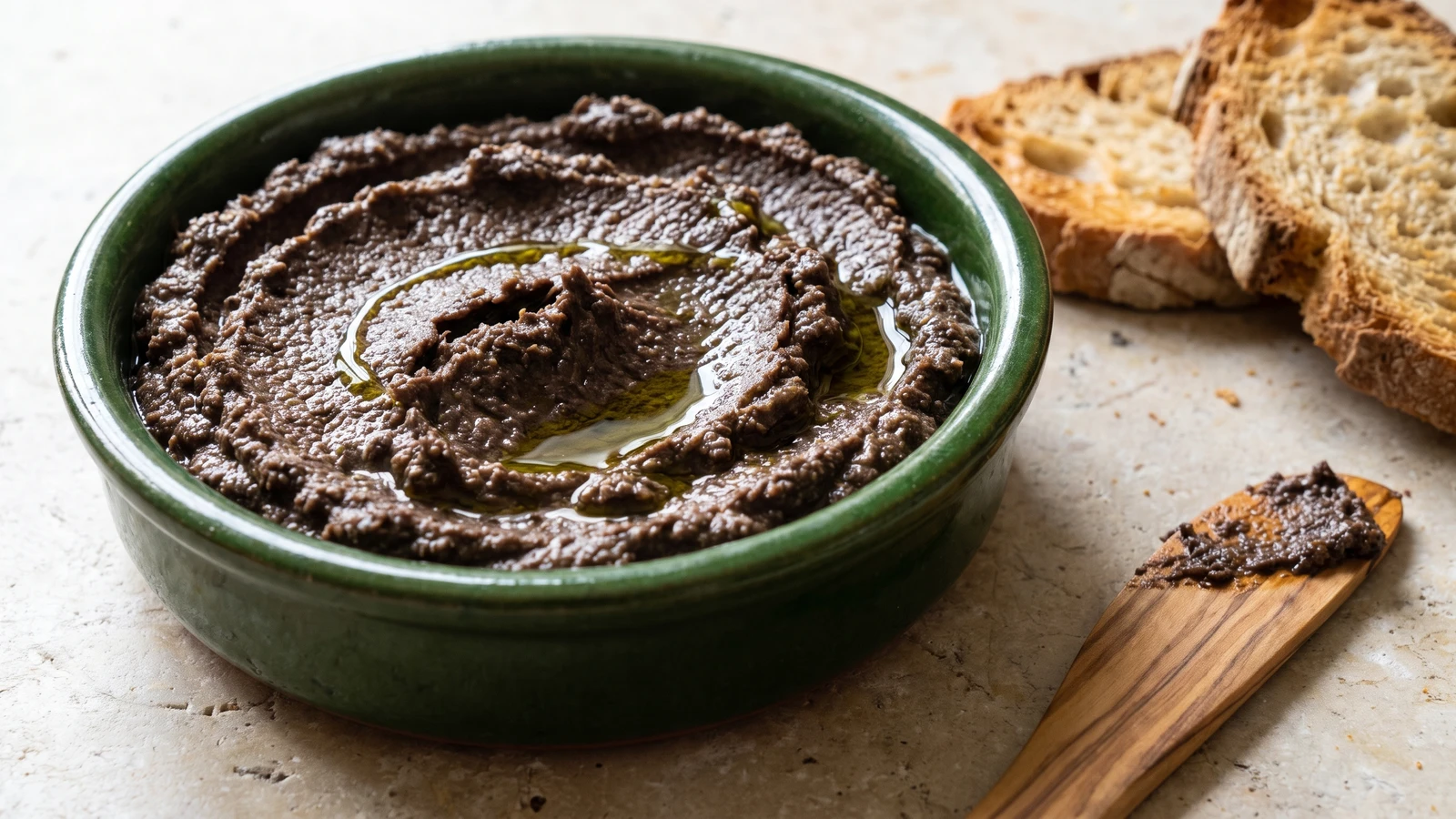
Catalonia's black olive spread is three ingredients and ten minutes: briny fruit, good oil and a whisper of garlic, crushed coarse enough that the olive still tastes like itself.
Olivada is Catalonia's black olive spread: ripe, brine-cured black olives, good olive oil and just enough garlic, crushed into a coarse, glossy paste. What keeps this Catalan preparation distinct from tapenade across the border is its plainness. Capers and anchovy aren't needed in this spare form. The olive carries the dish. Serve it on pa torrat, toasted country bread, beside grilled fish, or next to escalivada.
The crushing decides it. I stop while tiny pieces of olive are still visible, then work in the oil a little at a time. Run the machine without stopping and you'll get a smooth, greasy purée with none of the lively texture olivada should have. Thirty millilitres goes into the paste, and the last teaspoon belongs on top. Pésalo, no lo adivines, weigh it, don't guess.
If you can't find Catalan olives negres or Empeltre olives, choose any good naturally brine-cured black olive. Kalamata works at a pinch, though it makes a sharper, more wine-coloured spread. Avoid uniformly jet-black canned olives, which are mild and give you a dull paste. No hace falta haber pisado España. Keep the machine brief and the garlic modest, and it comes out. Siempre sale, si lo sigues.
Olivada belongs to Catalonia's olive-growing comarques, from Les Garrigues to Terra Alta, where brining carried the olive harvest through the year and a mortar turned the preserved fruit into food for bread. Its name is formed from the Catalan oliva, olive, and both green and black olivades are known. Capers and anchovy appear in neighboring and richer variations, but olives and oil remain the old foundation.
Quantity
250g
pitted, drained, and weighed after draining
Quantity
1 (3g)
peeled, halved, and green germ removed
Quantity
30ml
Quantity
5ml
Quantity
1/8 teaspoon (about 0.7g)
| Ingredient | Quantity |
|---|---|
| naturally brine-cured black olives, preferably Empeltre or olives negres d'Aragópitted, drained, and weighed after draining | 250g |
| small garlic clovepeeled, halved, and green germ removed | 1 (3g) |
| extra virgin olive oil | 30ml |
| extra virgin olive oil, for finishing | 5ml |
| fine sea salt (optional) | 1/8 teaspoon (about 0.7g) |
Taste an olive before you begin. If it is pleasantly salty, drain it and carry on. If the brine is harsh, rinse the olives briefly under cold water. Spread them on a clean kitchen towel and pat them thoroughly dry, then weigh out 250g. Water left on the olives thins the spread and makes it spoil sooner.
Put the garlic and olives in a small food processor. Pulse in one-second bursts 10 to 12 times, scraping down the bowl twice, until the olives form a rough paste with small pieces still visible. Do not leave the motor running. For the traditional mortar method, pound the garlic first, add the olives by handfuls, and crush them against the sides until coarse.
Add the 30ml olive oil in three 10ml additions. Pulse twice after each addition, or fold and pound it through with the pestle. Stop as soon as the spread holds together and looks glossy. The oil should bind the crushed olives, not leave them swimming.
Scrape the olivada into a small bowl and taste it before reaching for salt. Most brine-cured olives need none. If it truly tastes flat, mix in the measured 1/8 teaspoon. Draw a shallow furrow across the surface and spoon over the final 5ml olive oil. Serve at once, or cover and refrigerate.
1 serving (about 36g)
Culinary guides, cultural storytelling, and the editorial depth that makes cooking meaningful.
Discover Culinary ExplorerChef Isabel
Andalucía's green olives are cracked just enough to drink in garlic, cumin, oregano and sherry vinegar, then left two days until the brine turns fragrant and every bite carries the aliño.
Chef Isabel
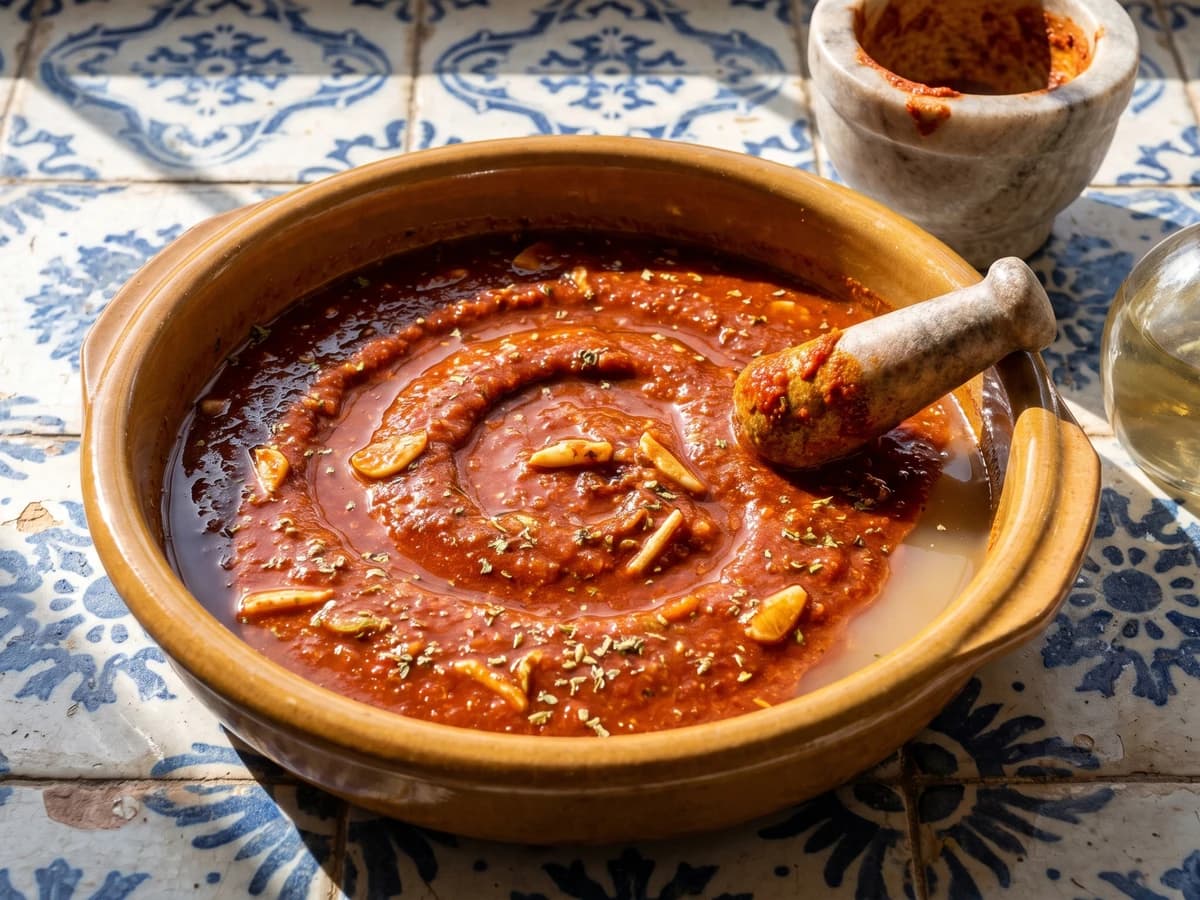
Andalucía's sharp, brick-red marinade brings vinegar, garlic, oregano, cumin and pimentón to fish and pork; pound the seasonings first, then give the acid time to carry them through.
Chef Isabel
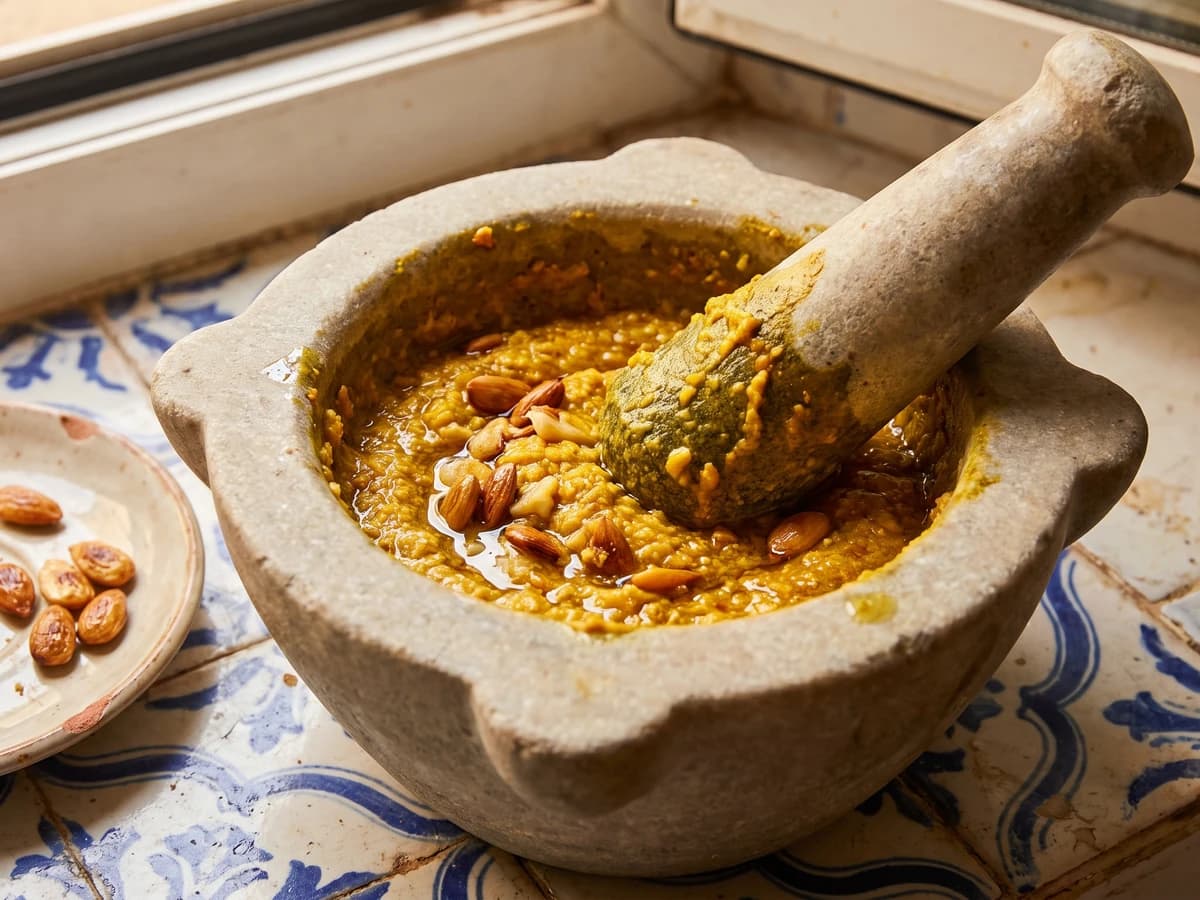
Almería's ajopollo turns fried garlic, almonds, bread and saffron into a golden mortar paste that gives modest fish and potato guisos their body, richness and unmistakable southern depth.
Chef Isabel
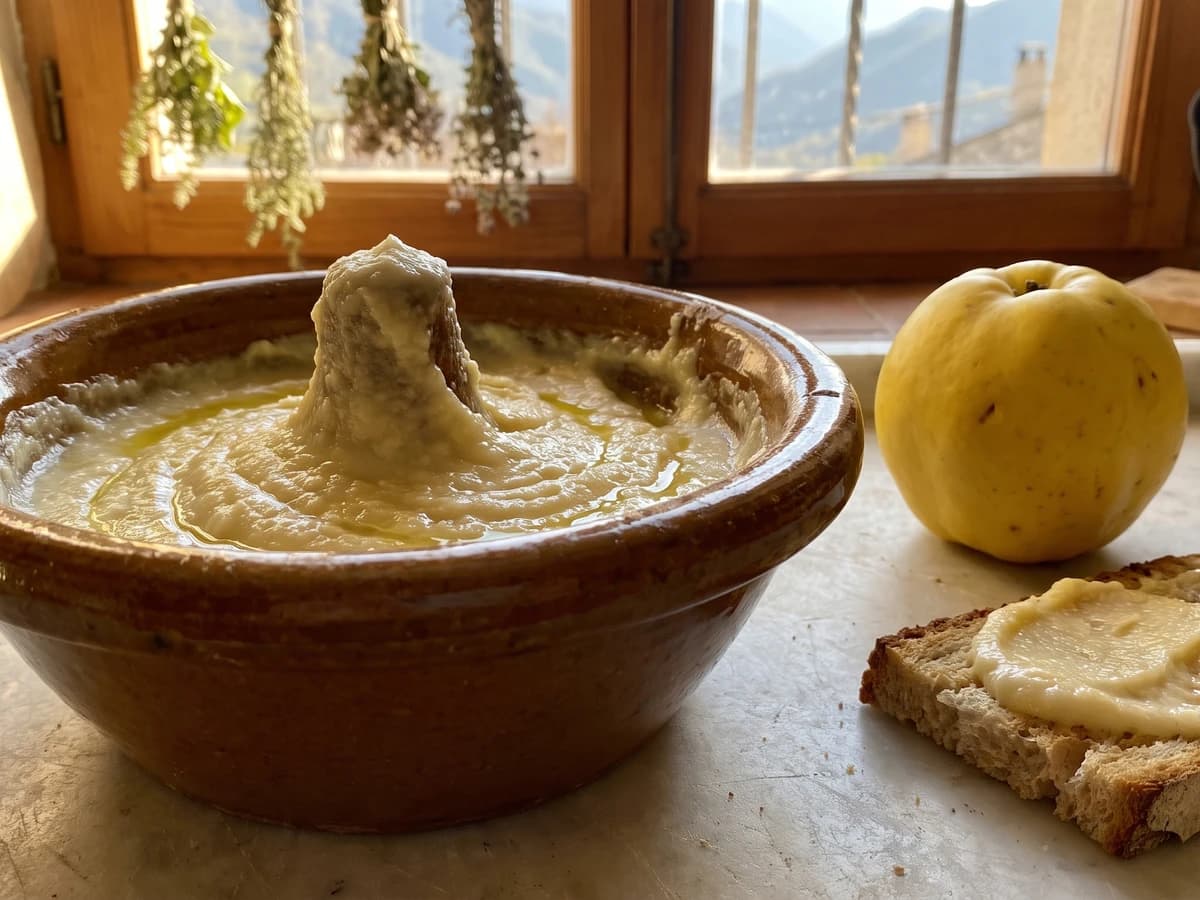
Allioli de codony belongs to the Catalan Pyrenees: boiled quince, raw garlic, salt, and olive oil worked into a thick, fragrant sauce for grilled meat, sausages, bread, and the autumn table.