Chef Isabel
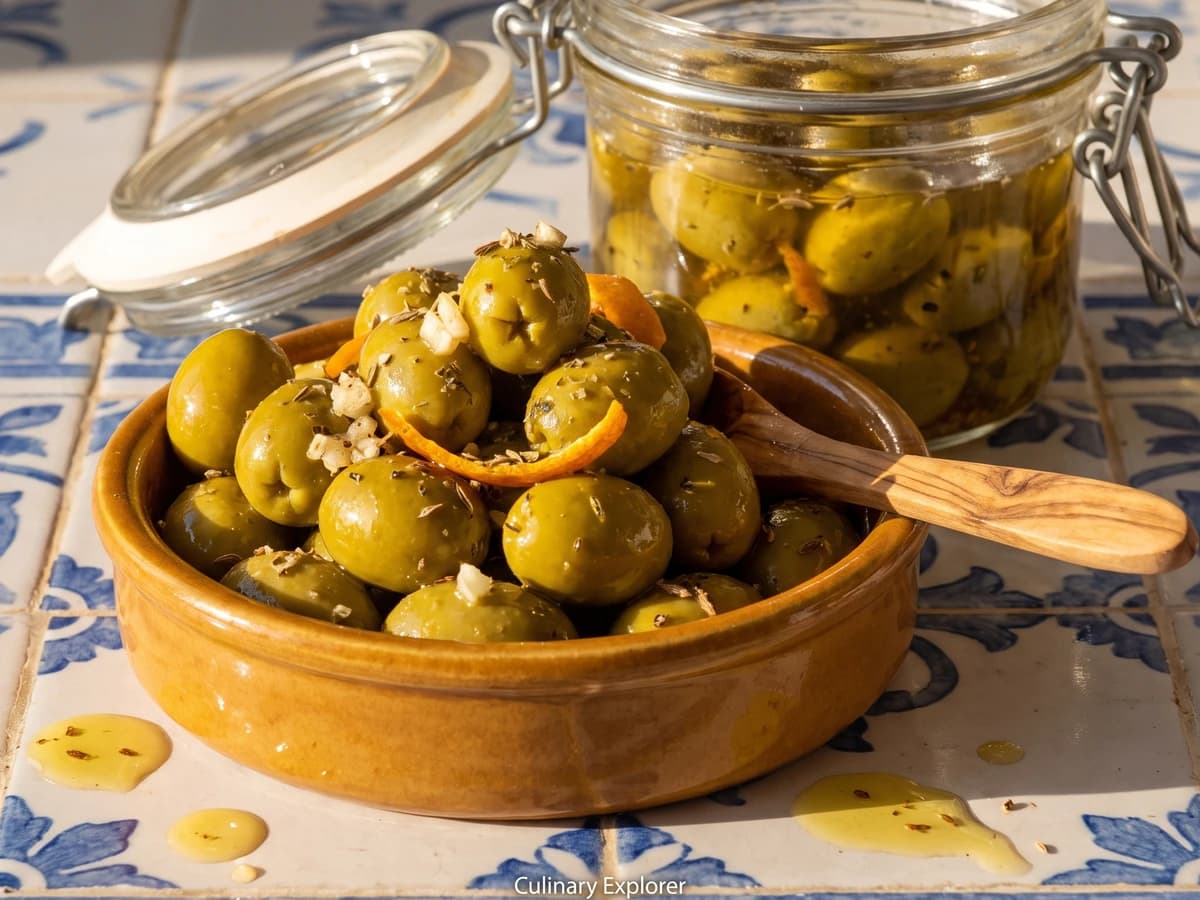
Aceitunas Aliñadas Andaluzas
Andalucía's green olives are cracked just enough to drink in garlic, cumin, oregano and sherry vinegar, then left two days until the brine turns fragrant and every bite carries the aliño.
A cooking platform built around craft, culture, and the stories behind what we eat.
Created by
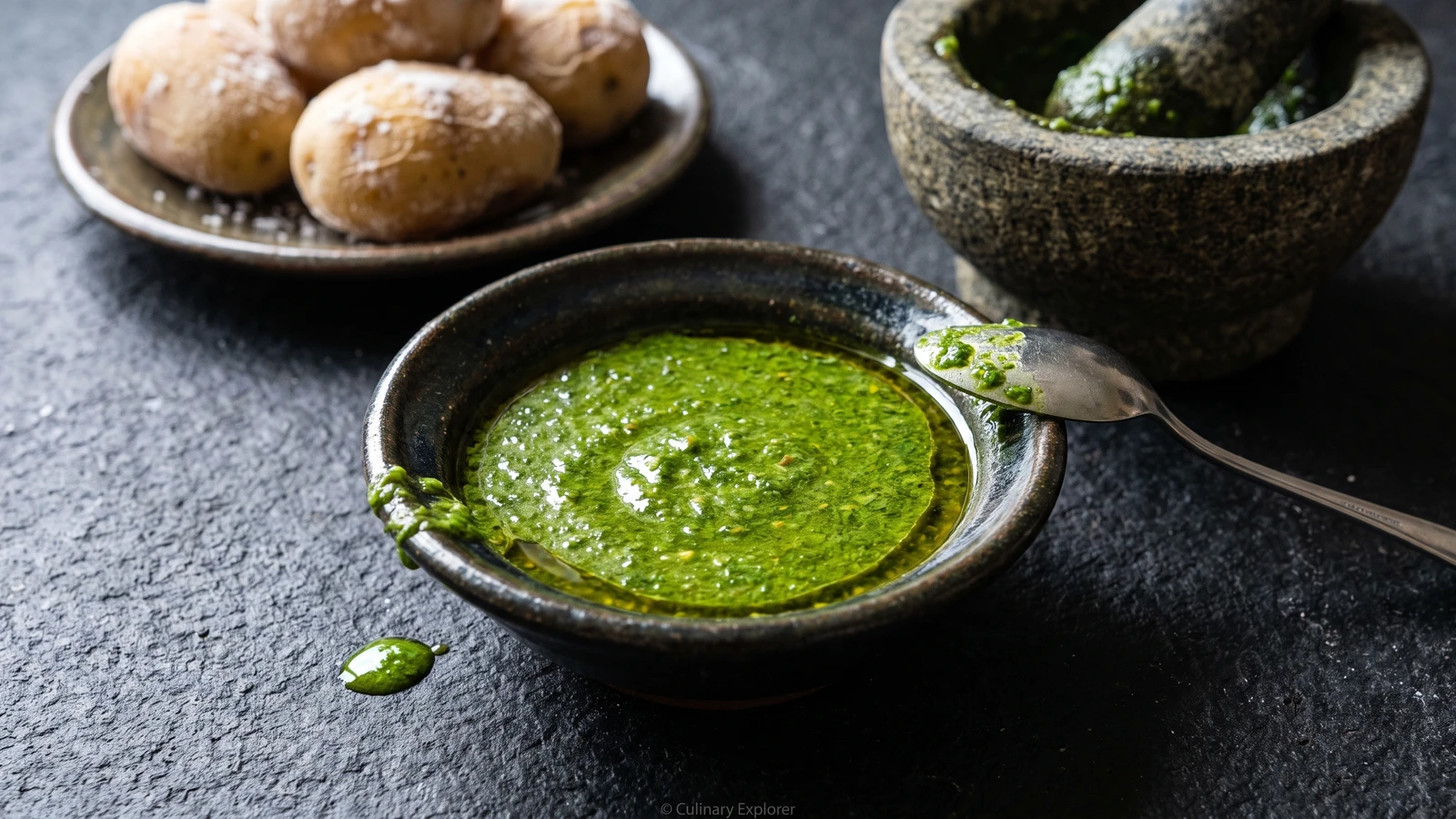
Mojo verde is the Canary Islands' raw coriander sauce, sharp with garlic, cumin and wine vinegar. Crush it only until coarse and bound, then spoon it over papas arrugadas or grilled fish.
Mojo verde de cilantro belongs to the Canary Islands: a raw, loose sauce of fresh coriander, garlic, cumin, green pepper, wine vinegar and olive oil. Coriander gives this version its bright, grassy edge. Put dried pepper or pimentón into it and you've crossed into mojo rojo, the red mojo, which is another sauce entirely.
The method that decides it is restraint. Grind the cumin, salt and garlic to a smooth majado first, then pound in the pepper and coriander only until fine green flecks remain. Long blending bruises and warms the herb, turning its clean flavour bitter and its colour tired. The finished mojo should spoon easily and show a little green-gold oil at the rim, not sit thick like a cream.
No hace falta haber pisado España. If fresh coriander is impossible to find, use the same weight of flat-leaf parsley and you have mojo verde de perejil, another Canarian green mojo, though it tastes gentler and less citrusy. A small blender works too, provided you pulse and stop early. My Margin has one useful line beside this sauce: "stop while you can still see the herb." Siempre sale, si lo sigues.
Mojo belongs to the Canary Islands, an Atlantic archipelago where sharp sauces of garlic, cumin, vinegar and oil became everyday companions to potatoes, fish and goat. Green mojo follows two established household paths, coriander in one and parsley in the other, while red mojos draw their colour and depth from dried pepper or pimentón. Papas arrugadas were traditionally cooked in seawater when fresh water was scarce, and their salt-crusted skins made bright, oily mojo their natural companion.
Quantity
40g
leaves and tender stems, washed and thoroughly dried
Quantity
20g (about 5 medium cloves)
peeled
Quantity
40g
seeded and roughly chopped
Quantity
2g (about 1 teaspoon)
Quantity
5g (about 1 teaspoon)
Quantity
40ml
Quantity
150ml
Quantity
up to 20ml
| Ingredient | Quantity |
|---|---|
| fresh corianderleaves and tender stems, washed and thoroughly dried | 40g |
| garlicpeeled | 20g (about 5 medium cloves) |
| mild thin-skinned green frying pepperseeded and roughly chopped | 40g |
| cumin seeds | 2g (about 1 teaspoon) |
| coarse sea salt | 5g (about 1 teaspoon) |
| white wine vinegar | 40ml |
| mild, fruity extra virgin olive oil | 150ml |
| cold water (optional) | up to 20ml |
Dry the coriander thoroughly, then cut away only the thick lower stems and roughly chop the leaves and tender stems. Seed and chop the green pepper. Water clinging to the herb dilutes the mojo and shortens its keeping time, so don't hurry the drying.
Put the cumin seeds and coarse salt in a large mortar. Grind them until the cumin is finely broken, then add the garlic and pound to a smooth, sticky majado, the pounded base of the sauce. Do this before adding any liquid; once oil is in the mortar, hard pieces of cumin and garlic simply skate around it.
Add the chopped pepper and pound until pulpy. Add the coriander a small handful at a time, crushing each addition before adding the next. Stop when the leaves have collapsed into a moist, coarse green paste with fine herb flecks still visible. The mojo wants texture. It isn't a smooth green cream.
Work in the wine vinegar, then pour in the olive oil gradually while stirring firmly with the pestle. Stop as soon as the ingredients bind into a loose, spoonable sauce. A little oil may remain visible around the edges; that is right. If the mojo is too thick to spoon, mix in cold water 5ml at a time, using no more than 20ml.
Leave the mojo for 10 minutes so the garlic, cumin and vinegar settle into the oil. Stir and taste it with a piece of potato or bread rather than from a bare spoon; the sauce should be sharp enough to season the food beneath it. Serve with papas arrugadas, salt-wrinkled potatoes, grilled fish or plain vegetables.
1 serving (about 32g)
Culinary guides, cultural storytelling, and the editorial depth that makes cooking meaningful.
Discover Culinary ExplorerChef Isabel
Andalucía's green olives are cracked just enough to drink in garlic, cumin, oregano and sherry vinegar, then left two days until the brine turns fragrant and every bite carries the aliño.
Chef Isabel
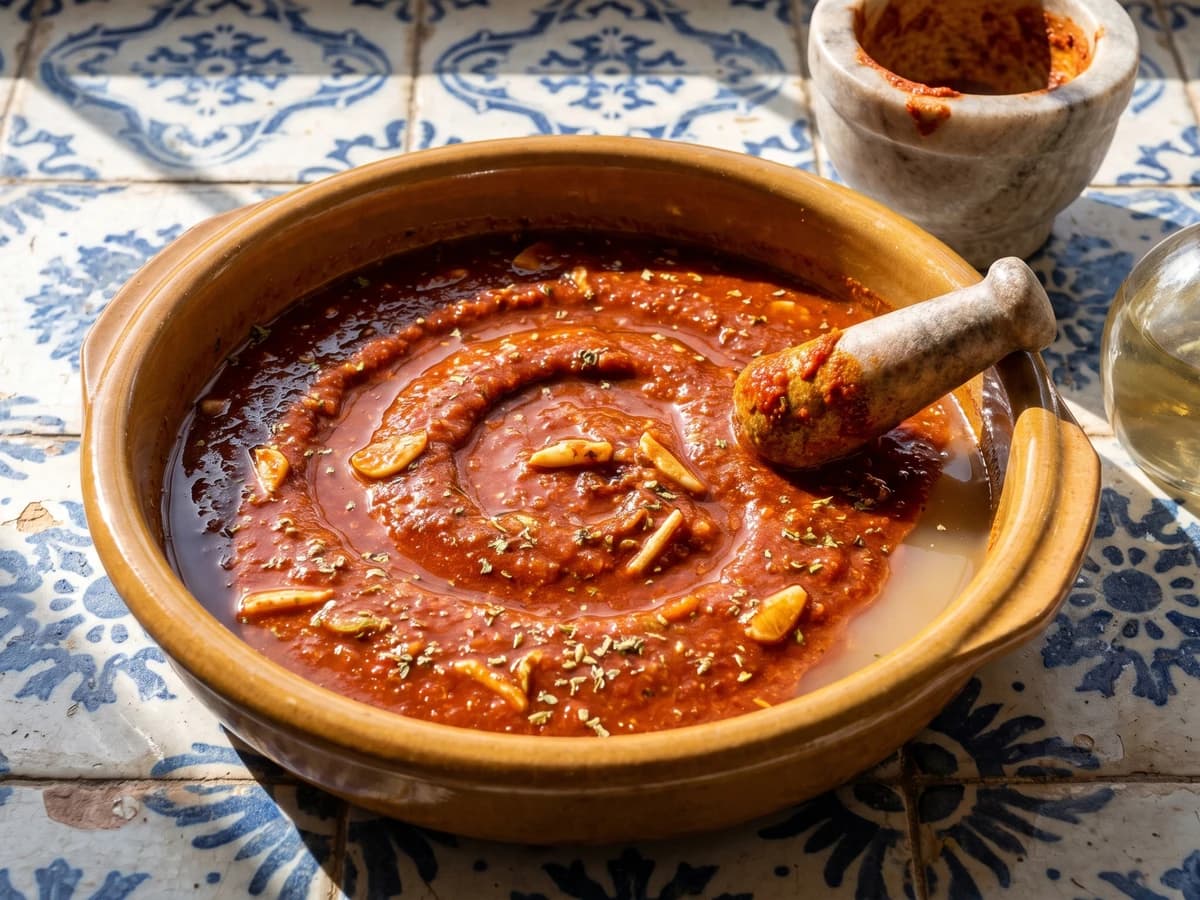
Andalucía's sharp, brick-red marinade brings vinegar, garlic, oregano, cumin and pimentón to fish and pork; pound the seasonings first, then give the acid time to carry them through.
Chef Isabel
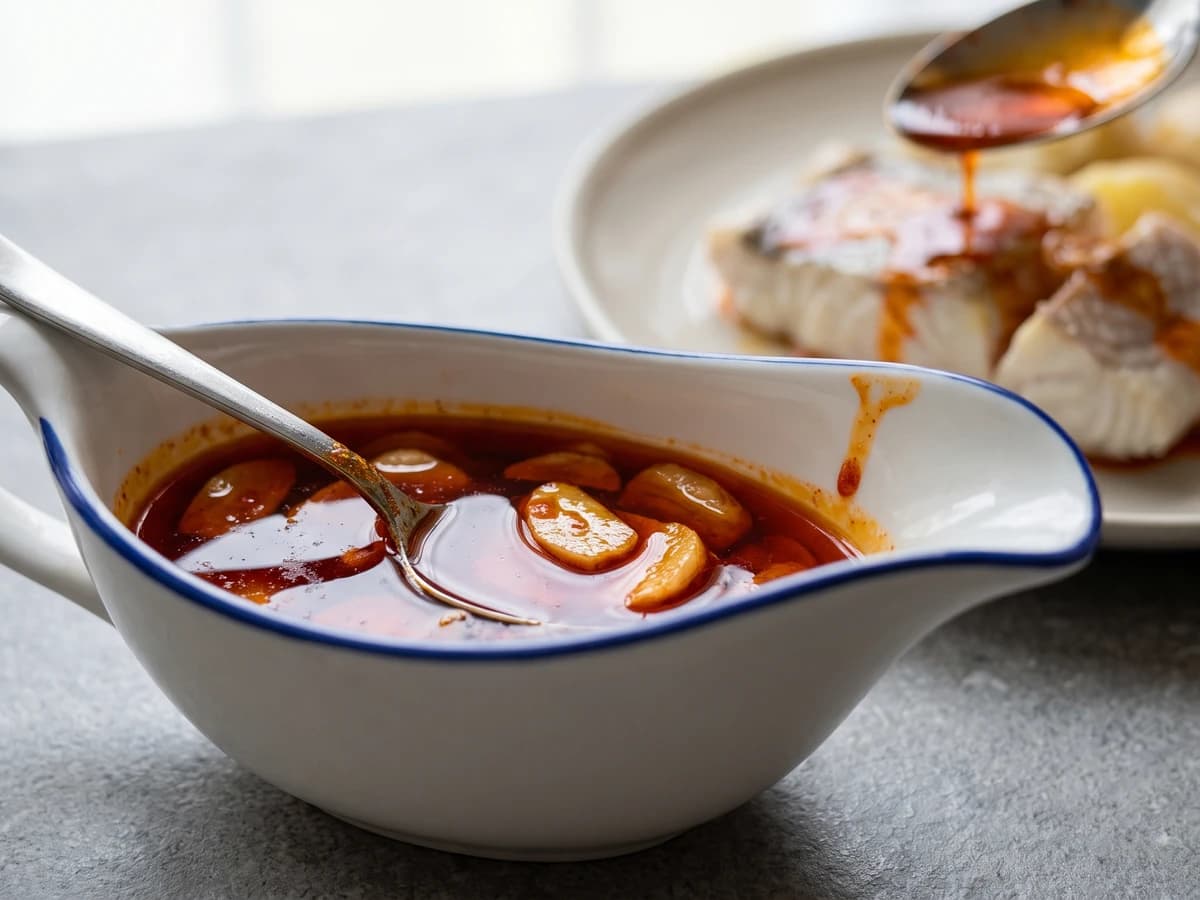
Ajada gallega is Galicia's quick garlic and pimentón refrito for boiled fish, octopus, vegetables and cachelos, with the paprika stirred in off the heat so its red oil stays sweet, never bitter.
Chef Isabel
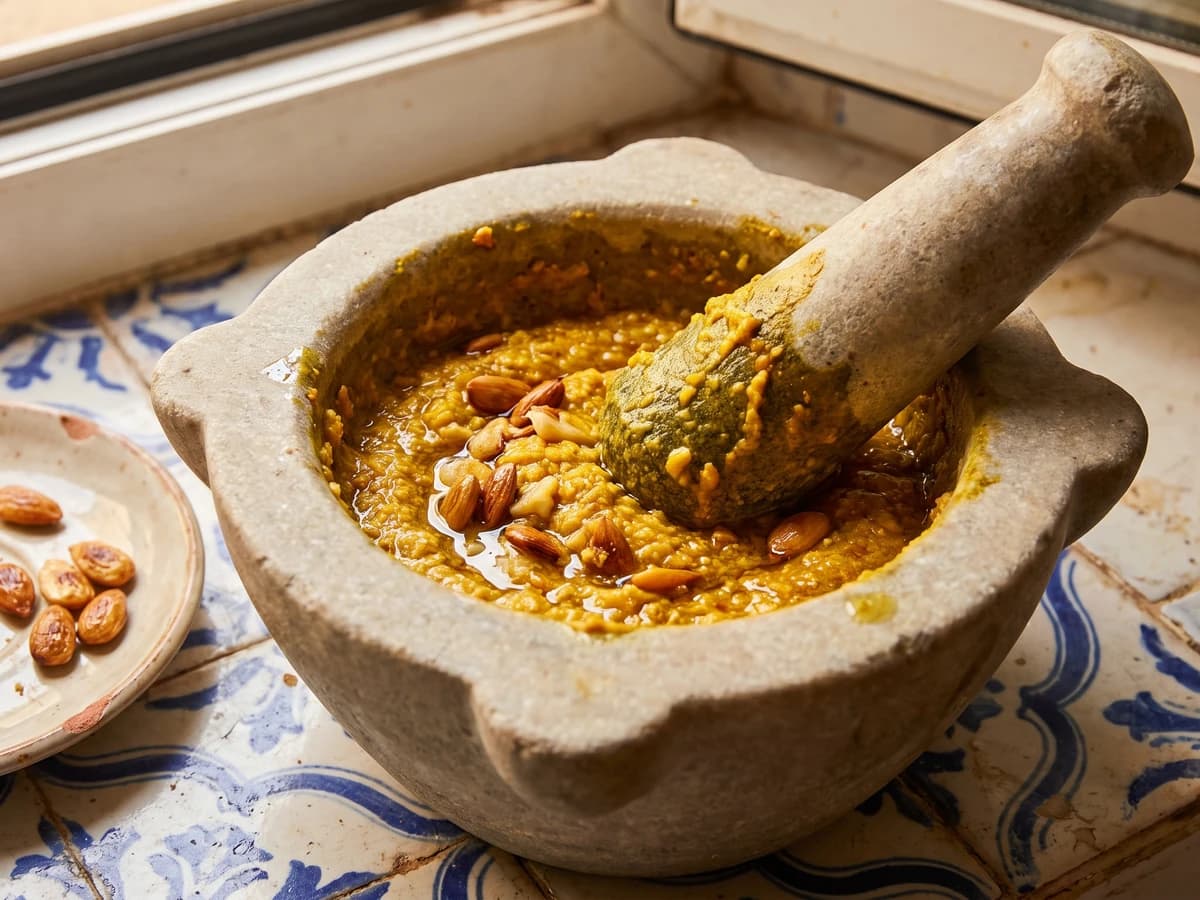
Almería's ajopollo turns fried garlic, almonds, bread and saffron into a golden mortar paste that gives modest fish and potato guisos their body, richness and unmistakable southern depth.