Chef Isabel
Aceitunas Aliñadas Andaluzas
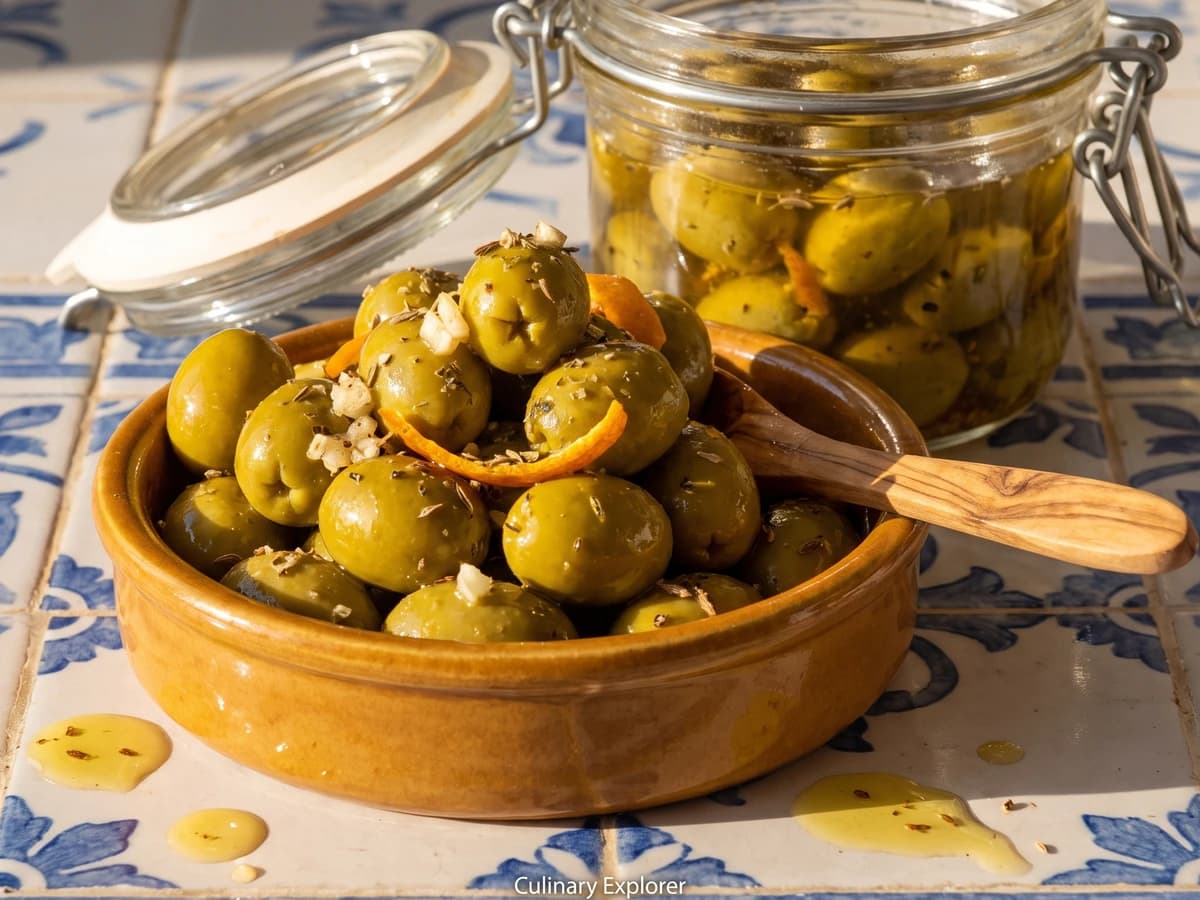
Andalucía's green olives are cracked just enough to drink in garlic, cumin, oregano and sherry vinegar, then left two days until the brine turns fragrant and every bite carries the aliño.
A cooking platform built around craft, culture, and the stories behind what we eat.
Created by
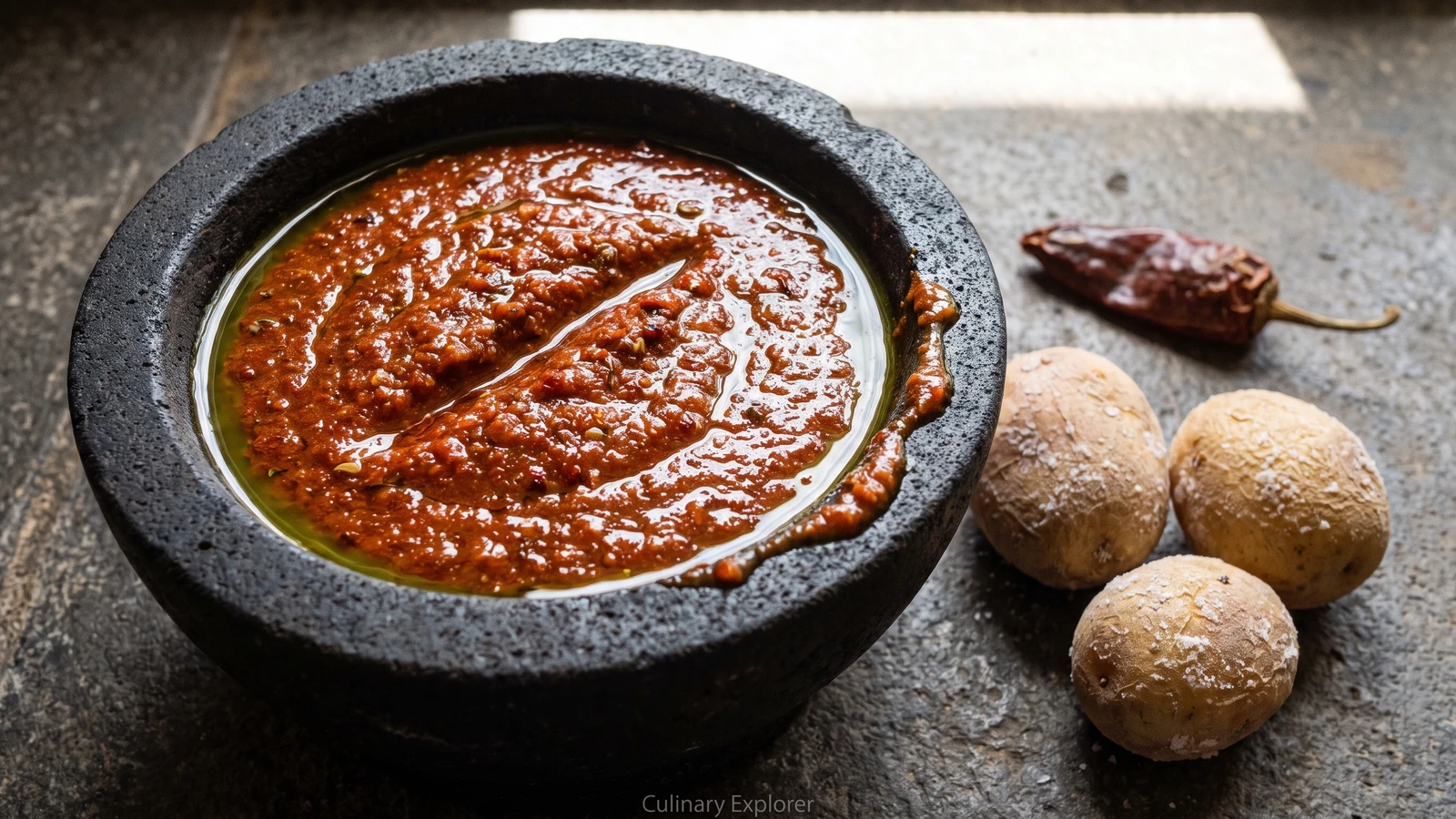
Canarias makes its red mojo raw and fiery: dried peppers, garlic, cumin, guindilla, vinegar and olive oil pounded in a mortar to a rough sauce that grips every salt-wrinkled potato.
Mojo picón is Canarian, a raw red sauce of dried pepper, garlic, cumin, chile, vinegar and olive oil. What separates it from the islands' mojo verde is not colour alone. The dried pepper gives it an earthy sweetness, the guindilla supplies the bite, and the cumin makes the bowl smell unmistakably of Canarias. Spoon it over papas arrugadas, the islands' salt-wrinkled potatoes, grilled fish or meat.
The mortar decides this one. Grind the cumin with coarse salt, crush in the garlic and guindilla, then pound the softened pepper until it becomes a rough red paste. Only then do the vinegar and oil go in. Pounding binds the ingredients without whipping air through them, so the mojo stays dark, coarse and able to grip a potato. A blender makes it smooth and orange. Edible, yes. The same sauce, no.
If pimienta palmera is beyond your reach, use dried ñoras with one guindilla. The result is sweeter and a little less earthy, but it keeps the proper balance of pepper, heat and vinegar. No hace falta haber pisado España. My notebook's margin says to add the oil in several turns, not one flood. Do that, give the sauce half an hour to settle, and it comes out.
Mojo belongs to Canarias, where red and green versions accompany papas arrugadas, fish, goat and grilled meats across the islands. Its name is linked to the Portuguese molho, meaning sauce, a trace of the archipelago's Atlantic connections, while chile peppers reached the Canarian larder from the Americas. On La Palma, the dried pimienta palmera became the defining pepper of the island's red mojos, pounded raw with garlic, cumin, vinegar and oil.
Quantity
15g (about 2 to 3)
stemmed and seeded
Quantity
1 (about 0.5g)
stem removed, seeds kept
Quantity
4 (about 16g)
peeled
Quantity
1 teaspoon (2g)
Quantity
3/4 teaspoon (4g)
Quantity
1 teaspoon (3g)
Quantity
40ml
Quantity
120ml
Quantity
30ml
| Ingredient | Quantity |
|---|---|
| dried pimientas palmerasstemmed and seeded | 15g (about 2 to 3) |
| small dried red guindillastem removed, seeds kept | 1 (about 0.5g) |
| garlic clovespeeled | 4 (about 16g) |
| cumin seeds | 1 teaspoon (2g) |
| coarse sea salt | 3/4 teaspoon (4g) |
| sweet unsmoked pimentón | 1 teaspoon (3g) |
| red wine vinegar | 40ml |
| mild extra virgin olive oil | 120ml |
| reserved pepper-soaking water | 30ml |
Put the stemmed and seeded pimientas palmeras in a small bowl and cover them with warm water. Leave them for 30 minutes, until the flesh bends easily and the skins have softened. Drain them, reserve 30ml of the soaking water, and blot the peppers so they do not carry excess water into the mojo.
Put the cumin seeds and coarse salt in a roomy mortar. Grind them until the cumin is fine and fragrant, then add the garlic and guindilla. Pound firmly, turning the pestle against the sides, until you have a damp, even paste with no large pieces of garlic.
Tear in the softened peppers a little at a time and pound each addition into the garlic paste. Add the pimentón and keep working until the mixture is brick red, thick and slightly coarse. This texture matters. The mortar crushes the pepper into the garlic and cumin; a blender cuts and aerates it, leaving a paler, smoother sauce that slips off the potato.
Stir in the vinegar, then add the olive oil in four roughly equal additions, pounding and stirring until each one is taken up before adding the next. Work in the reserved 30ml soaking water last. The finished mojo should be glossy and spoonable, with fine pepper flecks and enough body to cling. Do not chase the stiffness of mayonnaise; a little oil gathering at the edge is proper.
Leave the mojo covered for 30 minutes so the raw garlic softens into the vinegar and the cumin settles through the oil. Stir, taste with a piece of potato or bread, and adjust only if needed. It should taste sharp first, warm with chile second, and rich with oil at the finish. Siempre sale, si lo sigues.
1 serving (about 16g)
Culinary guides, cultural storytelling, and the editorial depth that makes cooking meaningful.
Discover Culinary ExplorerChef Isabel
Andalucía's green olives are cracked just enough to drink in garlic, cumin, oregano and sherry vinegar, then left two days until the brine turns fragrant and every bite carries the aliño.
Chef Isabel
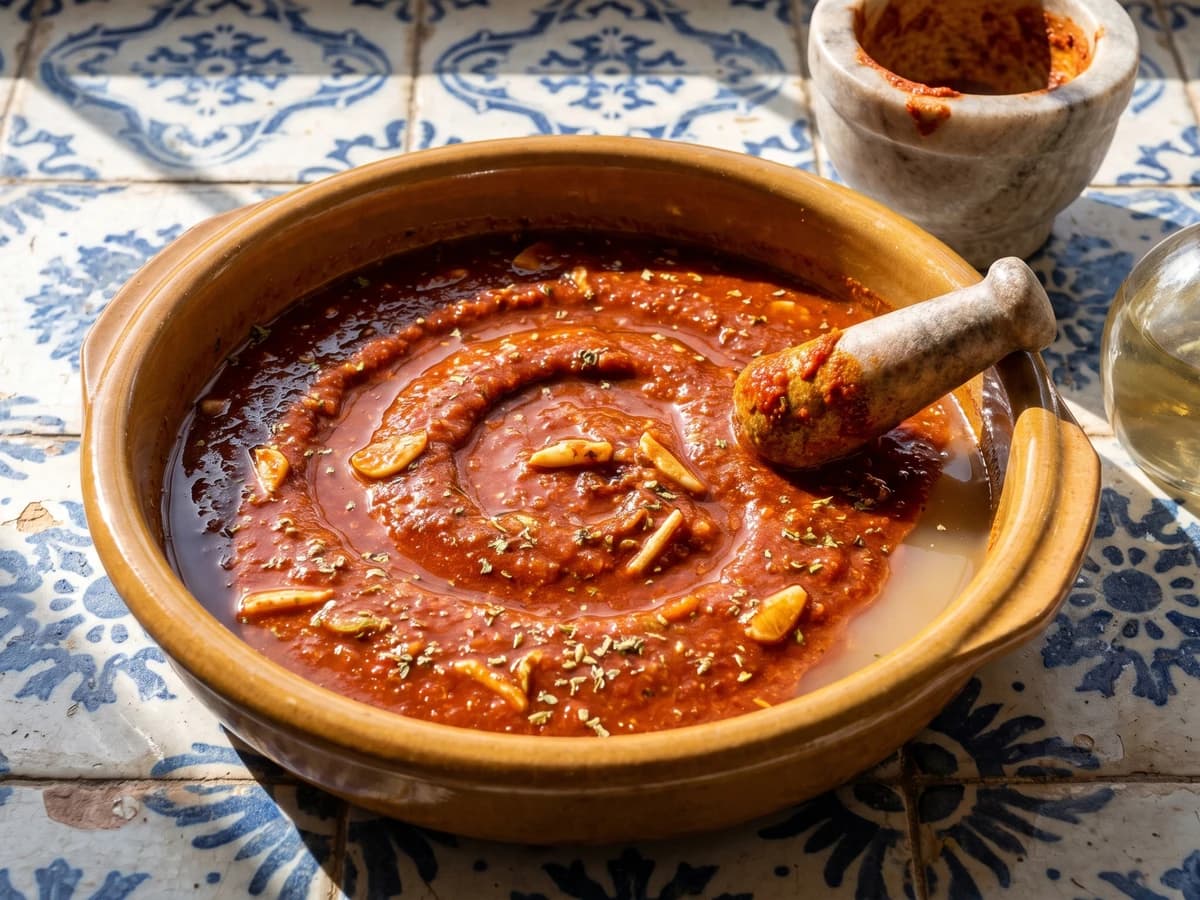
Andalucía's sharp, brick-red marinade brings vinegar, garlic, oregano, cumin and pimentón to fish and pork; pound the seasonings first, then give the acid time to carry them through.
Chef Isabel
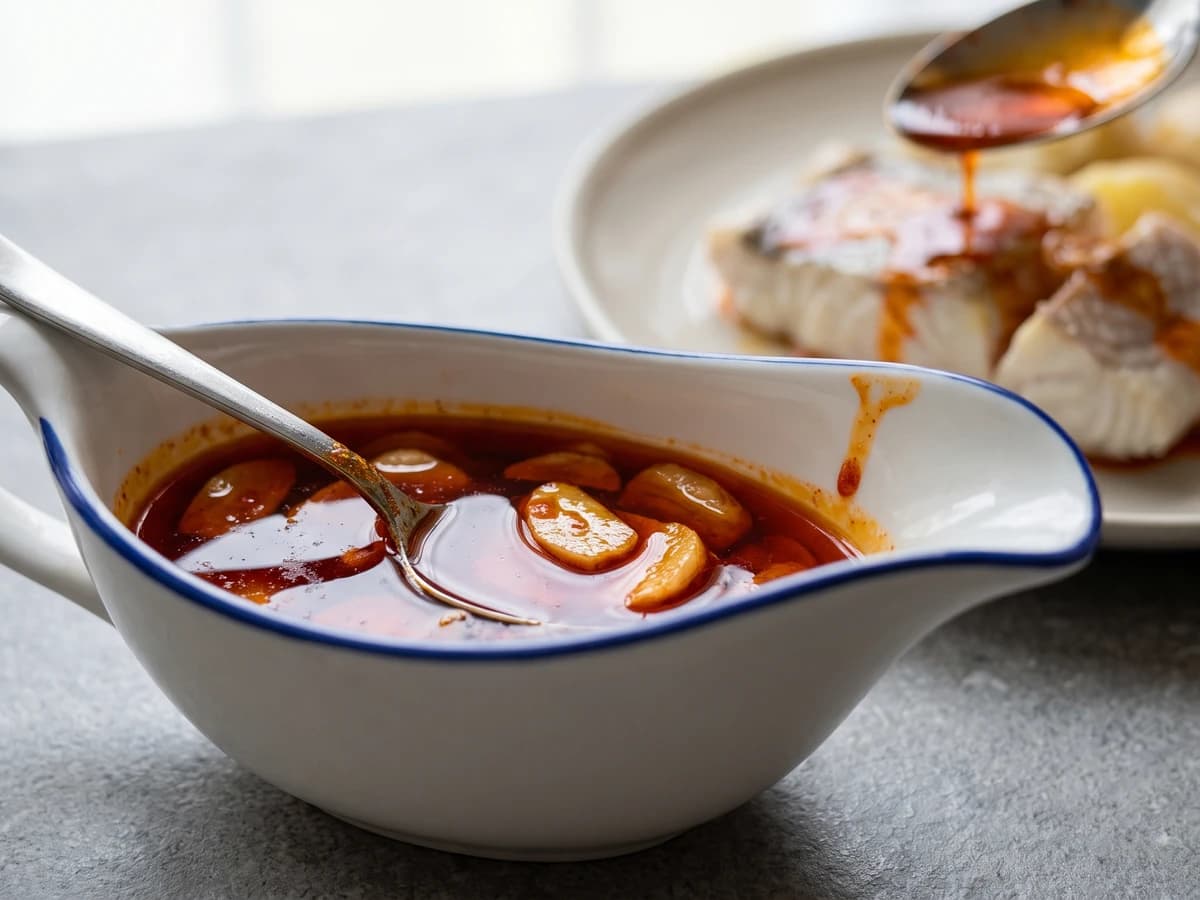
Ajada gallega is Galicia's quick garlic and pimentón refrito for boiled fish, octopus, vegetables and cachelos, with the paprika stirred in off the heat so its red oil stays sweet, never bitter.
Chef Isabel
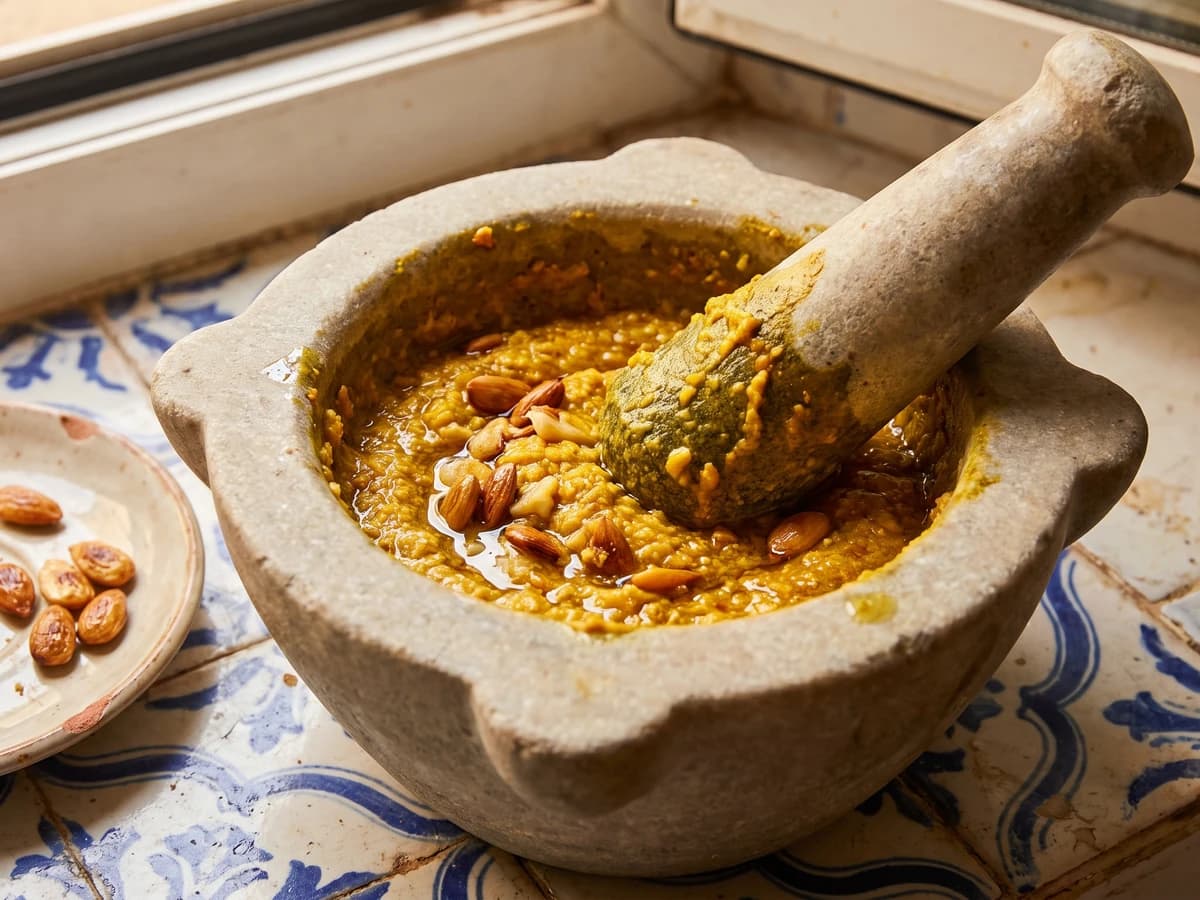
Almería's ajopollo turns fried garlic, almonds, bread and saffron into a golden mortar paste that gives modest fish and potato guisos their body, richness and unmistakable southern depth.