Chef Isabel
Aceitunas Aliñadas Andaluzas
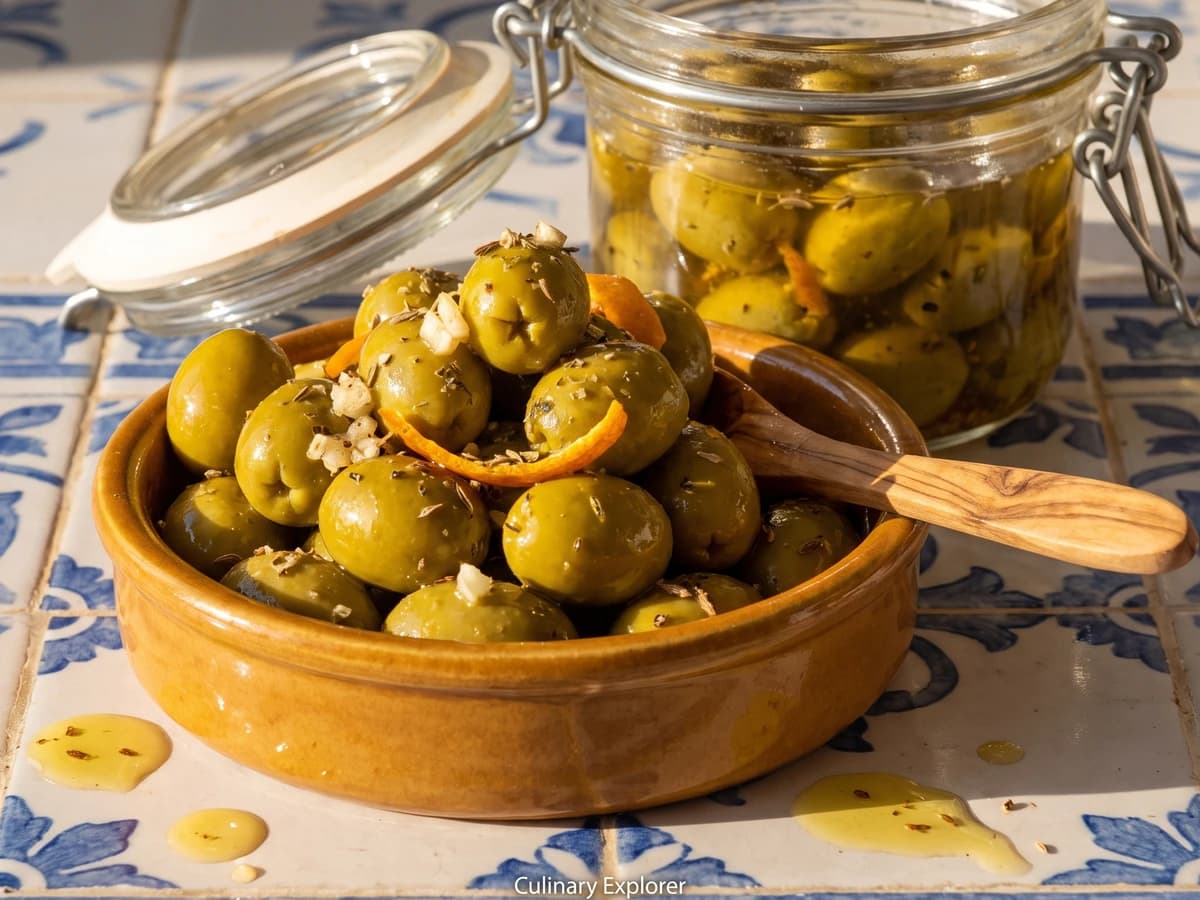
Andalucía's green olives are cracked just enough to drink in garlic, cumin, oregano and sherry vinegar, then left two days until the brine turns fragrant and every bite carries the aliño.
A cooking platform built around craft, culture, and the stories behind what we eat.
Created by
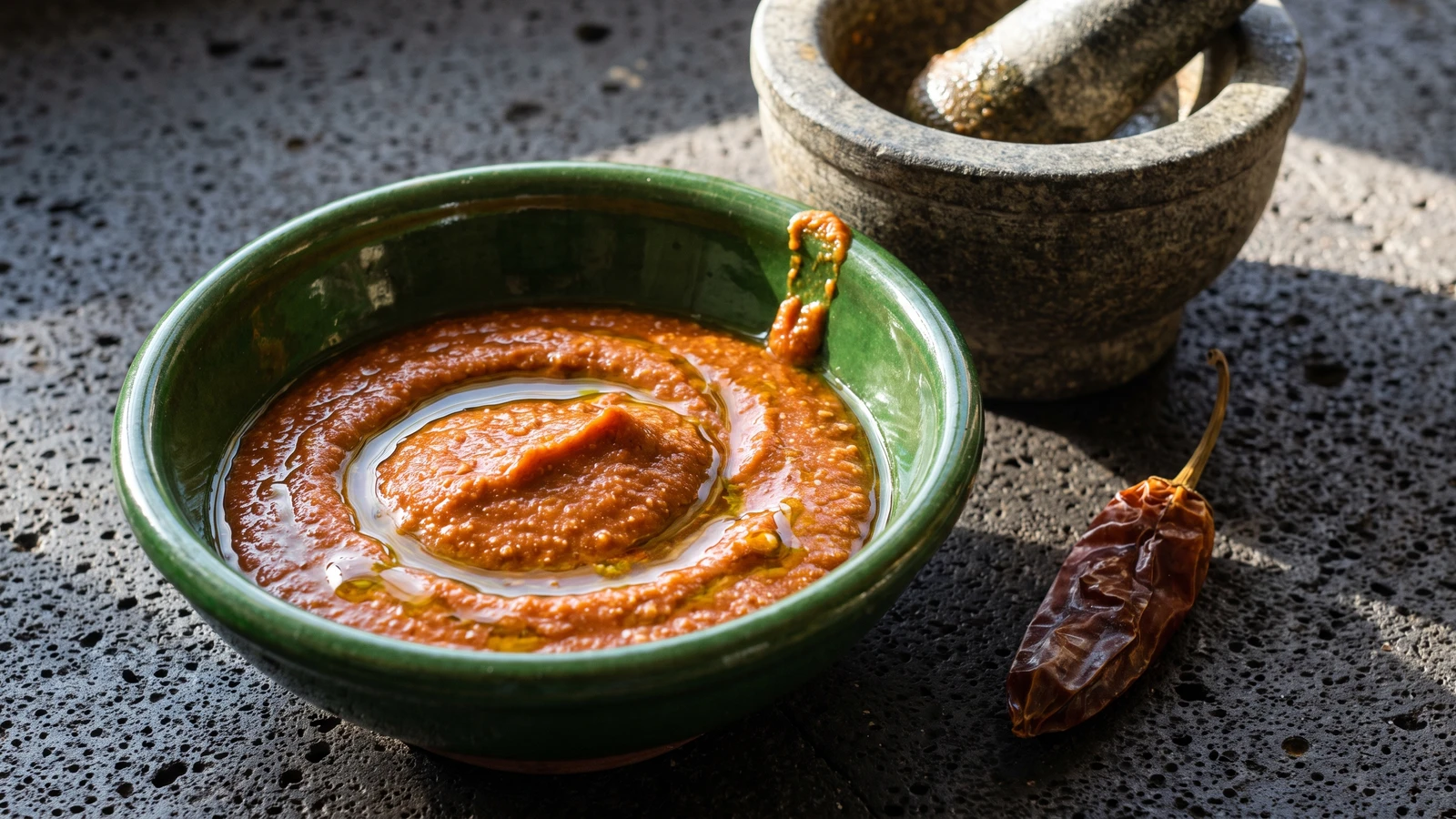
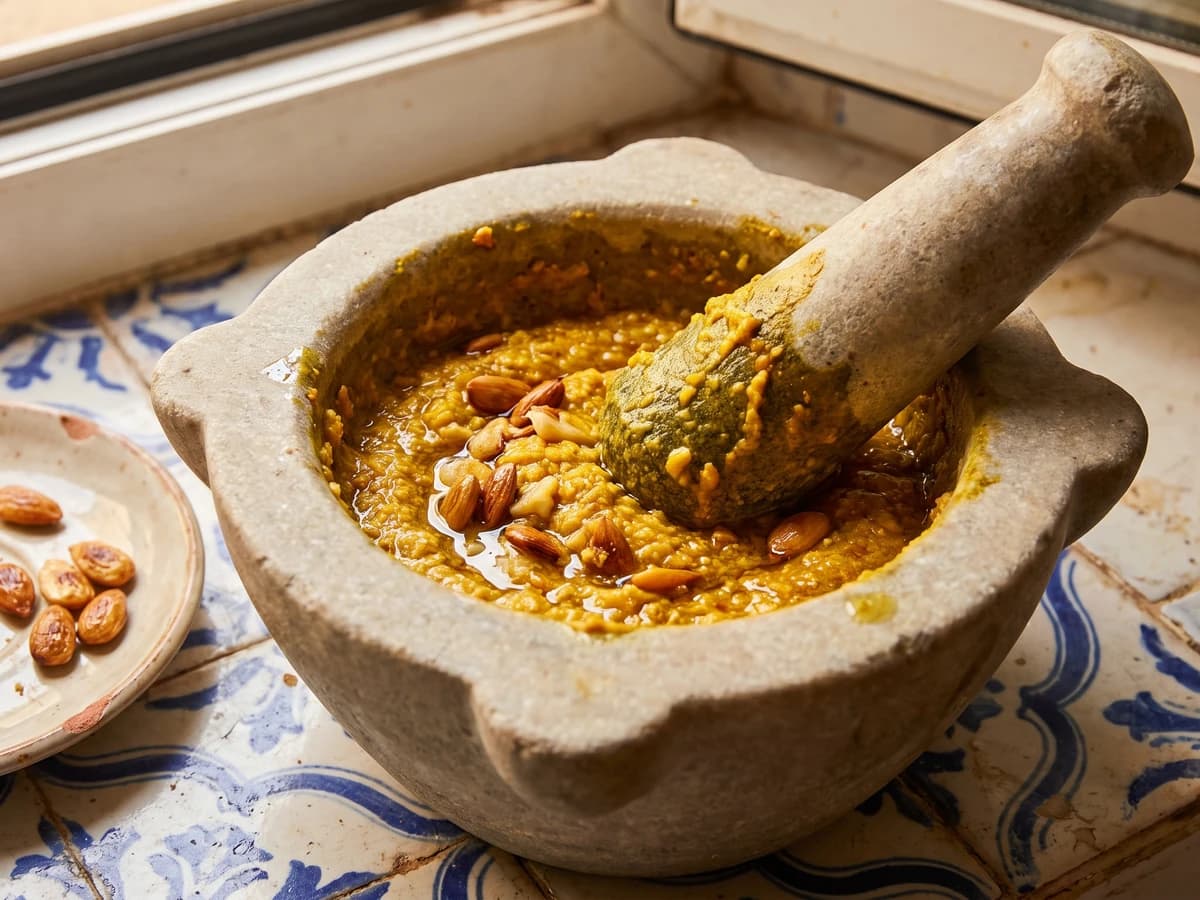
La Palma's almond mojo is a thick red sauce of dried pimienta palmera, garlic, cumin, vinegar, and toasted nuts, pounded until creamy enough to cling to papas arrugadas without losing its bite.
Mojo palmero de almendras belongs to La Palma in the Canary Islands. Dried pimienta palmera gives it its deep brick-red warmth, while almonds make it thicker, rounder, and creamier than the lean red mojos made elsewhere in the archipelago. It should cling to a papa arrugada, a salt-wrinkled potato, without sitting on it like cement.
The method that decides it is simple: pound the pepper, garlic, and cumin first, then grind in the toasted almonds before a drop of oil goes near them. Add the oil slowly only after the nuts have become a fine cream. Pour it in too soon and the almonds slide around instead of breaking down, leaving you with oily rubble. A mortar gives the best texture, though a small food processor works if you pulse patiently and stop before the sauce becomes completely smooth.
If pimienta palmera doesn't reach your market, use dried ñoras and one small dried guindilla. Ñora is sweeter, milder, and a little less earthy, while the guindilla returns the bite. It won't carry quite the same pepper fragrance, but it makes a proper working substitute from the larder of another kitchen in Spain. No hace falta haber pisado España. Weigh the almonds, mind the order, and this one comes out.
Mojo palmero belongs to La Palma, where peppers were dried to carry their flavor beyond the harvest and almonds grew particularly well around the northwestern districts of Puntagorda and Tijarafe. Adding those almonds produced a substantial sauce suited to papas arrugadas, roasted meat, goat cheese, and fish, while also distinguishing it from thinner Canarian red mojos. The word mojo is related to the Portuguese molho, a reminder that the Canary Islands' cooking was shaped by Atlantic trade as well as by its own volcanic soil and household larder.
Quantity
24g, about 3 pimientas palmeras or 4 ñoras
stems and most seeds removed
Quantity
500ml
for soaking the peppers
Quantity
75g
Quantity
15g, about 3 large cloves
peeled
Quantity
2g, about 1 teaspoon
Quantity
6g, about 1 teaspoon
Quantity
45ml
Quantity
150ml
Quantity
30ml, plus up to 15ml if needed
| Ingredient | Quantity |
|---|---|
| dried pimienta palmera, or dried ñora peppers plus 1 small dried guindillastems and most seeds removed | 24g, about 3 pimientas palmeras or 4 ñoras |
| just-boiled waterfor soaking the peppers | 500ml |
| raw blanched almonds | 75g |
| garlicpeeled | 15g, about 3 large cloves |
| cumin seeds | 2g, about 1 teaspoon |
| coarse sea salt | 6g, about 1 teaspoon |
| white wine vinegar | 45ml |
| mild extra virgin olive oil | 150ml |
| warm water (optional) | 30ml, plus up to 15ml if needed |
Split the dried peppers, remove the stems and most of the seeds, and put them in a heatproof bowl. Cover with the just-boiled water, weight them with a small plate, and leave for 30 minutes. Drain them, then scrape the softened red flesh from the tough skins with the blunt side of a knife. Discard the skins.
Set the almonds in a dry frying pan over low heat. Toast for 6 to 8 minutes, moving them often, until they are pale gold inside and smell nutty. Do not take them dark or the mojo will carry that bitterness. Tip them onto a plate and let them cool completely.
Put the garlic, cumin seeds, and coarse salt in a large mortar. Pound until the garlic is a smooth paste and no whole cumin seeds remain. Add the scraped pepper flesh and work it into a uniform brick-red majado, the pounded base of the sauce.
Add the cooled almonds in three batches, pounding each addition before the next goes in. Keep going until they form a fine, slightly grainy cream with the pepper base. This order decides the mojo: grind the nuts before adding liquid, because almonds coated too early in oil skate around the mortar instead of breaking down.
Work in the vinegar, then add the olive oil a tablespoon at a time, stirring and pounding until each addition disappears before adding the next. Stir in 30ml warm water. The finished mojo should fall slowly from a spoon and hold a soft ridge, thick enough to cling to a potato but not stiff like a paste. Add up to 15ml more water only if needed.
Cover and rest the mojo for 30 minutes so the garlic, vinegar, and pepper settle into one another. Taste it with a piece of potato or bread, not from a bare spoon, then adjust with a pinch of salt or a teaspoon of vinegar if needed. Serve at room temperature. Siempre sale, si lo sigues.
1 serving (about 28g)
Culinary guides, cultural storytelling, and the editorial depth that makes cooking meaningful.
Discover Culinary ExplorerChef Isabel
Andalucía's green olives are cracked just enough to drink in garlic, cumin, oregano and sherry vinegar, then left two days until the brine turns fragrant and every bite carries the aliño.
Chef Isabel
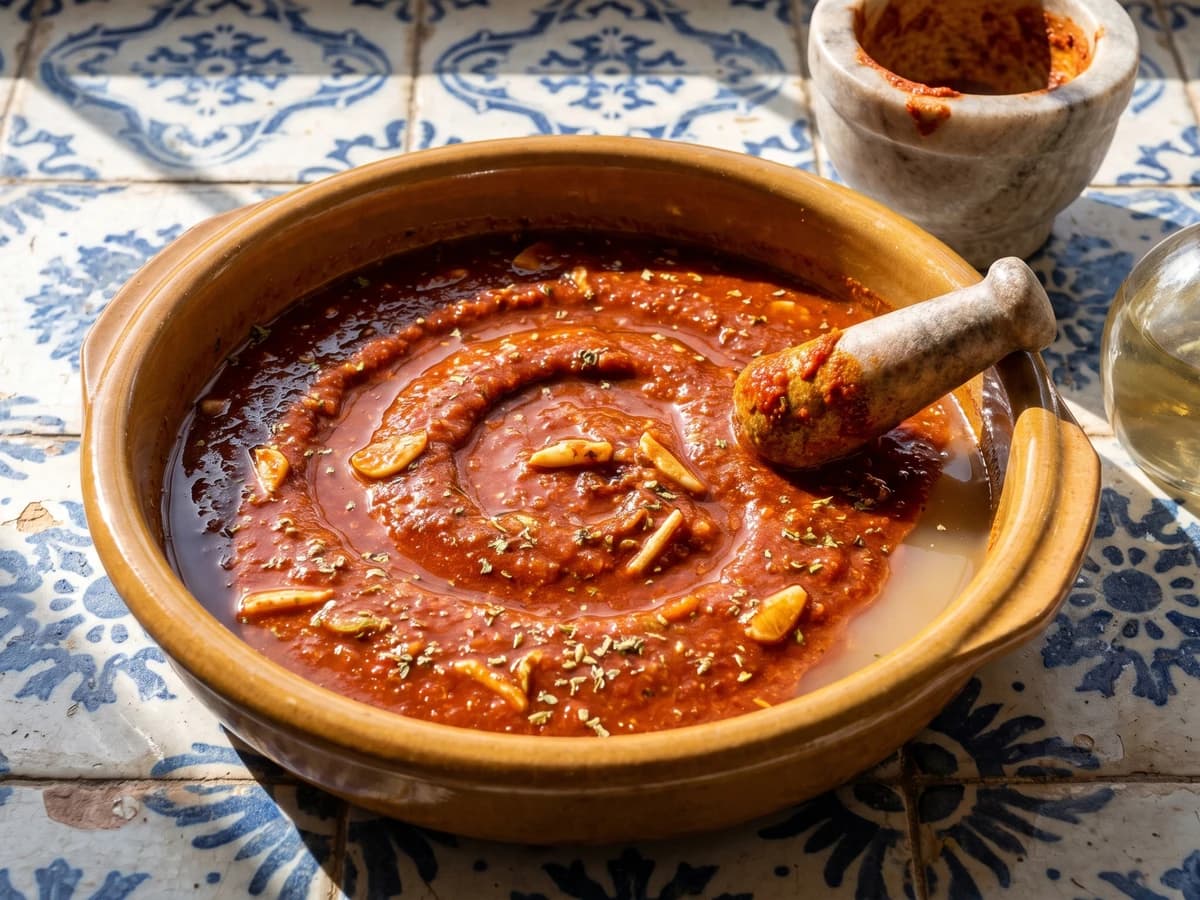
Andalucía's sharp, brick-red marinade brings vinegar, garlic, oregano, cumin and pimentón to fish and pork; pound the seasonings first, then give the acid time to carry them through.
Chef Isabel
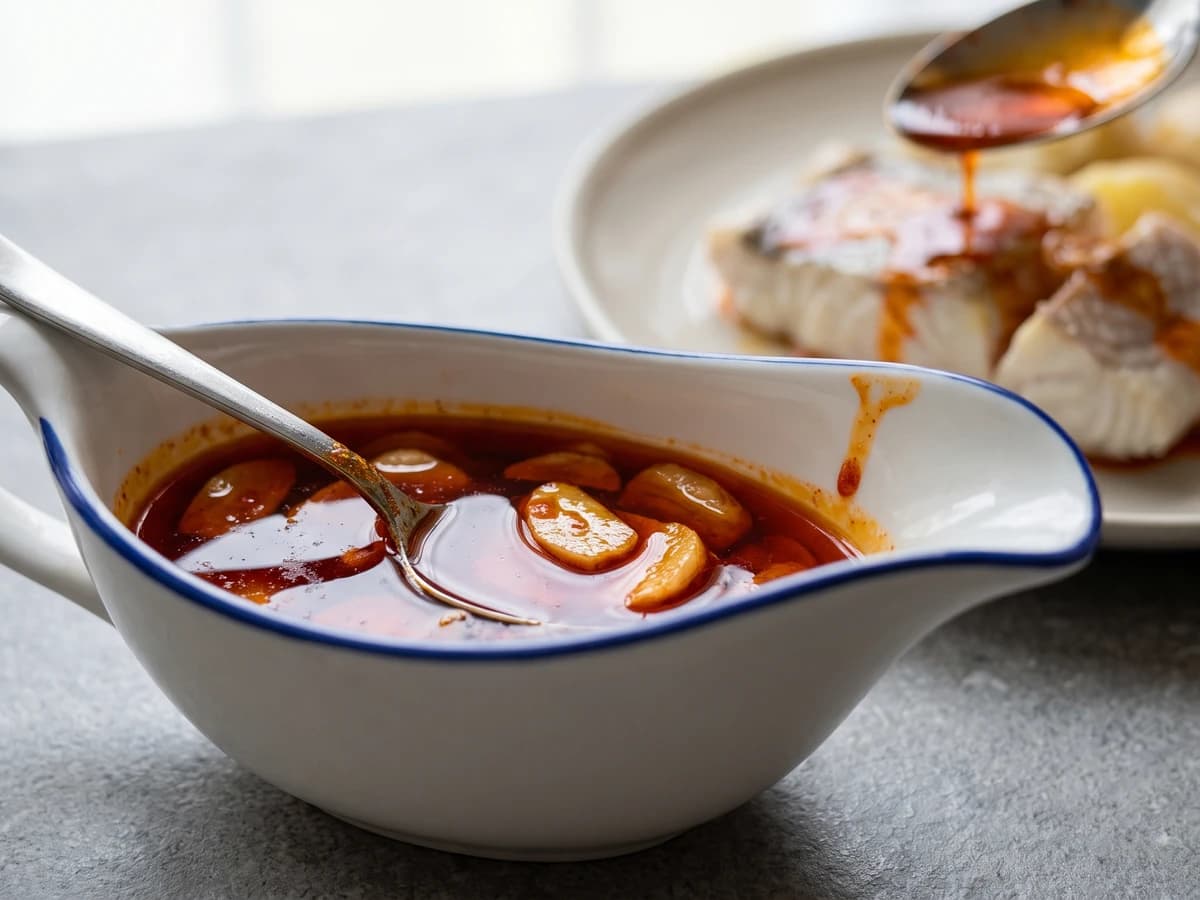
Ajada gallega is Galicia's quick garlic and pimentón refrito for boiled fish, octopus, vegetables and cachelos, with the paprika stirred in off the heat so its red oil stays sweet, never bitter.
Chef Isabel
Almería's ajopollo turns fried garlic, almonds, bread and saffron into a golden mortar paste that gives modest fish and potato guisos their body, richness and unmistakable southern depth.