Chef Isabel
Aceitunas Aliñadas Andaluzas
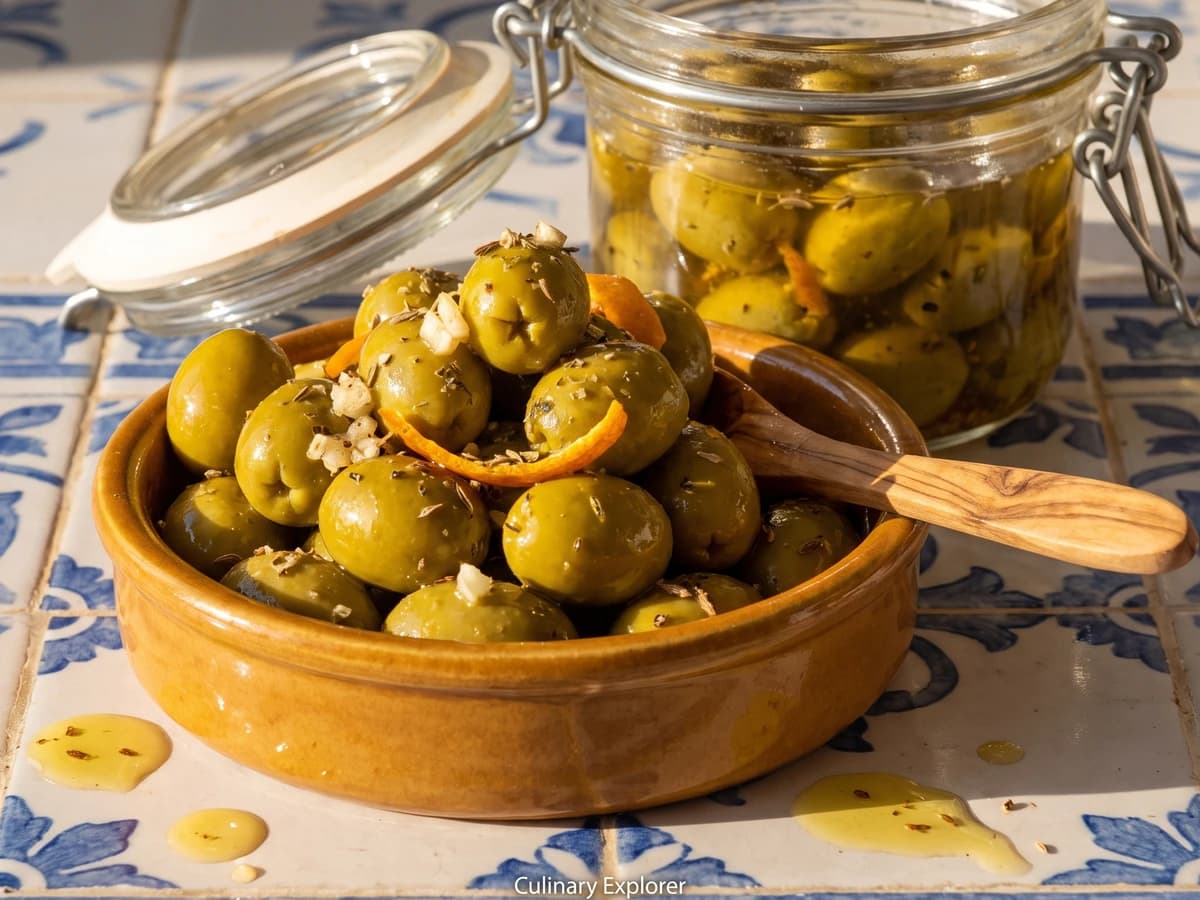
Andalucía's green olives are cracked just enough to drink in garlic, cumin, oregano and sherry vinegar, then left two days until the brine turns fragrant and every bite carries the aliño.
A cooking platform built around craft, culture, and the stories behind what we eat.
Created by
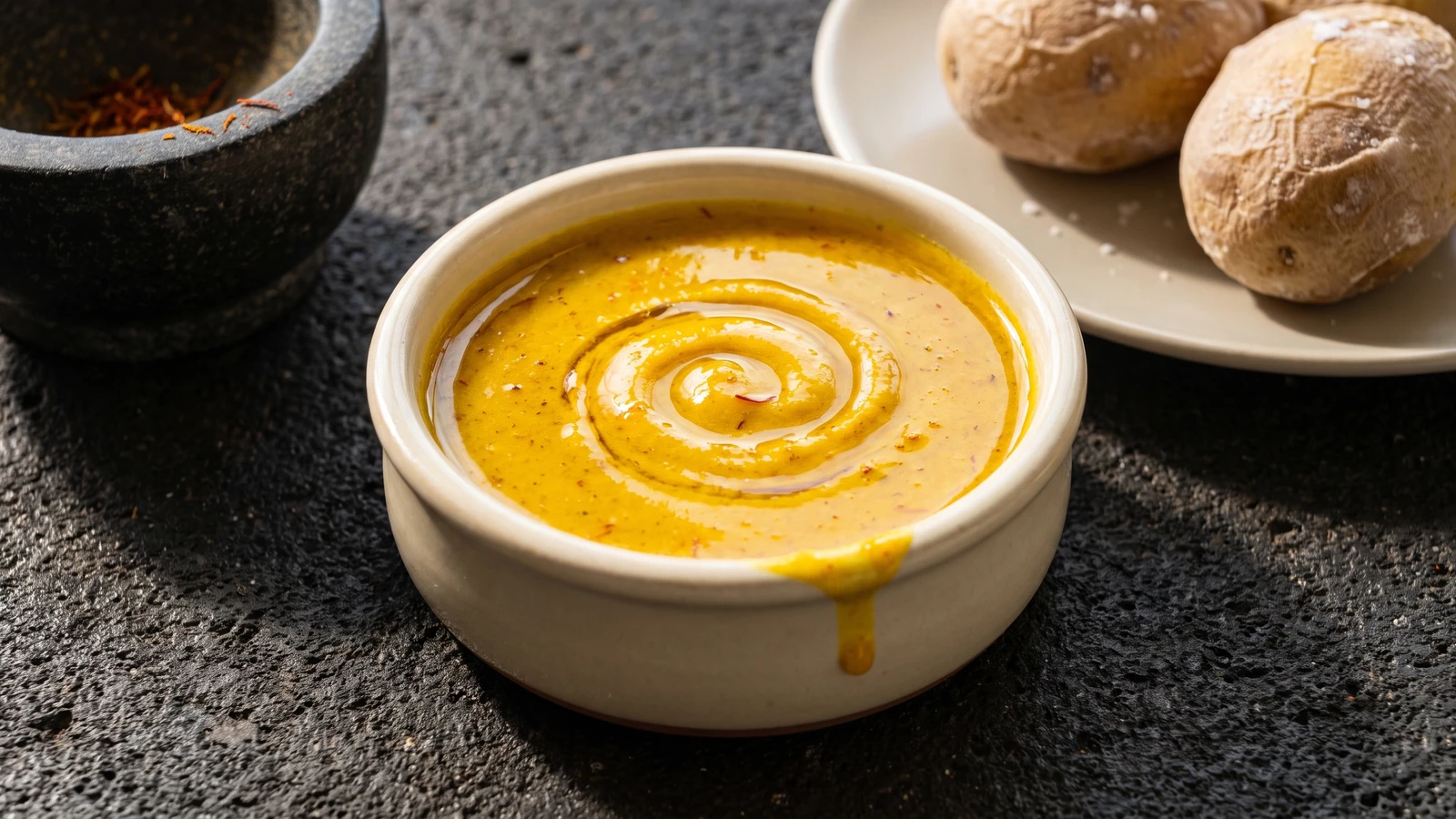
La Gomera's saffron mojo is a golden mortar sauce of garlic, cumin, oil and vinegar. Toast the threads gently before pounding, and their colour and perfume bloom through every spoonful.
Mojo de azafrán is La Gomera's golden mortar sauce, made from garlic, cumin, wine vinegar, olive oil and true saffron. Unlike the red mojos carried by dried pepper or the green ones carried by coriander, this one is fragrant, warm and unmistakably gold. A spoonful wakes up papas arrugadas, grilled fish or roast meat without covering what is underneath.
The method that decides it is the saffron. Warm the threads briefly in a dry pan before you pound them, just until their perfume rises and they become brittle enough to grind. That small heat releases their colour and aroma through the oil. Brown them and they turn bitter, so watch the pan rather than the clock. The Margin beside this one says only: gold, not brown.
If saffron from La Mancha is unavailable, use Iranian or Afghan Crocus sativus threads at the same 0.20g weight. The perfume may be a little more floral, but the mojo remains itself. Turmeric supplies yellow and nothing else, so it is no substitute here. No hace falta haber pisado España. Use whole threads, a heavy mortar and the measured heat, and the sauce comes out.
Mojo de azafrán belongs to La Gomera in the western Canary Islands, where mortar sauces accompany papas, fish and roasted meats at the home table. Canarian mojo takes its name from Portuguese molho, meaning sauce, one trace of the Atlantic contact that shaped the islands' larder. Unlike red mojo carried by dried pepper or green mojo carried by coriander, the Gomera version takes its gold and perfume from true saffron, once dear enough to mark the better table.
Quantity
0.20g
Quantity
1g
about 1/2 teaspoon
Quantity
5g
Quantity
20g
peeled, about 4 to 5 medium cloves
Quantity
45ml
Quantity
30ml
Quantity
150ml
| Ingredient | Quantity |
|---|---|
| whole saffron threads | 0.20g |
| cumin seedsabout 1/2 teaspoon | 1g |
| coarse sea salt | 5g |
| garlic clovespeeled, about 4 to 5 medium cloves | 20g |
| white wine vinegar | 45ml |
| cool water | 30ml |
| mild extra virgin olive oil | 150ml |
Warm a small dry frying pan over the lowest heat for 1 minute, then remove it from the heat. Scatter in the saffron and shake the pan constantly for 20 to 30 seconds. The threads should smell honeyed and deepen by one shade, never turn brown. Tip them immediately into the mortar.
Add the cumin seeds and coarse salt to the saffron. Pound everything to a fine golden powder, then add the garlic and work it patiently into a completely smooth paste. The salt provides the grit that breaks down both spice and garlic, so do not replace it with fine salt at this stage.
Stir the vinegar and water into the garlic paste, scraping every bit from the sides of the mortar. Leave it for 5 minutes. The liquid should turn a clear, deep yellow and carry no visible clumps of garlic.
Add the olive oil in four additions, stirring firmly with the pestle until each addition is mixed before adding the next. The finished mojo should be loose enough to fall from a spoon in a ribbon, with a glossy surface and a light, natural emulsion. It is a mojo, not a thick mayonnaise.
Cover the mojo and let it rest for 30 minutes at room temperature. Stir once, then serve with papas arrugadas, boiled potatoes, grilled fish or roast meat. The rest softens the raw edge of the garlic and lets the saffron travel through the oil. Siempre sale, si lo sigues.
1 serving (about 15g)
Culinary guides, cultural storytelling, and the editorial depth that makes cooking meaningful.
Discover Culinary ExplorerChef Isabel
Andalucía's green olives are cracked just enough to drink in garlic, cumin, oregano and sherry vinegar, then left two days until the brine turns fragrant and every bite carries the aliño.
Chef Isabel
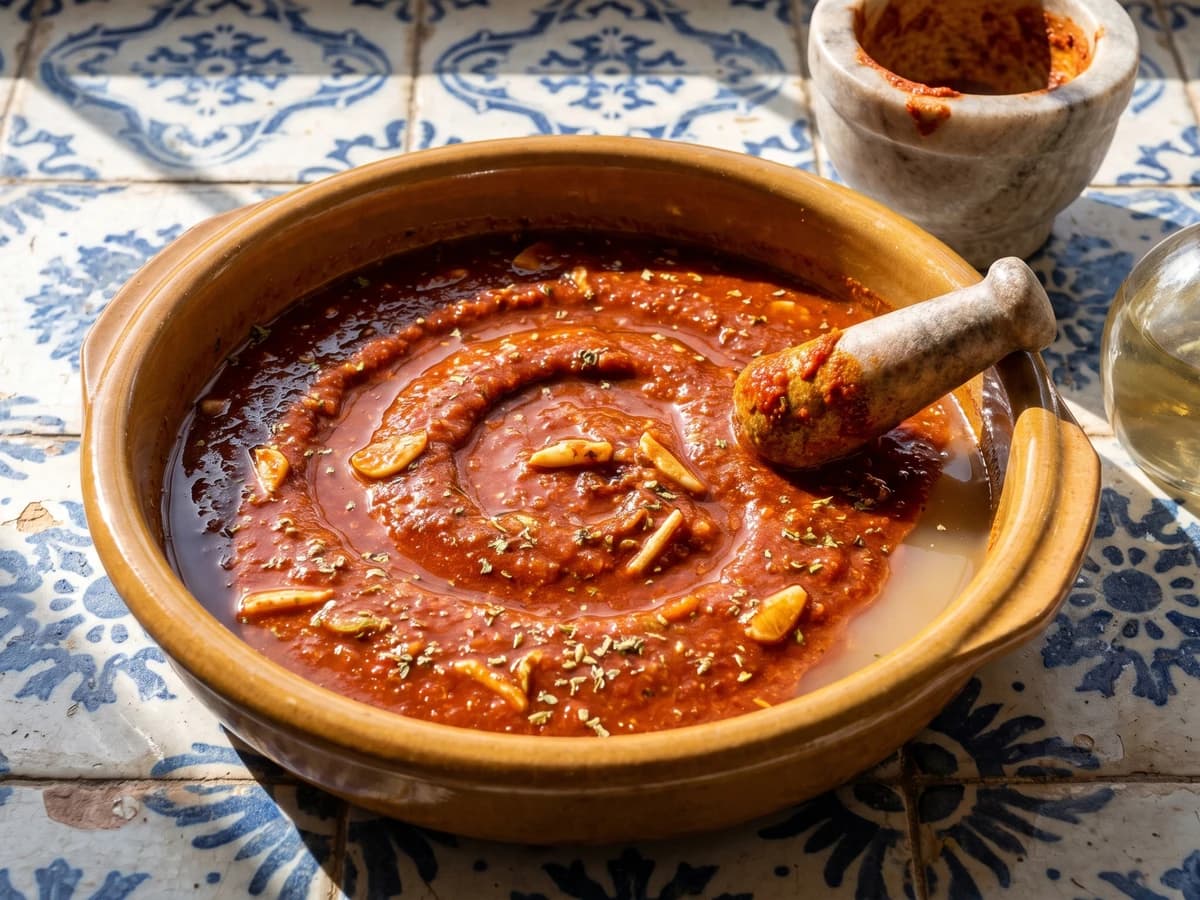
Andalucía's sharp, brick-red marinade brings vinegar, garlic, oregano, cumin and pimentón to fish and pork; pound the seasonings first, then give the acid time to carry them through.
Chef Isabel
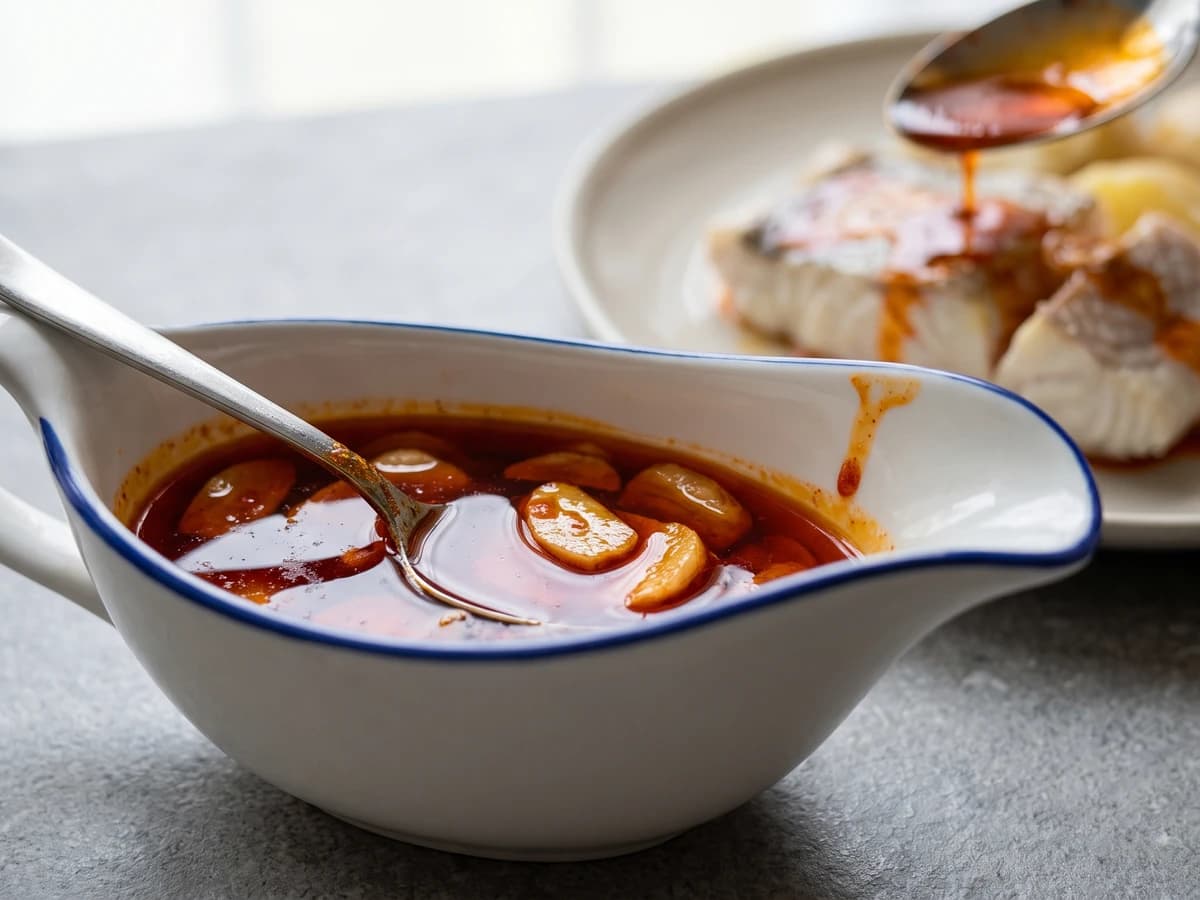
Ajada gallega is Galicia's quick garlic and pimentón refrito for boiled fish, octopus, vegetables and cachelos, with the paprika stirred in off the heat so its red oil stays sweet, never bitter.
Chef Isabel
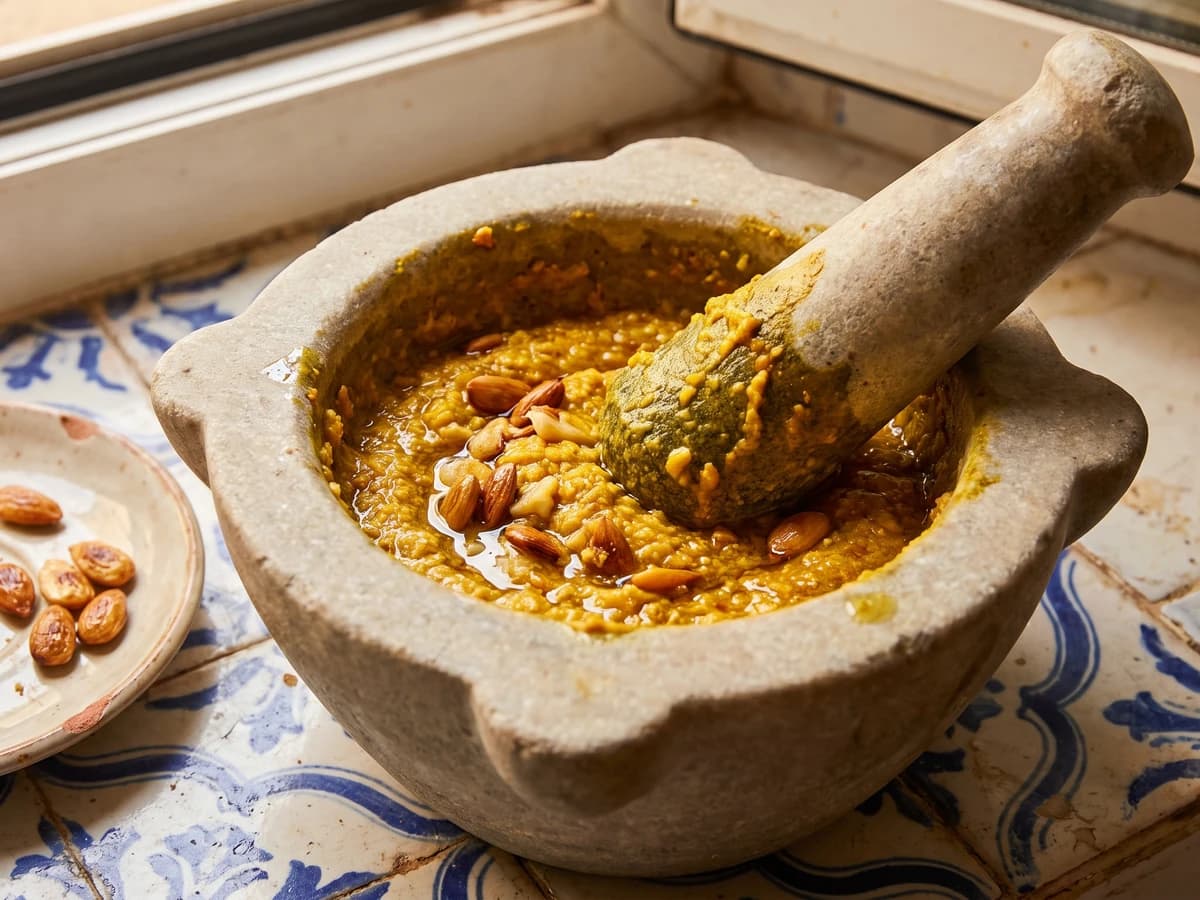
Almería's ajopollo turns fried garlic, almonds, bread and saffron into a golden mortar paste that gives modest fish and potato guisos their body, richness and unmistakable southern depth.