Chef Isabel
Abanico Ibérico a la Plancha
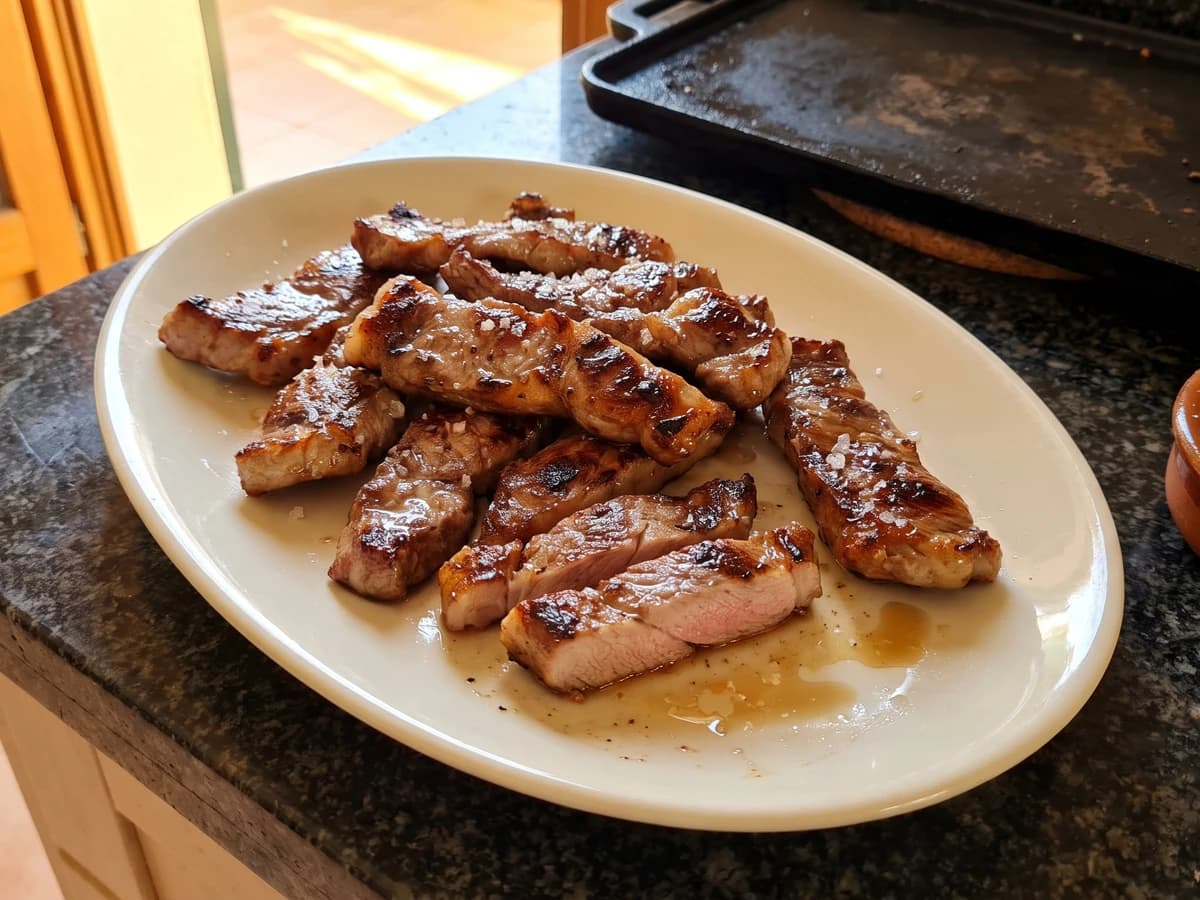
Extremadura's dehesa gives us this fan-shaped, marbled rib cut: salt it at the last moment, lay it on a fierce plancha, and count in seconds so the centre stays juicy.
A cooking platform built around craft, culture, and the stories behind what we eat.
Created by
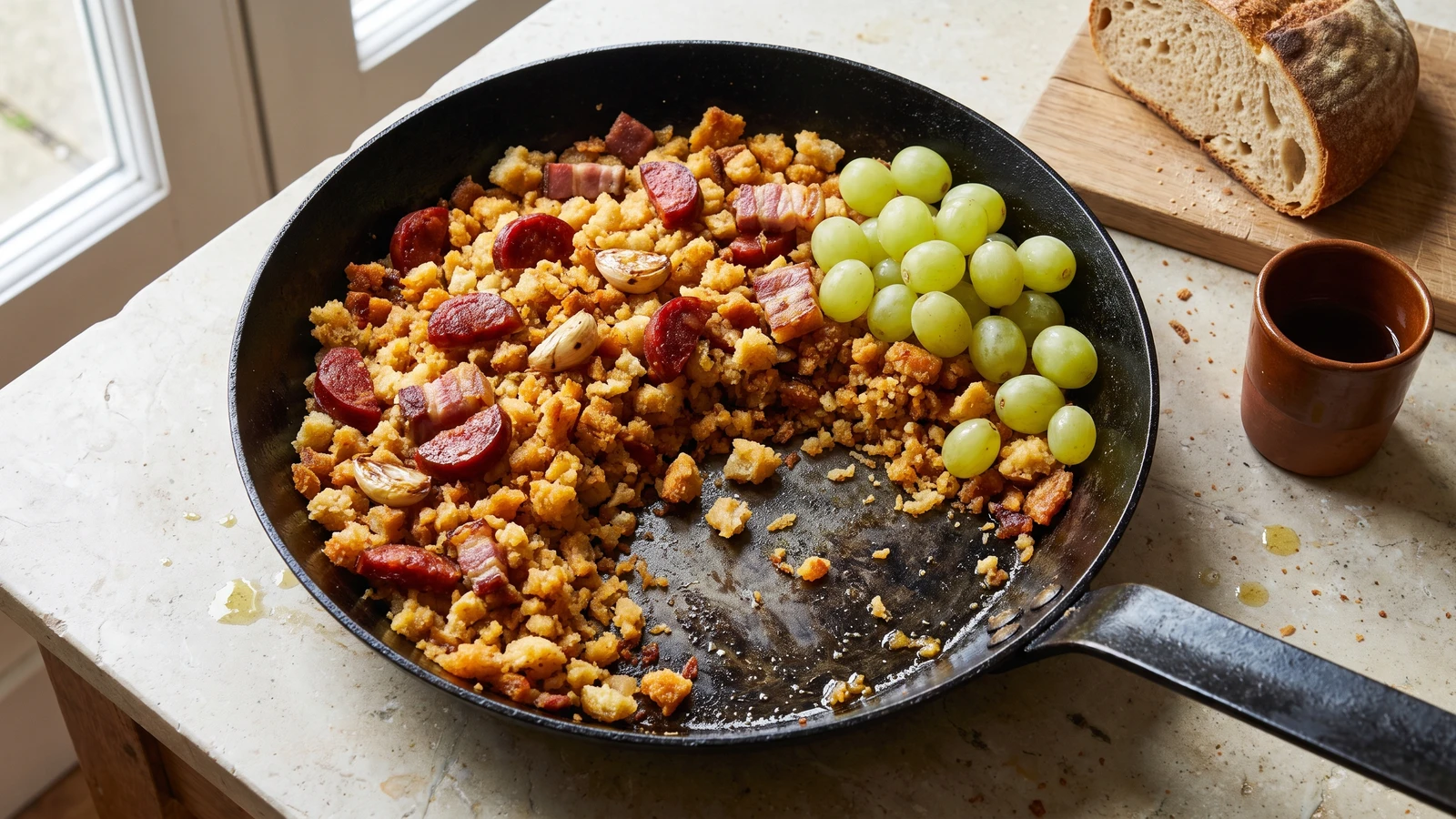
La Mancha turns yesterday's bread into a proper meal: loose golden crumbs rich with garlic, panceta, and chorizo, eaten with cool sweet grapes that cut through every salty mouthful.
Migas Manchegas belong to Castilla-La Mancha: stale candeal bread revived with salted water, then fried in garlic-and-pork fat until the crumbs are loose and golden. Chorizo and panceta make them substantial, while fresh grapes give the sweet, juicy bite that cuts through the salt. These are migas ruleras, made from bread, not the flour-and-water gachasmigas found in parts of the southeast.
The method that decides them is patient movement over steady, moderate heat. Moisten the bread evenly and let it rest so the water reaches the centre of every crumb. Then scrape, lift, and turn it without wandering off. The surface dries and browns while the middle stays tender. Too much heat burns the edges before the moisture escapes; too little leaves a heavy, damp mass.
If you can't find pan candeal, use a dense day-old white country loaf with a close crumb and mild flavour. Begin with slightly less water because a softer loaf drinks less, and avoid airy sourdough, which brings large leathery crusts and a tang the dish doesn't need. Choose a dry-cured chorizo seasoned with pimentón, not fresh chorizo, and use unsmoked pork belly if panceta curada is unavailable. The substitute will be gentler and less salty, but the migas will still be sound.
Serve them at once, with the grapes at room temperature and plenty within reach. The Margin beside this recipe says, "Do not walk away." Fair enough. The crumbs want your spoon for half an hour, and after that they ask nothing more. Siempre sale, si lo sigues, it turns out if you follow it.
Migas ruleras belong to the pastoral country of Castilla-La Mancha, where shepherds and field workers revived bread too hard to eat with water, garlic, olive oil, and whatever the household matanza, or pig slaughter, had supplied. Their rolling bread crumbs distinguish them from gachasmigas made with flour and water, while grapes from the Manchegan vendimia, the grape harvest, provide the customary sweet bite beside the salty pork. The dish is thrift made practical: dry bread keeps, cured meat travels, and nothing useful is wasted.
Quantity
500g
crust included, cut into rough 5-7mm crumbs
Quantity
250ml
divided; begin with 225ml
Quantity
6g
Quantity
100ml
Quantity
10
skins on and lightly crushed
Quantity
180g
cut into 1.5cm pieces
Quantity
150g
cut into 5mm half-moons
Quantity
400g
washed and thoroughly dried
| Ingredient | Quantity |
|---|---|
| day-old pan candeal or dense white country breadcrust included, cut into rough 5-7mm crumbs | 500g |
| waterdivided; begin with 225ml | 250ml |
| fine sea salt | 6g |
| extra virgin olive oil | 100ml |
| garlic clovesskins on and lightly crushed | 10 |
| panceta curada or unsmoked cured pork bellycut into 1.5cm pieces | 180g |
| dry-cured chorizo seasoned with pimentóncut into 5mm half-moons | 150g |
| firm sweet white or green table grapeswashed and thoroughly dried | 400g |
Cut the bread into irregular crumbs about 5-7mm across. They should resemble small pebbles, with a mixture of soft crumb and fine pieces of crust. Do this with a serrated knife or pulse briefly in batches, stopping well before it becomes powder. Packet breadcrumbs are too fine and will turn pasty.
Dissolve the salt in 225ml of the water. Put the bread in a wide bowl and sprinkle the salted water over it in three additions, tossing thoroughly with both spoons between each addition. Squeeze a handful: it should hold together briefly, then fall apart when touched. Sprinkle on the remaining 25ml only if dry centres remain. Cover and refrigerate for at least 4 hours or overnight so the moisture travels evenly through the bread.
Heat the olive oil in a wide, heavy frying pan over medium heat. Add the crushed garlic and cook for 3-4 minutes, turning until golden, then lift it onto a plate. Add the panceta and fry for 7-9 minutes until its fat has rendered and the edges are browned. Add the chorizo and cook for another 2 minutes, just until it releases red pimentón oil. Remove the meat with a slotted spoon, leaving all the seasoned fat in the pan.
Lower the heat to medium-low and add the rested bread. Scrape across the base, lift the crumbs, and turn them continuously so every part meets the seasoned oil. Break apart clumps with the edge of the spoon. Cook for 25-30 minutes, adjusting the heat to keep the colouring steady, until the crumbs are separate and honey-gold with darker toasted points. They should rustle against the pan, feel crisp at the edges, and remain tender inside. Return the garlic, panceta, and chorizo for the final 5 minutes.
Taste one crumb with a piece of panceta before adding any more salt; the cured meat usually supplies enough. Bring the pan straight to the table and serve the migas immediately with the grapes alongside, allowing roughly a handful per person. Eat a grape between salty forkfuls. That sweet, cool contrast is part of the dish, not decoration.
1 serving (about 235g)
Culinary guides, cultural storytelling, and the editorial depth that makes cooking meaningful.
Discover Culinary ExplorerChef Isabel
Extremadura's dehesa gives us this fan-shaped, marbled rib cut: salt it at the last moment, lay it on a fierce plancha, and count in seconds so the centre stays juicy.
Chef Isabel
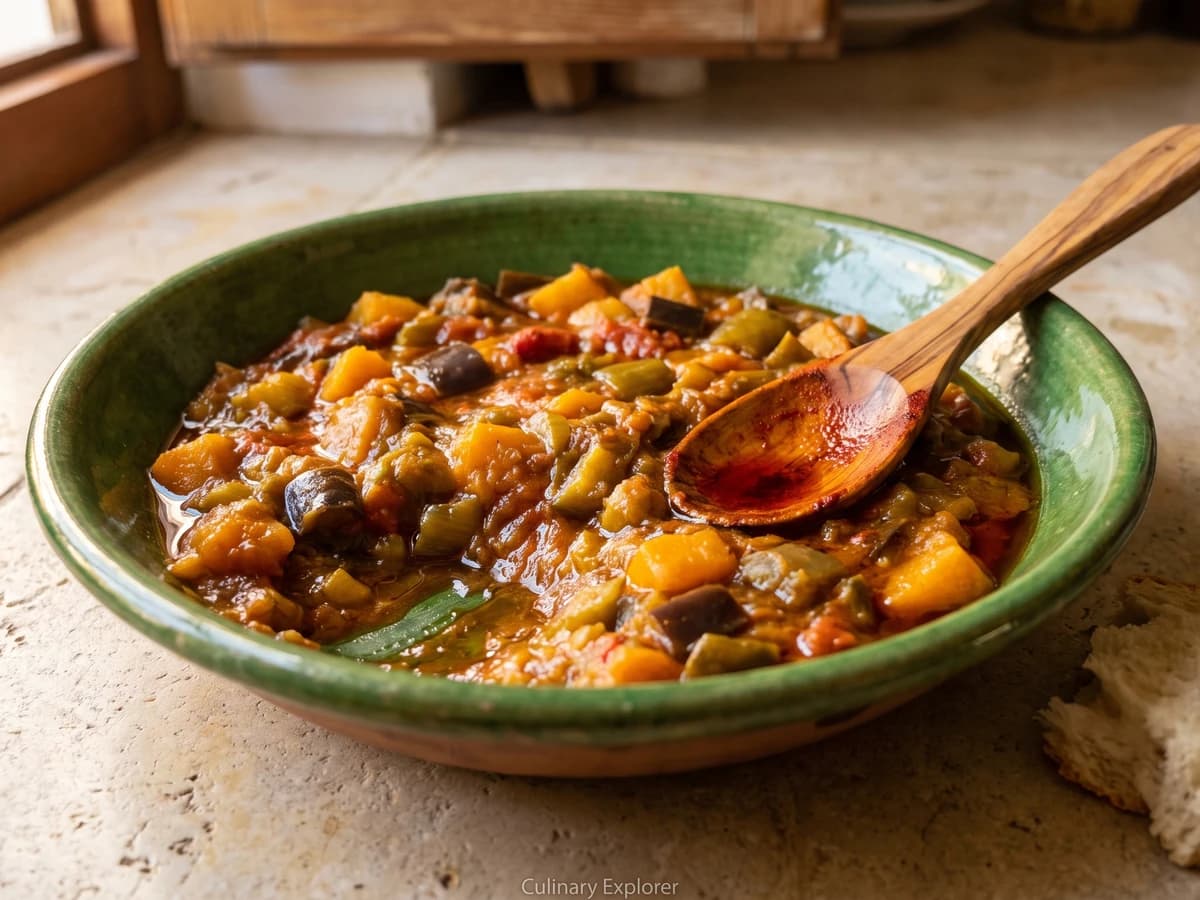
Alboronía is Andalucía's old pumpkin and aubergine stew, deepened with tomato, pimentón, and cumin, then cooked without hurry until the vegetables settle into a glossy, sweet, spoon-soft whole.

Chef Isabel
Aletría Murciana is Murcia's humble noodle guiso: fine fideos, pork ribs, potato, saffron, and a dark sweet sofrito. Get that base right and the pot knows where it's going.
Chef Isabel
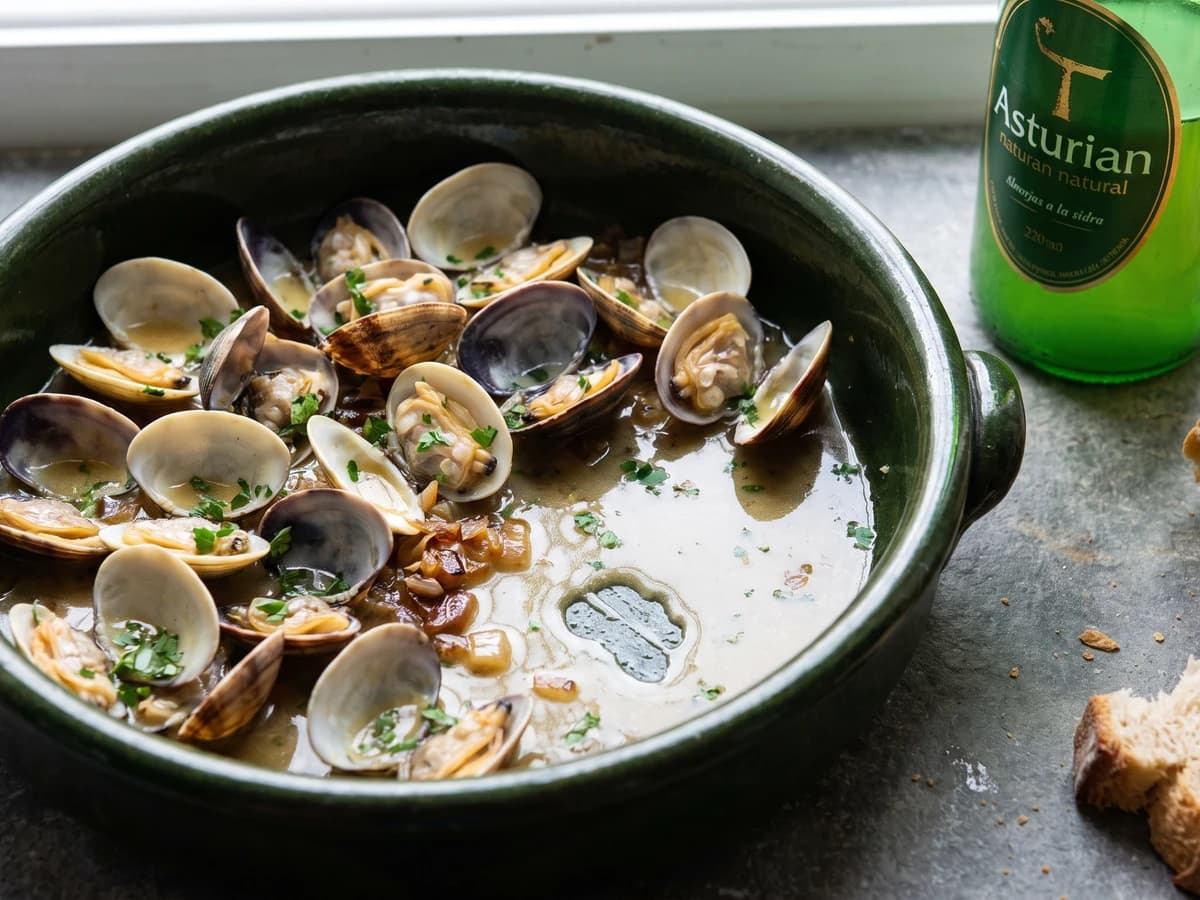
Asturias opens clams in tart natural cider over a slow onion and garlic sofrito, making a bright, briny sauce that asks for bread and rewards one rule: lift each clam as it opens.