Chef Isabel
Abanico Ibérico a la Plancha
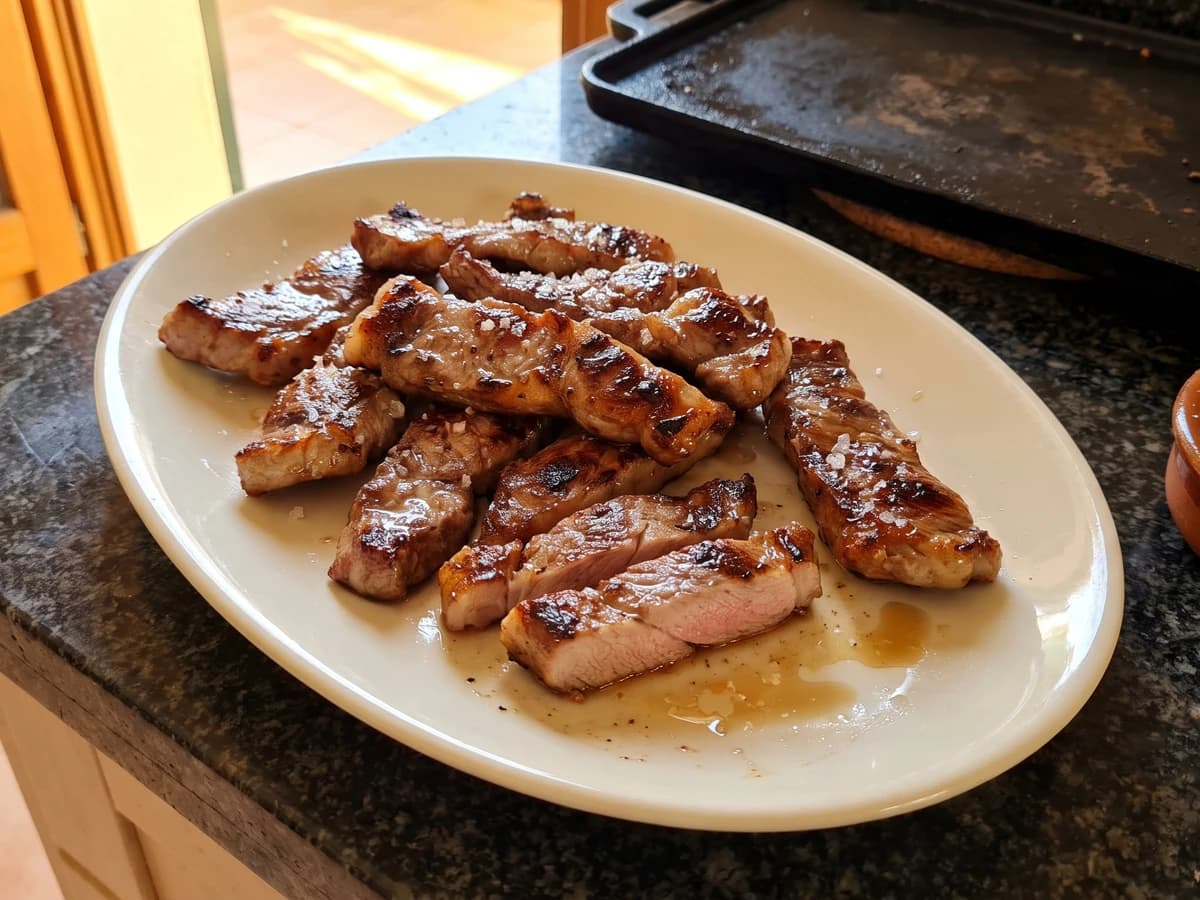
Extremadura's dehesa gives us this fan-shaped, marbled rib cut: salt it at the last moment, lay it on a fierce plancha, and count in seconds so the centre stays juicy.
A cooking platform built around craft, culture, and the stories behind what we eat.
Created by
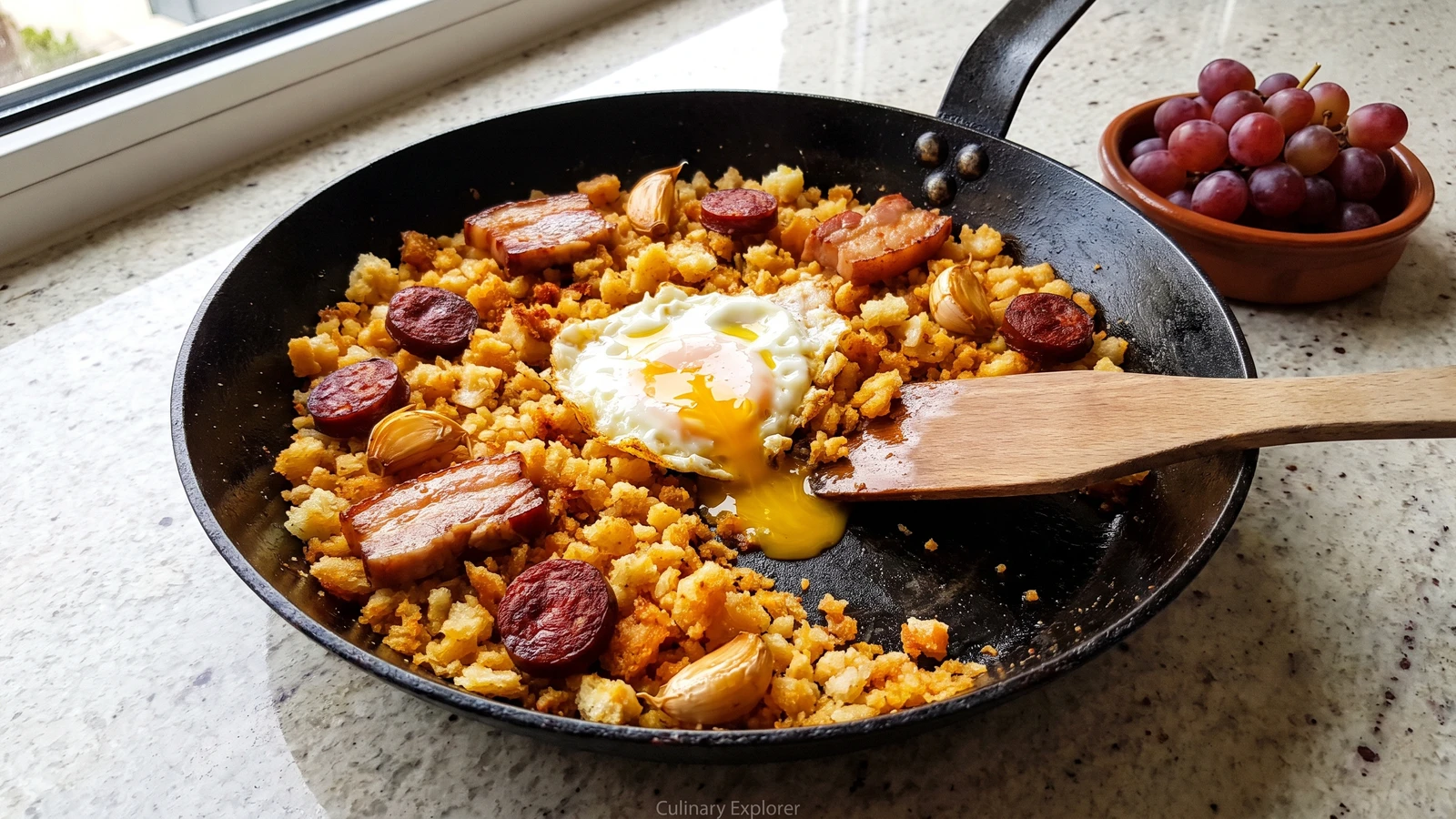
Migas Extremeñas are Extremadura's shepherd's pan: day-old bread dampened overnight, then worked in olive oil with garlic, panceta, chorizo, and pimentón until every crumb is loose, golden, and tender within.
Migas Extremeñas belong to Extremadura: day-old bread, garlic, olive oil, pimentón de la Vera, and the cured pork of the matanza, the household pig slaughter, worked together in a wide pan. These are bread migas, not the flour or semolina migas of southeastern Spain. The smoky-red pimentón and pork larder give the pan its Extremaduran character, while a fried egg turns it into a full supper without any ceremony.
The method that decides the dish happens the night before. Dampen the bread evenly with salted water, toss it thoroughly, and let it rest. You aren't soaking it. The long reposo, or rest, carries moisture from the surface into the hard centre, so the pieces fry separately while staying tender within. Pour all the water onto one spot and you'll spend the next morning frying paste beside pebbles. I want every crumb pliable before it reaches the pan.
Pan candeal, a firm wheat bread with a tight crumb, is the bread Extremadura wants. Far from Spain, use a dense, unsliced white country loaf and let it age for two days. A baguette works at a pinch, but needs less water and gives lighter, less chewy migas. Use firm paprika-cured cooking chorizo rather than fresh loose chorizo, and unsmoked slab bacon if panceta is beyond reach. The Margin beside this recipe says only "agua bien repartida," water evenly spread. Keep turning the crumbs until they tumble loose. Siempre sale, si lo sigues.
Migas extremeñas grew from the pastoral and farm cooking of Extremadura, where shepherds moving livestock along the cañadas carried bread until it hardened, then revived it with water and fried it in olive oil with garlic. Panceta and chorizo came from the matanza, the household pig slaughter that stocked the rural larder, so the richer form marked a well-supplied pan rather than the barest shepherd's meal. Across the region, grapes, figs, melon, peppers, sardines, or coffee may accompany the migas according to season and locality.
Quantity
500g
crust included, cut into irregular 8-10mm pieces
Quantity
220ml
Quantity
7g
divided, 6g for the bread and 1g for the eggs
Quantity
120ml
divided
Quantity
150g
rind removed and cut into 1cm lardons
Quantity
120g
cut into 5mm coins
Quantity
8 cloves
unpeeled and lightly crushed
Quantity
4g (about 1½ teaspoons)
Quantity
4
for serving
Quantity
30ml
for frying the eggs
| Ingredient | Quantity |
|---|---|
| day-old pan candeal or dense white country breadcrust included, cut into irregular 8-10mm pieces | 500g |
| cool water | 220ml |
| fine sea saltdivided, 6g for the bread and 1g for the eggs | 7g |
| extra virgin olive oildivided | 120ml |
| unsmoked pancetarind removed and cut into 1cm lardons | 150g |
| firm cured cooking chorizocut into 5mm coins | 120g |
| garlicunpeeled and lightly crushed | 8 cloves |
| sweet Pimentón de la Vera | 4g (about 1½ teaspoons) |
| large eggs (optional)for serving | 4 |
| extra virgin olive oil (optional)for frying the eggs | 30ml |
Cut the bread by hand into irregular pieces about 8-10mm across. Keep the crust. You want small, distinct crumbs with rough edges, not powder from a food processor. If the loaf still feels soft when pressed, spread the pieces on a tray for an hour before dampening them.
Dissolve 6g of the salt in the 220ml water. Put one-third of the bread in a wide bowl, flick over one-third of the salted water with your fingertips, and toss well. Repeat twice, then turn the whole bowl for another minute. The bread should feel evenly damp and pliable but never sodden, with no water collecting underneath. Cover tightly and refrigerate for 8-12 hours. Take it out 20 minutes before cooking and separate any pieces that have stuck together.
Set a wide, heavy 30-32cm frying pan over medium-low heat and add 20ml of the olive oil. Add the panceta and cook for 5-6 minutes, turning until its fat has rendered and the edges are golden. Add the chorizo and cook for another 2-3 minutes, just until it stains the oil red and begins to brown. Lift both meats onto a plate with a slotted spoon, leaving their fat in the pan.
Add the remaining 100ml olive oil and the crushed, unpeeled garlic cloves. Lower the heat and cook for 3-4 minutes, turning the garlic until the skins are golden and the oil smells of it. Pull the pan off the heat, stir in the pimentón for no more than 10 seconds, and immediately add the damp bread. Pimentón burns quickly and turns bitter, so the bread must be ready beside you.
Return the pan to medium-low heat. Turn, lift, and break apart the bread continuously with a flat wooden spatula, scraping the bottom and bringing the outer crumbs into the centre. Cook for 20-25 minutes. At first the bread will clump; as its surface dries, the pieces will separate and take on golden edges while remaining tender inside. Return the panceta and chorizo for the final 5 minutes. The migas are ready when they tumble loosely from the spatula and no damp masses remain.
If serving eggs, heat the optional 30ml olive oil in a separate frying pan over medium-high heat. Fry the eggs in two batches for 2-3 minutes, until the whites are set with browned, lacy edges and the yolks remain fluid. Season with the remaining 1g salt. Divide the migas among four plates, place an egg over each serving, and eat at once.
1 serving (about 300g)
Culinary guides, cultural storytelling, and the editorial depth that makes cooking meaningful.
Discover Culinary ExplorerChef Isabel
Extremadura's dehesa gives us this fan-shaped, marbled rib cut: salt it at the last moment, lay it on a fierce plancha, and count in seconds so the centre stays juicy.
Chef Isabel
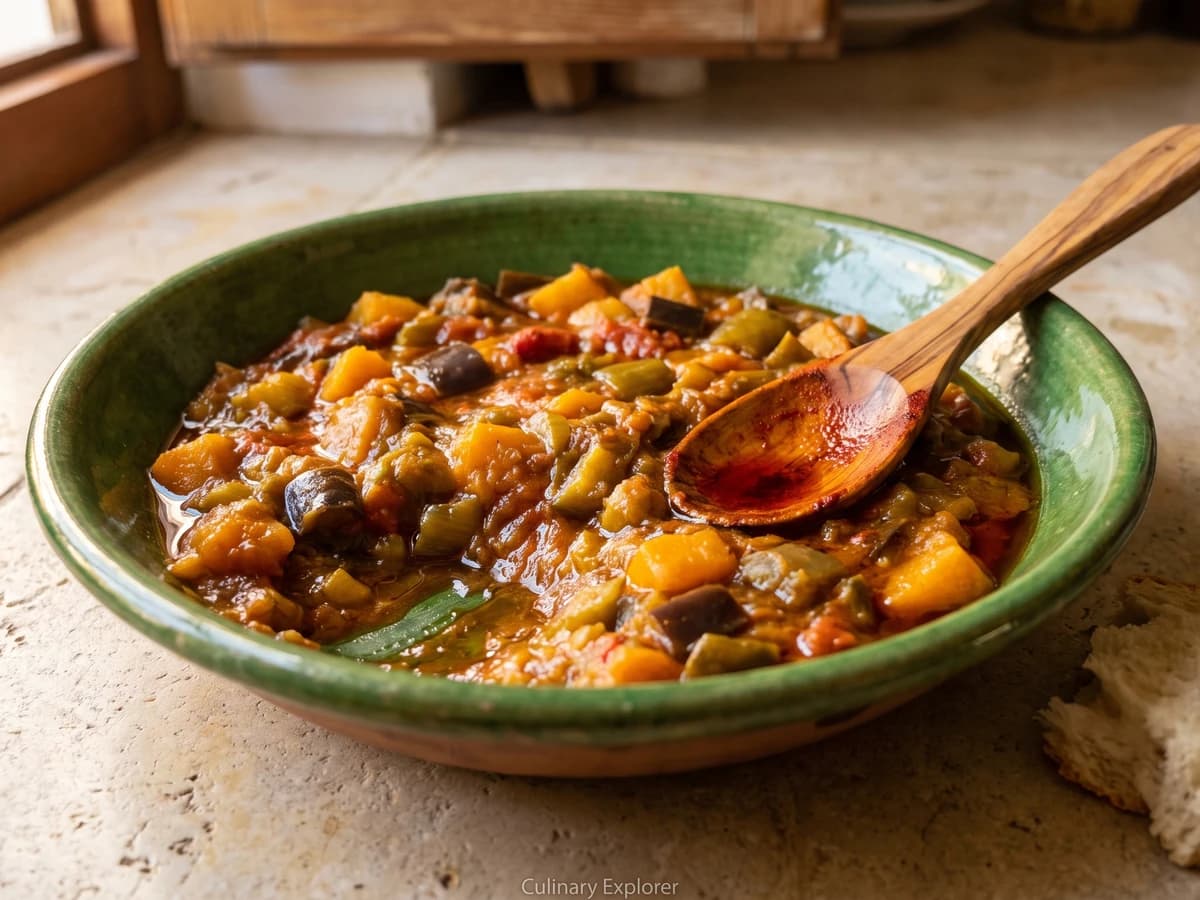
Alboronía is Andalucía's old pumpkin and aubergine stew, deepened with tomato, pimentón, and cumin, then cooked without hurry until the vegetables settle into a glossy, sweet, spoon-soft whole.

Chef Isabel
Aletría Murciana is Murcia's humble noodle guiso: fine fideos, pork ribs, potato, saffron, and a dark sweet sofrito. Get that base right and the pot knows where it's going.
Chef Isabel
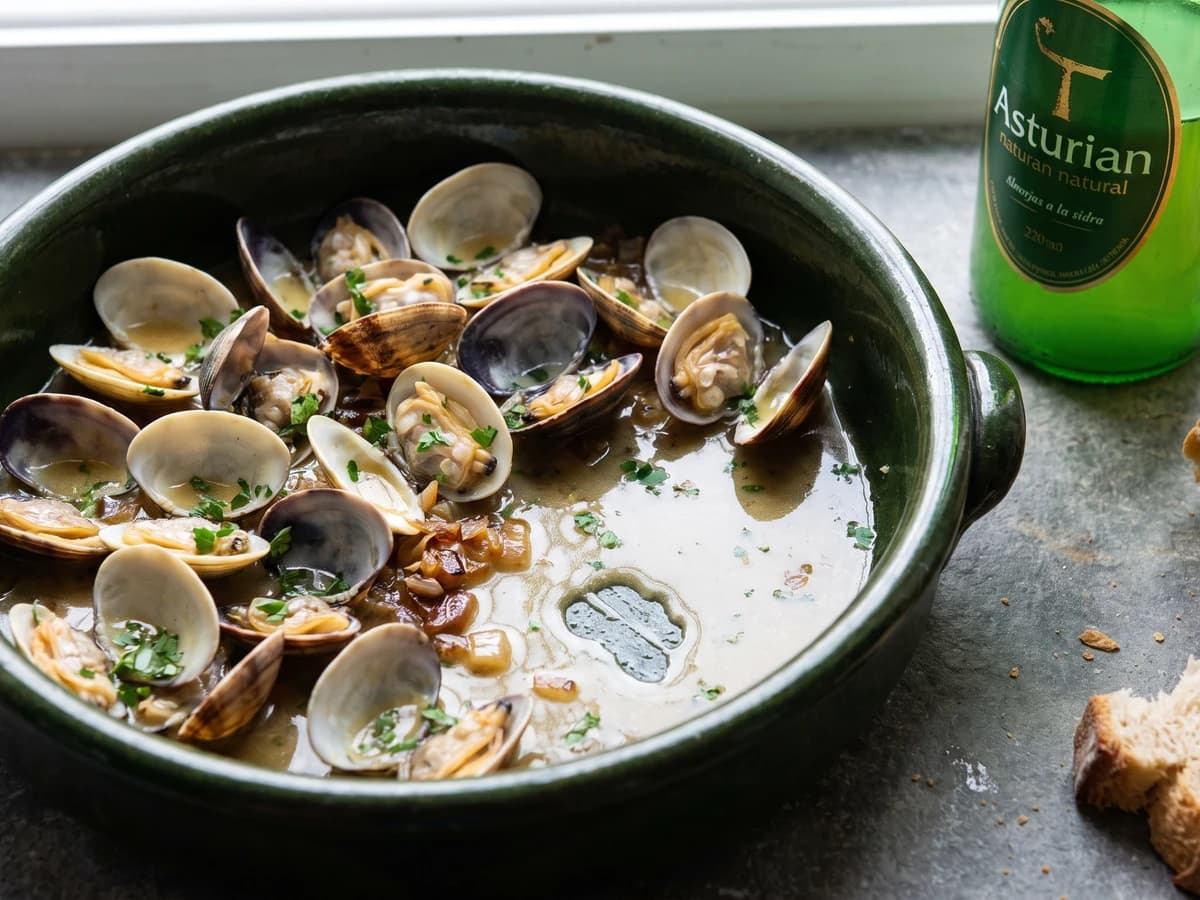
Asturias opens clams in tart natural cider over a slow onion and garlic sofrito, making a bright, briny sauce that asks for bread and rewards one rule: lift each clam as it opens.