Chef Isabel
Abanico Ibérico a la Plancha
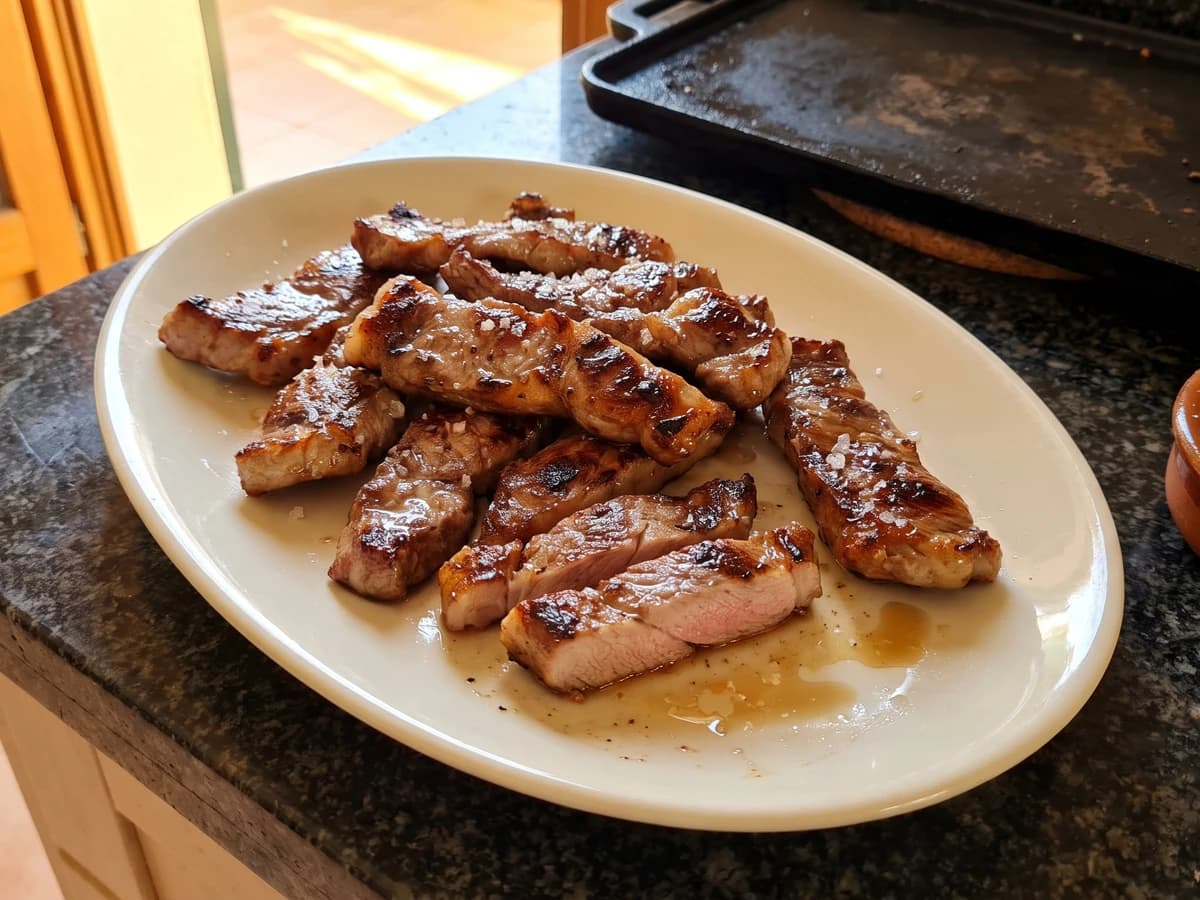
Extremadura's dehesa gives us this fan-shaped, marbled rib cut: salt it at the last moment, lay it on a fierce plancha, and count in seconds so the centre stays juicy.
A cooking platform built around craft, culture, and the stories behind what we eat.
Created by
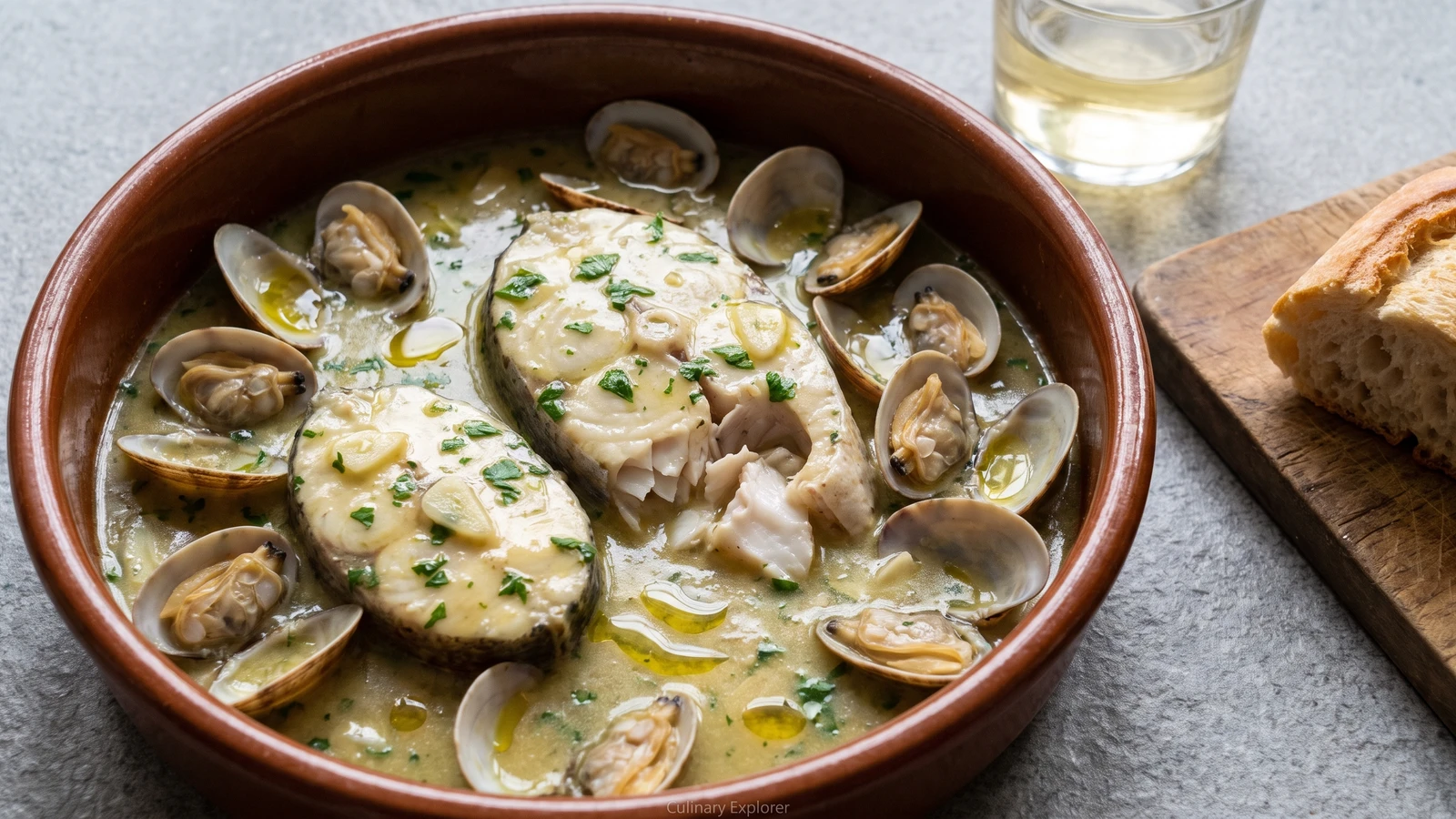
The Basque coast puts hake and clams in a pale parsley sauce whose silk comes from gentle heat and a circling cazuela. Shake the pan, never the fish, and supper is ready in minutes.
Merluza en salsa verde is Basque coastal cooking: thick hake steaks and clams in a pale, glossy sauce of garlic, parsley, olive oil, wine, and fish stock. The green comes from parsley, not spinach, and the sauce should cling lightly rather than sit like gravy. Hake has long been prized on Basque tables, and this clean, briny treatment gives good fish no place to hide and no reason to.
The method that decides it begins once the hake enters the cazuela, the shallow cooking pan. Keep the sauce at a bare simmer and move the whole pan in small circles instead of stirring. That motion draws the hake's gelatin and clam liquor into the olive oil, binding the sauce while leaving the fragile fish whole. A spoon breaks the hake. A hard boil turns the sauce greasy. Neither is necessary.
Frozen-at-sea European hake, thawed slowly and dried well, is often better than tired fresh fish. If hake simply isn't sold where you are, use thick skin-on cod loin. It will be firmer and shed less gelatin, so the sauce won't be quite as plush and the measured flour matters. No hace falta haber pisado España, you don't need to have set foot in Spain. The Margin beside this one says only this: once the fish goes in, the spoon stays out. Siempre sale, si lo sigues.
Merluza en salsa verde belongs to Basque coastal cooking, built around hake from the Bay of Biscay and the fresh green of chopped parsley. In 1723, Bilbao householder Plácida de Larrea described hake with parsley, asparagus, chirlas, and crayfish in a letter, one of the preparation's earliest written records. The related merluza a la koskera commonly carries peas, white asparagus, and egg, while this version with clams keeps to the plainer salsa verde line.
Quantity
720g total, 4 pieces about 180g each
cut 2.5 to 3cm thick
Quantity
500g
checked and purged
Quantity
1 litre
mixed with 30g fine sea salt for purging the clams
Quantity
4g
for seasoning the hake
Quantity
60ml
Quantity
12g, about 3 medium cloves
thinly sliced
Quantity
12g
Quantity
100ml
Quantity
280ml
kept hot, with 30ml reserved for adjusting the sauce
Quantity
30g
very finely chopped, 20g for the sauce and 10g to finish
| Ingredient | Quantity |
|---|---|
| skin-on, bone-in center-cut hake steakscut 2.5 to 3cm thick | 720g total, 4 pieces about 180g each |
| small live clams, such as almejas or littleneckschecked and purged | 500g |
| cold watermixed with 30g fine sea salt for purging the clams | 1 litre |
| fine sea saltfor seasoning the hake | 4g |
| extra virgin olive oil | 60ml |
| garlicthinly sliced | 12g, about 3 medium cloves |
| plain flour | 12g |
| dry txakoli or other dry, unoaked white wine | 100ml |
| unsalted light fish stockkept hot, with 30ml reserved for adjusting the sauce | 280ml |
| flat-leaf parsley leaves and tender stemsvery finely chopped, 20g for the sauce and 10g to finish | 30g |
Submerge the clams in the litre of cold water mixed with 30g salt and leave them in a cool place for 30 minutes. Lift them out rather than pouring away the water, so the expelled grit stays at the bottom, then rinse under cold running water. Discard cracked clams and any open one that does not close when tapped firmly.
Pat the hake thoroughly dry and season both sides evenly with the 4g salt. Leave it for 10 minutes while you slice the garlic and chop the parsley. Pésalo, no lo adivines. The clams bring their own salt, so seasoning the fish precisely now prevents an over-salted sauce later.
Set a wide 28 to 30cm cazuela or heavy sauté pan over medium-low heat. Add the olive oil and sliced garlic. Cook for 60 to 90 seconds, moving the garlic gently, until it is soft and barely pale gold. Do not brown it, or the clean sauce will taste bitter. Add the flour and stir for one minute so it loses its raw taste without taking colour.
Pour in the wine and stir while it bubbles, scraping up the flour from the base. Simmer for two minutes, until the sharp smell of alcohol has gone and the wine has reduced by about half. Gradually add 250ml of the hot fish stock, stirring until smooth. Add 20g of the chopped parsley and hold the sauce at a bare simmer for two minutes. It should be loose enough to flow when the pan moves, not thick like gravy.
Lay the hake steaks in one layer in the sauce and cook uncovered for three minutes at the gentlest simmer. Turn each piece once with a wide spatula, then arrange the clams around the fish and cover the pan. Cook for four to six minutes more. Every minute, grip the handles with dry cloths and move the whole pan in small, steady circles. Once the fish is in, use no spoon. The hake is ready when it separates into moist flakes and reaches 63°C at its thickest point; the clams must be open.
Take the cazuela off the heat and discard any unopened clams. Scatter over the remaining 10g parsley, then circle the pan for another 20 to 30 seconds. The sauce should look glossy and coat the back of a spoon in a thin layer. If it is too thick, circle in the reserved hot stock 15ml at a time. Taste only now, because the clam liquor has seasoned it. Rest for two minutes and serve directly from the cazuela.
1 serving (about 270g)
Culinary guides, cultural storytelling, and the editorial depth that makes cooking meaningful.
Discover Culinary ExplorerChef Isabel
Extremadura's dehesa gives us this fan-shaped, marbled rib cut: salt it at the last moment, lay it on a fierce plancha, and count in seconds so the centre stays juicy.

Chef Isabel
Aletría Murciana is Murcia's humble noodle guiso: fine fideos, pork ribs, potato, saffron, and a dark sweet sofrito. Get that base right and the pot knows where it's going.

Chef Isabel
Andrajos are Andalucía's dough-rag stew from Jaén and Granada: a slow rabbit guiso thickened with torn sheets of flour dough, rolled thin so they cook tender instead of gummy.
Chef Isabel
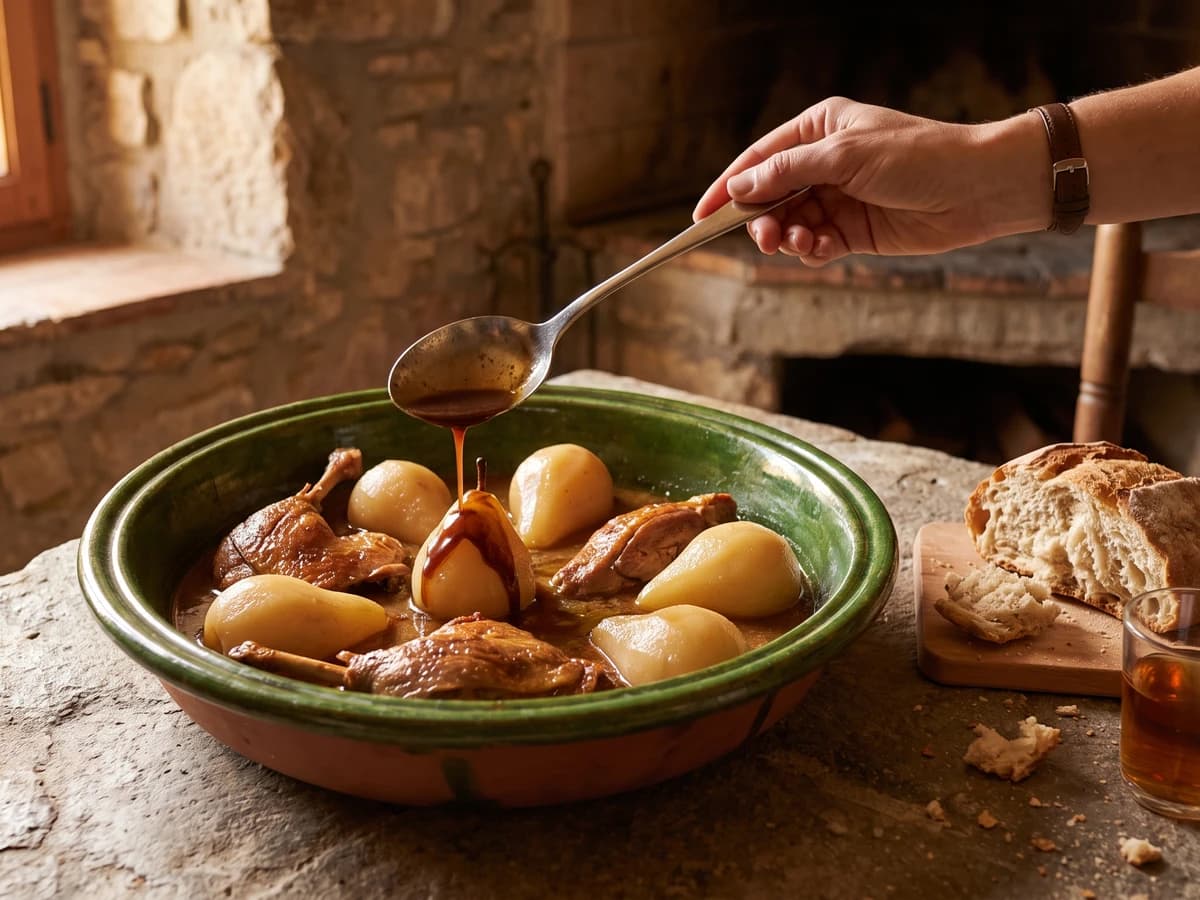
Ànec amb peres is Catalan celebration cooking: duck braised in a dark sofregit, firm autumn pears added near the end, and an almond-garlic picada that turns the juices into a close, glossy sauce.