Chef Isabel
Abanico Ibérico a la Plancha
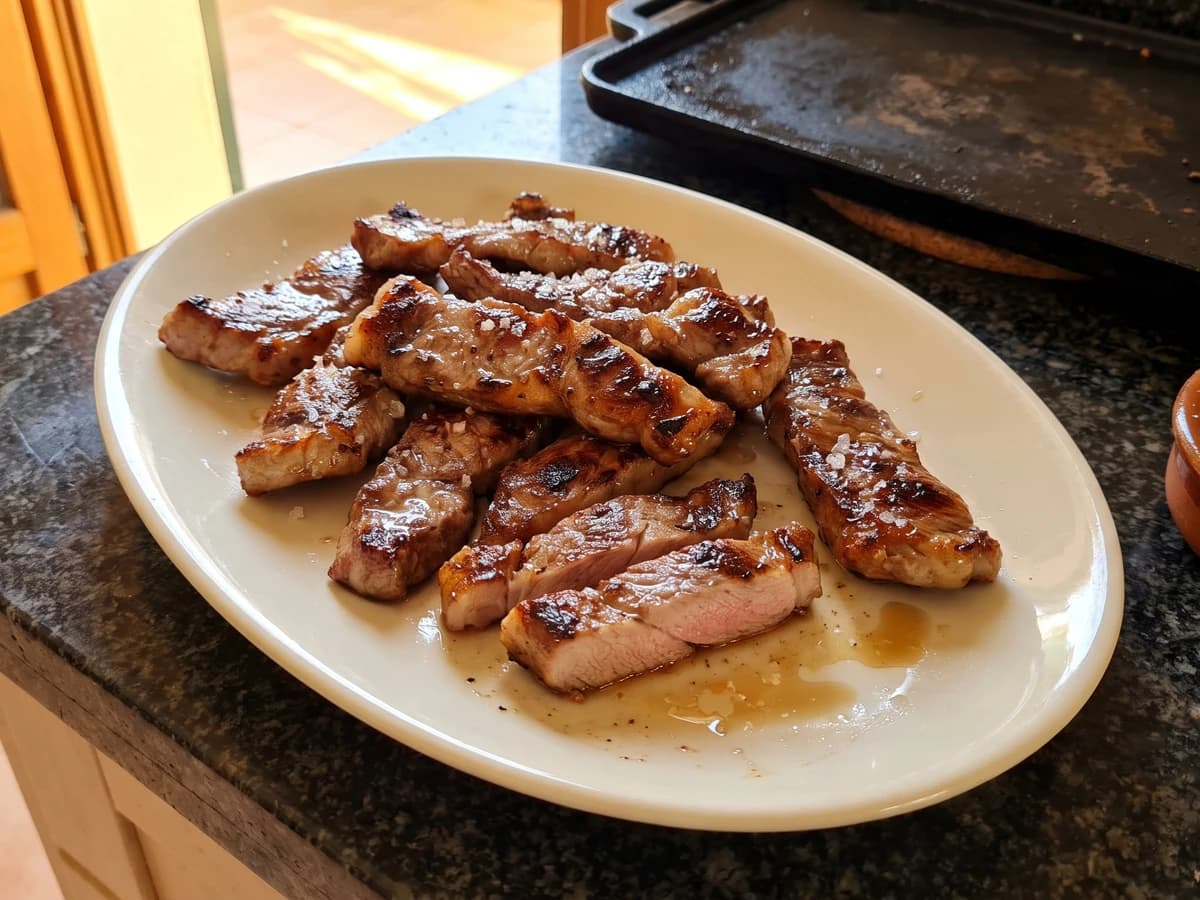
Extremadura's dehesa gives us this fan-shaped, marbled rib cut: salt it at the last moment, lay it on a fierce plancha, and count in seconds so the centre stays juicy.
A cooking platform built around craft, culture, and the stories behind what we eat.
Created by
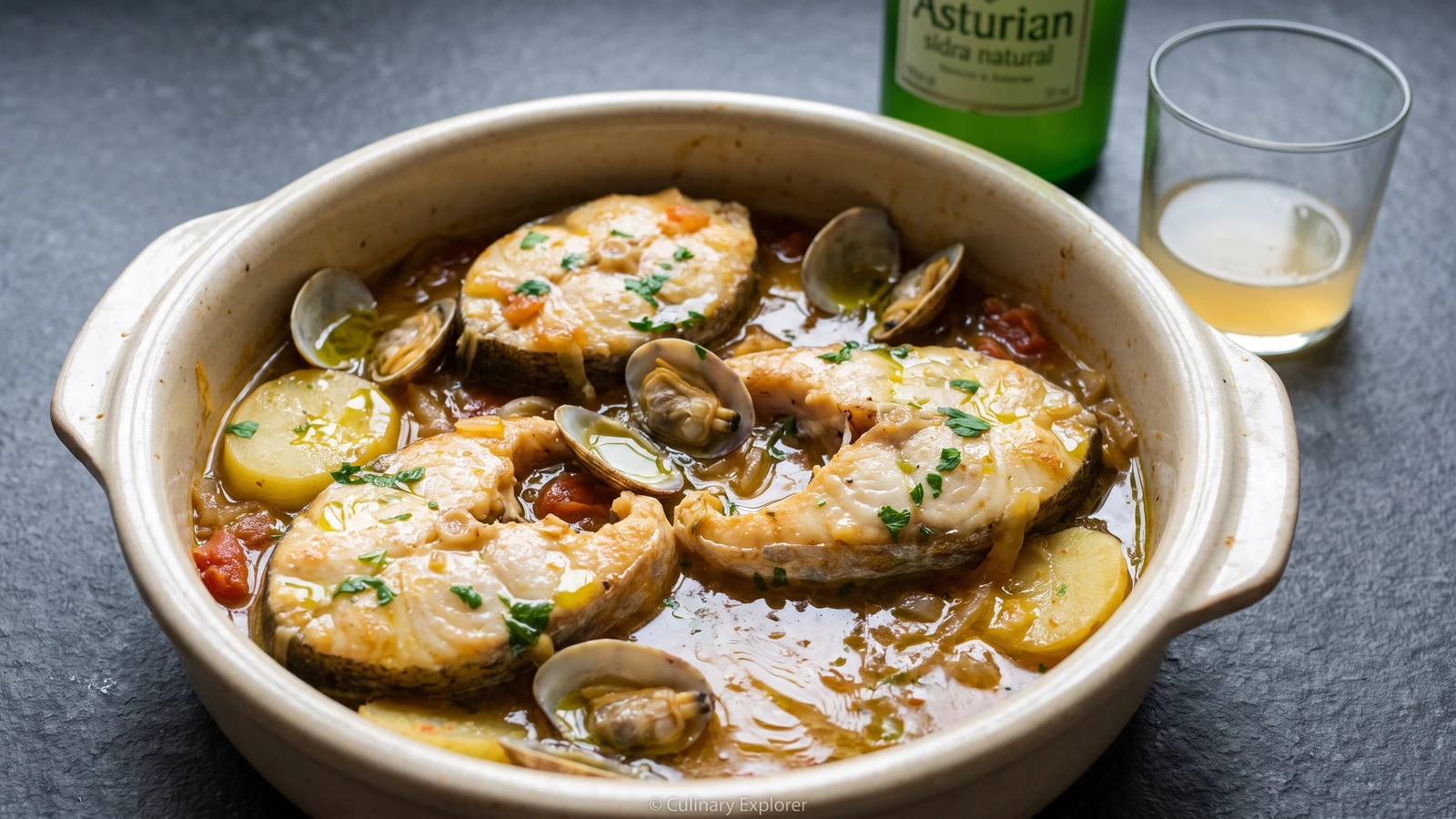
Asturias brings its coast and orchards together here: thick hake steaks and clams in a tart natural-cider sauce, cooked just long enough for the fish to flake and stay juicy.
Merluza a la sidra is Asturian, a cazuela of thick hake steaks and clams in the dry, tart cider of the northern orchards. Esto es de Asturias, no de "España" a secas. The sidra natural gives the sauce its gentle apple sharpness and marks it apart from the neighboring hake dishes built around wine, garlic, or pimentón.
The method that decides it is simple: reduce the cider before the fish goes into the pan. Let it bubble until it loses its raw alcoholic smell and falls by half, then add the stock and clam liquor. The harshness cooks away, the fruit remains, and the sauce has enough body to cling to the hake. Put the fish in too early and it overcooks while the cider is still thin and rough.
No hace falta haber pisado España. If Asturian sidra natural isn't sold where you live, use a dry hard cider with no added fruit flavor, still if possible. The sauce will be a little rounder and less tart; if it tastes sweet after reducing, 5ml of sherry vinegar brings back the necessary edge. For the fish, thick pollock or cod loin will stand in for hake, though cod is firmer and its flavor more pronounced.
Keep the simmer gentle once the hake is in, and add the opened clams only at the end. I wrote one line in the Margin beside this dish: the sauce waits for the fish, never the other way around. Siempre sale, si lo sigues.
Merluza a la sidra belongs to the coastal cooking of Asturias, where hake from the Cantabrian Sea met cider from orchard districts such as Villaviciosa and Nava. Natural cider serves here as a cooking liquor, its acidity balancing the sweetness of hake and clams rather than merely flavoring the finished sauce. Asturian households vary the cazuela with potatoes, tomato, or additional shellfish, but dry sidra natural remains its regional mark.
Quantity
500g
scrubbed
Quantity
30g
for purging the clams
Quantity
4 steaks (180 to 200g each)
cut about 3cm thick and patted dry
Quantity
600g
peeled and sliced 5mm thick
Quantity
8g
divided
Quantity
45g
30g for the hake and 15g for the sauce
Quantity
45ml
divided
Quantity
250g
finely diced
Quantity
3 cloves
finely minced
Quantity
120g
Quantity
300ml
Quantity
200ml
divided
Quantity
1
Quantity
15g
finely chopped
Quantity
5ml
use only if the reduced substitute cider tastes sweet
| Ingredient | Quantity |
|---|---|
| live clamsscrubbed | 500g |
| coarse sea saltfor purging the clams | 30g |
| bone-in hake steakscut about 3cm thick and patted dry | 4 steaks (180 to 200g each) |
| waxy potatoespeeled and sliced 5mm thick | 600g |
| fine sea saltdivided | 8g |
| plain flour30g for the hake and 15g for the sauce | 45g |
| extra virgin olive oildivided | 45ml |
| onionfinely diced | 250g |
| garlicfinely minced | 3 cloves |
| crushed canned tomato | 120g |
| Asturian sidra natural or dry hard cider | 300ml |
| unsalted fish stockdivided | 200ml |
| bay leaf | 1 |
| flat-leaf parsleyfinely chopped | 15g |
| sherry vinegar (optional)use only if the reduced substitute cider tastes sweet | 5ml |
Dissolve the coarse salt in 1 litre of cold water. Add the clams and refrigerate for 1 hour so they can release their grit. Lift them out rather than pouring them into a colander, which would send the sand back over them. Rinse under cold running water and discard any cracked clam or any open one that doesn't close when tapped.
Put the sliced potatoes in a saucepan, cover with cold water, and add 2g of the fine salt. Bring to a simmer and cook for 7 minutes. They should bend slightly but remain firm in the middle. Drain carefully and spread them on a plate so they stop cooking.
Season the hake with 4g of the fine salt and leave it for 10 minutes, then pat the surface dry. Dust with 30g of flour and shake off every loose bit. Heat 30ml of the olive oil in a wide cazuela or sauté pan over medium-high heat. Sear the hake for 1 minute on each side, just until the flour forms a pale golden skin, then lift it onto a plate. The middle must remain raw.
Lower the heat and add the remaining 15ml olive oil. Add the onion with the remaining 2g fine salt and cook gently for 18 to 22 minutes, stirring often, until deep gold, soft, and almost jammy. This is the sofrito, the slow onion base, and its sweetness must come from time rather than high heat. Add the garlic and cook for 1 minute, only until fragrant.
Stir in the tomato and cook for 6 to 8 minutes, until it darkens slightly and a spoon drawn through the pan leaves a clear trail. Sprinkle in the remaining 15g flour and stir for 1 minute. It should smell toasted, not raw, without taking on a dark color.
Pour in the cider all at once, scraping the bottom of the pan. Bring it to a lively bubble and cook uncovered for 8 to 10 minutes, until reduced from 300ml to roughly 150ml. Smell it: the raw alcoholic sting should be gone, leaving tart apple and the sweetness of the sofrito. This reduction is the step that decides the dish.
While the cider reduces, put the clams in a separate lidded pan with 50ml of the fish stock. Cover and cook over medium-high heat for 3 to 5 minutes, lifting each clam out as soon as it opens. Discard any that remain closed. Strain the cooking liquor through a fine sieve to catch the last grit.
Add the strained clam liquor, the remaining 150ml fish stock, and the bay leaf to the reduced cider sauce. Bring to a gentle simmer. Arrange the potatoes across the pan and cook for 5 minutes, turning them once, until almost tender. If the sauce becomes too thick to move around them, add 30 to 60ml water.
Nestle the hake steaks among the potatoes and spoon sauce over them. Cover and cook at the gentlest simmer for 5 to 7 minutes, depending on thickness. The flesh should be opaque beside the bone, separate into moist flakes under light pressure, and reach 63°C at its thickest point. Don't boil the sauce hard; hake is delicate and will tighten.
Add the opened clams and half the parsley. Shake the pan gently by its handles to settle everything into the sauce, then cover for 1 minute, just long enough to warm the clams. Remove the bay leaf, rest the cazuela for 3 minutes, and finish with the remaining parsley. Take the whole pan to the table and spoon plenty of cider sauce over each serving.
1 serving (about 470g)
Culinary guides, cultural storytelling, and the editorial depth that makes cooking meaningful.
Discover Culinary ExplorerChef Isabel
Extremadura's dehesa gives us this fan-shaped, marbled rib cut: salt it at the last moment, lay it on a fierce plancha, and count in seconds so the centre stays juicy.

Chef Isabel
Aletría Murciana is Murcia's humble noodle guiso: fine fideos, pork ribs, potato, saffron, and a dark sweet sofrito. Get that base right and the pot knows where it's going.

Chef Isabel
Andrajos are Andalucía's dough-rag stew from Jaén and Granada: a slow rabbit guiso thickened with torn sheets of flour dough, rolled thin so they cook tender instead of gummy.
Chef Isabel
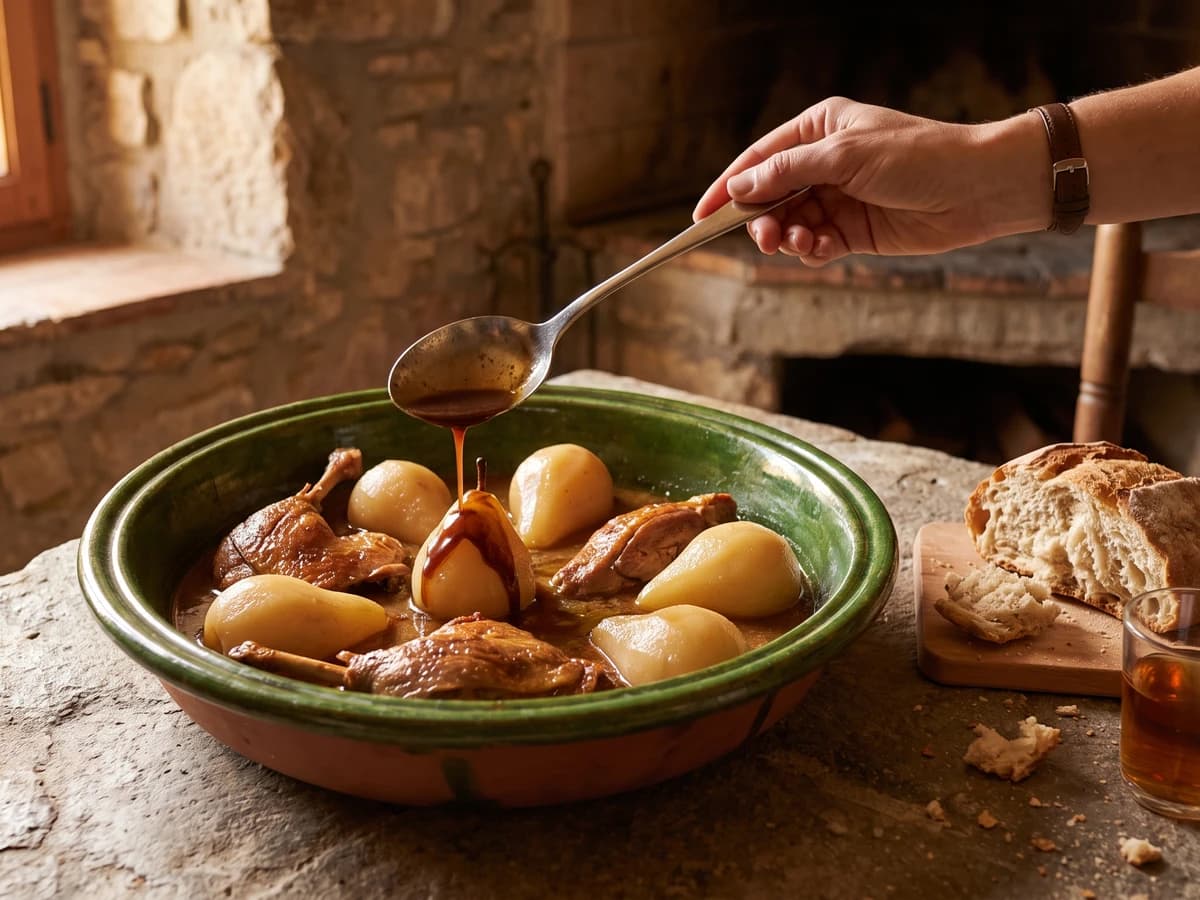
Ànec amb peres is Catalan celebration cooking: duck braised in a dark sofregit, firm autumn pears added near the end, and an almond-garlic picada that turns the juices into a close, glossy sauce.