Chef Isabel
Aceitunas Aliñadas Andaluzas
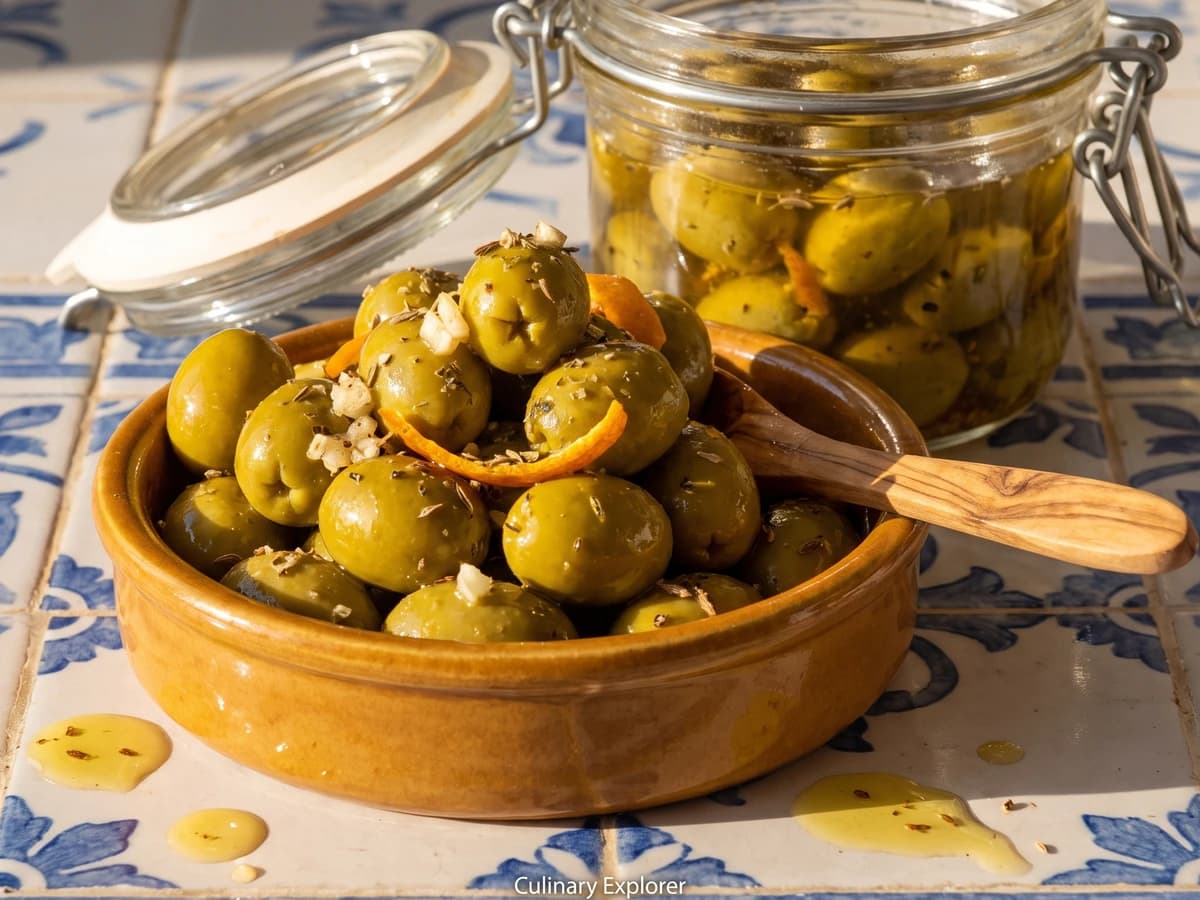
Andalucía's green olives are cracked just enough to drink in garlic, cumin, oregano and sherry vinegar, then left two days until the brine turns fragrant and every bite carries the aliño.
A cooking platform built around craft, culture, and the stories behind what we eat.
Created by
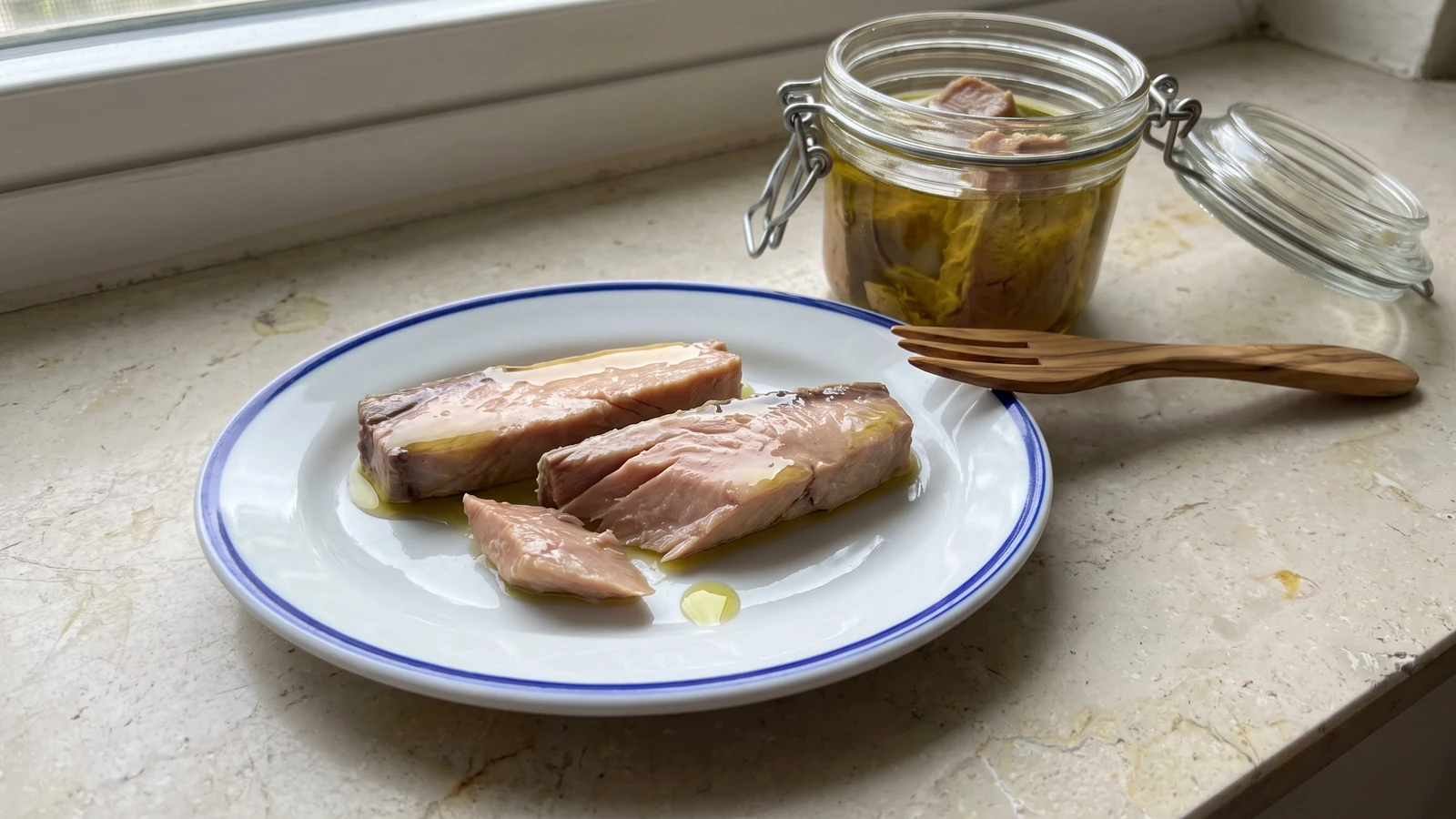
On Andalucía's coast, humble melva is gently cooked, cleaned while warm, dried well, and covered with olive oil, an everyday conserva whose clear flavor depends on keeping water out of the jar.
Melva en aceite is Andalucía's coastal conserva: a small tuna relative cooked in salted water, divided into clean loins, and covered with olive oil. Nothing else. Melva is darker, firmer, and more pronounced than the bonito del norte packed along the Cantabrian coast. That honest, economical fish is what makes this the preserve of the south and not its northern neighbour.
The step that decides it comes after cooking. Clean the melva while it's still warm, then let the loins drain, cool, and dry completely before they meet the oil. Water caught in the jar makes the flavour dull and shortens its keeping time. The poach must be gentle too. Hold the water at a bare simmer until the thickest piece reaches 63°C, because a hard boil turns firm melva dry and woolly.
If melva doesn't reach your market, use small skipjack tuna. Its darker, stronger flesh comes closest, though the jar is then atún en aceite, not melva. Albacore also works, but it will be paler, softer, and milder. No hace falta haber pisado España. My margin beside this recipe says only, "ni una gota de agua," not one drop of water. Follow that, keep the jar cold, and siempre sale, si lo sigues.
Melva de Andalucía belongs to the coastal preserving towns of Almería, Cádiz, Granada, Huelva, and Málaga, where the seasonal catches of Auxis rochei and Auxis thazard supplied a practical household preserve. The traditional work is manual: the fish is cooked, then its skin, bones, and dark bloodline are removed before the clean loins are packed in oil. Its firm, darker meat distinguishes it from Cantabrian bonito del norte and made melva an everyday conserva of the Andalusian coast.
Quantity
1kg cleaned weight
head and viscera removed, cut across the bone into 5cm sections
Quantity
2 litres
Quantity
100g
Quantity
500ml
| Ingredient | Quantity |
|---|---|
| fresh melvahead and viscera removed, cut across the bone into 5cm sections | 1kg cleaned weight |
| water | 2 litres |
| fine sea salt | 100g |
| mild olive oil | 500ml |
Ask the fishmonger to remove the head and viscera, but leave the backbone in place. Weigh 1kg after cleaning, pésalo, no lo adivines. Cut the fish across the bone into sections about 5cm thick, rinse the cavity and cut surfaces briefly under cold water, then pat them dry.
Put the 2 litres of water and 100g salt into a wide 4-litre pot. Bring it to a boil, stirring until the salt dissolves, then lower the heat until the surface holds a quiet simmer.
Lower the melva sections into the salted water. Let the water return slowly to a bare simmer, then cook for 10 to 14 minutes, depending on thickness. Do not let it boil hard. The flesh should be opaque beside the backbone, and an instant-read thermometer inserted into the thickest part must register 63°C. Lift the pieces onto a tray and leave them for 10 minutes, just until they can be handled.
While the fish is still warm, pull away the skin and fins. Separate the four loins from each section and remove the backbone, pin bones, loose scales, and the very dark central bloodline. Work gently so the loins remain in broad pieces. Run a fingertip over every surface to find the small bones that eyes miss.
Set the cleaned loins in one layer on a rack over a tray. Blot them carefully with kitchen paper, refrigerate uncovered for 1 hour, then blot once more. This is the step that decides the jar: the surface must feel dry, with no cooking water caught between the flakes.
Wash two 500ml jars and their lids in hot soapy water, rinse them well, and dry them completely. Pack the cold melva loosely into the jars without crushing the flakes. Pour in the olive oil, slide a clean skewer around the sides to release trapped air, and add more oil until the fish is covered by at least 1cm. Leave about 1.5cm of empty space beneath each lid, close the jars, and refrigerate immediately.
Leave the melva under oil for at least 12 hours before serving so the flesh settles and takes on the oil. Take out only the amount you need and let it stand for 15 to 20 minutes, until the chilled oil clears and loosens. Serve the loins with a spoonful of their oil. Keep the remaining fish submerged, return it promptly to the refrigerator, and finish it within 3 days of packing.
1 serving (about 125g)
Culinary guides, cultural storytelling, and the editorial depth that makes cooking meaningful.
Discover Culinary ExplorerChef Isabel
Andalucía's green olives are cracked just enough to drink in garlic, cumin, oregano and sherry vinegar, then left two days until the brine turns fragrant and every bite carries the aliño.
Chef Isabel
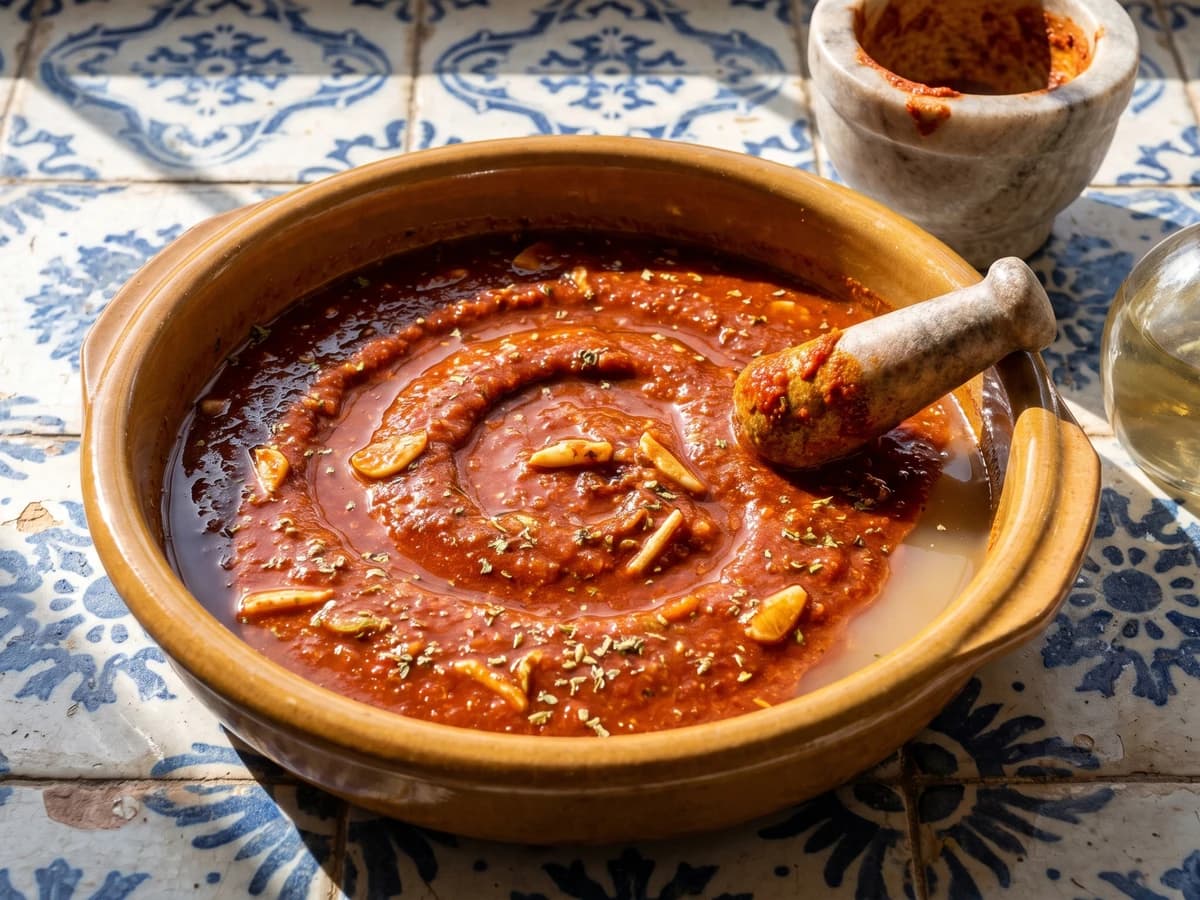
Andalucía's sharp, brick-red marinade brings vinegar, garlic, oregano, cumin and pimentón to fish and pork; pound the seasonings first, then give the acid time to carry them through.
Chef Isabel
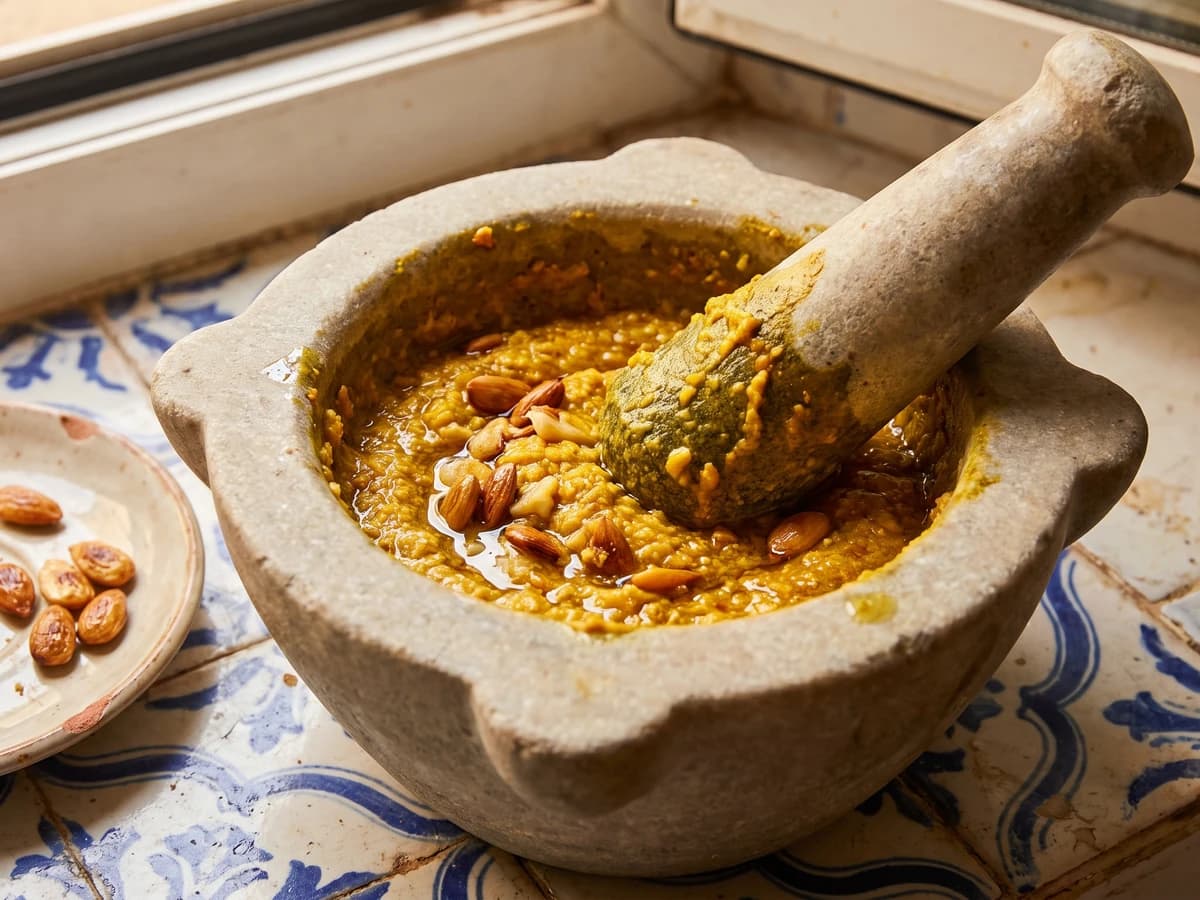
Almería's ajopollo turns fried garlic, almonds, bread and saffron into a golden mortar paste that gives modest fish and potato guisos their body, richness and unmistakable southern depth.
Chef Isabel
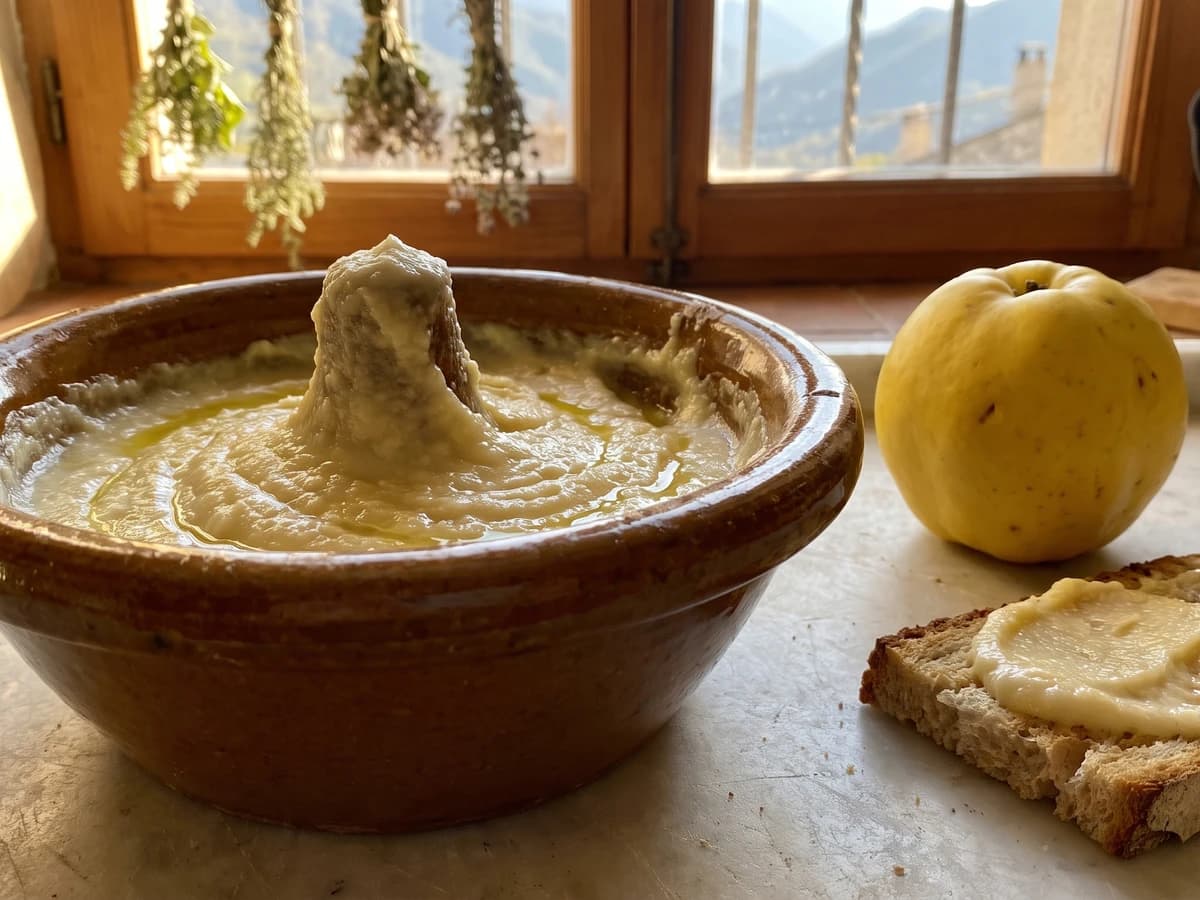
Allioli de codony belongs to the Catalan Pyrenees: boiled quince, raw garlic, salt, and olive oil worked into a thick, fragrant sauce for grilled meat, sausages, bread, and the autumn table.