Chef Isabel
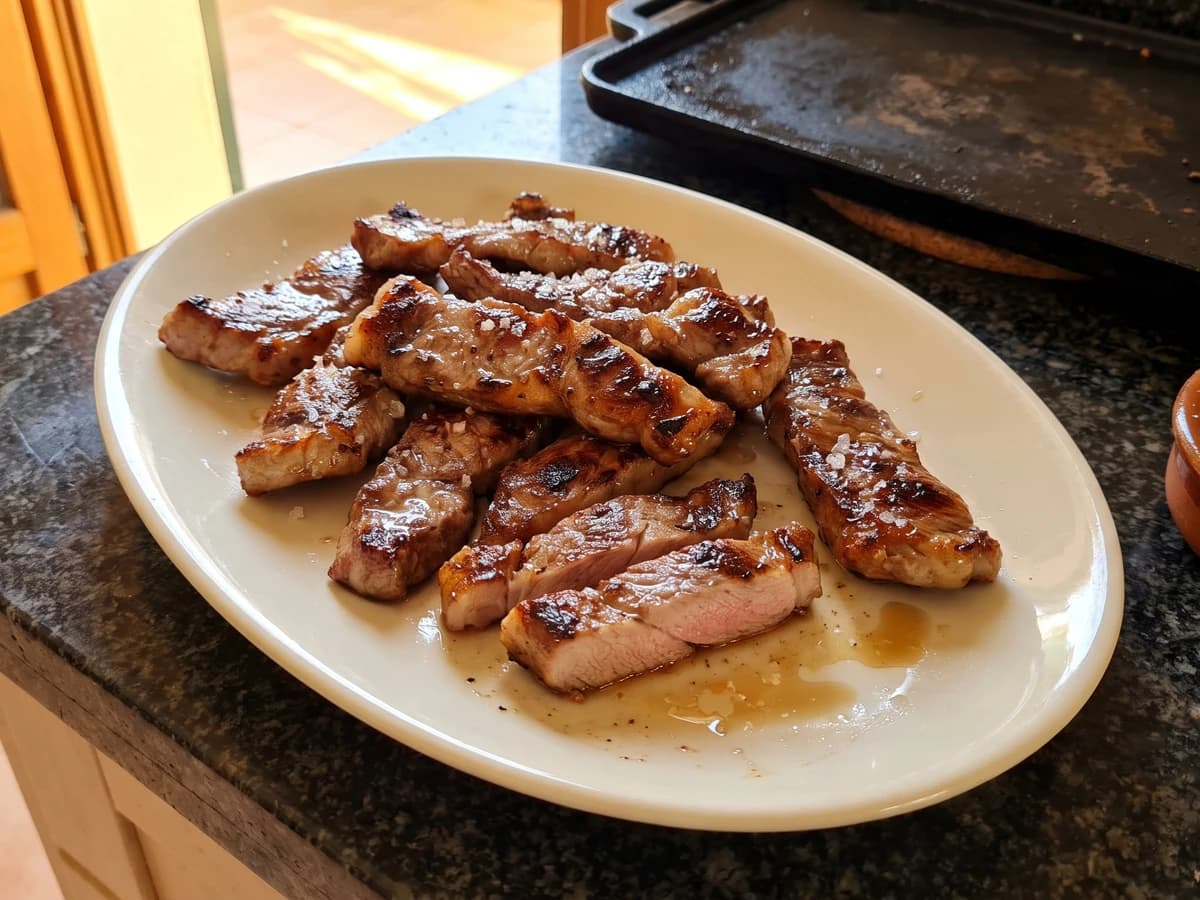
Abanico Ibérico a la Plancha
Extremadura's dehesa gives us this fan-shaped, marbled rib cut: salt it at the last moment, lay it on a fierce plancha, and count in seconds so the centre stays juicy.
A cooking platform built around craft, culture, and the stories behind what we eat.
Created by
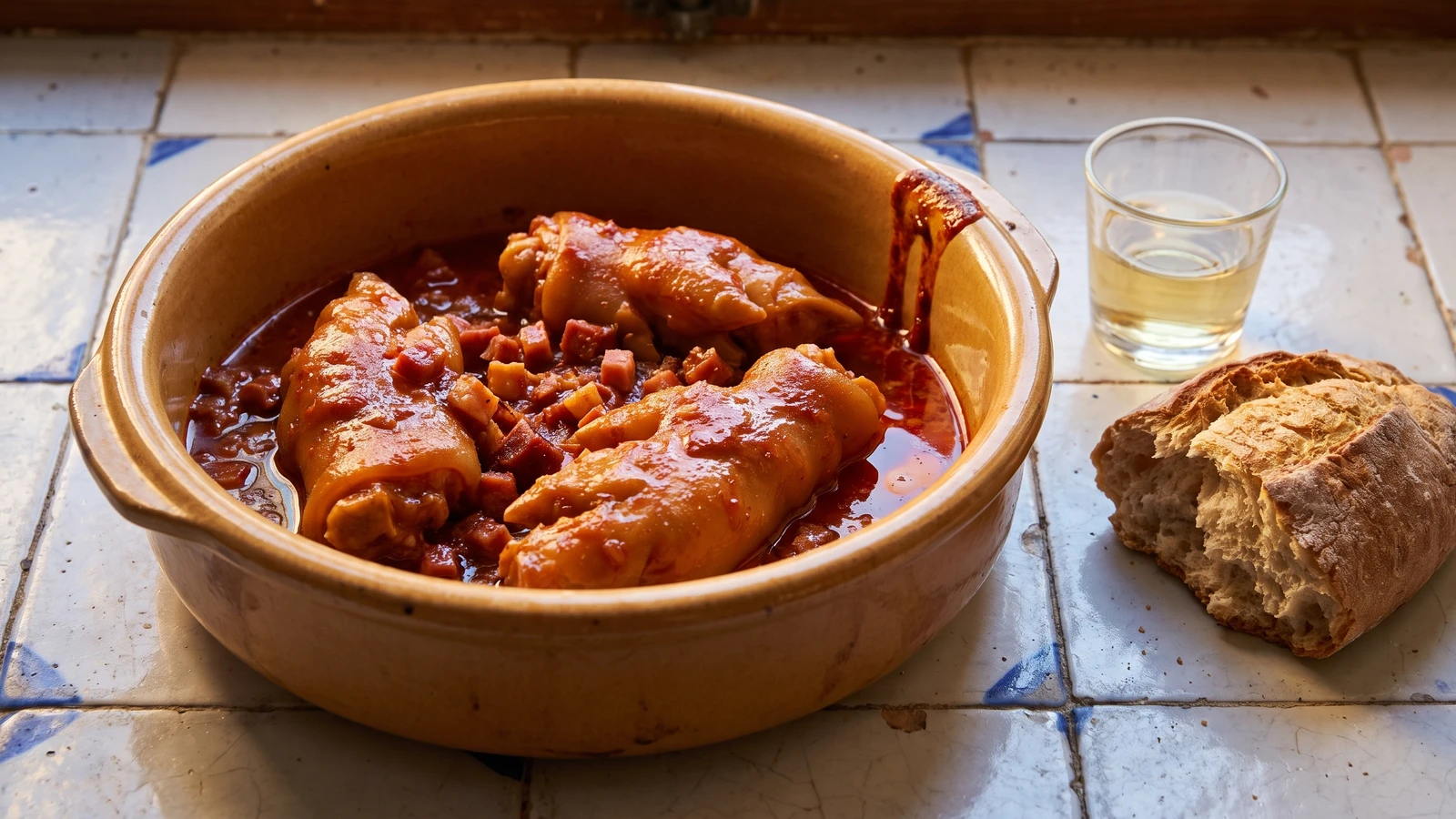
Andalusian pig's trotters become proper cocina de cuchara after a long, quiet simmer, with dark tomato sofrito, jamón, chorizo, pimentón, and fino holding their rich gelatine in a glossy sauce.
Manitas de cerdo en salsa are Andalucía's casquería, the careful cooking of the pig's humbler parts. The trotters are simmered until their bones loosen, then settled into a dark sofrito, the slow onion base, with tomato, jamón, chorizo, pimentón, and dry fino from Jerez. The result is proper cocina de cuchara, spoon food: rich, lightly smoky, and sticky enough for bread.
The one thing that decides the dish is the heat. Keep it low from beginning to end. A hard boil tears the skin and clouds the cooking liquor, while a bare tremble slowly releases the gelatine that later binds the sauce without flour. Finish the sofrito until the tomato is brick-red and almost dry before adding the trotters. Rush that base and the sauce tastes sharp and thin, however long the pot sits afterward.
Ask the butcher to clean and split the feet for you. Frozen cleaned trotters work well if fresh ones are scarce; thaw them overnight and blanch them exactly as written, knowing they may release a little more water. If fino is hard to find, use dry white wine with a measured spoonful of sherry vinegar. You lose a little of Jerez's nutty edge, but the sauce keeps its balance. The Margin beside mine says only, "a tremble, never a boil." Siempre sale, si lo sigues. It turns out if you follow it.
Manitas de cerdo en salsa belong to Andalucía's long tradition of casquería, in which the inexpensive parts of the pig were cooked slowly rather than wasted. Across the Guadalquivir valley, household pots joined the feet's gelatine to tomato, pimentón, cured pork, and local wine, though the balance changes from one town and family to the next. The dish is tied to the matanza, the household pig slaughter that filled the larder, with the feet going to the pot while hams and sausages were salted and hung.
Quantity
4 whole (about 1.8kg)
cleaned, split lengthwise, and cut once across the joint by the butcher
Quantity
3 litres
Quantity
2.5 litres, plus up to 500ml if needed
Quantity
1 (about 200g)
peeled and halved
Quantity
1 (about 120g)
cut into 3 pieces
Quantity
1 (about 150g)
cleaned and cut into 3 pieces
Quantity
2
divided
Quantity
8
Quantity
2
Quantity
10g, plus up to 3g after tasting
Quantity
60ml
Quantity
100g
casing removed and cut into 1cm dice
Quantity
80g
cut into small dice
Quantity
250g
finely diced
Quantity
120g
seeded and finely diced
Quantity
20g
finely chopped
Quantity
300g
grated if fresh, crushed if canned
Quantity
6g
Quantity
1
left whole
Quantity
150ml
or substitute 140ml dry white wine mixed with 10ml sherry vinegar
| Ingredient | Quantity |
|---|---|
| pig's trotterscleaned, split lengthwise, and cut once across the joint by the butcher | 4 whole (about 1.8kg) |
| cold water, for blanching | 3 litres |
| cold water, for simmering | 2.5 litres, plus up to 500ml if needed |
| onion for the cooking liquorpeeled and halved | 1 (about 200g) |
| carrotcut into 3 pieces | 1 (about 120g) |
| leekcleaned and cut into 3 pieces | 1 (about 150g) |
| bay leavesdivided | 2 |
| black peppercorns | 8 |
| whole cloves | 2 |
| fine sea salt | 10g, plus up to 3g after tasting |
| extra virgin olive oil | 60ml |
| mild paprika-cured cooking chorizocasing removed and cut into 1cm dice | 100g |
| jamón serranocut into small dice | 80g |
| onion for the sofritofinely diced | 250g |
| green frying pepperseeded and finely diced | 120g |
| garlicfinely chopped | 20g |
| ripe tomatoes or canned whole peeled tomatoesgrated if fresh, crushed if canned | 300g |
| sweet pimentón de la Vera | 6g |
| small dried guindilla (optional)left whole | 1 |
| fino or manzanilla sherryor substitute 140ml dry white wine mixed with 10ml sherry vinegar | 150ml |
Check the prepared trotters for stray bristles or bone dust, wiping away any dust with damp kitchen paper. Put them in a 6-litre pot with 3 litres of cold water and bring to a full boil. Boil for 5 minutes, then drain. Rinse the blanched pieces under cool water and wash the pot. This first water carries away loose blood and scum, giving you a cleaner cooking liquor and a clearer sauce.
Return the trotters to the clean pot. Add 2.5 litres of cold water, the halved onion, carrot, leek, 1 bay leaf, peppercorns, cloves, and 10g salt. The liquid should cover the meat by about 2cm; add no more than 500ml extra water if your pot requires it. Bring up slowly, skim the grey foam during the first 20 minutes, then lower the heat until only an occasional bubble breaks the surface. Cover slightly ajar and cook for 2 hours 30 minutes to 3 hours. Start checking at 2 hours 30 minutes. They are ready when a small bone wiggles easily and a skewer passes through the thick skin without springing back.
While the trotters finish cooking, warm the olive oil in a wide, heavy casserole over medium-low heat. Add the chorizo and cook for 4 minutes, just until its red fat colours the oil. Add the jamón and cook for 1 minute. Lift both out with a slotted spoon and reserve. Add the diced onion and green pepper to the flavoured oil. Cook gently for 25 minutes, stirring often, until the vegetables are dark gold, soft, and almost jammy. Add the garlic and cook for 2 minutes.
Add the grated or crushed tomato to the sofrito. Cook over medium-low heat for 15 to 18 minutes, stirring more often near the end, until it turns brick-red, loses its raw smell, and leaves a thin line of oil around the pan. Take the casserole off the heat. Stir in the pimentón and the whole guindilla, if using, for 20 seconds. Pimentón scorches quickly, and burnt pimentón makes the whole pot bitter.
Return the casserole to medium heat and pour in the fino, or the measured white wine and vinegar substitute. Scrape up the darkened sofrito from the bottom and boil for 3 minutes, until the sharp smell of alcohol has gone and the liquid has reduced by roughly half. Return the chorizo and jamón to the casserole.
Lift the tender trotters from their pot with a slotted spoon. Strain and reserve 750ml of their cooking liquor, discarding the vegetables and spices. Arrange the trotter pieces in the sofrito and add 650ml of the reserved liquor with the remaining bay leaf. Bring to a gentle simmer and cook uncovered for 40 to 45 minutes, turning the pieces carefully every 10 minutes. Add the remaining 100ml liquor only if the pan threatens to dry before the sauce is ready. The finished sauce should coat a spoon lightly while warm, with small pools of red-gold oil at the edges.
Remove the bay leaf and guindilla. Rest the casserole off the heat for 20 minutes, then taste the sauce before adding any more salt; the jamón and chorizo may have given it all it needs. Add up to 3g salt only if necessary. Serve one whole trotter per person in deep plates, with plenty of sauce and sturdy bread. There are small bones, so this is food for a fork, patient fingers, and no ceremony.
1 serving (about 500g)
Culinary guides, cultural storytelling, and the editorial depth that makes cooking meaningful.
Discover Culinary ExplorerChef Isabel
Extremadura's dehesa gives us this fan-shaped, marbled rib cut: salt it at the last moment, lay it on a fierce plancha, and count in seconds so the centre stays juicy.

Chef Isabel
Aletría Murciana is Murcia's humble noodle guiso: fine fideos, pork ribs, potato, saffron, and a dark sweet sofrito. Get that base right and the pot knows where it's going.

Chef Isabel
Andrajos are Andalucía's dough-rag stew from Jaén and Granada: a slow rabbit guiso thickened with torn sheets of flour dough, rolled thin so they cook tender instead of gummy.
Chef Isabel
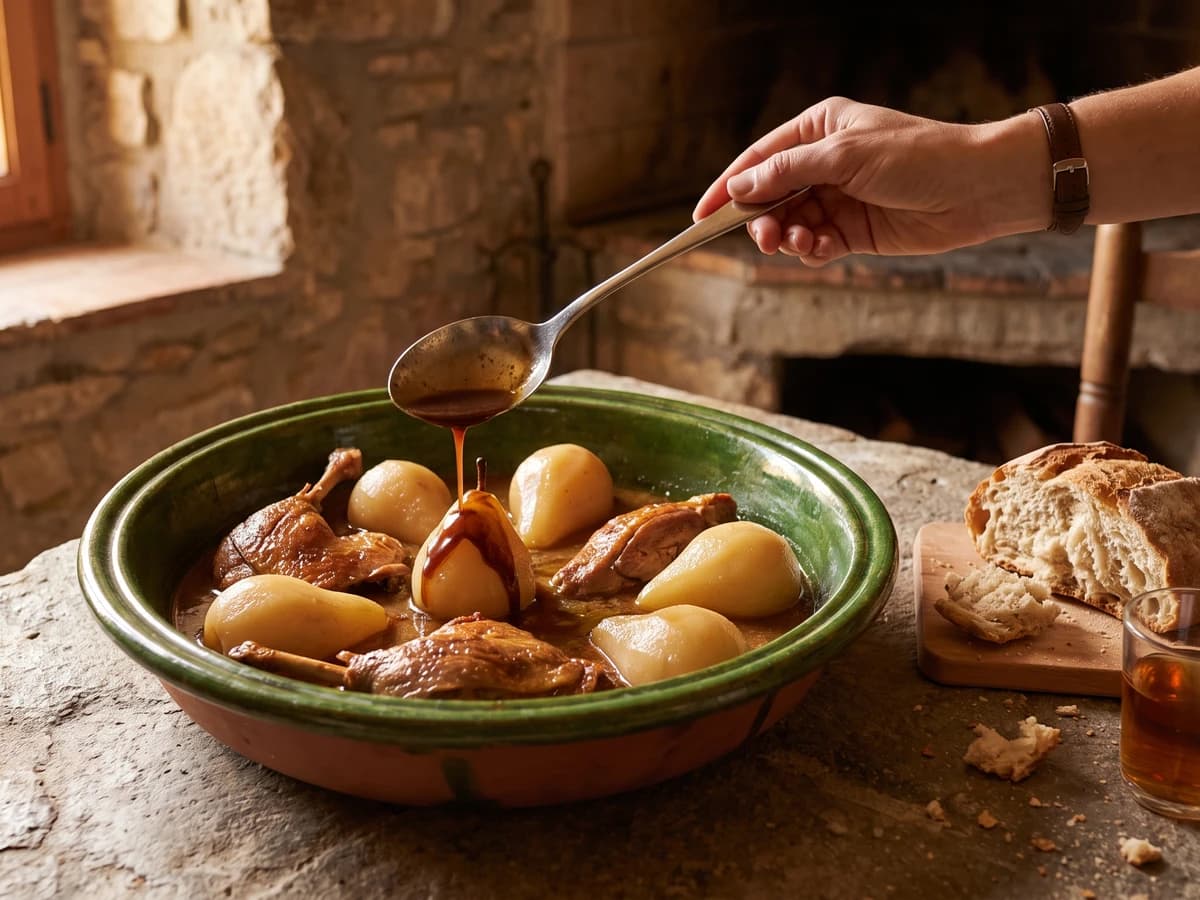
Ànec amb peres is Catalan celebration cooking: duck braised in a dark sofregit, firm autumn pears added near the end, and an almond-garlic picada that turns the juices into a close, glossy sauce.