Chef Isabel
Aceitunas Aliñadas Andaluzas
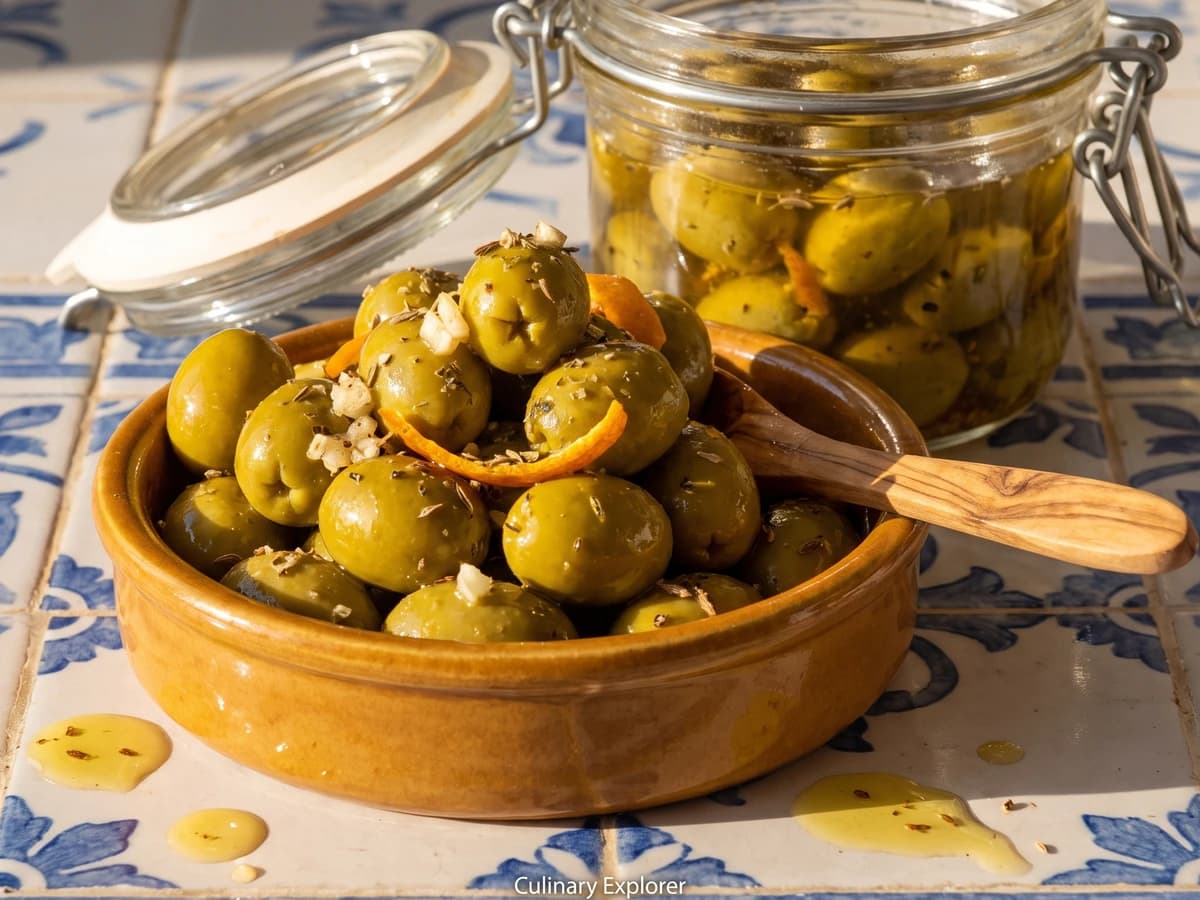
Andalucía's green olives are cracked just enough to drink in garlic, cumin, oregano and sherry vinegar, then left two days until the brine turns fragrant and every bite carries the aliño.
A cooking platform built around craft, culture, and the stories behind what we eat.
Created by
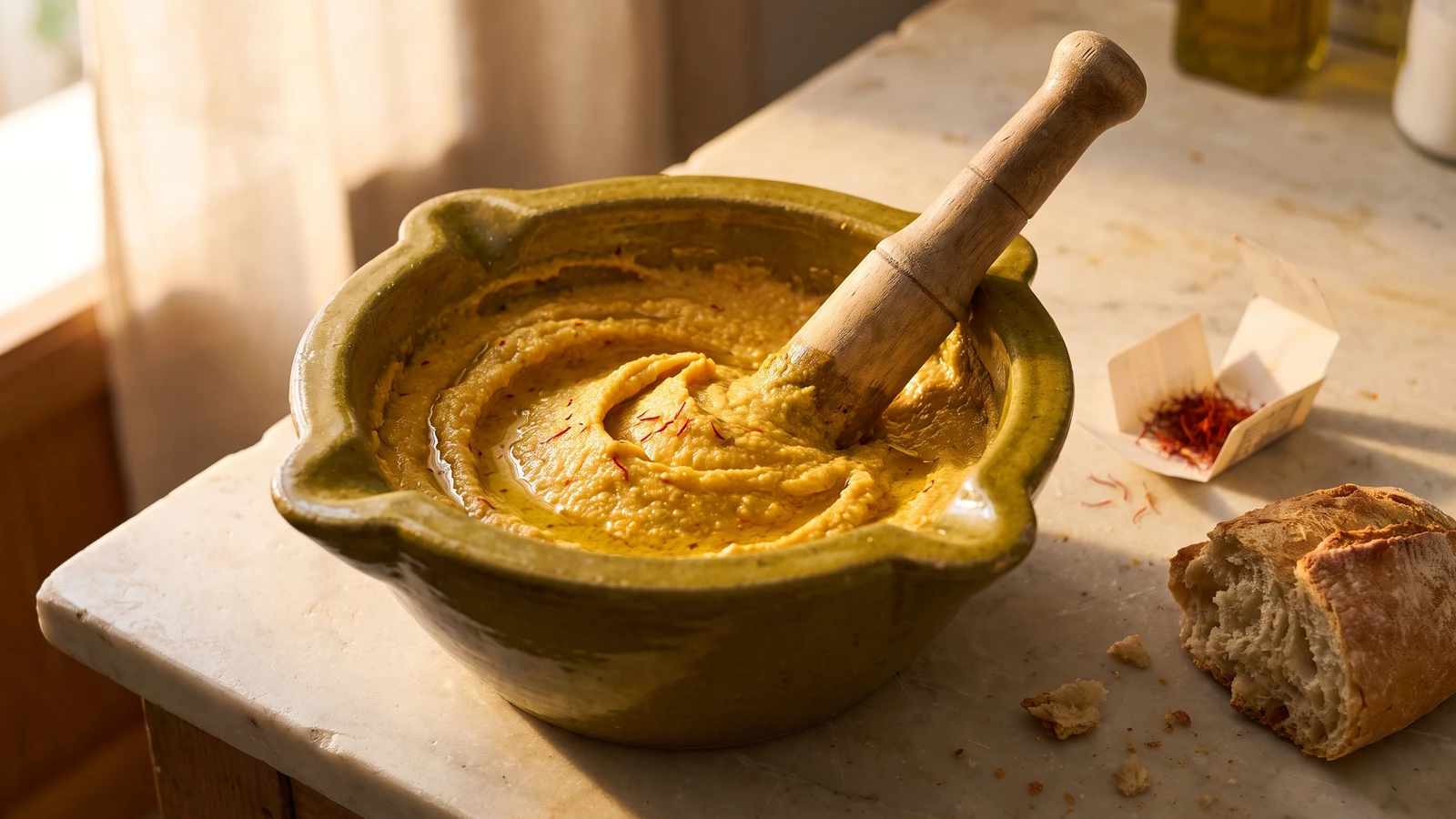
Majado is Castile and Andalucía's mortar finish: garlic, bread and almonds fried separately with saffron, pounded warm, then loosened with broth to give an everyday stew body, fragrance and a deep golden sauce.
Majado is Castile and Andalucía's mortar finish: golden garlic, day-old bread and almonds pounded with saffron, then stirred into a guiso, a stew, to give its cooking liquor body and a deep golden colour. What makes it a majado is not one fixed list of ingredients but the work of the mortar and the return to the pot. It isn't a table sauce. It belongs inside the stew, where the bread disappears and the almonds make the broth cling.
The frying decides it. Cook the almonds, garlic and bread separately over medium-low heat because each browns at its own pace. Pull each one at gold and nothing goes bitter. Pound them while they're still warm, then loosen the paste slowly with the stew's own broth. The Margin has only four words beside this one: gold, never dark brown. That warning earns its space.
If Marcona almonds are nowhere near you, use ordinary raw blanched almonds. They're a little less buttery, but they do the same honest work. If saffron is beyond reach, leave it out and accept a paler, plainer paste; turmeric changes the taste and has no business pretending. No mortar? A small processor will get supper made, though the paste comes finer and less nubbly. Stir it in for the last ten minutes and it will settle into the sauce. Siempre sale, si lo sigues.
Majado comes from majar, to crush, and across Castile and Andalucía the word has long named both the mortar work and the paste returned to a guiso or potaje. Day-old bread gave body without waste, while a small handful of almonds and a pinch of saffron spread costly flavour through the whole pot. The formula follows the dish: Seville's espinacas con garbanzos leans on fried bread, garlic, cumin and pimentón, while Castilian poultry guisos and pepitorias bring almonds and saffron forward.
Quantity
80ml
for frying
Quantity
30g
Quantity
12g (3 medium cloves)
peeled and left whole
Quantity
40g
crust included, cut into 2cm cubes
Quantity
0.1g
Quantity
3g
Quantity
100ml
divided
| Ingredient | Quantity |
|---|---|
| extra virgin olive oilfor frying | 80ml |
| raw blanched almonds, preferably Marcona | 30g |
| garlicpeeled and left whole | 12g (3 medium cloves) |
| day-old white country breadcrust included, cut into 2cm cubes | 40g |
| saffron threads | 0.1g |
| fine sea salt | 3g |
| hot unsalted broth from the stew, or hot waterdivided | 100ml |
Heat the olive oil in a small heavy frying pan over medium-low heat. Add the almonds and fry for 2 to 3 minutes, stirring often, until they are evenly pale gold and smell nutty. Lift them out with a slotted spoon and put them beside the mortar. Don't wait for dark brown edges; the almonds carry bitterness through the whole pot once they scorch.
Add the whole garlic cloves to the same oil and cook for 2 to 3 minutes, turning them, until soft and straw-gold. Remove them. Add the bread in a single layer and fry for 3 to 4 minutes, turning every piece, until crisp and deep gold on all sides. Lift it out before any edge blackens. Measure 20ml of the fragrant frying oil and reserve it for the paste; strain and save any oil left over for cooking.
Put the salt and warm garlic in the mortar and pound until creamy. Add the saffron and almonds, then work them with firm circular strokes until the nuts resemble coarse meal with no obvious chunks. Add the fried bread in two batches and keep pounding until it forms a thick, cohesive paste. A few tiny almond grains are right; large pieces are not.
Work the reserved 20ml frying oil into the paste. Add 90ml of the hot broth in three 30ml additions, pounding after each one until fully absorbed. The majado should be smooth enough to pour slowly from a spoon but thick enough to leave ridges in the mortar. Add the liquid gradually; pour it in at once and the oil separates instead of settling into the paste.
Stir the majado into a gently simmering stew 10 to 12 minutes before the stew is finished. Rinse the mortar with the remaining 10ml broth and add that too. Simmer uncovered, stirring from the bottom two or three times so the bread cannot catch. It is ready when no separate crumbs remain and the cooking liquor lightly coats the back of a spoon.
1 serving (about 37g)
Culinary guides, cultural storytelling, and the editorial depth that makes cooking meaningful.
Discover Culinary ExplorerChef Isabel
Andalucía's green olives are cracked just enough to drink in garlic, cumin, oregano and sherry vinegar, then left two days until the brine turns fragrant and every bite carries the aliño.
Chef Isabel
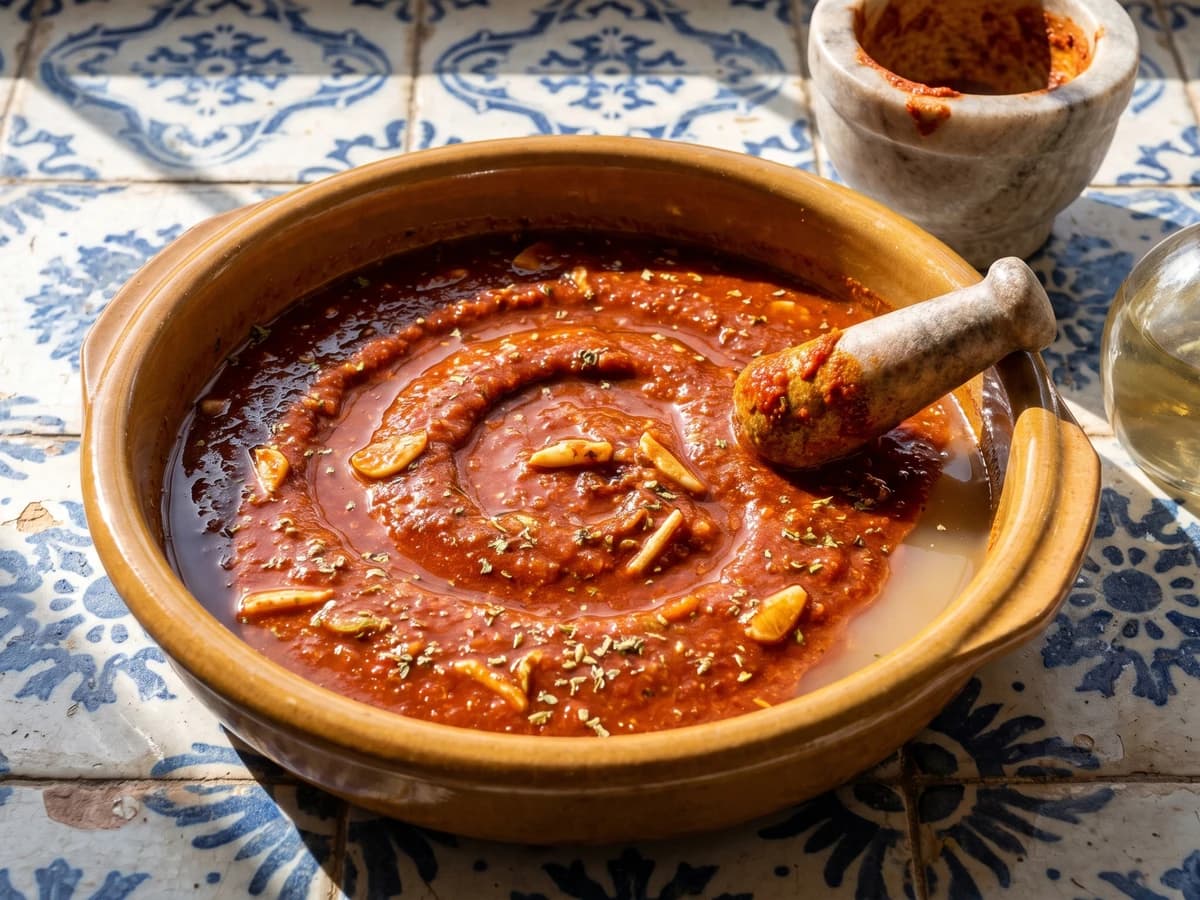
Andalucía's sharp, brick-red marinade brings vinegar, garlic, oregano, cumin and pimentón to fish and pork; pound the seasonings first, then give the acid time to carry them through.
Chef Isabel
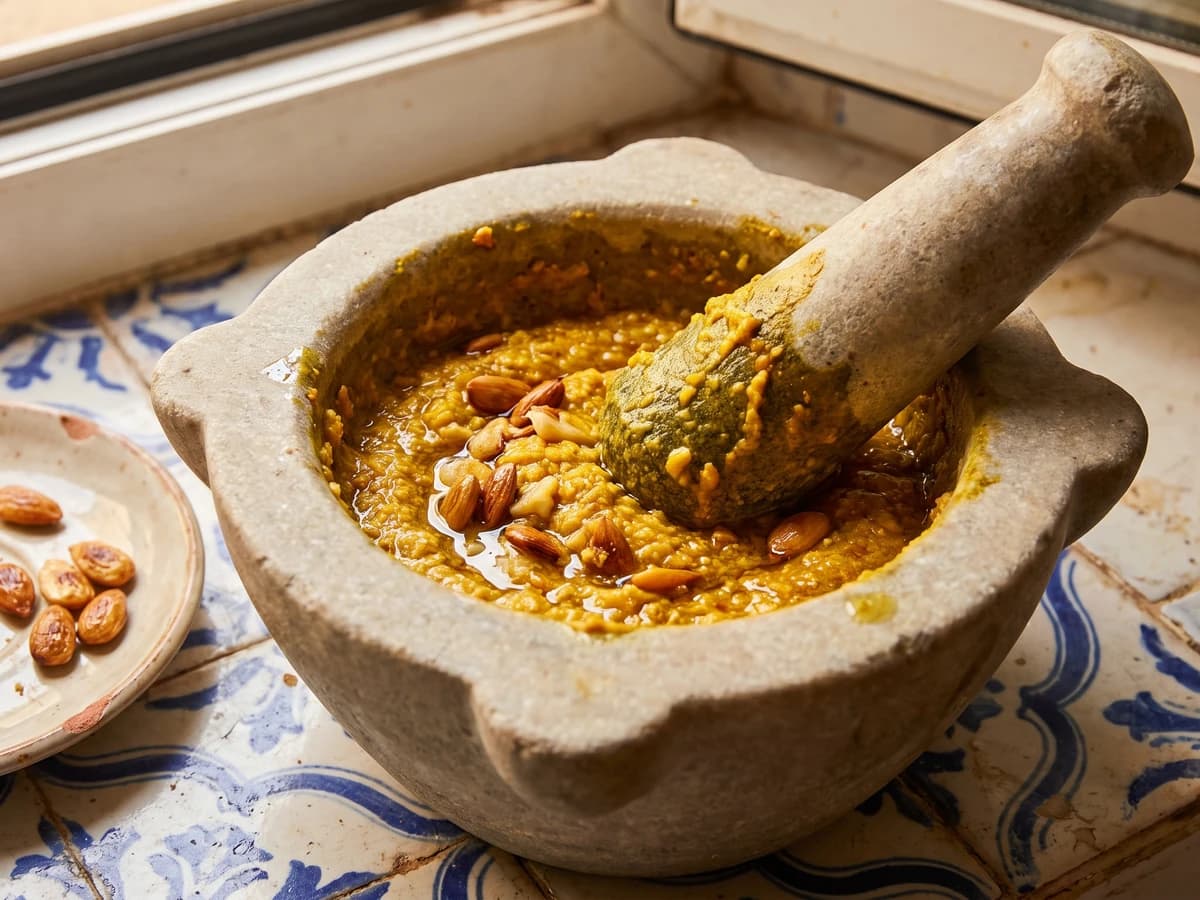
Almería's ajopollo turns fried garlic, almonds, bread and saffron into a golden mortar paste that gives modest fish and potato guisos their body, richness and unmistakable southern depth.
Chef Isabel
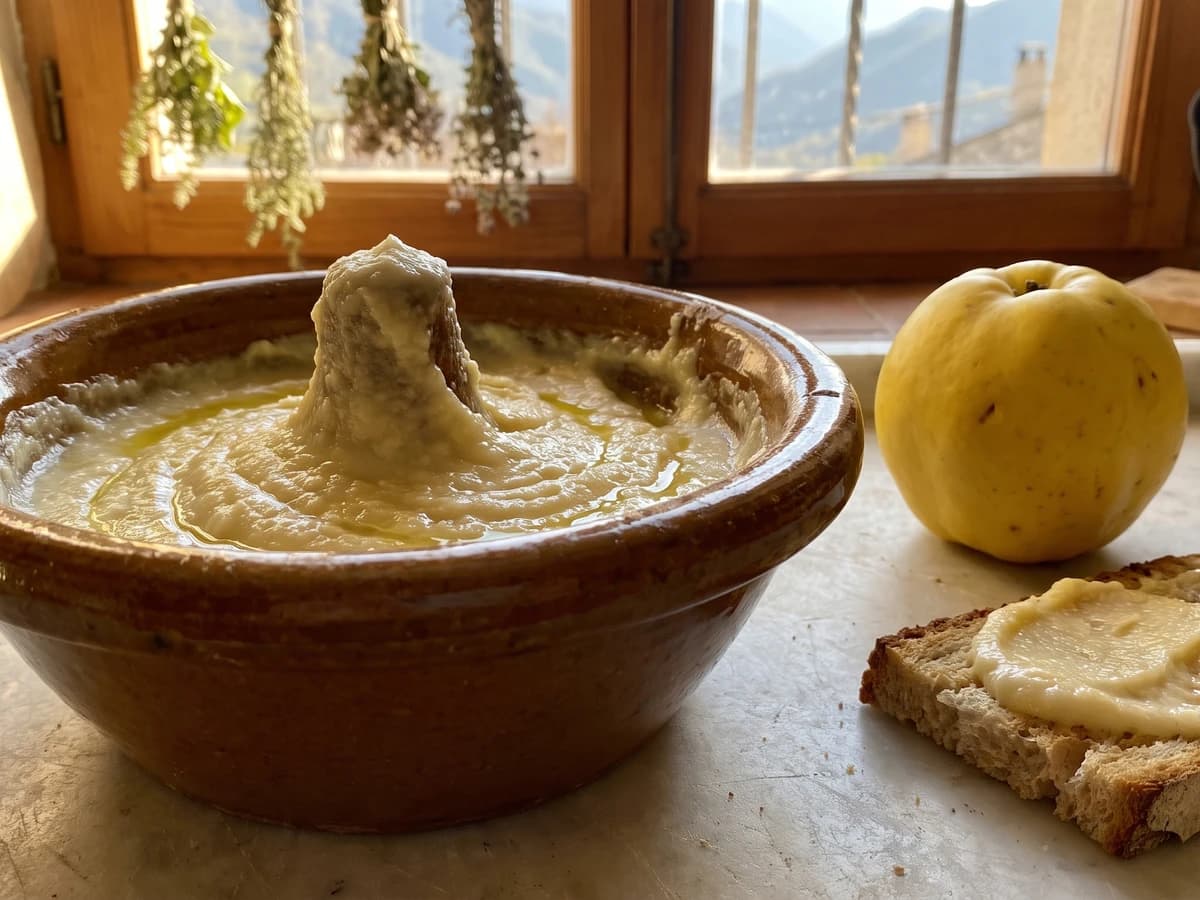
Allioli de codony belongs to the Catalan Pyrenees: boiled quince, raw garlic, salt, and olive oil worked into a thick, fragrant sauce for grilled meat, sausages, bread, and the autumn table.