Chef Isabel
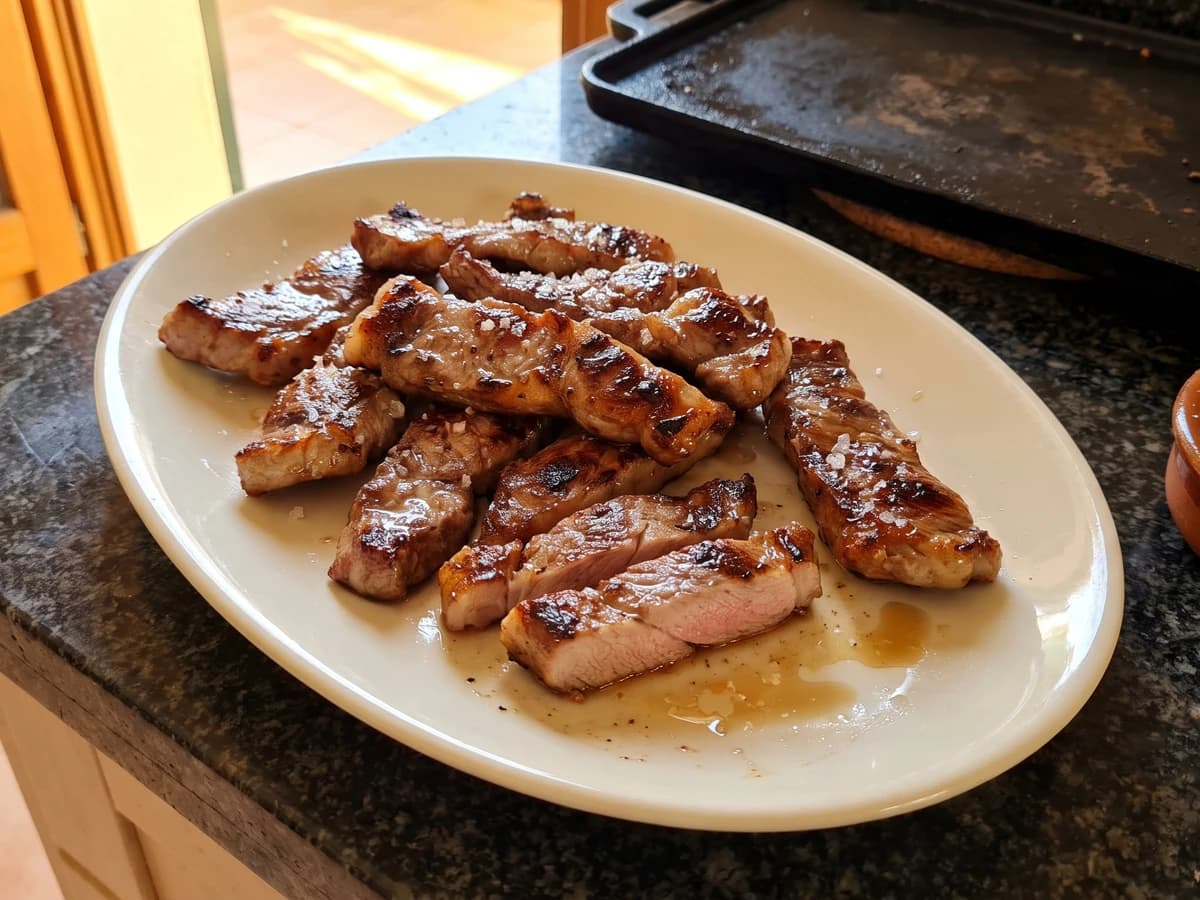
Abanico Ibérico a la Plancha
Extremadura's dehesa gives us this fan-shaped, marbled rib cut: salt it at the last moment, lay it on a fierce plancha, and count in seconds so the centre stays juicy.
A cooking platform built around craft, culture, and the stories behind what we eat.
Created by
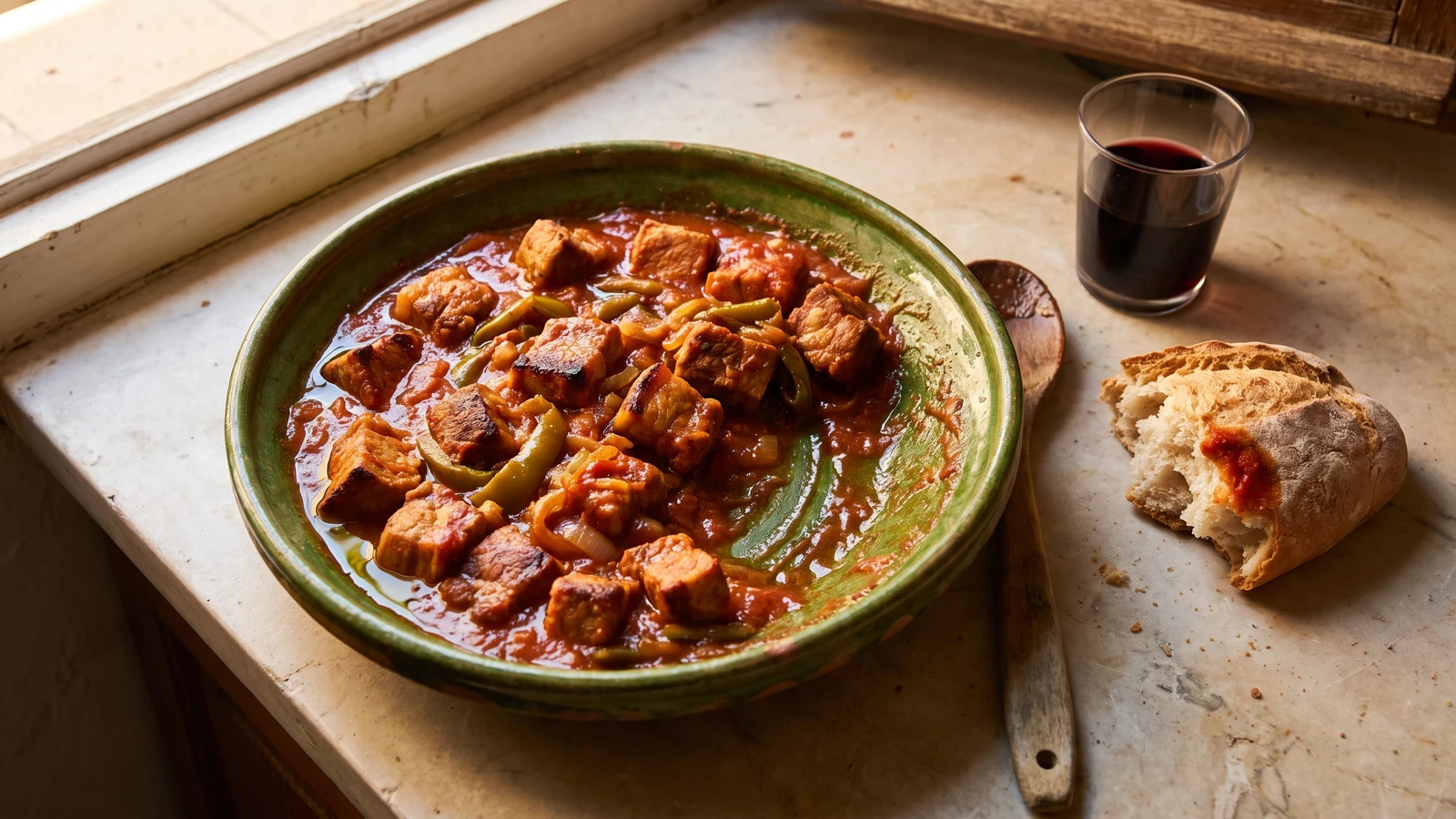
Murcia's everyday pork dish puts browned shoulder into a patient tomato sofrito, cooked until the sauce clings, the meat yields, and a piece of bread has nowhere else to be.
Magro con tomate is Murcian: cubes of lean pork browned in olive oil, then finished in a patient tomato sauce with onion and green pepper until the sauce clings. Murcia's huerta, its irrigated market garden, gives the dish its tomato and pepper, while pork gives it the sturdy heart of an everyday plate. This isn't pork with a spoonful of tomato over it. Meat and sauce finish together, and bread belongs beside them.
The step that decides it is reducing the tomato before the pork goes back into the pan. I wait until a spoon leaves a clear track across the bottom and the olive oil begins to show at the edges. That tells you the tomato's excess water has cooked away. Stop early and the sauce tastes raw and slips off the meat; wait for that little rim of oil and it turns thick, sweet, and deep red.
No hace falta haber pisado España. You don't need to have set foot in Spain. When good fresh tomatoes aren't in season, use canned whole peeled plum tomatoes. The sauce will be a little rounder and less bright, but far better than one made from pale winter tomatoes. A regular green bell pepper can replace the long frying pepper; it is fleshier and sweeter, so slice it thin and give it another 2 minutes in the pan. In the Margin beside this recipe I wrote only, "wait for the oil at the edge." Siempre sale, si lo sigues. It turns out if you follow it.
Magro con tomate belongs to Murcia's huerta, the irrigated market garden around the Segura, where plentiful tomatoes and peppers met pork from the household matanza, the annual pig slaughter. Home bottling carried the huerta's summer tomatoes into the rest of the year, allowing the sauce to remain everyday food beyond the harvest. The dish is also called magra con tomate in Murcia and appears both as a bar tapa and as a home main served with bread or fried potatoes.
Quantity
800g
trimmed of hard outer fat and cut into 2.5cm cubes
Quantity
8g
divided
Quantity
60ml
Quantity
220g
finely diced
Quantity
150g
seeded and cut into 1cm pieces
Quantity
12g
finely chopped
Quantity
800g canned or 1kg fresh
canned tomatoes crushed with their juices, or fresh tomatoes grated and skins discarded
Quantity
1
Quantity
100ml
Quantity
5g
Quantity
250g
thickly sliced for serving
| Ingredient | Quantity |
|---|---|
| boneless pork shouldertrimmed of hard outer fat and cut into 2.5cm cubes | 800g |
| fine sea saltdivided | 8g |
| extra virgin olive oil | 60ml |
| yellow onionfinely diced | 220g |
| long green frying pepperseeded and cut into 1cm pieces | 150g |
| garlicfinely chopped | 12g |
| whole peeled plum tomatoes or very ripe fresh tomatoescanned tomatoes crushed with their juices, or fresh tomatoes grated and skins discarded | 800g canned or 1kg fresh |
| dried bay leaf | 1 |
| water | 100ml |
| sugar (optional) | 5g |
| rustic country breadthickly sliced for serving | 250g |
Pat the pork completely dry, cut it into even 2.5cm cubes, and season with 6g of the salt. Leave it for 10 minutes while you prepare the onion, pepper, and garlic. Dry meat browns; wet meat sits in its own water and goes grey.
Heat 45ml of the olive oil in a wide, heavy pan over medium-high heat. Brown the pork in two batches, about 5 minutes per batch, turning only when the first side has taken on a deep golden crust. It needn't cook through yet. Lift each batch onto a plate and keep every drop of juice.
Lower the heat and add the remaining 15ml olive oil, the onion, green pepper, and remaining 2g salt. Cook gently for 18 to 20 minutes, stirring every few minutes, until the onion is dark gold and jammy and the pepper has collapsed. Add the garlic and cook for 1 minute. This is the sofrito, the slow vegetable base, and rushing it leaves the whole dish thin and sharp.
Add the crushed canned tomatoes, or the grated fresh tomatoes, and the bay leaf. Scrape the browned pork traces from the bottom, bring the sauce to a steady simmer, then cook uncovered over medium-low heat. Allow 25 to 30 minutes for canned tomatoes or 35 to 40 minutes for fresh ones, stirring more often as the sauce thickens. It is ready when a spoon drawn across the pan leaves a track for 2 seconds and green-gold oil shows around the edges.
Return the pork and its collected juices to the pan. Add 100ml water, stir once, and bring everything to a bare simmer. Cover with the lid slightly ajar and cook over low heat for 30 to 35 minutes, stirring two or three times, until a fork enters the pork with little resistance but the cubes still hold their shape. If the sauce is loose, uncover it for the final 5 to 10 minutes. Taste only now. If the tomato still has a hard acidic edge, stir in the optional 5g sugar and cook for 2 minutes.
Remove the bay leaf and let the magro rest off the heat for 10 minutes. The sauce settles, thickens, and grips the meat properly. Spoon it into a shallow serving dish with all its tomato sauce and put the bread beside it. Bread for mopping is not decoration here. It is how the plate is finished.
1 serving (about 450g)
Culinary guides, cultural storytelling, and the editorial depth that makes cooking meaningful.
Discover Culinary ExplorerChef Isabel
Extremadura's dehesa gives us this fan-shaped, marbled rib cut: salt it at the last moment, lay it on a fierce plancha, and count in seconds so the centre stays juicy.

Chef Isabel
Aletría Murciana is Murcia's humble noodle guiso: fine fideos, pork ribs, potato, saffron, and a dark sweet sofrito. Get that base right and the pot knows where it's going.

Chef Isabel
Andrajos are Andalucía's dough-rag stew from Jaén and Granada: a slow rabbit guiso thickened with torn sheets of flour dough, rolled thin so they cook tender instead of gummy.
Chef Isabel
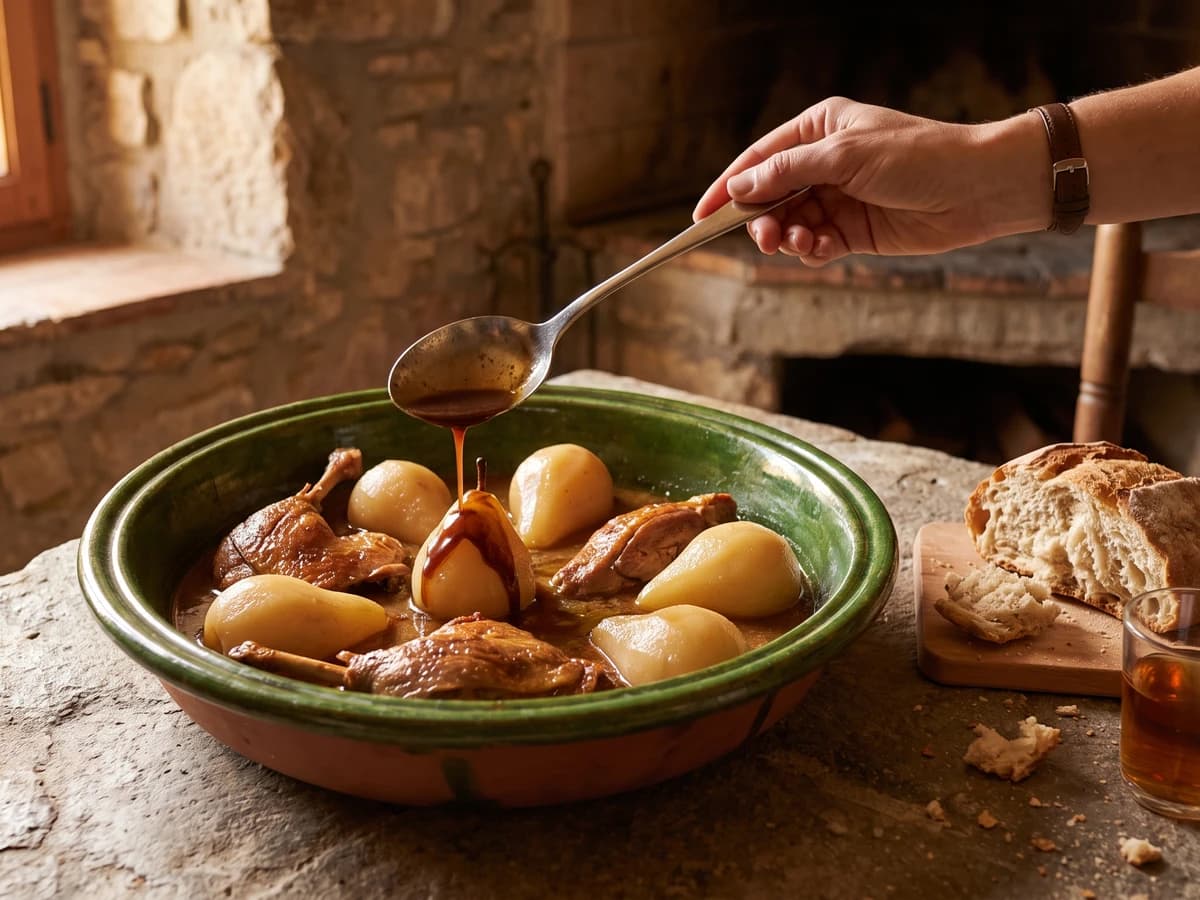
Ànec amb peres is Catalan celebration cooking: duck braised in a dark sofregit, firm autumn pears added near the end, and an almond-garlic picada that turns the juices into a close, glossy sauce.