Chef Isabel
Abanico Ibérico a la Plancha
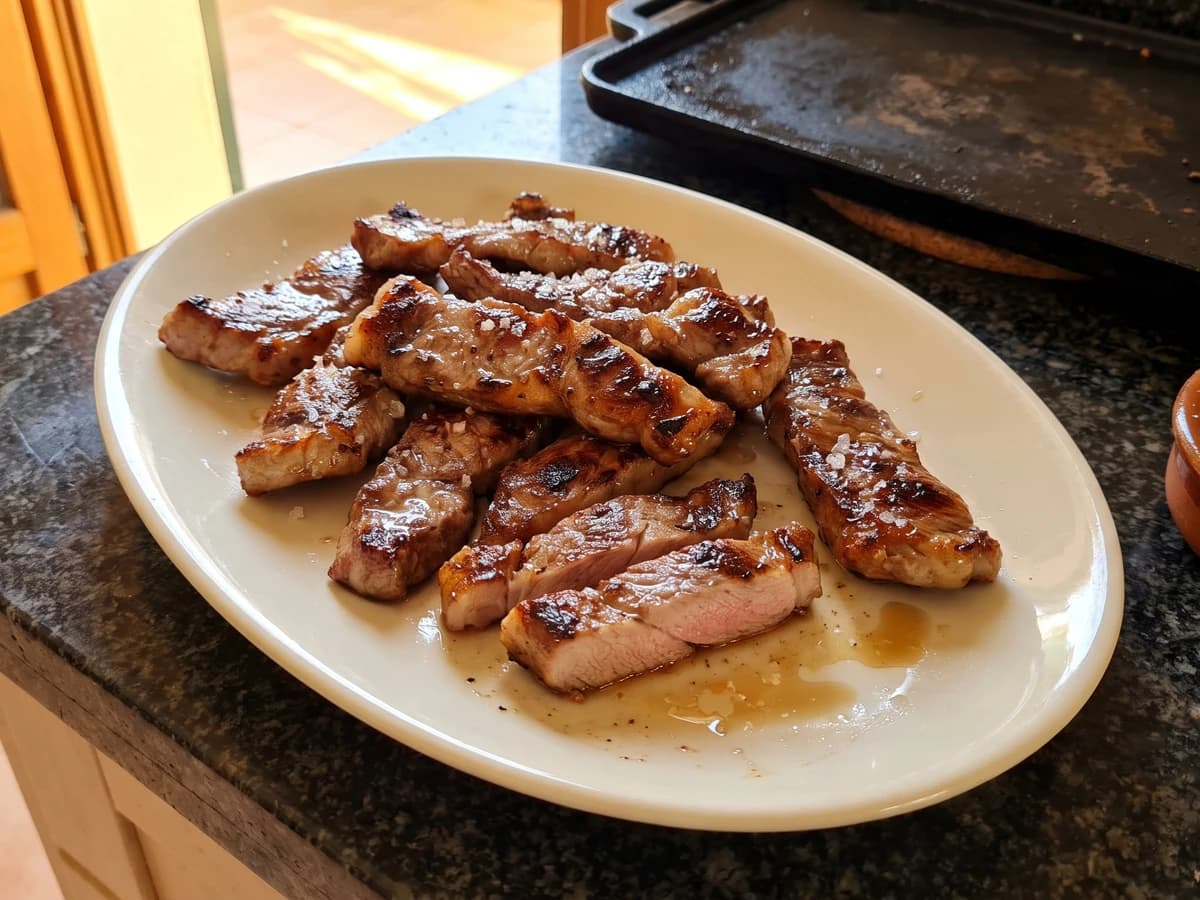
Extremadura's dehesa gives us this fan-shaped, marbled rib cut: salt it at the last moment, lay it on a fierce plancha, and count in seconds so the centre stays juicy.
A cooking platform built around craft, culture, and the stories behind what we eat.
Created by
Lubina a la sal belongs to the Levante coast: whole sea bass sealed under coarse salt, where intact scales protect sweet flesh and the crust cooks it gently without making the fish salty.
Lubina a la sal is cooking from the Levante coast, especially the Valencian and Murcian shore: a whole sea bass buried beneath coarse sea salt and baked until the flesh is pearly, moist, and lightly seasoned. There is no sauce to rescue a tired fish and no list of aromatics to disguise it. The bass, the salt, and the oven are the dish.
The method depends on one instruction: leave the scales on and keep the skin whole. Those scales form the wall between the salt and the flesh, while the damp crust closes around the fish and holds in its own moisture. Ask the fishmonger to remove the innards through the gills if possible, or through the smallest belly opening. Do not let anyone descale it out of habit. For once, tidy fishmongering ruins dinner.
If lubina isn't sold under that name where you live, ask for branzino or European sea bass. They are the same fish. Dorada, gilt-head bream, is the Levante kitchen's proper substitute and takes the salt crust beautifully, though its flesh is firmer and a little richer. Use a fish of the same weight, cover it evenly, and bake by temperature as well as time. The line in my Margin is short: brush away every grain before lifting the skin. Siempre sale, si lo sigues, it turns out if you follow it.
Lubina a la sal belongs to the Mediterranean cooking of the Levante, where whole market fish met the coarse sea salt produced along the Valencian and Murcian coast. The salt pans of Santa Pola and Torrevieja have long supplied Alicante's households and preserving trades, but this method does not preserve the fish: the crust is a temporary cooking shell and is discarded. Leaving the scales intact is not neglected preparation; it is the old protection that stops the flesh from curing against the salt.
Quantity
1 fish, 1.2 to 1.4kg after gutting
innards and gills removed, preferably through the gill opening; scales and skin left intact
Quantity
2kg
Quantity
125ml
added only until the salt holds together
Quantity
30ml
for serving
Quantity
1
cut into wedges for serving
| Ingredient | Quantity |
|---|---|
| whole European sea bassinnards and gills removed, preferably through the gill opening; scales and skin left intact | 1 fish, 1.2 to 1.4kg after gutting |
| coarse sea salt | 2kg |
| cold wateradded only until the salt holds together | 125ml |
| extra virgin olive oil (optional)for serving | 30ml |
| lemon (optional)cut into wedges for serving | 1 |
Set a rack in the middle of the oven and heat it to 200°C conventional or 180°C fan. Check that the sea bass has been gutted and that every scale remains in place. If the fishmonger used a belly incision, it should be small; wipe the cavity clean with damp kitchen paper, dry it thoroughly, and press the cut edges closed. Pat the outside dry as well.
Put the coarse salt in a large bowl. Pour in 100ml of the water and mix with both hands until the salt resembles damp beach sand. Squeeze a handful: it should hold its shape without dripping. Add the remaining 25ml only if it crumbles. Different salts arrive with different amounts of moisture, so measure the water, then let the handful tell you when to stop.
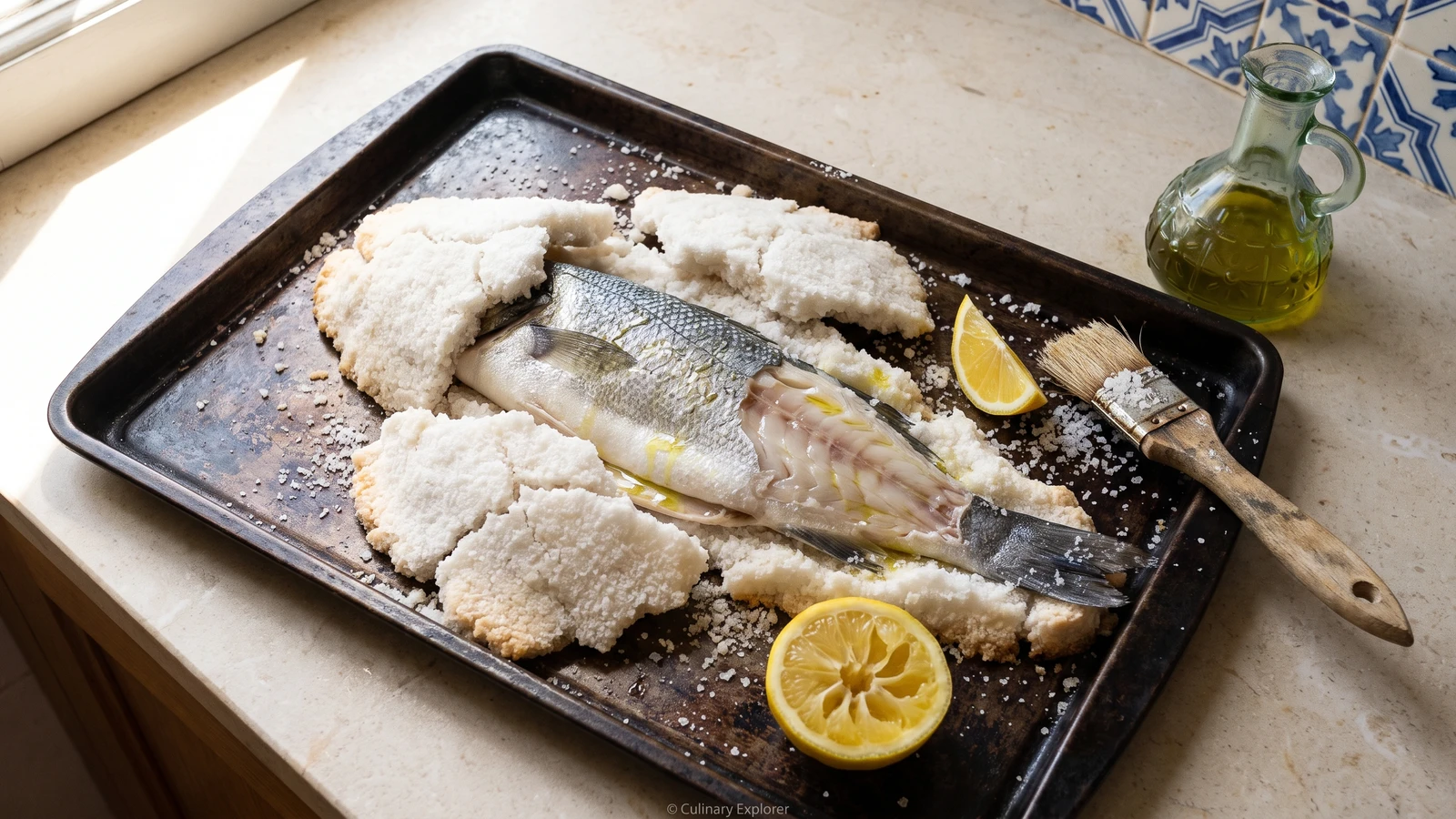
Line a large rimmed baking tray with baking parchment. Spread one third of the damp salt into a bed about 1cm thick and slightly larger than the fish. Lay the bass on its side, positioning any belly incision downward. Pack the remaining salt firmly over the entire body from the gill plate to the base of the tail, making an even layer at least 1cm thick. The head and tail fin may remain visible. Press the top crust into the bottom bed so there are no open seams.
Bake the 1.2 to 1.4kg fish for 30 minutes, without opening the oven. Then make one narrow hole through the crust just behind the head and insert an instant-read thermometer into the thickest flesh without touching the backbone. It should register 63°C. If it is lower, return the fish to the oven for 3 to 5 minutes and test through the same hole. The shell will be firm and dry, with lightly golden patches at its edges.
Take the tray from the oven and leave the fish sealed for 5 minutes. Trace around the crust with a short serrated knife, then tap it with the back of a heavy spoon until it splits into large slabs. Lift those slabs away rather than crushing them over the fish. Use a dry pastry brush to remove every loose grain of salt before touching the skin.
Peel away the upper skin; it should come free in broad pieces with the scales attached. Lift the two upper fillets onto a warm platter, remove the head and backbone in one piece, then lift the lower fillets. Check carefully for pin bones. Serve at once, with no additional salt. A little extra virgin olive oil and lemon may be offered at the table, but taste the fish first. Clean sea bass needs very little company.
1 serving (about 160g)
Culinary guides, cultural storytelling, and the editorial depth that makes cooking meaningful.
Discover Culinary ExplorerChef Isabel
Extremadura's dehesa gives us this fan-shaped, marbled rib cut: salt it at the last moment, lay it on a fierce plancha, and count in seconds so the centre stays juicy.

Chef Isabel
Aletría Murciana is Murcia's humble noodle guiso: fine fideos, pork ribs, potato, saffron, and a dark sweet sofrito. Get that base right and the pot knows where it's going.

Chef Isabel
Andrajos are Andalucía's dough-rag stew from Jaén and Granada: a slow rabbit guiso thickened with torn sheets of flour dough, rolled thin so they cook tender instead of gummy.
Chef Isabel
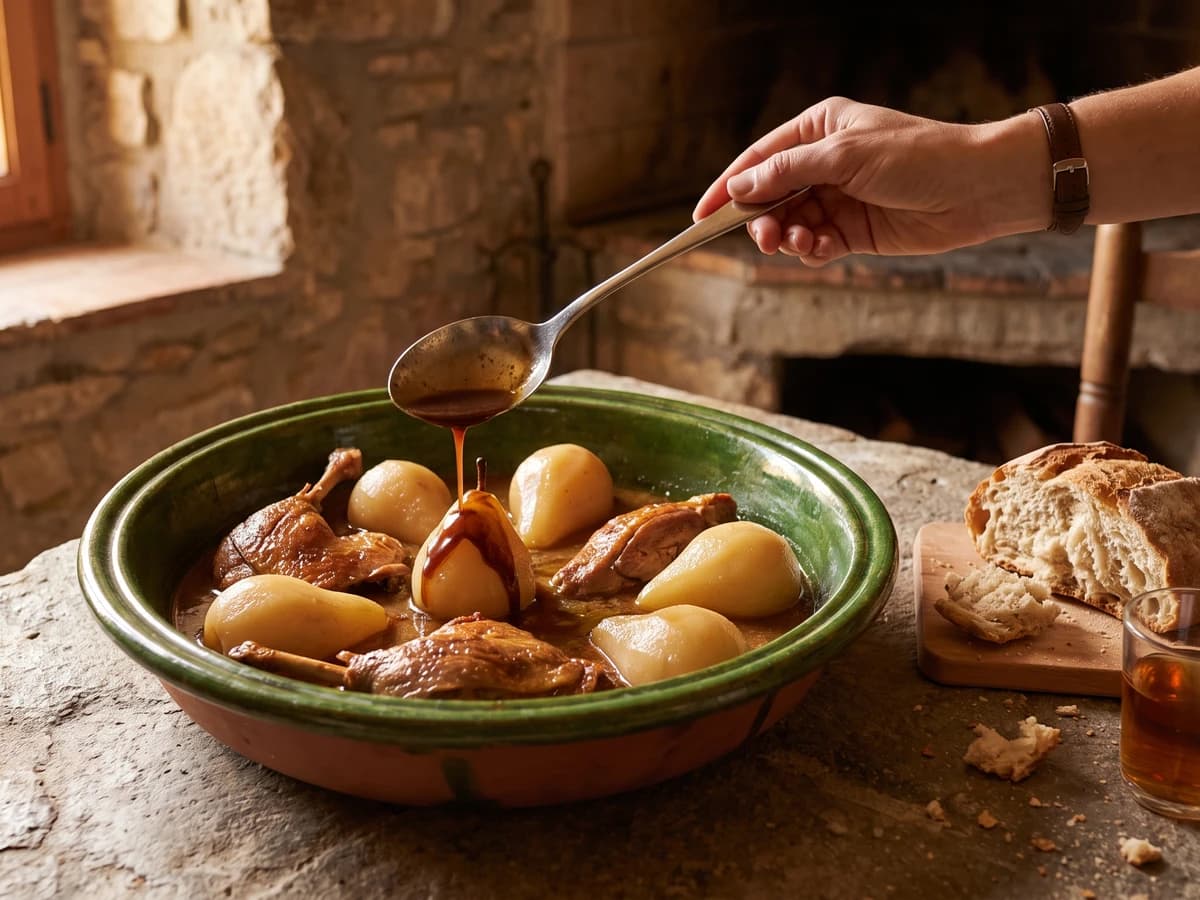
Ànec amb peres is Catalan celebration cooking: duck braised in a dark sofregit, firm autumn pears added near the end, and an almond-garlic picada that turns the juices into a close, glossy sauce.