Chef Isabel
Abanico Ibérico a la Plancha
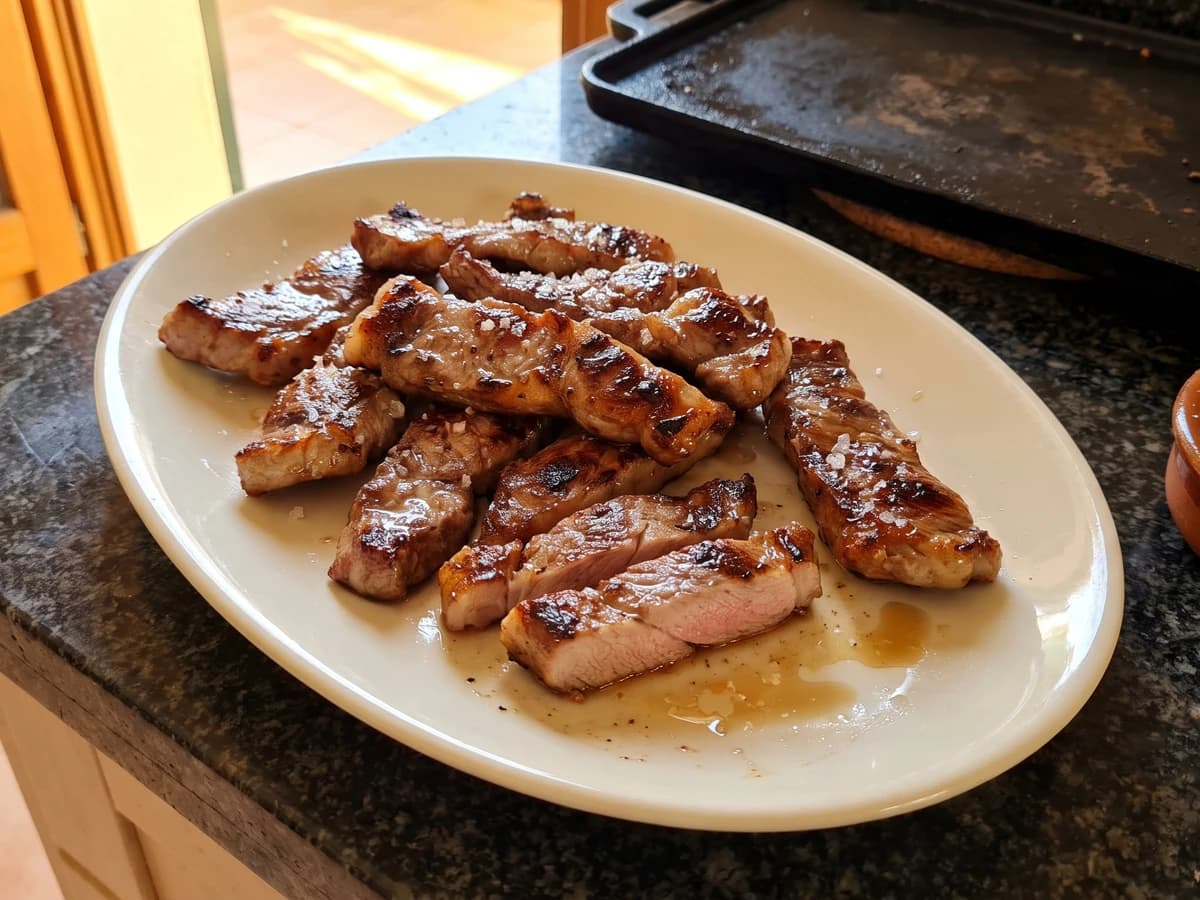
Extremadura's dehesa gives us this fan-shaped, marbled rib cut: salt it at the last moment, lay it on a fierce plancha, and count in seconds so the centre stays juicy.
A cooking platform built around craft, culture, and the stories behind what we eat.
Created by
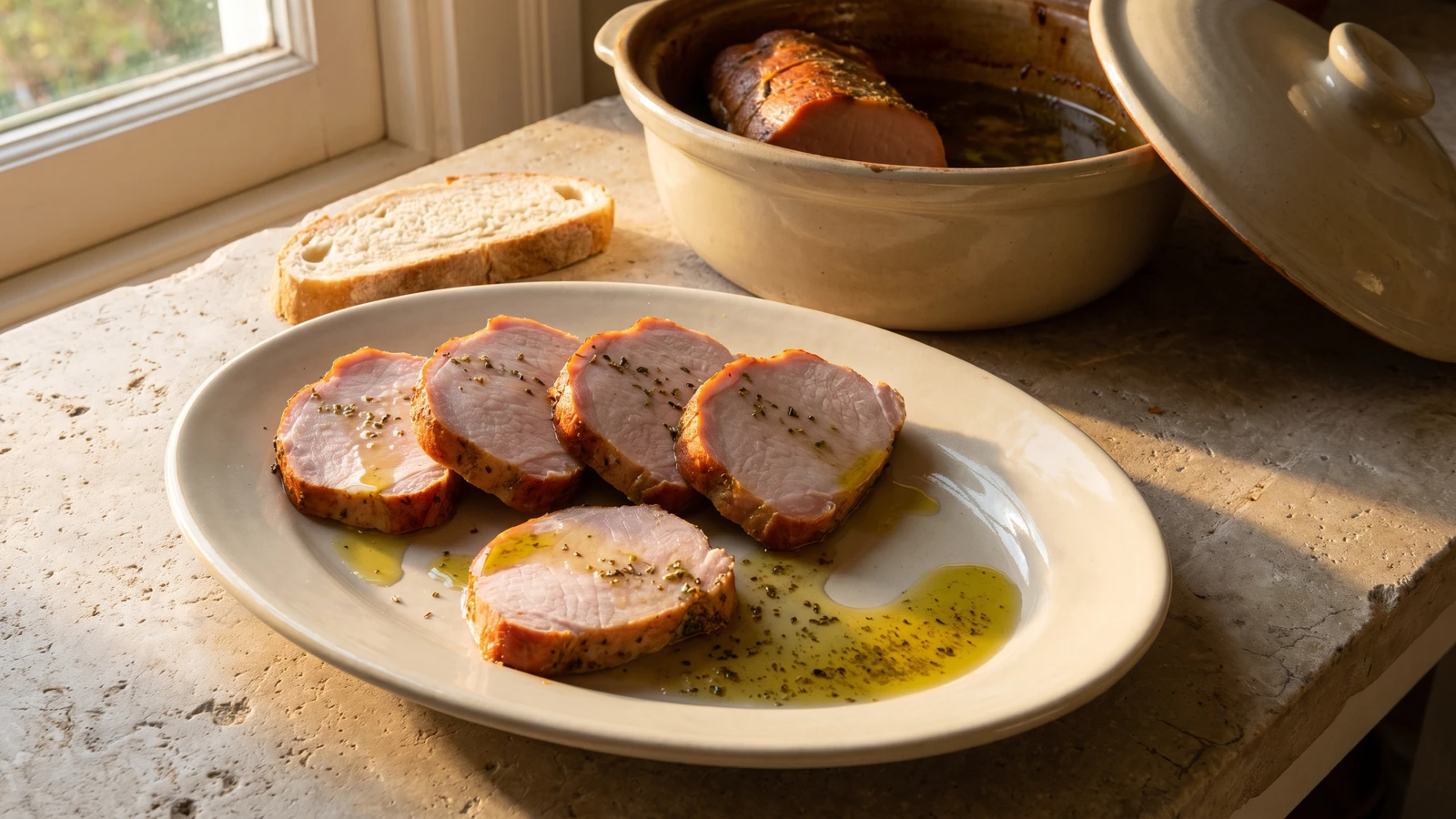
La Mancha keeps pork loin the old household way: a garlicky oregano adobo, gentle cooking in olive oil, then a clean covering of oil that seasons every tender slice for tomorrow's table.
Lomo de orza manchego is La Mancha's old way with pork loin: large pieces rested in an adobo of garlic, oregano, pimentón, wine and vinegar, fried gently, then kept beneath olive oil or lard in a glazed clay orza. It isn't simply lomo adobado. The rest under the fat is half the dish, carrying the seasoning through the meat and leaving every slice supple.
The heat decides it. Keep the oil between 105 and 115°C, turning the loin until its centre reaches 65°C. A fierce fry gives you a handsome brown outside and dry pork within, which is poor payment for a day's marinating. Quiet oil cooks the lean loin evenly without squeezing out its juices.
No hace falta haber pisado España. An ordinary boneless centre-cut pork loin from a good butcher is exactly what you need, provided it hasn't been injected with brine. If that much olive oil is costly, use rendered pork lard. It is an old inland choice, not a lesser one, though it sets white in the refrigerator and gives the meat a fuller pork flavour.
Give the cooked loin a full day beneath the fat before cutting it. The old orza was a pantry preserve, but this home recipe is not shelf-stable: refrigerate it and freeze anything you won't eat within four days of cooking. The Margin beside mine says only, "dry meat, quiet oil." That is enough. Siempre sale, si lo sigues.
Lomo de orza belongs to the matanza larder of La Mancha, particularly the farm households of Ciudad Real and Albacete, where the winter pig slaughter had to provision the table after the fresh meat was gone. Seasoned loin was cooked, packed into a tall glazed earthenware orza, and covered completely with olive oil or rendered lard so pieces could be removed while the rest remained protected. Jaén and Granada keep closely related versions, evidence that this practical preserving method crossed the dry inland country rather than belonging to one village alone.
Quantity
1.2kg
trimmed and cut crosswise into 4 equal pieces
Quantity
18g
Quantity
6 medium cloves (about 24g)
peeled
Quantity
8g
Quantity
6g
Quantity
2g
Quantity
2
torn
Quantity
100ml
Quantity
50ml
Quantity
50ml
Quantity
900ml oil or 800g lard
| Ingredient | Quantity |
|---|---|
| boneless centre-cut pork lointrimmed and cut crosswise into 4 equal pieces | 1.2kg |
| fine sea salt | 18g |
| garlicpeeled | 6 medium cloves (about 24g) |
| dried oregano | 8g |
| sweet pimentón | 6g |
| freshly ground black pepper | 2g |
| bay leavestorn | 2 |
| dry white wine | 100ml |
| red wine vinegar | 50ml |
| cold water | 50ml |
| mild extra virgin olive oil or rendered pork lard | 900ml oil or 800g lard |
Crush the garlic with the salt to a rough paste. Mix in the oregano, pimentón and black pepper, then add the torn bay leaves, wine, vinegar and water. Rub the adobo over every surface of the four loin pieces and place them in a snug non-reactive dish or food-safe bag.
Cover and refrigerate for 12 to 24 hours, turning the pieces once halfway through so the adobo reaches them evenly. Do not leave the loin longer than 24 hours; the vinegar eventually makes the outside soft while the centre remains unchanged.
Lift the pork from the adobo and discard the liquid. Scrape away the bay and any large pieces of garlic, leaving the thin red seasoning on the meat. Pat every piece very dry with kitchen paper and leave it on a clean plate for 15 minutes while the cooking fat warms. Wet pork makes the oil spit and carries unwanted water into the orza.
Pour the olive oil into a 24cm heavy casserole and heat it to 115°C. If using lard, melt it slowly and bring it to the same temperature. Add two loin pieces and keep the fat between 105 and 115°C. It should tremble and bubble gently, never fry hard. Turn the pieces every 5 minutes and cook until the thickest centre reaches 65°C, about 18 to 25 minutes. Transfer them to a clean tray and repeat with the remaining pork.
Strain the warm cooking fat through a fine metal sieve into a clean pan, leaving the browned seasoning and any watery juices behind. Return it to 120°C for about 5 minutes, until the small bubbles caused by moisture have almost stopped. This gives you clean fat for covering the pork, but it does not make the finished dish safe for pantry storage.
Divide the pork between two clean, completely dry 1-litre heatproof jars or place it in one snug glazed earthenware orza. Pour over the warm strained fat until the meat is covered by at least 1cm. If 900ml will not cover it, the vessel is too wide; move the pork to a narrower container rather than leaving a piece exposed.
Cover the containers loosely and cool them for no more than 30 minutes, then refrigerate. Tighten the lids once everything is cold. Rest the loin beneath the fat for 24 hours before serving, and keep it at 4°C or colder. Eat it within four days of cooking or freeze it in smaller oil-covered portions.
Remove only the piece you intend to eat, using a clean fork, and let it stand for 30 minutes so the fat loosens. Slice across the grain about 5mm thick and spoon a little of the seasoned oil over it. Serve at room temperature, or warm the slices very gently in a frying pan with one spoonful of their oil.
1 serving (about 145g)
Culinary guides, cultural storytelling, and the editorial depth that makes cooking meaningful.
Discover Culinary ExplorerChef Isabel
Extremadura's dehesa gives us this fan-shaped, marbled rib cut: salt it at the last moment, lay it on a fierce plancha, and count in seconds so the centre stays juicy.

Chef Isabel
Aletría Murciana is Murcia's humble noodle guiso: fine fideos, pork ribs, potato, saffron, and a dark sweet sofrito. Get that base right and the pot knows where it's going.

Chef Isabel
Andrajos are Andalucía's dough-rag stew from Jaén and Granada: a slow rabbit guiso thickened with torn sheets of flour dough, rolled thin so they cook tender instead of gummy.
Chef Isabel
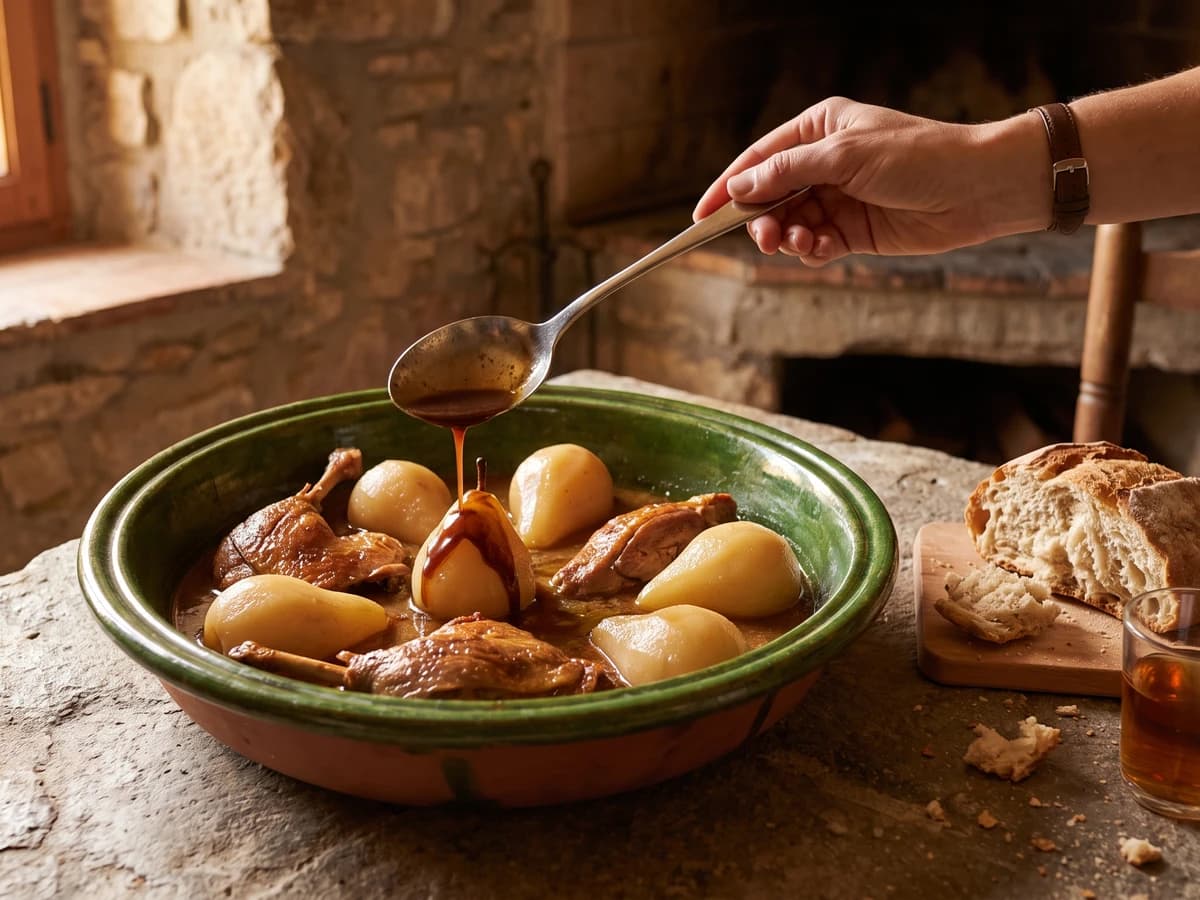
Ànec amb peres is Catalan celebration cooking: duck braised in a dark sofregit, firm autumn pears added near the end, and an almond-garlic picada that turns the juices into a close, glossy sauce.