Chef Isabel
Abanico Ibérico a la Plancha
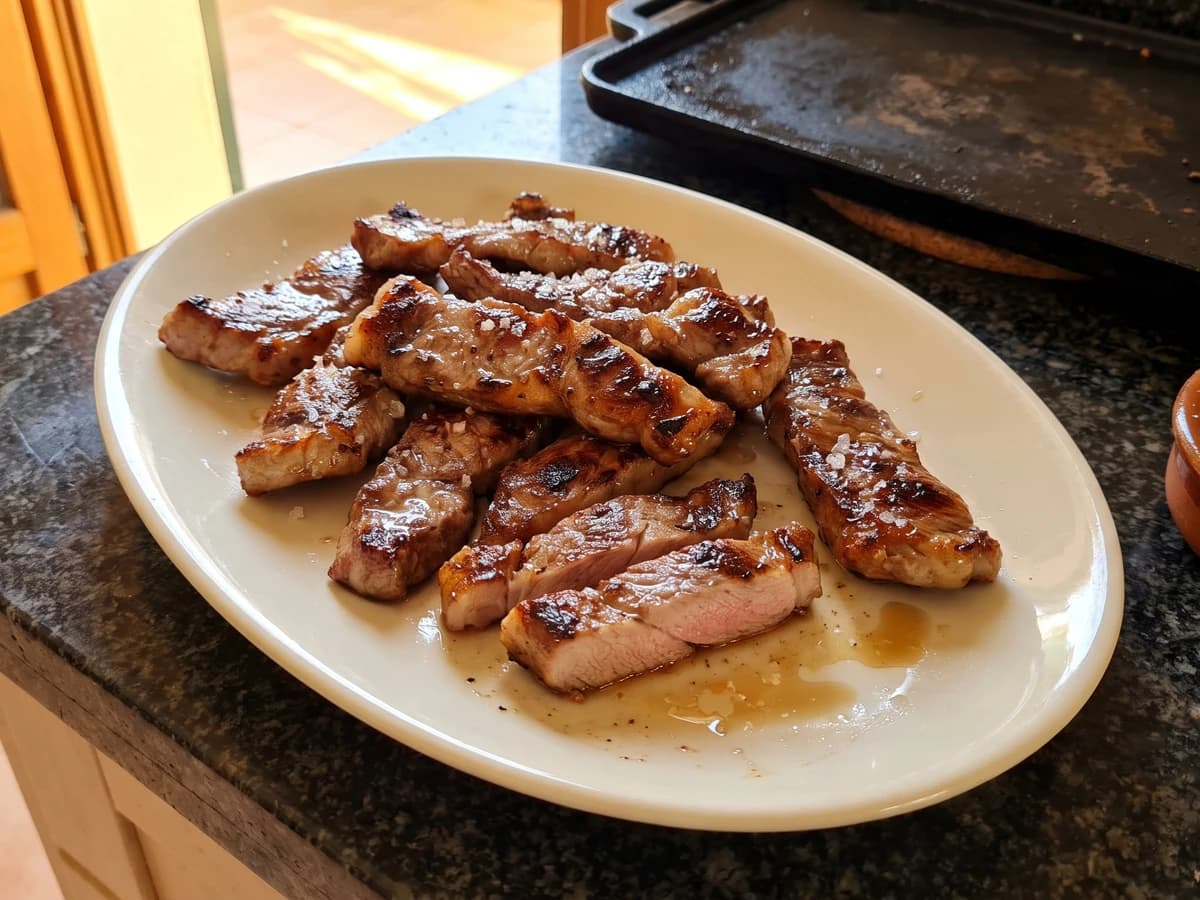
Extremadura's dehesa gives us this fan-shaped, marbled rib cut: salt it at the last moment, lay it on a fierce plancha, and count in seconds so the centre stays juicy.
A cooking platform built around craft, culture, and the stories behind what we eat.
Created by
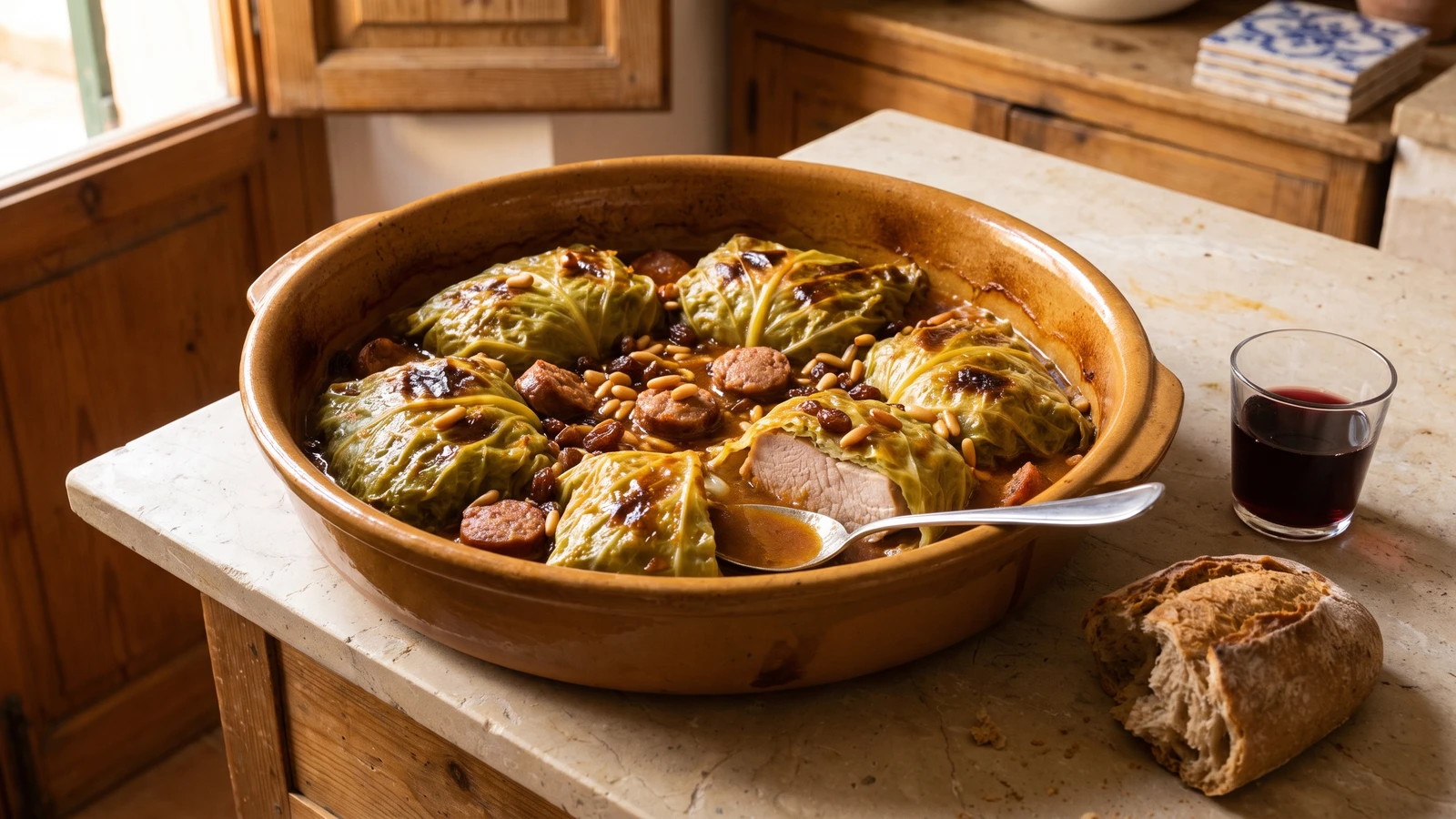
Llom amb col is Mallorca's winter feast: pork loin sealed inside tender cabbage, then braised with botifarró, sobrassada, pine nuts and raisins until each parcel yields under a fork.
Llom amb col is Mallorcan, a winter dish of pork loin enclosed in cabbage leaves and braised with the island's botifarró and sobrassada, raisins, and pine nuts. It isn't simply pork cooked beside greens. Each slice becomes a parcel, browned until the cabbage catches a little colour, then settled into a rich sauce in a greixonera, the low clay casserole used in Mallorcan kitchens.
The sofrit, the slow onion and tomato base, decides the dish. Cook the onion until dark gold and soft, then let the tomato lose nearly all its water before the wine goes in. That patient cooking concentrates the sweetness and gives the sauce enough body to cling to the cabbage. Rush it and the parcels sit in thin tomato water. There, I've saved you the usual disappointment.
Far from Mallorca, use Savoy cabbage in place of the island's loose-leaf winter cabbage. Its leaves fold without tearing and become nearly as tender. If botifarró is impossible to find, morcilla de cebolla is the honest substitute, though it makes the sauce darker and a little softer. Sobrassada is harder to replace without changing the dish; mild fresh Spanish chorizo can stand in, but it will taste firmer, more garlicky, and less distinctly Mallorcan. No hace falta haber pisado España, but the closer you get to those sausages, the closer the pot gets to Mallorca.
Wrap firmly, brown seam-side first, and keep the braise at the barest tremble. The Margin beside this recipe says only: don't chase a parcel around the pot with a spoon. Baste it and leave it whole. Siempre sale, si lo sigues.
Llom amb col belongs to Mallorca's winter table, when firm cabbages met pork from the matances, the household slaughter that supplied sobrassada, botifarró, and fresh cuts for the cold months. The cabbage parcels turned lean loin into feast food while the island's sausages seasoned the braise; raisins and pine nuts carry Mallorca's old taste for fruit with meat into the same pot. Closely tied to Christmas and family celebrations, the dish is traditionally cooked in a greixonera, the broad earthenware casserole of Mallorcan kitchens.
Quantity
3 litres
for blanching
Quantity
1 large (about 1.6kg)
12 intact outer leaves plus 2 spare
Quantity
900g
cut across the grain into 12 slices about 1.5cm thick
Quantity
42g
30g for blanching, 10g for the pork, and up to 2g for the sauce
Quantity
2g
Quantity
40g
Quantity
75ml
divided
Quantity
350g
finely diced
Quantity
15g
finely chopped
Quantity
300g
grated
Quantity
250g
drained and crushed; use in place of fresh tomato
Quantity
2
Quantity
2g
Quantity
150ml
Quantity
350ml
warmed
Quantity
180g
cut into 1cm rounds
Quantity
100g
casing removed and pinched into small pieces
Quantity
60g
Quantity
40g
| Ingredient | Quantity |
|---|---|
| waterfor blanching | 3 litres |
| loose-leaf winter or Savoy cabbage12 intact outer leaves plus 2 spare | 1 large (about 1.6kg) |
| boneless pork loincut across the grain into 12 slices about 1.5cm thick | 900g |
| fine sea salt30g for blanching, 10g for the pork, and up to 2g for the sauce | 42g |
| freshly ground black pepper | 2g |
| plain flour | 40g |
| extra virgin olive oildivided | 75ml |
| yellow onionsfinely diced | 350g |
| garlicfinely chopped | 15g |
| tomàtiga de ramellet (optional)grated | 300g |
| canned plum tomatoes (optional)drained and crushed; use in place of fresh tomato | 250g |
| bay leaves | 2 |
| dried marjoram | 2g |
| dry white wine | 150ml |
| light unsalted pork or chicken stock, or waterwarmed | 350ml |
| botifarró negre (Mallorcan black pudding)cut into 1cm rounds | 180g |
| sobrassada de Mallorcacasing removed and pinched into small pieces | 100g |
| seedless raisins | 60g |
| pine nuts | 40g |
Bring the 3 litres of water and 30g salt to a boil in a large pot. Lower in two or three cabbage leaves at a time and blanch for 2 to 3 minutes, just until they fold without snapping but still hold together. Transfer them to cold water, drain, and pat them thoroughly dry. Lay each leaf flat and shave the thick central rib until it is level with the leaf, taking care not to cut through it.
Pat the pork dry and season both sides evenly with the 10g salt and all the pepper. Put one slice across the lower third of each cabbage leaf. Fold the sides inward, roll the leaf around the pork, and tuck the final edge underneath to make a compact parcel. Secure each one with plain wooden toothpicks or kitchen twine. Keep the rolls snug rather than tight, since the cabbage contracts as it cooks.
Spread the flour on a plate. Dust each parcel lightly and shake off every loose bit. Heat 50ml of the olive oil in a wide heavy pan over medium heat. Brown the parcels in batches, seam-side first, for about 2 minutes per broad side, until the cabbage is patched with deep gold. Lift them out carefully. You're setting the wrapper and building flavour, not cooking the pork through.
Discard any burnt flour crumbs and put the remaining 25ml oil in a wide lidded casserole. Add the onions and cook over low heat for 18 to 20 minutes, stirring now and then, until dark gold, soft, and almost jammy. Add the garlic, bay leaves, and marjoram and cook for 1 minute. Add the tomato and cook for another 12 to 15 minutes, until a spoon drawn through the sofrit leaves a clear path and the oil shows again at the edges. That slow loss of water is what gives the final sauce depth instead of dilution. Pésalo, no lo adivines, and don't rush the pan.
Pour in the white wine, scrape up the browned layer, and let it reduce by half for 3 to 4 minutes. Add the sobrassada and stir gently until it begins to melt into the sofrit. Fold in the botifarró, raisins, and pine nuts. Nestle the cabbage parcels into the casserole in one close layer, seam-side down, then pour in the warm stock. The liquid should reach roughly halfway up the parcels. Cover and bring it only to a quiet tremble. Braise over low heat for 35 to 45 minutes, basting once halfway through without turning the rolls. The cabbage should yield easily to a skewer and the pork must reach at least 63°C at its centre.
Lift the parcels onto a warm platter and keep them covered. Remove the bay leaves, then simmer the sauce uncovered for 5 to 8 minutes, until glossy and thick enough to coat a spoon. If it becomes too thick, loosen it with 30ml water. Taste before adding any of the reserved 2g salt because the sausages may have done the work already. Return the parcels to the sauce, remove the toothpicks or twine, and rest everything for 10 minutes. Serve two parcels per person with botifarró, raisins, pine nuts, and plenty of sauce.
1 serving (about 450g)
Culinary guides, cultural storytelling, and the editorial depth that makes cooking meaningful.
Discover Culinary ExplorerChef Isabel
Extremadura's dehesa gives us this fan-shaped, marbled rib cut: salt it at the last moment, lay it on a fierce plancha, and count in seconds so the centre stays juicy.

Chef Isabel
Aletría Murciana is Murcia's humble noodle guiso: fine fideos, pork ribs, potato, saffron, and a dark sweet sofrito. Get that base right and the pot knows where it's going.

Chef Isabel
Andrajos are Andalucía's dough-rag stew from Jaén and Granada: a slow rabbit guiso thickened with torn sheets of flour dough, rolled thin so they cook tender instead of gummy.
Chef Isabel
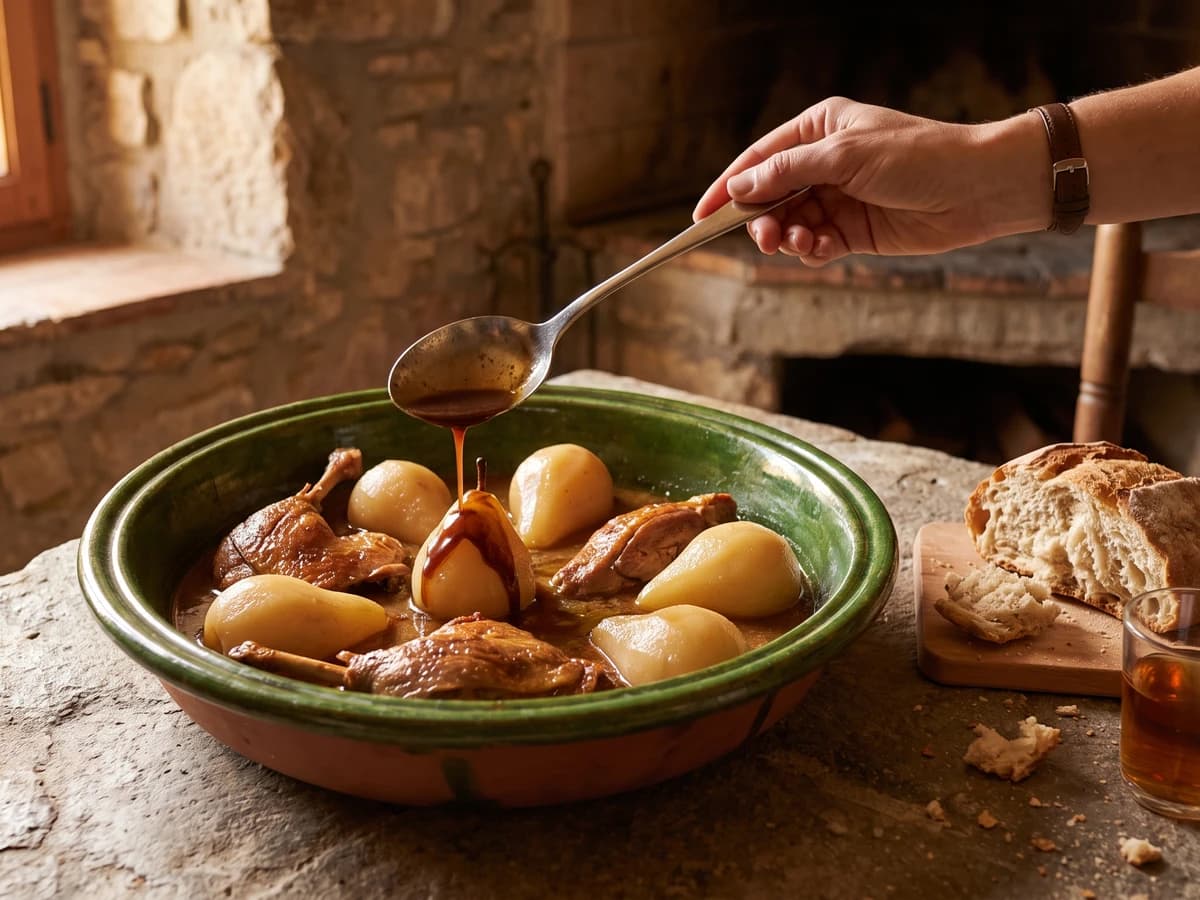
Ànec amb peres is Catalan celebration cooking: duck braised in a dark sofregit, firm autumn pears added near the end, and an almond-garlic picada that turns the juices into a close, glossy sauce.