Culinary Explorer
A cooking platform built around craft, culture, and the stories behind what we eat.
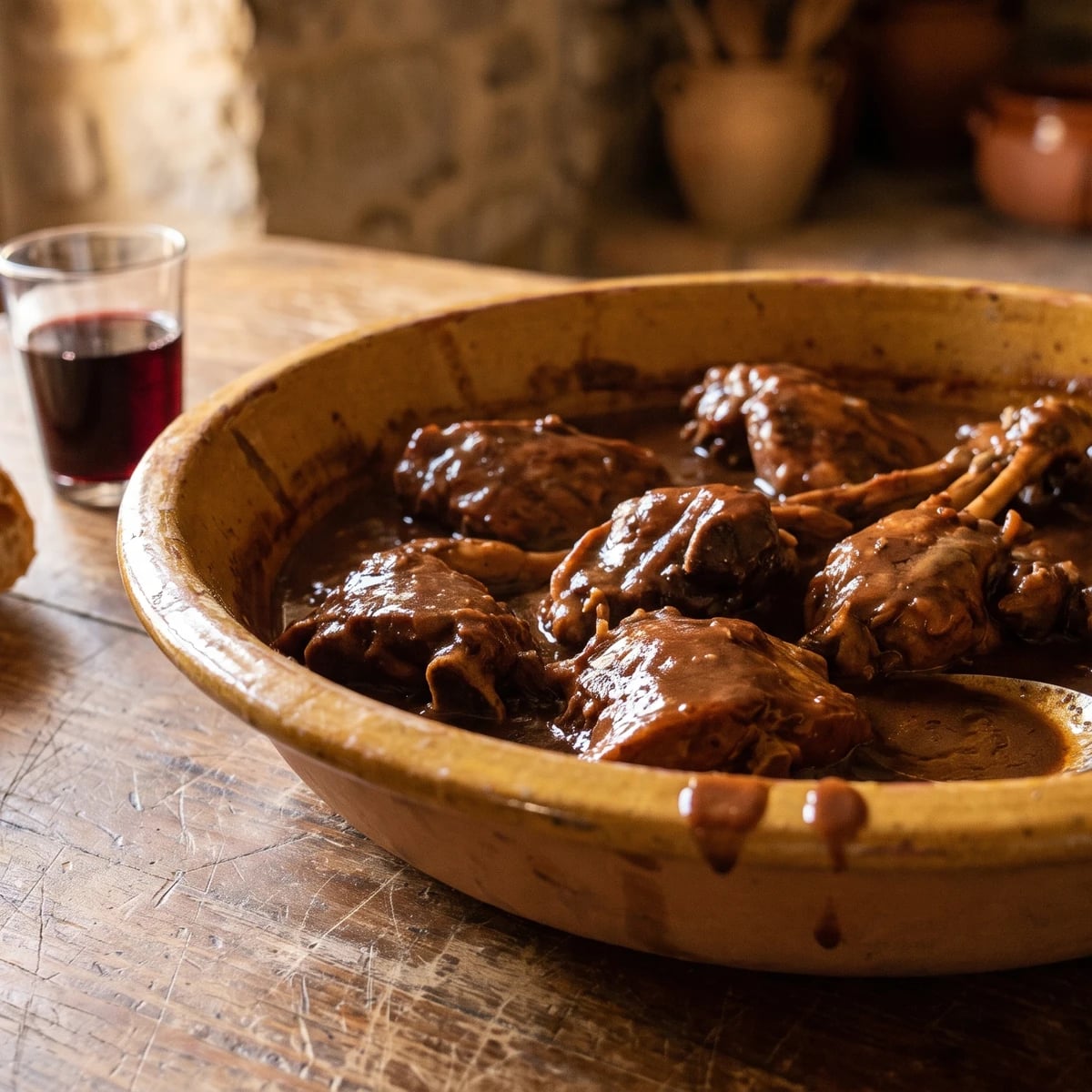
Liebre con Chocolate de Aragón
Created by Chef Isabel
Aragón's autumn hare is browned, braised in red wine, and finished with an almond, fried-bread and bitter-chocolate picada that thickens the sauce and rounds the game without making it sweet.
Liebre con chocolate is an Aragonese game braise built for cold weather: hare left overnight in red wine and aromatics, browned well, then cooked slowly over a dark onion-and-carrot sofrito. At the end comes the mark of the dish, a picada of almonds, fried bread and bitter chocolate. The chocolate works as a spice and thickener. The sauce should taste deep and savory, never like pudding.
The finish decides it. Pound the picada fine, loosen it with hot braising liquor, and stir it into the pot for the final fifteen minutes at the gentlest bubble. This gives the bread and almonds time to bind the sauce while the chocolate melts through it. Boil it hard or throw in a generous handful of chocolate and the sauce turns coarse, bitter and dull. Generosity has its limits.
Buy dressed hare from a licensed game dealer during the autumn and winter season. If hare isn't sold where you live, rabbit is the honest substitute a Spanish kitchen would reach for. Use two meaty rabbits and begin checking them after seventy-five minutes; the meat will be paler, milder and less firm, but the picada and red-wine sauce remain true to the pot. No hace falta haber pisado España.
Give the hare its night in the wine and don't hurry the sofrito. After that, the casserole does most of the work. My Margin has one blunt line beside this dish: "chocolate, 25 grams, no more." Pésalo, no lo adivines. Siempre sale, si lo sigues.
Ingredients
dressed hare
Quantity
1, weighing 1.8 to 2kg
jointed into 8 bone-in pieces
dry red wine, preferably Garnacha or Cariñena
Quantity
750ml
onions
Quantity
300g
thinly sliced
| Ingredient | Quantity |
|---|---|
| dressed harejointed into 8 bone-in pieces | 1, weighing 1.8 to 2kg |
| dry red wine, preferably Garnacha or Cariñena | 750ml |
| onionsthinly sliced | 300g |
Where cooking meets culture.
Culinary guides, cultural storytelling, and the editorial depth that makes cooking meaningful.
Discover Culinary Explorer