Chef Isabel
Duelos y Quebrantos Manchegos
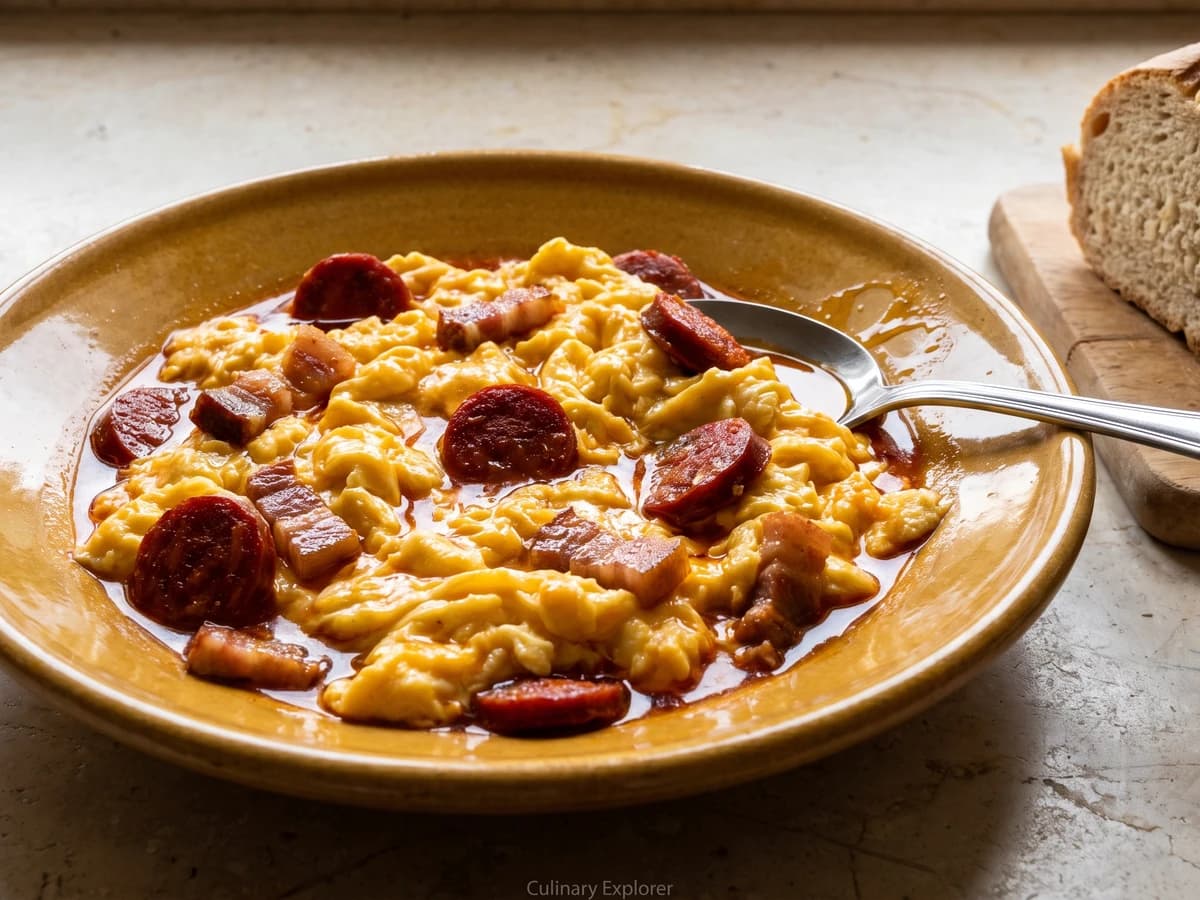
Duelos y quebrantos is Castilla-La Mancha in one pan: chorizo and bacon rendered slowly, then eggs folded through until soft, the plain Saturday meal Cervantes set on Don Quixote's table.
A cooking platform built around craft, culture, and the stories behind what we eat.
Created by
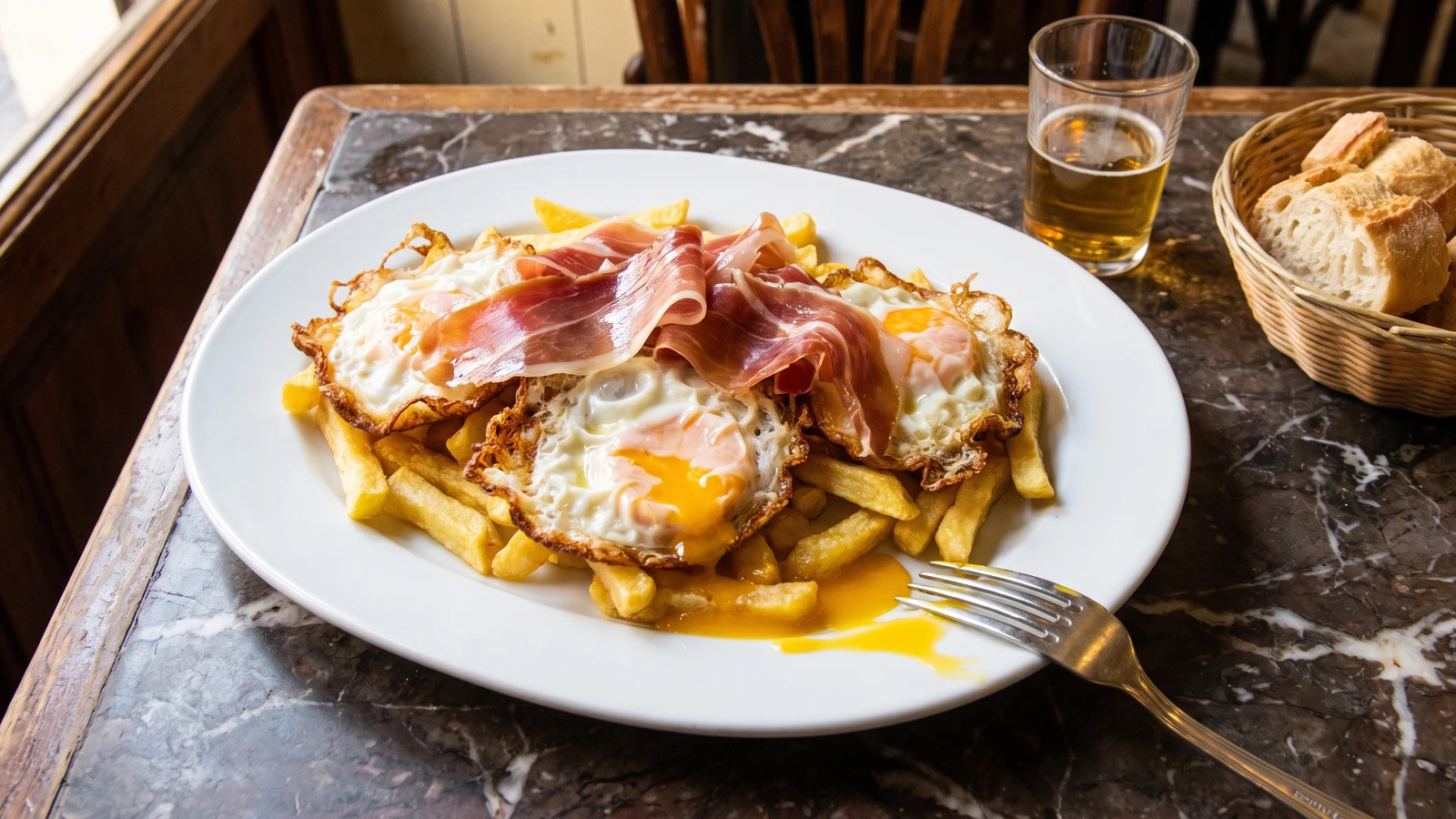
Madrid's great tavern plate is nothing more than potatoes, fried eggs, jamón, and good timing: lace the whites, keep the yolks soft, then break them over the potatoes while everything is ready.
Madrid's huevos rotos are fried potatoes covered with crisp-edged eggs, their soft yolks broken at the table so they run through the whole plate. Jamón brings salt and the sweetness of cured pork. What makes this huevos rotos rather than simply fried eggs with chips is that last act: the eggs arrive whole, then break over the potatoes while both are ready to eat. This is Madrileño food, made for sharing in the capital's tabernas and just as useful for a quick supper at home.
The egg decides the dish. Fry it in properly hot olive oil until the white sets and grows a golden puntilla, that crisp lace around the edge, but keep the yolk loose. Then break it over potatoes fried twice, first gently to cook the centre and then hot to colour the outside. The yolk becomes the sauce. Cook it firm and you have good eggs with potatoes, but not the plate Madrid means by huevos rotos.
If jamón ibérico is beyond reach, use a sound jamón serrano. That's the ordinary substitute in a Spanish kitchen, and the flavour will be a little leaner but still right. Where neither is sold, thinly sliced dry-cured country ham will do, though it may be saltier, so taste before adding more salt. No hace falta haber pisado España, you don't need to have set foot in Spain. The Margin beside this recipe says only, "break, don't stir." Siempre sale, si lo sigues.
Fried eggs and potatoes belong to everyday cooking throughout Spain, but huevos rotos took a distinctly Madrileño identity in the tabernas and casas de comidas of the capital. Casa Lucio on Cava Baja in La Latina made huevos estrellados, another name for the dish, its calling card and fixed the serving ritual in the public imagination: whole fried eggs brought over potatoes, then broken at the table. Jamón is the best-known addition, though the oldest plate needs only potatoes, eggs, olive oil, and salt.
Quantity
800g
peeled and cut into 1cm batons
Quantity
750ml
Quantity
4
at room temperature
Quantity
120g
Quantity
6g
divided
| Ingredient | Quantity |
|---|---|
| waxy or all-purpose potatoes, such as Monalisa or Yukon Goldpeeled and cut into 1cm batons | 800g |
| mild olive oil, for frying | 750ml |
| large eggsat room temperature | 4 |
| thinly sliced jamón serrano or jamón ibérico | 120g |
| fine sea saltdivided | 6g |
Rinse the cut potatoes under cold water until the water runs clear, then dry them thoroughly between clean cloths. Water left on them spits when it meets the oil, and damp potatoes soften instead of colouring properly. Keep the batons close to 1cm thick so their centres cook at the same pace.
Heat the olive oil in a deep, wide frying pan to 140°C. Fry the potatoes in two batches for 8 to 10 minutes each, stirring carefully now and then. The oil should bubble quietly. Take them out when tender enough to break with the edge of a spoon but still pale, then drain them on a rack or absorbent paper for 5 minutes.
Raise the oil to 180°C. Return the potatoes in two batches and fry for 2 to 3 minutes, until deep gold at the corners and crisp outside. Drain well, season immediately with 5g of the salt, and spread them across a warm oval serving plate. Lay the jamón loosely over the potatoes so its fat softens against their heat without frying hard.
Keep the oil at 180°C. Crack each egg into a small cup first, then slide it carefully into the oil, frying no more than two at once. Spoon hot oil over the white, avoiding the yolk, for 45 to 60 seconds. Lift the egg when the white is set and its edge has formed a crisp golden puntilla, the lacy border, while the yolk remains completely soft. Drain briefly and season the four eggs with the remaining 1g salt.
Set the eggs over the potatoes and jamón. At the table, pierce each yolk and make two or three broad cuts through the whites, then turn everything together just enough for the yolk to run between the potatoes. Do not mash or scramble it. The dish is called huevos rotos, broken eggs, and that breaking happens only now. Serve at once.
1 serving (about 230g)
Culinary guides, cultural storytelling, and the editorial depth that makes cooking meaningful.
Discover Culinary ExplorerChef Isabel
Duelos y quebrantos is Castilla-La Mancha in one pan: chorizo and bacon rendered slowly, then eggs folded through until soft, the plain Saturday meal Cervantes set on Don Quixote's table.
Chef Isabel
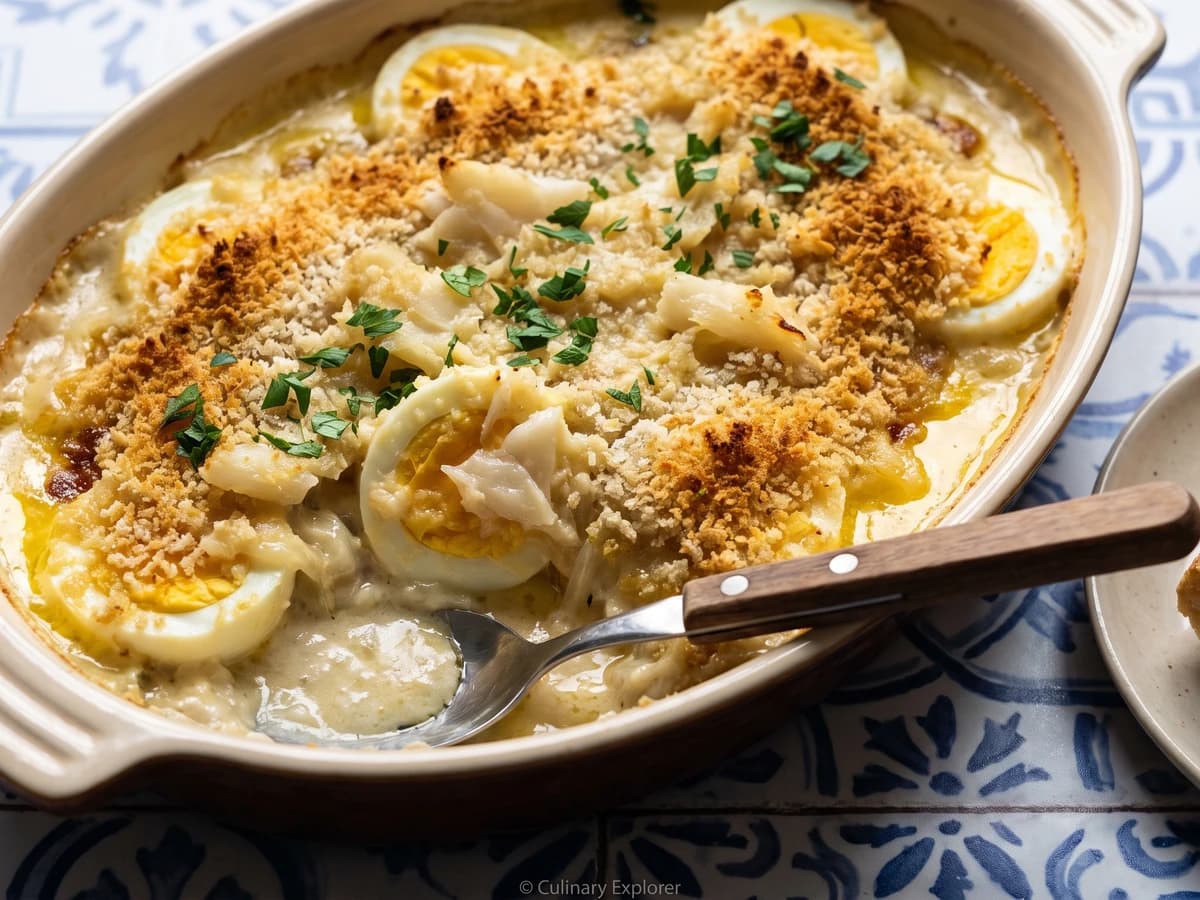
Donostia's baked eggs sit beneath a slow, sweet onion and bacalao sauce, with a fine breadcrumb crust browned under the grill. Desalt the cod properly and the rest is straightforward.
Chef Isabel
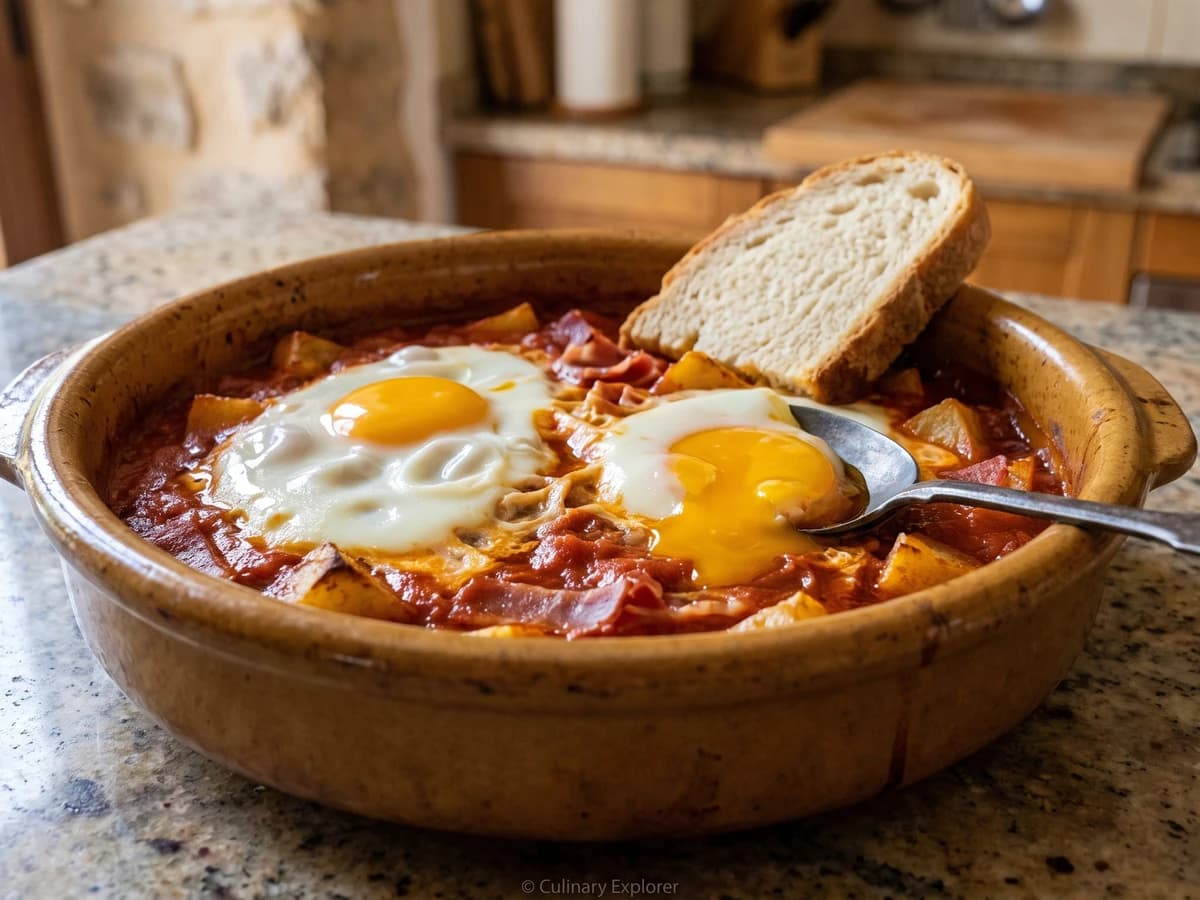
Extremadura sets eggs into a thick bed of fried potato, tomato sofrito, jamón, and its own smoky pimentón, then bakes them just until the whites hold and the yolks stay soft.
Chef Isabel
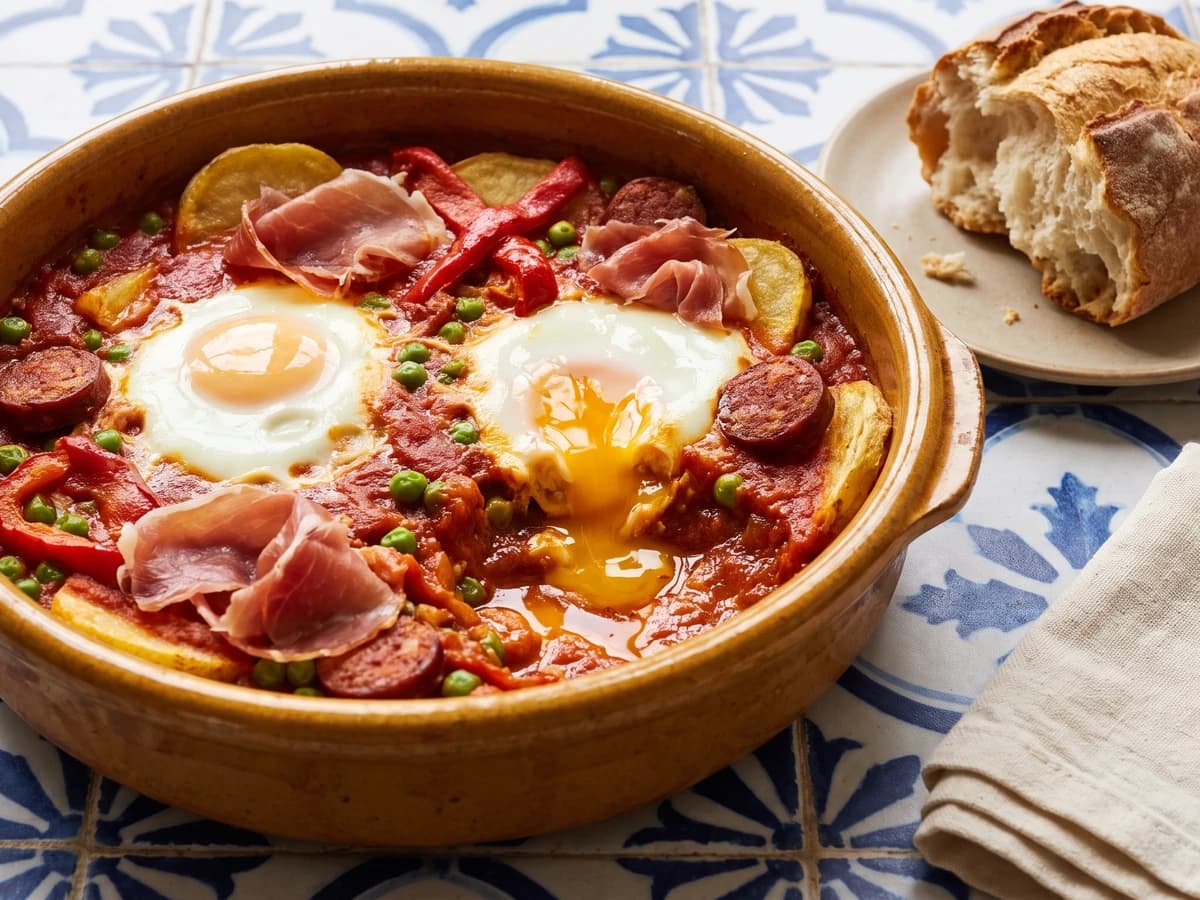
Huevos a la flamenca are Seville in a cazuela: eggs baked over a dark, sweet tomato sofrito with potatoes, peas, peppers, jamón and chorizo, pulled while the whites set and the yolks still run.